The best yellowstone itinerary for a first visit is three to four days: one on the geyser basins around Old Faithful, one on the Grand Canyon of the Yellowstone, Hayden Valley and Yellowstone Lake, and one on Mammoth Hot Springs and Lamar Valley, sleeping at Old Faithful and Canyon. Below are day-by-day plans for one to seven days from every entrance.
Most Yellowstone itineraries online are written as if everyone arrives through the same gate on the same summer day. You won’t. You might fly into Bozeman and enter at Gardiner, drive up from Jackson through Grand Teton, come over the mountains from Cody, or arrive at West Yellowstone after a long drive from Salt Lake City. You might visit in May, when some roads are still closed, or in October, when they’re about to be. And in 2026 there’s construction to plan around, plus a few famous stops that are closed.
So this guide works differently. It starts with the handful of things that shape every Yellowstone itinerary: how many days you need, how the roads fit together and how long the drives really take. Then it gives you six building-block day plans, each built around one part of the park, with timings, mileage and honest notes on what to skip. Those blocks combine into complete itineraries for one to seven days, and then into routes that start from each of the five entrances. After that come adjustments for each season, special-interest versions for wildlife, families, accessibility and photography, and a short list of the mistakes that ruin more Yellowstone trips than bad weather ever does.
If you’re earlier in your planning, our guide to planning a trip to Yellowstone covers the basics of when to go, how to get there and how to book. For the sights themselves, the things to do in Yellowstone guide ranks 40 of them by region. And for beds, which you should sort out before anything else, see where to stay in Yellowstone.
How many days do you need in Yellowstone?
Three days is the minimum to see Yellowstone’s highlights without rushing: the geyser basins, the Grand Canyon of the Yellowstone, Hayden Valley, Yellowstone Lake, Mammoth and Lamar Valley. Four or five days lets you add dawn wildlife and a hike. One or two days works only if you pick one half of the park.
Here’s what each trip length realistically gets you:
| Days | What you can see | What you’ll miss | Our verdict |
|---|---|---|---|
| 1 | One loop: usually Old Faithful, Grand Prismatic, West Thumb, Hayden Valley and the canyon | The whole north: Mammoth and Lamar Valley | Worth it if it’s all you have, but you’ll spend half the day driving |
| 2 | The Lower Loop in full, with time at each stop | The north, or most of it | Fine for a first taste; tight |
| 3 | All the major regions, one per day | Hikes, second visits, slow mornings | The minimum we’d recommend |
| 4 | Everything in 3 days plus a Norris or hiking day | Very little of the highlights | The sweet spot for most first-timers |
| 5 | Add a second dawn in Lamar, the Beartooth Highway or a long hike | Only the backcountry | Relaxed, with room for weather |
| 7 | All of the above plus lake time, more hikes and rest days | Almost nothing a first-timer would miss | Ideal for wildlife lovers and hikers |
Our dedicated guide to how many days in Yellowstone goes deeper, matching trip length to your interests and entrance.
One honest note before you plan: most people underestimate how long everything takes in Yellowstone. The distances look short on a map, but speed limits top out at 45 mph, the roads are two lanes, and wildlife jams can stop traffic for 20 minutes or more. Every itinerary below assumes realistic summer driving, not what a navigation app says at 6 a.m.
How Yellowstone’s roads shape every itinerary
The key to planning is the Grand Loop Road, a 142-mile figure eight that links all the park’s main areas. The lower half, called the Lower Loop, runs about 96 miles through Madison, Old Faithful, West Thumb, Lake, Canyon and Norris. The upper half, the Upper Loop, runs about 70 miles through Norris, Mammoth, Tower-Roosevelt and Canyon. The two halves share the 12-mile road between Norris and Canyon. Five entrance roads connect the loop to the outside world, and a sixth road runs east from Tower-Roosevelt through Lamar Valley to the Northeast Entrance. Our guide to the Grand Loop Road describes the drive mile by mile.
Here’s the drive-time table to plan with. Distances follow the NPS road chart, and the times are typical summer times with a few quick stops.
| From | To | Miles | Typical summer drive |
|---|---|---|---|
| West Entrance | Madison Junction | 14 | 30 min |
| Madison Junction | Old Faithful | 16 | 35-45 min |
| Old Faithful | West Thumb | 17 | 35-40 min |
| West Thumb | Lake Village / Fishing Bridge | 21 | 40 min |
| Fishing Bridge | Canyon Village (through Hayden Valley) | 16 | 35 min to over an hour |
| Canyon Village | Norris | 12 | 25 min |
| Norris | Madison Junction | 14 | 30 min |
| Norris | Mammoth Hot Springs | 21 | 45 min |
| North Entrance (Gardiner) | Mammoth Hot Springs | 5 | 15 min |
| Mammoth Hot Springs | Tower-Roosevelt | 18 | 40 min |
| Tower-Roosevelt | Canyon Village (over Dunraven Pass) | 19 | 45-50 min |
| Tower-Roosevelt | Lamar Valley (Lamar Buffalo Ranch area) | 12 | 25 min |
| Tower-Roosevelt | Northeast Entrance | 29 | 1 hr without stops |
| South Entrance | West Thumb | 22 | 40 min |
| East Entrance | Fishing Bridge | 27 | 45-50 min |
Drive the full Grand Loop without stopping and you’re looking at five to six hours in the car, which is why we never recommend it as a single day.
The 2026 construction and closure overlay
Every itinerary this year needs to account for a few changes (checked September 2026). Road dates, and the latest on each project, are on our Yellowstone road closures page.
- Gardner River High Bridge (North Entrance road): single lane with delays of up to 15 minutes, 24 hours a day, through late October 2026. Vehicles 8’6″ or wider or 75 feet or longer can’t cross, which matters for big RVs and trailers heading to or from Gardiner.
- Chip sealing: delays of up to 30 minutes on sections being resurfaced.
- Bridge work: delays of up to 15 minutes near Bridge Bay, over the Firehole River and over the Yellowstone River.
- Dunraven Pass: the Canyon to Tower road closes for the season on October 12, 2026, along with the Beartooth Highway and the Chief Joseph Scenic Byway outside the park. After that date, the fastest route from Canyon to Lamar Valley goes around through Norris and Mammoth, adding roughly an hour.
- Most other park roads close to cars at the end of October.
- Closed sights: Biscuit Basin (since a hydrothermal explosion in July 2024), which also cuts the usual route to Mystic Falls; Uncle Tom’s Trail at the canyon (since 2019); and the Firehole River Swim Area. Boiling River near Mammoth has been closed to swimming since the 2022 flood.
Build 15 to 30 minutes of slack into any day that crosses one of the construction zones, and you’ll barely notice them.
Driving tips for the Grand Loop
Driving in Yellowstone is part of the experience, but it’s not like driving anywhere else. A few habits make it safer and less stressful:
- Use the pullouts. If you want to stop for wildlife or a view, pull completely off the road. Never stop in the traffic lane, even for a moment, and never leave your car in the road to walk toward an animal.
- Expect wildlife jams. A single bison or a bear near the road can stop traffic in both directions. Be patient, stay in your car if the animal is close, and move on once you’ve had a look so others can too.
- Watch your speed. The speed limit is 45 mph at most, and lower in many areas. Animals cross without warning, and many wildlife deaths in the park are caused by vehicles.
- Fill up when you can. Gas stations are spread out, at Canyon, Fishing Bridge, Grant Village, Mammoth, Old Faithful and Tower Junction. Don’t let your tank drop below a quarter.
- Download your maps. Cell coverage is limited outside the developed areas. Download offline maps and the NPS app before you arrive.
- Avoid driving at night. The roads are unlit, and animals are hard to see in the dark.
- Watch the grades. Dunraven Pass and Sylvan Pass are steep and winding. Use lower gears on the way down, especially in an RV.
- Mind the RV limits. Some side roads and parking areas aren’t suitable for large RVs or trailers, and in 2026 the Gardner River High Bridge on the North Entrance road bars vehicles 8’6″ or wider or 75 feet or longer.
Five rules that make every itinerary work
- Sleep inside the park if you can, and move once or twice. Two nights at Old Faithful and two at Canyon puts every major sight within about an hour.
- Flip the crowd schedule. Almost everyone hits the famous stops from 10 a.m. to 4 p.m. Be at them early or late, and use the middle of the day for driving, lunch, hikes or quieter places.
- Plan by region, not by list. Group sights by area so you’re not crisscrossing the park.
- Leave room for wildlife. A bison herd in the road or a bear by the river will eat your schedule. That’s not a problem, it’s the point.
- Enter and exit through different gates if you can. One-way routes save hours of backtracking.
The building blocks: six day plans you can mix and match
Every itinerary in this guide is built from six day plans, each focused on one part of the park. They’re written for summer, from mid-June to early September, and assume you’re staying at or near the start point. Each one lists realistic timings, the mileage and what you can safely drop if you’re running late.
Block A: The geyser basins (Old Faithful, Midway and the Lower Geyser Basin)
Best base: Old Faithful, or West Yellowstone, 30 miles away. Driving: about 40 to 60 miles. Walking: 4 to 6 miles on flat boardwalks and paths.
This is the day most people come to Yellowstone for, and it’s also the one where timing matters most, because the parking at Grand Prismatic Spring is overwhelmed from about 10 a.m. to 4 p.m.
| Time | Stop | Notes |
|---|---|---|
| 7:00 a.m. | Old Faithful eruption | Check the prediction the night before; the benches are nearly empty at this hour |
| 8:00 a.m. | Upper Geyser Basin loop to Morning Glory Pool | About 3 miles round trip; plan around Grand, Castle or Riverside if one is due |
| 10:30 a.m. | Old Faithful Inn | Coffee, the lobby, and the upper deck for another eruption |
| 11:30 a.m. | Black Sand Basin | A quick loop; Biscuit Basin next door is closed |
| 12:30 p.m. | Lunch | Picnic, or the lodge cafeteria or Inn deli |
| 1:30 p.m. | Fairy Falls trailhead and Grand Prismatic overlook | About 1.2 miles round trip to the overlook; the colors are best on sunny afternoons |
| 3:30 p.m. | Firehole Lake Drive and Great Fountain Geyser | Check the prediction window; bring a chair |
| 5:00 p.m. | Fountain Paint Pot | All four types of thermal feature on a half-mile loop |
| 6:00 p.m. | Midway Geyser Basin boardwalk | The lot empties in the evening |
| 8:00 p.m. | Old Faithful at sunset, or Observation Point | The best light of the day on the steam |
If you’re coming from West Yellowstone, flip the order: Grand Prismatic’s boardwalk at 8 a.m. on your way in, Fountain Paint Pot and Firehole Lake Drive mid-morning, Old Faithful and the Upper Geyser Basin for the middle of the day (the lots there are huge), and the Fairy Falls overlook on the way back out in the late afternoon.
Drop if you’re short on time: Black Sand Basin and Firehole Lake Drive. Don’t drop: the Upper Geyser Basin walk. The eruption lasts a few minutes; the basin behind it is the real show.
For the sights on this day, see our guides to Old Faithful, the Upper Geyser Basin, Grand Prismatic Spring, Midway Geyser Basin, Fountain Paint Pot, Firehole Lake Drive and Great Fountain Geyser. If you’re coming in from the West, our West Yellowstone to Old Faithful guide covers every stop on the drive.
Block B: The Grand Canyon, Hayden Valley and Yellowstone Lake
Best base: Canyon Village or Lake Village. Driving: about 60 to 80 miles. Walking: 2 to 4 miles, with one steep descent if you do the Brink of the Lower Falls.
This day combines the park’s most dramatic scenery with its best roadside wildlife.
| Time | Stop | Notes |
|---|---|---|
| 6:00 a.m. | Hayden Valley | Bison, elk, sometimes bears and wolves; use the pullouts and stay in your car near big animals |
| 8:00 a.m. | Artist Point | The classic view of the Lower Falls, before the tour buses |
| 8:45 a.m. | South Rim Trail toward Point Sublime | An easy extra mile most visitors never walk |
| 9:45 a.m. | North Rim Drive: Brink of the Lower Falls, Lookout Point, Grand View, Inspiration Point | The Brink trail drops about 600 feet in under half a mile |
| 12:00 p.m. | Canyon Village | Lunch, and the Canyon Visitor Education Center on the supervolcano |
| 1:30 p.m. | Mud Volcano and Dragon’s Mouth Spring | About six miles north of Fishing Bridge |
| 2:30 p.m. | LeHardy Rapids and Fishing Bridge | Trout jumping the rapids in June and July |
| 3:30 p.m. | Lake Yellowstone Hotel | A drink in the sunroom looking over the lake |
| 4:30 p.m. | Storm Point Trail | A flat 2.3-mile loop to the lakeshore; marmots are common |
| 7:30 p.m. | Lake Butte Overlook or Hayden Valley | Sunset over the lake, or a last wildlife drive |
Drop if you’re short on time: LeHardy Rapids outside the spawning season, and the Canyon Visitor Education Center on a sunny day. Don’t drop: Artist Point and at least one Hayden Valley drive at the edge of the day. Uncle Tom’s Trail at the canyon has been closed since 2019, so ignore itineraries that include it.
See our guides to the Grand Canyon of the Yellowstone, Artist Point, the Brink of the Lower Falls, Hayden Valley, Mud Volcano, Fishing Bridge, Yellowstone Lake and Lake Butte Overlook.
Block C: Mammoth Hot Springs and Lamar Valley
Best base: Gardiner, Mammoth, Roosevelt Lodge, or Canyon with an early start. Driving: 90 to 130 miles depending on your base. Walking: 2 to 3 miles, including the terrace boardwalks.
This is the wildlife day, and it starts before dawn. From Canyon, Lamar Valley is about an hour over Dunraven Pass; from Gardiner, about an hour past Mammoth and Tower.
| Time | Stop | Notes |
|---|---|---|
| 5:30 a.m. | Leave for Lamar Valley | Sunrise is around 5:30 a.m. in late June, 7 a.m. by mid-September |
| 6:30 a.m. | Lamar Valley | Drive slowly, stop where you see spotting scopes; wolves are most active now |
| 9:00 a.m. | Slough Creek or Soda Butte | A quieter side valley, or the old travertine cone near the east end |
| 10:00 a.m. | Trout Lake | A short, steep 1.2-mile round trip; otters in early summer |
| 11:30 a.m. | Tower Fall and Calcite Springs | A quick overlook stop |
| 12:30 p.m. | Roosevelt Lodge | Lunch on the porch; the Petrified Tree is just west |
| 2:00 p.m. | Mammoth Hot Springs terraces | The lower boardwalks, then the Upper Terrace Drive |
| 4:00 p.m. | Fort Yellowstone and the Albright Visitor Center | History, and elk on the lawns |
| 5:00 p.m. | Roosevelt Arch (optional) | Five miles north at Gardiner |
| 6:30 p.m. | Back to Lamar, or dinner at Mammoth or Gardiner | A second wildlife window opens in the evening |
If you’re based at Canyon, you can do this block as a loop: out to Lamar over Dunraven Pass, west to Mammoth, then back to Canyon via Norris, about 110 miles. After October 12, 2026, when Dunraven Pass closes, you’ll need to go both ways via Norris and Mammoth, which makes it a much longer day.
Drop if you’re short on time: Tower Fall, Petrified Tree and the Roosevelt Arch. Don’t drop: dawn in Lamar Valley. If you arrive at 11 a.m., you’ll see distant bison and wonder what the fuss was about.
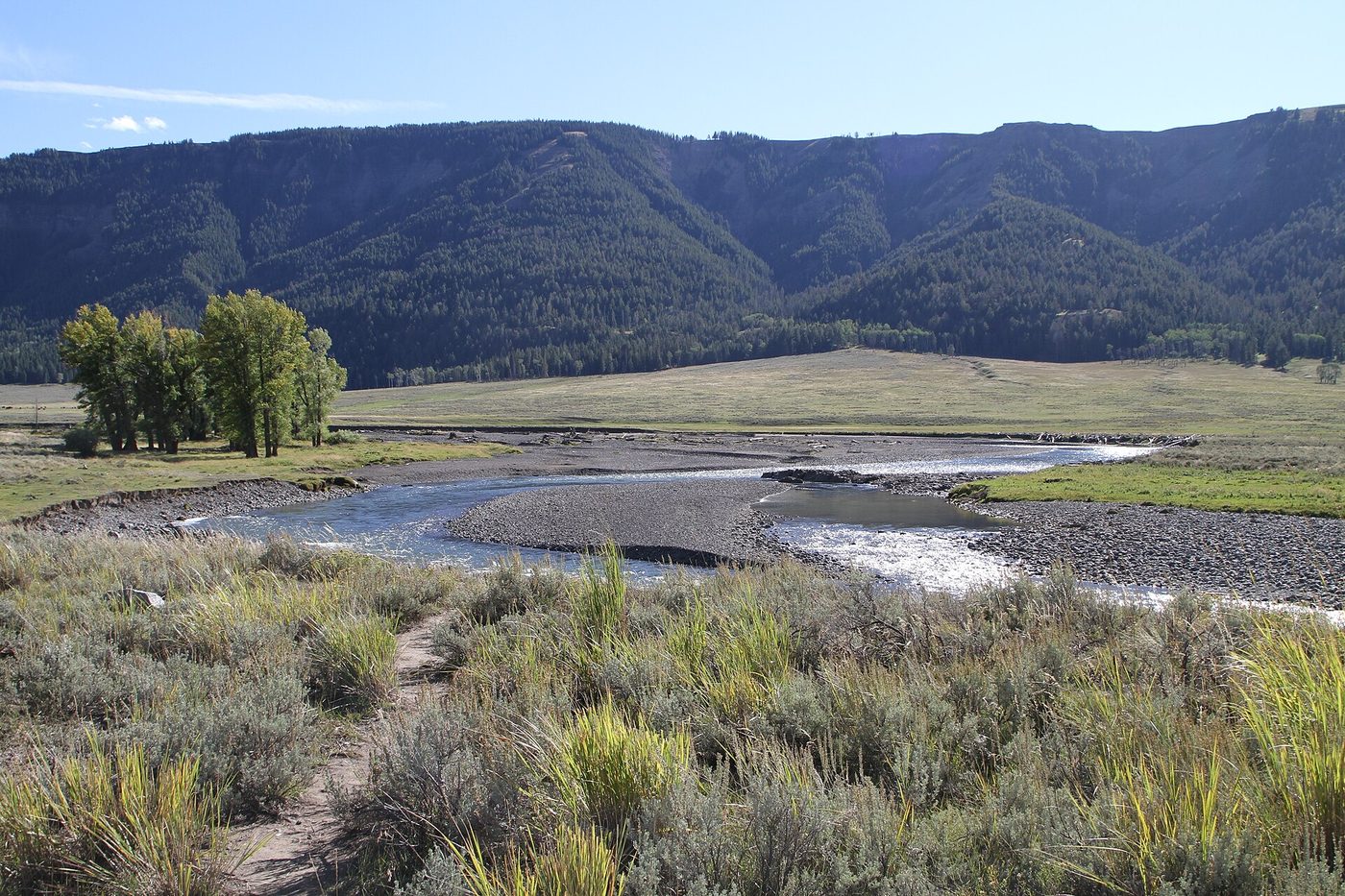
See Lamar Valley, the Lamar Valley drive, wolf watching in Yellowstone, Tower Fall, Trout Lake, Mammoth Hot Springs and the Mammoth terraces.
Block D: Norris, West Thumb and the connector roads
Best base: Old Faithful, Canyon or West Yellowstone. Driving: 60 to 90 miles. Walking: 3 to 5 miles.
This is the block that fills the gaps: the thermal areas and waterfalls along the roads between the headline regions. It works well as a travel day between bases.
| Time | Stop | Notes |
|---|---|---|
| 8:00 a.m. | Norris Geyser Basin | Porcelain Basin first, then the 1.5-mile Back Basin loop past Steamboat Geyser |
| 10:30 a.m. | Museum of the National Park Ranger | A mile north of Norris; small and personal |
| 11:15 a.m. | Artists Paintpots | A one-mile round trip to bubbling mudpots; the lot is tiny, so skip it if full |
| 12:00 p.m. | Gibbon Falls | An 84-foot roadside waterfall |
| 1:00 p.m. | Firehole Canyon Drive | A two-mile one-way side road past Firehole Falls |
| 2:30 p.m. | Kepler Cascades and Lone Star Geyser | A flat 4.8-mile round trip on an old road to a geyser that erupts about every three hours |
| 5:30 p.m. | West Thumb Geyser Basin | Hot springs on the shore of Yellowstone Lake |
| 6:30 p.m. | Grant Village or Lake | Dinner, and sunset over the lake |
Swap in Virginia Cascade Drive between Norris and Canyon if that’s your direction.
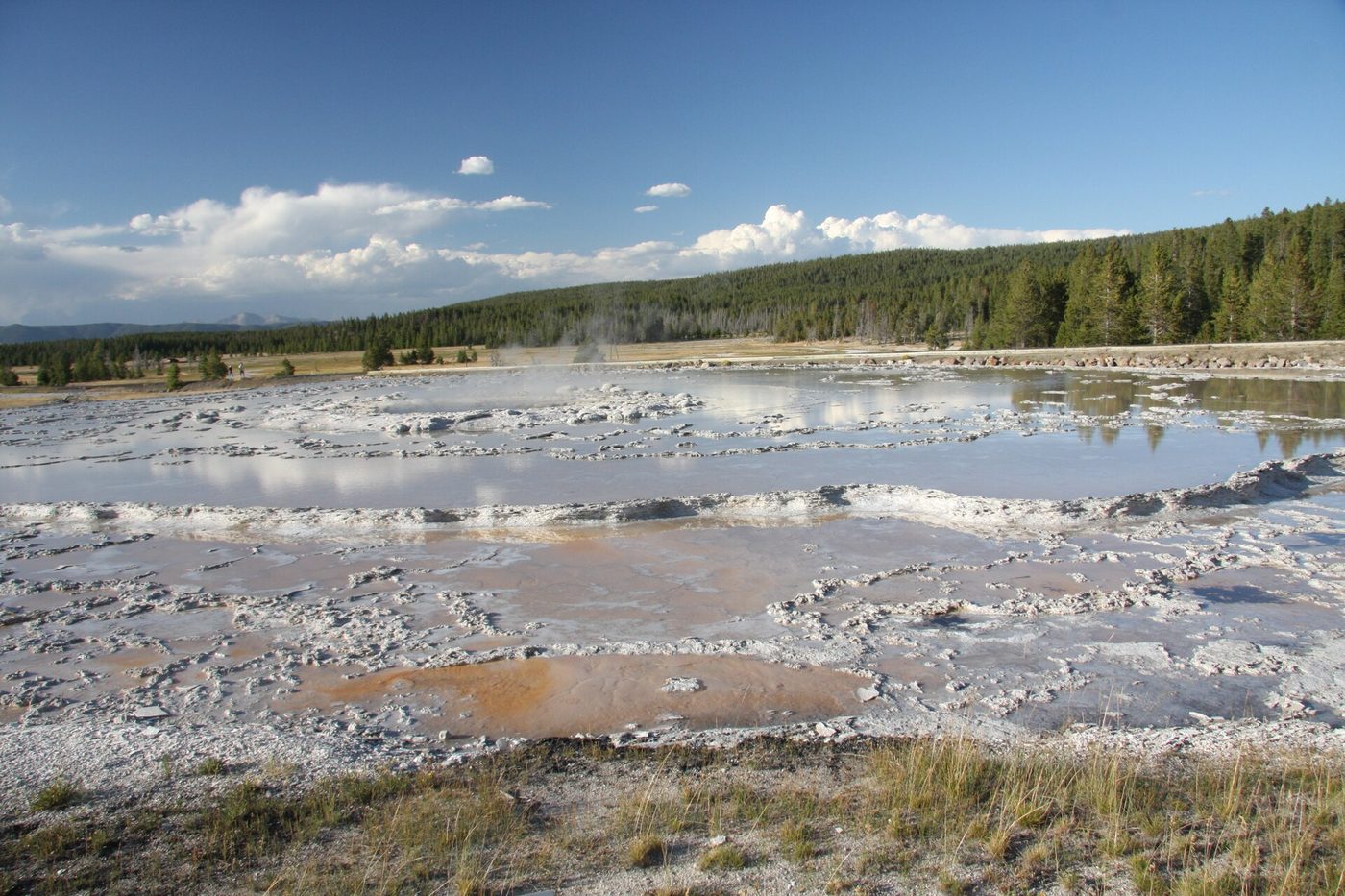
The southern connector variant. If you’re moving between Old Faithful and the South Entrance, or linking Yellowstone with Grand Teton, Block D can run south instead: Kepler Cascades and Lone Star Geyser in the morning, a stop at Isa Lake on Craig Pass, where the road crosses the Continental Divide, West Thumb Geyser Basin at lunchtime, the Grant Village visitor center for the story of the 1988 fires, and Lewis Falls on the way out through the Lewis River canyon. It’s a quieter, gentler day than the northern version, with more lake and forest than thermal features. Drop if you’re short on time: the museum and Gibbon Falls. Don’t drop: Norris and West Thumb, two of the park’s most interesting thermal areas. See Norris Geyser Basin, Steamboat Geyser, Artists Paintpots, Firehole Canyon Drive and West Thumb Geyser Basin.
Block E: The northeast and the Beartooth Highway
Best base: Cooke City, Silver Gate, Roosevelt Lodge or Gardiner. Driving: 100 to 150 miles. Season: late May to October 12 in 2026, when the Beartooth Highway is open.
For wildlife lovers and road-trippers, this is one of the best days in the region: a dawn in Lamar Valley, then out the Northeast Entrance and up the Beartooth Highway, which climbs to 10,947 feet at Beartooth Pass through alpine lakes and tundra. You can drive to the pass and back for a spectacular half day, or continue 68 miles over the top to Red Lodge.
| Time | Stop | Notes |
|---|---|---|
| 6:00 a.m. | Lamar Valley | Wolves, bison and pronghorn |
| 9:00 a.m. | Cooke City | Breakfast and fuel |
| 10:00 a.m. | Beartooth Highway | Pullouts at the lakes and the pass; bring a warm layer |
| 1:00 p.m. | Back to Cooke City, or on to Red Lodge | |
| 4:00 p.m. | Lamar Valley again | The evening wildlife window |
Verdict: worth it if you have five days or more, or you’re entering or leaving that way anyway. On a shorter trip, a second Lamar dawn is a better use of the day. See the Beartooth Highway guide.
Weather on the Beartooth is serious. The pass sits well above treeline, snowbanks can line the road into July, and afternoon storms can bring hail or snow even in summer. Carry a warm layer, check the road status before you set out, and don’t plan the drive for the last days of the season: it closes on October 12 in 2026, and early storms can close it sooner.
Block F: A hiking day
Best base: Canyon or Old Faithful. Walking: 5 to 12 miles, depending on the trails you choose.
A trip of four days or more should include at least one day on your feet, because the trails are where Yellowstone’s crowds disappear. Good options by region:
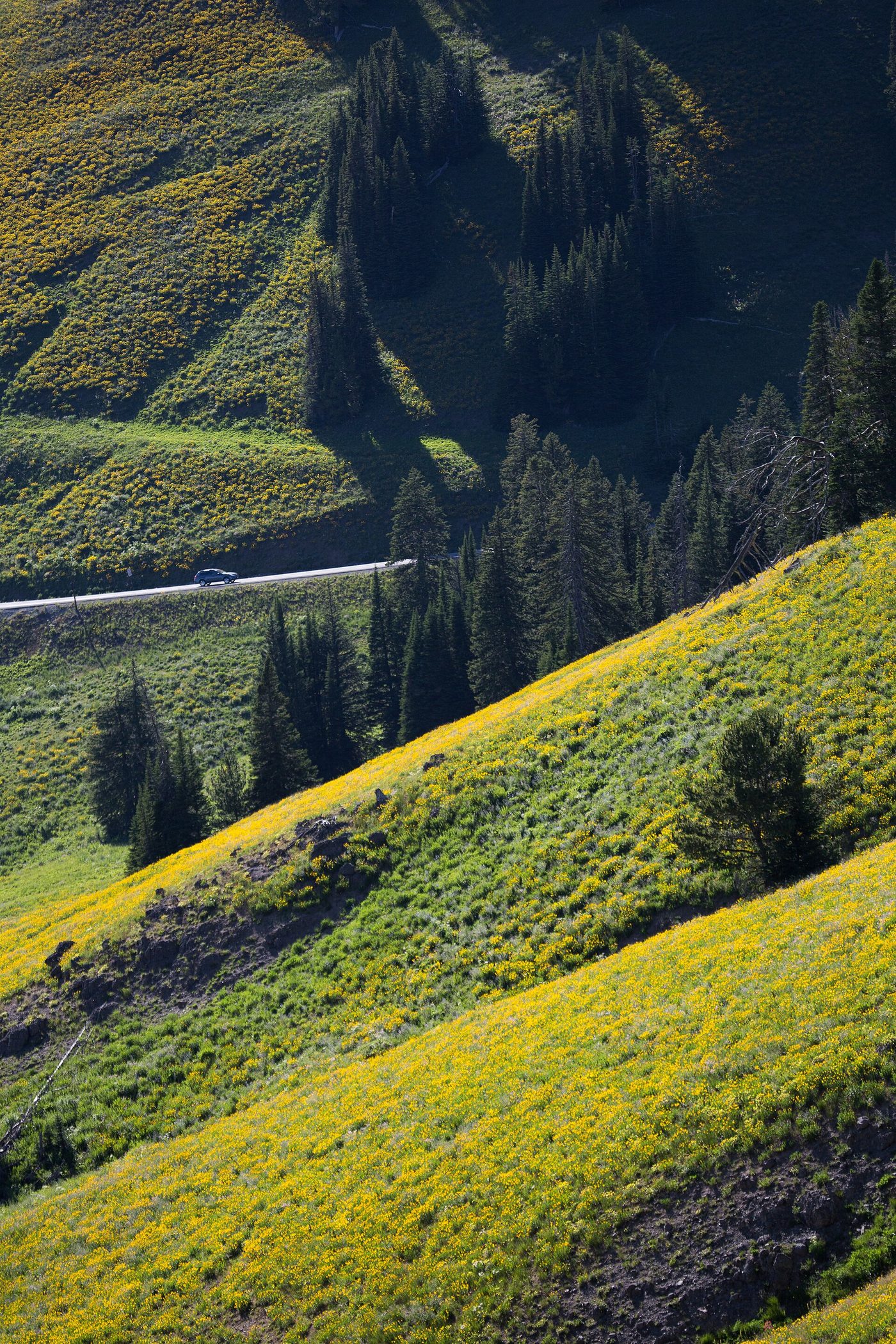
- Canyon: Mount Washburn from Dunraven Pass, about 6 miles round trip with roughly 1,400 feet of climbing to a fire lookout with views across the park. Open until the pass closes on October 12, 2026.
- Old Faithful: the full Fairy Falls trail, 5.4 miles round trip and flat, with the Grand Prismatic overlook on the way, or Lone Star Geyser.
- Lake: Storm Point, then the Elephant Back Mountain trail for a view over the lake.
- North: the Lamar River trail or Slough Creek trail for wildlife, and Wraith Falls or Trout Lake for short walks. From Mammoth, the Beaver Ponds loop, about five miles through meadows and aspen, is good for wildlife in the early morning, and Bunsen Peak, roughly 4 to 5 miles round trip with a steady climb, gives a view straight down over Mammoth and the Gardner River.
- Easy additions anywhere: the South Rim Trail from Artist Point to Point Sublime at the canyon, Observation Point above Old Faithful, and the flat walk to Natural Bridge near Bridge Bay.
A note on one old favorite: Mystic Falls, a 70-foot waterfall on the Little Firehole River, is normally reached from Biscuit Basin, which has been closed since July 2024. Until it reopens, leave it off your plan rather than trying to find a way around the closure.
Carry bear spray, hike in groups of three or more where you can, and make noise on the trail. The rules and statistics are on our Yellowstone safety page, and the trails themselves in our best hikes in Yellowstone guide.
Bad-weather swaps
Yellowstone’s weather changes fast, and summer thunderstorms are common in the afternoons. Having a plan B for each block keeps a wet day from becoming a wasted one:
- Block A in the rain: the geyser basins work well in light rain, with fewer people and bigger steam clouds. Duck into the Old Faithful Visitor Education Center for its exhibits on how geysers work, and the Old Faithful Inn’s lobby for a warm drink.
- Block B in the rain: the Canyon Visitor Education Center, with its exhibits on the Yellowstone supervolcano, is the best indoor stop in the park. Rain doesn’t hurt the canyon views much, and wildlife in Hayden Valley doesn’t care about the weather. The Lake Hotel’s sunroom is a fine place to wait out a storm.
- Block C in the rain: the Albright Visitor Center in Mammoth covers the park’s history and wildlife. Lamar Valley wildlife watching works from the car in any weather.
- Lightning: if thunder is close, get off exposed ridges and summits like Mount Washburn, and away from open meadows. Thunderstorms usually build in the early afternoon and pass by evening.
Our rainy day things to do in Yellowstone guide has more ideas.
Where to eat and refuel along each block
Food and fuel are easy to overlook until you’re hungry and an hour from the next village. Here’s what’s on each route:
- Block A (geyser basins): the Old Faithful Inn Dining Room, the Obsidian Dining Room at the Snow Lodge, the Old Faithful Lodge cafeteria and bake shop, a deli at the Inn, and general stores. Gas at Old Faithful.
- Block B (canyon, Hayden and the lake): at Canyon, the M66 Bar and Grill and a large cafeteria-style eatery; at Lake, the Lake Yellowstone Hotel Dining Room and the Lake Lodge cafeteria. General stores at both. Gas at Canyon and Fishing Bridge.
- Block C (Lamar and Mammoth): Roosevelt Lodge’s dining room at Tower, and the Mammoth dining room and Terrace Grill. Gas at Tower Junction and Mammoth. Gardiner and Cooke City have more restaurants.
- Block D (Norris and West Thumb): not much at Norris itself, so carry a picnic. Grant Village has the Lake House restaurant and a general store, and gas.
Dinner reservations at the historic dining rooms fill up in summer, so book them when you book your room. A picnic lunch from a general store saves both time and money, and some of the park’s best picnic spots are on Yellowstone Lake and along the Firehole River. For more, see where to eat in Yellowstone.
Can you see Yellowstone in one day?
You can see half of it. In a day, drive the Lower Loop from the West Entrance: Grand Prismatic Spring, Old Faithful, West Thumb, Hayden Valley and the Grand Canyon of the Yellowstone, about 125 miles and 10 to 12 hours with stops. Driving the 142-mile Grand Loop in a day isn’t worth it.
A one-day visit is a compromise, and it’s worth accepting that up front. Pick one loop, start early and don’t try to see everything.
From West Yellowstone (Lower Loop, about 125 miles):
- 7:00 a.m. Enter at the West Entrance and follow the Madison River to Madison Junction.
- 8:00 a.m. Grand Prismatic Spring boardwalk, before the parking crush.
- 9:30 a.m. Old Faithful: an eruption and a short Upper Geyser Basin walk.
- 12:00 p.m. West Thumb Geyser Basin, with lunch on the lakeshore.
- 1:30 p.m. Drive along Yellowstone Lake to Fishing Bridge.
- 2:30 p.m. Hayden Valley, stopping for wildlife.
- 3:30 p.m. The Grand Canyon of the Yellowstone: Artist Point and Lookout Point.
- 5:30 p.m. Norris Geyser Basin if you have energy, otherwise straight back.
- 7:00 p.m. Back to West Yellowstone via Madison.
From Gardiner (Upper Loop, about 90 miles): Mammoth Hot Springs early, then Lamar Valley, Tower Fall, Dunraven Pass, the Grand Canyon of the Yellowstone, Norris and back to Mammoth. This one is better for wildlife, weaker on geysers.
From Jackson or Grand Teton: enter at the South Entrance, then West Thumb, Old Faithful, Midway and back the same way. The drive from Jackson to Old Faithful is about 2.5 hours each way, so this is a long day.
What to cut if you’re running late
One-day visits almost always run behind, usually because of a wildlife jam or a crowded parking lot. Cut in this order:
- Norris. It’s wonderful, but it’s the easiest to drop on a one-day loop.
- Firehole Lake Drive and Black Sand Basin. Good, but not essential.
- The North Rim viewpoints. Keep Artist Point, and skip the rest of the canyon.
- West Thumb. Beautiful, but if you’re more than an hour behind, drive straight from Old Faithful toward the lake.
Never cut: Old Faithful, Grand Prismatic and at least a glimpse of the canyon from Artist Point. And don’t try to make up time by speeding or driving after dark.
One day on a tour
If you’d rather not drive, guided one-day tours run from West Yellowstone, Gardiner, Jackson and Bozeman, usually covering either the Lower Loop or the Upper Loop. They’re a good choice if you’re nervous about driving, want expert commentary or want to focus on wildlife. The trade-off is less flexibility and less time at each stop. See our Yellowstone tours guide.
Our one day in Yellowstone guide has more detail, including what to cut if you’re running late.
Yellowstone itinerary: 2 days
With two days, you can see the Lower Loop properly, plus a taste of either the north or more of the canyon.
- Day 1: Block A, the geyser basins. Sleep at Old Faithful, or in West Yellowstone.
- Day 2: Block B, the canyon, Hayden Valley and the lake. Sleep at Canyon or exit.
If you’re entering from the North, swap Day 1 for Block C (Mammoth and Lamar) and finish with a shortened Block B. If you’re entering from the South, start at West Thumb and Old Faithful on Day 1 and end with the canyon on Day 2.
What you’ll miss: most of the north. That’s the honest trade-off of two days. See our 2-day Yellowstone itinerary.
Two days, hour by hour (entering at the West)
Day 1: the geyser basins. Enter at the West Entrance by about 7:30 a.m. and follow the Madison River for 14 miles to Madison Junction, watching the meadows for elk and bison. Turn south along the Firehole and be at the Midway Geyser Basin lot by 8:15, before the crush, for Grand Prismatic Spring and Excelsior Geyser. Continue to Fountain Paint Pot for a half-hour loop, then drive the three-mile Firehole Lake Drive if Great Fountain Geyser’s prediction window suits you. Reach Old Faithful by late morning; the lots there are huge, so midday is fine. Watch an eruption, eat lunch, then spend the afternoon on the Upper Geyser Basin loop to Morning Glory Pool, timing the walk around whichever big geyser is predicted. Late in the afternoon, drive back north to the Fairy Falls trailhead for the Grand Prismatic overlook, when the colors are strongest, and finish with an evening eruption of Old Faithful. Driving: about 55 miles. Night: Old Faithful, or West Yellowstone.
Day 2: the lake, Hayden Valley and the canyon. Leave Old Faithful by 6:30 a.m. for the 17-mile drive to West Thumb, crossing the Continental Divide twice. At West Thumb, the steam hangs over the lake on cold mornings and the boardwalk is quiet. Follow the shoreline 21 miles to Fishing Bridge, stop at Mud Volcano and LeHardy Rapids, and give Hayden Valley at least an hour for bison and whatever else is out. Reach the canyon by late morning: Artist Point first, then the North Rim viewpoints and the Brink of the Lower Falls. After lunch at Canyon Village, decide how you’re leaving. To exit at the West, drive to Norris (12 miles), walk Porcelain Basin, then head back through Madison (28 miles more). To exit at the North, drive from Norris to Mammoth (21 miles), walk the terraces and leave through Gardiner. Driving: about 110 to 130 miles.
From the North instead: reverse it. Spend Day 1 on Mammoth, Norris and the canyon, sleep at Canyon, then do Hayden Valley at dawn, the lake, West Thumb and Old Faithful on Day 2, leaving through the West Entrance.
If you can possibly add a night, do. The difference between two days and three is the whole northern range, and with it most of the park’s best wildlife watching.
Yellowstone itinerary: 3 days
Three days is the classic first-timer’s trip, with one region per day.
- Day 1: Block A, the geyser basins. Night at Old Faithful.
- Day 2: Block B, the Grand Canyon, Hayden Valley and Yellowstone Lake. Drive from Old Faithful via West Thumb and the lake in the morning, then the canyon in the afternoon and Hayden Valley at dusk. Night at Canyon.
- Day 3: Block C, Lamar Valley and Mammoth. Dawn in Lamar over Dunraven Pass, then Mammoth, and exit through the North Entrance or return to Canyon.
Where to sleep: one night at Old Faithful and two at Canyon, or three in the gateway towns (West Yellowstone for two nights, then Gardiner). This version works best entering at the West or South and exiting at the North. See our 3-day Yellowstone itinerary.
Three days, hour by hour
Day 1: the geyser basins (about 50 miles). Arrive at Old Faithful, or enter from the West early, and follow Block A. If you’re arriving from the West, do Grand Prismatic’s boardwalk first thing on the way in; if you’re already at Old Faithful, start with the dawn eruption and the Upper Geyser Basin, and save Midway for the evening. Either way, finish the day with Old Faithful at sunset. Eat at the Old Faithful Inn Dining Room if you’ve booked, or the lodge cafeteria if you haven’t.
Day 2: from the geysers to the canyon (about 85 miles). This is a moving day, and the route does the work: Old Faithful to West Thumb in the early morning, along Yellowstone Lake to Lake Village for a mid-morning break at the Lake Hotel, then north past Mud Volcano into Hayden Valley around lunchtime. Check in at Canyon in the early afternoon, when the rims are busy but the light is still good, and walk the South Rim from Artist Point toward Point Sublime. Before dinner, do the North Rim viewpoints. After dinner, drive back into Hayden Valley for the evening wildlife window, about 20 minutes each way.
Day 3: Lamar Valley and Mammoth (about 65 to 100 miles). Leave Canyon before dawn and drive 31 miles over Dunraven Pass and past Tower Junction to Lamar Valley, arriving as the light comes up. Spend the morning there. On the way back, stop at Tower Fall, have lunch at Roosevelt Lodge, then drive 18 miles west to Mammoth for the terraces and Fort Yellowstone. Exit through the North Entrance to Gardiner, five miles away, or drive back to Canyon via Norris (33 miles) if you’re flying out of the west.
If you’re not an early riser: swap Day 3’s dawn start for a later departure and aim to reach Lamar in the late afternoon instead. The evening window can be nearly as good as dawn, and you’ll be driving back in daylight in midsummer. After mid-August, sunset comes early enough that you’ll need to plan the drive home carefully.
If it rains: move the Canyon Visitor Education Center, Mammoth’s Albright Visitor Center and the Old Faithful Visitor Education Center into the wet hours, and remember that geyser basins and wildlife viewing both work fine in light rain.
Three days based in West Yellowstone
Many visitors stay in West Yellowstone for all three nights, which means daily loops from the same base. It works, with longer drives:
- Day 1: Block A, the geyser basins, 30 miles from town.
- Day 2: a big Lower Loop day: Norris, the canyon, Hayden Valley, the lake, West Thumb and back past Old Faithful, about 150 miles.
- Day 3: the north: Mammoth and as much of Lamar Valley as you can reach. Lamar is more than two hours from West Yellowstone, so this is a long day; many people cut it to Mammoth and Norris.
See our 3 days from the West Entrance guide.
Yellowstone itinerary: 4 days
Four days is the sweet spot for most first-timers. You get all three headline regions plus a day for the in-between sights or a hike, and you’re not rushing.
- Day 1: Block A, the geyser basins. Night at Old Faithful.
- Day 2: Block D, Lone Star Geyser, Firehole Canyon and the Fairy Falls hike, or a slower second geyser day. Night at Old Faithful.
- Day 3: Block B, the canyon, Hayden Valley and the lake, arriving via West Thumb. Night at Canyon.
- Day 4: Block C, Lamar Valley and Mammoth. Exit through the North, or back to Canyon.
Where to sleep: two nights at Old Faithful and two at Canyon. See our 4-day Yellowstone itinerary.
What the extra day buys you
The fourth day is the one that turns a checklist into a trip. Here’s how we’d spend it, based at Old Faithful:
- Early morning: drive 2.5 miles south to Kepler Cascades and walk the flat old road to Lone Star Geyser, 4.8 miles round trip. Check the logbook at the geyser for the last eruption time; it goes off about every three hours, so you may want to time your arrival or bring a book.
- Late morning: back to Old Faithful for lunch, and a second look at the Upper Geyser Basin if a big geyser like Grand or Riverside is predicted.
- Afternoon: the full Fairy Falls trail, 5.4 miles round trip and flat, with the Grand Prismatic overlook on the way out and the 197-foot falls at the end. Or, if hiking isn’t your thing, Firehole Canyon Drive and a slow wait for Great Fountain Geyser on Firehole Lake Drive.
- Evening: dinner, then Observation Point for a final eruption with the whole basin below you.
With two nights at Old Faithful, you also get two dawns in the geyser basins, which is when they’re at their most beautiful and their most empty. If you’d rather use the extra day elsewhere, Block D, with Norris and West Thumb, is the next best option, and it doubles as a relaxed moving day between Old Faithful and Canyon.
Yellowstone itinerary: 5 days
Five days gives you room for a hike, a second wildlife morning and some breathing space.
- Day 1: Block A, the geyser basins. Night at Old Faithful.
- Day 2: Block D, Norris and the connector roads, or a geyser-country hike. Night at Old Faithful.
- Day 3: Block B, Yellowstone Lake, Hayden Valley and the canyon. Night at Canyon or Lake.
- Day 4: Block F, a hiking day: Mount Washburn, with Hayden Valley at dusk. Night at Canyon.
- Day 5: Block C, Lamar Valley and Mammoth. Night at Roosevelt, Mammoth or Gardiner, or exit.
Add a sixth day in the north for Block E, the Beartooth Highway, or a second Lamar dawn. See our 5-day Yellowstone itinerary.
How the five days feel
The shape of a five-day trip is two slow days in the south, two in the middle and one in the north, and it works because no day asks you to drive more than about two hours in total.
The Mount Washburn day is the one to plan most carefully. Start early: the Dunraven Pass trailhead lot fills on summer mornings, and afternoon thunderstorms are common in July and August, so you want to be off the exposed summit ridge by early afternoon. The trail climbs steadily on an old road, with bighorn sheep often grazing near the top and wildflowers across the slopes in July. At the summit, a fire lookout with an observation room looks across the whole park. Allow four to five hours round trip. Afterwards, rest at Canyon, then drive into Hayden Valley at dusk.
On the last day, if you’re spending the night at Roosevelt Lodge or in Gardiner, you get the luxury of a second wildlife window in Lamar Valley that evening and a third the next morning before you leave. Those repeat visits are what produce the sightings people remember: wolves crossing the river, a grizzly digging on a hillside, pronghorn racing across the flats.
If the weather turns: swap the Washburn day with Block D. Norris and the museums work in any weather; exposed summits don’t.
Yellowstone itinerary: 7 days
A week lets you see Yellowstone properly, with time for the backcountry, lake activities and rest.
- Day 1: Block A, the geyser basins. Night at Old Faithful.
- Day 2: A slower geyser day, with Lone Star Geyser and the full Fairy Falls hike. Night at Old Faithful.
- Day 3: Block D, West Thumb and the lake. Night at Lake.
- Day 4: A lake day: a boat tour from Bridge Bay, Storm Point, the Lake Hotel sunroom and sunset at Lake Butte. Night at Lake or Canyon.
- Day 5: Block B, the canyon and Hayden Valley. Night at Canyon.
- Day 6: Block F, Mount Washburn, and Norris on the way back. Night at Canyon.
- Day 7: Block C, Lamar Valley and Mammoth. Night at Roosevelt, Mammoth or Gardiner.
If you have an eighth day, spend it on Block E: a second Lamar dawn and the Beartooth Highway. See our 7-day Yellowstone itinerary.
Making a week work
A week in Yellowstone is less about seeing more and more about seeing things well. A few ideas for the extra days:
The lake day. Yellowstone Lake is the part of the park most visitors rush past. Spend a whole day on it. In summer, a scenic cruise leaves Bridge Bay Marina, and you can rent a boat there too; the details are in our Yellowstone Lake cruise guide. Walk the Storm Point Trail in the morning for marmots and lake views, then the flat trail to Natural Bridge, which is often closed in late spring and early summer when bears fish the spawning streams. Spend the late afternoon in the Lake Yellowstone Hotel’s sunroom, and finish at Lake Butte Overlook for sunset.
The second geyser day. With two full days at Old Faithful, you can wait for the big predicted geysers, like Grand, which can erupt 150 to 200 feet, and walk out to Lone Star Geyser. You also get two chances at the dawn eruption.
The hiking day. Mount Washburn is the classic, but a week gives you time for a longer walk, such as the Slough Creek trail in the north, with a good chance of wildlife in the valley.
Rest time. Don’t underestimate it. After four or five early mornings, a slow morning with coffee on the porch at Roosevelt Lodge, or a lazy afternoon by the lake, is part of the experience. Plan at least one half day with nothing scheduled.
Laundry and supplies. On a week-long trip, you’ll need to restock. Every village has a general store, and Lake Lodge has a laundry. Gas stations are at Canyon, Fishing Bridge, Grant Village, Mammoth, Old Faithful and Tower Junction.
Itineraries by entrance
The direction you enter from changes the best order. Here’s how to route each one, with the first and last nights.
Before the routes, a word on getting to the gates, since that often decides which one you use. Bozeman has the biggest airport near the park and serves both the North Entrance, about 80 miles away via Livingston and the Paradise Valley, and the West Entrance, about 90 miles away via the Gallatin Canyon. Jackson’s airport serves the South Entrance, about 60 miles north through Grand Teton National Park. Cody serves the East Entrance, about 50 miles away. Billings and Idaho Falls also have year-round flights. The small airport at West Yellowstone operates only from early May to mid-October. There’s no passenger train to the park. Salt Lake City is about five hours’ drive from the West Entrance. Our how to get to Yellowstone guide covers every option.
The best trips usually fly into one airport and out of another: into Bozeman and out of Jackson, say, or the reverse. That lets you enter the park at one end and leave from the other without ever backtracking.
From the West Entrance (West Yellowstone)
The most common way in, and the easiest start: the geyser basins are 30 miles away.
Order: Block A first, then Block D or B, then C, and exit through the North Entrance to Gardiner and Bozeman. First night: Old Faithful or West Yellowstone. Last night: Mammoth or Gardiner. Our West Entrance guide covers the gate, and West Yellowstone the town.
A four-day West Entrance route:
- Day 1: arrive in West Yellowstone the evening before if you can, then enter at 7 a.m. Follow the Madison River to Madison Junction, turn south to Grand Prismatic and Fountain Paint Pot, and reach Old Faithful by late morning. Night at Old Faithful.
- Day 2: dawn in the Upper Geyser Basin, then Lone Star Geyser or the Fairy Falls hike. Night at Old Faithful.
- Day 3: West Thumb, Yellowstone Lake, Hayden Valley and the canyon. Night at Canyon.
- Day 4: Lamar Valley at dawn, then Mammoth, and exit through the North Entrance to Gardiner, flying home from Bozeman.
The most common mistake from the West is spending every night in West Yellowstone and driving back and forth. The geyser basins are close, but by the time you’re heading for Lamar Valley you’re facing more than two hours each way. Moving into the park for at least two nights fixes that.
From the North Entrance (Gardiner)
The best way in if you fly into Bozeman, and the only entrance open to cars all year.
Order: Block C first (Mammoth, then Lamar at dawn the next day), then B, then A, and exit through the West or South. First night: Gardiner or Mammoth. Last night: Old Faithful or West Yellowstone. Remember the 2026 Gardner River High Bridge restrictions if you’re towing. See our North Entrance guide.
A four-day North Entrance route:
- Day 1: fly into Bozeman, drive about 80 miles through the Paradise Valley to Gardiner, and walk under the Roosevelt Arch. Spend the late afternoon at the Mammoth terraces. Night in Gardiner or at the Mammoth Hotel.
- Day 2: Lamar Valley at dawn, then over Dunraven Pass to the canyon. Night at Canyon.
- Day 3: Hayden Valley at dawn, Yellowstone Lake, West Thumb and on to Old Faithful. Night at Old Faithful.
- Day 4: the geyser basins, then out through the West Entrance and back to Bozeman, about 90 miles through the Gallatin Canyon.
Starting in the north has a real advantage: you get the wildlife days in while you’re fresh and excited, and you finish with the geysers, which work at any time of day. It’s also the best direction in September and October, when the elk rut at Mammoth makes a spectacular first afternoon.
From the South Entrance (from Grand Teton and Jackson)
The natural way in on a two-park trip.
Order: West Thumb and Block A first, then B, then C, and exit through the North. First night: Grant Village or Old Faithful. Last night: Mammoth or Gardiner. If you’re continuing back to Jackson instead, reverse it and end at Old Faithful. See our South Entrance guide and Yellowstone and Grand Teton.
A four-day South Entrance route:
- Day 1: leave Jackson in the morning and drive about 60 miles north through Grand Teton to the South Entrance, then follow the Lewis River canyon past Lewis Falls to West Thumb. Continue to Old Faithful for the evening eruption. Night at Old Faithful or Grant Village.
- Day 2: the geyser basins, Block A. Night at Old Faithful.
- Day 3: back past West Thumb and along the lake to Hayden Valley and the canyon. Night at Canyon.
- Day 4: Lamar Valley at dawn and Mammoth, exiting through the North Entrance to Bozeman.
If you’re returning to Jackson instead, turn it around: canyon and Lamar first, via the East side of the loop, and finish at Old Faithful and West Thumb on your way south. Either way, remember that driving between Jackson and Yellowstone takes you through Grand Teton, which charges its own entrance fee.
From the East Entrance (Cody)
A scenic arrival over Sylvan Pass to Yellowstone Lake.
Order: Lake Butte Overlook and Block B first, then A, then D and C, and exit through the North or West. First night: Lake Village. Last night: Mammoth or West Yellowstone. See our East Entrance and Cody to Yellowstone guides.
A four-day East Entrance route:
- Day 1: spend the morning in Cody at the Buffalo Bill Center of the West, then drive about 50 miles west through the Wapiti Valley and over 8,530-foot Sylvan Pass. Stop at Lake Butte Overlook for your first view of Yellowstone Lake. Night at Lake Village.
- Day 2: Hayden Valley at dawn, the canyon and Mud Volcano. Night at Canyon.
- Day 3: Lamar Valley at dawn and Mammoth, returning via Norris. Night at Canyon, or move to Old Faithful.
- Day 4: the geyser basins, exiting through the West Entrance, or back to Cody via West Thumb and the lake.
The East Entrance is the least used of the main gates, so arrival is usually easy. If you’re going back to Cody, the Chief Joseph Scenic Byway and the Beartooth Highway make a spectacular alternative return through the Northeast Entrance when they’re open, until October 12 in 2026.
From the Northeast Entrance (Cooke City and the Beartooth Highway)
The most dramatic arrival, over the Beartooth Highway in summer.
Order: Block C starting in Lamar, then B, then A, and exit through the West or South. First night: Cooke City, Silver Gate or Roosevelt. Last night: Old Faithful or West Yellowstone. See our Northeast Entrance guide.
A four-day Northeast Entrance route:
- Day 1: drive the Beartooth Highway from Red Lodge, climbing to 10,947 feet at Beartooth Pass, and descend to Cooke City. Enter the park in the late afternoon and drive into Lamar Valley for the evening wildlife window. Night in Silver Gate, Cooke City or at Roosevelt Lodge.
- Day 2: Lamar Valley at dawn, then Mammoth. Night at Mammoth or Canyon via Norris.
- Day 3: the canyon and Hayden Valley, then the lake. Night at Canyon or Lake.
- Day 4: West Thumb and the geyser basins, exiting at the West or South.
This is the most dramatic way into Yellowstone, but it only works in summer. In winter, the road east of Cooke City is closed and the Northeast Entrance can only be reached from inside the park.
For help choosing, see our best entrance to Yellowstone guide. Your weekly entrance pass works at every gate; fees are on our entrance fee guide.
Should you do the Upper Loop or Lower Loop first?
Do the loop nearest your entrance first. From the West or South, start with the Lower Loop’s geysers; from the North or Northeast, start with Mammoth and Lamar Valley on the Upper Loop. If you only have time for one, choose the Lower Loop: it holds Old Faithful, Grand Prismatic and the canyon.
The Lower Loop is the more famous half, with the geyser basins, West Thumb, Yellowstone Lake, Hayden Valley and the Grand Canyon of the Yellowstone. The Upper Loop has Mammoth Hot Springs, Tower Fall, the drive over Dunraven Pass, Norris and the road east to Lamar Valley, which is technically a spur rather than part of the loop. The canyon and Norris sit on both.
If you’re choosing between them for a single day, the Lower Loop has more headline sights, and the Upper Loop has the best wildlife. Our Upper Loop vs Lower Loop guide compares them in detail.
Itineraries by season
Everything above assumes summer. Here’s how to adjust for the rest of the year. The month-by-month picture is in our best time to visit Yellowstone guide.
Spring (mid-April to mid-June)
Roads open in stages. In 2026, the first roads, including West Entrance to Old Faithful and Mammoth to Norris to Canyon, opened on April 17; the East Entrance and Canyon to Lake on May 1; the South Entrance and Tower to Tower Fall on May 8; and Dunraven Pass and the Beartooth Highway on May 22. That means early spring itineraries have to avoid the closed segments, and Block C from Canyon goes via Norris and Mammoth until Dunraven opens. Snow is possible, many trails are muddy or snowbound, and some lodges don’t open until mid-May or June. The rewards are bears, bison calves, roaring waterfalls and far fewer people. Stick to Blocks A, B and C, and keep hiking plans flexible.
A sample late-May trip (four days, after Dunraven Pass opens):
- Day 1: enter at the West Entrance and follow Block A, watching for bison calves along the Madison and Firehole rivers. Night at Old Faithful, if its lodges are open, or West Yellowstone.
- Day 2: West Thumb, the lake and Hayden Valley, where grizzlies are often seen in spring, and the canyon, where the waterfalls are thundering with snowmelt. Night at Canyon.
- Day 3: Lamar Valley at dawn for bears, wolves and newborn bison, then Mammoth. Night in Gardiner or at Mammoth.
- Day 4: a second Lamar dawn, then out through the North Entrance.
Pack for snow. Late May in Yellowstone can bring sunshine and a blizzard in the same afternoon, and high trails like Mount Washburn usually stay snowbound into late June or early July. Memorial Day weekend is busy, so aim for the week before or after if you can.
Summer (mid-June to early September)
Everything is open. The main challenge is crowds, so use the early-and-late rhythm in every block. Afternoon thunderstorms are common, so hike in the morning. Book lodging and dinner reservations early.
Here’s what that rhythm looks like on a typical July day, when sunrise comes around 5:30 a.m. and sunset after 9 p.m.:
| Time | What to do |
|---|---|
| 5:30-8:00 a.m. | Wildlife drive in Hayden or Lamar Valley, or the first Old Faithful eruption |
| 8:00-10:00 a.m. | The day’s headline sight: Grand Prismatic, Artist Point or the Mammoth terraces |
| 10:00 a.m.-4:00 p.m. | A hike, a quieter area, lunch by the lake, a museum or a rest |
| 4:00-8:00 p.m. | Back to the famous stops as the crowds thin, with warmer light |
| 8:00-9:30 p.m. | Sunset at Lake Butte, or a last wildlife drive |
The long days make this easy in July: you can fit two full sightseeing sessions and a long break into a single day. The Fourth of July week is the busiest of the year, so if you have any choice, avoid it. The last two weeks of August are a little quieter as schools go back.
Fall (September and October)
September is our favorite month: everything is open, the crowds thin after Labor Day, and the elk rut is on at Mammoth and along the Madison River. Sunrise comes later, around 7 a.m. by mid-month, which makes dawn wildlife drives easier. In October, Dunraven Pass and the Beartooth Highway close on October 12, 2026, lodges close through the month, and most roads close to cars at the end of October. Plan Block C via Norris and Mammoth after the 12th, and check which lodges are open before you book your bases.
A sample late-September trip (four days):
- Day 1: enter at the North Entrance and spend the afternoon at Mammoth, where the elk rut is in full swing. Bulls bugle and chase rivals across the lawns; keep at least 25 yards away and use your car as a shield. Night in Gardiner or at Mammoth.
- Day 2: Lamar Valley at dawn, then over Dunraven Pass, with the aspens turning gold on the northern range, to the canyon. Night at Canyon.
- Day 3: Hayden Valley at dawn, then the lake, West Thumb and Old Faithful. Night at Old Faithful.
- Day 4: a cold, clear morning in the Upper Geyser Basin, when the steam is at its most dramatic, then Grand Prismatic and out through the West Entrance.
The only real risk in fall is weather. Early snowstorms can close roads for a few hours or a day, so leave slack, carry warm layers and check road conditions each morning.
Winter (mid-December to mid-March)
Winter is a different trip. Most roads close to cars; you travel to the interior by guided snowcoach or snowmobile. The only road open to cars runs from Gardiner through Mammoth and Lamar Valley to Cooke City. A classic winter itinerary is two nights in Gardiner or at the Mammoth Hotel for Lamar Valley wolves, then a snowcoach to the Old Faithful Snow Lodge for two nights among the steaming geysers, then out to West Yellowstone. Our Yellowstone in winter guide has sample winter itineraries and dates.
A sample four-day winter trip (mid-December to early March):
- Day 1: fly into Bozeman and drive about 80 miles to Gardiner. Walk the lower Mammoth terraces, steaming in the cold, and look for elk around the village. Night in Gardiner or at the Mammoth Hot Springs Hotel, which is open through March 7, 2027.
- Day 2: drive the plowed road to Lamar Valley before dawn for wolves, bison and coyotes against the snow, with a stop in Cooke City for lunch. Night at Mammoth or Gardiner.
- Day 3: take the snowcoach from Mammoth to Old Faithful, which the concessioner runs from December 16, 2026 to March 7, 2027, stopping in the geyser basins on the way. Night at the Old Faithful Snow Lodge.
- Day 4: ski or snowshoe through the Upper Geyser Basin at dawn, watch Old Faithful erupt into frozen air, then snowcoach out to West Yellowstone or back to Mammoth.
Book the Snow Lodge and the snowcoach well ahead, especially over the holidays, and pack for temperatures well below zero.
Special-interest itineraries
For wildlife lovers
Build every day around dawn and dusk, and spend them in Lamar and Hayden valleys. A five-day wildlife itinerary might be two dawns in Lamar based at Roosevelt, Gardiner or Cooke City, two in Hayden Valley based at Canyon or Lake, and a fifth day wherever the sightings are best that week. Middays are for the geyser basins, naps and long lunches. A guided wildlife tour on your first morning, with a guide who knows where the wolf packs are, can make the rest of the trip much more productive. See our Yellowstone wildlife itinerary, Yellowstone wildlife and Yellowstone tours guides.
A sample five-day wildlife trip:
- Day 1: arrive at Gardiner and spend the late afternoon and evening watching elk around Mammoth and bighorn sheep on the cliffs near the North Entrance. Night in Gardiner.
- Day 2: Lamar Valley from before dawn until mid-morning, ideally with a guide. Rest at midday, then back to Lamar or Slough Creek for the evening. Night at Roosevelt Lodge, Silver Gate or Cooke City.
- Day 3: a second Lamar dawn, then over Dunraven Pass to Canyon, watching for bighorn sheep near the summit. Hayden Valley in the evening. Night at Canyon.
- Day 4: Hayden Valley at dawn, then the lake for pelicans, trumpeter swans and bald eagles. A midday walk at Storm Point for marmots. Night at Lake or Canyon.
- Day 5: a last Hayden dawn, then out through the geyser basins, where bison graze among the steam, to the West Entrance.
Pack binoculars for everyone and, if you can, a spotting scope. And remember the distance rules: 100 yards from bears and wolves, 25 yards from everything else.
For families with kids
Slow down, shorten the drives and build around the stops kids love: Old Faithful, Fountain Paint Pot, Mud Volcano, the Mammoth terraces and anywhere you can watch bison from the car. Pick up Junior Ranger booklets on day one. Keep hikes short, with Wraith Falls, Trout Lake and Storm Point as good first trails, and hold small children’s hands on every boardwalk. A four-day family version of the itinerary above, with shorter days, is in our Yellowstone itinerary with kids guide, and the Yellowstone with kids guide covers everything else.
A four-day family plan:
- Day 1: Old Faithful and the Upper Geyser Basin in the morning, with an eruption and Junior Ranger booklets from the visitor education center. Picnic lunch, then Fountain Paint Pot in the afternoon for the bubbling mud. Night at Old Faithful.
- Day 2: Grand Prismatic and the short walk to the overlook, then a rest day afternoon. In the evening, catch a ranger program. Night at Old Faithful.
- Day 3: Mud Volcano and Dragon’s Mouth Spring, Hayden Valley bison from the car, and Artist Point. Night at Canyon.
- Day 4: Mammoth terraces and Wraith Falls, with lunch at Roosevelt Lodge and maybe the Old West cookout. Night at Mammoth or Gardiner.
Keep the driving to two hours a day at most, pack snacks, and plan a midday break. With young children, the early-morning wildlife drives are best saved for a day when everyone has slept well.
For visitors with limited mobility
Much of Yellowstone’s best is accessible. The boardwalks at Old Faithful, Midway Geyser Basin, Fountain Paint Pot, West Thumb and the lower Mammoth terraces are mostly flat or gently sloped, and many are wheelchair-friendly. Artist Point is a short paved walk. Wildlife viewing in Lamar and Hayden valleys happens from the car. A three- or four-day itinerary using those stops, with Old Faithful and Canyon as bases, sees almost all the highlights. Check with lodges about accessible rooms; see accessible lodging in Yellowstone.
A sample accessible day in the geyser basins: start with an Old Faithful eruption from the benches in front of the visitor education center, which has accessible exhibits and restrooms. Follow the paved and boardwalk paths toward Castle and Grand geysers, which are mostly flat. After lunch, drive to Midway Geyser Basin for Grand Prismatic Spring, where the boardwalk is gently sloped, and Fountain Paint Pot, a short loop. End with a drive along Firehole Lake Drive, which you can do without leaving the car. On a canyon day, Artist Point, the Brink of the Upper Falls and Lookout Point are the most accessible viewpoints; the Brink of the Lower Falls is steep and best avoided.
For photographers
Plan by light. Old Faithful and the geyser basins are best at sunrise on cold, calm mornings, when the steam glows. Grand Prismatic is a midday or early-afternoon subject from the overlook. The canyon is best in the morning from Artist Point, with a rainbow in the spray on sunny days. Hayden and Lamar valleys are best at dawn and dusk for wildlife. Lake Butte is the sunset spot. See our Yellowstone photography and best sunrise spots in Yellowstone guides.
A four-day photographer’s plan:
- Day 1: sunrise at Old Faithful, then the Upper Geyser Basin while the steam is still up. Midday at the Grand Prismatic overlook for color. Sunset back at Old Faithful or Observation Point.
- Day 2: sunrise in Hayden Valley, with mist over the river. Late morning at Artist Point for the rainbow in the Lower Falls. Evening at Lake Butte Overlook for sunset over the lake.
- Day 3: pre-dawn drive to Lamar Valley for wildlife at first light. Midday rest. Late afternoon at the Mammoth terraces, when the travertine glows.
- Day 4: sunrise at West Thumb, when the steam rises over the lake, then out.
Bring a telephoto lens for wildlife, a wide lens for the geyser basins and the canyon, and a polarizer for the hot springs. Cold mornings in September and October make the best steam.
Adding Grand Teton
Grand Teton National Park is next door, and many visitors combine the two. Allow at least two extra days for Grand Teton. The simplest combined route is to fly into Jackson, spend two or three days in Grand Teton, enter Yellowstone through the South Entrance and follow the South Entrance itinerary above, then fly out of Bozeman. Remember that each park charges its own entrance fee, and international visitors pay the $100 nonresident fee at both unless they hold an annual or America the Beautiful pass.
See our guides to Yellowstone and Grand Teton, a Grand Teton day trip from Yellowstone and the distance between Yellowstone and Grand Teton.
A seven-day, two-park route:
- Days 1-2: Grand Teton. Fly into Jackson. Spend two days on the Teton Park Road, Jenny Lake, Signal Mountain and the wildlife viewpoints along the Snake River, with sunrise at Oxbow Bend or Mormon Row. Nights in Jackson or inside Grand Teton.
- Day 3: into Yellowstone. Drive north through the South Entrance to West Thumb and Old Faithful. Night at Old Faithful.
- Day 4: the geyser basins. Block A. Night at Old Faithful.
- Day 5: the lake and the canyon. Block B. Night at Canyon.
- Day 6: Lamar Valley and Mammoth. Block C. Night at Mammoth or Gardiner.
- Day 7: out. A last dawn in Lamar, then fly home from Bozeman.
The two-park trip is one of the great road trips in the country. If you only have five days for both, give Grand Teton one day and Yellowstone four.
Where to sleep for each itinerary
Your lodging decides your itinerary more than any other choice. The short version:
| Trip length | Best in-park bases | Best gateway bases |
|---|---|---|
| 1 day | None needed, or Canyon | West Yellowstone or Gardiner |
| 2 days | Old Faithful, then Canyon | West Yellowstone |
| 3 days | Old Faithful 1, Canyon 2 | West Yellowstone 2, Gardiner 1 |
| 4 days | Old Faithful 2, Canyon 2 | West Yellowstone 2, Gardiner 2 |
| 5 days | Old Faithful 2, Canyon or Lake 2, Roosevelt or Mammoth 1 | West Yellowstone 2, Gardiner 2, Cooke City 1 |
| 7 days | Old Faithful 2, Lake 2, Canyon 2, Roosevelt or Mammoth 1 | West Yellowstone 3, Gardiner 3, Cooke City 1 |
In-park lodging opens 13 months ahead and books up fast for summer. The details are in our lodging in Yellowstone National Park guide, the inside-versus-outside trade-offs in where to stay in Yellowstone, and campsites in camping in Yellowstone.
How much driving each itinerary involves
It helps to know roughly how much time you’ll spend behind the wheel. These are our estimates from the NPS road mileage, for driving inside the park with in-park bases, and they don’t include the drive to your first entrance.
| Trip length | Approximate park miles | Approximate hours driving (summer) |
|---|---|---|
| 1 day (Lower Loop from the West) | 125 | 5-6 |
| 2 days | 175 | 7-8 |
| 3 days | 200-235 | 8-10 |
| 4 days | 225-260 | 9-11 |
| 5 days | 265-300 | 11-13 |
| 7 days | 350-400 | 14-17 |
The pattern is the point: longer trips add days much faster than they add driving. A seven-day trip has you driving about two hours a day, while a one-day visit has you in the car for half of it. Staying in gateway towns instead of the park can add one to three hours a day on top of these figures.
Itinerary mistakes to avoid
These are the most common ways Yellowstone trips go wrong, and every one is avoidable:
- Trying to see everything in a day or two. The park is too big. Pick a loop and accept what you’ll miss.
- Arriving at Grand Prismatic at noon. You’ll queue for parking and see mostly steam. Go early or late, or use the overlook in the afternoon.
- Skipping dawn. Wildlife is most active early, and the famous stops are empty. One early morning in Lamar is worth a whole afternoon.
- Basing yourself in one far-off town. Jackson and Cody are great towns but poor bases; West Yellowstone is fine for the geysers but far from Lamar.
- Ignoring the closures. Biscuit Basin, the usual Mystic Falls route, Uncle Tom’s Trail and the Firehole swim area are all closed as of September 2026, and Dunraven Pass closes October 12.
- Not booking lodging early. In-park lodges sell out months ahead for summer. Book first, plan second.
- Driving after dark. Wildlife uses the roads at night, and the roads are unlit. Plan to arrive at your base before dusk.
- Leaving no slack. A bison jam, a bear sighting or a great eruption can take an hour. Build it in.
- Getting too close to wildlife. Stay at least 100 yards from bears and wolves and 25 yards from everything else, including the bison at Old Faithful and the elk at Mammoth. See Yellowstone safety.
- Forgetting the basics. Fill up with gas when you pass a station, carry water and snacks, and download maps before you lose cell signal.
What to pack for a Yellowstone road trip
A few items make any of the itineraries above easier:
- Layers. Even in July, mornings can be close to freezing and afternoons warm. A warm jacket, a rain shell, a hat and gloves are worth carrying every day.
- Binoculars. For everyone in the car, if possible. Wildlife is often distant.
- Bear spray. For any hike, and even short walks away from the boardwalks. It’s sold and rented in the park and gateway towns.
- Water bottles and snacks. Services are spread out, and lines at lunchtime are long.
- A cooler. For picnic lunches, which save time and money.
- Sunscreen and sunglasses. The sun is strong at 7,500 feet.
- A headlamp. For early starts, late returns and walks to cabin bathhouses.
- Offline maps and the NPS app. Downloaded before you arrive.
- A paper map. The one you get at the entrance is excellent, and it doesn’t need a signal.
Our planning a trip to Yellowstone guide has a fuller checklist.
Frequently asked questions
What is the best Yellowstone itinerary for first-timers?
Three or four days: one on the geyser basins, one on the canyon, Hayden Valley and Yellowstone Lake, and one on Mammoth and Lamar Valley, with a fourth for Norris or a hike. Sleep at Old Faithful and Canyon.
How many days do you need in Yellowstone?
Three days to see the highlights, four or five to enjoy them. One or two days works only if you focus on one loop.
Can you drive the whole Grand Loop in one day?
Technically yes, since it’s 142 miles, but it takes five to six hours of pure driving, and more in summer traffic. You’d see the park through a windshield. We don’t recommend it.
Which entrance is best for a Yellowstone itinerary?
West for the geysers, North for wildlife and winter, South for combining with Grand Teton. Entering through one and leaving through another saves backtracking.
What should you not miss in Yellowstone?
Old Faithful and the Upper Geyser Basin, Grand Prismatic Spring, the Grand Canyon of the Yellowstone at Artist Point, Hayden Valley, Lamar Valley at dawn, Mammoth Hot Springs, Norris and West Thumb.
Is it better to do Yellowstone clockwise or counterclockwise?
It depends on your entrance, not the direction. Start with the region nearest your entry point and move in a single direction around the loop so you don’t backtrack.
How early should you start each day in Yellowstone?
Early. In summer, leave by 6 a.m. for wildlife and to beat the crowds at the famous stops. The middle of the day is the time for drives, hikes and quieter sights.
Can you do Yellowstone without a car?
Yes, with a tour. Guided tours run from the in-park lodges and every gateway town, and some multi-day tours include lodging. There’s no public shuttle inside the park. See our Yellowstone tours guide.
What’s the best Yellowstone itinerary in October?
Focus on the Lower Loop and Mammoth, and do Lamar Valley via Norris after Dunraven Pass closes on October 12, 2026. Check lodge dates, since many close during the month, and plan to be out before most roads close at the end of October.
How do I plan a Yellowstone road trip from Salt Lake City?
It’s about five hours from Salt Lake City to West Yellowstone. Enter through the West Entrance and follow the West Entrance order above. Our Salt Lake City to Yellowstone guide covers the drive, and how to get to Yellowstone covers other routes.
Is a Yellowstone itinerary different with an RV?
Yes, a little. Allow more time on steep passes like Dunraven and Sylvan, check which parking lots and side roads suit your vehicle, and remember that the Gardner River High Bridge on the North Entrance road bars vehicles 8’6″ or wider or 75 feet or longer until late October 2026. Base yourself at a campground or RV park, and use a smaller vehicle for side trips if you can. See our Yellowstone RV camping guide.
How far apart are Old Faithful and Lamar Valley?
About 73 miles over Dunraven Pass, or 2 hours 15 minutes in summer, and longer via Mammoth when Dunraven is closed. That’s why most itineraries split the park into a geyser day from Old Faithful and a wildlife day from Canyon, Mammoth or Gardiner.
Do you need reservations to visit Yellowstone?
Not to enter the park: there’s no timed-entry or reservation system, and you pay at the gate. You do need to book in-park lodging, campgrounds, dinner at the historic dining rooms, and concession activities like boat tours, horseback rides and the Roosevelt cookout, often months ahead in summer.
What’s the best Yellowstone itinerary for seniors or slower travelers?
Four or five days with two bases, Old Faithful and Canyon, and no more than about two hours of driving a day. Focus on the boardwalks, overlooks and wildlife from the car, and skip the steep trails like the Brink of the Lower Falls. Mornings are cooler and quieter, and the lodges’ dining rooms make for relaxed evenings.
Every itinerary on this page assumes you can picture where the villages sit on the Grand Loop. If you can’t yet, spend five minutes with our Yellowstone map guide first: it covers the figure-eight road system, junction-to-junction mileages, and which maps and apps work offline once the signal goes.
Sources
- National Park Service, Yellowstone: park roads, current conditions, operating hours and seasons, safety
- Yellowstone National Park Lodges (Xanterra): lodging reservations
- Montana Department of Transportation: Beartooth Highway
Image credits
| Photo | Credit |
|---|---|
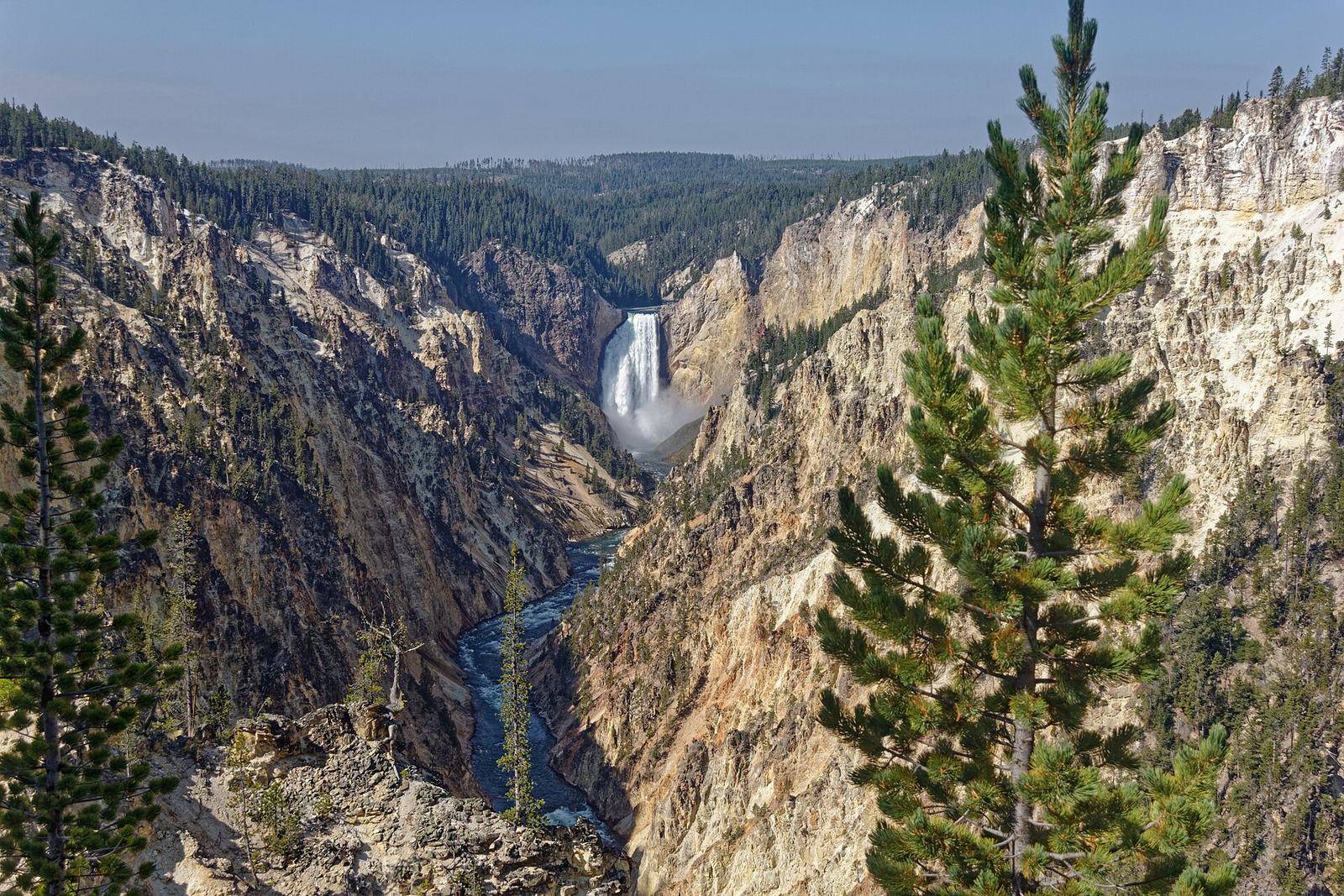
| The view from Artist Point, the anchor of the canyon day in every itinerary below (top of page) | Dirtsc, CC BY-SA 3.0, via Wikimedia Commons |
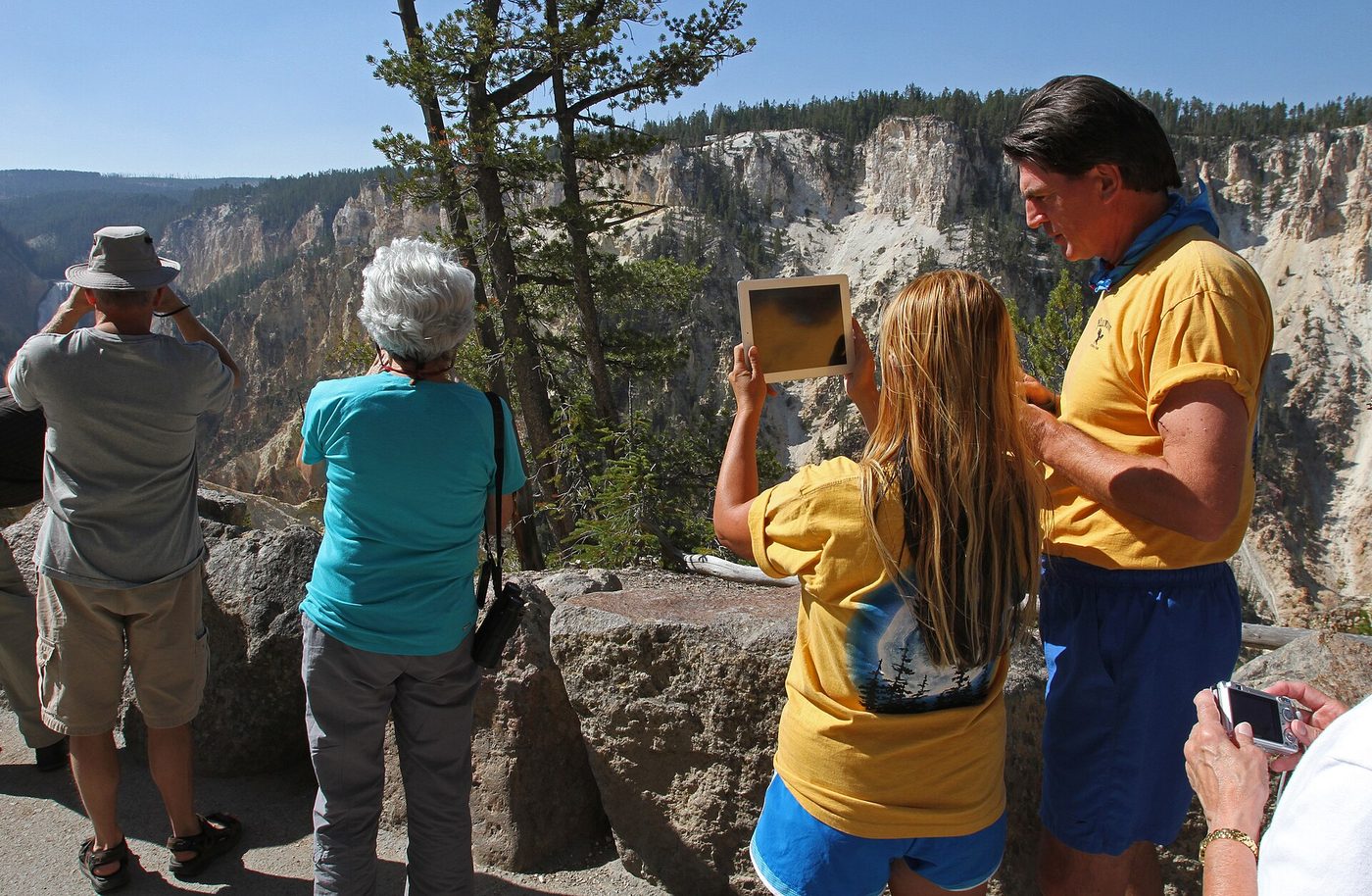
| Canyon overlooks fill by mid-morning; arrive by 8 a.m | Yellowstone National Park from Yellowstone NP, USA, public domain, via Wikimedia Commons |
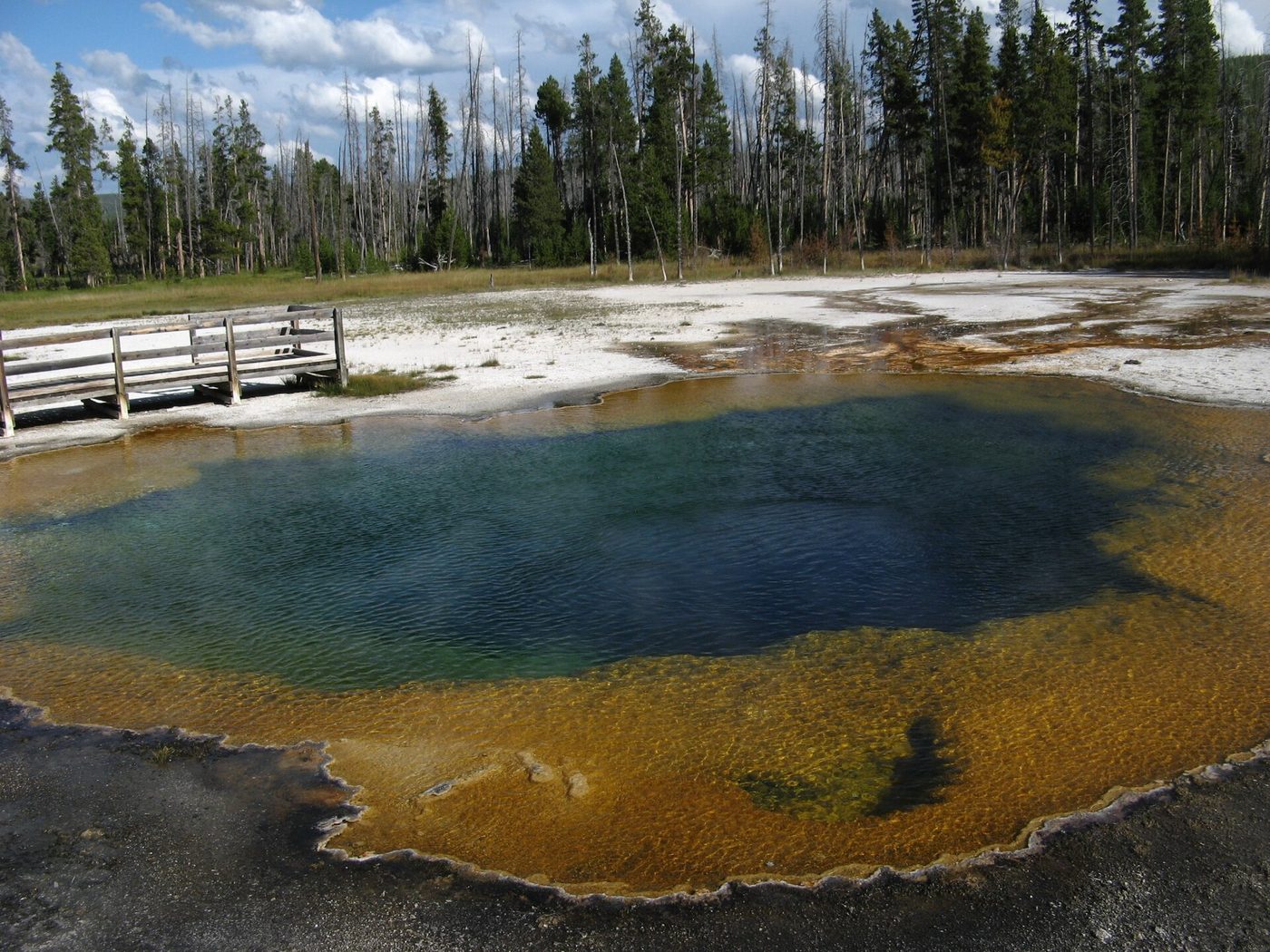
| Sunset Lake in Black Sand Basin, a quick stop on the geyser-basin day | hakkun, CC BY-SA 3.0, via Wikimedia Commons |
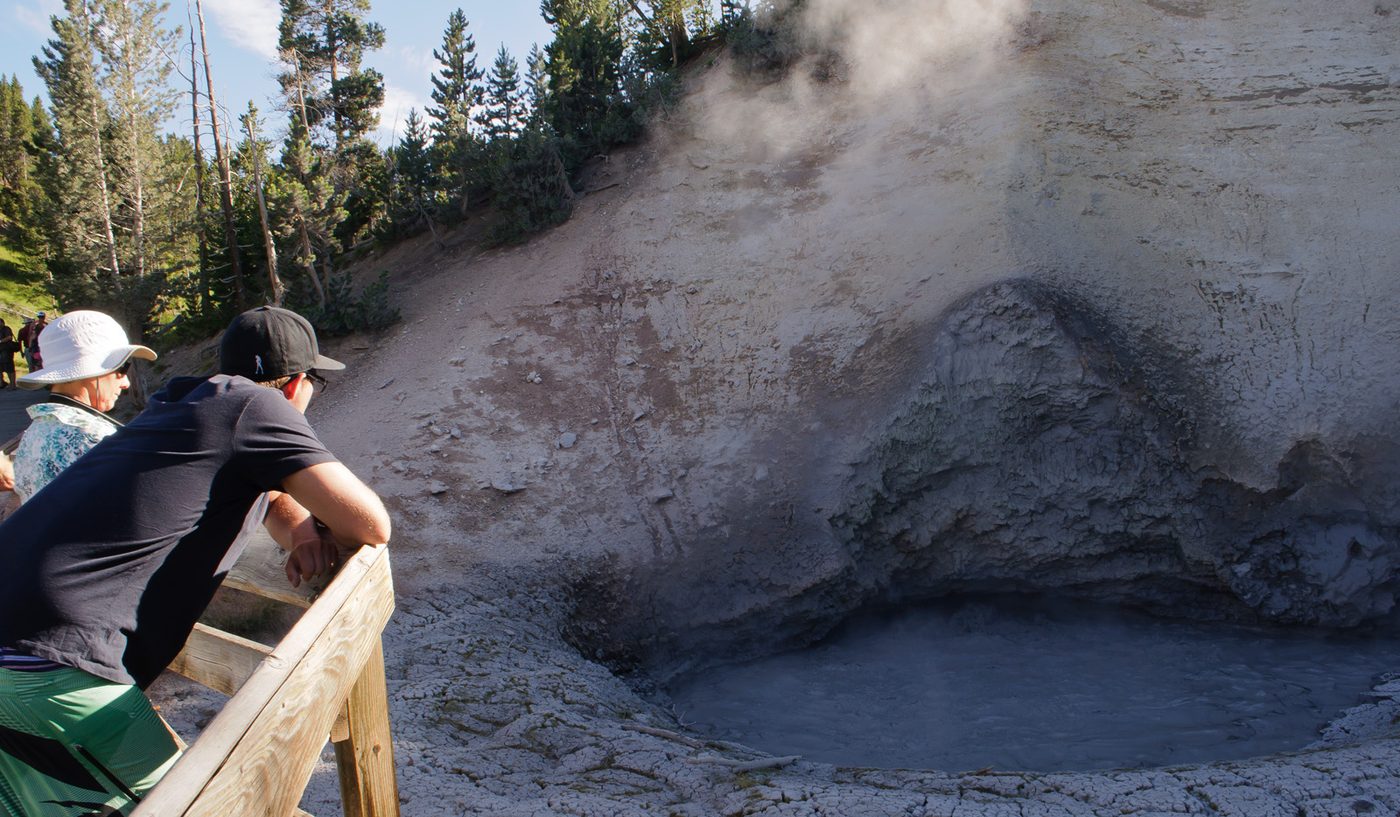
| The Mud Volcano area, about six miles north of Fishing Bridge on the lake-to-canyon drive | InSapphoWeTrust from Los Angeles, California, USA, CC BY-SA 2.0, via Wikimedia Commons |
| The Fountain Paint Pot area in the Lower Geyser Basin, a half-mile loop off the Grand Loop | Glysiak, CC BY-SA 3.0, via Wikimedia Commons |
| Dunraven Pass in July; the road closes for the season on October 12, 2026 | Yellowstone National Park from Yellowstone NP, USA, public domain, via Wikimedia Commons |
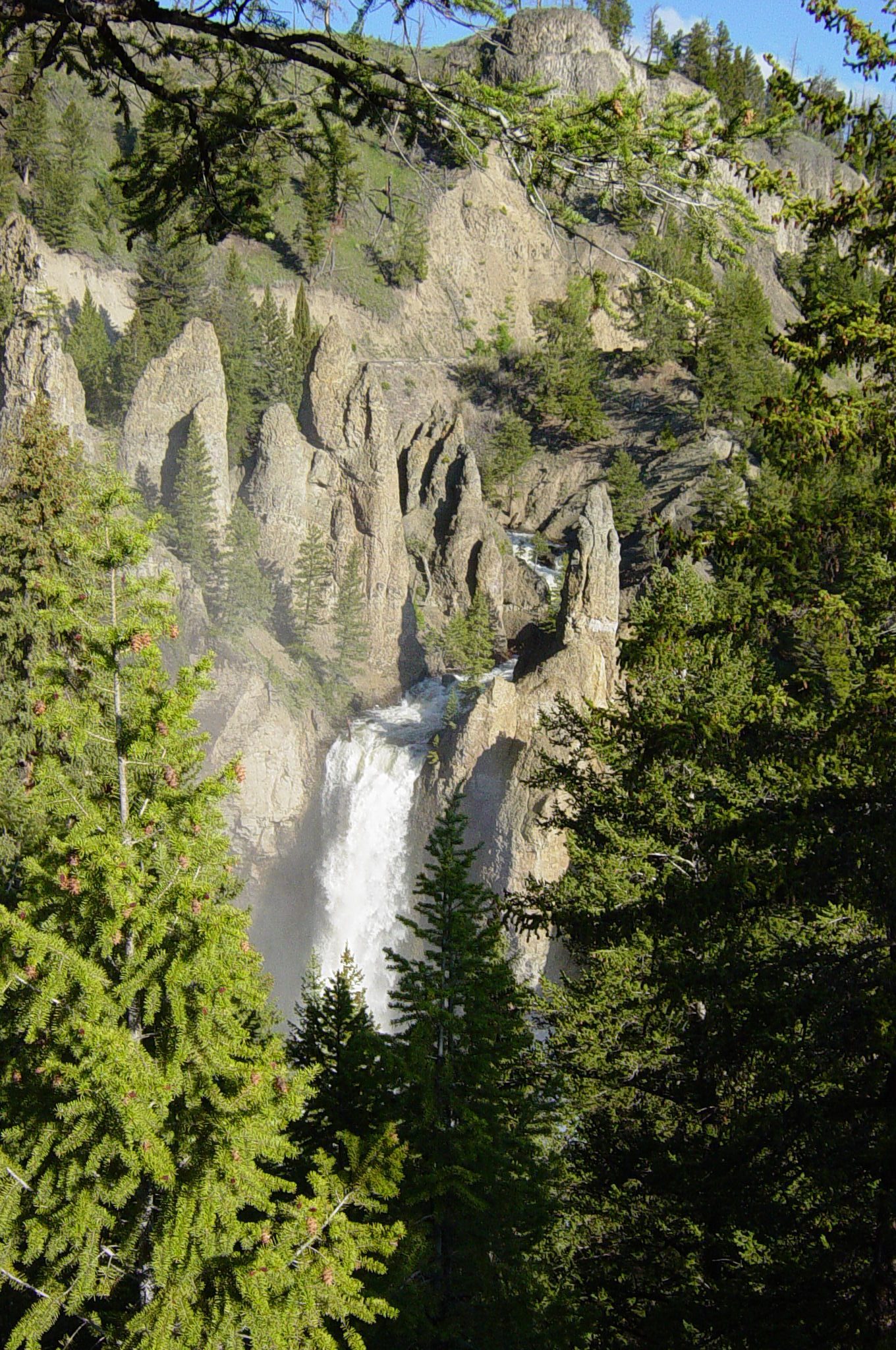
| Tower Fall from the overlook, a quick stop between Tower Junction and Dunraven Pass | Daniel Mayer, CC BY-SA 3.0, via Wikimedia Commons |
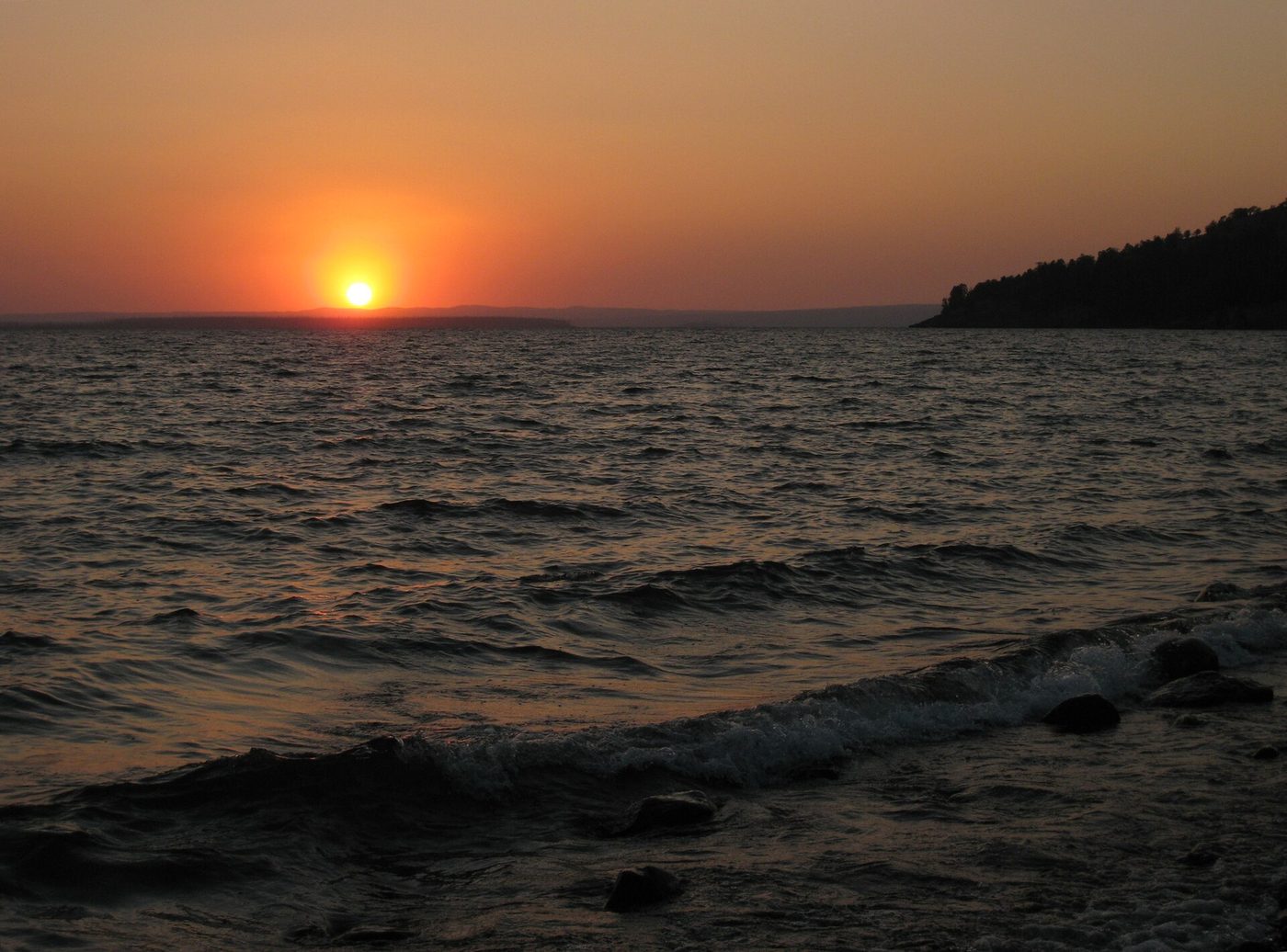
| Sunset over the Southeast Arm of Yellowstone Lake on a smoky August evening | Yellowstone National Park from Yellowstone NP, USA, public domain, via Wikimedia Commons |