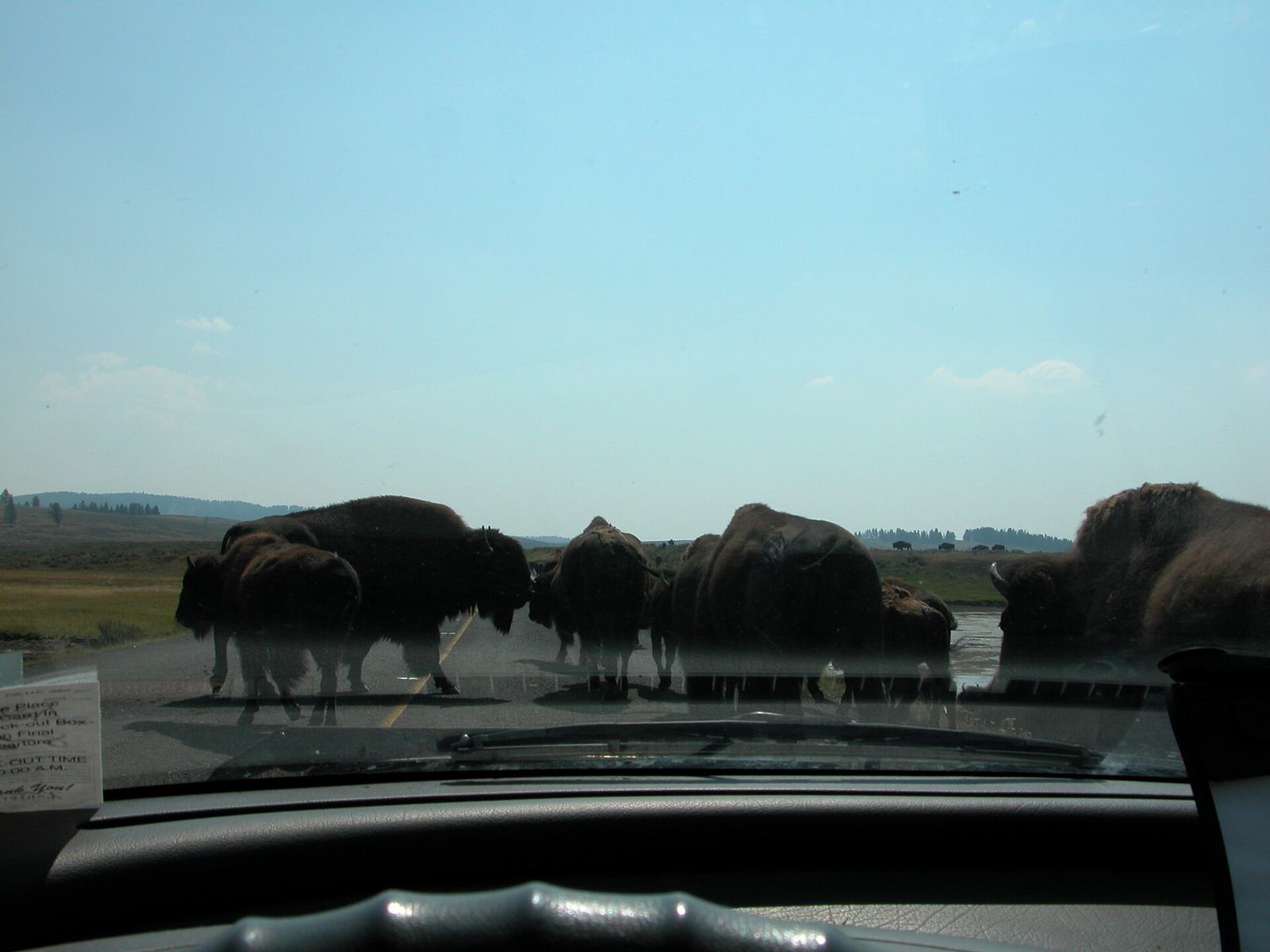
Yellowstone is a safe park for people who follow a short list of rules, and a genuinely dangerous one for people who don’t. Yellowstone safety comes down to four things: keep 25 yards from bison and elk and 100 yards from bears and wolves, stay on the boardwalks, drive like there’s a bison around the next bend, and respect the altitude and weather.
That’s the honest summary. Nearly five million people visit every year, and almost all of them go home with nothing worse than a sunburn and a camera full of bison pictures. The injuries that do make the news tend to follow the same few patterns, again and again: someone walks up to a bison for a photo, someone steps off a boardwalk, someone hikes alone in grizzly country without bear spray. None of these are freak accidents. They’re predictable, which means they’re avoidable.
This hub covers what actually hurts people in Yellowstone, in rough order of how likely it is to affect you, plus the park regulations visitors break most often, some without realizing they’re rules at all. Every number here comes from the National Park Service, checked September 2026. If you’re still at the early stage of building a trip, start with our guide to planning a trip to Yellowstone and come back here before you go.
Is Yellowstone dangerous?
Not for most visitors. Serious injuries are rare for the number of people who come, and they mostly follow a few avoidable patterns: approaching wildlife, leaving boardwalks in thermal areas, car crashes, and hiking unprepared in bear country. Follow the distance rules, stay on marked paths and carry bear spray on trails.
It helps to put the risk in the right order, because the things people worry about most aren’t the things most likely to hurt them. The supervolcano gets the documentaries. Grizzlies get the campfire stories. But the NPS is blunt that traffic accidents are the most common cause of injury and death in the park. After that come the hazards that are unique to Yellowstone: thermal features and large animals. Then weather, cold water, falls and altitude, the same things that hurt people in any mountain park.
Here’s how we’d rank the realistic risks for an ordinary summer visitor who mostly drives the Grand Loop and does a few short hikes:
- Driving. Wildlife on the road, distracted drivers staring at elk, people stopping in the lane, long days behind the wheel, and roads with no shoulder.
- Wildlife encounters you create. Bison and elk injure people who get too close, usually for a photo.
- Thermal areas. Scalding water under a thin crust, just off the boardwalk.
- Weather and exposure. Afternoon lightning, sudden cold, dehydration at altitude.
- Bears on trails. Uncommon, serious, and mostly preventable with group size, noise and spray.
- Cold, fast water. Rivers and lakes that are far colder than they look.
The volcano doesn’t make the list, and we explain why further down.
The safety numbers every visitor should know
Most of Yellowstone’s safety advice fits in a table. These are the figures from the NPS safety page and park regulations (checked September 2026). Screenshot this before you lose cell service, which you will.
| Rule or fact | The number | Why it matters |
|---|---|---|
| Distance from bears and wolves | At least 100 yards (91 m) | About the length of a football field |
| Distance from bison, elk and all other animals | At least 25 yards (23 m) | Roughly two bus lengths |
| Bear spray effective range | 30 to 60 feet | Spray when a charging bear is inside this range |
| Bear spray heat limit | Can explode at 120°F | Never leave it on the dashboard |
| Bear injuries by group size (since 1970) | 91% were alone or in pairs | Groups of 3+ accounted for only 9% |
| Deaths from hot springs | More than 20 people | Most had left boardwalks or marked paths |
| Park speed limit | 45 mph unless posted | Lower in developed areas and construction zones |
| Elevation | Most of the park is above 1 mile | Altitude sickness and faster dehydration |
| Hypothermia danger zone | 30 to 50°F | Wet, windy, “not that cold” days are the risky ones |
| Pets | Within 100 feet of roads and parking, 6-foot leash max | Not on trails or boardwalks |
| Emergency | Call 911 or notify a ranger | Cell coverage is patchy outside developed areas |
A few of those deserve more than a line in a table, so the sections below take them one at a time.
How close can you get to wildlife in Yellowstone?
You must stay at least 100 yards (91 m) from bears and wolves, and at least 25 yards (23 m) from every other animal, including bison, elk, moose, deer, bighorn sheep and coyotes. If an animal moves toward you, you’re the one who has to back away and keep that distance.
That last part catches people out. The regulation isn’t “don’t walk toward animals.” It’s that you can’t willfully remain near an animal or approach it within any distance that disturbs or displaces it. If a bison wanders toward the boardwalk you’re standing on, the law, and common sense, expect you to retreat.
Bison: the animal that injures the most people
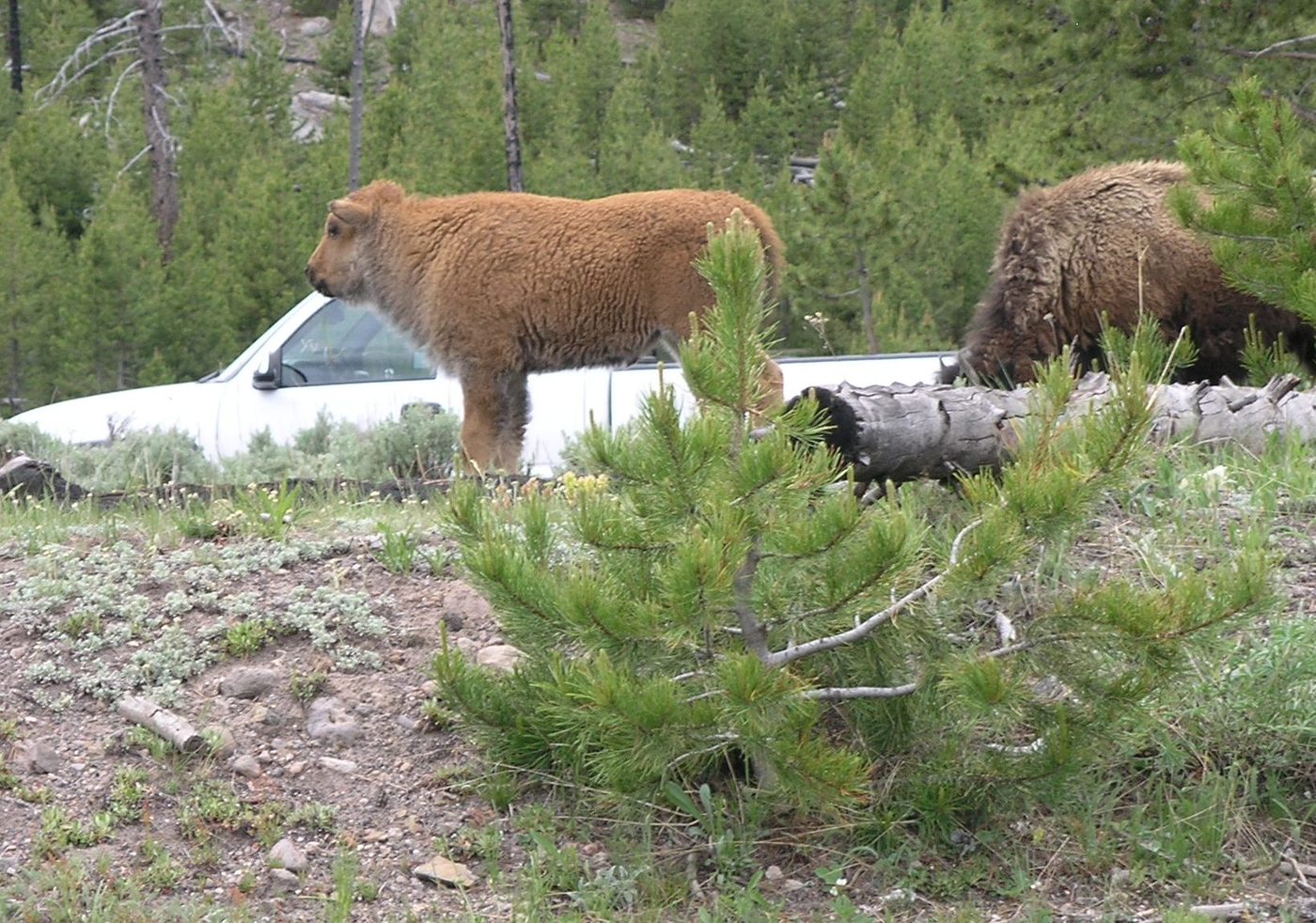
Bison look slow and placid, like large cattle grazing beside the road. They aren’t cattle. According to the NPS, a bison can run three times faster than a person, and they are unpredictable, especially during the summer rut (July and August) and when cows have young calves in spring. A bison that raises its tail, paws the ground, snorts or turns to face you is telling you to leave. By the time most people read those signals, they’re already too close.
Almost every bison injury follows the same script: a visitor walks toward an animal to get a better photo or a selfie, the animal charges, and the visitor is gored or tossed. Many of these happen in developed areas: around Old Faithful, on the boardwalks, near parking lots, where people feel safe because they’re surrounded by other tourists. We cover specific incidents, and what they have in common, in our article on Yellowstone bison attacks.
A useful rule of thumb: hold your arm out straight and give the animal a thumbs-up. If your thumb doesn’t completely cover the animal, you’re probably too close. It’s not a legal measurement, but it errs on the right side.
Elk: most dangerous in fall and spring
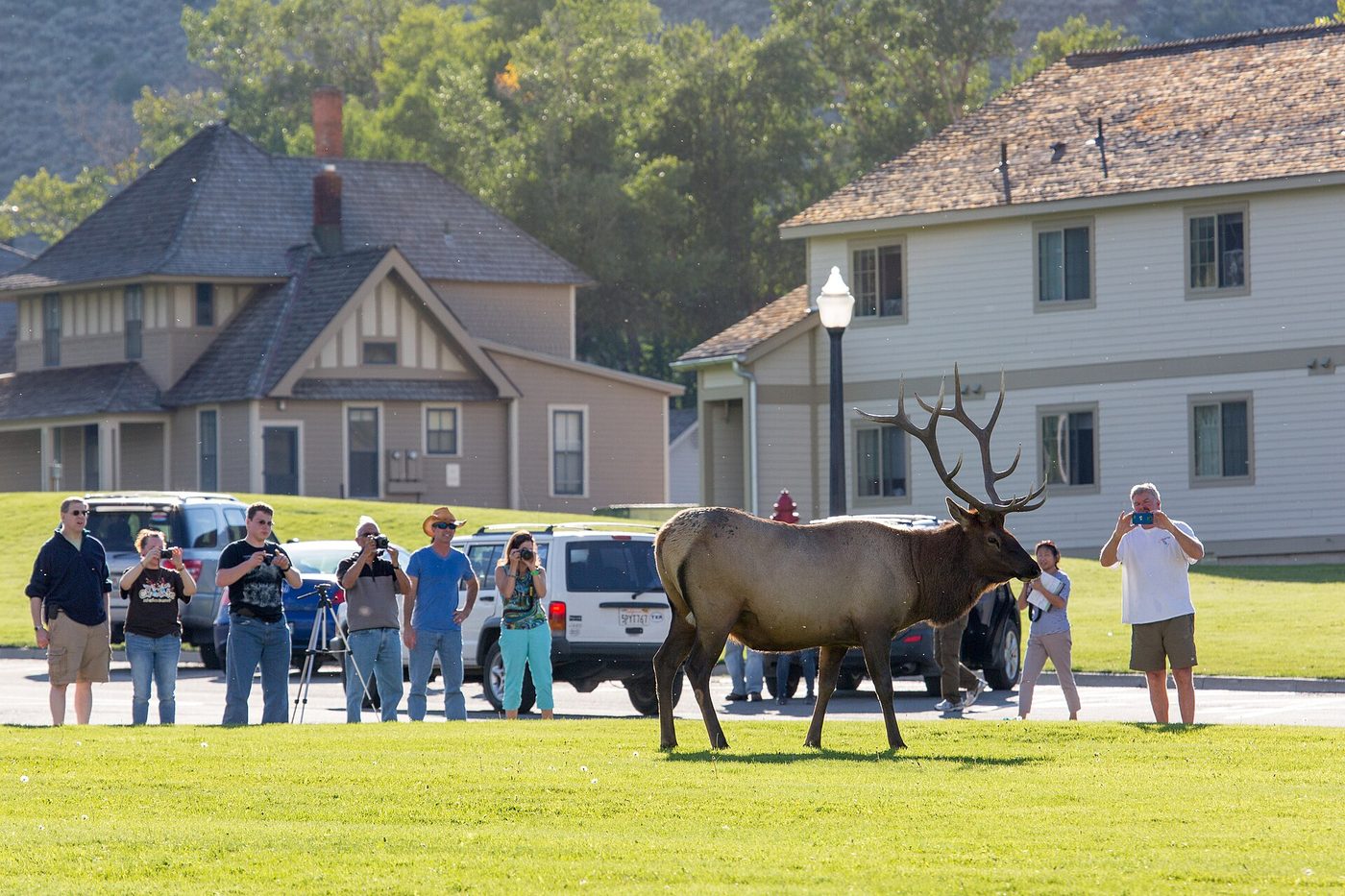
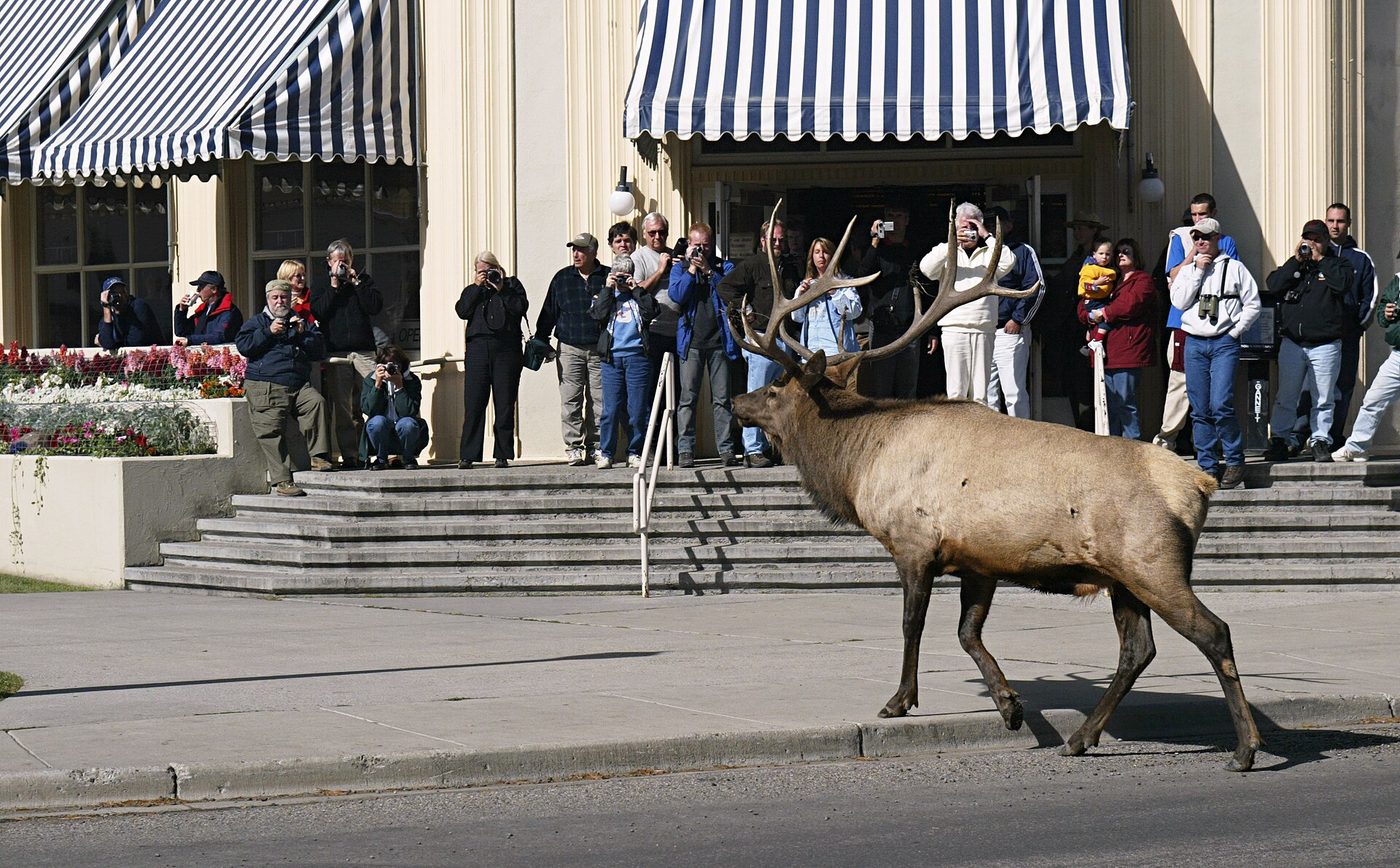
Elk spend a lot of time on the lawns of Mammoth Hot Springs, which makes them look tame. In September and October, bull elk in the rut become aggressive, charge people and cars, and gore anything that looks like a rival. In May and June, cow elk protecting newborn calves can be just as dangerous, and they’ll kick and chase people who walk too close to a calf hidden in the grass. At Mammoth, rangers often station themselves between the elk and the crowd during the rut. Give them a wide berth and use your car as a shield if a bull starts moving toward you.
Wolves, coyotes and the rest
Wolves rarely approach people, but coyotes and foxes that have been fed learn to beg along roadsides, and that almost always ends with the animal being killed. Some small mammals, including bats, foxes and skunks, can carry rabies. Never feed any animal, never leave food out, and never try to touch one, however cute. For where and when to see Yellowstone’s animals, go to our Yellowstone wildlife guide. For the full set of distance rules and what to do in a wildlife jam, see Yellowstone wildlife safety.
Bear safety on trails and in camp
Yellowstone has both grizzly and black bears, and the most likely place to meet one is on a trail. The NPS statistic that matters most is about group size: since 1970, 91% of people injured by bears in the park were hiking alone or with one other person. Only 9% were in groups of three or more. That’s the single most useful thing to know about bears.
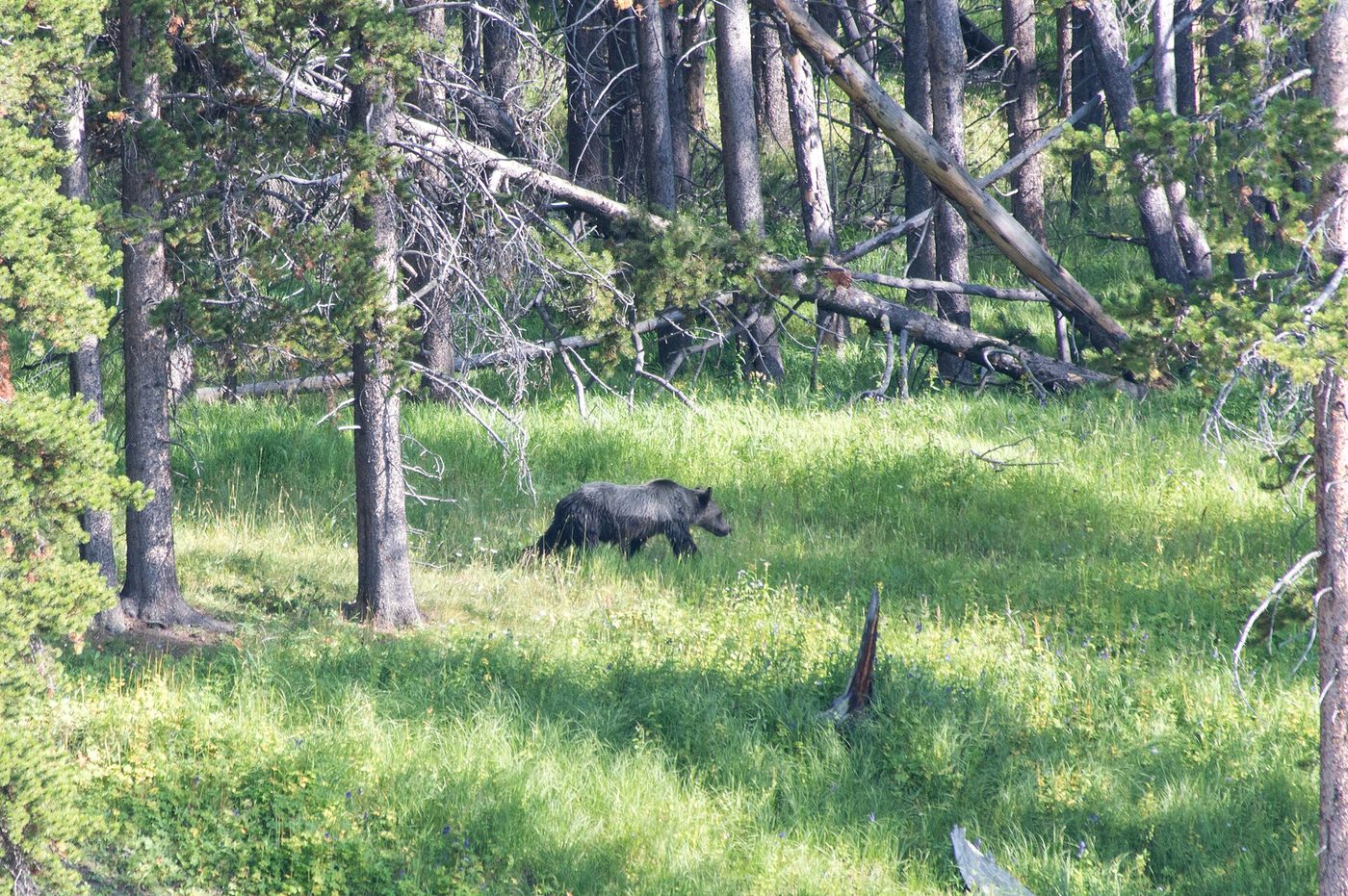
The basics for day hikers:
- Hike in a group of three or more when you can, and stay together.
- Make noise, especially near streams, in thick brush, around blind corners and in wind. Talk, clap and call out “hey bear.”
- Carry bear spray where you can reach it in a second or two, on a hip belt or chest strap, not inside your pack.
- Don’t run from a bear. Running can trigger a chase, and you can’t outrun one.
- Avoid hiking at dawn, dusk and night, when bears are most active.
- Leave any area with a carcass or with scavenging birds circling.
- Respect closures. Some areas close seasonally for bear management; a closed trail is closed for a reason.
Bear bells are the one piece of popular gear we’d skip. They’re quiet, they don’t carry around corners or over running water, and they give people a false sense of security. Your voice works better. For encounters, surprise charges and the difference between how you respond to a defensive and a predatory attack, read our full guide to Yellowstone bear safety.
Bear spray: carry it, and know how to use it
Bear spray works. It’s a large canister of capsaicin that fires a cloud about 30 to 60 feet, and it’s more effective at stopping a charging bear than any other option available to hikers. It’s legal in the park and sold or rented at stores in and around Yellowstone.
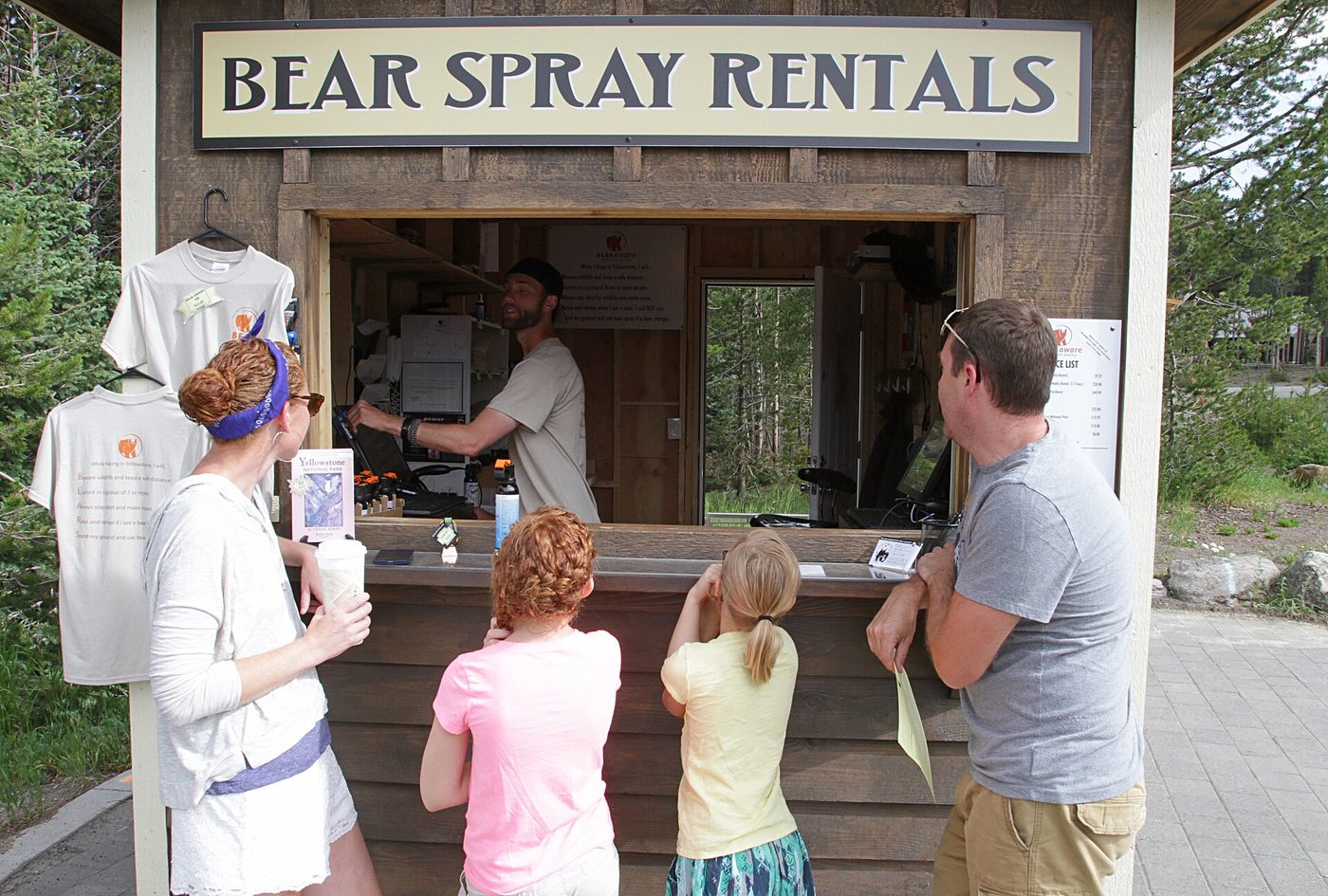
Three practical points most guides don’t mention:
- You can’t fly with it. Bear spray isn’t allowed in carry-on or checked airline baggage, so if you’re flying into Bozeman or Jackson, buy or rent it when you land. Rental kiosks in the park charge from about $16 for one or two days (checked September 2026), which is cheaper than buying a new can for a short trip.
- Heat ruins it. The canister can explode at 120°F, and a car parked in the sun gets hotter than that. Keep it on the floor out of direct sun, and never on the dashboard.
- Practice the draw. Take the safety clip off and on a few times at the trailhead. If you have to think about how it works while a bear is running at you, you’ve lost the time you needed.
Our full guide to bear spray in Yellowstone covers where to buy or rent it, how to return rentals and how to fire it into wind.
Food storage in campgrounds
In campgrounds, all food, coolers, cooking gear, toiletries and anything with a scent must be stored in a hard-sided vehicle or a bear box when you’re not using it. That includes the dog bowl and the trash. A clean camp protects you and the bear, because a bear that gets human food once usually keeps coming back until it has to be removed. Campground details live in our camping in Yellowstone hub.
Why do you have to stay on the boardwalks in Yellowstone?
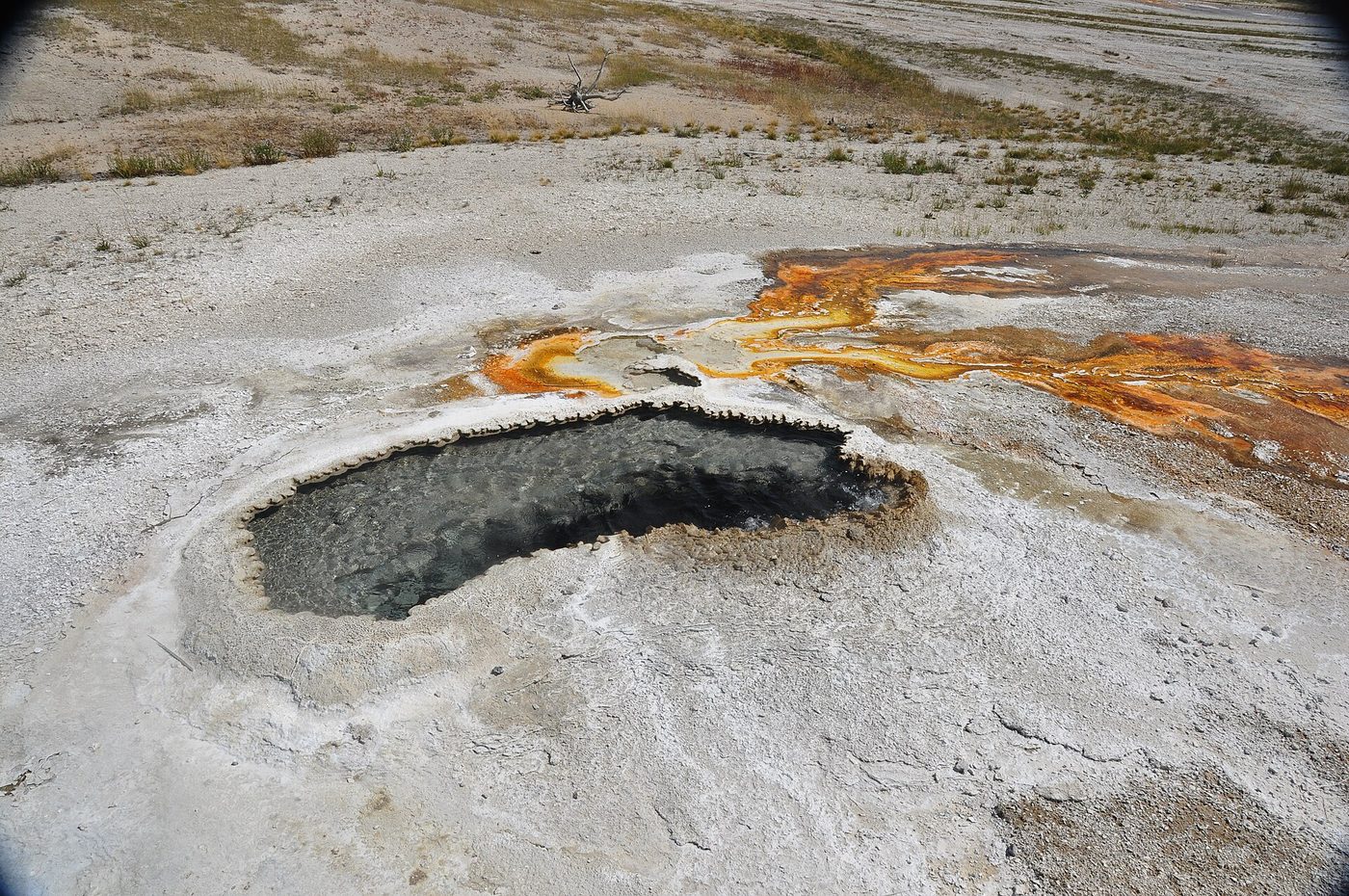
Because the ground in thermal areas can be a thin crust over boiling, acidic water. More than 20 people have died from burns after entering or falling into Yellowstone’s hot springs, and the ground that looks solid is often hollow. Boardwalks and marked trails are the only places that have been judged safe to stand.
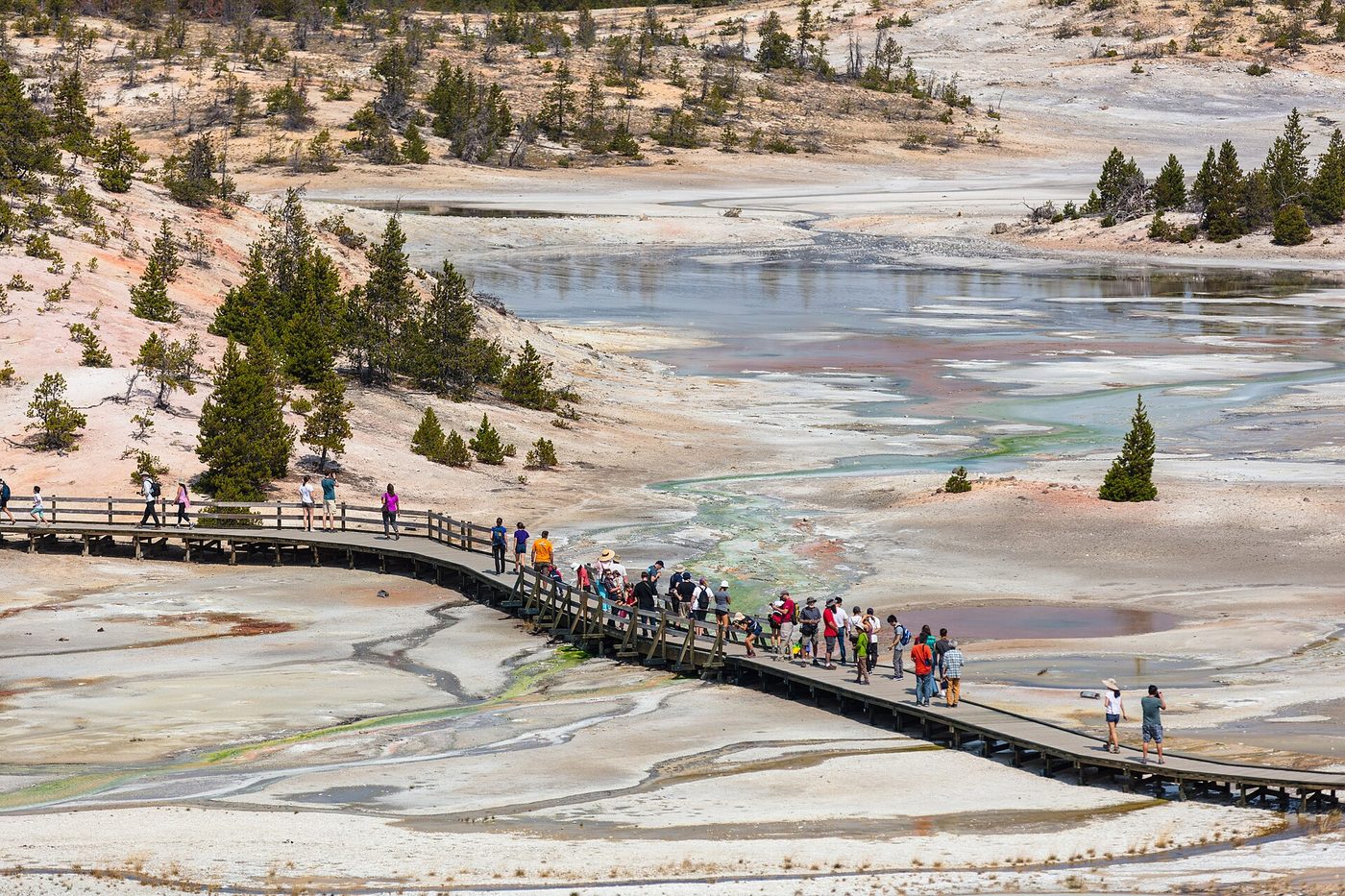
This is the rule people underestimate most, and it’s the one where a mistake is most likely to be fatal. The water in Yellowstone’s hot springs is often at or above boiling point for the altitude, and some features are strongly acidic; at Norris, Echinus Geyser’s water has a pH around 3.5. A burn from that water isn’t a scald you walk off. It’s a deep, full-body injury that can kill hours or days later, and many of the people hurt were close to help when it happened.
What to do in any geyser basin:
- Stay on the boardwalk or marked trail at all times, including to retrieve a dropped hat, phone or lens cap. Let it go, or ask a ranger.
- Hold children’s hands and keep strollers under control. Boardwalks at places like Norris and Grand Prismatic often have no railings.
- Never touch the water in a hot spring, runoff channel or pool, even if it looks cool.
- Don’t throw anything into a feature. Coins and trash have ruined springs, and it’s prohibited.
- Leave pets in the car or at the lodging; they’re not allowed on boardwalks.
- Watch for steam on cold mornings, when visibility on the boardwalks can drop to a few feet.
The ground itself is changing. In July 2024, a hydrothermal explosion at Biscuit Basin sent rock and debris over the boardwalk, and the parking lot and boardwalk there were still closed as of September 2026. These explosions are rare and localized, but they’re a good reminder that the thermal areas are active, not a museum. Everything else about hot springs, crusts and scalding injuries is in our guide to Yellowstone thermal safety. All swimming and soaking questions, including where you legally can and can’t get in the water, belong to our fishing and water guide.
Driving: the hazard that hurts the most people
The NPS says traffic accidents are the most common cause of injury and death in the park, and after a day on the Grand Loop you’ll understand why. The roads are narrow and winding, most have little or no shoulder, and they carry a mix of RVs, rental cars, motorcycles, cyclists, tour buses and 2,000-pound animals.
The speed limit is 45 mph unless posted otherwise, and lower in many places. The limit isn’t the target. At dusk, in fog or anywhere near a meadow, 35 is often too fast to stop for a bison standing in the lane.
The situations that cause crashes in Yellowstone:
- Wildlife jams. Someone spots a bear, stops in the middle of the road and jumps out. The car behind doesn’t see it in time. Pull completely off the road into a pullout, or keep driving.
- Animals on the road at night. Dark bison on dark asphalt are nearly invisible until your headlights are on them. We’d avoid driving the park after dark when you can.
- Distracted drivers. The scenery is the distraction. If you’re the driver, let the passengers do the looking.
- Fatigue. Distances look short on a map, but the Grand Loop is about 142 miles of slow driving. Plan around real driving times, not map mileage.
- Construction delays. Bridge work and chip sealing mean waits, and waits breed impatient passing. The Gardner River High Bridge near Mammoth was down to one lane in 2026, with no vehicles 8’6″ or wider allowed.
- Snow and ice at any time from September to June at higher elevations.
Seasonal road openings, closures and live construction status belong to our Yellowstone road closures page, so check it before your trip rather than relying on dates you read elsewhere.
Weather, altitude, fire and cold water: the quiet risks
Yellowstone’s weather is the kind of hazard that doesn’t make headlines but ruins a lot of days. NPS advice is to expect rain or snow in any month, and it means it: snow in July is unusual but not rare at higher elevations.
Altitude
Most of Yellowstone lies more than a mile above sea level. Yellowstone Lake sits at about 7,733 feet, the Mount Washburn summit is 10,243 feet, and the highest point in the park, Eagle Peak, reaches 11,358 feet. Even the lowest point, near Reese Creek on the northern boundary, is about 5,282 feet. If you’ve flown in from sea level, you may notice headaches, shortness of breath, trouble sleeping, nausea or dizziness for the first day or two.
The fixes are simple: drink more water than you think you need, go easy on alcohol the first night, and save the big climbs like Mount Washburn for your second or third day. If you have heart or lung conditions, talk to your doctor before the trip, and note that the NPS specifically doesn’t recommend some steep canyon trails for people with those conditions. More detail, including the elevation of every major area, is in our guide to Yellowstone elevation.
Lightning and afternoon storms
Summer afternoons in Yellowstone often build to thunderstorms. The pattern is familiar in the Rockies: clear morning, clouds building by noon, lightning by 2 or 3 p.m. Exposed places are the problem: Mount Washburn’s summit, open ridges, boats on Yellowstone Lake, and the wide-open valleys where you’re the tallest thing around.
Start big hikes early and aim to be off summits and ridges by early afternoon. If you hear thunder, you’re close enough to be struck, so head down and away from open ground, and get off the water. A hard-topped car is a good shelter. A picnic shelter or tree isn’t. See Yellowstone thunderstorms for the full picture.
Hypothermia and sudden cold
The NPS flags 30 to 50°F as the danger range for hypothermia, which surprises people. It’s not the subzero days that catch visitors out, because everyone dresses for those. It’s the 45-degree afternoon with rain and wind, when you’re in cotton, wet and tired from a hike. Pack a warm layer and a rain shell every day, in every month, even if the morning is sunny. Nights in summer regularly drop into the 30s and 40s°F.
Sun, dehydration and bugs
At altitude, UV is stronger and dry air dehydrates you faster. Wear sunscreen and a hat on the boardwalks, where there’s no shade and the white sinter reflects sunlight. Ticks are active from mid-March to mid-July, mostly at lower elevations in the north of the park, so check yourself after hikes. Mosquitoes peak in June and July and fade by mid-to-late August.
Wildfire and smoke
Fire is a natural part of Yellowstone’s forests, and in most summers something is burning somewhere in or near the park. Most fires are small and far from roads. Some are allowed to burn when they pose no threat to people or buildings, because fire renews lodgepole pine forests. The fires of 1988 burned about 36% of the park, and the regrowth you’ll see today is one of the most striking sights in Yellowstone.
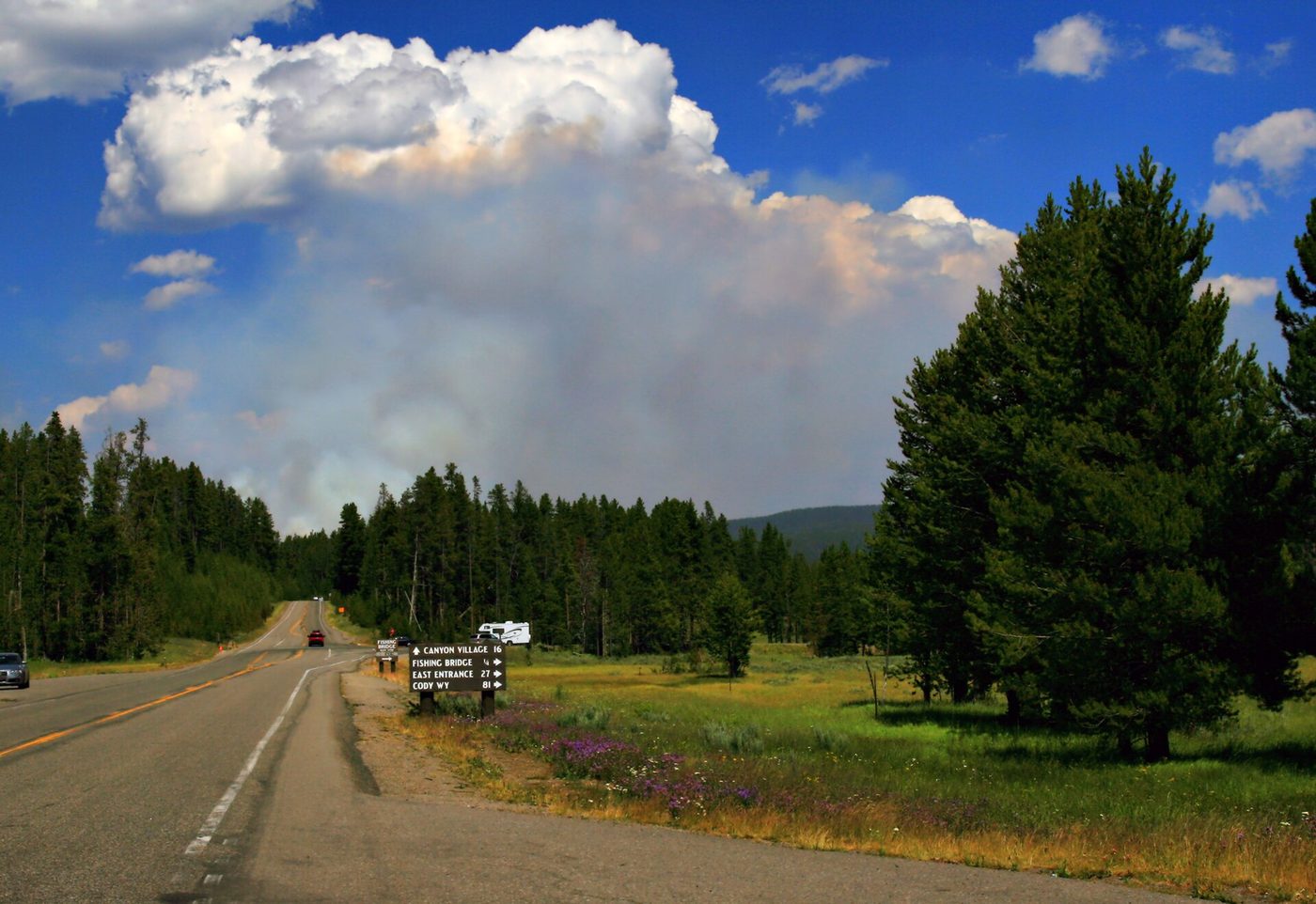
For visitors, fire usually means three things: smoke that hazes the views and irritates lungs, occasional road or trail closures, and fire restrictions. The fire danger level was rated high at the end of August 2026. When restrictions are in effect, campfires may be limited or banned outside designated grills, and smoking can be restricted too. Smoking is already prohibited in geyser basins and on trails at all times.
If you have asthma or a heart or lung condition, check air quality on smoky days and keep strenuous plans flexible. How fire season works, how to find current fires and what to do if one affects your route are covered in our Yellowstone wildfire guide.
Cold water, rivers and drowning
Yellowstone’s rivers and lakes are cold enough to be dangerous even in August. Yellowstone Lake is a high-elevation lake fed by snowmelt, and falling in can cause cold shock and hypothermia fast. Rivers like the Yellowstone, Firehole and Gardner run fast, with slick rocks and undercut banks, especially in May and June when snowmelt peaks.
The practical advice: keep kids well back from riverbanks, never climb on rocks at the edge of waterfalls or canyon rims, wear a life jacket on any boat, and get off the lake when afternoon wind or storms come up. Swimming spots, closures and soaking rules (several popular swimming spots were closed in 2026) belong to one page on this site, so go to our fishing and water guide for the details.
Should you worry about the Yellowstone supervolcano?
No, not for trip planning. The U.S. Geological Survey watches Yellowstone continuously through the Yellowstone Volcano Observatory, and it puts the annual chance of another large caldera-forming eruption at about 1 in 730,000. Small hydrothermal explosions in thermal areas are a far more realistic hazard, and the boardwalk rules cover them.
Earthquake swarms happen regularly and are almost never felt by visitors. Ground uplift and subsidence are normal for a caldera. If you’re curious about how the system works and why scientists aren’t worried, our Yellowstone supervolcano hub explains the geology without the sensationalism.
Park rules visitors actually break
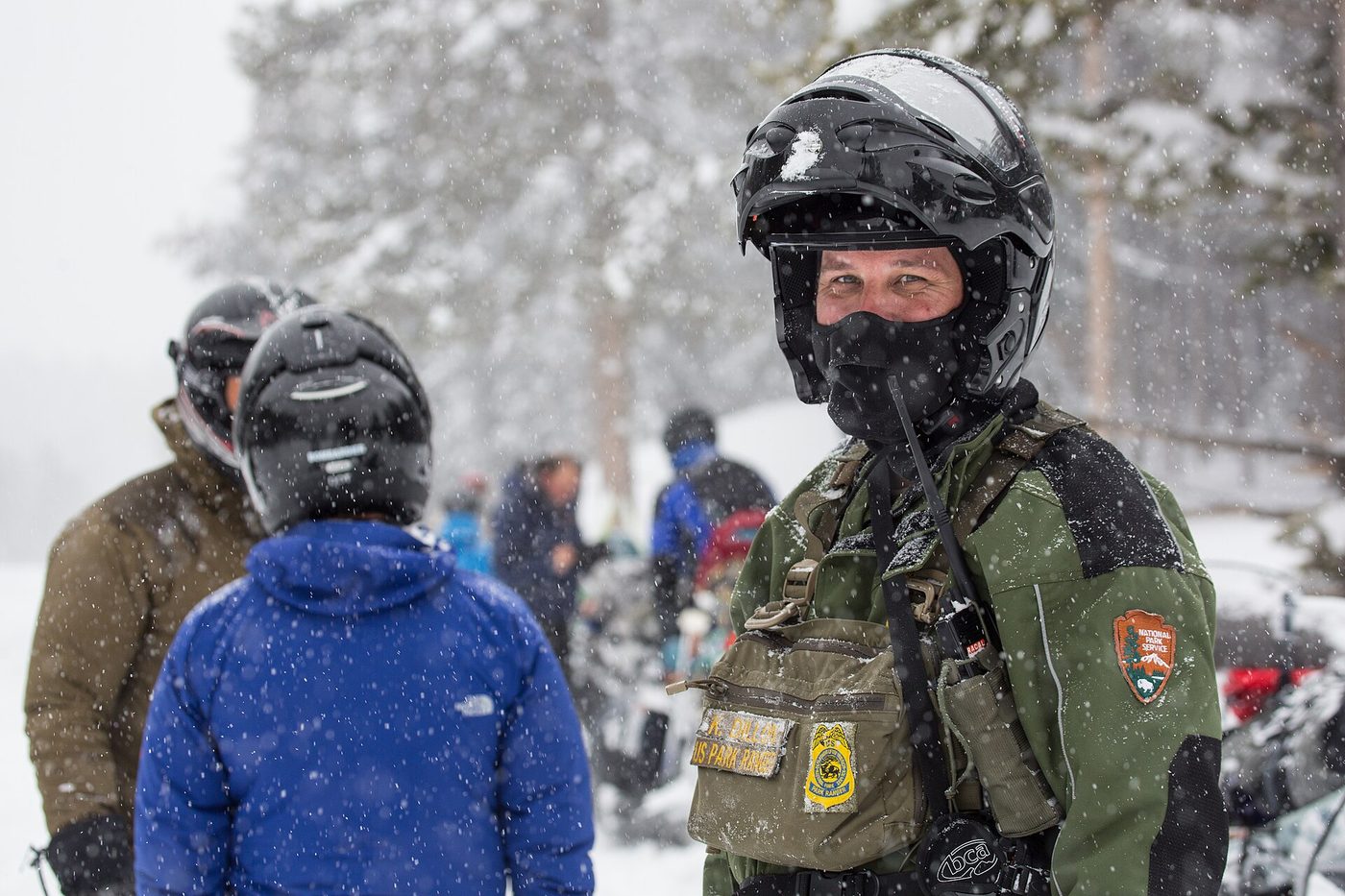
Most people who break Yellowstone’s rules aren’t trying to. They fly a drone because they didn’t know it was banned, they pocket a pretty rock, or they doze off in the car at a pullout. Rangers do write citations for all of these, and violating park regulations is a federal misdemeanor that can carry a fine and up to six months in jail. Here are the rules that trip up visitors most (checked against the NPS laws and policies page, September 2026).
| Rule | What it means in practice |
|---|---|
| No drones | Launching, landing or operating a drone anywhere on park lands or waters is prohibited |
| No collecting | Leave rocks, antlers, wildflowers, bones and arrowheads where you find them |
| No feeding wildlife | Includes leaving food out where animals can reach it |
| No approaching wildlife | 100 yards from bears and wolves, 25 yards from everything else |
| Stay on boardwalks in thermal areas | No throwing objects into features, no swimming in hot springs |
| No camping outside designated sites | No sleeping in cars at pullouts, trailheads or parking lots |
| No off-road driving or biking | Vehicles and bikes stay on roads and designated routes |
| No spotlighting | Don’t use lights to look for wildlife at night |
| No smoking in thermal areas or on trails | Also not within 25 feet of building entrances |
| Pets restricted | Within 100 feet of roads and parking areas, 6-foot leash, never on trails or boardwalks |
Can you fly a drone in Yellowstone?
No. Operating drones is prohibited throughout the park, and that includes launching from a pullout, from a boat on the lake or from a hotel parking lot. The ban protects wildlife, which can be stressed or displaced by drones, and it protects other visitors’ experience. Fines are real, and rangers do respond to reports. If you want aerial shots, fly legally on land outside the park where local and federal rules allow it. More detail in our guide to flying a drone in Yellowstone.
Can you sleep in your car in Yellowstone?
Only in a campground site you’ve reserved or registered for. Sleeping in a car, van or RV at a pullout, trailhead, picnic area or lodge parking lot counts as camping outside a designated area. Rangers patrol overnight, especially in summer. If you’re stuck without a site, the national forests outside several entrances have legal dispersed camping. We explain the options in can you sleep in your car in Yellowstone.
Firearms
People who can legally possess firearms under federal, state and local law may possess them in Yellowstone. But firing a gun is prohibited, and firearms aren’t allowed in federal facilities such as visitor centers and ranger stations, where signs are posted. Honestly, for the vast majority of visitors a gun is not a useful bear defense. Bear spray is easier to use accurately under stress and doesn’t require you to hit a moving target.
The complete list, including fishing regulations, boating permits, food storage and the Superintendent’s Compendium, is in our guide to Yellowstone rules and regulations.
Can you bring your dog to Yellowstone?
Yes, but with tight limits. Pets must stay within 100 feet of roads, parking areas and campgrounds, on a leash no longer than 6 feet. They’re not allowed on trails, boardwalks, in thermal areas or in the backcountry, and there are no kennels in the park. Service animals follow separate rules.
In practice, that means a dog can come on a driving trip and stretch its legs at pullouts and campsites, but it can’t see Old Faithful from the boardwalk or come on any hike. You can’t leave a pet unattended or tied to an object, and a car in summer sun gets dangerously hot even with the windows cracked. Thermal areas are especially dangerous for dogs, which have died jumping into hot springs.
Our verdict: if you’re coming to hike or walk the geyser basins, Yellowstone is not a good trip for your dog. Consider a boarding kennel in a gateway town, or pet-friendly lodging and trails outside the park. We cover the rules in are dogs allowed in Yellowstone, and the best alternatives in dog-friendly hikes near Yellowstone.
Hiking and backcountry safety
Day hiking doesn’t need a permit, and most popular trails are well-marked and busy in summer. Still, conditions change fast once you’re a mile from the road. Snow can linger on many trails until late May or early June, and on high passes until late July. Trail markers can be hard to see in snow or burned areas, and streams run high and cold in early summer.
Before any hike longer than a boardwalk loop:
- Tell someone your route and when you’ll be back.
- Carry the essentials: water and a way to treat more, food, a warm layer, a rain shell, a map, a headlamp, a basic first-aid kit and bear spray.
- Treat all surface water. Streams can carry Giardia and other parasites, however clean they look.
- Check trail status at a visitor center or backcountry office. Bear-management closures and trail damage aren’t always on third-party maps.
- Know your turnaround time. In summer, that’s usually before afternoon storms.
Overnight trips need a backcountry permit. Our best hikes in Yellowstone hub rates the trails by difficulty and season and points out which ones need extra care.
Medical care, cell service and emergencies
In an emergency, call 911 or find a ranger. Rangers are trained emergency responders, and the park has its own ambulances. Getting help to you can still take a long time, because distances in the park are large and roads are slow.
Clinics in the park
Yellowstone has medical clinics for injuries and illnesses that aren’t life-threatening. The Mammoth clinic is open year-round, while the clinics at Lake and Old Faithful operate in summer (hours checked September 2026). They’re useful for altitude sickness, minor injuries, prescriptions and illness. Anything serious goes to a hospital outside the park, often in Cody, Jackson, Bozeman or Livingston, sometimes by air ambulance. Hours, services and what they can and can’t treat are in our guide to the Yellowstone medical clinics.
Cell service
Cell coverage exists around the main developed areas, such as Old Faithful, Canyon, Mammoth, Grant and Lake, and often nowhere in between. Most trails, much of the Grand Loop and valleys like Lamar have no signal. Don’t count on your phone for navigation or emergency calls. Download offline maps before you enter, carry a paper map, and consider a satellite messenger if you’re hiking far from roads.
Travel insurance and pre-existing conditions
If you’re visiting from outside the US, make sure your travel insurance covers emergency evacuation. A helicopter or air ambulance flight from a remote part of the park can cost many thousands of dollars. US visitors should check whether their health plan covers out-of-network emergency transport.
Keeping kids safe in Yellowstone
Children are more at risk in a few specific places: boardwalks without railings, canyon rims and riverbanks, and anywhere wildlife is close to paths. The best approach is to explain the rules before you arrive, not in the moment. Kids who understand why the ground in a geyser basin is dangerous are much easier to keep on the boardwalk.
Our family rules: hands held in every thermal area, no running on boardwalks, a whistle on every child’s jacket for hikes, and a meeting point agreed in busy places like the Old Faithful viewing area. The Junior Ranger program covers safety in an age-appropriate way, and it’s worth doing early in the trip.
Deaths in Yellowstone, in perspective
Deaths in Yellowstone are rare given how many people visit, and most years pass without a death from wildlife. When they happen, the causes are the ones covered above: vehicle crashes, falls, drowning, medical events such as heart attacks at altitude, thermal burns and, much less often, bear attacks. Bison injure more people than bears, but those injuries are rarely fatal.
We write about these incidents factually rather than sensationally, because the pattern is what’s useful to you. Most fatal accidents in the park involved someone doing something the rules or signs specifically warned against. Our article on deaths in Yellowstone breaks them down by cause, with the lessons that come out of each.
A pre-trip Yellowstone safety checklist
Before you go:
- Read the distances: 25 yards from bison and elk, 100 yards from bears and wolves.
- Buy or rent bear spray after you land, not before you fly, and learn how to fire it.
- Pack a rain shell and warm layer for every day, whatever the forecast.
- Download offline maps and save the park’s emergency number, 911.
- Check road status and construction delays the week you travel.
- Leave the drone at home.
- Plan where you’ll sleep each night; pullouts don’t count.
- Decide whether your dog is really coming.
- If you have heart or lung conditions, check with your doctor about altitude.
- Talk to your kids about boardwalks and wildlife before you arrive.
In the park:
- Pull fully off the road to watch wildlife; never stop in the lane.
- Stay on boardwalks and marked trails in thermal areas, always.
- Hike in groups of three or more, make noise, and keep spray within reach.
- Start hikes early and get off summits before afternoon storms.
- Store every scented item in a vehicle or bear box in camp.
- Drink plenty of water and go slow on the first day.
Yellowstone safety isn’t complicated, and none of it should stop you from having a great trip. The park is wild on purpose, and the rules exist so that you can get close to that wildness without getting hurt. For the rest of your trip, from when to go to where to stay, head back to our complete Yellowstone planning guide.
Frequently asked questions
Is Yellowstone safe to visit?
Yes. Millions of people visit every year without incident. Serious injuries are uncommon and usually involve someone approaching wildlife, leaving a boardwalk in a thermal area, driving carelessly, or hiking unprepared in bear country. Following the NPS distance rules and staying on marked paths removes most of the risk.
How far away do you have to stay from bison in Yellowstone?
At least 25 yards (23 m), the same as for elk and every animal other than bears and wolves, which require 100 yards (91 m). If a bison approaches you, you must move away to keep that distance. Bison can run three times faster than people, so don’t test it.
Do I need bear spray in Yellowstone?
If you’re hiking anywhere beyond short boardwalks and paved paths, yes. Bear spray is effective at 30 to 60 feet and is the NPS-recommended deterrent. You can’t fly with it, so buy or rent it near the park. Rentals start around $16 for one or two days (checked September 2026).
What happens if you walk off the boardwalk in Yellowstone?
You risk falling through thin crust into scalding, sometimes acidic water. More than 20 people have died from hot spring burns in the park. Leaving boardwalks in thermal areas is also against park regulations, and rangers issue citations for it.
Can you fly a drone in Yellowstone?
No. Launching, landing or operating a drone is prohibited on all park lands and waters. Violations can lead to a citation and fine.
Is it safe to drive in Yellowstone at night?
It’s legal, since entrances aren’t gated at night when roads are seasonally open, but we don’t recommend it. Bison, elk and deer on the road are hard to see in the dark, and there are few services or cell signals between developed areas. Plan to reach your lodging before dusk.
What should I do in a medical emergency in Yellowstone?
Call 911 or contact a ranger. The park has emergency responders and clinics, including a year-round clinic at Mammoth and summer clinics at Lake and Old Faithful. Serious cases are taken to hospitals outside the park. Remember that cell service is limited outside developed areas.
Is the Yellowstone supervolcano a risk to visitors?
Not in any practical sense. The USGS monitors the volcano continuously and estimates the annual chance of a large caldera-forming eruption at about 1 in 730,000. Small hydrothermal explosions are the more realistic thermal hazard, and staying on boardwalks is the protection.
Sources
- National Park Service: Yellowstone safety, checked September 2026
- National Park Service: Yellowstone laws and policies, checked September 2026
- National Park Service: Yellowstone backcountry safety, checked September 2026
- National Park Service: pets in Yellowstone, checked September 2026
- U.S. Geological Survey: Yellowstone Volcano Observatory, checked September 2026
Image credits
| Photo | Credit |
|---|---|
| Bison on the road are the most common traffic hazard in the park (top of page) | Ildar Sagdejev (Specious), CC BY-SA 4.0, via Wikimedia Commons |
| Too close: bull elk at Mammoth are most dangerous during the fall rut | Yellowstone National Park from Yellowstone NP, USA, public domain, via Wikimedia Commons |
| Cows with young calves are protective in spring and early summer | No machine-readable author provided. Mav assumed (based on copyright claims)., CC BY-SA 3.0, via Wikimedia Commons |
| Trails through meadows and forest edges are where hikers are most likely to meet a bear | Supercarwaar, CC BY-SA 4.0, via Wikimedia Commons |
| Renting bear spray in the park is cheaper than buying for a short trip | Yellowstone National Park from Yellowstone NP, USA, public domain, via Wikimedia Commons |
| At Norris, the boardwalk is the only safe ground | Jacob W. Frank, public domain, via Wikimedia Commons |
| Ear Spring on Geyser Hill: the crust around pools like this can be paper-thin | James St. John, CC BY 2.0, via Wikimedia Commons |
| Most summers bring smoke from a fire somewhere in the region | Brocken Inaglory Original uploader was Brocken Inaglory, CC BY-SA 3.0, via Wikimedia Commons |
| Rangers patrol year-round and enforce park regulations | Yellowstone National Park, public domain, via Wikimedia Commons |
| Wildlife on the road isn’t limited to open valleys; elk walk the streets at Mammoth | NPS/Jim Peaco, public domain, via Wikimedia Commons |