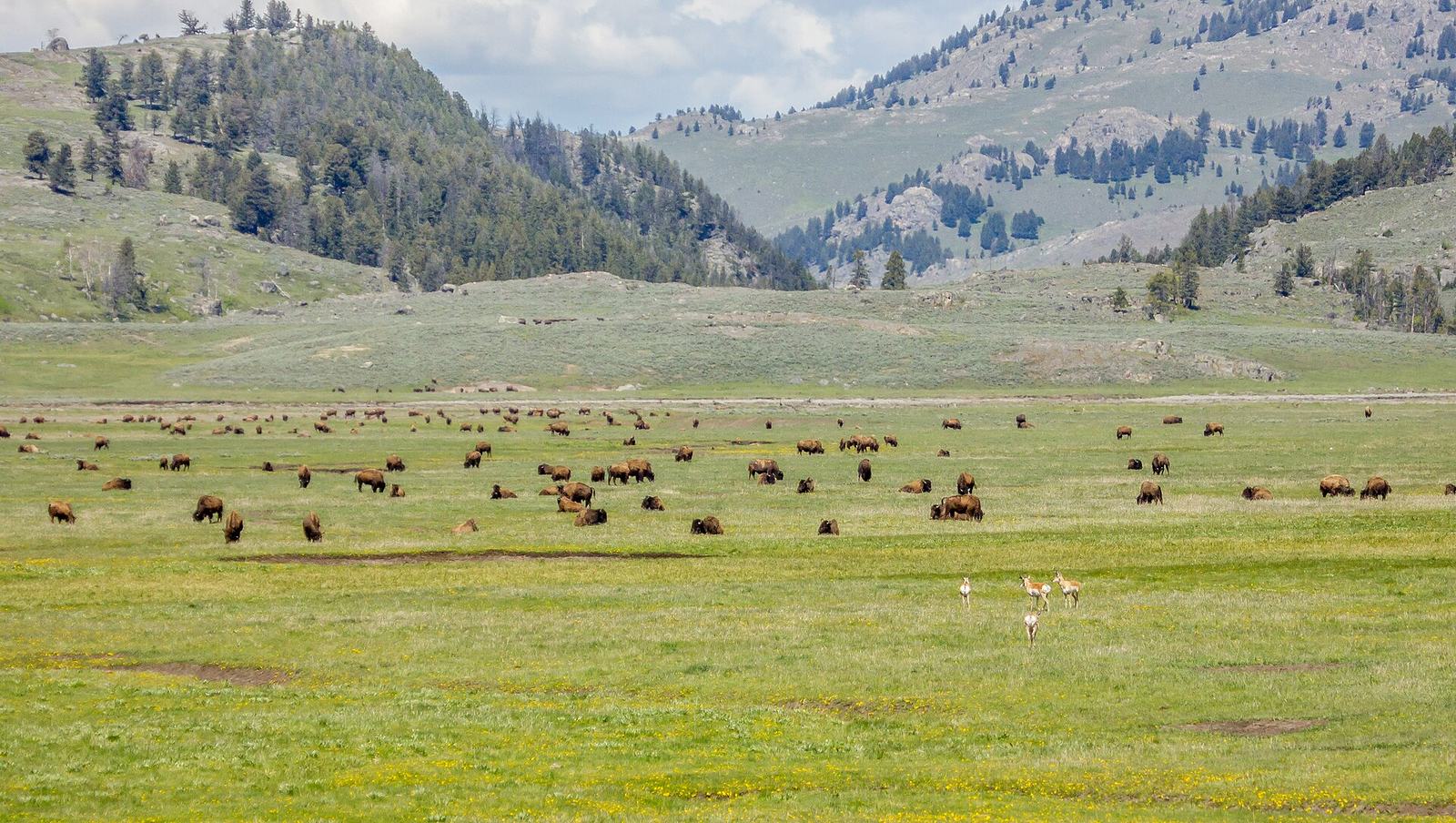
Yellowstone wildlife includes 67 species of mammals, among them bison, elk, gray wolves, grizzly and black bears, moose, pronghorn and bighorn sheep. To see the most, drive Lamar Valley or Hayden Valley at dawn or dusk, bring binoculars, and plan your trip for spring or fall rather than midsummer afternoons.
Yellowstone is the best place in the lower 48 states to watch large mammals in the wild, and it isn’t close. On a single morning in Lamar Valley you can watch a bison herd, a pronghorn, a coyote hunting mice, and, with luck and a spotting scope, a wolf pack on a distant ridge. But the animals don’t perform on schedule. Many visitors see hundreds of bison and elk and leave without a glimpse of a bear or wolf, usually because they looked in the wrong places at the wrong time of day.
This guide fixes that. It covers what lives in the park and roughly how many, where each species is most often seen, how the seasons and hours change your odds, the techniques experienced watchers use, and what to realistically expect. Keeping your distance is a safety topic in its own right, covered in our Yellowstone safety guide; this page is about finding the animals.
Yellowstone wildlife at a glance
NPS counts 67 mammal species in the park, many of them small mammals such as pikas, marmots and ground squirrels. The big draws fall into two groups: eight ungulates (bighorn sheep, bison, elk, moose, mountain goats, mule deer, pronghorn and white-tailed deer) and seven large predators (black bears, Canada lynx, coyotes, grizzly bears, mountain lions, wolverines and wolves) (checked September 2026).
The table gives the latest official figures where NPS publishes them. Populations change every year, so treat them as a guide to scale rather than a precise count.
| Animal | Population (latest NPS figure) | How easy to see | Best places |
|---|---|---|---|
| Bison | About 5,400 (August 2024) | Almost guaranteed May-October | Lamar Valley, Hayden Valley, Madison and Firehole rivers |
| Elk | Thousands in summer; fewer in winter | Very easy | Mammoth Hot Springs, Madison River, Gibbon Meadows |
| Gray wolf | At least 108 living primarily in the park (January 2025) | Hard; best with a scope | Lamar Valley, Slough Creek, Hayden Valley |
| Grizzly bear | About 1,030 in the Greater Yellowstone Ecosystem (2024), not just the park | Moderate in spring | Hayden Valley, Swan Lake Flat, Dunraven Pass, East Entrance road |
| Black bear | Common; no published count | Moderate | Tower-Roosevelt, Mammoth to Tower road, Lamar |
| Moose | Small population | Hard | Willow Park, Soda Butte Creek, Yellowstone Lake shores |
| Pronghorn | A few hundred | Easy in the north | North Entrance near Gardiner, Lamar Valley |
| Bighorn sheep | A few hundred | Moderate | Gardner Canyon, Calcite Springs, Mount Washburn |
| Coyote | Common | Easy | Lamar Valley, Hayden Valley, anywhere open |
| Mountain lion, lynx, wolverine | Rare | Very rare | Not worth planning around |
Grizzly, wolf and bison figures from NPS, checked September 2026. Newer wolf counts released after that page was updated may differ; the Yellowstone Wolf Project publishes the annual total.
For the complete species list, including small mammals, see our guide to animals in Yellowstone.
What animals can you see in Yellowstone?
Nearly every visitor sees bison and elk, and most see pronghorn, coyotes, bald eagles or osprey. With a dawn start in Lamar or Hayden Valley, many also see grizzly or black bears. Wolves, moose and bighorn sheep take more effort, and mountain lions, lynx and wolverines are rarely seen by anyone.
Here’s what to know about each of the main animals.
Bison
Yellowstone is the only place in the United States where bison have lived continuously since prehistoric times. The herd fell to a couple of dozen animals in the early 1900s and was rebuilt at the Lamar Buffalo Ranch; today it numbers several thousand. You’ll see them grazing in the valleys, lying in the dust at the roadside, and walking right down the middle of the road.
Bison are more dangerous than bears by the injury numbers. They look slow and can outrun you easily. The summer rut, from late July through August, is when bulls bellow, wallow and fight, and Hayden Valley is the best place to watch it (checked September 2026). Our Yellowstone bison guide covers their history, and bison rut in Yellowstone covers the summer spectacle.
Elk
Elk are the most common large animal in the park. Several herds summer here, and a smaller number stays for the winter. The famous place to see them is Mammoth Hot Springs, where elk graze on the lawns around the historic buildings, often right next to the parking lots.
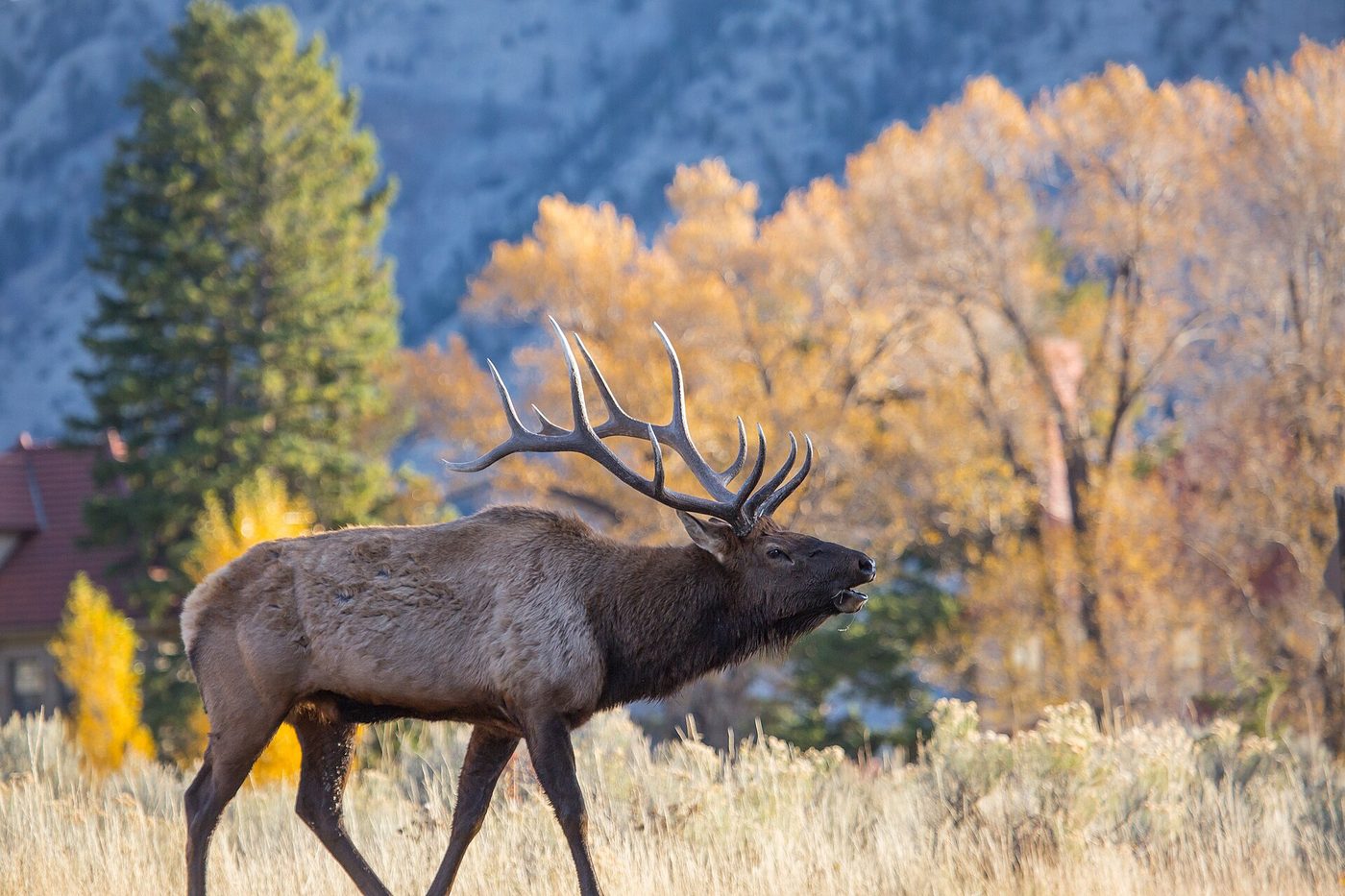
The fall elk rut, from September into October, is one of Yellowstone’s great events: bulls bugle, gather harems of cows and spar with rivals. Mammoth and the Madison River near West Yellowstone are the classic places to watch. A rutting bull elk is unpredictable and will charge cars and people. See elk in Yellowstone and our timely guide to the Yellowstone elk rut.
Gray wolves
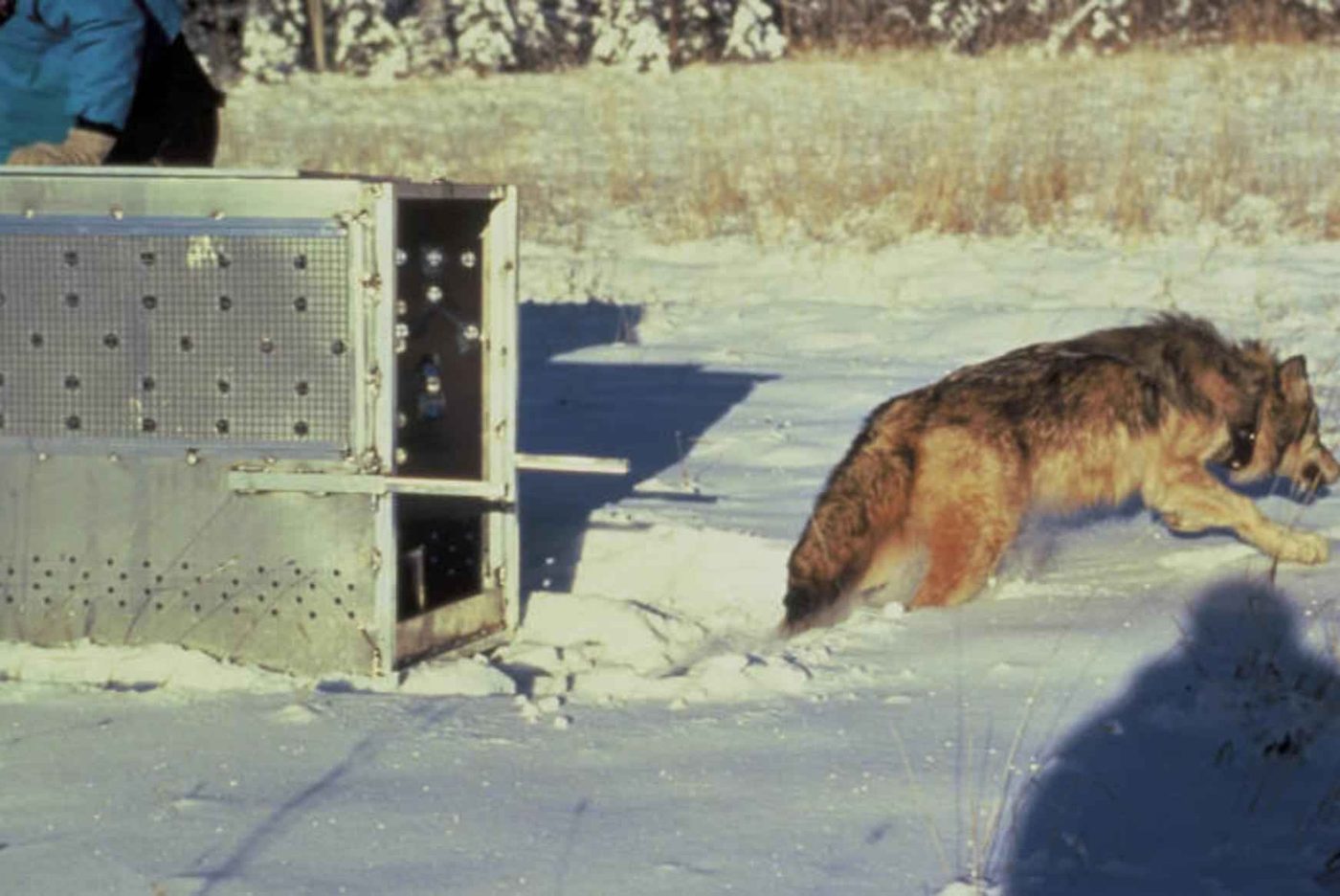
Wolves were eliminated from Yellowstone by the 1920s and reintroduced in 1995 and 1996, one of the most famous conservation projects in the world. NPS reported at least 108 wolves living primarily in the park in January 2025 (checked September 2026). Several packs roam the northern range, and their territories and numbers shift from year to year as packs form, split and fight.
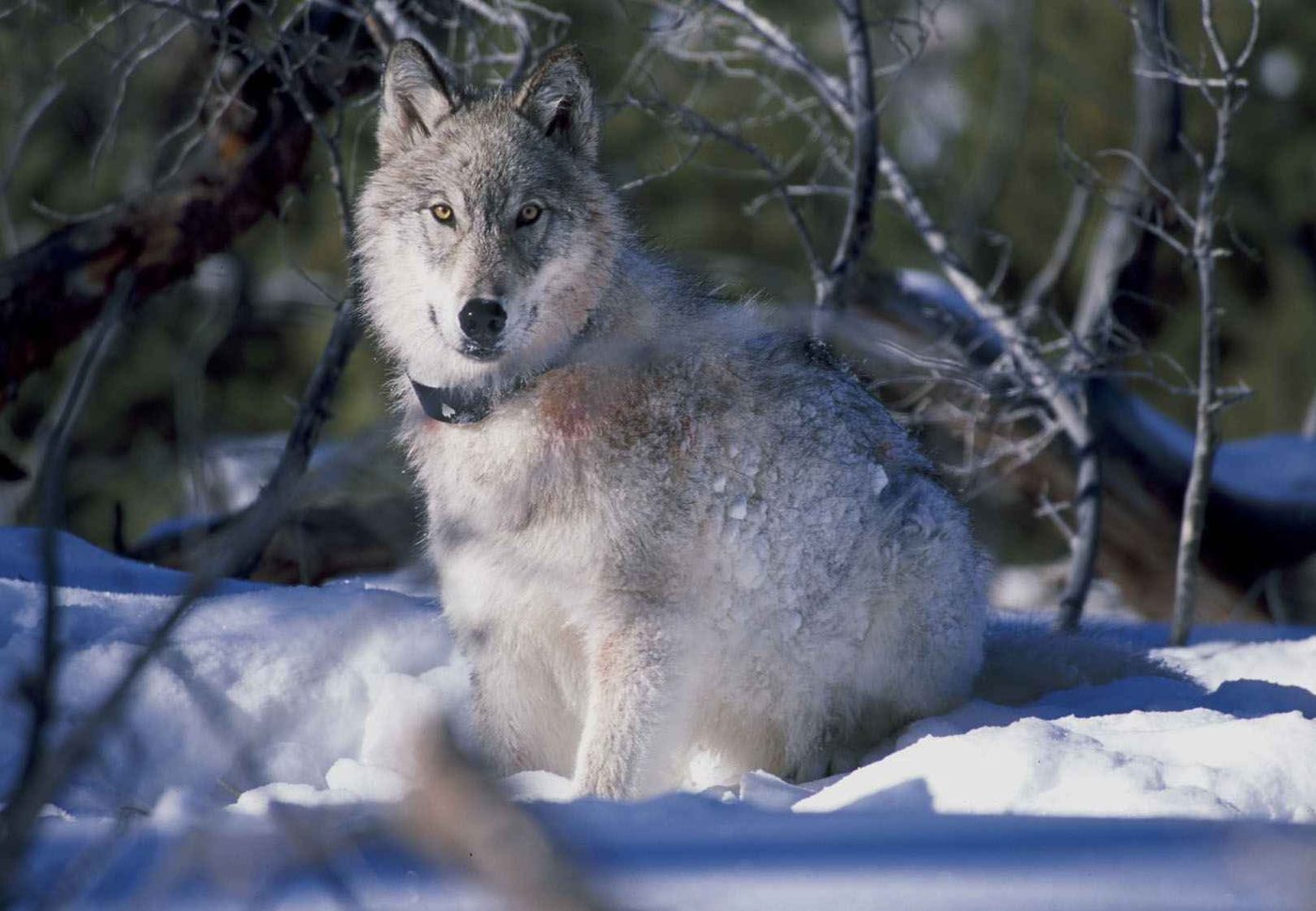
Wolves are most often seen in Lamar Valley and around Slough Creek, usually at dawn, often a mile or more away. Winter is the best season, when dark wolves stand out against the snow. Our wolf guides go deep: wolves in Yellowstone for the overview, wolf watching in Yellowstone for technique, Yellowstone wolf packs for the packs, Yellowstone wolf reintroduction for the history, and Yellowstone wolves and the trophic cascade for the science and the debate around it.
Grizzly bears
An estimated 1,030 grizzly bears lived across the Greater Yellowstone Ecosystem in 2024, an area far larger than the park itself (checked September 2026). Grizzlies are most visible in spring, when they emerge from dens and search low valleys for winter-killed carcasses and newborn elk calves. Hayden Valley, Swan Lake Flat south of Mammoth, the Dunraven Pass area, and the East Entrance road around Sylvan Pass and Yellowstone Lake are all good places to look.
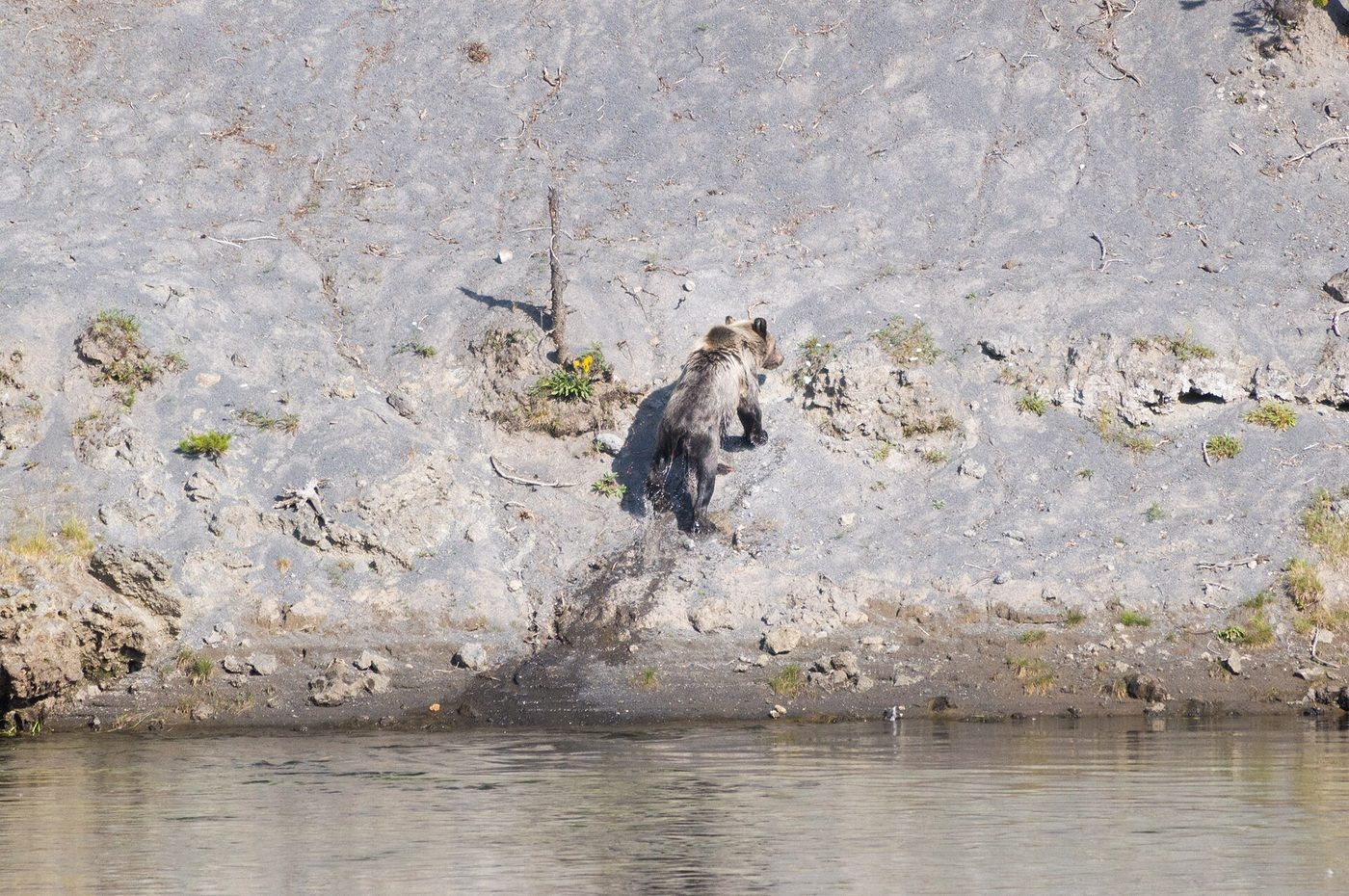
See our grizzly bears in Yellowstone guide, and bears in Yellowstone for both species and how to tell them apart.
Black bears
Black bears are common in Yellowstone’s forests, especially in the north, between Mammoth and Tower-Roosevelt and around Lamar Valley. Despite the name, many are brown or cinnamon, so color is a poor guide. Look instead for the grizzly’s shoulder hump and dish-shaped face, versus the black bear’s straighter profile and taller ears. Black bears are often seen on hillsides along roads in spring and early summer, which causes some of the park’s biggest “bear jams.”
Moose
Moose are harder to find in Yellowstone than most visitors expect. The population is small, and much of their habitat was affected by the 1988 fires. Look in willow-lined creeks and marshes: Willow Park between Mammoth and Norris, along Soda Butte Creek toward the Northeast Entrance, and in the wetlands around Yellowstone Lake and the southern park. Grand Teton, just to the south, is often a better bet. See moose in Yellowstone.
Pronghorn
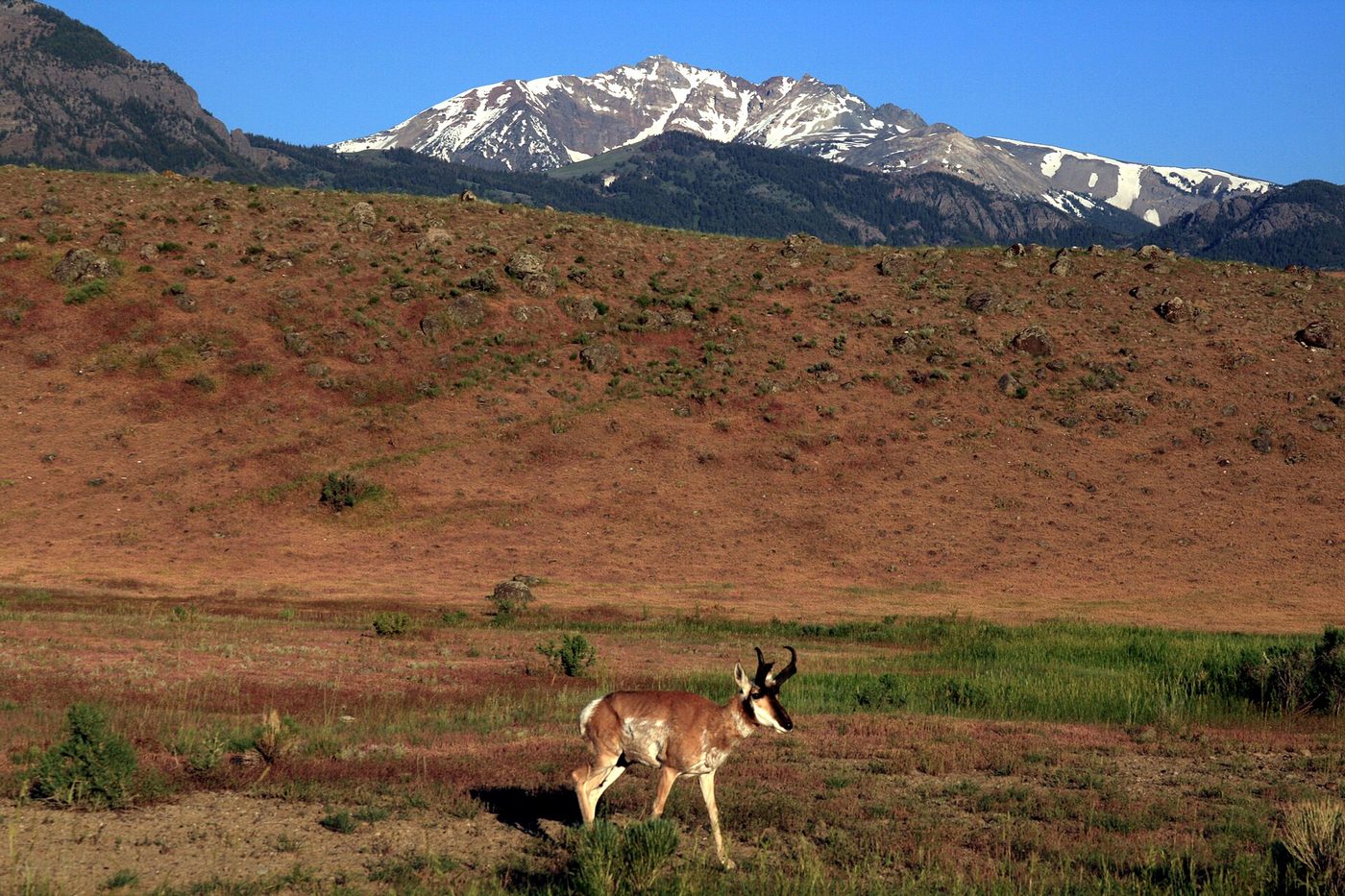
Often called antelope, pronghorn are North America’s fastest land animals. They’re common on the dry grasslands near the North Entrance at Gardiner, where you’ll often see them from the road right past the Roosevelt Arch, and in Lamar Valley in summer.
Bighorn sheep and mountain goats
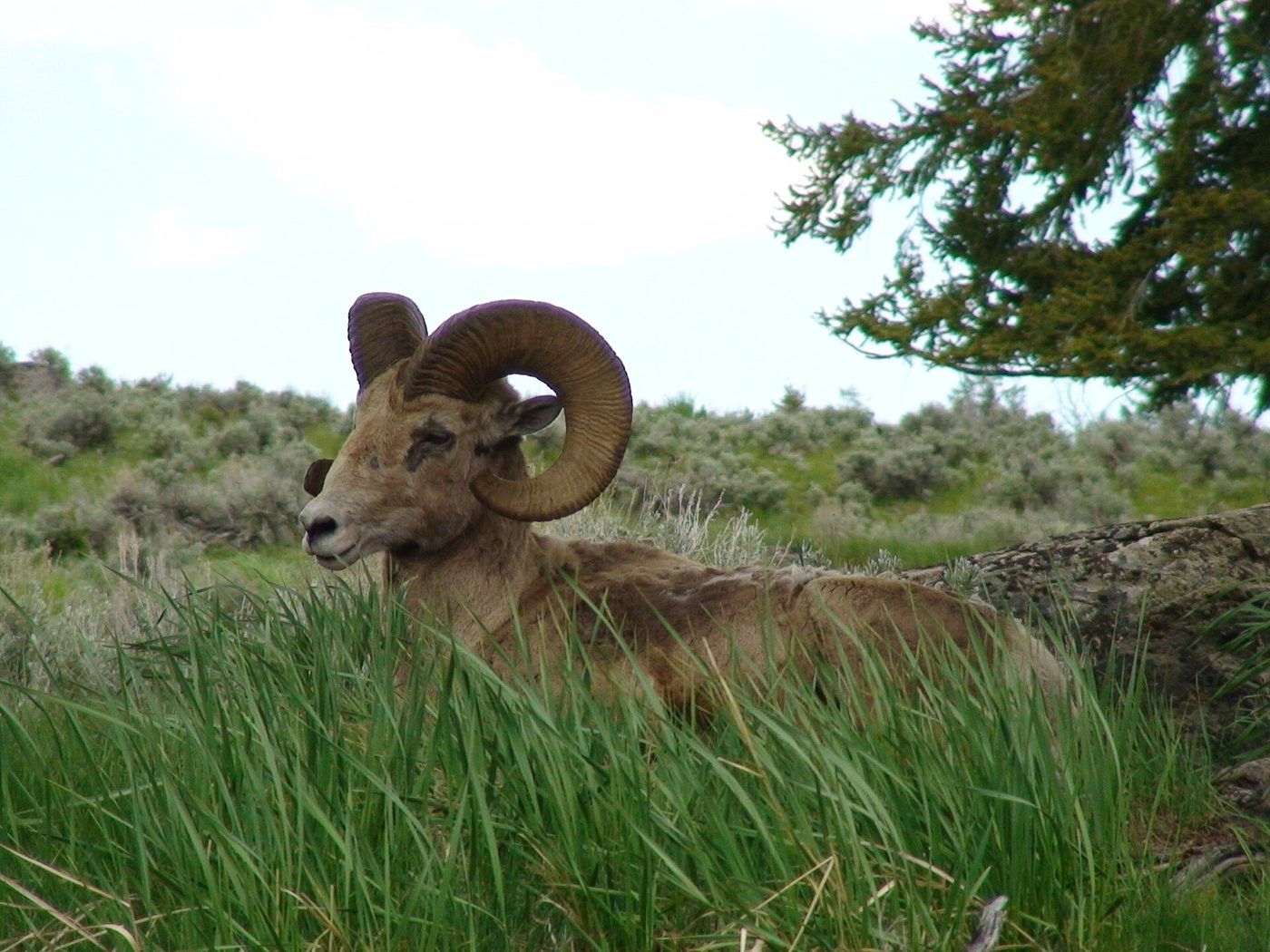
Bighorn sheep live on steep cliffs in the north of the park. Good places include the cliffs of Gardner Canyon between Gardiner and Mammoth, the Calcite Springs Overlook near Tower Fall, and the slopes of Mount Washburn in summer. Mountain goats, which colonized the park from herds introduced in nearby ranges, are sometimes seen on the cliffs of Barronette Peak near the Northeast Entrance. See bighorn sheep in Yellowstone.
Coyotes, foxes and cougars
Coyotes are everywhere and easy to see, often hunting rodents in the meadows by pouncing. Red foxes are seen less often, sometimes in the Lamar and Hayden valleys and around developed areas in winter; see foxes in Yellowstone. Mountain lions live in rugged, rocky country in the north but are secretive and mostly nocturnal, and very few visitors ever see one; see cougars in Yellowstone.
Birds
Yellowstone is also excellent for birds. Bald eagles and osprey fish the rivers and lakes, trumpeter swans nest on quiet waters, American white pelicans float on Yellowstone Lake and the Yellowstone River in Hayden Valley, sandhill cranes call from the meadows, and ravens seem to be everywhere. Our birds of Yellowstone guide lists the species and where to find them.
The smaller animals worth watching
The famous animals get the attention, but some of the most enjoyable wildlife moments in Yellowstone involve smaller creatures that are easier to find.
- River otters fish and play in the Yellowstone River, Lamar River and Trout Lake, especially in early summer and late fall. Watch quietly from the bank; they’re often around the same pools for days.
- Yellow-bellied marmots sun themselves on rock piles, including those near Sheepeater Cliff and along Dunraven Pass, and whistle when you get close.
- Pikas, small round relatives of rabbits, gather grass in the talus slopes at higher elevations. You’ll usually hear their sharp “eep” before you see them.
- Uinta ground squirrels are everywhere in summer meadows and around picnic areas. Don’t feed them; human food makes them sick and aggressive.
- Beavers are shy and mostly active at dusk, but their dams and lodges are visible in creeks across the park.
These are great for kids, easy to photograph and a pleasant way to fill the middle of the day when the big animals are resting.
Where to see wildlife in Yellowstone
Most large wildlife in Yellowstone is concentrated in the open valleys, where grass supports grazing animals and predators follow. The forested plateau, where most of the geyser basins are, has far fewer. Plan your wildlife time around these areas. Our best places to see wildlife in Yellowstone guide goes pullout by pullout.
| Area | Best for | Best time | Drive from |
|---|---|---|---|
| Lamar Valley | Wolves, bison, pronghorn, coyotes, bears | Dawn and dusk, all year | About 1 hour from Gardiner; 30-45 min from Cooke City |
| Hayden Valley | Bison, grizzlies, wolves, waterfowl, pelicans | Dawn and dusk, May-October | 15-20 min from Canyon or Lake |
| Mammoth Hot Springs | Elk | All year; rut September-October | 5 miles from Gardiner |
| Madison River and Gibbon Meadows | Elk, bison, trumpeter swans | Dawn and dusk; elk rut in fall | 14 miles from West Yellowstone |
| North Entrance road near Gardiner | Pronghorn, bighorn sheep, elk | All year | At the entrance |
| Blacktail Plateau and Mammoth-Tower road | Black bears, elk, bison, wolves | Spring and early summer | 20-40 min from Mammoth |
| Dunraven Pass and Mount Washburn | Bighorn sheep, grizzlies, black bears | Summer (road open late May to mid-October) | Between Tower and Canyon |
| Yellowstone Lake shore and Fishing Bridge area | Grizzlies, bison, waterfowl, otters | Spring and summer | At Lake Village |
| Willow Park and Soda Butte Creek | Moose | Early morning | Various |
| Firehole River and geyser basins | Bison, elk in steam | Winter especially | Near Old Faithful |
What you’ll see first, by entrance
Your entrance shapes your first wildlife encounters.
- North Entrance (Gardiner): pronghorn and elk within minutes of the Roosevelt Arch, bighorn sheep in Gardner Canyon, and elk at Mammoth. The best start for wildlife lovers.
- Northeast Entrance (Cooke City): you drop straight into Soda Butte Creek and Lamar Valley, with bison, pronghorn, wolves and occasionally moose.
- West Entrance (West Yellowstone): bison and elk along the Madison River, and trumpeter swans on quieter stretches.
- South Entrance (from Grand Teton): mostly forest at first; the best wildlife viewing starts around Yellowstone Lake and Hayden Valley.
- East Entrance (Cody): grizzlies are regularly seen along the road near Sylvan Pass and Yellowstone Lake in spring, and bighorn sheep in the Wapiti Valley outside the park.
Lamar Valley
Nicknamed “America’s Serengeti,” Lamar Valley in the northeast is the best place in the park for wildlife watching, and especially for wolves. It’s also the only major wildlife valley you can drive to all year, since the road from Gardiner to Cooke City stays open in winter. The catch is distance: it’s well over two hours from Old Faithful and West Yellowstone, so plan to sleep in Gardiner, Mammoth, Cooke City or Silver Gate if you want to be there at first light. Our Lamar Valley guide has the full detail.
Hayden Valley
Right in the middle of the park, between Canyon Village and Yellowstone Lake, Hayden Valley is the most convenient big wildlife valley for most itineraries. The Yellowstone River meanders through it, and bison herds gather in their hundreds, especially during the summer rut. Grizzlies are often seen scanning the far hillsides, and a wolf pack uses the valley too. It’s closed to cars in winter.
Mammoth and the North Entrance
The simplest wildlife stop in the park: elk on the lawns at Mammoth are a near certainty, and the road down to Gardiner has pronghorn, bighorn sheep and more elk. This is the easiest area for families and for winter visitors.
When is the best time to see wildlife in Yellowstone?
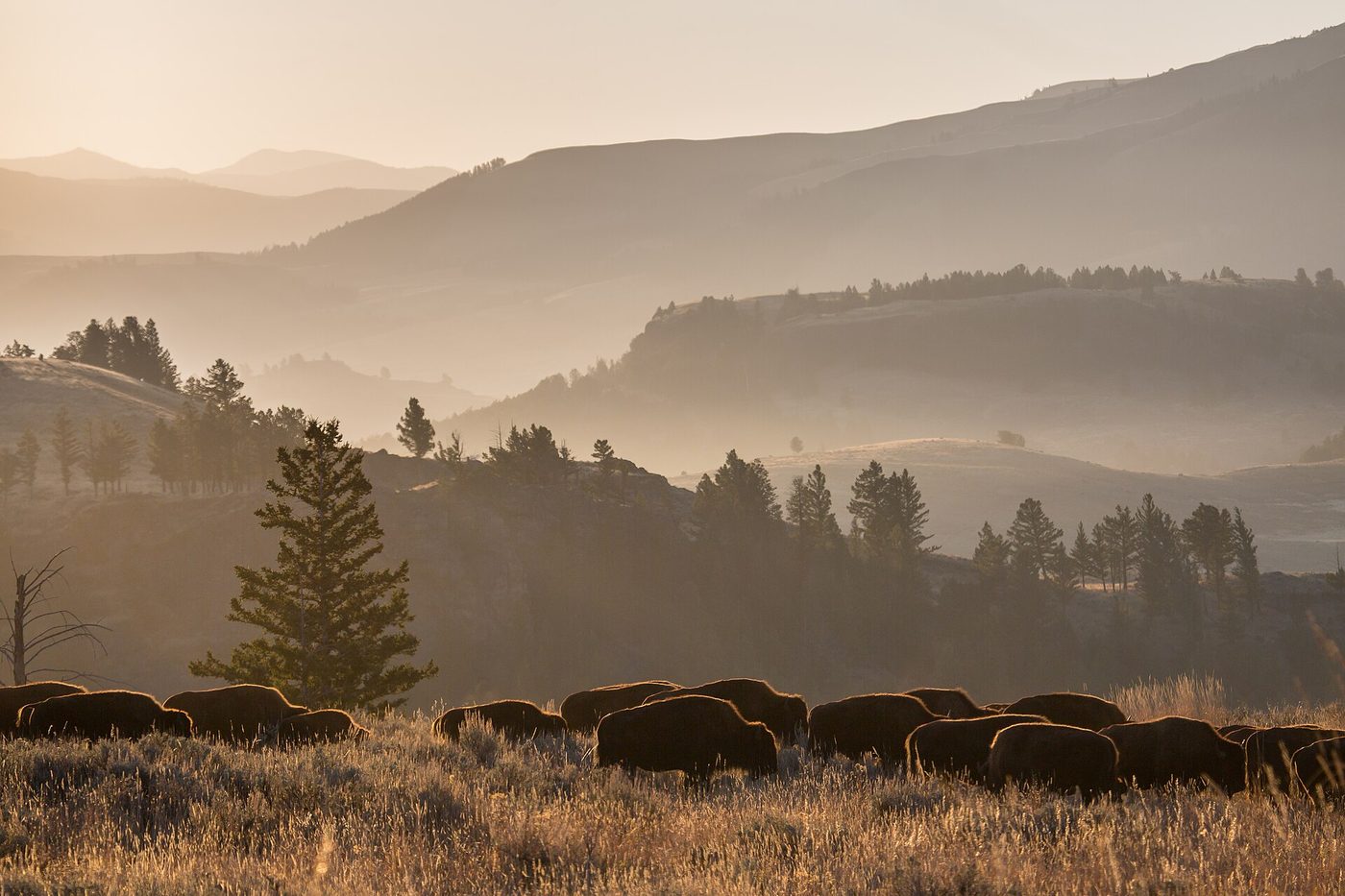
The best times of day are the first two hours after sunrise and the last two hours before sunset. The best seasons are spring (April to June) for bears and newborn animals, fall (September to October) for the elk rut and active predators, and winter for wolves in Lamar Valley. Midday in July and August is the worst time.
Time of day
Most large animals are active in the cool hours around dawn and dusk and rest during the heat of the day. In summer that means being in a valley by about 5:30 or 6 a.m., when the light is soft and roads are empty, and coming back in the evening. Midday is for driving between regions, visiting the geyser basins and napping.
Season by season
| Season | Highlights | Where to focus |
|---|---|---|
| Spring (April-June) | Bears emerge and hunt low valleys; bison calves (“red dogs”) in April-May; elk calves late May-June; wolves at den sites | Lamar Valley, Hayden Valley, Swan Lake Flat, Mammoth-Tower road |
| Summer (July-August) | Bison rut late July-August; animals move higher and are active only early and late; bighorn on Mount Washburn | Hayden Valley at dawn, Lamar Valley, Dunraven Pass |
| Fall (September-October) | Elk rut; bears feeding intensively before denning; wolves more visible; fewer people | Mammoth, Madison River, Lamar Valley, Hayden Valley |
| Winter (December-March) | Wolves against snow; bison and elk near thermal areas; bighorn sheep along the northern road | Lamar Valley (by car); the geyser basins (by snowcoach) |
Spring and fall are our pick for the overall best wildlife trip, with September especially good: the elk rut is on, the crowds are thinner and the light is excellent. For the month-by-month view, see best time to visit Yellowstone for wildlife and the wider best time to visit Yellowstone guide. For the cold-season picture, see Yellowstone in winter.
Do animals really leave before eruptions?
Every few years a viral video of bison running along a road sparks claims that animals are fleeing the park ahead of a supervolcano eruption. They aren’t. Bison and elk move with the seasons, snow and grazing, and a herd running along a road is ordinary behavior. Our Yellowstone animals leaving page looks at where the rumor comes from.
How to see more wildlife in Yellowstone
Luck plays a part, but experienced watchers see far more than casual visitors. Here’s what they do differently. Our guide on how to see wildlife in Yellowstone goes deeper.
- Be there at dawn. If you do one thing, do this. Stay in the right base so you can reach Lamar or Hayden Valley by sunrise.
- Scan slowly, far away. Most wolves and bears are on distant hillsides, not beside the road. Park safely, get out, and systematically sweep the slopes and river edges with binoculars.
- Bring good optics. Binoculars are essential, and a spotting scope makes the difference for wolves a mile away. See best binoculars for Yellowstone.
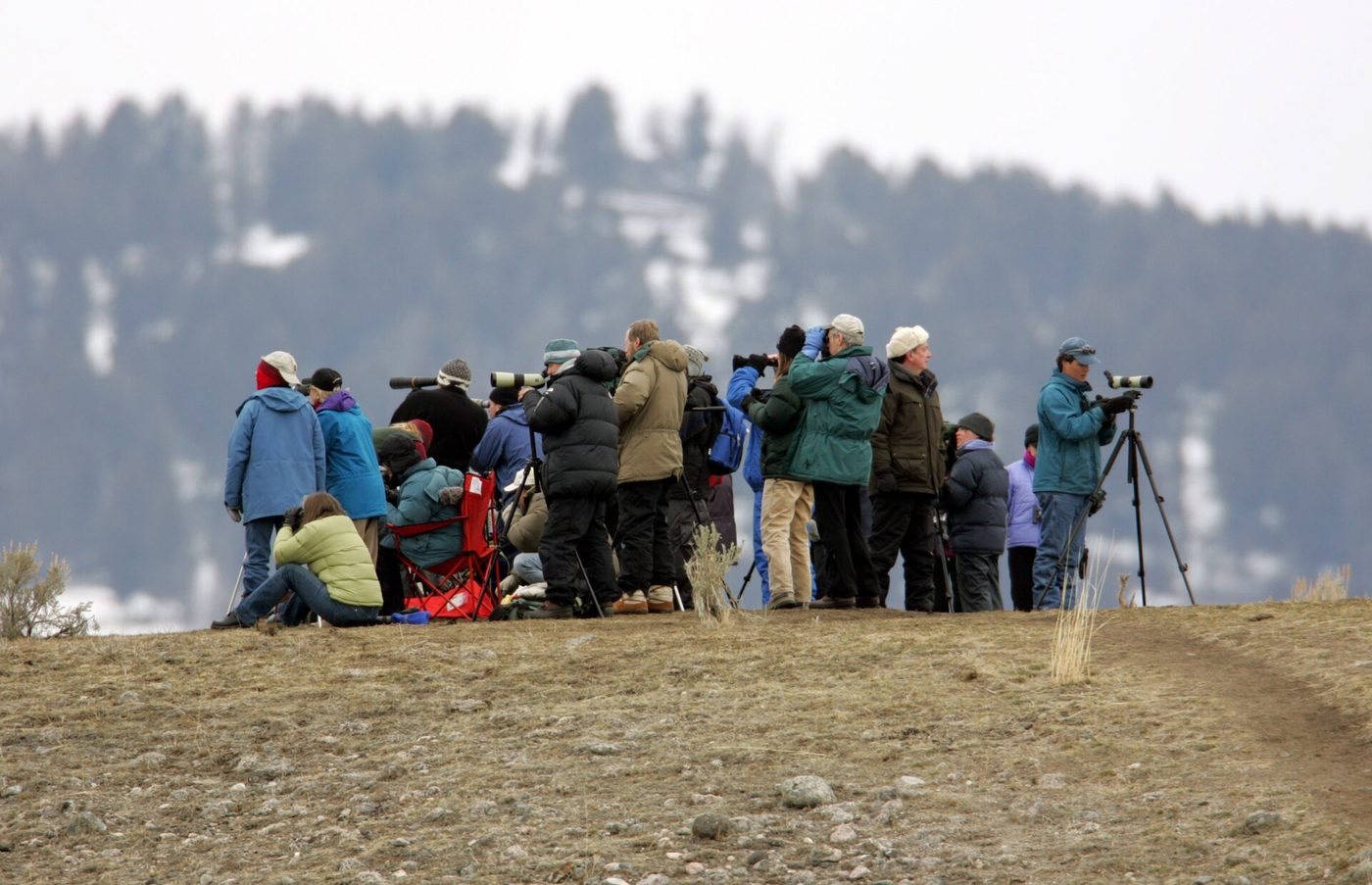
- Look for the watchers. A row of parked cars and people with scopes on tripods usually means something is visible. Pull fully off the road, walk over quietly, and ask; most regulars are happy to share a view through their scope.
- Drive slowly and use pullouts. Speed limits are 45 mph or lower, and the best sightings come when you’re moving slowly enough to notice movement.
- Look for signs. Ravens and magpies circling or gathering on the ground can mean a carcass, which can mean bears or wolves. Elk or bison all staring in one direction are worth watching.
- Revisit the same valley. Animals use predictable places. Two mornings in Lamar Valley beat two different valleys once each.
- Be patient. Plan to stay an hour or more in one spot instead of driving the whole loop looking for a bear jam.
- Talk to rangers. Visitor center staff often know where animals have been seen recently, and in summer, rangers sometimes staff the busiest wildlife areas.
What to bring on a wildlife drive
- Binoculars for every person in the car, so nobody has to wait.
- A spotting scope and tripod if you’re serious about wolves.
- Warm layers, a hat and gloves. Dawn in Lamar Valley can be below freezing in June.
- A thermos of coffee and breakfast. Nothing is open in the valleys at 6 a.m.
- A field guide or app to identify birds and tracks.
- A camera with a long lens, and a beanbag for resting it on the window frame.
- Bear spray, if you plan to walk from pullouts on any trail.
- Patience. The best sightings come to people who wait.
Wildlife tours
A guided tour with a naturalist who carries spotting scopes and knows the latest sightings dramatically improves your odds of seeing wolves and bears. Tours run from Gardiner, West Yellowstone, Bozeman, Jackson and inside the park. For a first-time visitor who really wants wolves, a dawn Lamar Valley tour is often money well spent. See our Yellowstone tours guide for options.
Wildlife etiquette: the short version
These rules protect you and the animals. The full detail, including what to do in a bear encounter, belongs to our Yellowstone safety guide.
- Distance. Stay at least 100 yards (about the length of a football field) from bears and wolves, and at least 25 yards from all other animals, including bison and elk (checked September 2026). If an animal moves toward you, back away.
- Stay in your car at roadside sightings unless you can park completely off the road in a pullout.
- Never stop in a traffic lane. Bear jams cause accidents and block emergency vehicles.
- Never feed wildlife, including ravens and ground squirrels.
- Don’t call, whistle or use animal calls to get an animal’s attention.
- Carry bear spray on every hike and know how to use it.
- Use a long lens, not your feet, for photos.
Every year, visitors are injured by bison that they approached for a photo. Don’t be one of them.
Wildlife photography in Yellowstone
Yellowstone is one of the best places in the world to photograph large mammals, but good wildlife images take preparation.
- Lens. A telephoto of at least 300 mm, and ideally 400 to 600 mm, is the minimum for bears and wolves at legal distances. A phone works for bison and elk at Mammoth, and a phone held to binoculars or a spotting scope (“digiscoping”) can work for distant subjects.
- Light. The golden hours are also the active hours. Frost, backlit breath and steam on winter mornings make for dramatic images.
- Background. Snow, autumn aspens and steaming thermal features set Yellowstone photos apart. Winter bison in the Firehole geyser basins are a classic.
- Stability. A beanbag on the car window works well at roadside sightings where you should stay inside the vehicle.
- Ethics. Never bait, call or pressure an animal for a shot, and move on if your presence changes its behavior.
Our Yellowstone wildlife photography guide covers gear, locations and seasons in more detail.
A wildlife-focused day in Yellowstone
This plan works from a base in Gardiner, Mammoth or Canyon in summer or fall. Adapt the start time to the season’s sunrise.
- 5:00 a.m. Leave your base with coffee, snacks, binoculars and warm layers.
- 5:45 a.m. Arrive in Lamar Valley (from Gardiner) or Hayden Valley (from Canyon) as the sky brightens.
- 6:00-9:00 a.m. Stop at pullouts, scan the hillsides and river edges, and look for groups of watchers with scopes. Move between two or three favorite spots rather than driving the whole road.
- 9:30 a.m. Breakfast in Cooke City, at Roosevelt Lodge or at Canyon Village.
- Late morning to mid-afternoon. Wildlife goes quiet. Visit a geyser basin, the Grand Canyon of the Yellowstone, or rest.
- 5:00 p.m. Head back to a valley for the evening session: Hayden Valley, Lamar Valley or the Madison River during the elk rut.
- Sunset. Stay until the light fades. Drive home slowly; animals are on the roads at dusk.
For a multi-day plan built around wildlife, see our Yellowstone wildlife itinerary.
Will you see a bear or a wolf in Yellowstone?
Probably a bear if you visit in spring or early summer and spend dawns and dusks in the right valleys; possibly a wolf if you commit to Lamar Valley at dawn with good optics. On a quick summer trip that sticks to the geyser basins in the middle of the day, the honest odds of either are low.
Setting expectations helps you enjoy what you do see:
- Bison and elk: close to certain from May to October.
- Pronghorn, coyotes, bald eagles or osprey: very likely on a trip of three days or more that includes the north of the park.
- Black bear or grizzly: good odds in May and June, especially with dawn drives; lower in midsummer, when bears move to higher elevations; fair again in September.
- Wolves: the hardest of the famous animals. Most wolf sightings are through scopes at long range, in Lamar Valley, at dawn, often in winter or spring. A dedicated two or three mornings or a guided tour gives you a real chance.
- Moose: hit or miss. Don’t build a Yellowstone trip around them.
- Mountain lions, lynx and wolverines: almost never. Treat any sighting as a gift.
The honest bottom line: Yellowstone’s wildlife is extraordinary, but it rewards people who plan around it. If seeing wolves or bears matters to you, choose your base, set your alarm, bring binoculars and give it more than one morning. If it doesn’t, you’ll still see more big animals from your car than almost anywhere else in the country.
Frequently asked questions
What is the best place to see wildlife in Yellowstone?
Lamar Valley in the northeast is the best overall, especially for wolves, bison and pronghorn, and it’s reachable by car year-round. Hayden Valley in the center of the park is the best convenient alternative for bison, grizzlies and waterfowl. Mammoth Hot Springs is the easiest place to see elk.
What time of day is best for seeing animals in Yellowstone?
Early morning, from just before sunrise to about two hours after, and the last two hours before sunset. Most large mammals rest in the middle of the day, especially in summer. Being in Lamar or Hayden Valley at first light makes the biggest difference.
How many wolves are in Yellowstone?
NPS reported at least 108 wolves living primarily in the park as of January 2025. Numbers change every year as packs form and break up, and the Yellowstone Wolf Project publishes an annual count, so check for the latest figure.
How many grizzly bears are in Yellowstone?
An estimated 1,030 grizzly bears lived in the Greater Yellowstone Ecosystem in 2024, according to NPS. That area includes the national forests and lands around the park, so the number living inside the park at any one time is lower.
Where can you see moose in Yellowstone?
Moose are uncommon. Look in willow-lined creeks and wetlands such as Willow Park between Mammoth and Norris, along Soda Butte Creek near the Northeast Entrance, and around Yellowstone Lake. Early morning is best. Grand Teton National Park often offers better moose viewing.
Are there mountain lions in Yellowstone?
Yes, mostly in the rugged, rocky country of the northern range. They’re secretive and active mainly at night, so very few visitors see one. Tracks in winter snow are more likely than a sighting.
When is the elk rut in Yellowstone?
The elk rut runs from September into October. Mammoth Hot Springs and the Madison River near West Yellowstone are the classic places to hear bulls bugle and watch them gather herds. Keep well back: rutting bulls charge people and cars.
Sources
- National Park Service, Yellowstone: mammals, checked September 2026
- National Park Service, Yellowstone: bison, checked September 2026
- National Park Service, Yellowstone: elk, checked September 2026
- National Park Service, Yellowstone: safety, checked September 2026
- U.S. Geological Survey: Interagency Grizzly Bear Study Team
Image credits
| Photo | Credit |
|---|---|
| Lamar Valley in early summer, with bison and pronghorn sharing the grass (top of page) | Diane Renkin for Yellowstone National Park from Yellowstone NP, USA, public domain, via Wikimedia Commons |
| Dawn and dusk are when the valleys come alive | Yellowstone National Park from Yellowstone NP, USA, public domain, via Wikimedia Commons |
| The elk rut at Mammoth runs from September into October | Yellowstone National Park from Yellowstone NP, USA, public domain, via Wikimedia Commons |
| Collars help researchers track packs across the northern range | Campbell William, U.S. Fish and Wildlife Service, public domain, via Wikimedia Commons |
| Grizzlies are most visible in spring, when they search low valleys for food | Supercarwaar, CC BY-SA 4.0, via Wikimedia Commons |
| Pronghorn are common on the dry grasslands near the North Entrance | Brocken Inaglory, CC BY-SA 3.0, via Wikimedia Commons |
| Wolf watchers at Slough Creek | NPS/Jim Peaco, public domain, via Wikimedia Commons |
| Bighorn sheep favor the steep cliffs of the northern park | Lincoln.abraham, CC BY 3.0, via Wikimedia Commons |
| Wolves were reintroduced to Yellowstone in 1995 and 1996 | U.S. Fish and Wildlife Service, public domain, via Wikimedia Commons |