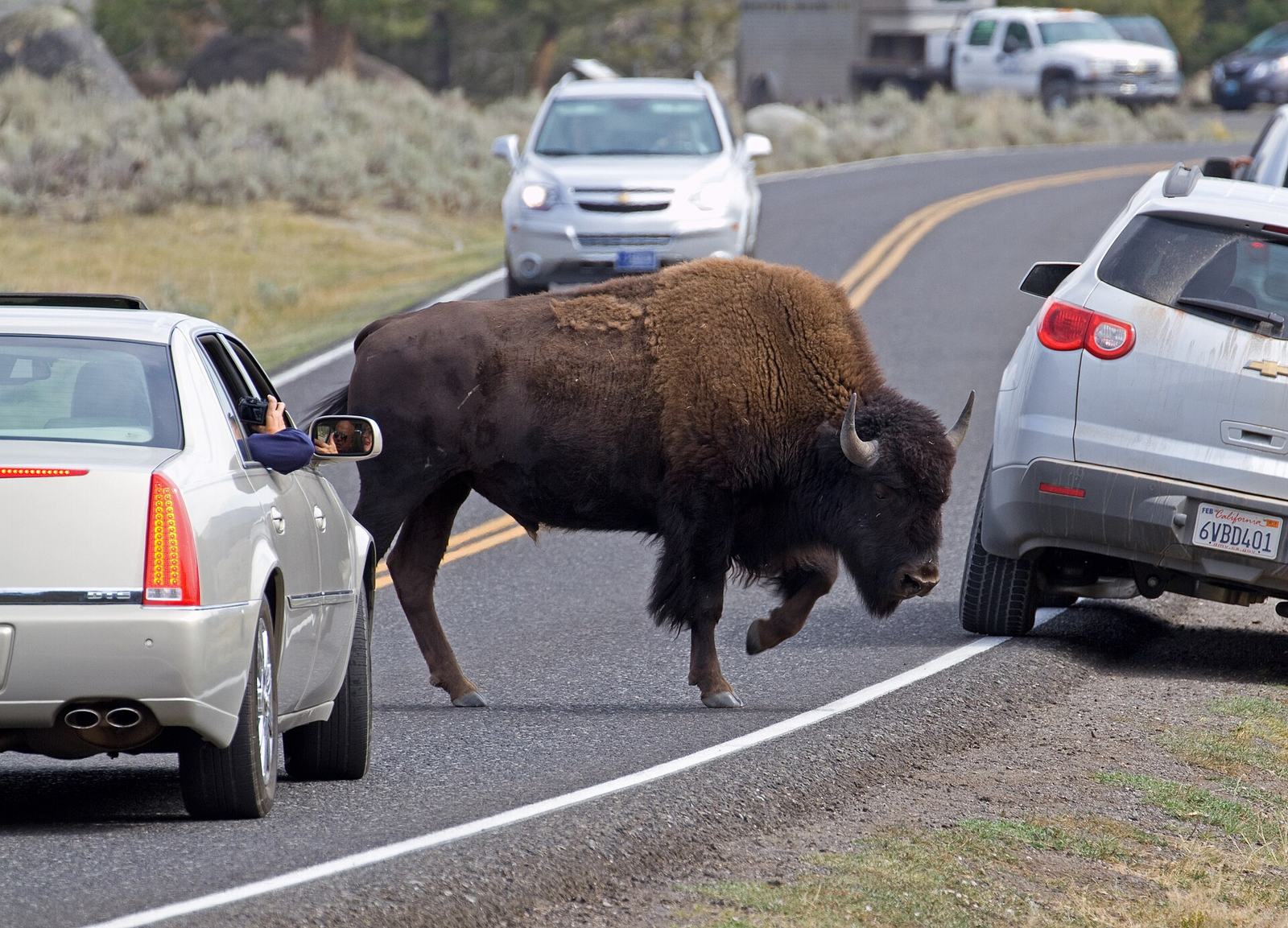
Here’s how to get to Yellowstone in one sentence: fly into Bozeman, Jackson or one of four smaller airports, rent a car, and drive one to two hours to the nearest entrance. There’s no train, no public bus network to the park and no public transit inside it, so almost every visitor arrives and gets around by car.
The details are where trips go right or wrong. The “closest” airport isn’t always the best one. The entrance you drive in through decides what you see on day one. In winter, three of the five entrances close to cars. And a cheap flight to Salt Lake City can cost you a full day at the wheel.
This guide compares every realistic way in: the six commercial airports, the big-city hubs worth considering, rental cars, shuttles, driving routes, the seasons that change the answer, and what to do if you won’t have a car at all. Once you’ve settled your arrival, the next step is our Yellowstone road trip planning and a look at the gateway towns you’ll sleep in.
What is the easiest way to get to Yellowstone?
For most visitors, the easiest way is flying into Bozeman Yellowstone International Airport (BZN), renting a car there, and driving about 90 minutes to the North Entrance or just under two hours to the West Entrance. Bozeman has the most flights, the most rental cars and year-round access.
Jackson Hole Airport is the easy runner-up if you’re also visiting Grand Teton, since it sits inside that park about an hour south of Yellowstone. Everything else is a trade-off: West Yellowstone’s tiny airport is closest but seasonal and pricey, Cody works well for the east side, and Salt Lake City or Denver save money on airfare but add a long drive.
Easiest isn’t always best, though. The right answer depends on three questions:
- Which part of the park do you want to see first? Geysers are closest to the West and South entrances; Mammoth and Lamar Valley to the North and Northeast; Yellowstone Lake to the East.
- When are you going? From early November to late April, most entrances are closed to cars, and that removes several airports from consideration.
- Are you pairing Yellowstone with Grand Teton, Glacier or a longer road trip? A one-way route, flying into one airport and out of another, often beats a round trip.
The quick decision table
Use this to match an airport to an entrance. Drive times are without stops in summer; distances are approximate and rounded (checked September 2026).
| Airport | Nearest entrance | Miles / drive time | First big sight | Season | Best for |
|---|---|---|---|---|---|
| Bozeman (BZN) | North (Gardiner) | about 85 mi / 1 h 30 min | Mammoth Hot Springs | Year-round | Most trips; winter trips; best flight choice |
| Bozeman (BZN) | West (West Yellowstone) | about 90 mi / 1 h 45 min-2 h | Madison River, geysers | Year-round flights | Geyser-first itineraries |
| Jackson Hole (JAC) | South | about 50 mi / 1 h 15 min | Grand Teton, then West Thumb | Year-round | Combined Yellowstone and Grand Teton trips |
| West Yellowstone (WYS) | West | about 2-3 mi / 5-10 min | Old Faithful area (30 mi) | About early May to mid-Oct | Short trips focused on geysers |
| Cody (COD) | East | about 50-53 mi / 1 h | Yellowstone Lake | Year-round flights | East-side and Cody combinations |
| Idaho Falls (IDA) | West | about 108 mi / 1 h 45 min-2 h | Geysers | Year-round | Fare hunters; Grand Teton links |
| Billings (BIL) | Northeast via Beartooth Hwy | about 130 mi / 2 h 30 min-3 h | Lamar Valley | Beartooth open late May to mid-Oct | Beartooth Highway drivers |
| Salt Lake City (SLC) | West | about 320 mi / 5-6 h | Geysers | Year-round | Cheap fares, longer road trips |
If that table already makes the decision, you can go straight to our best airport to fly into for Yellowstone guide, which walks through it by itinerary. If you only care about distance, see the closest airport to Yellowstone, with the caveat that closest rarely wins.
Flying to Yellowstone: the six airports
NPS lists five airports with year-round commercial service near the park, Bozeman, Billings, Cody, Jackson and Idaho Falls, plus West Yellowstone, which it describes as served from early May to mid-October (checked September 2026). Here’s how each one works in practice.
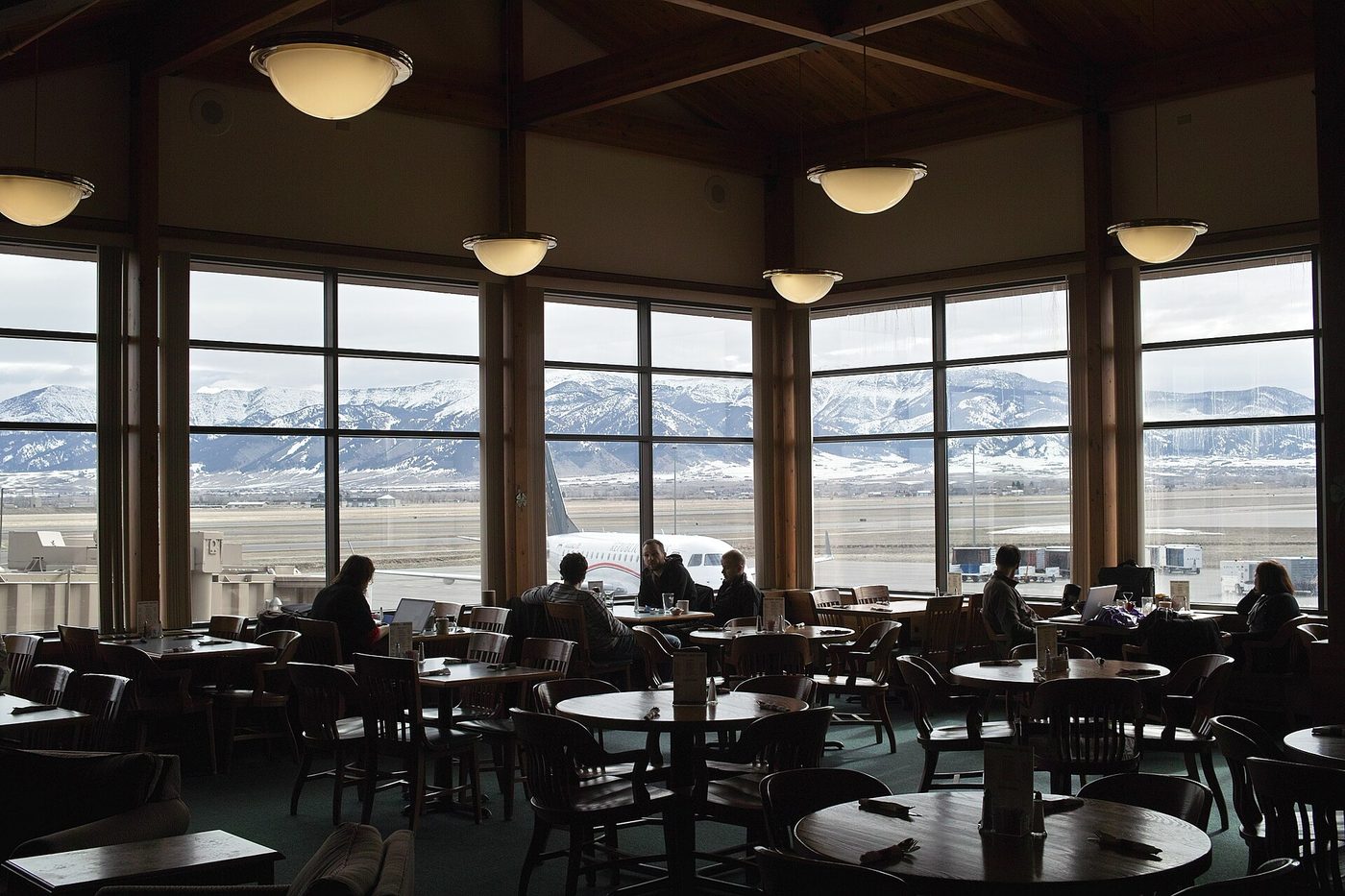
Bozeman Yellowstone International Airport (BZN)
Bozeman is Montana’s busiest airport and the default choice for good reason. It handles more than 2 million travelers a year, and when we checked its website, eight airlines (Alaska, Allegiant, American, Delta, jetBlue, Southwest, Sun Country and United) listed 12 year-round nonstop routes, including Atlanta, Chicago, Dallas, Denver, Las Vegas, Los Angeles, Minneapolis, Phoenix-Mesa, Portland, Salt Lake City, San Francisco and Seattle. Roughly 15 more routes run seasonally, many of them summer flights from East Coast cities such as New York, Boston, Charlotte and Washington (checked September 2026).
From the airport in Belgrade, just west of Bozeman, you have two routes:
- North Entrance: east on I-90 to Livingston, then south on US-89 through Paradise Valley to Gardiner. About 85 miles and 1.5 hours. This road stays open all winter and leads to the only stretch of park road open to cars year-round.
- West Entrance: south on US-191 through Gallatin Canyon and past Big Sky to West Yellowstone. About 90 miles and 1 hour 45 minutes to 2 hours. It’s a scenic but narrow two-lane road, and winter conditions can be rough.
Rental supply is the largest in the region, though summer prices can still shock you. Our Bozeman to Yellowstone guide covers both drives stop by stop, and Bozeman airport car rental covers booking strategy.
Verdict: the best all-round choice for most trips, and the only sensible one for a winter trip to the northern range.
Jackson Hole Airport (JAC)
Jackson Hole Airport is the only commercial airport inside a national park: it sits within Grand Teton, about 7 miles north of the town of Jackson. Alaska, American, Delta and United fly here, with year-round nonstops including Denver, Salt Lake City, Dallas and Houston, and a longer list of seasonal routes (checked September 2026). It was also the first airport certified as an International Dark Sky Place.
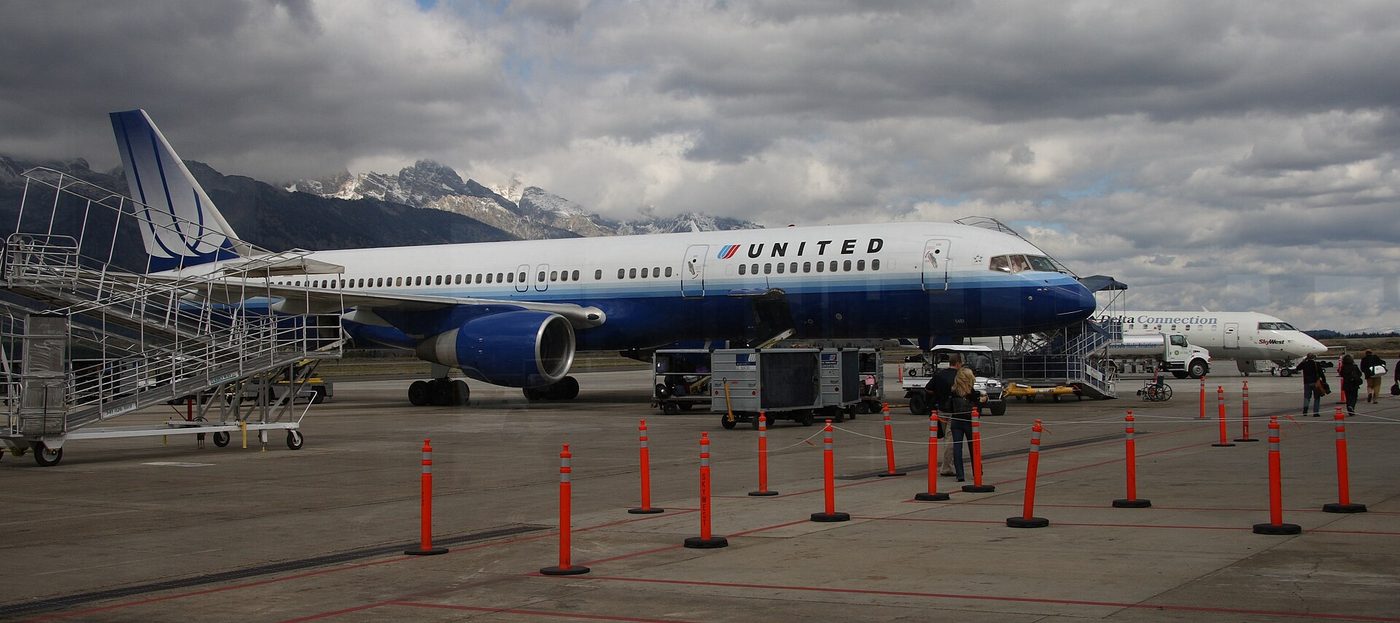
The South Entrance of Yellowstone is about 50 miles north of the airport on US-89/191/287, straight through Grand Teton past Jackson Lake. Allow at least 1 hour 15 minutes, more with photo stops, and you will make photo stops. Then it’s another 22 miles to West Thumb inside Yellowstone.
The catch: fares and rental rates at JAC tend to be among the highest in the region, and the South Entrance road is closed to cars from early November to early or mid-May. Our Jackson Hole to Yellowstone guide details the drive.
Verdict: the best airport if Grand Teton is part of your trip, especially in a one-way plan with Bozeman.
Yellowstone Airport (WYS), West Yellowstone
This small airport is about 2 miles north of West Yellowstone and a few minutes from the West Entrance. Current schedules show Delta Connection flights from Salt Lake City and United flights from Denver, but only in season, roughly early May to mid-October according to NPS. Avis and Budget have the only on-site rental counters, and cars are limited, so book the car the day you book the flight (checked September 2026).
Verdict: superb when fares are reasonable and you’re focused on geysers. Usually the priciest ticket, with the least flexibility if a flight cancels. Read our West Yellowstone Airport guide before you commit.
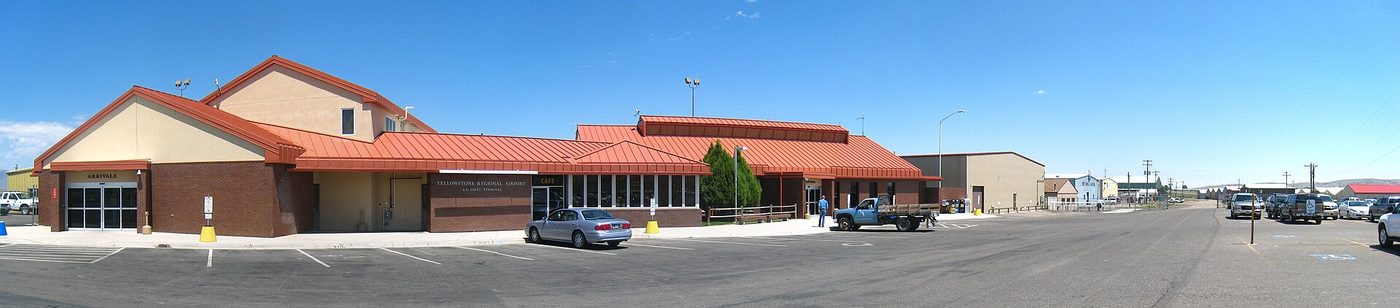
Yellowstone Regional Airport (COD), Cody
Cody’s airport has year-round United Express service to Denver, the only nonstop its site lists (checked September 2026). The East Entrance is about 50 to 53 miles west along US-14/16/20, the Buffalo Bill Cody Scenic Byway, through the Wapiti Valley and the Shoshone National Forest. Allow about an hour.
From the East Entrance it’s 27 miles over Sylvan Pass to Fishing Bridge on Yellowstone Lake. Note that the East Entrance road is closed to cars from early November to early May, and Sylvan Pass is one of the slower, twistier sections of park road.
Verdict: a good pick if you want Cody’s rodeo and museums or you’re arriving from the east. One route means limited backup if weather cancels a flight. See our Cody Yellowstone Regional Airport guide.
Idaho Falls Regional Airport (IDA)
Idaho Falls has about 10 nonstops across five airlines, with year-round service to Denver (United), Salt Lake City (Delta), Dallas (American), Seattle and Portland (Alaska), and Las Vegas and Santa Ana (Allegiant), plus seasonal routes (checked September 2026). West Yellowstone is about 108 miles northeast on US-20 through Island Park, generally a straightforward two-hour drive.
Idaho Falls sometimes undercuts Bozeman on fares and rental rates, and it’s roughly equidistant from the West Entrance and from Jackson via Teton Pass or Swan Valley. See our Idaho Falls to Yellowstone guide.
Verdict: the underrated option. Check it every time you price Bozeman or Jackson.
Billings Logan International Airport (BIL)
Billings is Montana’s largest city, with around 15 domestic routes across six carriers, most usefully to Denver, Salt Lake City, Seattle and Dallas (checked September 2026). The catch is distance. The Northeast Entrance is about 130 miles away via Red Lodge and the Beartooth Highway, one of the most spectacular roads in the United States, climbing to nearly 11,000 feet. That’s 2.5 to 3 hours without stops, and nobody drives the Beartooth without stops.
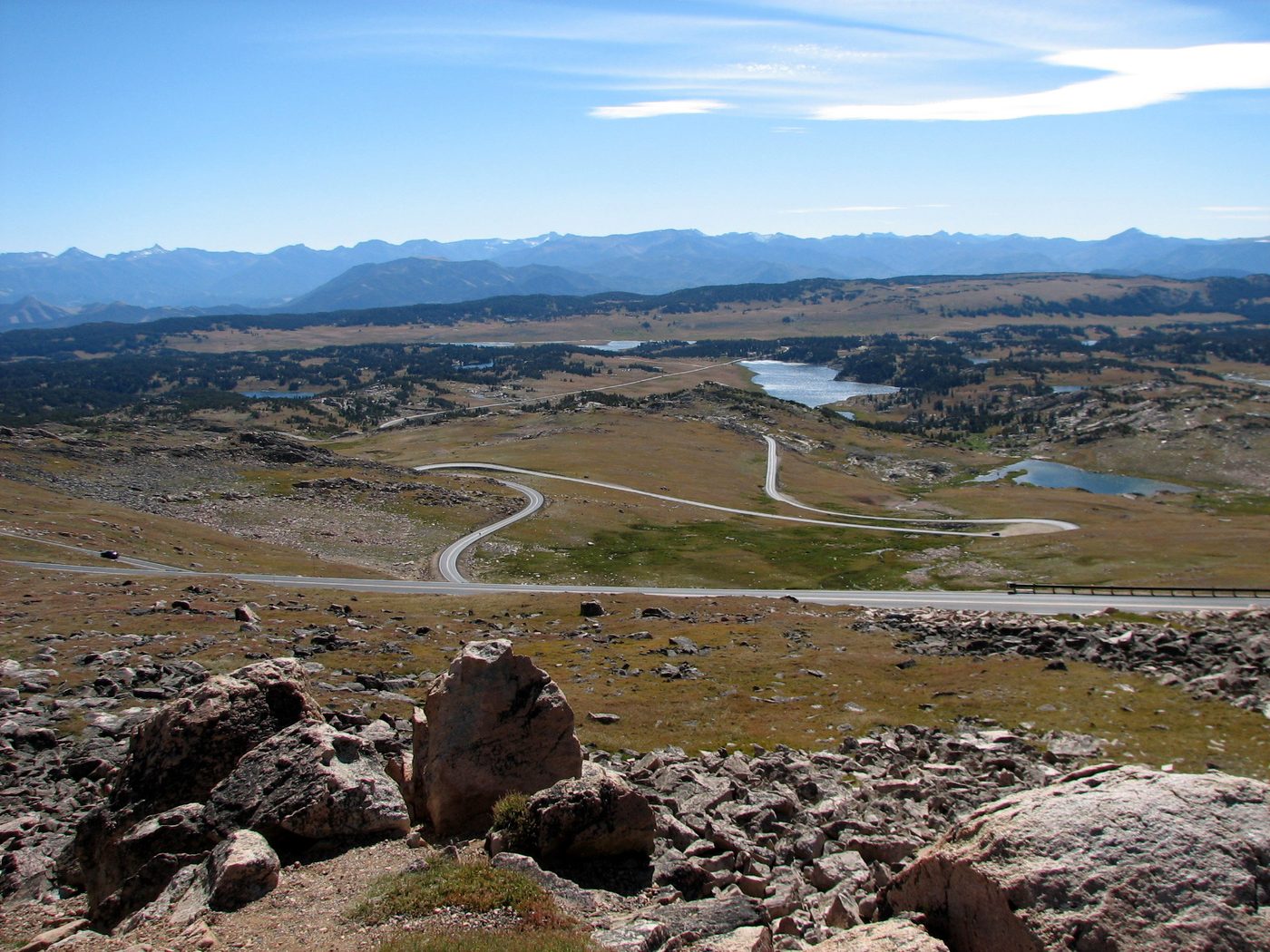
The Beartooth is only open in summer and early fall, from late May to mid-October in 2026, and it can close for snow at any time. Outside that window, Billings to Gardiner runs west on I-90 via Livingston, roughly 170 miles and about 2 hours 45 minutes. Our Billings to Yellowstone guide covers both routes.
Verdict: worth it only if the Beartooth Highway is a goal in itself, or if Billings fares are dramatically lower.
What is the nearest major airport to Yellowstone?
Bozeman Yellowstone International Airport is the nearest major airport, about 85 miles from the North Entrance and 90 miles from the West Entrance. Jackson Hole is slightly closer to the South Entrance but much smaller. West Yellowstone’s airport is closer still, only a few minutes away, but it’s a small seasonal regional airport.
“Major” matters here. A major airport gives you enough flights that a cancellation doesn’t wreck your trip, enough rental cars that you can find one in July, and prices that face some competition. By that measure Bozeman stands clearly ahead of the others near the park, and Salt Lake City and Denver are the true big hubs further away.
Salt Lake City and Denver: cheaper flights, longer drives
If you’re flying from far away, and especially from outside the United States, the big hub airports deserve a look.
Salt Lake City (SLC) is a Delta hub with nonstops from almost everywhere in the US and several international cities. It’s about 320 miles to West Yellowstone, mostly on I-15 through Idaho and then US-20, around 5 to 6 hours without stops. You can also route through Jackson and Grand Teton to the South Entrance, which is slower but far more scenic. Airfares and rental rates at SLC are often much lower than Bozeman’s, and SLC is usually the cheapest place for an RV or campervan rental. Our Salt Lake City to Yellowstone guide covers the routes.
Denver (DEN) is a United hub with an enormous flight network, but Yellowstone is around 520 miles and 8 to 10 hours away by road. For most people it only makes sense as the start of a longer Rocky Mountain road trip. See our Denver to Yellowstone guide.
Is the long drive worth the saving? Do the math before you book. Add the cost of an extra day’s rental, an extra night’s hotel, fuel for 600 to 1,000 extra miles and the vacation day you lose, then compare that with the airfare difference. For a family of four, a hub often wins. For a couple on a five-day trip, it often doesn’t. Our cheapest airport to fly into for Yellowstone guide runs that calculation, and fly or drive to Yellowstone helps if you’re coming from a drivable distance anyway.
Renting a car for Yellowstone
You’ll almost certainly need one. Yellowstone covers 2.2 million acres, the main Grand Loop Road runs 142 miles, and the big sights sit 20 to 50 miles apart with no public transit linking them. A car is how you see the park.
What to know before you book:
- Book early for summer. Bozeman, Jackson and West Yellowstone have finite fleets that sell out in July and August. Book when you book flights, and pick a cancellable rate so you can rebook if prices fall.
- Prices swing hard by season. An online snapshot of Bozeman rentals in September 2026 showed economy cars from around $39 a day, with typical summer rates far higher. Treat any quoted figure as a snapshot, not a promise.
- You don’t need four-wheel drive in summer. All the main park roads are paved. An ordinary sedan is fine from June to September. An SUV mostly buys you visibility over other cars at wildlife jams and extra luggage space.
- In spring and fall, consider it. Snow can fall in any month at 7,000 to 8,000 feet, and a higher-clearance vehicle with good tires helps in April, May and October. In winter, stick to the roads open to cars and use all-wheel drive.
- Look at one-way rentals. Picking up in Bozeman and dropping off in Jackson or Salt Lake City lets you see both parks without retracing your route. Drop fees vary a lot between companies and sometimes disappear entirely.
- Check the rules on unpaved roads. Most rental contracts restrict gravel roads. That rarely affects Yellowstone itself, but it can matter for side trips into national forest land.
- Fuel up in gateway towns. Gas stations inside the park, at Canyon, Fishing Bridge, Grant, Mammoth, Old Faithful and Tower Junction, have 24-hour card pumps year-round, but prices are higher and some stations are far apart (checked September 2026). See gas stations in Yellowstone.
Our Yellowstone car rental guide compares the options airport by airport. If you’re considering an RV, read RV rental for Yellowstone and our Yellowstone RV camping guide first. Some park campground sites can’t take long rigs, and 2026 construction on the Gardner River High Bridge near the North Entrance bans vehicles 8 feet 6 inches or wider and 75 feet or longer through late October.
Driving to Yellowstone
If you’re driving from home, you’ll reach one of five entrances, each on a different US highway and each leading to a different part of the park.
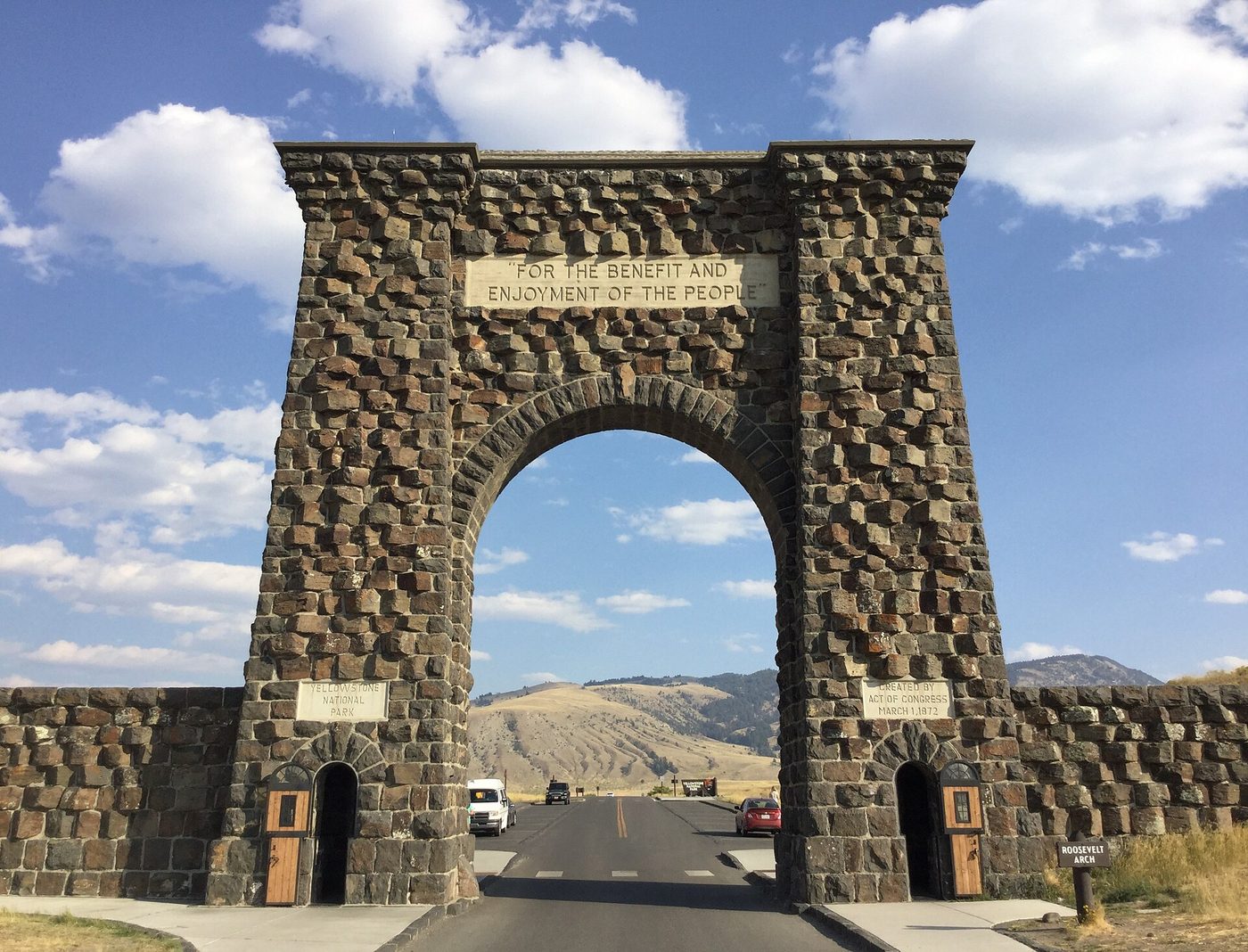
- North Entrance, Gardiner, Montana: US-89 from I-90 at Livingston. The historic Roosevelt Arch stands here, and it’s the only entrance open to cars all year.
- Northeast Entrance, Silver Gate and Cooke City, Montana: US-212. Open to cars year-round from Gardiner through Lamar Valley to Cooke City, but beyond Cooke City the Beartooth Highway and Chief Joseph Scenic Byway close for winter.
- East Entrance, near Cody, Wyoming: US-14/16/20 through the Wapiti Valley.
- South Entrance, from Jackson, Wyoming: US-89/191/287 through Grand Teton National Park.
- West Entrance, West Yellowstone, Montana: US-20 from Idaho, US-191 from Bozeman, and US-287 from the Hebgen Lake area.
Which one you use shapes the whole trip, and our Yellowstone entrances guide compares them properly. Fees are charged per vehicle and valid for seven days at all entrances: the private vehicle fee is $35, and non-US residents aged 16 and over pay an additional $100 per person unless admitted on an annual pass (checked September 2026). The full breakdown is on our Yellowstone entrance fee page.
Road trips from farther away. Yellowstone sits within a long day’s drive of Salt Lake City, Denver, Boise, Spokane and Calgary. For route-by-route advice, including where to break the drive, see driving to Yellowstone and the long-distance routes in our road trip section.
Don’t trust your GPS blindly. NPS warns that GPS and online mapping may not reflect current road status. Several apps still send drivers toward closed roads in spring and fall, and a few try to route you over forest roads that aren’t plowed. Check the park’s road status and our Yellowstone road closures guide before you set off.
Is there a train or bus to Yellowstone?
No train serves Yellowstone. NPS notes the nearest passenger depots are in southeast Idaho, Salt Lake City and northern Montana, all far from the park. Buses do run to the gateway towns: Bozeman to West Yellowstone year-round, Bozeman to Gardiner in winter and summer, and to West Yellowstone from Idaho, Cody and Jackson in summer.
It wasn’t always this way. The Northern Pacific brought early visitors to Gardiner and the Union Pacific to West Yellowstone, and the old railroad depots still stand. Today the closest you’ll get by rail is Amtrak’s Empire Builder across northern Montana, a very long day’s drive from the park.
Bus and shuttle options change often, so check with operators before you rely on them:
- Salt Lake Express runs between Salt Lake City’s airport, Idaho Falls and West Yellowstone.
- Karst Stage operates airport shuttles and charters out of Bozeman.
- Old Faithful and Friends listed a 2026 shuttle from Bozeman’s airport to Gardiner and Mammoth Hot Springs, four days a week from June 1 to October 15, at $135 one way to Gardiner or $145 to Mammoth, running only when booked at least six hours ahead (checked September 2026).
- Xanterra, the park’s lodging concessioner, has run a winter shuttle from Bozeman’s airport to Mammoth for guests.
Our Yellowstone shuttle guide keeps a current list.
Rideshare? Uber and Lyft technically operate in Bozeman and sometimes the gateway towns, but drivers willing to head to Gardiner or West Yellowstone are rare and there’s no service inside the park. Don’t build a plan on it.
Getting around inside the park
This is where Yellowstone surprises people. NPS states plainly that public transportation isn’t available in the park, though many companies run shuttles and tours. There are no hop-on buses between Old Faithful and Canyon, no park-run shuttles and no rideshare.
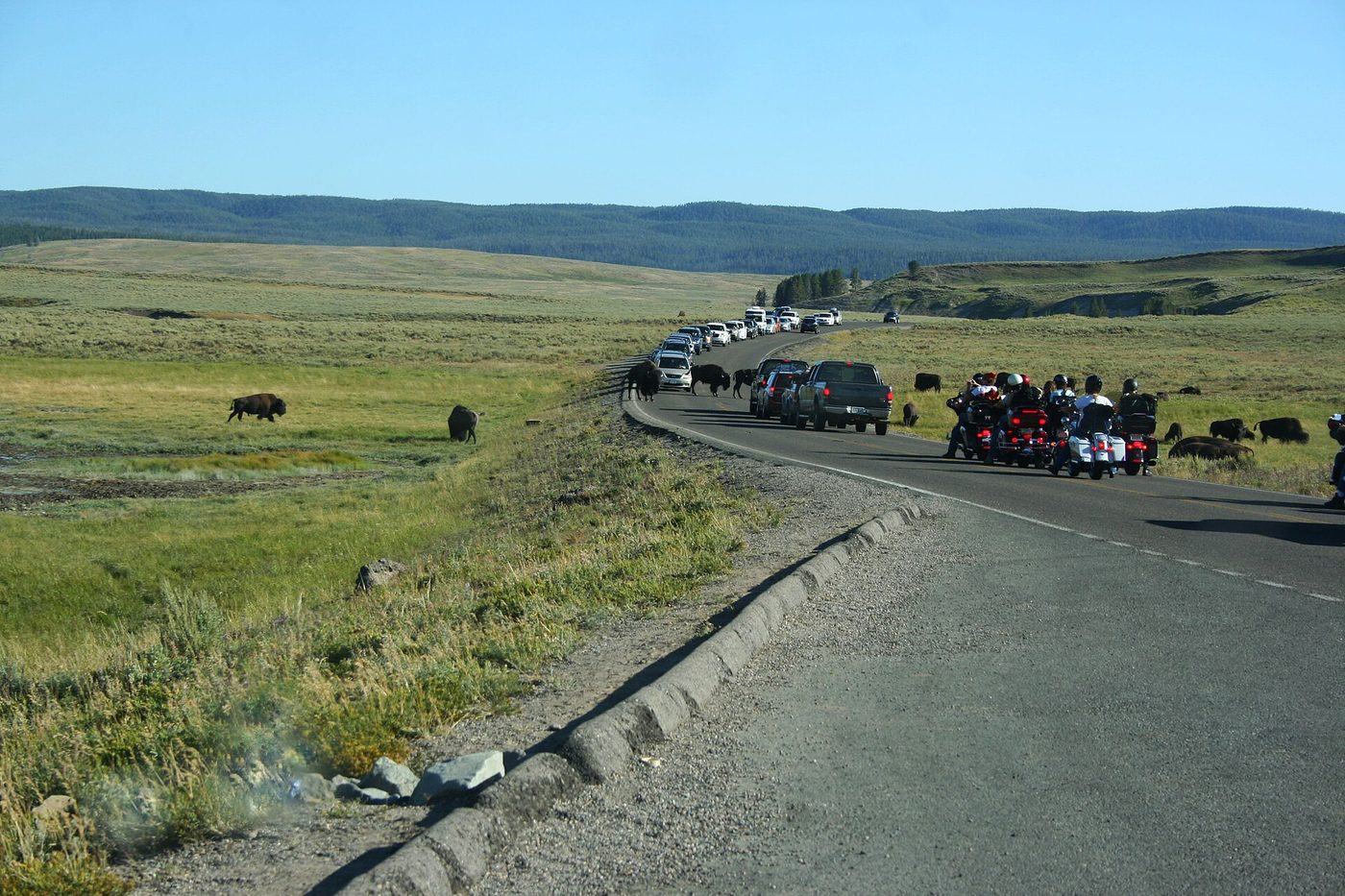
The Grand Loop Road forms a figure eight of 142 miles, connecting the five entrance roads with the main sights. Drives take longer than the mileage suggests:
- The speed limit is 45 mph or lower on most park roads, and slower in developed areas.
- Wildlife jams are real. A bison herd crossing the road in Hayden Valley or Lamar Valley can stop traffic for 20 minutes or longer.
- Road work adds delays. In 2026, NPS warned of up to 30 minutes of delay for chip sealing and up to 15 minutes for bridge work in several places.
- Parking fills. Grand Prismatic Spring, Old Faithful, Artist Point and Norris fill by mid-morning in July.
As a rule of thumb, plan on 30 to 40 miles of driving an hour at most, and budget roughly half a day just for driving each loop with a few stops. Our Grand Loop Road guide has a full point-to-point drive-time table.
Visiting Yellowstone without a car
It’s possible, but it limits what you’ll see and costs more than you might expect. Your realistic options:
- Guided tours from a gateway town. Operators in West Yellowstone, Gardiner, Bozeman, Jackson and Cody run full-day tours of the lower or upper loop. This is the most practical way to see the highlights without driving.
- Stay inside the park and join Xanterra tours. In-park lodges offer bus tours, including the historic Yellow Bus tours. Combine a shuttle to the park with nights at Old Faithful or Canyon and daily tours.
- Multi-day guided trips. Small-group companies handle transport, lodging and guiding from Bozeman or Jackson. Expensive, but completely hands-off.
- Bike (with caveats). Park roads are narrow, shoulders are minimal, distances are long and you share the road with RVs. Only experienced touring cyclists should consider it.
Honest verdict: if you can drive, rent a car. Car-free trips work best for travelers who don’t drive or want a guide for wildlife anyway. Our Yellowstone without a car guide lays out the options, costs and a sample plan.
How arrival changes by season
The season decides which airports and entrances are practical. Here’s the broad pattern for 2026-27; exact road dates live in our road closures guide (checked September 2026).
| Season | Roads open to cars | Best arrival | Notes |
|---|---|---|---|
| Late May to mid-October | All entrances and interior roads | Any airport | Peak flights; WYS open; Beartooth open late May to mid-Oct |
| Mid-April to late May | Roads open in stages from mid-April (West Entrance and the western roads first) | Bozeman, Idaho Falls | East and South entrances open in May; WYS starts early May |
| Early November to mid-December | Only North Entrance to Northeast Entrance | Bozeman | Most of the park closed to cars; quiet shoulder season |
| Mid-December to mid-March | Only North to Northeast by car; oversnow travel from West, South and East | Bozeman | Snowcoach and snowmobile tours from West Yellowstone, Mammoth and Flagg Ranch |
Winter: from mid-December to mid-March, you reach the interior only on a guided snowmobile or snowcoach tour. Bozeman is the natural arrival airport, with Gardiner and West Yellowstone the two main winter bases. Our Yellowstone in winter guide covers how winter access works.
Combining Yellowstone with Grand Teton
Grand Teton National Park sits just south of Yellowstone, and seeing both is the most popular way to extend a trip. That changes the airport decision:
- One-way, Bozeman to Jackson (or the reverse): the most efficient route. Fly into Bozeman, enter Yellowstone at the North or West Entrance, work south through the park, drive through Grand Teton and fly home from Jackson. No backtracking.
- Round trip from Jackson: simple, but Mammoth and Lamar Valley end up four to five hours’ round trip from Jackson itself, so you’ll want to move hotels.
- Round trip from Salt Lake City: the cheapest option in many cases, going up through Idaho to West Yellowstone and back through Grand Teton and Jackson, or the reverse.
Each park charges its own entrance fee. Our best airport for Yellowstone and Grand Teton guide compares the routes, and the full Yellowstone and Grand Teton hub helps you plan the combined trip.
Traveling from the UK and other countries
If you’re flying from overseas, you can’t fly nonstop to any airport near Yellowstone. You’ll connect through a US hub.
- Denver has nonstops from London and other European cities, then short connections to Bozeman, Jackson, Cody, Idaho Falls and, in season, West Yellowstone.
- Salt Lake City has nonstops from Europe with Delta and short hops to Bozeman, Jackson, Idaho Falls and West Yellowstone. It also works as a fly-drive start point.
- Seattle, Minneapolis and Chicago connect well to Bozeman.
Before you go, apply for an ESTA if you’re traveling on the Visa Waiver Program, check your rental company’s driving licence requirements, and budget for the $100 nonresident fee per person aged 16 and over at both Yellowstone and Grand Teton, unless admitted with an annual pass (checked September 2026). Our how to get to Yellowstone from the UK guide covers routings, fly-drive packages, driving tips and what to expect at the border.
Frequently asked questions
What airport is closest to Yellowstone National Park?
Yellowstone Airport (WYS) in West Yellowstone is closest, a few minutes from the West Entrance, but it’s seasonal, running about early May to mid-October. The closest year-round airports are Bozeman, Jackson Hole and Cody, each roughly 50 to 90 miles from an entrance.
Can you get to Yellowstone without a car?
Yes, but it’s limited. Shuttles and buses reach the gateway towns, and guided tours run from West Yellowstone, Gardiner, Bozeman, Jackson and Cody. Inside the park there’s no public transportation, so you’ll rely on tours or lodge-based trips.
Is there a train to Yellowstone?
No. No passenger train serves Yellowstone or its gateway towns. NPS notes the nearest depots are in southeast Idaho, Salt Lake City and northern Montana. You’ll need to fly or drive the rest of the way.
Is it better to fly into Bozeman or Jackson for Yellowstone?
Bozeman usually has more flights, more rental cars and lower prices, and it’s closer to Mammoth, Lamar Valley and the West Entrance. Jackson is better if Grand Teton is part of your trip. Many travelers fly into one and out of the other.
How far is Yellowstone from Salt Lake City?
About 320 miles to West Yellowstone, around 5 to 6 hours without stops via I-15 and US-20. The scenic route through Jackson and Grand Teton to the South Entrance is longer. Salt Lake City often has cheaper flights and rental cars than airports closer to the park.
Can you drive into Yellowstone in winter?
Only on one road. From early November to mid-April, the road from the North Entrance at Gardiner through Mammoth and Lamar Valley to Cooke City stays open to cars. All other roads close to cars, and from mid-December you reach the interior only by snowcoach or snowmobile.
Do I need a 4×4 for Yellowstone?
Not in summer. All main park roads are paved, and an ordinary car handles them easily from June to September. In spring, fall and winter, an all-wheel-drive vehicle with good tires is sensible because snow can fall in any month at park elevations.
However you arrive, the drive from the gate to your lodging is longer than most first-time visitors expect, and cell service disappears within minutes of entering the park. Before you set out, read our guide to Yellowstone maps and in-park services, which lays out the Grand Loop, the five entrance roads and where the gas stations and visitor centers actually are.
Which airport you fly into largely decides which entrance you use, and which entrance you use should decide where you sleep. Bozeman feeds the North and West entrances, Jackson the South, Cody the East. Before you book flights, read our entrance-by-entrance comparison of hotels near Yellowstone, because a cheap fare into the wrong airport can cost you two extra hours of driving every day of the trip.
Before you compare airports, it helps to be clear on the geography itself — which states the park straddles, how far apart the five entrances are, and how big the place actually is. Our explainer on where Yellowstone National Park is covers the states, the size, the Grand Loop and which gate suits which trip.
Sources
- National Park Service: Yellowstone directions and transportation, checked September 2026
- National Park Service: Yellowstone park roads, checked September 2026
- National Park Service: Yellowstone fees and passes, checked September 2026
- Bozeman Yellowstone International Airport, checked September 2026
- Jackson Hole Airport, checked September 2026
- Yellowstone National Park Lodges: getting to Yellowstone, checked September 2026
Image credits
| Photo | Credit |
|---|---|
| Once you arrive, the car is how you get around, and bison set the pace (top of page) | Tony Hisgett from Birmingham, UK, CC BY 2.0, via Wikimedia Commons |
| Bozeman’s airport, formerly Gallatin Field, is the region’s busiest | Jun Seita, CC BY 2.0, via Wikimedia Commons |
| Jackson Hole Airport sits inside Grand Teton National Park | Acroterion, CC BY-SA 4.0, via Wikimedia Commons |
| Cody’s airport is about an hour from the East Entrance | Russell Harrison Photography from Raleigh, NC, US, CC BY-SA 2.0, via Wikimedia Commons |
| The Beartooth Highway links Red Lodge to the Northeast Entrance in summer | WizardFusion, public domain, via Wikimedia Commons |
| The North Entrance at Gardiner is the only one open to cars all year | Craig Baker, CC BY-SA 4.0, via Wikimedia Commons |
| A wildlife jam in Hayden Valley can add 20 minutes or more to a drive | Anusia1984, CC BY-SA 3.0, via Wikimedia Commons |