The yellowstone entrance fee is $35 per private vehicle, which covers everyone in the car for seven days. Motorcycles pay $30 and hikers or cyclists 16 and older pay $20. Since January 1, 2026, every non-US resident aged 16 or older also pays a $100 nonresident fee unless admitted with an annual or America the Beautiful pass. Grand Teton charges separately.
Those are the headline numbers (checked on nps.gov in September 2026), and for a US family driving in for a week, that’s the whole story: $35 at the gate and you’re in. For international visitors, it’s more complicated and a lot more expensive, and most trip-cost articles online still haven’t caught up. A British couple driving from Jackson to West Yellowstone through both parks now pays $470 in entrance fees if they buy weekly passes at each gate. The right pass cuts that to $250.
This guide is the site’s single home for money at the gate and choosing a gate. It covers every fee and pass, how the nonresident fee works in practice, worked examples for real groups, a quick decision guide on which pass to buy, how and where to pay, the 2026 fee-free days, and all five entrances with their seasons and what’s beyond each one. If you’re earlier in your planning, our guide to planning a trip to Yellowstone covers the bigger picture, and how to get to Yellowstone covers airports and drives.
How much does it cost to get into Yellowstone?
A private vehicle costs $35 for seven days and covers everyone inside. A motorcycle is $30 and a hiker or cyclist 16 or older pays $20. Since January 1, 2026, each non-US resident aged 16 or older also pays a $100 nonresident fee unless admitted with an annual or America the Beautiful pass.
Here is the full fee schedule as published by the park (checked September 2026):
| Pass | Price | What it covers |
|---|---|---|
| Private vehicle | $35 | One non-commercial vehicle and all passengers, 7 consecutive days |
| Motorcycle | $30 | Up to 2 private motorcycles with up to 4 total passengers, 7 days |
| Snowmobile | $30 | Up to 2 snowmobiles with up to 4 total passengers, 7 days |
| Individual (on foot or bicycle) | $20 | One person 16 or older, 7 days |
| Nonresident fee | $100 per person | Each non-US resident 16 or older, on top of the entrance fee, unless admitted with an annual or America the Beautiful pass |
| Yellowstone Annual Pass | $70 | Pass holder and passengers in the same vehicle for a year, Yellowstone only |
| America the Beautiful, resident annual | $80 | All federal fee areas nationwide for a year |
| America the Beautiful, nonresident annual | $250 | All federal fee areas nationwide for a year |
| America the Beautiful, senior annual / lifetime | $20 / $80 | US citizens and permanent residents 62 and older |
| America the Beautiful, military, Access, 4th grade | Free | Eligible groups; see below |
A few details that trip people up:
- Children under 16 enter free. The per-person fees and the nonresident fee apply only from age 16.
- The seven days are consecutive. Buy on Monday and your pass runs through the following Sunday. You can leave and re-enter as often as you like in that window, at any entrance.
- The fee is per vehicle, not per person, for private cars. A minivan with seven people pays the same $35 as a solo driver, except for any nonresidents aboard.
- The Yellowstone Annual Pass runs through the month of purchase the following year, so a pass bought on June 3 is valid until the end of the next June.
- Grand Teton is not included. Each park charges its own fee. More on that below.
Fees go back into the park: most of the money collected at Yellowstone’s gates stays in Yellowstone to fund projects like trail repairs, restrooms and visitor services.
Motorcycles, bicycles and hikers
The $30 motorcycle pass covers up to two private motorcycles and four riders in total, so two couples riding together pay once, not twice. It’s valid for seven days like the vehicle pass, which suits the many riders who loop through the park on the way to or from the Beartooth Highway.
Cyclists and hikers pay the $20 individual rate for each person aged 16 or older, valid for seven days. That applies to touring cyclists crossing the park, to anyone who parks outside a gate and walks or rides in, and to backpackers who enter on foot from neighboring national forest land. Backcountry camping needs its own permit, separate from the entrance fee; our best hikes in Yellowstone guide covers where to get one.
Nonresidents traveling by motorcycle, bike or on foot pay the $100 nonresident fee on top of these rates, per person, just as they would in a car.
The $100 nonresident fee: who pays and how it works
The biggest change to Yellowstone’s fees in years took effect on January 1, 2026. The park’s own wording is direct: each non-US resident aged 16 and older visiting Yellowstone must pay a $100 nonresident fee in addition to the standard entrance fee, unless admitted with an annual or America the Beautiful pass. The Department of the Interior announced the fee in November 2025, and it applies at 11 of the most visited national parks, including Grand Teton next door.
Who counts as a nonresident? Anyone who isn’t a US citizen or a US resident. That includes Canadians, Mexicans and anyone visiting from overseas on a tourist visa or visa waiver. Carry photo ID that shows your residency; if you’re a US resident, a US driver’s license or state ID is the simplest proof, and rangers can ask for it.
How much does it add? $100 for each nonresident aged 16 or older, per park. A carload of four foreign adults pays $400 on top of the $35 vehicle fee, at Yellowstone alone.
How is it collected? At the entrance station, along with the entrance fee. Travel-industry guidance issued when the fee took effect said the $100 is collected in person at the gate rather than through online passes, and rangers may check the ID of every passenger aged 16 and older. Build in a few extra minutes at the booth.
How do you avoid it? Enter with an annual pass or an America the Beautiful pass. For a nonresident, that means the $250 nonresident America the Beautiful pass, which covers entrance fees at all national parks and other federal fee areas for a year and, under the NPS wording, means the pass holder is admitted without the $100 fee.
What about nonresident passengers in a pass holder’s car? Here the rules are less clear than they should be. An annual pass admits the pass holder and everyone in the same private vehicle, and the NPS wording exempts anyone “admitted with an Annual or America the Beautiful Pass.” Read together, that suggests nonresident passengers traveling with a pass holder don’t pay the $100. But we couldn’t find NPS wording that says so outright when we checked in September 2026, and enforcement happens at the gate. If your budget depends on it, confirm at the entrance station or with the park before you travel.
Our dedicated guide to the Yellowstone nonresident fee covers the rule in more depth, including worked examples for families from the UK, Canada, Germany and Australia.
Annual and America the Beautiful passes
If you’re visiting more than once, visiting several parks, or visiting from abroad, a pass can save you a lot. Here are the options.
Yellowstone Annual Pass ($70). Unlimited entry to Yellowstone for a year for the pass holder and passengers in the same vehicle. It covers Yellowstone only, not Grand Teton. It pays for itself on your second weekly visit, which makes it a good choice for people who live within driving distance. See our Yellowstone annual pass guide.
America the Beautiful, resident annual ($80). Covers entrance fees at every national park and more than 2,000 other federal recreation areas for a year, for the pass holder and passengers in a single private vehicle. It’s the pass for road-trippers. The pass holder must be present, with ID, for it to be used.
America the Beautiful, nonresident annual ($250). The same nationwide coverage for visitors from abroad, priced higher since 2026. For most international visitors doing more than one park, it’s the best deal going. See our guide to the America the Beautiful pass for Yellowstone.
Senior passes ($20 annual, $80 lifetime). For US citizens and permanent residents aged 62 and older. The lifetime pass pays for itself on a single trip to Yellowstone and Grand Teton plus one more park. See our Yellowstone senior pass guide.
Free passes. Current US military members and veterans, US citizens and permanent residents with permanent disabilities (the Access Pass), and US fourth graders and their families (the 4th Grade pass) all qualify for free America the Beautiful passes.
| Pass | Price | Covers Grand Teton? | Waives $100 nonresident fee? | Best for |
|---|---|---|---|---|
| Yellowstone 7-day vehicle | $35 | No | No | One trip, Yellowstone only |
| Yellowstone Annual | $70 | No | Yes, for those admitted with it (US citizens and residents) | Locals and repeat visitors |
| ATB resident annual | $80 | Yes | Not applicable | US residents visiting 3+ parks a year |
| ATB nonresident annual | $250 | Yes | Yes | International visitors, especially to 2+ parks |
| ATB senior lifetime | $80 | Yes | Not applicable | US residents 62+ |
Is the America the Beautiful pass worth it for Yellowstone?
For nonresidents, almost always: at $250 it costs less than a carload of two foreign adults pays at Yellowstone and Grand Teton combined. For US residents, the $80 pass pays off if you’ll visit three or more fee parks in a year; for Yellowstone alone, a $35 weekly pass is cheaper.
Here’s the arithmetic, using the published fees (checked September 2026) and assuming one private vehicle.
For US residents: Yellowstone and Grand Teton on the same trip cost $35 + $35 = $70 with weekly passes, which is $10 less than the $80 pass. Add a third fee park, such as Glacier, Arches or Rocky Mountain, or a second trip later in the year, and the pass wins. Many road trips in the West pass through three or more fee areas, so it’s worth adding up your route.
For nonresidents: the numbers are much starker. A single nonresident adult pays $135 at Yellowstone ($35 + $100) and the same again at Grand Teton, $270 in all, against $250 for the pass. Two nonresident adults pay $235 per park, $470 for both. Even at Yellowstone alone, a car with three or more nonresident adults pays more than $250. For almost any international visitor, the nonresident pass is the obvious buy, as long as the pass holder is in the car at every gate.
What real groups pay: worked examples
These examples use the fees published by the park (checked September 2026), assume one private vehicle and children under 16, and show weekly passes at the gate against the best pass. For groups with nonresident passengers traveling with a pass holder, see the note in the nonresident section above.
| Group | Yellowstone only, gate passes | Yellowstone and Grand Teton, gate passes | Best option |
|---|---|---|---|
| US family of 4, one car | $35 | $70 | Weekly passes ($70), or $80 ATB if a third park is on the route |
| US couple, 3 parks in a year | $35 | $70 plus the third park | $80 ATB resident |
| UK couple, one car | $235 | $470 | $250 ATB nonresident |
| UK family, 2 adults and 2 under-16s | $235 | $470 | $250 ATB nonresident |
| German family, 2 adults and a 17-year-old | $335 | $670 | $250 ATB nonresident |
| Solo Canadian driver | $135 | $270 | $250 ATB nonresident |
| Nonresident couple on one motorcycle | $230 | $460 | $250 ATB nonresident |
| Nonresident cyclist | $120 | $240 | Gate passes, unless more parks follow |
| US senior couple | $35 | $70 | $80 senior lifetime |
Two quick observations. First, for international visitors the nonresident fee usually costs far more than the entrance fee itself, so skipping the maths can cost a few hundred dollars. Second, the cyclist is the one case where the gate passes win for both parks; the moment a third park joins the trip, the pass takes over.
Does the Yellowstone entrance fee cover Grand Teton?
No. Yellowstone and Grand Teton each charge their own entrance fee, $35 per vehicle, and the $100 nonresident fee applies at both. Nonresidents visiting both should usually buy the $250 America the Beautiful pass; for US residents, the $80 version pays off with a third fee park.
This catches a lot of people, because the two parks sit next to each other and the drive from one to the other feels continuous. As the Yellowstone fees page points out, traveling through the South Entrance, including trips to Jackson, takes you through Grand Teton National Park, and each park charges its own fee. If you’re doing both, work out your pass before you arrive at the first gate. Our guide to the Yellowstone and Grand Teton pass goes through every combination, and Yellowstone and Grand Teton covers how to plan a trip to both.
Which pass should you buy? A quick decision guide
Work down this list and stop at the first line that fits:
- Are you a US fourth grader, an active-duty service member or veteran, or a US citizen or permanent resident with a permanent disability? Get the free America the Beautiful pass you qualify for.
- Are you a US citizen or permanent resident aged 62 or older? Buy the $80 senior lifetime pass. It never expires.
- Are you a nonresident visiting two or more fee parks, or three or more nonresident adults in one car? Buy the $250 nonresident America the Beautiful pass, and make sure the pass holder is at every gate.
- Are you a US resident visiting three or more fee parks this year? Buy the $80 resident America the Beautiful pass.
- Do you live nearby and visit Yellowstone more than once a year? Buy the $70 Yellowstone Annual Pass.
- Everyone else: pay $35 at the gate for a seven-day vehicle pass, plus $100 for each nonresident aged 16 or older.
How and where to pay
At the gate. All five entrance stations accept cash and credit or debit cards. You pay at the booth as you drive in and get a receipt that serves as your pass for the week. Keep it on your dashboard or with you.
Online. Digital America the Beautiful passes are sold through Recreation.gov, and you can load them on your phone before you arrive. Physical passes are sold through the USGS online store and at more than 1,000 federal recreation sites. Buying online can save time at a busy gate, but it doesn’t skip the line entirely, since you still stop at the booth, and the nonresident fee is handled in person. Our Yellowstone pass online guide walks through the options.
ID. Pass holders must show valid photo ID with every pass, and for annual passes the pass holder must be present. If you’re claiming US residency to avoid the nonresident fee, bring ID that shows it.
Arriving when the booth is empty. Yellowstone’s entrances are open 24 hours a day when they’re seasonally open, and they aren’t gated at night. You can drive in at 5 a.m. or midnight. You still need a valid pass, so buy one in advance if you expect to arrive outside booth hours. See Yellowstone entrance hours for how each gate works through the day.
Transit through the park. There’s no free transit exemption for the Grand Loop: if you drive through Yellowstone, you pay. The one exception people ask about is US-191, which clips the northwest corner of the park between Big Sky and West Yellowstone without an entrance station. Our guide to whether you can drive through Yellowstone without paying explains exactly what that covers.
At the booth: what to expect
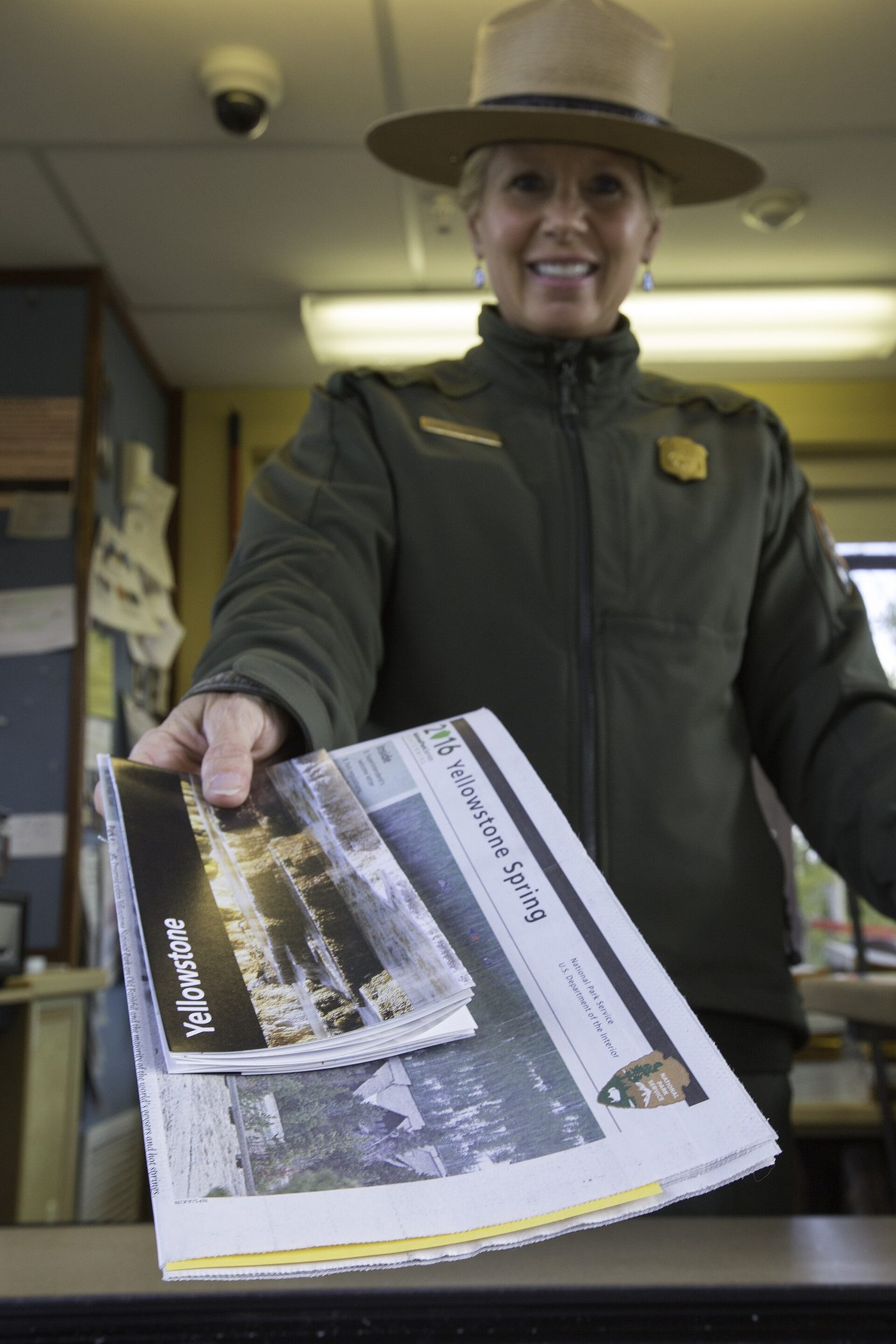
Paying at a Yellowstone gate takes a minute or two if you’re ready for it. Pull up to the window, tell the ranger which pass you want or hand over your America the Beautiful pass with your photo ID, and pay by card or cash. If there are nonresidents aged 16 or older in the car, expect to be asked, and have their passports or ID cards to hand. You’ll get a receipt, which is your pass for the week, along with the park map and the park newspaper, which lists current road work, visitor center hours and ranger programs. Keep that receipt somewhere you’ll find it again: when you re-enter, even through a different gate, you show it and drive on.
A few habits make the booth painless:
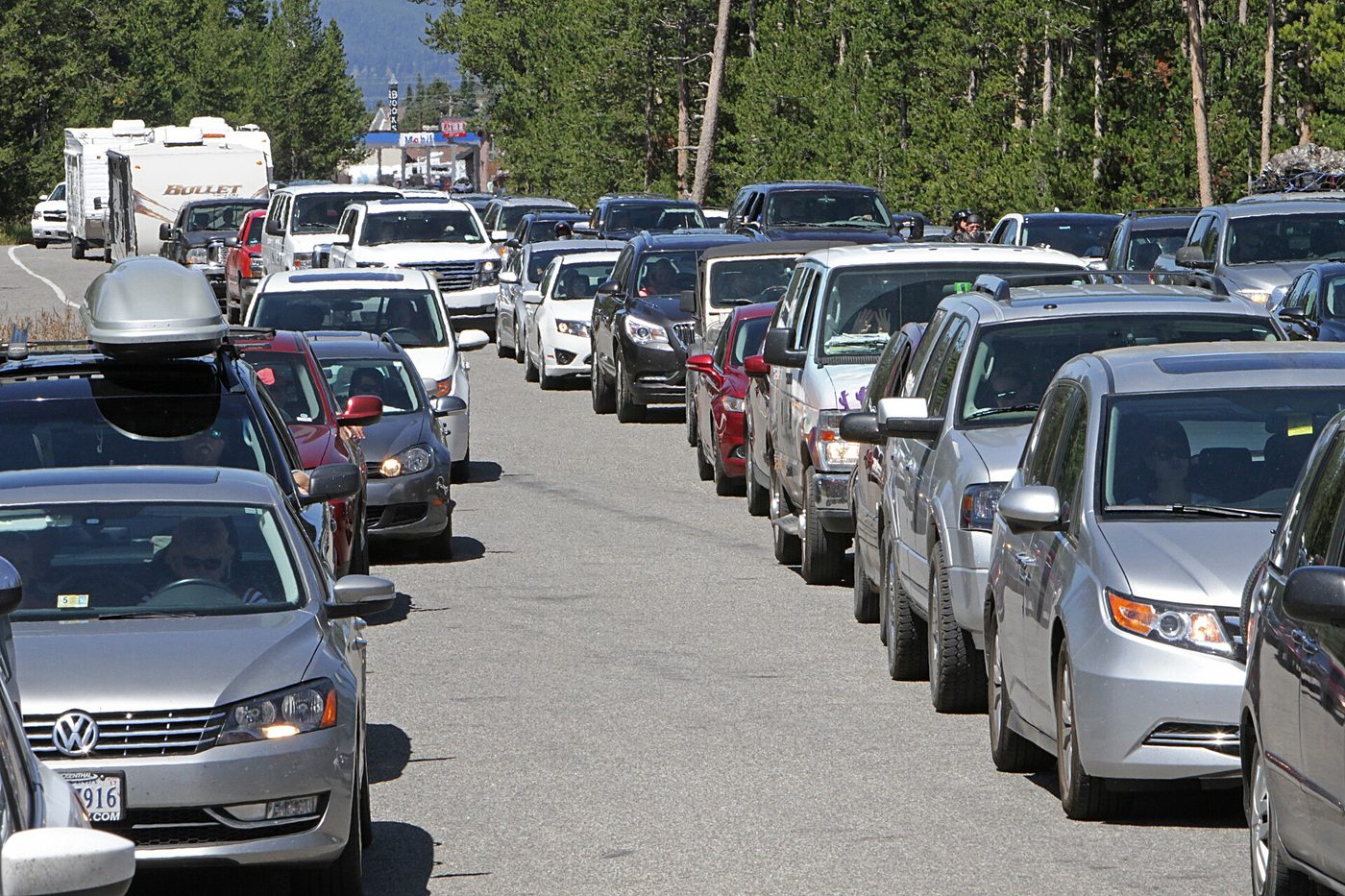
- Have everything out before you reach the window. Much of the midmorning queue at the West Entrance in July is people hunting for wallets and passes.
- Check the 2026 bridge limits if you’re towing or driving a big RV and plan to use the North Entrance road, since vehicles 8’6″ or wider or 75 feet or longer can’t cross the Gardner River High Bridge until late October.
- Ask the ranger. The staff at the gate know which parking lots are filling, where the day’s construction delays are and whether a bison jam is building up the road.
- Don’t stop at the booth for photos. Use the pullouts beyond the gate; the people behind you will thank you.
Fee mistakes to avoid
Most overspending at Yellowstone’s gates comes from the same handful of mistakes:
- Assuming one pass covers both parks. The Yellowstone weekly pass doesn’t cover Grand Teton, and Grand Teton’s doesn’t cover Yellowstone. If you’re doing both, do the maths before the first gate.
- Leaving the pass holder behind. An annual or America the Beautiful pass only works when the holder is in the vehicle with ID. If the holder stays at the hotel while the rest of the group drives to Old Faithful, the car pays the full fees, including the $100 for each nonresident adult.
- Not budgeting the nonresident fee per park. Four nonresident adults in one car pay $400 at Yellowstone and another $400 at Grand Teton, on top of the vehicle fees. That’s $870 across two parks against $250 for one nonresident pass.
- Starting a weekly pass on a wasted day. The seven days are consecutive from the day you buy. If you arrive at dusk and simply drive to your room, that counts as day one. It rarely matters for a short trip, but on a long one it can push your last day outside the window.
- Counting on a fee-free day as a nonresident. In 2026, fee-free days apply only to US citizens and residents.
- Assuming a tour covers everything. Tour prices usually include the entrance fee, but not always the nonresident fee. Ask before you book.
- Choosing the wrong senior pass. The $20 senior annual pass and the $80 lifetime pass cost the same after four years. If you expect to keep visiting parks, the lifetime pass is better value.
- Throwing away the receipt. It’s your proof of payment for re-entry during the week. Keep it on the dashboard or photograph it.
Fee-free days in 2026
The NPS waives entrance fees on a handful of days each year. In 2026, the fee-free days at Yellowstone are February 16, May 25, June 14, July 3 to 5, August 25, September 17, October 27 and November 11 (checked September 2026). As of this writing, three remain: September 17, October 27 and November 11.
The big change this year: free entrance on these days is for US citizens and residents only. Nonresidents pay the regular entrance fee and the $100 nonresident fee as usual.
Our honest take: fee-free days are a nice bonus if they happen to fall on your trip, but don’t plan around them. Saving $35 on a busy summer day means sharing the park with more people, and the entrance lines can be longer. The fall dates are less crowded and more worthwhile. Our Yellowstone free days guide lists the dates for 2026 and 2027 as they’re announced.
Yellowstone’s five entrances
Yellowstone has five entrances, and the one you choose shapes your first day, your drive and, in some seasons, whether you can get in at all. The road dates change each year and are listed on our Yellowstone road closures page; the guide to all Yellowstone entrances covers them side by side.
| Entrance | Gateway town | Open to cars (2026) | First big sight | Notes |
|---|---|---|---|---|
| North | Gardiner, MT | All year | Mammoth Hot Springs (5 miles) | Roosevelt Arch; single-lane bridge restrictions to late October 2026 |
| Northeast | Silver Gate and Cooke City, MT | All year (from inside the park in winter) | Lamar Valley | Beartooth Highway and Chief Joseph Byway approach in summer only |
| West | West Yellowstone, MT | April 17 to end of October | Madison River, Old Faithful (30 miles) | The busiest gate |
| South | From Grand Teton and Jackson, WY | May 8 to end of October | Lewis Falls, West Thumb | Passes through Grand Teton, which charges separately |
| East | From Cody, WY | May 1 to end of October | Sylvan Pass, Yellowstone Lake | Oversnow only in winter, with limited avalanche-season access |
North Entrance (Gardiner, Montana)
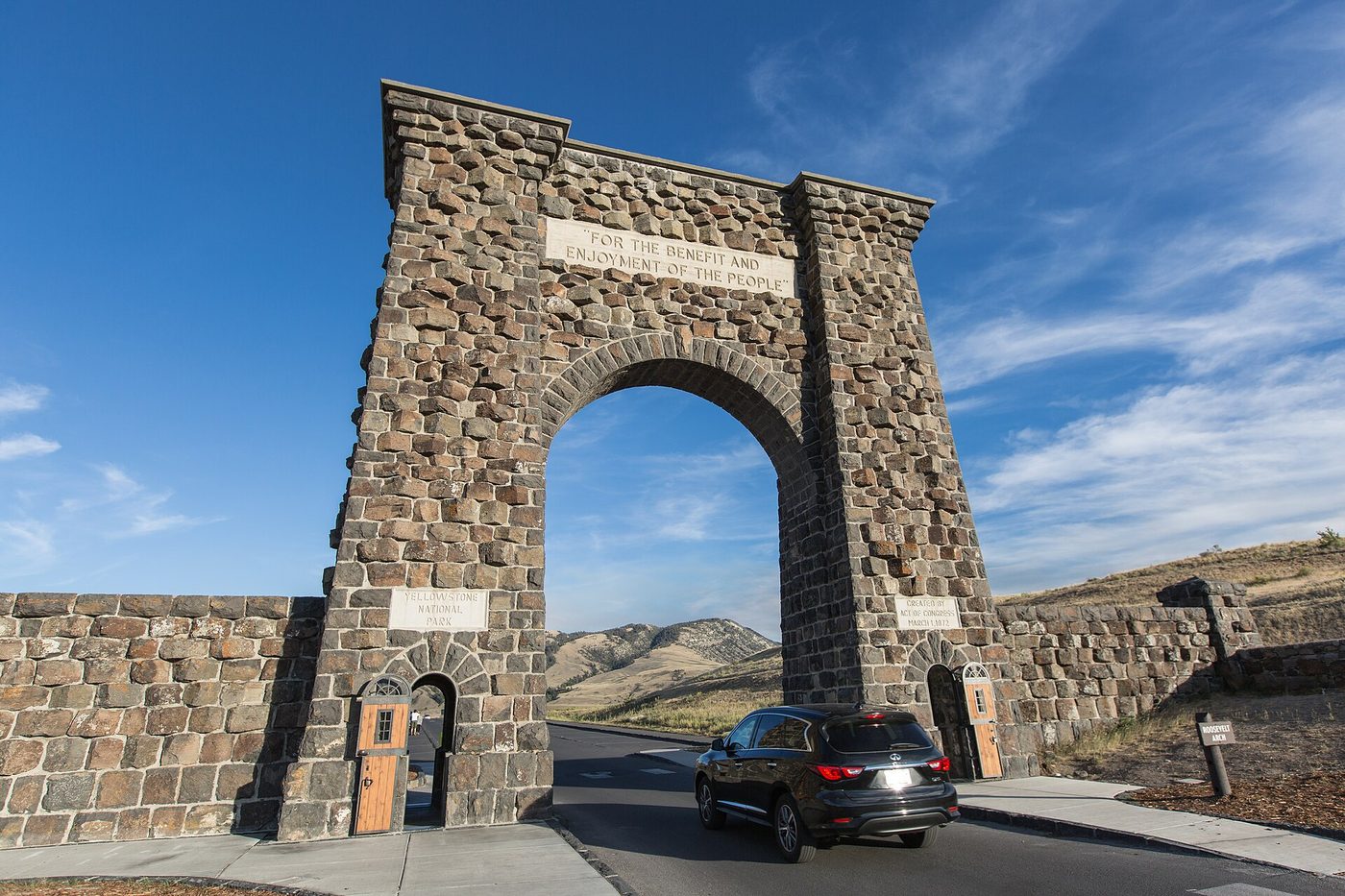
The only entrance open to cars all year, and the most historic, with the stone Roosevelt Arch dedicated in 1903. Mammoth Hot Springs is just 5 miles inside. It’s the natural gate if you’re flying into Bozeman, about 80 miles away. For 2026, the Gardner River High Bridge on the entrance road is down to one lane with delays of up to 15 minutes, and vehicles 8’6″ or wider or 75 feet or longer can’t cross until late October. See our Yellowstone North Entrance guide and things to do in Gardiner.
Northeast Entrance (Silver Gate and Cooke City, Montana)
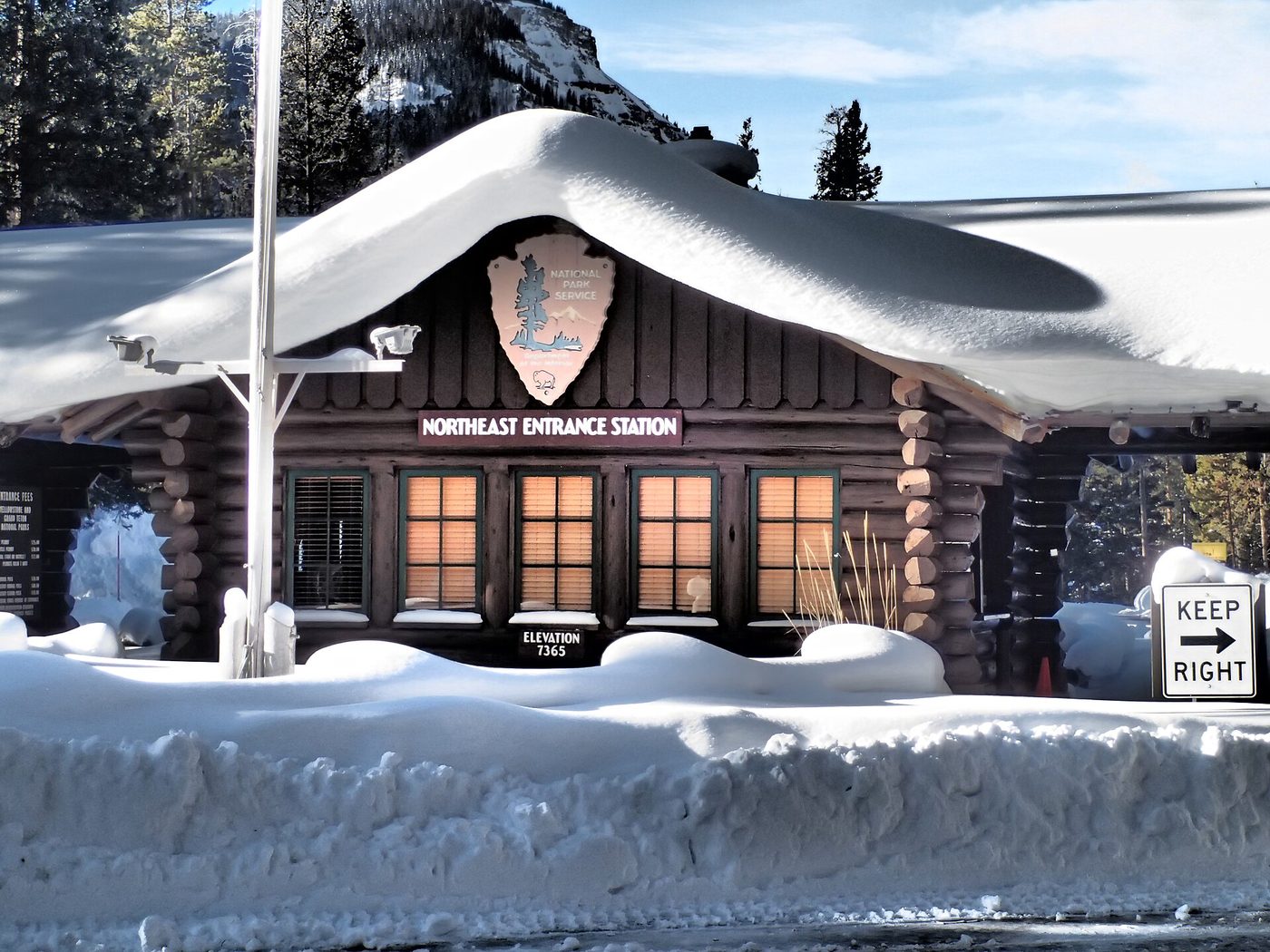
The quietest and wildest entrance, leading straight into Lamar Valley, the best wildlife-watching area in the park. The road from the North Entrance to here is open all year, but the approaches from outside the park, the Beartooth Highway from Red Lodge and the Chief Joseph Scenic Byway from Cody, are open only in summer (May 22 to October 12 in 2026). In winter, Cooke City is reachable only through the park. See our Northeast Entrance and Beartooth Highway guides.
West Entrance (West Yellowstone, Montana)
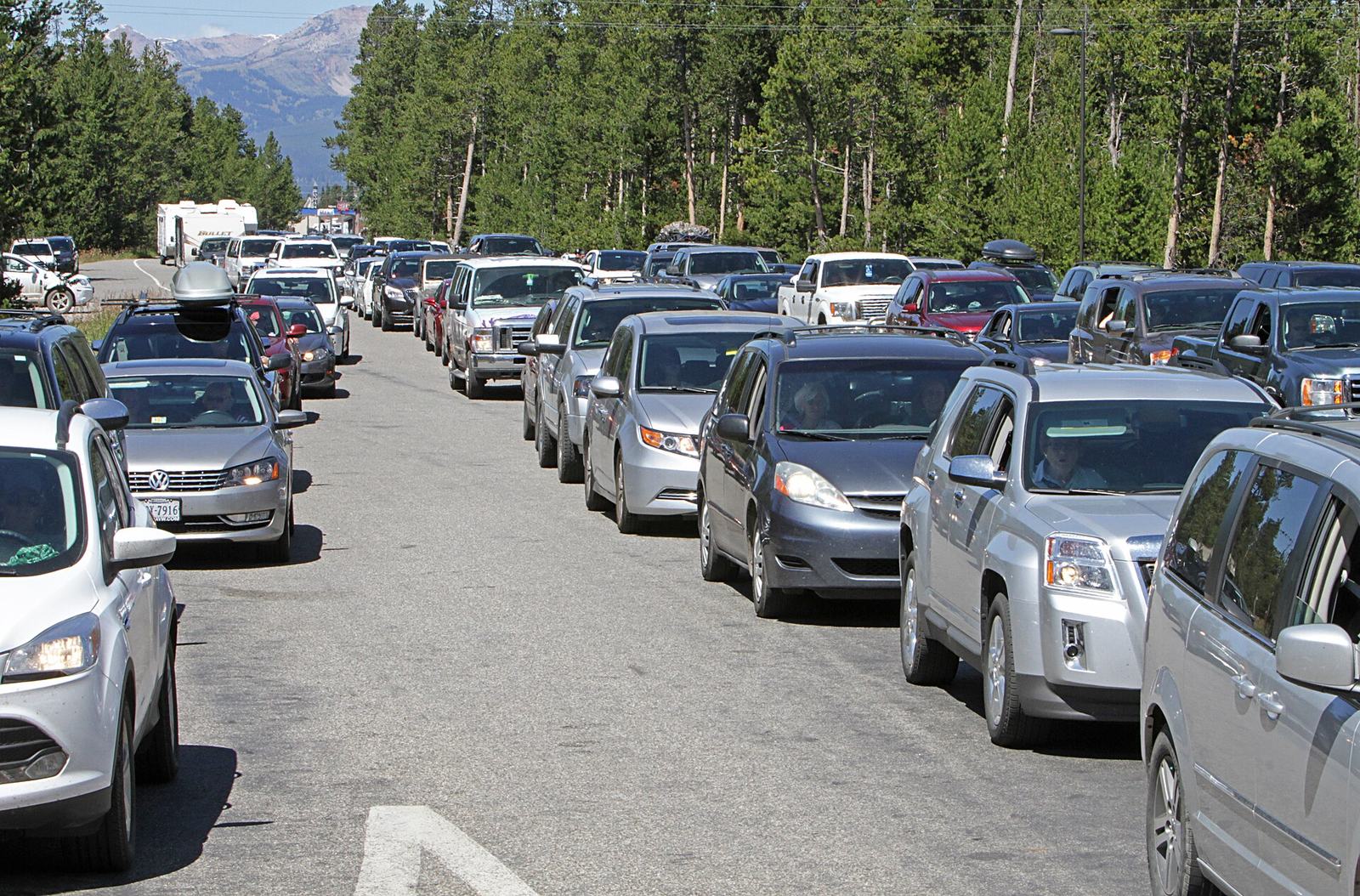
The busiest entrance, and the closest to the geyser basins: Old Faithful is 30 miles away via Madison Junction. The town of West Yellowstone has the most lodging, restaurants and tour operators of any gateway. In summer, lines at the gate can back up for a mile between about 9 a.m. and noon; arrive before 8 or after 3. It’s open to cars from mid-April (April 17 in 2026) to the end of October, and to oversnow vehicles from December 15 to mid-March. See our West Entrance guide and West Yellowstone.
South Entrance (from Grand Teton and Jackson, Wyoming)
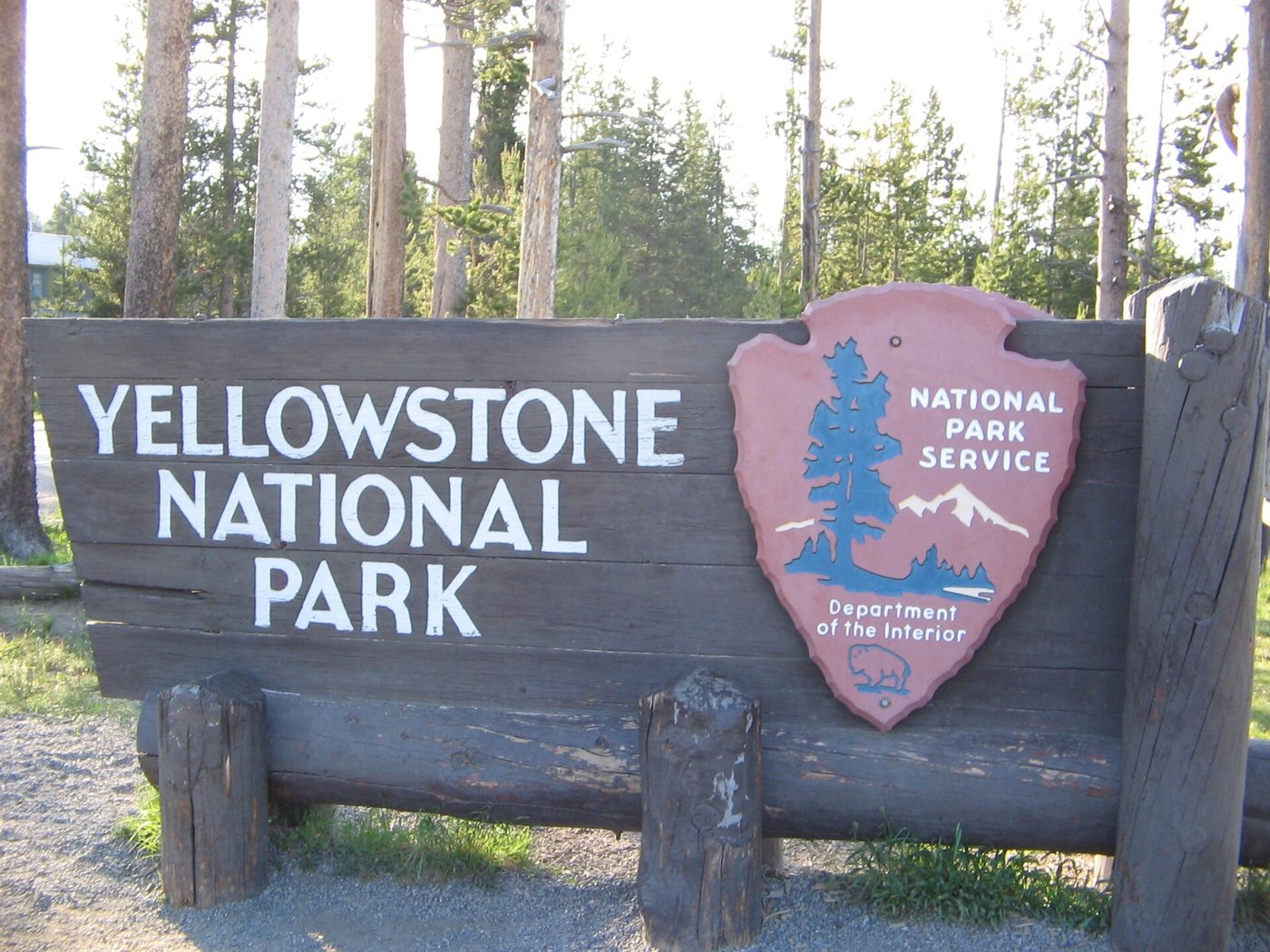
The entrance for anyone coming from Jackson or combining the trip with Grand Teton. The road climbs north along the Lewis River to Lewis Falls and West Thumb on Yellowstone Lake. It opened to cars on May 8 in 2026 and closes at the end of October; in winter it’s open to oversnow travel. Remember that the drive from Jackson passes through Grand Teton, which has its own fee. See our South Entrance guide.
East Entrance (from Cody, Wyoming)
The entrance from Cody, about 50 miles east, over 8,530-foot Sylvan Pass and down to Yellowstone Lake near Lake Butte Overlook. It’s one of the most scenic approaches, through the Shoshone National Forest’s Wapiti Valley. It opened on May 1 in 2026 and closes to cars at the end of the season. Winter access over Sylvan Pass is limited by avalanche control. See our East Entrance guide and Cody to Yellowstone.
Which entrance should you use?
The best entrance is the one closest to where you’re sleeping and to the first thing you want to see. In practice:
- For geysers first: the West Entrance.
- For wildlife first, or in winter: the North Entrance, then east to Lamar Valley.
- Coming from Grand Teton or Jackson: the South Entrance.
- Coming from Cody or the Bighorn Basin: the East Entrance.
- For a scenic arrival in summer: the Northeast Entrance via the Beartooth Highway.
If you’re flying, Bozeman works best for the North and West entrances, Jackson for the South, and Cody for the East. Many visitors enter through one gate and leave through another to avoid backtracking, and your weekly pass covers any combination of entrances. Our best entrance to Yellowstone guide compares them in detail, and the Yellowstone itinerary guide shows routes from each gate.
Entrance hours, lines and seasonal access
Yellowstone’s entrances are open 24 hours a day, 365 days a year, when the roads behind them are open. There’s no timed-entry or reservation system for the park itself, and the gates aren’t locked at night.
What does vary is the season. The North Entrance is open to cars all year. The Northeast Entrance is open to cars all year from inside the park. The West, South and East entrances close to cars at the end of October and reopen between mid-April and early May, with oversnow travel only from mid-December to mid-March. In the gaps between seasons, these three entrances are closed to everyone. Our Yellowstone in winter guide explains how winter access works.
Lines are a summer issue, worst at the West Entrance from about 9 a.m. to noon. Arriving before 8 a.m. or after mid-afternoon usually means little or no wait. Having your pass or payment ready, and having everyone’s ID to hand if there are nonresidents aboard, speeds things up.
Commercial tours, groups and other fees
If you’re visiting on a tour, the operator pays the entrance fee as part of your ticket, usually built into the price. The commercial fees published by the park (checked September 2026) are:
| Vehicle | Fee |
|---|---|
| Non-commercial group (16+ people) | $20 per person |
| Commercial sedan (1-6 seats) | $25 plus $20 per person |
| Commercial van (7-15 seats) | $125 |
| Commercial mini-bus (16-25 seats) | $200 |
| Commercial motor coach (26+ seats) | $300 |
Ask your tour operator whether the $100 nonresident fee is included for international passengers; many aren’t. Our Yellowstone tours guide compares operators.
Other fees you might pay inside the park aren’t entrance fees and are handled on their own pages: fishing requires a Yellowstone fishing permit (see Yellowstone fishing permit), boats need a boat permit (see Yellowstone boat permit), and lodging and campgrounds have their own rates (see lodging in Yellowstone National Park and camping in Yellowstone).
Frequently asked questions
How much is the Yellowstone entrance fee in 2026?
$35 per private vehicle for seven days, $30 per motorcycle, $20 per person on foot or bicycle, plus $100 for each non-US resident aged 16 or older unless they enter with an annual or America the Beautiful pass (checked September 2026).
Do you need to buy Yellowstone tickets in advance?
No. There’s no reservation or timed-entry system; you pay at the gate. You can buy an America the Beautiful pass online in advance, which saves a little time, but it’s not required.
Is the Yellowstone pass good for Grand Teton?
No. Each park charges its own fee. The America the Beautiful pass covers both.
Do children pay to enter Yellowstone?
No. Children under 16 enter free, and they’re exempt from the nonresident fee too.
How long is a Yellowstone pass good for?
Seven consecutive days from the date of purchase, with unlimited re-entry at any entrance. Annual passes run for a year, through the end of the month in which you bought them.
Does the $100 nonresident fee apply to Canadians?
Yes. Anyone who isn’t a US citizen or resident, including Canadians, pays the $100 fee if they’re 16 or older, unless admitted with an annual or America the Beautiful pass.
Can you drive through Yellowstone without paying?
Not on the park’s main roads. The only exception is a short stretch of US-191 through the park’s northwest corner between Big Sky and West Yellowstone, which has no entrance station. Our guide to driving through Yellowstone without paying explains the details.
Are entrance fees refundable?
Generally no. The weekly pass is valid for seven days and there’s no refund if you leave early or the weather turns. That’s another reason to buy at the gate rather than far in advance.
Does the Yellowstone Annual Pass cover the nonresident fee?
The NPS says the $100 fee doesn’t apply to anyone admitted with an annual or America the Beautiful pass. The $70 Yellowstone Annual Pass is aimed at US citizens and residents, though, so for international visitors the practical route is the $250 nonresident America the Beautiful pass.
Can someone else use my America the Beautiful pass?
Only if they’re a signer and present at the gate. The physical annual pass has room for two signers, and either one can use it with photo ID. It covers the holder and passengers in the same private vehicle, but it can’t be lent to friends traveling separately.
Sources
- National Park Service, Yellowstone: fees and passes, park roads, operating hours and seasons
- National Park Service: America the Beautiful passes
- US Department of the Interior: news releases
- Recreation.gov: America the Beautiful digital pass
Image credits
| Photo | Credit |
|---|---|
| The summer line at the West Entrance on a late-July morning; arrive before 8 a.m (top of page) | Yellowstone National Park from Yellowstone NP, USA, public domain, via Wikimedia Commons |
| Rangers at the West Entrance hand out the park map and newspaper with every pass | Yellowstone National Park from Yellowstone NP, USA, public domain, via Wikimedia Commons |
| Midmorning traffic backing up from the West Entrance booths in July | Yellowstone National Park from Yellowstone NP, USA, public domain, via Wikimedia Commons |
| The Roosevelt Arch at the North Entrance, the only gate open to cars all year | Neal Herbert, public domain, via Wikimedia Commons |
| The Northeast Entrance Station in January, reachable only from inside the park in winter | Mike Cline, CC BY-SA 3.0, via Wikimedia Commons |
| The sign at the South Entrance, the gate for anyone coming from Grand Teton and Jackson | Salier100, public domain, via Wikimedia Commons |
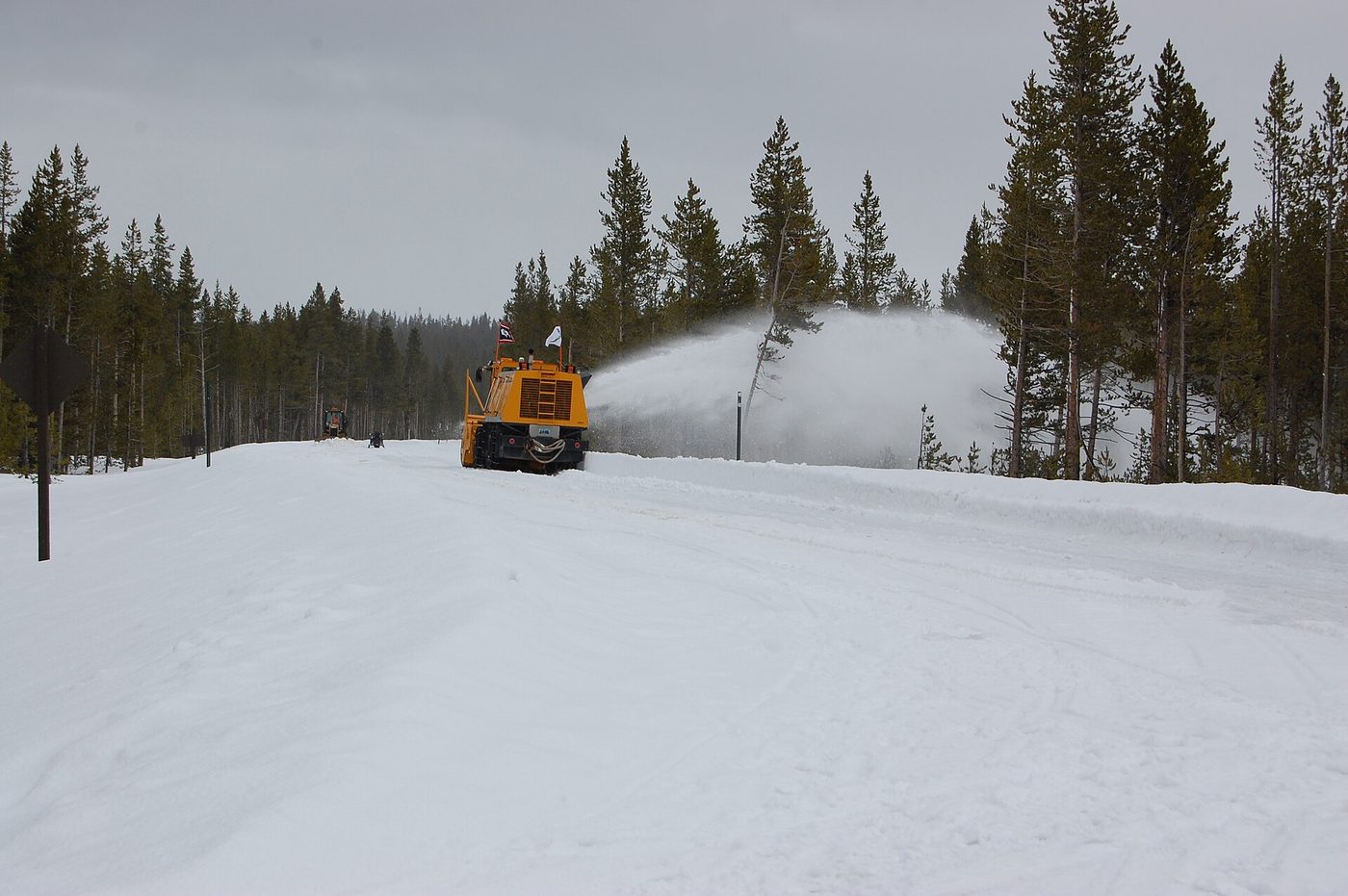
| A rotary plow clears the South Entrance Road in April ahead of the spring opening | Yellowstone National Park from Yellowstone NP, USA, public domain, via Wikimedia Commons |