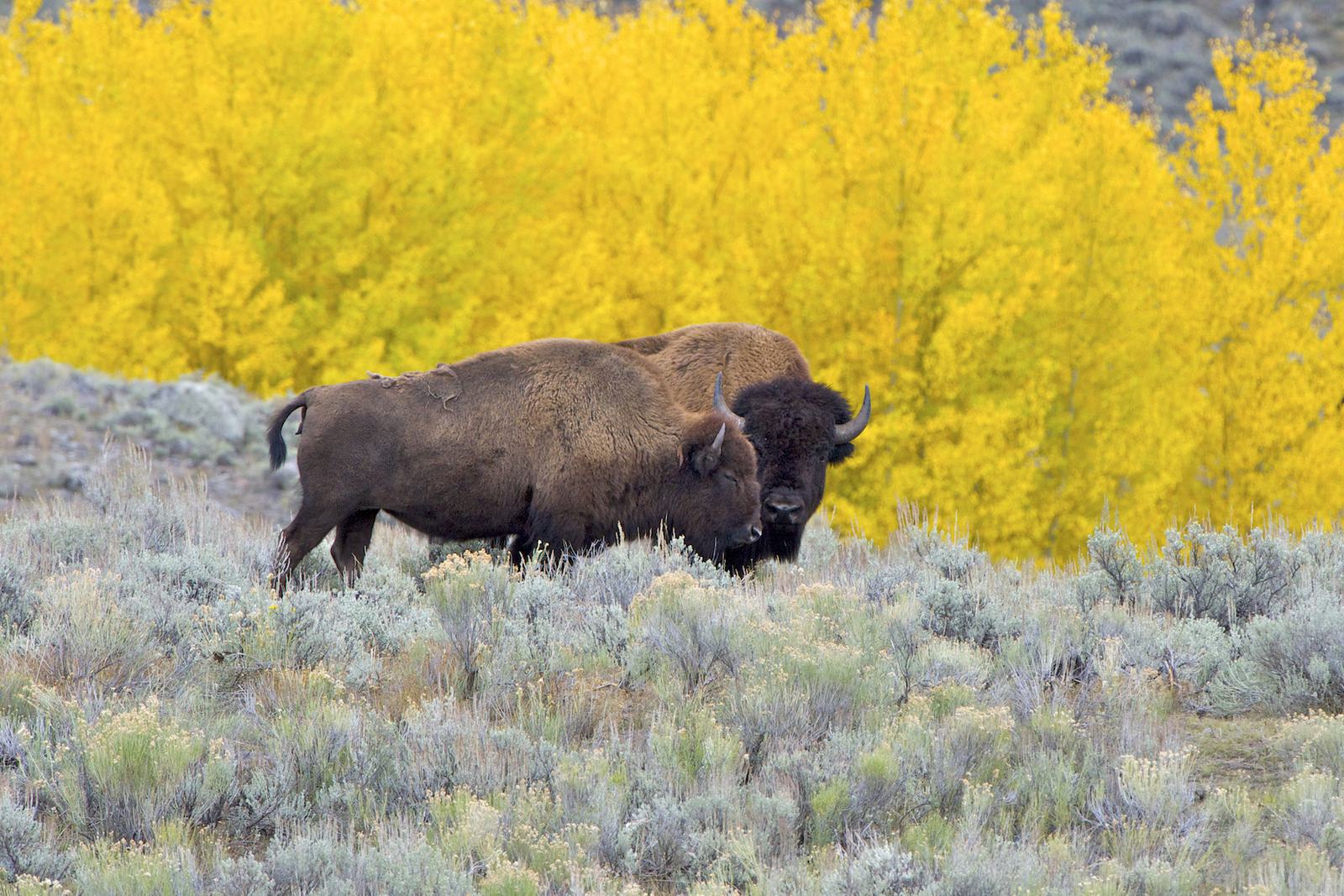
The best time to visit Yellowstone is September, when every road is still open, summer crowds have thinned and the elk rut is on. Mid-June is a close second for long days, full waterfalls and newborn animals. July and August are the busiest months, and from mid-December to mid-March most of the park is open only by snowcoach or snowmobile.
That’s the short version. The longer version is that “best” depends heavily on what you want out of the trip. If wolves are the goal, January beats September. If you’re bringing kids who are only free in July, then July it is, and the question becomes how to make peak season work. If money is tight, the answer shifts again. So this guide gives you the verdict for each of the twelve months, a table of NPS weather averages and access, a wildlife calendar, and a decision matrix that matches the month to the trip you actually want.
A note on how Yellowstone’s year works, because it’s different from most parks. The park itself never closes. Its roads do. There are really four seasons for a visitor: the summer driving season (roughly mid-April to the end of October, with the full loop open from late May), a late-fall gap when roads close to cars and nothing replaces them, the winter oversnow season (mid-December to mid-March), and a spring gap while crews plow. Plan around those four and the month choice gets easy.
If you’re earlier in the process, our guide to planning a trip to Yellowstone covers how long to stay, where to fly and how to book, and the things to do in Yellowstone guide explains what each region offers so you can match it to a season.
What is the best month to visit Yellowstone?
September is the best month to visit Yellowstone for most people. Every road and most lodges are still open, crowds drop sharply after Labor Day, the elk rut is underway and daytime highs average about 68°F. Mid-June is the runner-up if you want long days, waterfalls at full flow and baby animals.
The reasons September wins are practical. You get the whole Grand Loop, including Dunraven Pass, until it closes on October 12, 2026. Nights are cold, which makes the geyser basins steam dramatically on clear mornings. Bull elk bugle across the Madison River and on the lawns at Mammoth. Aspens on the northern range start turning gold in the last week or two of the month. And after school starts, the drive through Hayden Valley stops feeling like a queue.
The trade-offs are real but manageable. Some lodges and campgrounds start closing from mid-September, snow is possible (the NPS averages half an inch of snowfall for the month at lower elevations, more up high), and ranger programs wind down. For the full picture, see our Yellowstone National Park in September guide.
Mid-June is the other strong choice. Days are at their longest, with more than 15 hours of daylight around the solstice, the waterfalls are thundering with snowmelt, and bison calves and elk calves are everywhere. The catches are mosquitoes, snow lingering on high trails, and crowds building fast after the middle of the month. Our Yellowstone in June guide covers it in depth.
Yellowstone by month at a glance
This is the table to keep open while you decide. Temperatures and precipitation are the NPS monthly averages (checked September 2026). They match a lower-elevation station; the interior plateaus around Old Faithful, Canyon and Lake, mostly between 7,300 and 8,000 feet, run colder and much snowier, and park-wide snowfall averages about 150 inches a year. Crowd levels are our reading of NPS visitation patterns, anchored by the 975,109 visits recorded in July 2025.
| Month | Avg high / low (°F) | Precip / snow (in) | Car access | Crowds | Headline |
|---|---|---|---|---|---|
| January | 28.6 / 9.6 | 1.1 / 14.5 | North road only; oversnow elsewhere | Very low | Wolves on snow, frosted bison |
| February | 34.0 / 13.0 | 0.75 / 10.4 | North road only; oversnow elsewhere | Very low | Best winter month |
| March | 39.6 / 17.2 | 1.1 / 13.1 | North road only; oversnow ends mid-month | Very low | Bears wake, park in between seasons |
| April | 49.4 / 26.0 | 1.2 / 5.9 | First roads reopen mid-month | Low | Grizzlies and snow, few services |
| May | 60.4 / 34.3 | 2.0 / 1.5 | Most roads by mid-May, full loop late May | Moderate | Bison calves, bears, waterfalls |
| June | 70.0 / 41.2 | 1.5 / 0.1 | Everything open | High | Longest days, newborns, wildflowers |
| July | 79.6 / 46.7 | 1.5 / 0.0 | Everything open | Peak | Warmest, busiest, bison rut begins |
| August | 78.3 / 45.3 | 1.4 / 0.0 | Everything open | Very high | Bison rut, possible smoke |
| September | 67.8 / 37.0 | 1.3 / 0.5 | Everything open | Moderate-high | Elk rut, steam, thinning crowds |
| October | 55.7 / 29.4 | 1.0 / 3.7 | High roads close Oct 12; most others end of month | Low-moderate | Quiet, cold, closing down |
| November | 38.7 / 19.2 | 1.0 / 9.0 | North road only | Very low | Gap season, wolves |
| December | 30.5 / 11.8 | 1.0 / 13.5 | North road only; oversnow from Dec 15 | Low | Winter season opens |
Two things jump out of that table. First, the difference between July and October isn’t just temperature; it’s a whole different park, with a fraction of the people. Second, snow is possible in every month except the height of summer, and even in July the NPS warns that high elevations can see it. As the park puts it, you should expect big temperature swings, rain or snow in every month of the year. Our Yellowstone weather by month guide breaks the numbers down by area and elevation.
The best month for you: a decision matrix
Pick the row that sounds most like your trip.
| If your priority is… | Go in | Runner-up | Avoid |
|---|---|---|---|
| First visit, see everything | Early-to-mid September | Mid-June | April, November |
| Fewest crowds with roads open | First half of October | Early May | July |
| Wolves | January-February | May-June (dens) | Midday in July |
| Grizzly and black bears | May-early June | September-October | Winter |
| Baby animals | Late May-June | Early May | Fall |
| Elk rut | Mid-September to early October | Late September | Summer |
| Bison rut | Late July-August | Early September | Spring |
| Wildflowers | Late June-July | August at high elevation | Fall |
| Hiking, including high trails | Mid-July to mid-September | Late June | Before June |
| Geyser steam photography | September-October mornings | Winter | Midsummer afternoons |
| Budget | Early May or mid-October | Winter (rooms only) | July |
| Families on school holidays | Late June | Mid-August | Late July weekends |
| Winter experience | January-February | Late December | November, April |
| Yellowstone plus Grand Teton | September | Mid-June | Early May |
For the wildlife rows in more detail, see the calendar further down and our dedicated guide to the best time to visit Yellowstone for wildlife. Timing a combined trip with Grand Teton has its own quirks; our best time to visit Yellowstone and Grand Teton guide handles those.
Spring in Yellowstone: April and May
Spring in Yellowstone is not the gentle season it is elsewhere. It’s cold, muddy, unpredictable and, for wildlife watchers, fantastic. Roads reopen in stages, snowbanks line the road well into May, and animals that wintered in the low valleys are out in the open where you can see them. Our Yellowstone in spring guide covers the season as a whole.
April
Verdict: not for a first visit; excellent for bear and wildlife enthusiasts who can live with limited services.
The first roads reopen to cars in mid-April (April 17 in 2026: West Entrance to Old Faithful, Madison to Norris, Mammoth to Norris and Norris to Canyon). The rest of the loop stays closed, and snow still covers most trails. Average highs sit around 49°F and lows in the mid-20s, and a spring storm can drop a foot of snow in a day. Grizzlies are out of their dens and hunting winter-killed carcasses, bison are starting to calve, and there’s almost nobody else around. In-park lodging is very limited. See our Yellowstone in April guide.
May
Verdict: a great shoulder month if you accept cold mornings and a few closed roads early on.
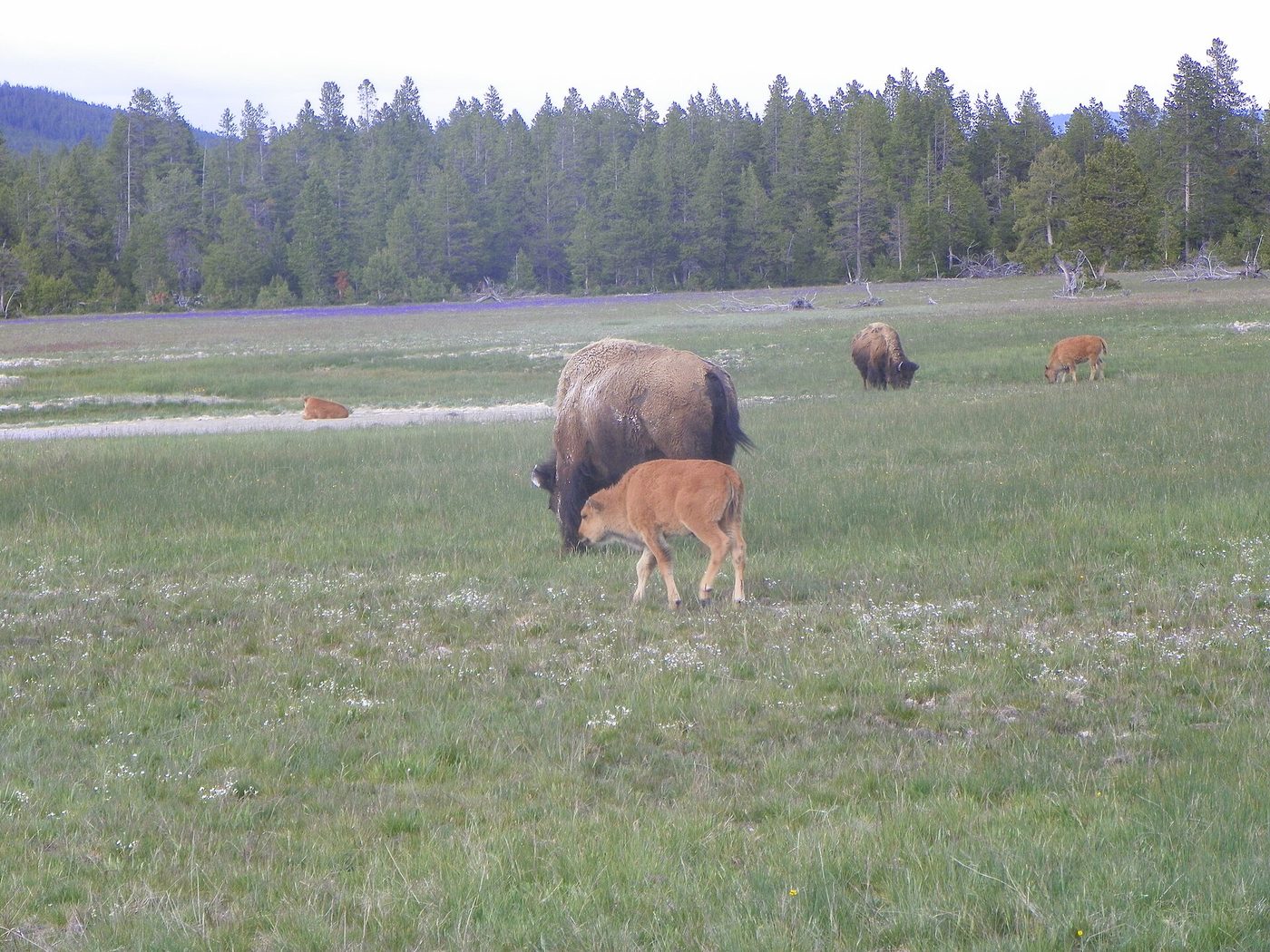
May is when Yellowstone wakes up. The East Entrance and Canyon to Lake roads usually open at the start of the month, the South Entrance a week or so later, and Dunraven Pass, the Beartooth Highway and the Chief Joseph Scenic Byway around Memorial Day weekend (May 22 in 2026). Average highs reach about 60°F. Bison calves, nicknamed “red dogs” for their orange coats, are everywhere in Lamar and Hayden valleys, bears are active and visible, and the waterfalls start to roar. Lodges open through the month.
Crowds are moderate until Memorial Day weekend, when they jump. That weekend is its own special case, because it’s often the first chance for many people to drive the whole loop and it can feel like July with snow. Our Memorial Day weekend in Yellowstone guide covers how to handle it, and the Yellowstone in May guide has the full month.
Summer in Yellowstone: June, July and August
Summer is when Yellowstone is fully open: every road, lodge, campground, tour and ranger program. It’s also when roughly half of the year’s visitors arrive. Yellowstone logged 4,762,988 recreation visits in 2025, the second-highest year on record, and the summer months carry the load. None of that means you shouldn’t come; it means you plan around it. The Yellowstone in summer guide gives you the crowd-beating tactics in one place, and our Yellowstone crowds guide explains when and where the jams happen.
June
Verdict: the best summer month, especially the first half.
Highs average about 70°F, lows about 41°F, and snow is rare but possible. Days are long, waterfalls are at peak flow, wildflowers spread across the lower valleys, and bison and elk calves are still small. Bears are active in the early part of the month. Downsides: mosquitoes near water, high trails like Mount Washburn can hold snow into late June or early July, and crowds climb quickly after school lets out. Try to come in the first two weeks. Our Yellowstone in June guide has details.
July
Verdict: worth it only if your calendar forces it, and then only with an early-start plan.
July is the warmest and busiest month, with average highs near 80°F and 975,109 visits in July 2025 alone. Every road and trail is open, the wildflowers peak at higher elevations, and the bison rut starts in late July, with bulls bellowing and wallowing in Hayden and Lamar valleys. Afternoon thunderstorms are common, so hike early. The crowds are concentrated at a dozen stops between 10 a.m. and 4 p.m.; be at Grand Prismatic and Old Faithful by 8 a.m. and you’ll barely notice them. Lodging and campgrounds sell out months ahead. See Yellowstone in July.
August
Verdict: good for the bison rut and high hikes; watch the smoke forecast.
August is nearly as busy as July through mid-month, then eases as schools reopen. Highs average 78°F. The bison rut peaks early in the month, trails are snow-free, and the high country is at its best. Wildfire smoke from the park or from fires elsewhere in the West can haze views in some years, and fire danger typically climbs through the month. It was rated high at the end of August 2026. Our Yellowstone in August guide covers it in depth, and the bison rut guide explains where to watch.
How to make July and August work
If school holidays or work leave you no choice but peak season, you can still have a great trip. The trick is to flip the park’s rhythm. Almost everyone arrives at the famous stops between 10 a.m. and 4 p.m., so you do the opposite:
| Time | What to do |
|---|---|
| 5:30-8:00 a.m. | Wildlife drive in Hayden or Lamar Valley, when animals are most active and the roads are empty |
| 8:00-10:00 a.m. | The headline sight nearest you: Grand Prismatic, Old Faithful, Artist Point or the Mammoth terraces |
| 10:00 a.m.-4:00 p.m. | A hike, a picnic on the lakeshore, a quieter region or a rest back at your room |
| 4:00-8:00 p.m. | Back to the famous stops as the tour buses leave, with softer light for photos |
| 8:00-9:30 p.m. | Sunset at Lake Butte Overlook or a last look for wildlife |
A few more peak-season tactics that make a real difference:
- Sleep as close as possible to your first stop. A room inside the park or at the gate nearest your morning plans saves an hour of driving each day.
- Carry lunch and fill the tank early. Restaurant lines and gas station queues peak at midday.
- Book dinner reservations at the in-park dining rooms when you book your room, and expect to eat early or late.
- Use the NPS app for geyser predictions and road updates, and download the maps before you arrive, because cell coverage in the park is patchy.
- Keep Plan B handy. If the Midway lot is full, go to Fountain Paint Pot or Firehole Lake Drive and come back later rather than circling.
Do all that and a July visit feels far less crowded than the numbers suggest.
Fall in Yellowstone: September, October and November
Fall is the season experienced Yellowstone visitors choose. The light softens, the crowds fade, the elk rut fills the valleys with noise and the first snow dusts the peaks. It’s also the season when the park shuts down, quickly and in stages, so the timing within fall matters a lot. Our Yellowstone in fall guide covers the whole season.
September
Verdict: the best month of the year for most visitors.
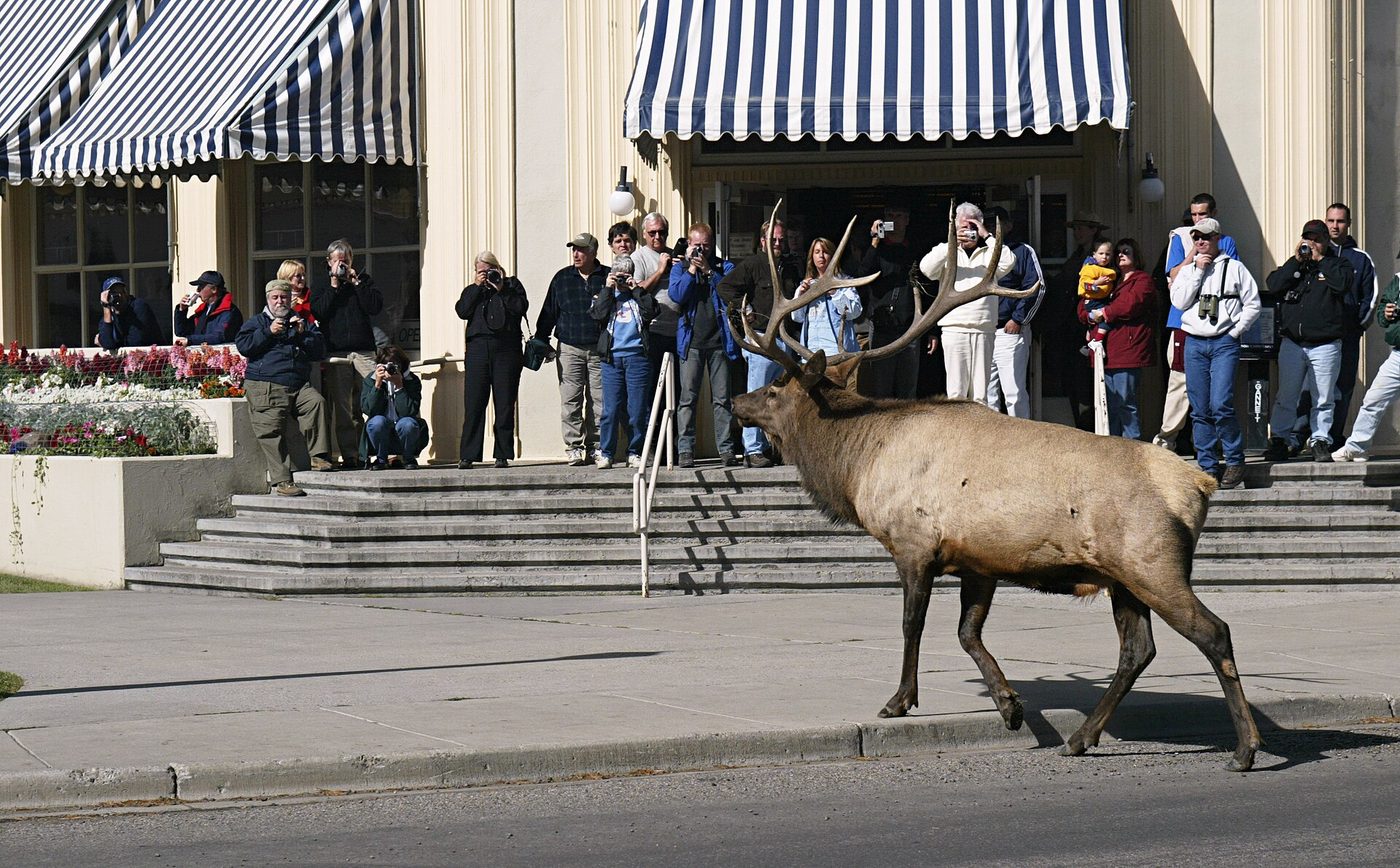
Highs average about 68°F and lows about 37°F. Everything is open at the start of the month, crowds drop after Labor Day, and the elk rut peaks from mid-September into early October. At Mammoth, bull elk gather their harems on the lawns between the hotel and the post office, bugling and charging; stay at least 25 yards away and use your car as a shield. Aspens start to turn late in the month. Some in-park lodges and campgrounds begin closing mid-month, so check dates before you book. September 17, 2026 is a fee-free day for US citizens and residents. See our Yellowstone National Park in September guide.
October
Verdict: beautiful and quiet in the first half; a gamble in the second.
Highs average about 56°F and lows below freezing. Dunraven Pass, the Beartooth Highway and the Chief Joseph Scenic Byway close on October 12, 2026, and most other park roads close to cars at the end of the month. Services shrink fast: most lodges close by mid-October, and campgrounds follow. In return you get empty boardwalks, the tail end of the elk rut, gold aspens and steam-shrouded geyser basins on cold mornings. Snowstorms can close roads temporarily. Our Yellowstone in October guide has the week-by-week picture.
November
Verdict: skip it unless you’re a wolf watcher or photographer who likes it bleak.
After the last roads close to cars, only the northern road from Gardiner through Mammoth and Lamar Valley to Cooke City stays open. There’s no oversnow travel yet, so the interior is off limits. Highs average 39°F. Wolves are active in Lamar, bighorn sheep begin their rut, and you’ll have the northern range nearly to yourself. It’s one of the least-visited months of the year. See our Yellowstone in November guide.
Winter in Yellowstone: December through March
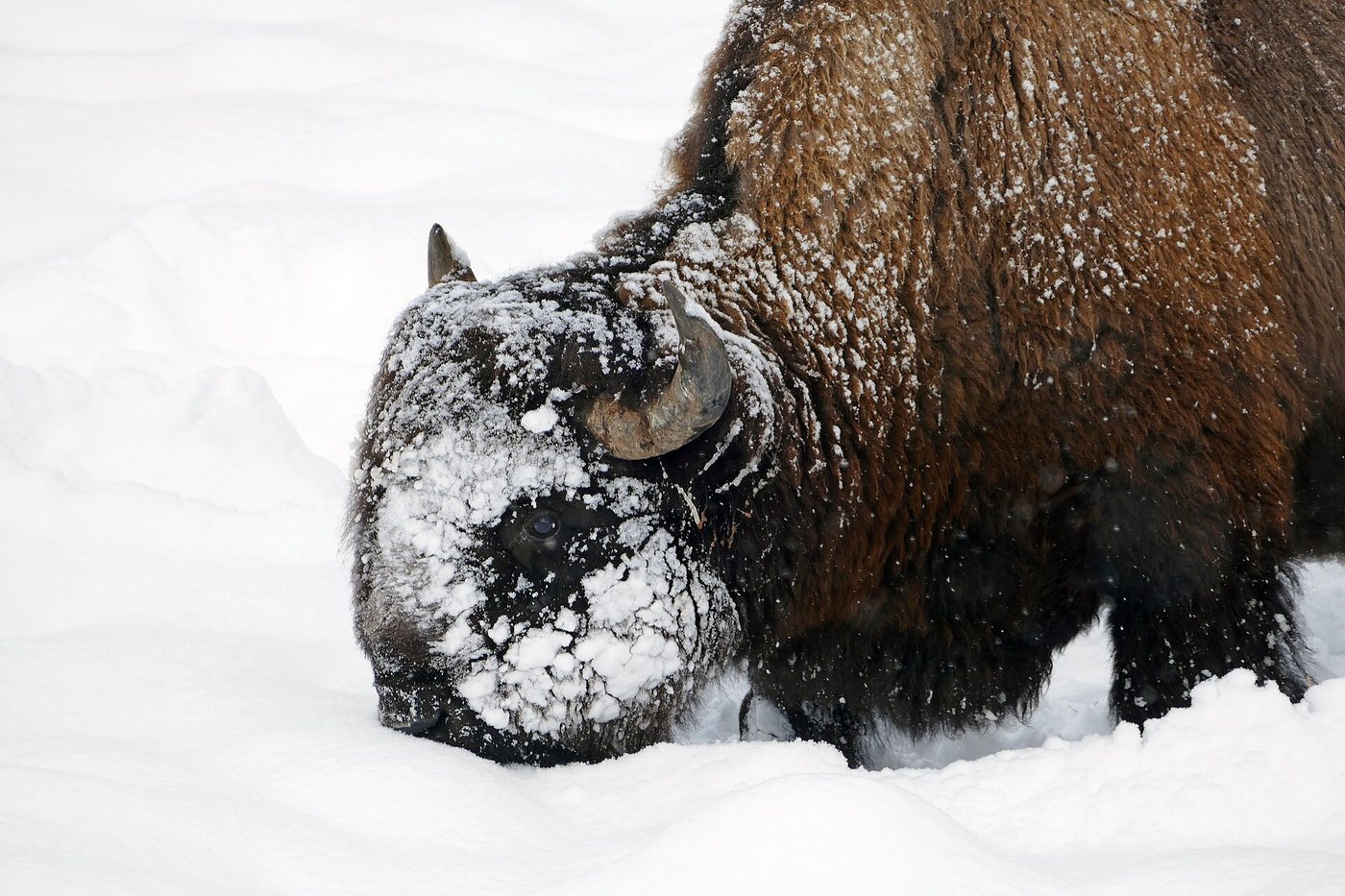
Winter is a completely different trip, and for some people the best one. The geyser basins steam like cauldrons, bison wear frost like armor and wolves stand out against the snow. From mid-December to mid-March, the only way into the interior is by snowcoach, snowmobile, skis or snowshoes; the northern road from Gardiner to Cooke City stays open to cars all year. Only two in-park lodges operate in winter: the Mammoth Hot Springs Hotel and the Old Faithful Snow Lodge, which is reachable only by oversnow vehicle. Our Yellowstone in winter guide covers everything, including whether you can drive through Yellowstone in winter and winter tours.
December
Verdict: magical after the 15th; don’t come before it.
The oversnow season opens on December 15, 2026. Before then the interior is closed to everyone, so an early December trip is limited to the northern road. Highs average about 30°F and lows about 12°F. Christmas and New Year’s weeks are the busiest of the winter, so book snowcoach tours and the two winter lodges early. See Yellowstone in December.
January
Verdict: the heart of winter, and the best month for wolves.
January is the coldest month, with average highs under 29°F and lows around 10°F. Nights well below zero are common, and the park’s record low is -66°F. Oversnow travel is in full swing, the geyser basins are at their steamiest and wolves are easiest to see against the snow in Lamar Valley. Crowds are very small. See Yellowstone in January and our guide to Old Faithful in winter.
February
Verdict: our pick for a winter trip.
February gives you the same winter experience as January with slightly warmer days (highs about 34°F), longer daylight and a deeper snowpack. Wolves are in their mating season and are highly visible. Presidents’ Day weekend is busy, so book ahead. See Yellowstone in February.
March
Verdict: good early in the month for winter; otherwise a gap month.
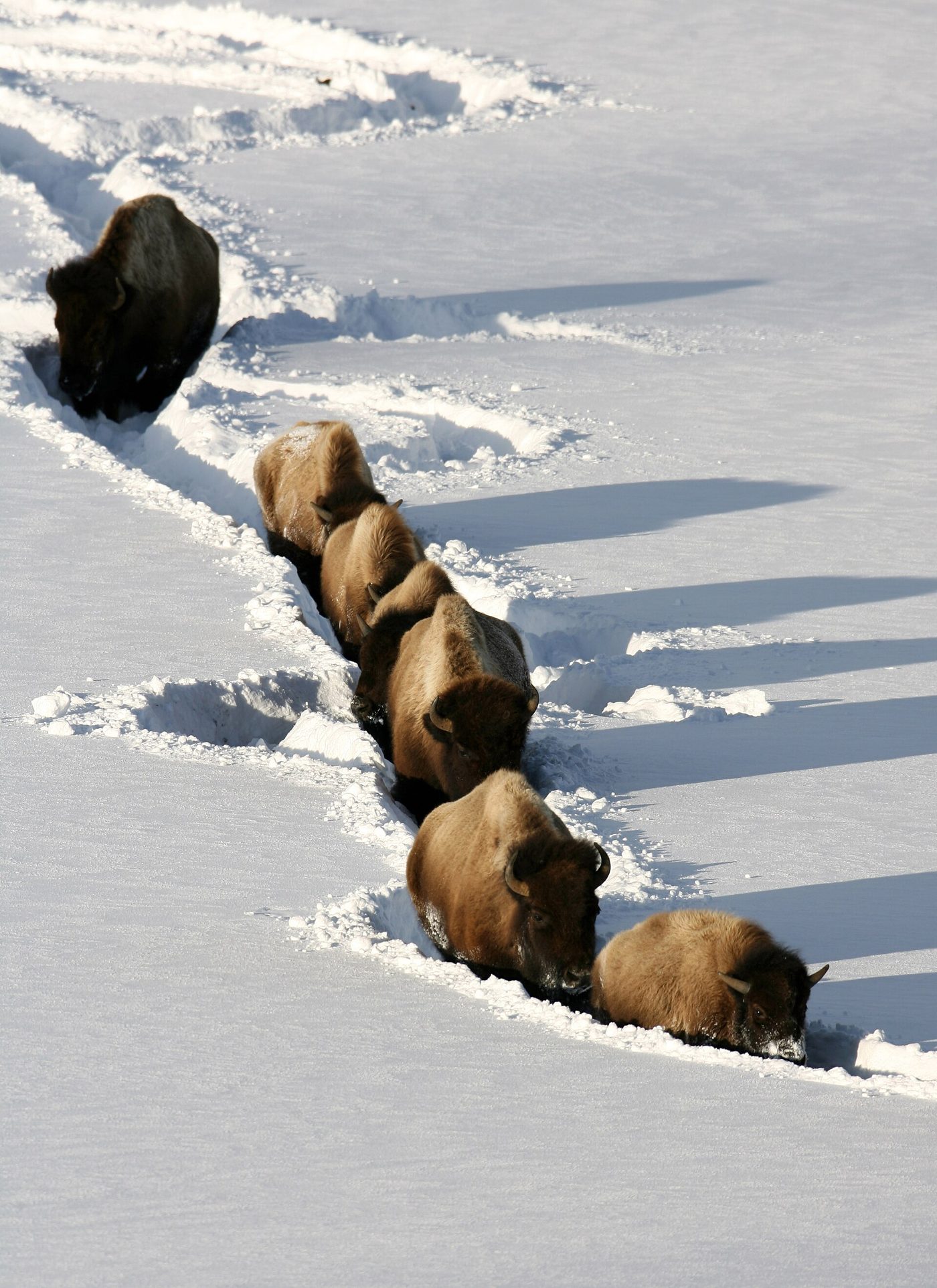
Oversnow travel continues into early March and ends in stages, with the last roads closing to snowcoaches on March 15, 2027. Then the park’s interior closes to everyone while crews plow for the spring opening. Grizzlies begin leaving their dens, and in some years cyclists get a short window to ride certain roads before cars return; our biking in Yellowstone guide explains how that works. Highs average about 40°F. See Yellowstone in March.
What is the best week to visit Yellowstone?
The week after Labor Day is the single best week to visit Yellowstone. Every road is still open, most lodges are running, families have gone home and the elk rut is building. For summer, aim for the second week of June; for winter, the first week of February.
In 2026, Labor Day falls on September 7, so that sweet spot runs roughly September 8 to 14. If you can’t make that week, here’s how the other good ones rank, with the reasons and the catches:
- The week after Labor Day. Full access, a sharp drop in visitors, cold clear mornings that make the geyser basins steam, and the first bugling elk. The only catch is that a few lodges and campgrounds start their closing sequence soon after.
- The second week of June. The whole park is open, the waterfalls are at full volume and calves are still small, but school holidays haven’t fully kicked in. Expect mosquitoes near water and snow on the highest trails.
- The last week of September into early October. Peak elk rut, gold aspens and the quietest boardwalks of the driving season. You’re racing the October 12 closing of Dunraven Pass and the lodge shutdowns, and a snowstorm can close a road for a day or two.
- The week before Memorial Day. Bison calves everywhere, bears active and most of the loop open, with Dunraven Pass usually opening just before the holiday weekend. Cold, sometimes snowy, and a few services still closed.
- The first week of February. For a winter trip: a deep snowpack, active wolves, slightly longer days than January and none of the holiday-week crowds.
And the weeks to avoid if you have any choice: the Fourth of July week, Memorial Day weekend and Labor Day weekend itself, all of which put the most cars in the park all year on the same roads.
Peak season, shoulder season and off season explained
You’ll see these terms everywhere, and they mean something specific in Yellowstone:
- Peak season runs from about mid-June to late August. Everything is open, prices are highest and crowds are at their worst.
- Shoulder seasons are May to mid-June and September to mid-October. The park is mostly or fully open, crowds are lighter and prices ease, but the weather is less predictable and some services run on reduced schedules.
- Off season runs from late October to mid-April. Within it, the winter oversnow season (mid-December to mid-March) is a destination in its own right; the gaps either side, when neither cars nor snowcoaches can reach the interior, are the true off season.
For most first-time visitors, the shoulder seasons offer the best balance: the park is open, but you’re not sharing it with everyone else. If you’re coming in the off season, focus on the northern road and Lamar Valley, which are open to cars all year.
What is the least crowded month to visit Yellowstone?
November and March are the least crowded months, but most of the park is closed to cars then; only the northern road from Gardiner to Cooke City stays open. With most of the park reachable, the quietest windows are early May and the first half of October, when visits run a fraction of July’s.
Crowds in Yellowstone aren’t evenly spread, even in July. They cluster at a dozen famous stops, from about 10 a.m. to 4 p.m., and on the roads between them. So the least crowded time isn’t just a month; it’s also a time of day. Be at Grand Prismatic at 8 a.m. in July and you’ll share it with a few dozen people. Arrive at noon in September and you’ll still wait for parking.
Some rules of thumb that hold every year:
- Weekdays beat weekends, especially around the holidays: Memorial Day, the Fourth of July and Labor Day are the three worst weekends of the year.
- The week after Labor Day is the best week of the year for many visitors, with full access and a sharp drop in families.
- Early mornings and evenings are quiet in every month.
- The northern range (Lamar Valley, Mammoth) is less crowded than the Lower Loop, except at dawn in Lamar when the wolf watchers are out.
For the real numbers, our Yellowstone visitors per year guide tracks visitation over time, and Yellowstone crowds maps the pinch points.
Wildlife calendar: when to see bison calves, bears, wolves and the rut
Yellowstone’s wildlife follows the seasons more than anything else. Here’s when the big events happen and where to see them. For the animals themselves, see our Yellowstone wildlife guide.
| What | When | Where |
|---|---|---|
| Grizzlies leave dens | March to April (males first) | Northern range, Hayden Valley, carcasses |
| Bison calves born | Late April to May, peak in May | Lamar and Hayden valleys |
| Elk calves born | Late May to June | Mammoth, Lamar, meadows everywhere |
| Wolf pups at dens | Born in April; visible from about May to June | Lamar Valley, Slough Creek (from a distance) |
| Cutthroat trout spawn | Late May to July | LeHardy Rapids, Trout Lake |
| Wildflowers | June at low elevations, July to August up high | Northern range, Mount Washburn |
| Bison rut | Mid-July to mid-August | Hayden and Lamar valleys |
| Elk rut | September to mid-October | Mammoth, Madison River, Norris |
| Bears feeding heavily before winter | September to October | Across the park |
| Bighorn sheep rut | November to December | Northern range, Gardiner area |
| Wolves on snow | December to March | Lamar Valley |
Two notes. First, the best times of day matter as much as the month: dawn and dusk are when most animals are active. Second, wildlife viewing brings real risks. Stay at least 100 yards from bears and wolves and 25 yards from all other animals, including the elk at Mammoth; our Yellowstone safety guide covers the rules. For specific places, see Lamar Valley, Hayden Valley and wolf watching in Yellowstone.
When is Yellowstone open? Roads, entrances and lodges by season
Yellowstone is open 24 hours a day, 365 days a year, but its roads are not. Cars can use all of the Grand Loop from late May to the end of October, part of it from mid-April. From mid-December to mid-March you need a snowcoach or snowmobile, except on the northern road.
Here’s how access works through the year at each entrance, in broad strokes. Exact dates change every year and are listed on our Yellowstone road closures page, and details on each gate are in the Yellowstone entrances guide.
| Entrance | Summer driving season | Winter (mid-Dec to mid-Mar) | Gap seasons |
|---|---|---|---|
| North (Gardiner) | Open | Open to cars | Open to cars |
| Northeast (Cooke City) | Open | Open to cars, reached through the park from Gardiner | Open to cars from Gardiner |
| West (West Yellowstone) | Mid-April to end of October | Oversnow only | Closed |
| South (from Grand Teton) | Early-to-mid May to end of October | Oversnow only | Closed |
| East (from Cody) | Early May to end of October | Oversnow only | Closed |
Two related points. The North Entrance road currently has a single-lane stretch at the Gardner River High Bridge, with delays of up to 15 minutes and no vehicles 8’6″ or wider or 75 feet or longer allowed, through late October 2026. And the Beartooth Highway from Red Lodge and the Chief Joseph Scenic Byway from Cody both close in winter, which is why Cooke City becomes a dead end reachable only through the park; our Beartooth Highway guide has more.
Lodges and campgrounds. Most in-park lodges run from May to October, with each lodge on its own schedule, and only two open in winter. Booking opens 13 months ahead. The dates, prices and booking rules for each are on our lodging in Yellowstone National Park guide, and campground seasons are on our camping in Yellowstone guide. If you’re thinking about winter, the Yellowstone winter lodging guide covers the options in and around the park.
What is the cheapest time to visit Yellowstone?
The cheapest time to visit Yellowstone is late April to mid-May or mid-October, when gateway-town hotels drop well below summer rates and in-park lodges are either just opening or about to close. Winter can also be cheap for rooms in Gardiner and West Yellowstone, but snowcoach tours add real cost.
The entrance fee is the same all year, so savings come from lodging, flights and car rental. Summer rates in gateway towns like West Yellowstone, Gardiner and Jackson climb steeply, and in-park lodging sells out at premium prices. In shoulder seasons you can often find a room a week or two out. Fees and passes, including how the nonresident fee works, are on our Yellowstone entrance fee guide.
The honest catch: the cheapest months are also the ones with the most closures and the worst weather. Early May and mid-October save money but give you snow risk and limited services. For the best value, aim for the week after Labor Day or the first week of June, when prices start to ease but the park is still fully open. Our cheapest time to visit Yellowstone guide goes deeper, and Yellowstone lodging prices covers what rooms cost through the year.
Weather: what to expect and how to pack
Yellowstone’s weather is shaped by elevation. Most of the park sits between 7,000 and 8,000 feet, which means cold nights even in summer, thin air, strong sun and fast-changing conditions. Mammoth, in the north, is about 1,500 feet lower than Old Faithful or Lake and noticeably milder.
What that means month by month:
- Summer (June to August): daytime highs are often around 70°F and occasionally 80°F at lower elevations, according to the NPS, but nights can drop below freezing at higher elevations. Afternoon thunderstorms are common; plan hikes for the morning and get off exposed ridges by early afternoon.
- Spring and fall: daytime temperatures range from the 30s to the 60s, with overnight lows in the teens or single digits. Snow is common, and a single storm can drop a foot in 24 hours.
- Winter: daytime temperatures run from zero to 20°F, sub-zero nights are common, and the park averages about 150 inches of snow a year, with twice that at higher elevations.
Pack layers in every season: a warm jacket, a rain shell, a hat and gloves even in July. Sunscreen matters too, because the sun at 7,500 feet is strong. For winter, see our Yellowstone winter packing list. And for the question everyone asks, our when does it snow in Yellowstone guide shows snowfall by month and elevation.
Planning around Grand Teton, holidays and fee-free days
A few things to weigh alongside the month itself:
- Grand Teton: the two parks are next door, and a combined trip is common. Grand Teton’s season runs on a similar schedule, with the Teton Park Road closed to cars in winter. September is the best month for a combined trip. See Yellowstone and Grand Teton.
- Holidays: Memorial Day, the Fourth of July and Labor Day weekends are the busiest days of the year. Presidents’ Day and the Christmas weeks are busy in winter.
- Fee-free days: the park offers a handful of fee-free days each year, now for US citizens and residents only. The remaining 2026 dates after this guide was checked are September 17, October 27 and November 11. They draw bigger crowds, so don’t plan around them unless the savings matter to you. The full list is on our entrance fee guide.
- Fishing season: Yellowstone’s fishing season generally opens on the Saturday of Memorial Day weekend. Details are on our fishing in Yellowstone guide.
- Booking windows: in-park lodging opens 13 months ahead, and campgrounds book about six months ahead. If you want a July room, book the previous June. See how to book Yellowstone lodging.
Once you’ve picked your month, our Yellowstone itinerary guide gives you day-by-day plans that work in each season.
Frequently asked questions
What is the best month to visit Yellowstone?
September for most people: everything is open, crowds are thinner after Labor Day and the elk rut is on. Mid-June is the runner-up for long days and baby animals. July and August are the busiest months.
What is the worst time to visit Yellowstone?
November and the second half of March through mid-April, when the interior is closed to both cars and snowcoaches. Only the northern road from Gardiner to Cooke City is open. Early December, before the oversnow season begins on December 15, is similar.
When is the best time to see wildlife in Yellowstone?
Spring (May and June) for bears and baby animals, fall (September and October) for the elk rut, and winter (January and February) for wolves. In every season, dawn and dusk are best.
Is Yellowstone open year-round?
Yes. The park never closes, but most roads close to cars from early November to mid-April. From mid-December to mid-March you can reach the interior by snowcoach or snowmobile. The northern road from Gardiner to Cooke City is open to cars all year.
How many days do you need in Yellowstone?
Three full days is the minimum to see the highlights without rushing; four or five lets you add wildlife mornings and a hike. Our Yellowstone itinerary has day-by-day plans.
Does it snow in Yellowstone in summer?
It can. The NPS warns that snow is possible in every month of the year. It’s rare at lower elevations in July and August, but higher areas like Dunraven Pass and Mount Washburn can see it, and nights often drop below freezing.
When do the roads open in Yellowstone?
The first roads reopen in mid-April (April 17 in 2026), and the whole Grand Loop is usually open by late May. Most roads close to cars at the end of October, with the high passes closing earlier. Exact dates are on our road closures page.
Is September or June better for Yellowstone?
September has fewer crowds, cooler weather and the elk rut; June has longer days, newborn animals and waterfalls at full flow. If you can only choose one, September is the better all-round month. If baby animals matter most, choose June.
Sources
- National Park Service, Yellowstone: Weather, park roads, fees and passes, 2025 visitation release
- Yellowstone National Park Lodges (Xanterra): lodging reservations
Image credits
| Photo | Credit |
|---|---|
| Late September on the northern range, when the aspens turn and the crowds thin (top of page) | Arturo de Frias Marques, CC BY-SA 4.0, via Wikimedia Commons |
| Bison calves, nicknamed red dogs for their color, are born from late April through May | Sarah Afshar, CC BY-SA 4.0, via Wikimedia Commons |
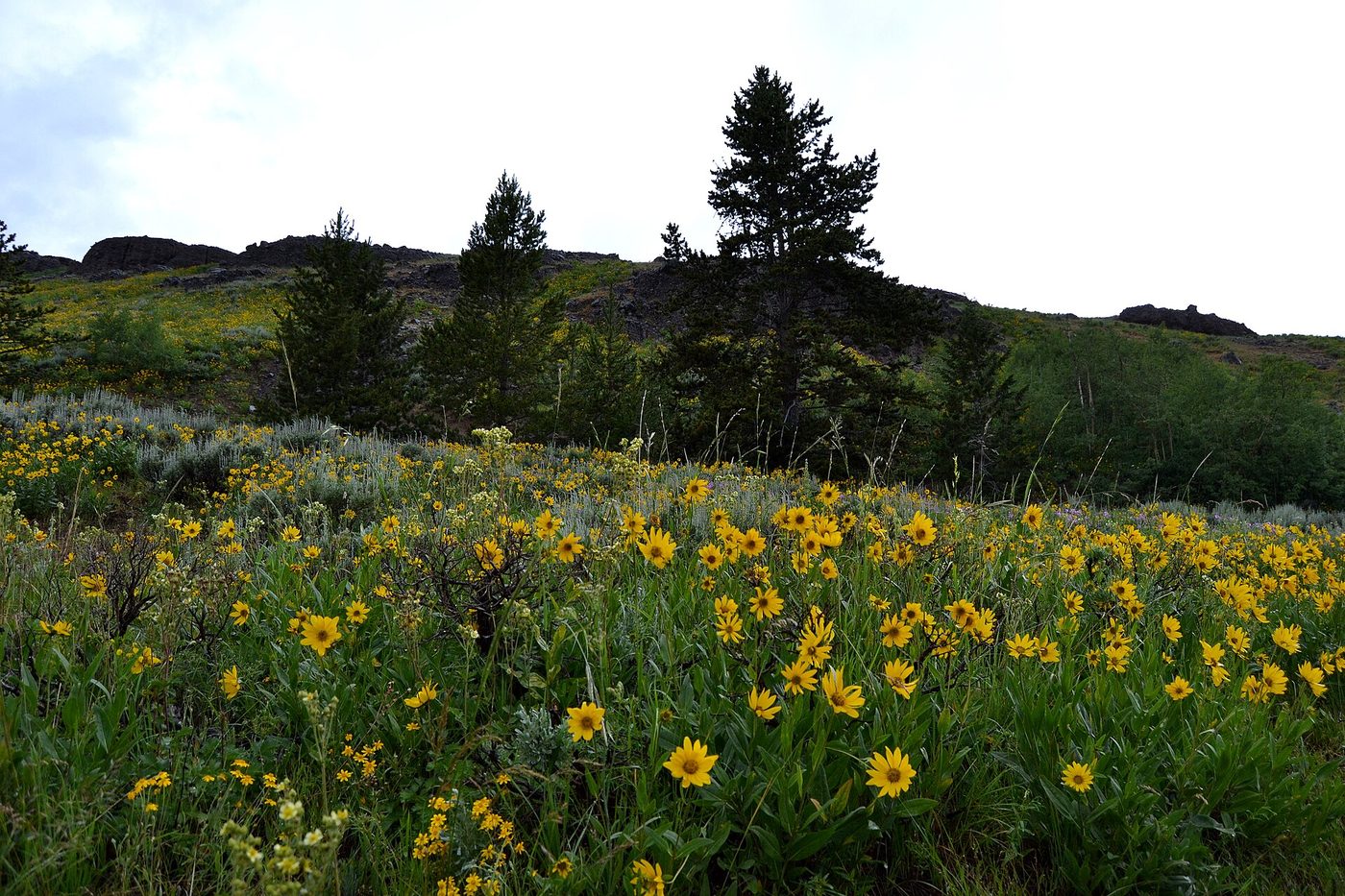
| Arrowleaf balsamroot turns the lower slopes yellow in late spring and early summer | incidencematrix, CC BY 2.0, via Wikimedia Commons |
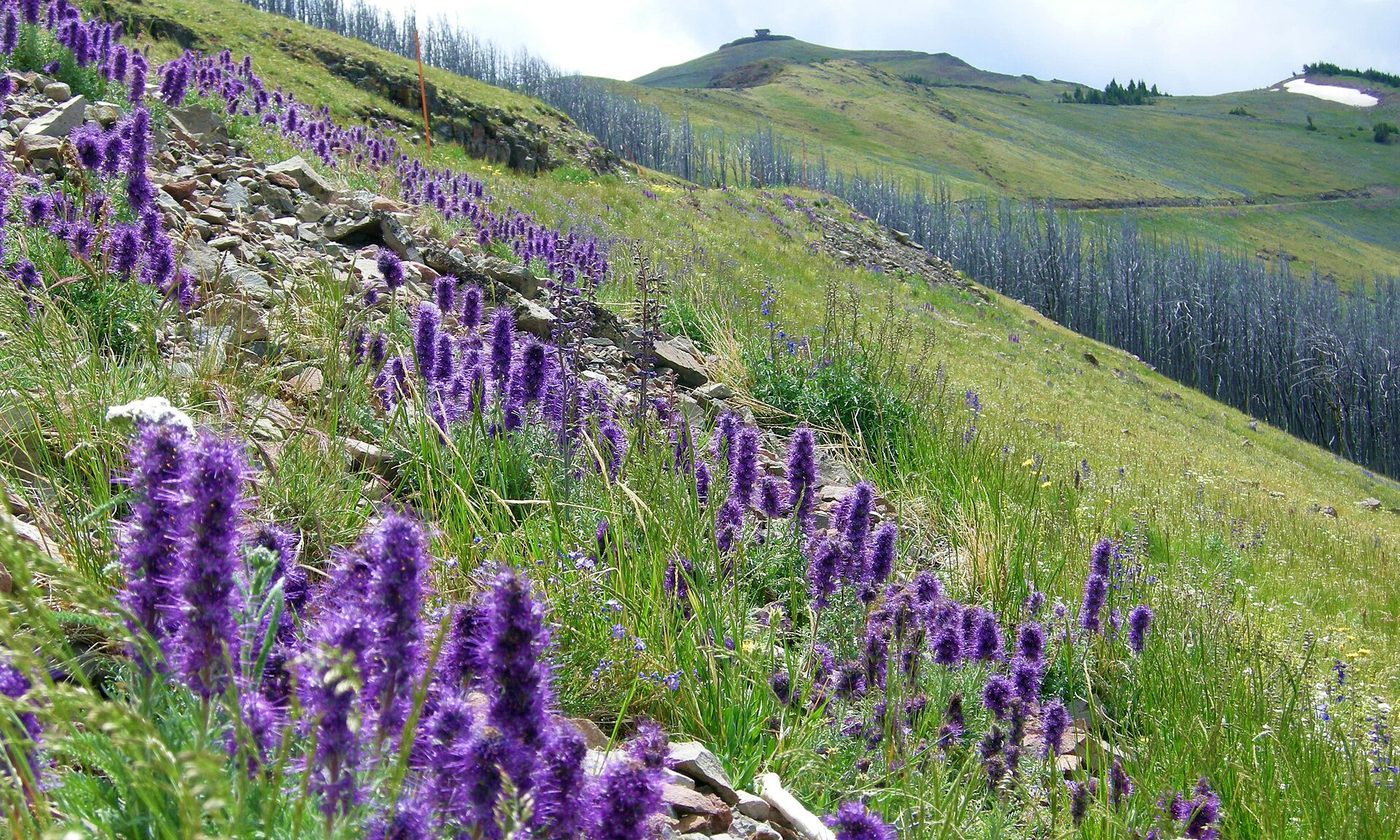
| Silky phacelia beside the Chittenden Road to Mount Washburn in July, peak bloom up high | Yellowstone National Park from Yellowstone NP, USA, public domain, via Wikimedia Commons |
| Rutting bulls take over Mammoth’s lawns and sidewalks from September into October; keep 25 | NPS/Jim Peaco, public domain, via Wikimedia Commons |
| Bison swing their heads to clear snow from the grass; this one was near Rainy Lake in Dece | Yellowstone National Park from Yellowstone NP, USA, public domain, via Wikimedia Commons |
| Bison break trail single file through deep March snow near Tower Junction | Yellowstone National Park from Yellowstone NP, USA, public domain, via Wikimedia Commons |