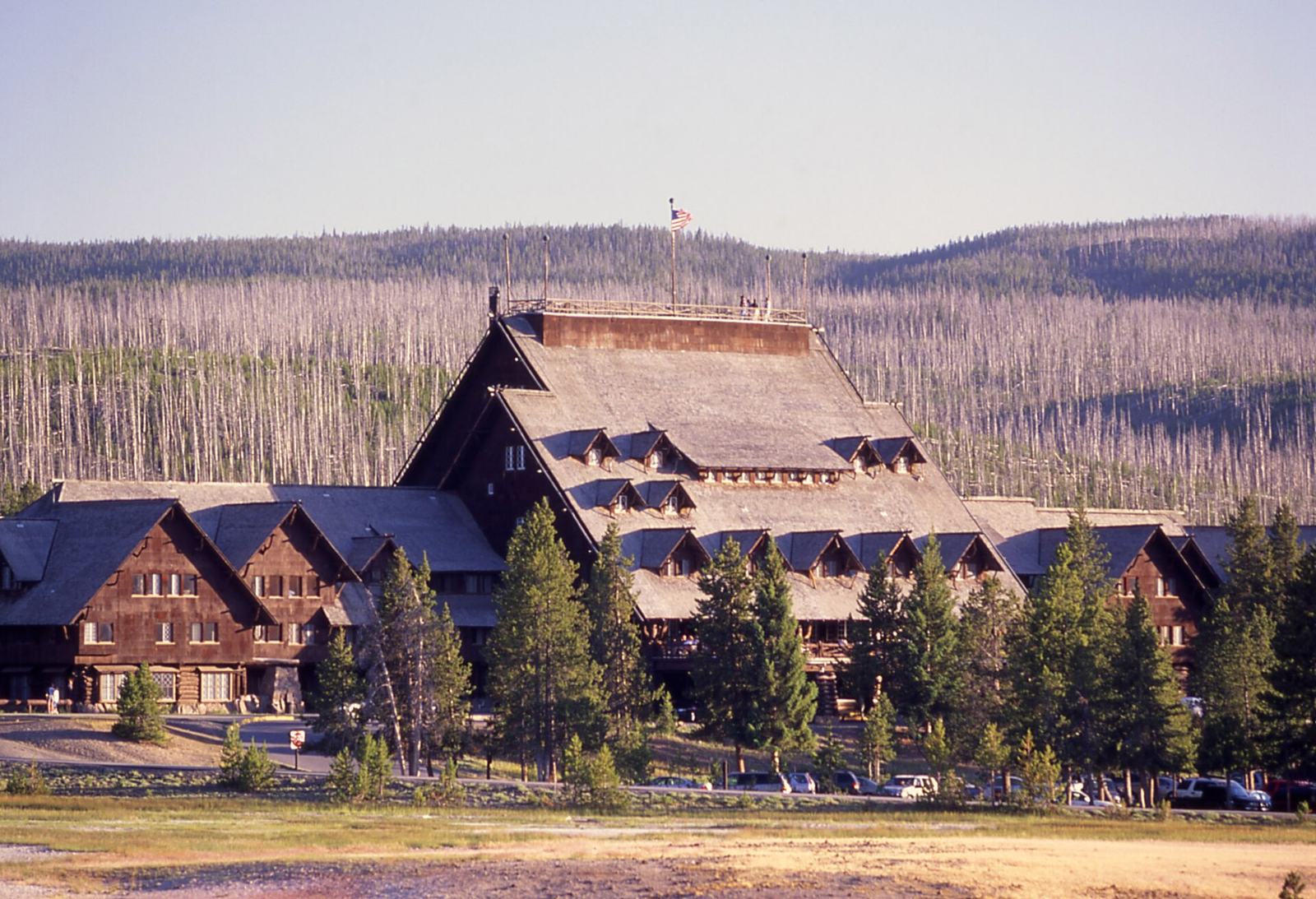
The best answer to where to stay in Yellowstone is inside the park, at Old Faithful and Canyon Village, splitting your nights so you’re never more than about an hour from the next day’s sights. If in-park rooms are sold out, West Yellowstone is the best gateway town for the geysers and Gardiner the best for wildlife and winter.
That’s the short version, and for most first-time visitors it’s the right one. But Yellowstone is big enough that “where to stay” is really three decisions: inside the park or outside it, which of the park’s villages or gateway towns, and how to split your nights across the trip. Get those three right and you’ll spend your days looking at geysers and wolves. Get them wrong and you’ll spend them in the car: a base in Jackson, for example, puts you about two and a half hours from Old Faithful each way.
This guide is the site’s hub for that decision. It compares every in-park village and every gateway town, with drive times to the three places most people want to reach (Old Faithful, the Grand Canyon of the Yellowstone and Lamar Valley), price bands checked in September 2026, a night-split plan for trips of one to seven days, and what to do about kids, pets, accessibility and big groups. The in-park lodges themselves, with their seasons and booking rules, have their own guide: lodging in Yellowstone National Park. The towns outside the park are covered in depth in our Yellowstone gateway towns guide, and campgrounds in camping in Yellowstone.
If you haven’t settled on dates or trip length yet, start with our guide to planning a trip to Yellowstone, then come back here.
Should you stay inside or outside Yellowstone?
Stay inside if you can get a room: you’ll save one to three hours of driving a day and can be at Old Faithful or Lamar Valley at dawn. Stay outside if the lodges are full, or if you want a pool, air conditioning, more restaurant choice or a lower price.
It’s worth being honest about both sides, because in-park lodging isn’t for everyone.
| Inside the park | Gateway towns | |
|---|---|---|
| Drive time to sights | Minutes to an hour | 45 minutes to 2.5 hours each way |
| Dawn and dusk access | Easy | Means very early starts |
| Rooms | Historic to plain; no A/C and usually no TV | Everything from motels to resorts; most have A/C and TV |
| Wi-Fi and cell | Patchy; some lodges have none in rooms | Generally good |
| Food | Lodge dining rooms, cafeterias and delis | More restaurants, groceries and choice |
| Pools and hot tubs | None, except hot tub cabins at Mammoth | Common in West Yellowstone and larger towns |
| Price | Moderate to high for what you get | Wide range, often lower |
| Availability | Books out months ahead for summer | Easier, especially last minute |
| Atmosphere | Quiet nights, stars, wildlife around the lodges | Town life, shops, evening entertainment |
Our honest take: for a first trip, at least some in-park nights are worth a lot, even if the rooms are basic. Watching Old Faithful erupt at 7 a.m. with 30 other people, or walking out of your cabin at Roosevelt to the sound of elk, is the difference between visiting Yellowstone and passing through it. But if you’re traveling with young kids who need a pool to burn off energy, or you’d rather have air conditioning and a burger joint than a historic lodge, a gateway town is a perfectly good choice. Our detailed guide to staying inside vs outside Yellowstone works through the costs and trade-offs.
Where to stay inside Yellowstone: the villages compared
The park has nine lodges run by the concessioner, with more than 2,000 rooms between them, clustered in six developed areas. Each has a different character and puts you close to a different part of the park. Here’s how they compare. For every lodge in detail, including its 2026-27 season, see our guide to lodging in Yellowstone National Park, and to see where everything sits, the Yellowstone lodging map.
| Village | Lodges | Best for | Downsides |
|---|---|---|---|
| Old Faithful | Old Faithful Inn, Old Faithful Lodge Cabins, Old Faithful Snow Lodge | Geysers, history, the most iconic stay in the park | Busy by day, far from Lamar |
| Canyon Village | Canyon Lodge and Cabins | The most central base; the canyon and Hayden Valley | Modern and less characterful |
| Lake Village | Lake Yellowstone Hotel, Lake Lodge Cabins | Lakeside calm, the park’s most elegant hotel | Far from Mammoth and Lamar |
| Grant Village | Grant Village Lodge | Grand Teton connection, West Thumb | Plain, no elevators, far from the north |
| Mammoth Hot Springs | Mammoth Hot Springs Hotel and Cabins | Wildlife, the terraces, the only in-park lodge you can drive to in winter | 1.5 hours from the geysers |
| Tower-Roosevelt | Roosevelt Lodge Cabins | Lamar Valley, a rustic Old West feel | Very basic, the shortest season |
Old Faithful
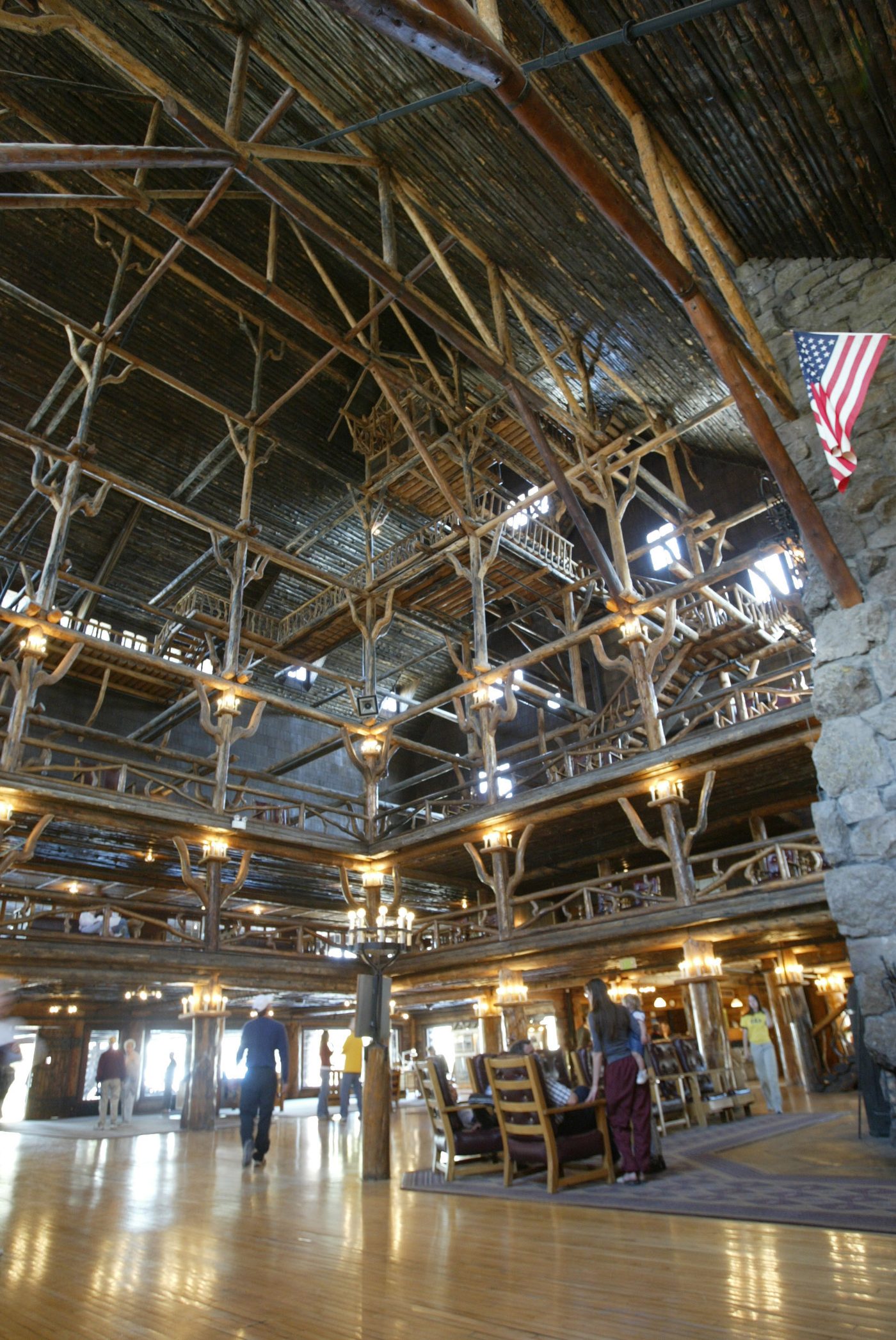
The most famous place to stay in Yellowstone, and for good reason. The Old Faithful Inn, opened in 1904, is one of the great buildings of the national parks, with its log lobby rising nearly 80 feet. The Old Faithful Lodge Cabins are simpler and cheaper, and the Old Faithful Snow Lodge, the newest of the three, is the only in-park lodge in the interior that opens in winter. From any of them you can watch Old Faithful from your doorstep and walk the Upper Geyser Basin at dawn before the crowds arrive.
Best for: first-timers, geyser lovers, anyone who wants the classic Yellowstone stay. Watch out for: the Inn has no air conditioning, TV or internet in rooms, and the cheapest “Old House” rooms share bathrooms down the hall. It’s also 2 hours or more from Lamar Valley. Our Old Faithful guide covers the area.
Choosing between the three Old Faithful lodges. They sit within a few minutes’ walk of each other, so the choice comes down to the room rather than the location. The Old Faithful Inn is the one to book if the building itself is part of the trip: the Old House rooms carry the atmosphere, some with shared bathrooms down the hall, while the wing rooms are more conventional. There’s no air conditioning, TV or internet, and most rooms are reachable by elevator apart from the first-floor West Wing. The Old Faithful Lodge Cabins are the budget choice, simple Frontier cabins and cabins without bath, with some pet-friendly units; you eat and hang out in the main lodge, which has big windows facing the geyser. The Old Faithful Snow Lodge is the most modern of the three, with lodge rooms and Western and Frontier cabins, and it’s the only one open in winter. No pets are allowed there. If you can only get one night, take whichever has a room: waking up beside Old Faithful matters more than which building you wake up in.
Canyon Village
The largest lodging complex in the park, with more than 500 rooms and cabins in five modern lodges completed in 2016, plus a campground, restaurants and a visitor education center. It’s the most central base in Yellowstone, minutes from the Grand Canyon of the Yellowstone and Hayden Valley, and roughly an hour from Old Faithful, Lamar Valley and Mammoth.
Best for: anyone who wants to see the whole park from one base, and families who want straightforward modern rooms. Watch out for: it’s more like a mountain resort than a historic lodge. See our Canyon Lodge and Canyon Village guides.
Lake Village
Home to the Lake Yellowstone Hotel, the oldest operating hotel in the park, opened in 1891, with its pale yellow facade and a sunroom looking out over the water, plus the more rustic Lake Lodge Cabins nearby. Evenings here are the calmest in the park, and Hayden Valley is a short drive north.
Best for: couples, anyone who wants a quieter and more elegant stay, and people looking for a central-south base between the geysers and the canyon. Watch out for: it’s about 1.5 hours from Lamar Valley and Mammoth. See Lake Yellowstone Hotel, Lake Lodge cabins and Lake Village. If you’re torn between the two historic hotels, our Lake Yellowstone Hotel vs Old Faithful Inn guide compares them.
Lake Hotel or Lake Lodge? The Lake Yellowstone Hotel, a National Historic Landmark, is the more refined stay, with rooms in the main hotel, the simpler Sandpiper Lodge annex and a few cabins, some of them pet-friendly. There’s no internet in the rooms. Lake Lodge, a short drive away, is a cluster of 186 cabins around a big log lodge with a porch facing the water, a cafeteria, laundry and Wi-Fi in the lobby only. Choose the hotel for a special night; choose the lodge cabins for a family base with a lower price.
Grant Village
A lodge of 300 rooms in six two-story buildings on the West Thumb of Yellowstone Lake, with no elevators. It’s the closest in-park lodge to Grand Teton, about 20 minutes from West Thumb Geyser Basin and 40 from Old Faithful.
Best for: one night on the way to or from Grand Teton, or a southern base when Old Faithful is full. Watch out for: the buildings are plain and the location is far from the north of the park. No pets are allowed at the lodge. It’s fine, but it’s the least memorable place to stay in the park.
Mammoth Hot Springs
The Mammoth Hot Springs Hotel sits in the park’s historic headquarters, among the old stone buildings of Fort Yellowstone and a short walk from the terraces. It’s the only in-park lodge on the one road open to cars in winter, and elk graze on the lawns outside.
Best for: wildlife watchers who want an early start in Lamar Valley, winter visitors and anyone arriving from Bozeman via the North Entrance. Watch out for: it’s about 1.5 hours from Old Faithful. See Mammoth Hot Springs Hotel.
Tower-Roosevelt
Roosevelt Lodge Cabins are the most rustic lodging in the park: simple Frontier cabins with bathrooms, and Roughrider cabins with wood stoves and shared bathhouses. There’s a porch full of rocking chairs, a restaurant serving hearty food, horseback rides and the Old West cookout. It’s the closest in-park lodging to Lamar Valley.
Best for: wolf watchers, families who want an Old West atmosphere and anyone who doesn’t mind roughing it. Watch out for: it has the shortest season of any lodge, from early June to early September, and the cabins are basic. See our guide to where to stay near Lamar Valley and Tower-Roosevelt.
Food, fuel and connectivity at each village
The practical side of an in-park stay is worth knowing before you choose, because it shapes your evenings and your budget.
Food. Every village has a general store with groceries, snacks, drinks and camping basics, and most have a sit-down restaurant plus something quicker. Old Faithful has the Old Faithful Inn Dining Room, the Obsidian Dining Room at the Snow Lodge and a cafeteria at the Old Faithful Lodge. Canyon has the M66 Bar and Grill and a large cafeteria-style eatery. Lake has the elegant Lake Yellowstone Hotel Dining Room and a simpler cafeteria at Lake Lodge. Mammoth has its dining room, the Terrace Grill and the Map Room Bar. Grant Village has the Lake House restaurant on the shore, and Roosevelt Lodge has its own rustic dining room. Dinner reservations at the historic dining rooms fill up in summer, so book when you book your room, or plan to eat early. Buying picnic supplies at the general stores saves both money and time in the middle of the day.
Fuel. Gas stations operate at Canyon, Fishing Bridge, Grant Village, Mammoth, Old Faithful and Tower Junction, with 24-hour card fueling, so running out is rarely a risk if you top up when you pass one. Prices are higher than outside the park.
Medical care. The clinic at Mammoth is open all year, and there are summer clinics at Lake and Old Faithful.
Wi-Fi and phone signal. This varies more than people expect. Canyon Lodge and Grant Village have Wi-Fi in rooms, and Mammoth has Wi-Fi and cell coverage. The Lake Yellowstone Hotel has no in-room internet, Lake Lodge offers Wi-Fi in the main lodge only, and the Old Faithful Inn has no internet, TV or radio in rooms. Cell signal is usually available around the developed areas but drops out quickly between them. If you need to work, Canyon or a gateway town is the safer bet. If you want to switch off, the Inn is perfect.
Pools and hot tubs. There are no swimming pools anywhere in the park. The only in-park hot tubs are in the Hot Tub Cabins at Mammoth.
What is the most central place to stay in Yellowstone?
Canyon Village is the most central place to stay in Yellowstone. It sits where the Upper and Lower loops meet, minutes from Hayden Valley, about an hour from Lamar Valley and 75 minutes from Old Faithful. Canyon Lodge is also the park’s largest lodge, so it’s often the easiest to book.
That centrality is why Canyon is our default recommendation for a single base, and why it features in almost every night-split plan below. Lake Village is a close second for the southern half of the park, while Old Faithful is the best base for the geysers but far from the north. Our best area to stay in Yellowstone guide compares all six villages on distance, dining, cell coverage and season.
Gateway towns: where to stay near Yellowstone
If in-park rooms are full, or you want more comfort or choice, the gateway towns ring the park at each entrance. Each suits a different part of the park and a different kind of traveler. Our Yellowstone gateway towns guide covers each in depth, and best hotels near Yellowstone picks the best places to stay in each.
West Yellowstone, Montana (West Entrance)
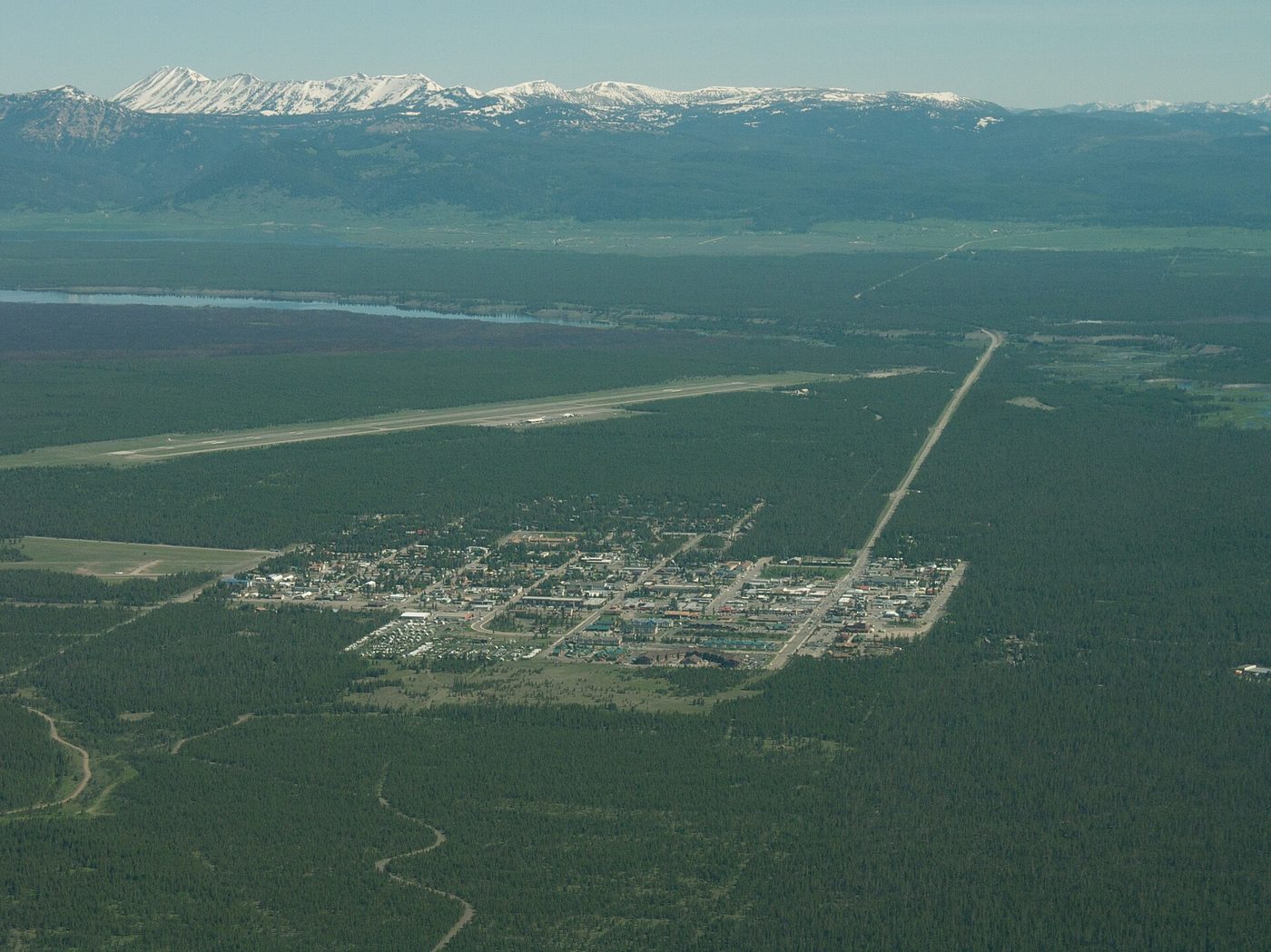
The biggest and busiest gateway, right at the West Entrance and about 30 miles from Old Faithful. It has the most hotels, motels, restaurants, shops and tour operators of any Yellowstone town, along with attractions like the Grizzly and Wolf Discovery Center. It’s the best gateway for the geyser basins and for winter snowcoach and snowmobile tours.
Verdict: the best all-round gateway town, especially for first-timers and families. It’s a touristy strip, but a practical one, and hotels with pools are easy to find. It’s far from Lamar Valley, though. See where to stay in West Yellowstone, things to do in West Yellowstone and the West Yellowstone guide.
Gardiner, Montana (North Entrance)
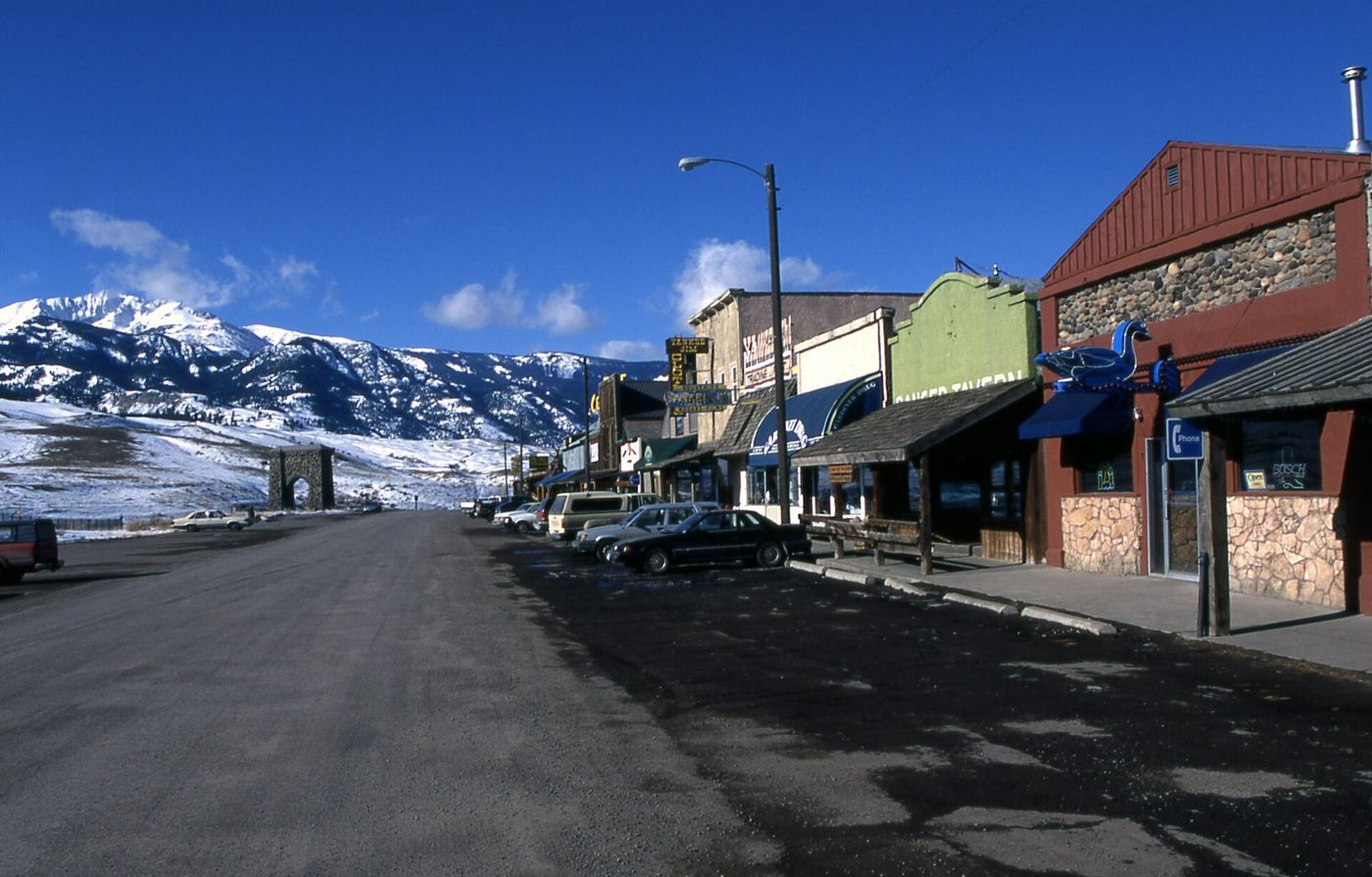
A small, old western town at the North Entrance, beside the Roosevelt Arch and five miles from Mammoth. It’s the best gateway for Lamar Valley and the northern range, and the only one with car access into the park year-round. It has a handful of motels, cabins and restaurants, and is quieter and more authentic than West Yellowstone.
Verdict: our favorite gateway for wildlife watchers and winter trips. It’s about 1 hour 45 minutes from Old Faithful, so combine it with a night further south. For 2026, note that the single-lane Gardner River High Bridge on the entrance road bars vehicles 8’6″ or wider or 75 feet or longer until late October. See Gardiner hotels and things to do in Gardiner. If you’re choosing between the two Montana towns, see West Yellowstone vs Gardiner.
Cooke City and Silver Gate, Montana (Northeast Entrance)
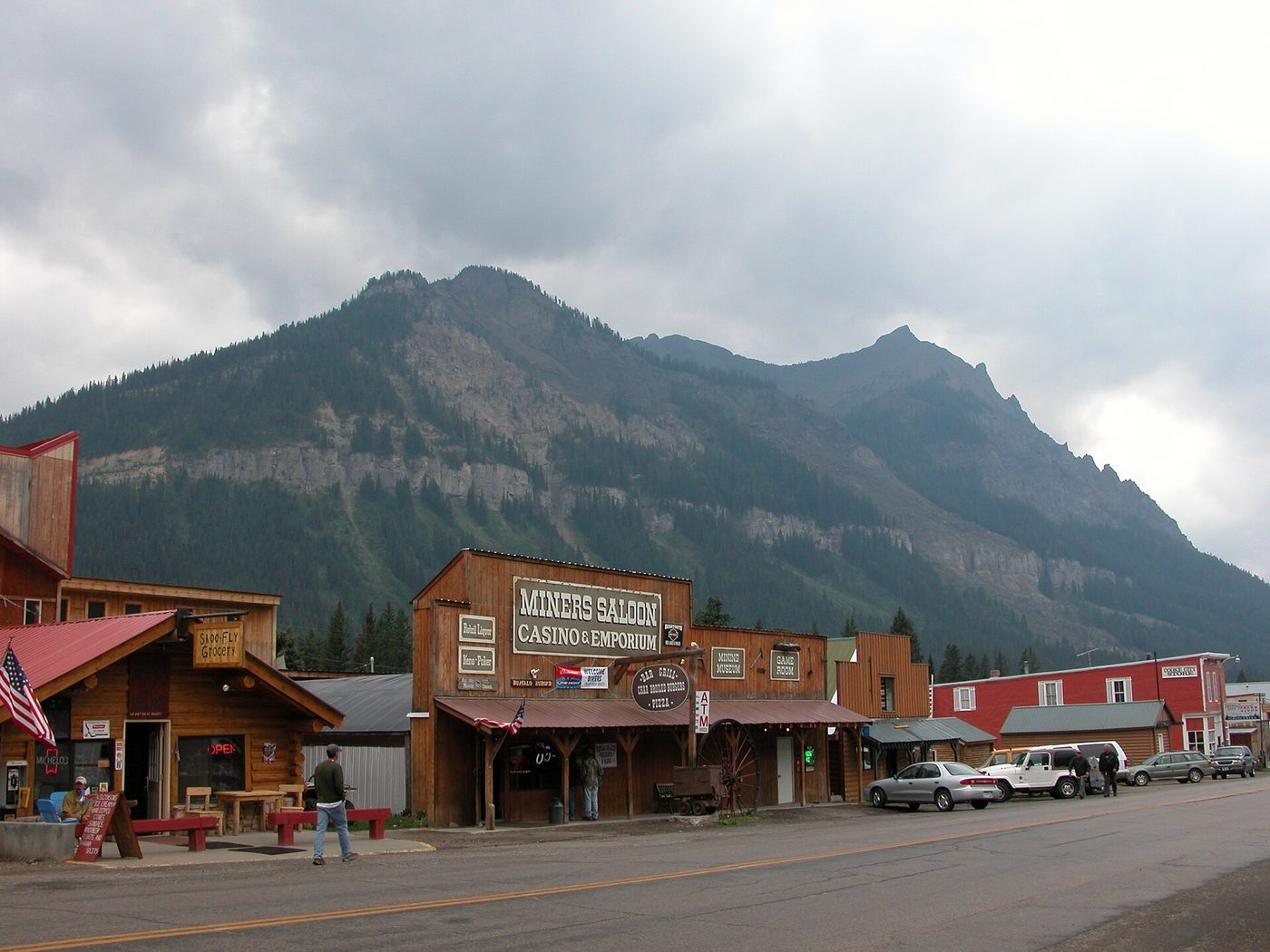
Two tiny towns just outside the Northeast Entrance: Silver Gate about half a mile away, Cooke City about four miles. They’re the closest towns to Lamar Valley and at the top of the Beartooth Highway, one of the most spectacular drives in the country.
Verdict: perfect for dedicated wolf watchers and Beartooth road-trippers, with a handful of cabins, motels and restaurants. For everyone else, it’s too remote: Old Faithful is about three hours away. In winter you reach them only through the park from Gardiner.
Cody, Wyoming (East Entrance)
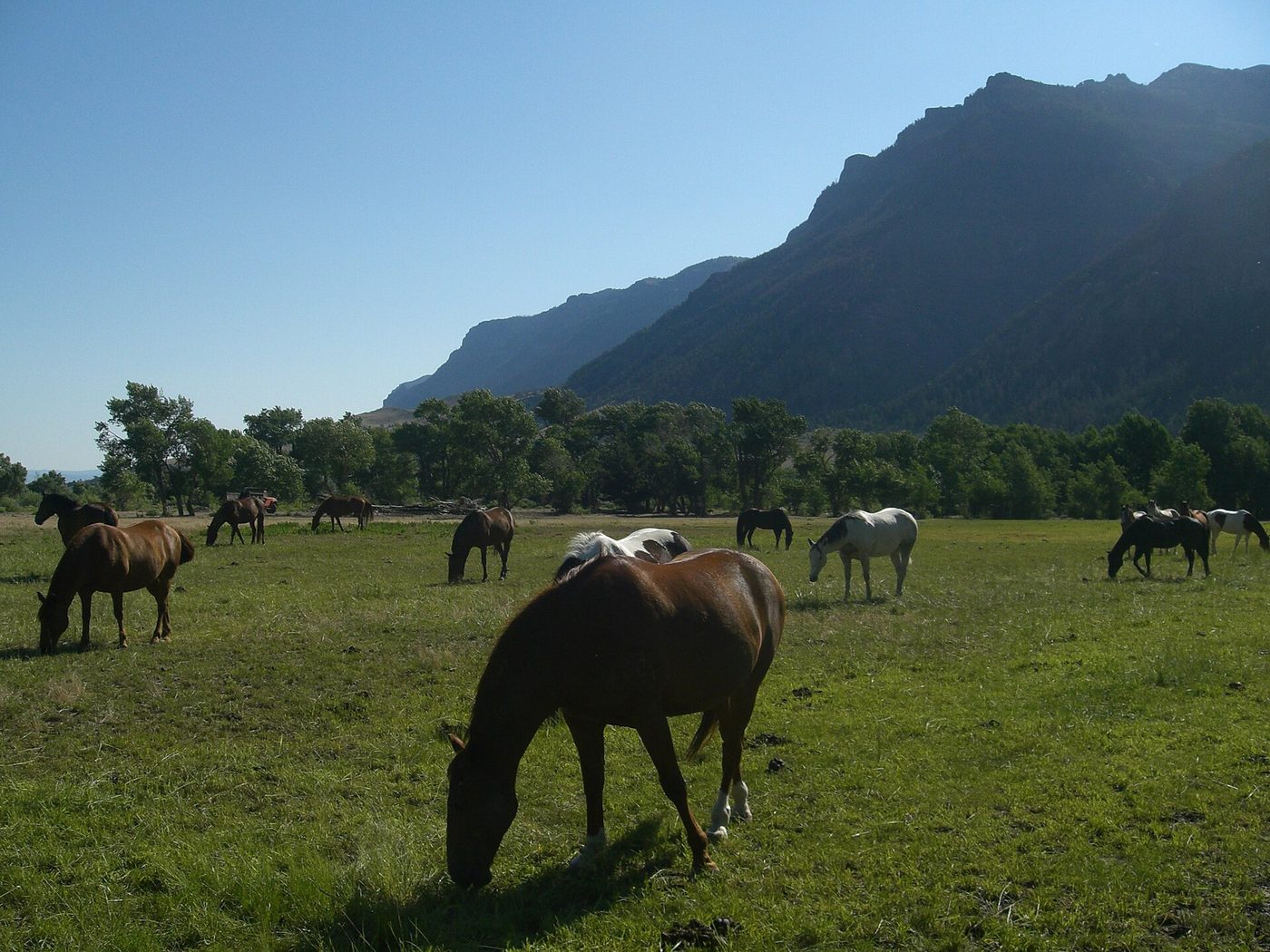
A proper western town about 50 miles east of the East Entrance, founded by Buffalo Bill Cody, with the Buffalo Bill Center of the West, a nightly summer rodeo and a lively main street. Between Cody and the park, the Wapiti Valley has lodges, guest ranches and cabins along the Shoshone River.
Verdict: worth a night or two for the town itself, but it’s a long way from the park’s highlights: about 2.5 hours to Canyon and 3 to Old Faithful. The Wapiti Valley lodges cut that by about an hour. See Cody hotels, things to do in Cody and lodging near the East Entrance.
Jackson, Wyoming (South Entrance)
A stylish resort town about 60 miles south of the South Entrance, through Grand Teton National Park. It has the best dining, shopping and luxury lodging in the region, and it’s the obvious base for Grand Teton.
Verdict: a great town and a poor Yellowstone base. Old Faithful is about 2.5 hours each way. Stay in Jackson for Grand Teton, then move north. Our guide to where to stay for Yellowstone and Grand Teton covers how to split a two-park trip.
Gateway towns out of season
The gateway towns change character with the park’s seasons, and it’s worth knowing before you book a spring or fall trip. From mid-October, as the park’s interior roads and lodges close, many businesses in Gardiner, Cooke City and Silver Gate cut their hours or shut for a few weeks, and some restaurants in West Yellowstone do the same. The quietest stretches are November and the weeks between the end of the oversnow season in mid-March and the spring road openings in April and May. West Yellowstone comes back to life in winter as the snowmobile and snowcoach hub, and Gardiner stays open for wolf watchers because its road into the park never closes. In late spring and early fall, you’ll often find the best prices of the year, but check that the restaurants you’re counting on are actually open.
Other options: Big Sky, Island Park, Bozeman and Paradise Valley
A few more places come up in searches. Big Sky is a ski and summer resort about an hour north of West Yellowstone via US-191, good if you’re combining the park with the resort. Island Park, Idaho, south of West Yellowstone, has cabins and vacation rentals by the Henrys Fork. Bozeman is a lively college town with the main airport, but about 1.5 hours from the North Entrance. Paradise Valley between Livingston and Gardiner has ranches, Chico Hot Springs and Sage Lodge. All work for a night on arrival or departure, but none is a practical base for daily trips into the park’s heart.
Drive times from every base to Old Faithful, Canyon and Lamar Valley
This is the table that matters most when you’re choosing a base. Distances follow the NPS road mileage chart and the shortest route open in summer; times are realistic summer driving times with light stops. In July, add 20 to 30 percent for traffic and wildlife jams.
| Base | Old Faithful | Canyon Village | Lamar Valley |
|---|---|---|---|
| Old Faithful | 0 | 42 miles, 1 hr 15 min | 73 miles, 2 hr 15 min |
| Canyon Village | 42 miles, 1 hr 15 min | 0 | 31 miles, 1 hr |
| Lake Village | 38 miles, 1 hr 15 min | 18 miles, 40 min | 49 miles, 1 hr 40 min |
| Grant Village | 19 miles, 40 min | 39 miles, 1 hr 20 min | 70 miles, 2 hr 20 min |
| Mammoth Hot Springs | 51 miles, 1 hr 30 min | 33 miles, 1 hr | 30 miles, 50 min |
| Roosevelt Lodge | 61 miles, 2 hr | 19 miles, 45 min | 12 miles, 25 min |
| West Yellowstone | 30 miles, 50 min-1 hr | 40 miles, 1 hr 15 min | 71 miles, 2 hr 20 min |
| Gardiner | 56 miles, 1 hr 45 min | 38 miles, 1 hr 15 min | 35 miles, 1 hr |
| Cooke City | 94 miles, 3 hr | 52 miles, 1 hr 45 min | 21 miles, 35 min |
| Cody | 115 miles, 3 hr | 93 miles, 2 hr 30 min | 124 miles, 3 hr 45 min |
| Jackson | 99 miles, 2 hr 30 min | 119 miles, 3 hr | 150 miles, 4 hr+ |
Routes to Lamar from the south and west assume Dunraven Pass is open (late May to October 12 in 2026). When it’s closed, you go around via Norris and Mammoth, which adds time. Road opening dates are on our Yellowstone road closures page.
Two things stand out. First, no single base is close to everything: even Canyon is an hour from Lamar and more from Old Faithful. That’s why splitting your nights makes such a difference. Second, the gateway towns aren’t as far away as they seem, as long as you choose the one nearest to what you want to see: West Yellowstone for geysers, Gardiner for wildlife.
Your first night, by entrance
Your first night is the easiest to get wrong, because it follows a long travel day. The rule of thumb: sleep close to the gate you arrive through, and let the first morning carry you into the park.
| Entrance | Best first night inside the park | Best first night outside | What’s on your doorstep |
|---|---|---|---|
| West (West Yellowstone) | Old Faithful, 30 miles in | West Yellowstone | The Firehole geyser basins and Grand Prismatic |
| North (Gardiner) | Mammoth Hot Springs Hotel | Gardiner | The Mammoth terraces and a dawn drive to Lamar |
| Northeast (Cooke City) | Roosevelt Lodge | Silver Gate or Cooke City | Lamar Valley at first light |
| East (from Cody) | Lake Yellowstone Hotel or Lake Lodge | Cody or the Wapiti Valley | Yellowstone Lake, then Hayden Valley |
| South (from Jackson) | Grant Village | Jackson or Grand Teton lodging | West Thumb, then Old Faithful |
One more piece of hard-won advice: don’t plan to drive deep into the park after dark on your arrival day. Bison, elk and deer use the roads at night, the roads are unlit, and after a day of flights you won’t be at your sharpest. If your flight lands in Bozeman at 6 p.m., sleep in Bozeman or Gardiner and enter in the morning. The same logic applies to a late arrival in Jackson or Cody.
It also helps to plan to leave through a different gate from the one you came in. Your weekly entrance pass works at every entrance, and a one-way route through the park, say in at West and out at North, saves a half day of backtracking. Our guide to the best entrance to Yellowstone compares the gates, and the fees and passes are on our Yellowstone entrance fee guide.
What are the best two places to stay in Yellowstone?
For most first-time visitors, the best two places to stay in Yellowstone are Old Faithful and Canyon Village: two nights near the geysers and two at Canyon puts every major sight within about an hour. If you can’t get in-park rooms, split between West Yellowstone and Gardiner instead.
Splitting nights is the single most useful trick in Yellowstone lodging. Here’s how we’d divide trips of different lengths. For a full breakdown, see our guide to the best two places to stay in Yellowstone, and for day-by-day plans that match these splits, see the Yellowstone itinerary.
| Trip length | In-park split | Gateway-town split |
|---|---|---|
| 1 night | Canyon Village | West Yellowstone |
| 2 nights | Old Faithful 1, Canyon 1 | West Yellowstone 2 |
| 3 nights | Old Faithful 1, Canyon 2 | West Yellowstone 2, Gardiner 1 |
| 4 nights | Old Faithful 2, Canyon 2 | West Yellowstone 2, Gardiner 2 |
| 5 nights | Old Faithful 2, Canyon or Lake 2, Mammoth or Roosevelt 1 | West Yellowstone 2, Gardiner 2, Cooke City 1 |
| 7 nights | Old Faithful 2, Lake 1, Canyon 2, Roosevelt or Mammoth 2 | West Yellowstone 3, Gardiner 3, Cooke City 1 |
| Adding Grand Teton | Add Grant Village 1, then Jackson or Grand Teton lodging | Add Jackson 2 or more |
A few principles behind these splits:
- Put the geysers first or last, because Old Faithful is at one end of the park. Start there if you arrive via the West or South entrances; finish there if you arrive from the North.
- Give the north at least one night if wildlife matters to you. Lamar Valley at dawn is only practical from Mammoth, Roosevelt, Gardiner or Cooke City.
- Mix in-park and gateway nights if you can’t get all in-park: one night at Old Faithful plus two in Gardiner is better than three in West Yellowstone if you want wildlife.
- Don’t move every night. Two nights in each base gives you a full day without packing.
A sample four-night stay, night by night
To show how a split works in practice, here’s a four-night trip entering at the West Entrance, with two nights at Old Faithful and two at Canyon.
- Night 1, Old Faithful. Enter at West Yellowstone around midday and follow the Madison and Firehole rivers south, stopping at Fountain Paint Pot and Grand Prismatic Spring on the way. Check in, then watch an evening eruption of Old Faithful from the benches or the Inn’s upper deck, when the crowds have thinned.
- Night 2, Old Faithful. Walk the Upper Geyser Basin at dawn, before the day visitors arrive. Late morning, drive to the Fairy Falls trailhead for the Grand Prismatic overlook, then spend the afternoon on Firehole Lake Drive waiting for Great Fountain Geyser. Back to your room without a long drive.
- Night 3, Canyon. Drive east to West Thumb Geyser Basin, then along Yellowstone Lake to Lake Village for lunch, and north through Hayden Valley in the late afternoon, when the bison are active. Check in at Canyon.
- Night 4, Canyon. Leave before dawn for Lamar Valley over Dunraven Pass, spend the morning looking for wolves, then drive west to Mammoth for the terraces and back to Canyon via Norris. Finish with sunset at Artist Point.
- Departure. Leave through the West Entrance via Norris and Madison, about 40 miles, or the North Entrance via Mammoth.
The same plan from gateway towns, using West Yellowstone for two nights and Gardiner for two, sees the same sights but adds roughly an hour of driving to the geyser days and makes the Hayden Valley evening and Lamar dawn much longer round trips. It works, and it costs less, but you’ll feel the extra hours by day four. Our Yellowstone itinerary has full versions of these plans for other entrances and trip lengths.
How much does it cost to stay in Yellowstone?
In summer, in-park rooms and cabins run from roughly $150 a night for a basic cabin to $400 or more for the best rooms at the Old Faithful Inn or Lake Yellowstone Hotel. Gateway-town motels start lower, often around $100 to $200, and campgrounds cost a fraction of either. Prices depend heavily on dates.
Here are the bands we found when we checked in September 2026. They’re ranges for two adults per night in peak summer, compiled from published rate estimates and booking-site rates, not quotes. In-park rates are set each year by the concessioner and change with date and demand, so check live prices before you decide.
| Type of stay | Typical peak-summer range per night | Notes |
|---|---|---|
| In-park cabin without private bath | About $130-$200 | Roosevelt Roughrider and budget cabins at Old Faithful and Lake; shared bathhouses |
| In-park standard room or cabin with bath | About $200-$300 | Canyon, Grant, Lake Lodge, Mammoth, Old Faithful Lodge |
| Historic hotel rooms | About $250-$400, suites much more | Old Faithful Inn, Lake Yellowstone Hotel |
| Gateway-town motel | About $100-$200 | West Yellowstone and Gardiner; lower in spring and fall |
| Gateway chain or upscale hotel | About $200-$400 | West Yellowstone, Jackson, Big Sky |
| Glamping | Premium, often above in-park hotel rates | Under Canvas and similar |
| Campgrounds | About $20-$100 | Basic NPS sites at the low end, full-hookup RV sites at the top |
Honest observations: in-park rooms aren’t luxurious for the money, since you’re paying for location. Gateway prices can drop sharply outside July and August, and Gardiner and Cooke City tend to be cheaper than West Yellowstone. For more detail, see Yellowstone lodging prices and our guide to cheap places to stay near Yellowstone.
Other ways to stay: cabins, rentals, glamping, ranches and luxury
Hotels and lodges aren’t the only options. Around the park, you’ll also find:
- Cabins. Log cabins are the classic Yellowstone stay, inside the park and out. Gateway towns and the surrounding valleys have hundreds, from basic to luxurious. See cabins near Yellowstone.
- Vacation rentals. Houses and condos in West Yellowstone, Island Park, Gardiner and Big Sky suit families and groups who want a kitchen and space. See Yellowstone vacation rentals.
- Glamping. Safari-style tents with real beds, heating and private bathrooms, without the work of camping. The best known is Under Canvas West Yellowstone, about 10 minutes from the West Entrance, open from May 19 to September 7 in 2026. See glamping near Yellowstone and our review of Under Canvas West Yellowstone.
- Dude and guest ranches. All-inclusive ranches in the Wapiti Valley, Paradise Valley and the Gallatin Canyon offer horseback riding, fishing and home-cooked meals, often with minimum stays of several nights. Some have been running for a century, like Covered Wagon Ranch near the park’s northwest corner, which dates to 1925. See dude ranches near Yellowstone.
- Luxury. Yellowstone’s in-park lodges are historic rather than luxurious. For real luxury, look to Jackson, Big Sky and Paradise Valley. See luxury hotels near Yellowstone.
Camping and RVs
Camping is the cheapest way to stay inside Yellowstone, and one of the most memorable. The park has a dozen campgrounds, some run by the concessioner and some by the NPS, plus the hard-sided-only Fishing Bridge RV Park. Two changes to know for 2026 and 2027: Pebble Creek is closed and Norris isn’t operating this year, and from the 2027 season, Bridge Bay, Canyon, Grant, Madison and Fishing Bridge RV Park move to Recreation.gov, with bookings opening about six months ahead.
The full campground table, with sites, seasons, prices and booking rules, is in our camping in Yellowstone guide. RV travelers should also see Yellowstone RV camping, the Fishing Bridge RV Park guide and West Yellowstone RV parks.
Staying with kids, pets, accessibility needs or a big group
Different travelers need different things, and Yellowstone lodging varies widely in what it offers.
Families with kids. Canyon Lodge is the easiest in-park base for families, with modern rooms and a central location. Roosevelt’s cabins and the Old West cookout are a hit with older kids. There are no swimming pools in the park, so if a pool matters, West Yellowstone has plenty. See where to stay in Yellowstone with kids.
Pets. In-park lodges allow up to two dogs or cats in designated pet-friendly cabins only, for a fee of $40 per night since April 24, 2026. Pets aren’t allowed at Grant Village Lodge or the Old Faithful Snow Lodge. Pets are allowed in campgrounds. Inside the park, pets must stay within 100 feet of roads, parking areas and campgrounds, on a leash no longer than 6 feet, and aren’t allowed on boardwalks or trails. There are no kennels in the park, so if you want to hike, you’ll need a pet sitter in a gateway town. See pet-friendly hotels near Yellowstone.
Accessibility. Several in-park lodges offer ADA-accessible rooms, but the historic buildings have limits: Grant Village has no elevators, and the Old Faithful Inn’s first-floor West Wing isn’t elevator-accessible, though most of its rooms are. Newer gateway hotels are generally easier. See accessible lodging in Yellowstone.
Big groups. Large vacation rentals in West Yellowstone, Island Park and Big Sky suit family reunions and multi-generational trips, and some sleep 15 or more. In the park, booking several adjoining cabins at Canyon or Lake works well. See Yellowstone lodging for large groups.
Booking tips and what to do if everything is sold out
In-park lodging opens 13 months ahead: on the 5th of each month, the whole of the same month the following year is released. Online booking opens at midnight Mountain Time, and the phone line at 7 a.m. A deposit of the first night is taken when you book, and you can cancel for a full refund up to 30 days before arrival. The details, including how to improve your chances for peak dates, are in our how to book Yellowstone lodging guide and the cancellation policy guide.
If you’re looking at sold-out dates, don’t give up:
- Watch for cancellations, especially in the days before the 30-day cancellation deadline, when people drop reservations to avoid losing their deposit.
- Check every lodge, every night. A single night at Old Faithful or Canyon often opens up even when a full stay doesn’t.
- Look at gateway towns, where availability is much easier and prices are lower outside peak weeks.
- Try campgrounds, especially the first-come, first-served NPS sites.
Our guide to last-minute Yellowstone lodging goes through these tactics in detail.
Where to stay in Yellowstone in winter
In winter, the choices shrink to two in-park lodges: the Mammoth Hot Springs Hotel, which you can drive to, and the Old Faithful Snow Lodge, reachable only by snowcoach or snowmobile. Outside the park, Gardiner is the best base for Lamar Valley wolf watching, and West Yellowstone is the hub for snowcoach and snowmobile tours to Old Faithful. Mammoth Campground stays open all year. See Yellowstone winter lodging and our Yellowstone in winter guide.
Mistakes to avoid when choosing where to stay
Most Yellowstone lodging regrets come from a short list of avoidable mistakes:
- One gateway base for a long trip. Staying five nights in West Yellowstone means a round trip of about four and a half hours every time you want to see Lamar Valley. Split your nights instead.
- Using Jackson as a Yellowstone base. It’s a wonderful town, and a long commute: about five hours of round-trip driving just to reach Old Faithful and back.
- Booking a cabin without a bathroom by accident. The cheapest in-park cabins share a bathhouse, which can mean a walk in the dark, occasionally past a bison. Read the room description carefully.
- Assuming air conditioning. In-park rooms almost never have it, and July afternoons at lower elevations average close to 80°F. Rooms usually cool quickly in the evening with the windows open, but light sleepers may want a fan or a gateway hotel.
- Ignoring lodge seasons. Roosevelt opens only from early June to early September, and several lodges start closing in mid-September. Check the season on our lodging in Yellowstone National Park guide before you plan around one.
- Driving to a distant lodge at night. Plan your route so you arrive in daylight, especially on your first evening.
- Waiting for a better deal. In-park rooms don’t get cheaper as dates approach; they just disappear. Book early, then use the 30-day cancellation window if your plans change.
- Forgetting the 2026 bridge limits. If you’re towing or driving a large RV to Gardiner or Mammoth via the North Entrance road, vehicles 8’6″ or wider or 75 feet or longer can’t use the Gardner River High Bridge until late October 2026.
Our verdict: the best place to stay for each type of trip
If you just want the answer for your trip:
- First-time visitor, 3 to 4 days: Old Faithful and Canyon Village.
- Short trip, one base: Canyon Village, or West Yellowstone if the park is full.
- Wildlife lovers: Roosevelt Lodge, Mammoth or Gardiner, plus a night at Canyon.
- Families with young kids: Canyon Lodge, or West Yellowstone for a pool.
- Couples: the Lake Yellowstone Hotel and the Old Faithful Inn.
- Budget travelers: campgrounds, cabins without bath, or Gardiner motels.
- Winter: Gardiner or the Mammoth Hotel, plus the Old Faithful Snow Lodge.
- Yellowstone plus Grand Teton: Old Faithful and Canyon, then Grant Village on the way south, then Jackson.
- Road-trippers from the east: Cody, then Lake Village and Canyon.
- Photographers: Old Faithful for steam at sunrise and Canyon for the canyon’s morning light, with a night at Roosevelt or Gardiner for wildlife at first light.
- Anglers: Lake Village or Canyon for Yellowstone Lake and the Yellowstone River, West Yellowstone for the Madison and Firehole, and Gardiner or Cooke City for the Lamar and Slough Creek.
- Hikers: Canyon for the most trailheads within an hour, and Old Faithful for the geyser-country trails; add a night at Roosevelt for the northern range.
Frequently asked questions
Is it better to stay inside or outside Yellowstone?
Inside, if you can get a room. You’ll save hours of driving each day and have the park to yourself at dawn and dusk. Outside is better for pools, air conditioning, more dining choice and lower prices.
What is the best town to stay in near Yellowstone?
West Yellowstone for the geysers and first-time visitors, and Gardiner for wildlife, Lamar Valley and winter.
How far in advance should you book Yellowstone lodging?
As early as you can. In-park lodging opens 13 months ahead, and summer dates at Old Faithful and Canyon can sell out quickly. Gateway towns can usually be booked a few months out.
Where should you stay for Old Faithful?
At Old Faithful itself: the Old Faithful Inn, Old Faithful Lodge Cabins or Old Faithful Snow Lodge. The nearest gateway town is West Yellowstone, about 30 miles away.
Where should you stay for Lamar Valley?
Roosevelt Lodge Cabins inside the park, or Gardiner, Silver Gate or Cooke City outside it. Mammoth works too, about 50 minutes away.
Do Yellowstone lodges have air conditioning or TV?
Most don’t. The in-park lodges generally have no air conditioning and no TVs in rooms, and some have no internet in rooms either. Most gateway-town hotels have both.
Can you stay in Yellowstone with a dog?
Yes, in designated pet-friendly cabins at several lodges, for $40 per night, with up to two pets, and in the campgrounds. Pets aren’t allowed at Grant Village Lodge or the Old Faithful Snow Lodge.
Is Jackson a good base for Yellowstone?
Not really. It’s about 2.5 hours from Old Faithful each way. It’s a great base for Grand Teton, so stay there for that part of the trip and move north for Yellowstone.
What is the best place to stay in Yellowstone for a first visit?
Old Faithful and Canyon Village, split roughly evenly across your nights. Old Faithful puts you at the geysers at dawn and dusk; Canyon puts you in the middle of everything else. If both are full, West Yellowstone and Gardiner are the best gateway pair.
Can you stay in Yellowstone for just one night?
Yes. If you only have one night, stay at Canyon Village for the most central location, or at Old Faithful if the geysers are your priority. One night inside the park is still worth it for the evening and early morning alone.
Sources
- National Park Service, Yellowstone: lodging, operating hours and seasons, campgrounds, pets
- Yellowstone National Park Lodges (Xanterra): stay, reservations
- Recreation.gov: Yellowstone campgrounds
Image credits
| Photo | Credit |
|---|---|
| The Old Faithful Inn, opened in 1904, from the edge of the Upper Geyser Basin (top of page) | Jim Peaco, public domain, via Wikimedia Commons |
| The Inn’s lobby rises nearly 80 feet; you don’t need to be a guest to look around | Jim Peaco, public domain, via Wikimedia Commons |
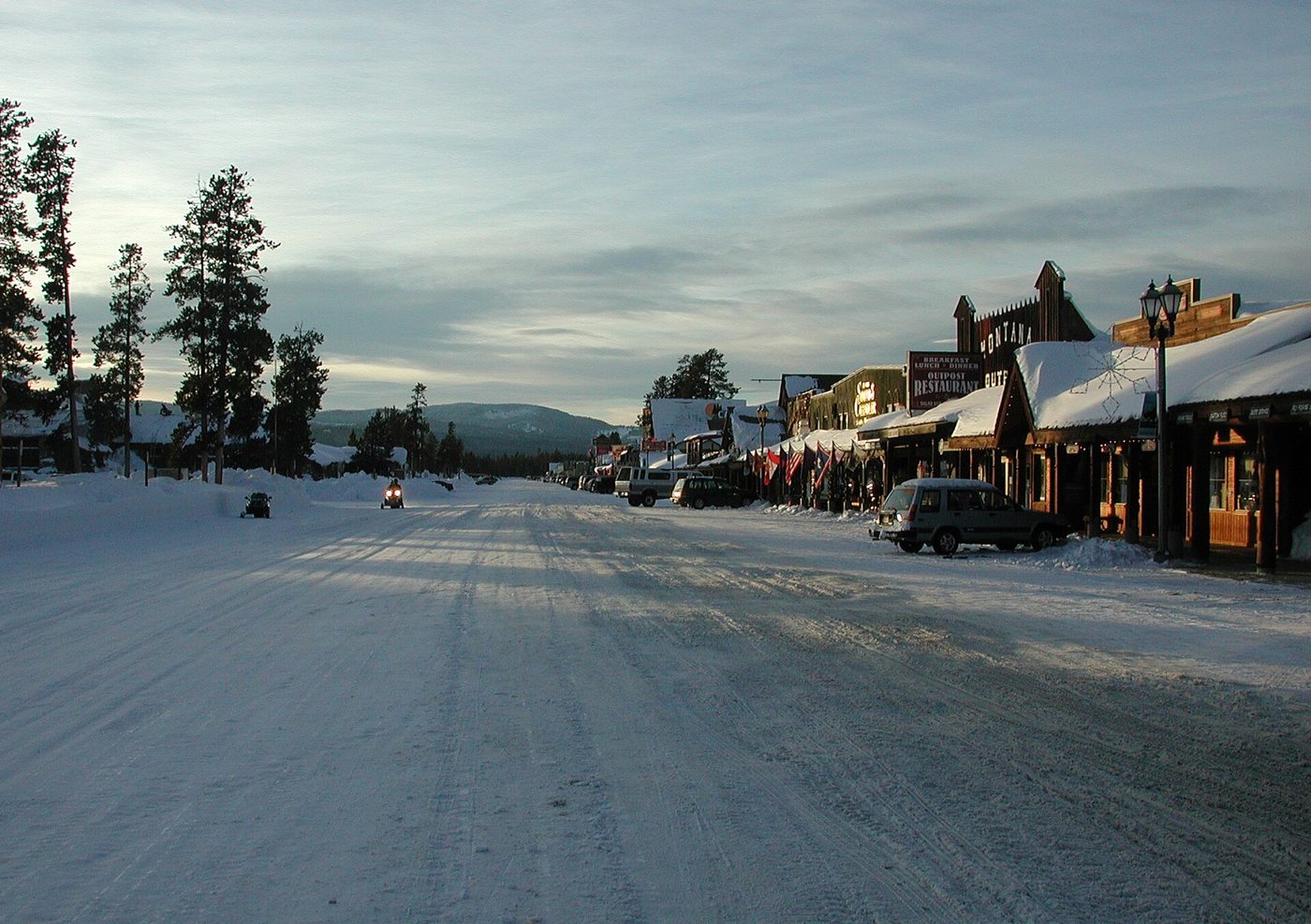
| Yellowstone Avenue in West Yellowstone, the park’s biggest gateway town, on a winter eveni | Finetooth, CC BY-SA 3.0, via Wikimedia Commons |
| Downtown Gardiner, five miles from Mammoth, with Electric Peak on the skyline | Jim Peaco, public domain, via Wikimedia Commons |
| Cooke City’s main street, four miles from the Northeast Entrance and the closest town to L | Ildar Sagdejev (Specious), CC BY-SA 4.0, via Wikimedia Commons |
| Ranch country near Cody, where guest ranches line the road to the East Entrance | Matt Wilson (Mw8355 at en.wikipedia), Hobart College, public domain, via Wikimedia Commons |
| West Yellowstone from the air, with the seasonal Yellowstone Airport just north of town | Sam Beebe, CC BY 2.0, via Wikimedia Commons |