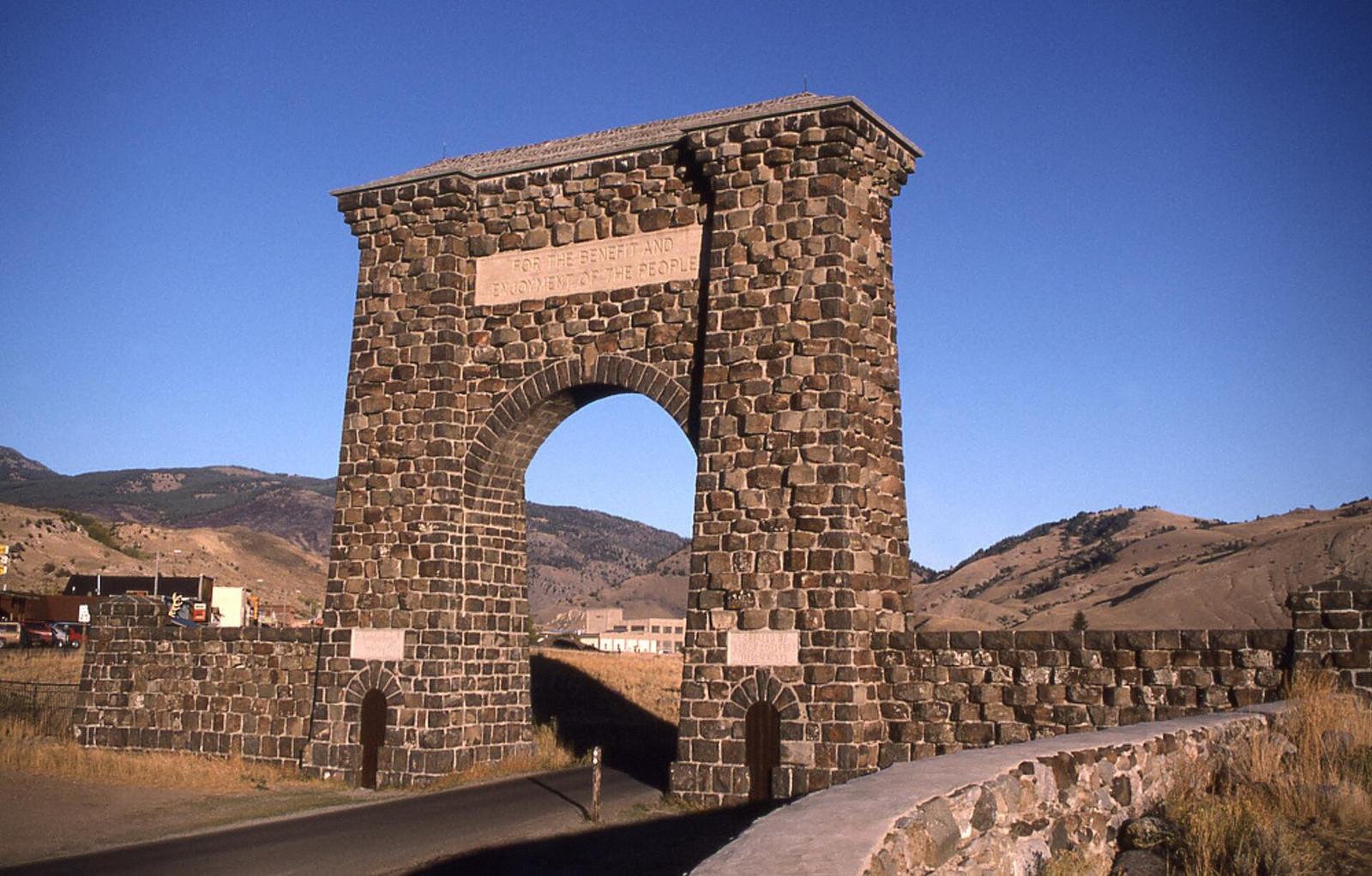
Yellowstone has five entrance stations, and choosing the wrong one can add two hours of driving to every day of your trip. The five Yellowstone entrances are West (West Yellowstone, Montana), North (Gardiner, Montana), Northeast (Cooke City and Silver Gate, Montana), East (Cody, Wyoming) and South (toward Jackson, Wyoming, through Grand Teton). Only the North Entrance is open to cars year-round; the West, East and South close to regular vehicles for the winter.
Which gate is right depends on three things: where you are flying into, what you most want to see, and when you are coming. This page compares all five on distance, season, crowding, scenery and what each one puts you next to. Fees are the same at every gate and are covered in full on our Yellowstone entrance fee guide.
How many entrances does Yellowstone have?
Yellowstone has five entrance stations: North at Gardiner, Montana; Northeast at Cooke City and Silver Gate, Montana; East on US-14/16/20 from Cody, Wyoming; South on US-89/191/287 from Grand Teton and Jackson; and West at West Yellowstone, Montana. Three of the five close to cars each winter.
The park itself is open 24 hours a day, 365 days a year. That is not the same as every road being open, and the distinction trips people up constantly. When a road is closed for the season the entrance it serves is closed too; when it is open, the gate is not physically locked overnight, so you can drive in before the staffed booth opens as long as you pay or show a pass.
The five entrances at a glance
| Entrance | Gateway town | State | 2026 car season | First major sight | Best for |
|---|---|---|---|---|---|
| West | West Yellowstone | MT | 17 Apr – 31 Oct | Madison, then Old Faithful | Geyser basins, first-time visits, most services |
| North | Gardiner | MT | Year-round | Mammoth Hot Springs | Winter, elk rut, northern range, history |
| Northeast | Cooke City / Silver Gate | MT | Year-round to Cooke City | Lamar Valley | Wolves and wildlife, solitude, the Beartooth |
| East | Cody | WY | 1 May – 31 Oct | Yellowstone Lake | Lake, quietest paved approach, Cody rodeo |
| South | Jackson (via Grand Teton) | WY | 8 May – 31 Oct | West Thumb, then Old Faithful | Combining Yellowstone with Grand Teton |
Seasonal dates are the 2026 regular-vehicle dates published by the National Park Service (checked September 2026). They shift a little each year, and the winter closures are absolute rather than weather-dependent. Our road closures page keeps the current calendar.
West Entrance: the busiest gate and the easiest first visit
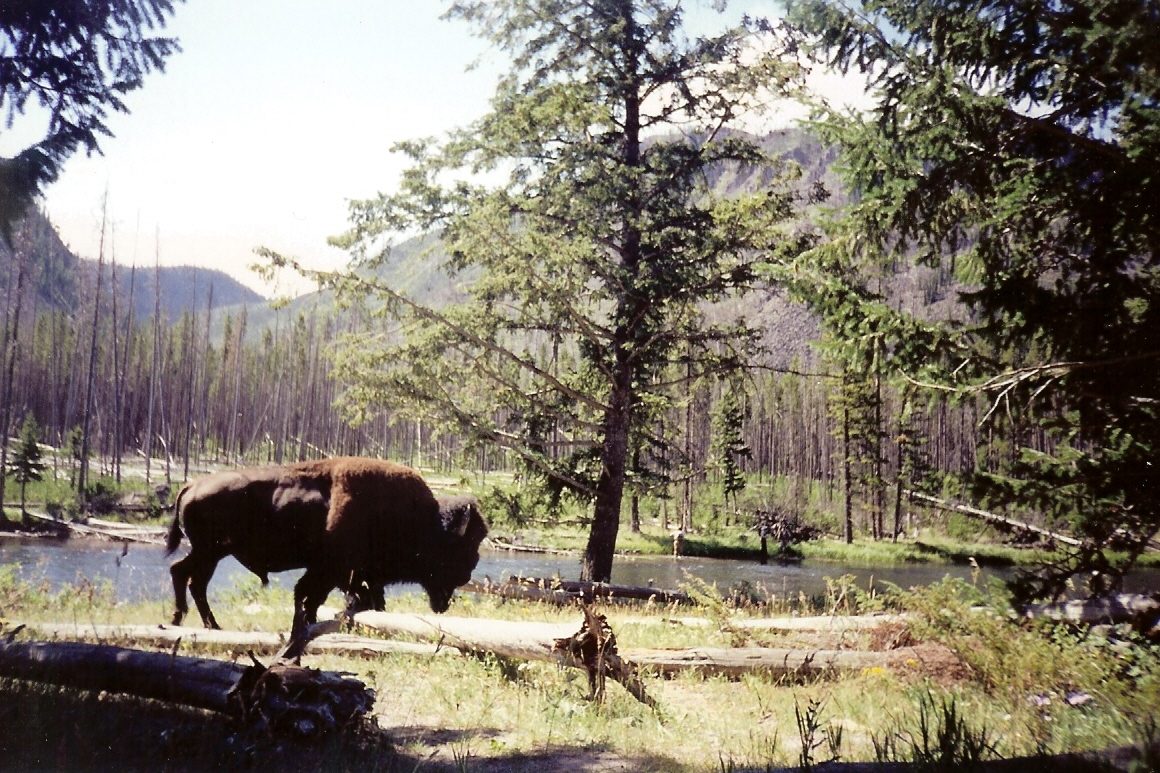
The West Entrance sits at the edge of West Yellowstone, Montana, and it is the gate most visitors use. It is also the one most likely to have a queue.
What it puts you next to. Madison Junction is 30 minutes inside (NPS drive time, checked September 2026), and from Madison it is another 35 to 45 minutes to Old Faithful. That makes the West Entrance the shortest paved approach to the geyser basins — the Lower, Midway and Upper basins, Grand Prismatic, Old Faithful and the Firehole — which is what most first-time visitors come for. Our Old Faithful eruption times page explains how to time that first morning.
The town. West Yellowstone has the largest concentration of hotels, restaurants, gas and outfitters of any gateway, plus an airport (WYS) served from Salt Lake City from early May to mid-October. Our West Yellowstone guide covers the town, and where to stay in West Yellowstone covers the beds.
The catch. Volume. In July and August the queue at the West Entrance booths can run 20 to 40 minutes at the wrong time of day, and the cars that came through it are the same cars you will meet at Midway and Old Faithful an hour later. The fix is simple and reliable: be at the gate before 7:30 a.m., or after 4 p.m.
Season. Closed to cars from 1 November to mid-April. The road from the West Entrance to Madison and Old Faithful is groomed for oversnow travel from 15 December, which makes West Yellowstone the busiest snowmobile and snowcoach town in the region — see Yellowstone in winter.
Use it if this is a first visit, you want the geysers, you need a wide choice of hotels and restaurants, or you are flying into Bozeman or Idaho Falls and heading straight for the famous half of the park.
Skip it if wildlife is your priority. The Madison and Firehole valleys hold bison, elk and the occasional bear, but Lamar and Hayden are where the density is, and both are a long way from this gate.
North Entrance: the only one open all year
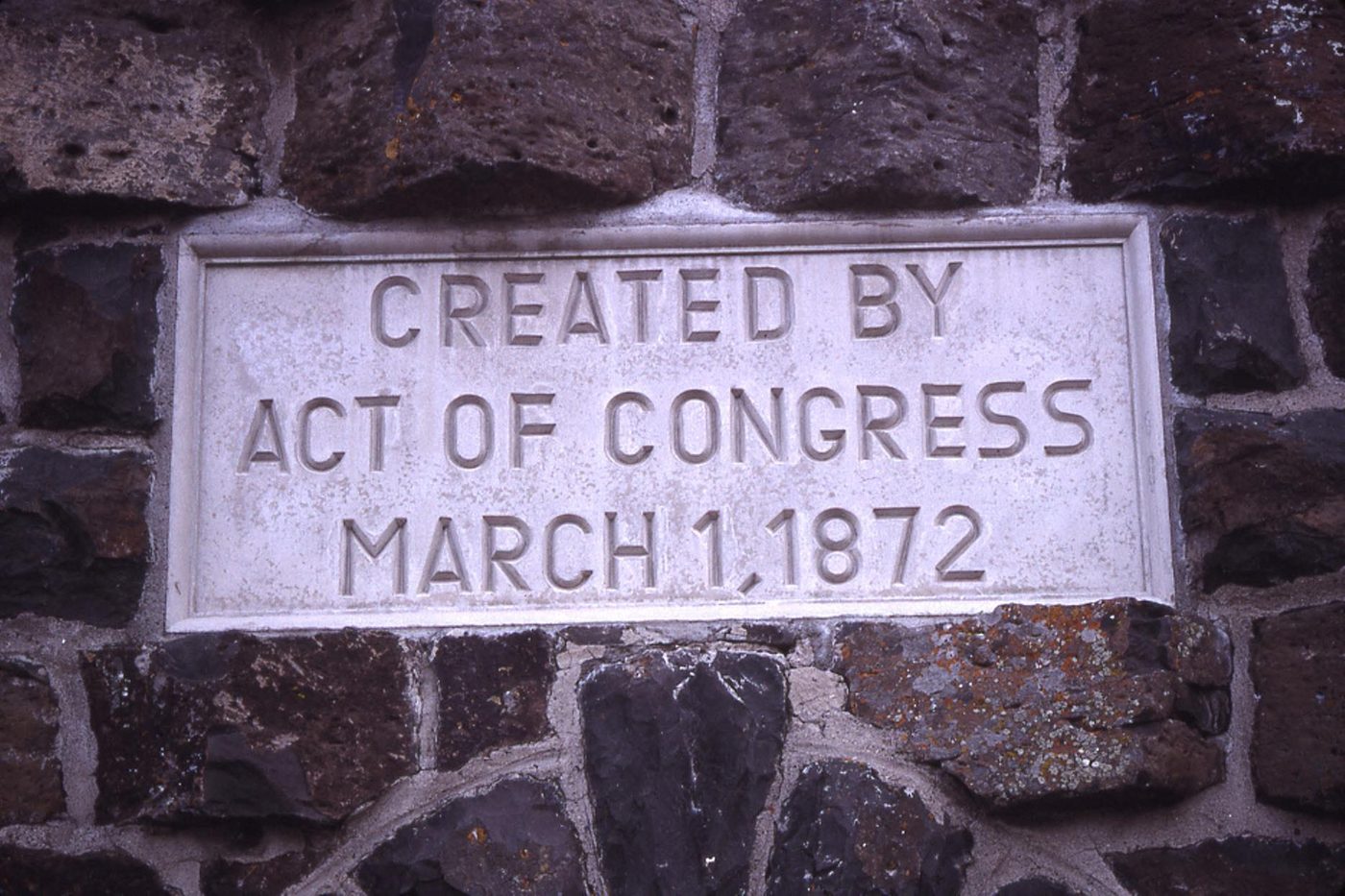
The North Entrance at Gardiner, Montana is the original gate, marked by the Roosevelt Arch, and the only one you can drive through in January.
What it puts you next to. Mammoth Hot Springs is 15 minutes inside (NPS, checked September 2026) — the shortest distance from any gate to a major feature in the park. From Mammoth it is 40 minutes east to Tower Junction and the head of Lamar Valley, or 45 minutes south to Norris.
The town. Gardiner is small, functional and built for the park. It has hotels that stay open all winter, a handful of restaurants, outfitters and raft companies, and it sits about 50 miles south of Livingston and roughly 85 miles from Bozeman’s airport. Our Gardiner hotels page covers the options, and West Yellowstone vs Gardiner settles the choice between the two main bases.
The catch in 2026. The Gardner River High Bridge on the road between Gardiner and Mammoth ran single-lane with delays of up to 15 minutes, 24 hours a day, from mid-April into late October 2026, and was closed to vehicles over 8 feet 6 inches wide or 75 feet long (checked September 2026). If you are driving a large RV or towing, that restriction effectively rules out the North Entrance while the work is under way. Confirm the current status before you commit a big vehicle to this road.
Season. Open to cars year-round, and paired with the Northeast Entrance by the only road in the park that never closes to regular vehicles.
Use it if you are visiting between November and April, you want the elk rut at Mammoth, you are chasing wolves and bears on the northern range, or you want the shortest possible drive from a gate to a thermal area.
Skip it if Old Faithful and the geyser basins are the point of the trip. Mammoth to Old Faithful is 45 minutes to Norris plus another 30 to Madison plus 35 to 45 more — about two hours each way, which is a bad way to spend a short visit.
Northeast Entrance: the wildlife gate
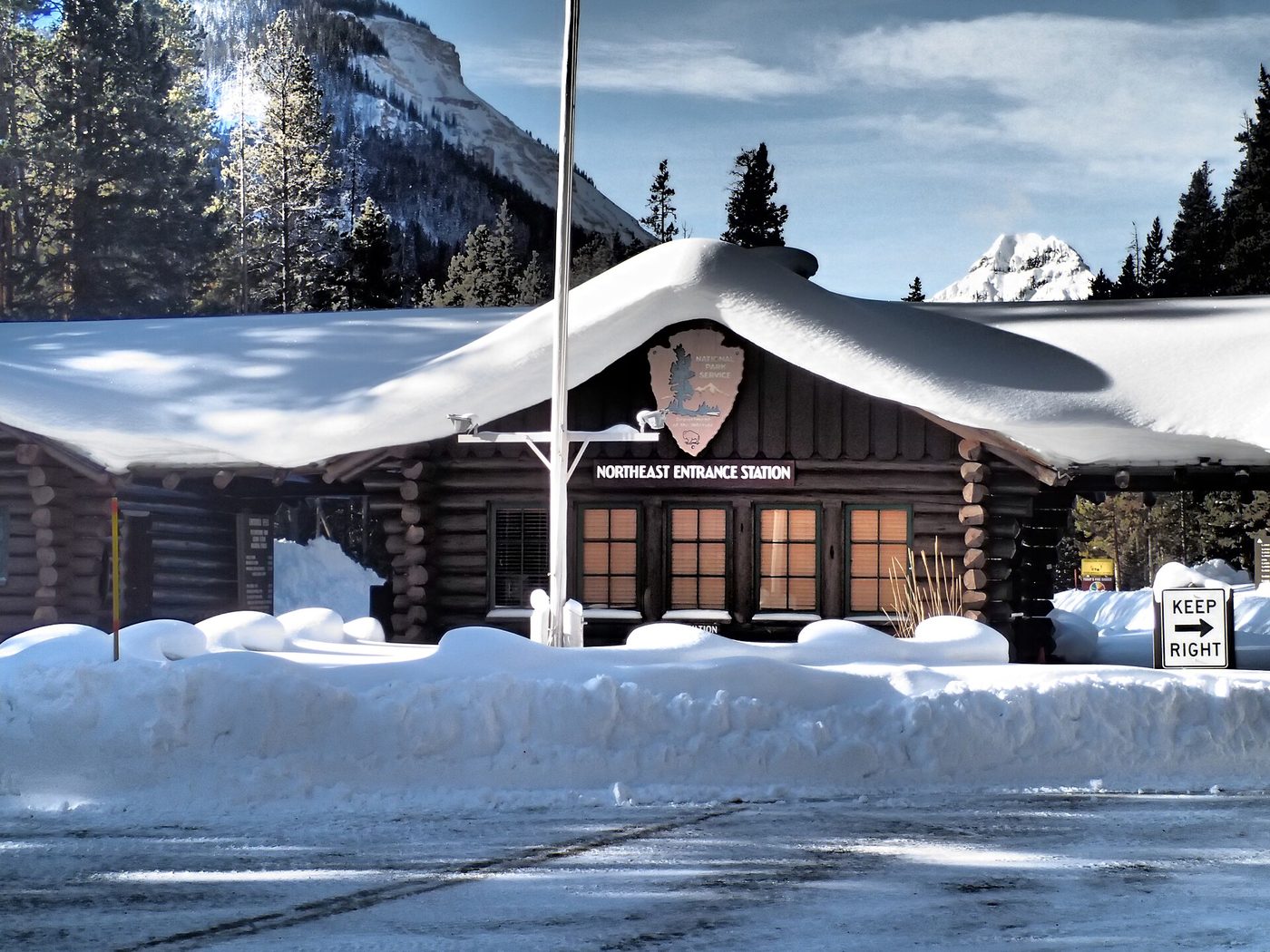
The Northeast Entrance at Silver Gate and Cooke City, Montana is the least used of the five, and for a certain kind of visitor it is the best.
What it puts you next to. Lamar Valley, immediately. Tower Junction is 60 minutes inside (NPS, checked September 2026), and the whole of that hour runs through the finest wildlife habitat in the lower 48 states: the Lamar River, Slough Creek, Soda Butte and the open sage flats where wolves, grizzlies, black bears, bison, pronghorn and coyotes are all regularly visible from the road. Our Lamar Valley guide covers the pullouts and the timing.
The towns. Cooke City and Silver Gate are tiny — a few dozen rooms, a couple of restaurants, one gas station. There is no supermarket and no hospital. That scarcity is part of the appeal and part of the risk.
The catch. Access. In summer you reach Cooke City over the Beartooth Highway from Red Lodge or the Chief Joseph Scenic Byway from Cody, and both are spectacular. Both closed on 12 October in 2026. After that, the only way in or out of Cooke City is west through the park via Gardiner, and in winter the road east of Cooke City is closed entirely, which makes the town a genuine dead end. Our Beartooth Highway page has the route and the seasons.
Season. The road from the Northeast Entrance to Mammoth and Gardiner is open to cars year-round. The approaches from Red Lodge and Cody are not.
Use it if wildlife is the main reason for the trip, you are willing to drive the Beartooth, or you are entering from Billings and want the most scenic approach in the Rockies.
Skip it if you need choice — of restaurants, of rooms, of anything. Cooke City has one of most things. Also skip it if you are arriving after mid-October, when the eastern approaches close and the town becomes reachable only through the park.
East Entrance: the quiet approach from Cody
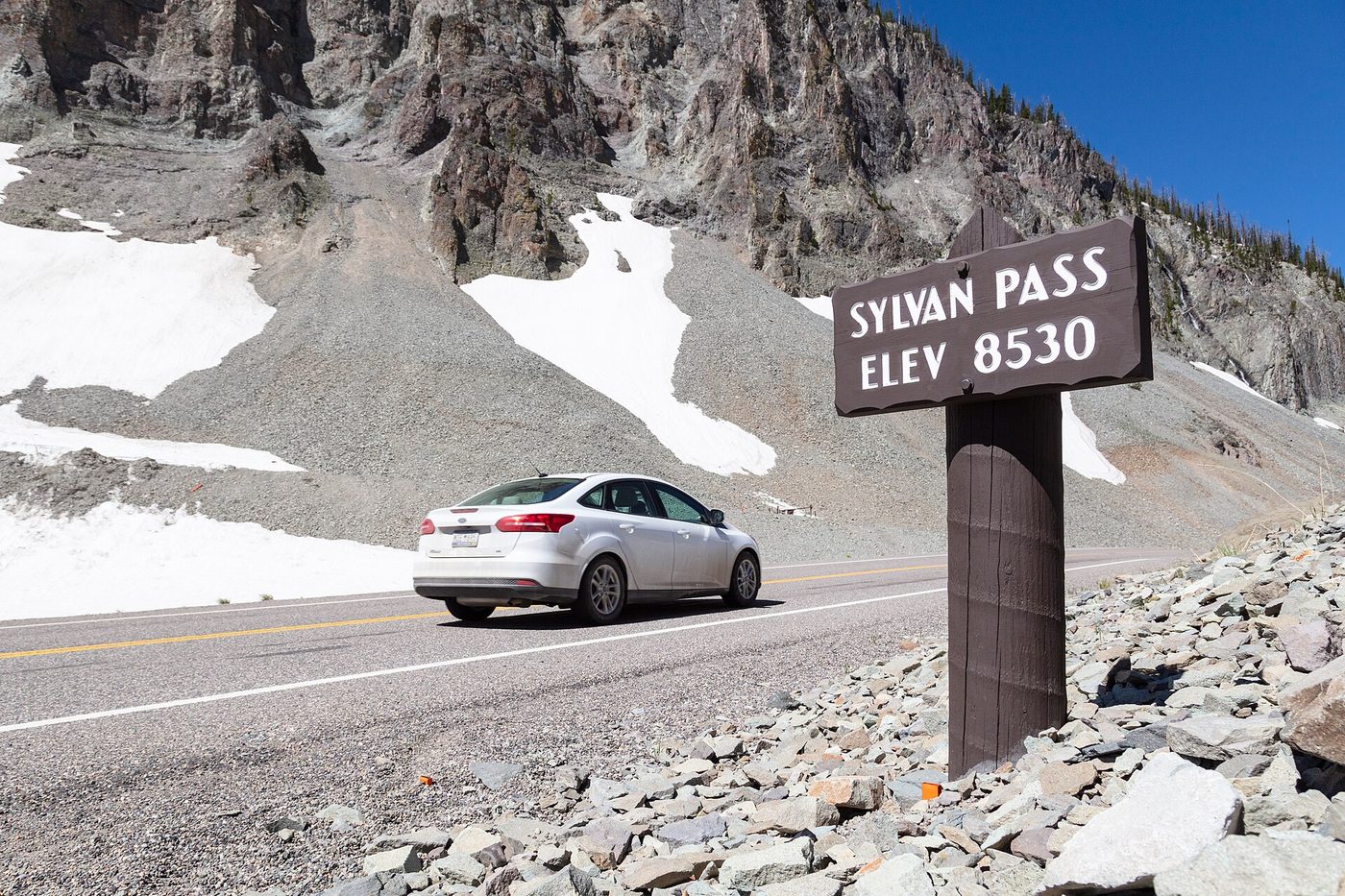
The East Entrance on US-14/16/20 is about 50 miles west of Cody, Wyoming, over Sylvan Pass at 8,530 feet.
What it puts you next to. Lake Village is 60 minutes inside (NPS, checked September 2026), which means Yellowstone Lake, Fishing Bridge, the Lake Hotel and, a little further on, Hayden Valley and the Grand Canyon of the Yellowstone. It is the natural gate if the lake and the canyon are your priorities rather than the geysers.
The town. Cody is a real town with an airport (COD), a substantial hotel stock, the Buffalo Bill Center of the West and a nightly rodeo in summer. It is generally better value than Jackson and considerably livelier than Gardiner. See things to do in Cody and Cody hotels.
The catch. The drive. The Wapiti Valley between Cody and the gate is beautiful, and it is still 50 miles before you reach the boundary and another hour to Lake Village. You are committing to roughly two hours from your hotel to the middle of the park, each way. Sylvan Pass also closes for avalanche control more often than any other road in the park.
Season. 1 May to 31 October for cars in 2026, with oversnow access managed separately in winter.
Use it if you are arriving from the Bighorns, Cody or Billings, you want Yellowstone Lake and the canyon first, or you want the least congested paved approach in summer.
Skip it if you are on a short trip. Two hours each way from a Cody hotel to the middle of the park costs you a day out of three, and the geyser basins are further still.
South Entrance: the Grand Teton connection
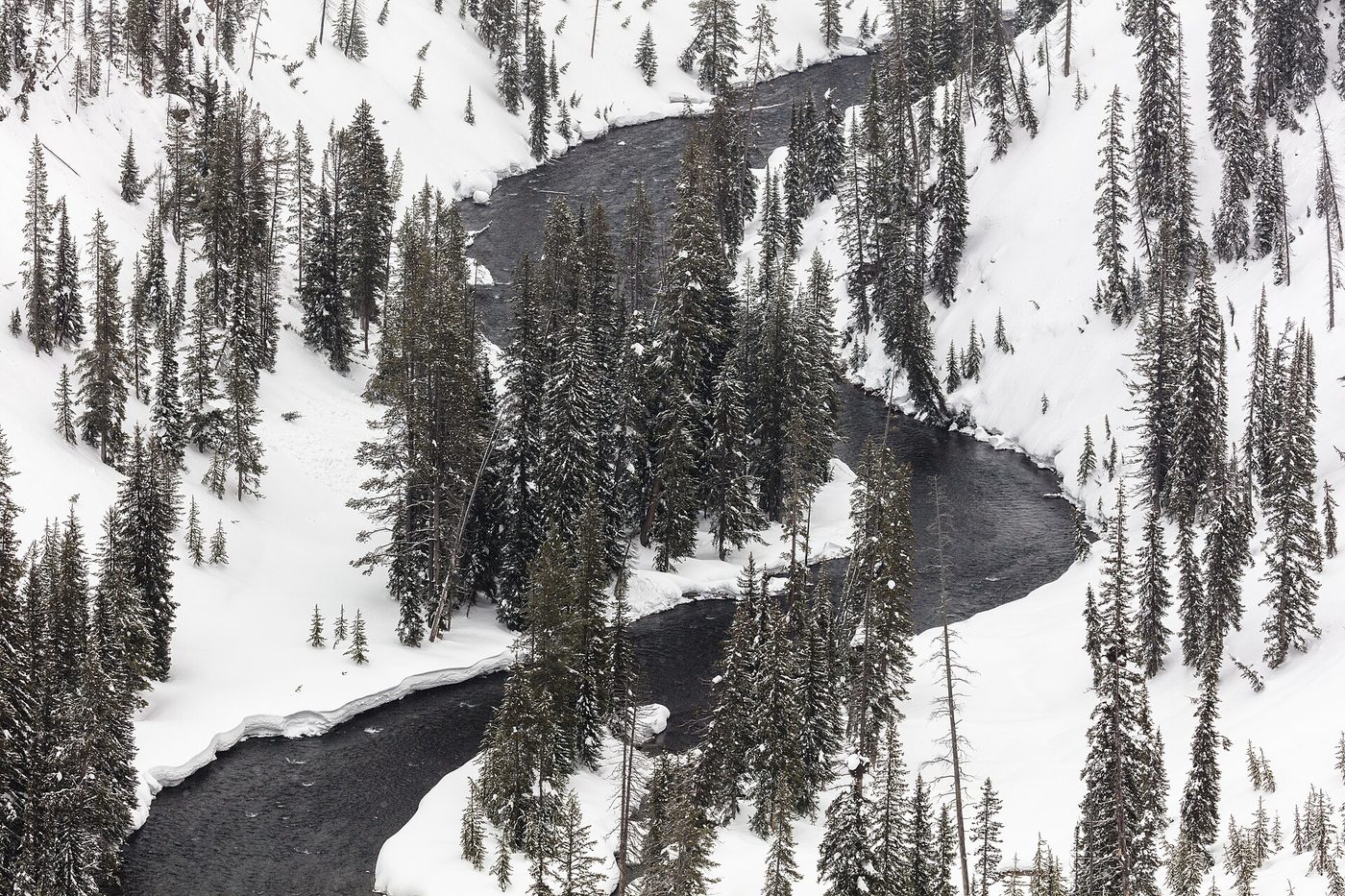
The South Entrance sits about 56 miles north of Jackson, Wyoming, reached by driving the length of Grand Teton National Park on US-89/191/287.
What it puts you next to. Grant Village is 50 minutes inside (NPS, checked September 2026), West Thumb is just beyond it on Yellowstone Lake, and Old Faithful is another 40 minutes from Grant over Craig Pass. That gives you reasonable access to both the lake and the geyser basins without a punishing drive.
The real advantage. Grand Teton. The 56 miles between Jackson and the Yellowstone boundary are among the best road miles in the United States, and taking this gate means you see two national parks rather than one. Our Yellowstone and Grand Teton guide covers the combined trip, and Yellowstone vs Grand Teton helps if you are choosing between them.
The catch. Cost and distance. Grand Teton charges its own entrance fee, so a combined trip pays twice unless you buy an America the Beautiful pass — which is exactly when that pass starts making financial sense, particularly for non-US residents paying the $100 nonresident fee at each park. Our nonresident fee page does that arithmetic. Jackson is also the most expensive gateway town by a wide margin.
Season. 8 May to 31 October for cars in 2026.
Use it if you are flying into Jackson Hole, you want both parks, or you are driving up from Salt Lake City and Utah.
Skip it if your budget is tight and Grand Teton is not part of the plan. You would be paying Jackson prices and driving through a park you are not stopping in, which is the most expensive way to reach Old Faithful.
Drive times from each entrance to the places you came for
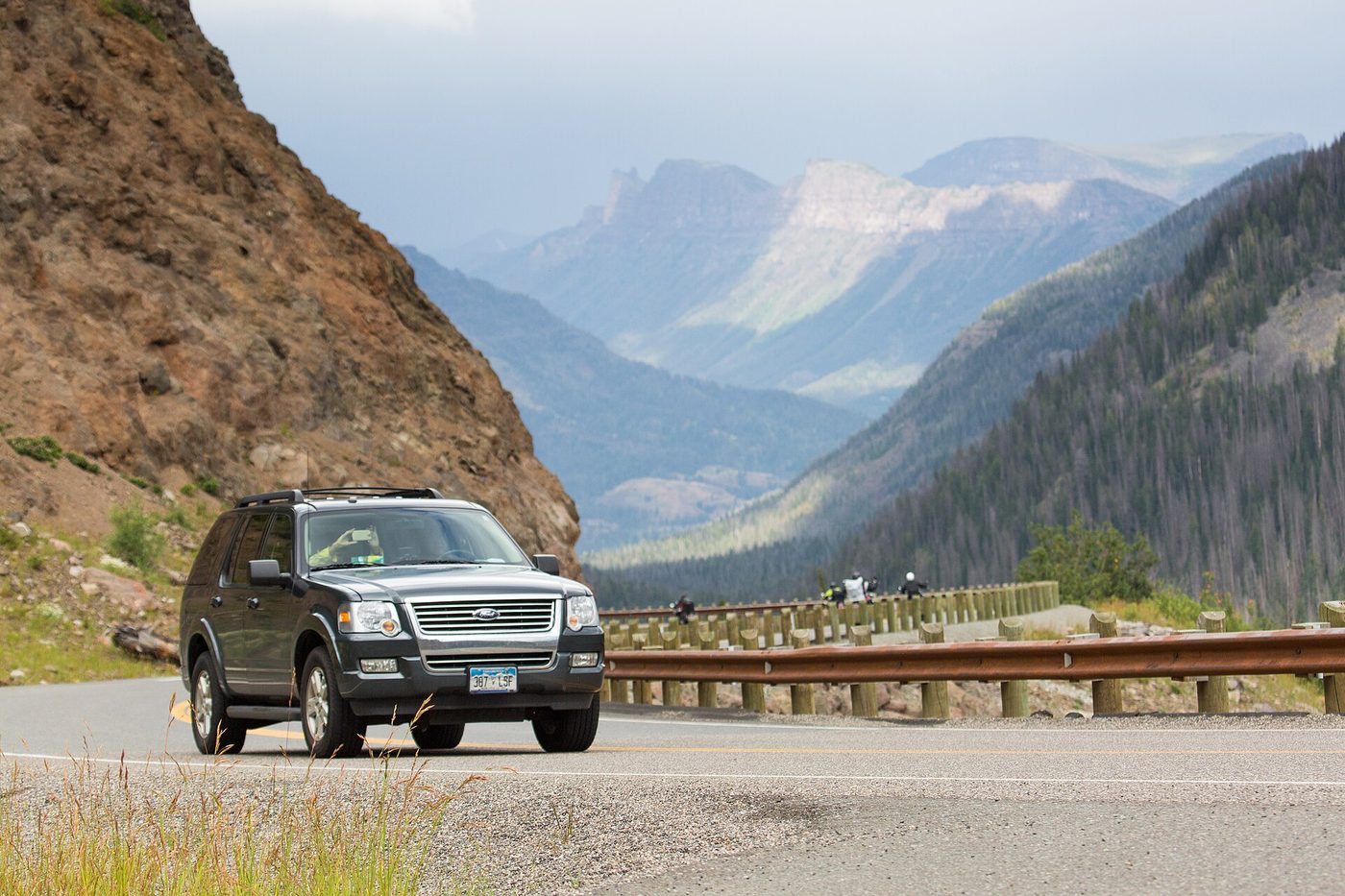
These are the National Park Service’s own published drive times between junctions (checked September 2026). They assume normal summer traffic and no wildlife jam, which is an optimistic assumption in July.
| From | To | Drive time |
|---|---|---|
| West Entrance | Madison Junction | 30 min |
| Madison Junction | Old Faithful | 35–45 min |
| Old Faithful | Grant Village | 40 min |
| South Entrance | Grant Village | 50 min |
| Grant Village | Lake Village | 45 min |
| East Entrance | Lake Village | 60 min |
| Lake Village | Canyon Village | 35 min |
| Canyon Village | Norris Junction | 30 min |
| Canyon Village | Tower Junction | 50–60 min |
| Northeast Entrance | Tower Junction | 60 min |
| Tower Junction | Mammoth Hot Springs | 40 min |
| North Entrance | Mammoth Hot Springs | 15 min |
| Mammoth Hot Springs | Norris Junction | 45 min |
| Norris Junction | Madison Junction | 30 min |
Two things to take from that table. First, nothing in Yellowstone is close to anything else: the park is 2.2 million acres and the Grand Loop Road is 142 miles of it. Second, the entrance you choose determines which half of the park is convenient and which half is an expedition. If you enter at Cody, the geyser basins are a long day. If you enter at West Yellowstone, Lamar Valley is a long day. Plan around that rather than against it, and use our guide to how many days you need in Yellowstone to size the trip honestly.
Getting to each entrance: airports, driving and shuttles
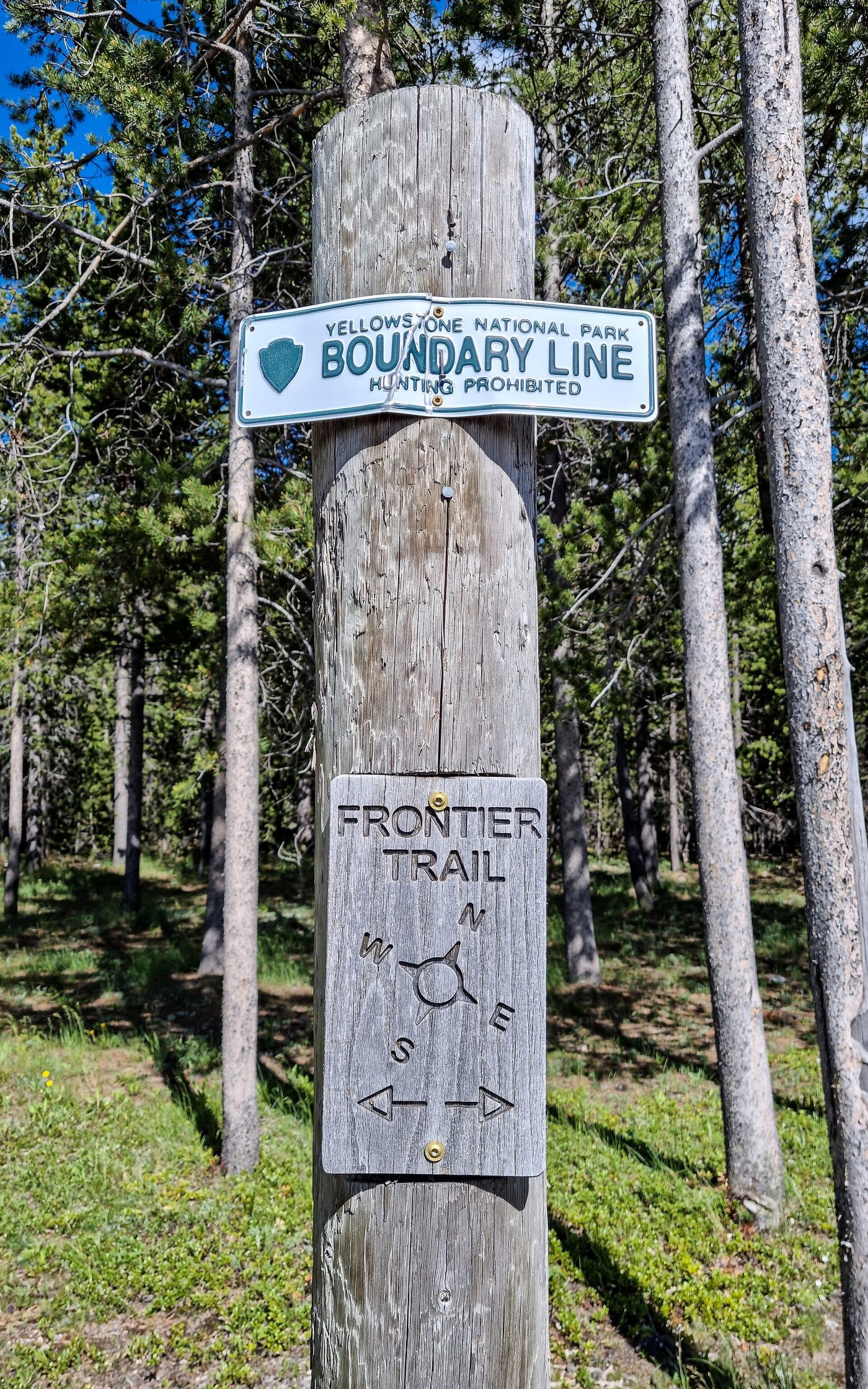
The gate you use is usually decided by the airport you fly into, so it is worth working backwards from the flight.
Commercial airlines serve five airports near Yellowstone all year: Cody and Jackson in Wyoming, Bozeman and Billings in Montana, and Idaho Falls in Idaho. The West Yellowstone airport is served from Salt Lake City from early May to mid-October only (NPS, checked September 2026).
| Airport | Code | Natural entrance | Notes |
|---|---|---|---|
| Bozeman | BZN | West or North | The biggest choice of flights and rental cars; roughly 85 miles to the North Entrance |
| Jackson Hole | JAC | South | 7 miles north of Jackson, inside Grand Teton; the most scenic arrival and the priciest |
| Cody | COD | East | Small, convenient, about 50 miles from the gate |
| Billings | BIL | Northeast or North | The gateway to the Beartooth Highway in summer |
| Idaho Falls | IDA | West | Often the cheapest fare; a longer drive than Bozeman |
| West Yellowstone | WYS | West | Seasonal, early May to mid-October, from Salt Lake City only |
There is no train. The National Park Service is explicit about it: train service is not available to the park, and the nearest depots are in southeast Idaho, Salt Lake City and northern Montana.
Bus and shuttle service is thin but real. Bus service from Bozeman to West Yellowstone via US-191 runs all year. Service from Idaho to West Yellowstone is summer-only, Bozeman to Gardiner runs in winter and summer, and services from Cody and Jackson operate in the summer season. There is no public transport inside the park itself, though a number of companies run shuttles and guided tours from the gateway towns.
Renting a car is effectively required for anything except a fully guided trip. Book it at the same time as the flights: rental supply at Bozeman and Jackson is tight in July and August, and one-way drops between airports — which is what a West-in, North-out itinerary needs — carry a fee that can be substantial.
Which Yellowstone entrance is the busiest?
The West Entrance is consistently the busiest, because it is the closest gate to Old Faithful and the geyser basins and the most convenient for visitors arriving from Bozeman, Idaho Falls and Salt Lake City. The Northeast Entrance is the quietest by a wide margin, followed by the East Entrance.
Peak queueing at the West Entrance runs from roughly 9 a.m. to 11 a.m. in July and August. The North Entrance is second busiest in summer and by far the busiest in winter, because it is the only one open. The East and South entrances rarely queue for more than a few minutes even in peak season, and the Northeast Entrance frequently has no queue at all.
If crowd avoidance is a priority, the gate matters far less than the hour. A 7 a.m. arrival at the West Entrance beats a 10 a.m. arrival at any of the other four.
Which entrance should you use? A short decision guide
- First visit, want the geysers, flying into Bozeman: West Entrance.
- Winter trip of any kind: North Entrance. It is the only option for cars.
- Wolves, bears and the northern range: Northeast Entrance, or North if you cannot reach Cooke City.
- Combining with Grand Teton, flying into Jackson: South Entrance.
- Yellowstone Lake, the canyon, arriving from the east: East Entrance.
- Elk rut in September and October: North Entrance, for Mammoth.
- Driving a large RV or towing during the 2026 bridge work: anything but the North Entrance.
- Shortest possible gate-to-sight drive: North Entrance, 15 minutes to Mammoth.
- Most scenic approach: Northeast, over the Beartooth Highway, in summer only.
- Cheapest gateway town: Cody or Gardiner. Jackson is the most expensive.
If you want that argued out at length, our best entrance to Yellowstone page ranks them for specific trip types.
Entrance seasons: what is open when
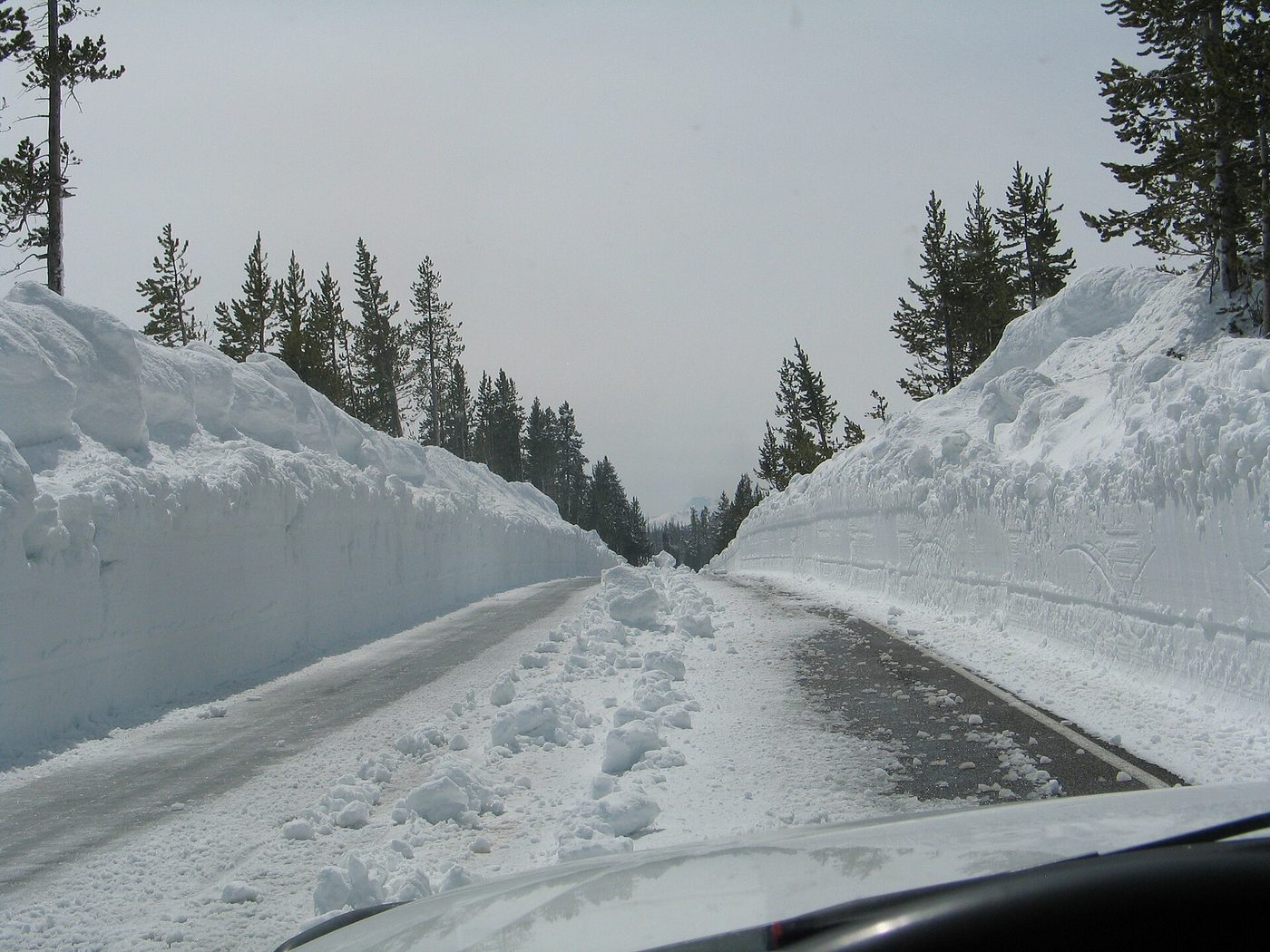
This is the part that most often derails a plan, because the closures are not gradual.
Mid-April to late October. All five entrances open to cars. The West Entrance opened 17 April in 2026, the East on 1 May, the South on 8 May, and everything closed on 31 October except the high roads, which closed on 12 October.
1 November to mid-December. The West, South and East entrances are closed to cars, and so is nearly the whole interior. The North and Northeast entrances stay open, and the 52-mile road between them through Mammoth, Tower and Lamar Valley is the only drivable route in the park. Oversnow travel has not started. This six-week window is the quietest of the year and the most limited.
15 December 2026 to mid-March 2027. Oversnow travel opens. You still cannot drive a car through the West, South or East entrances, but you can reach the interior by commercially guided snowcoach or snowmobile, or with a non-commercially guided permit. The North Entrance remains the only car access.
Mid-March to mid-April. Oversnow travel ends in stages through March, then the roads are plowed, and the seasonal entrances reopen in April and May. Several weeks of this period have neither car access nor oversnow access to the interior.
The full calendar with every segment and date sits on our Yellowstone road closures page.
At the gate: fees, ID, vehicle limits and hours
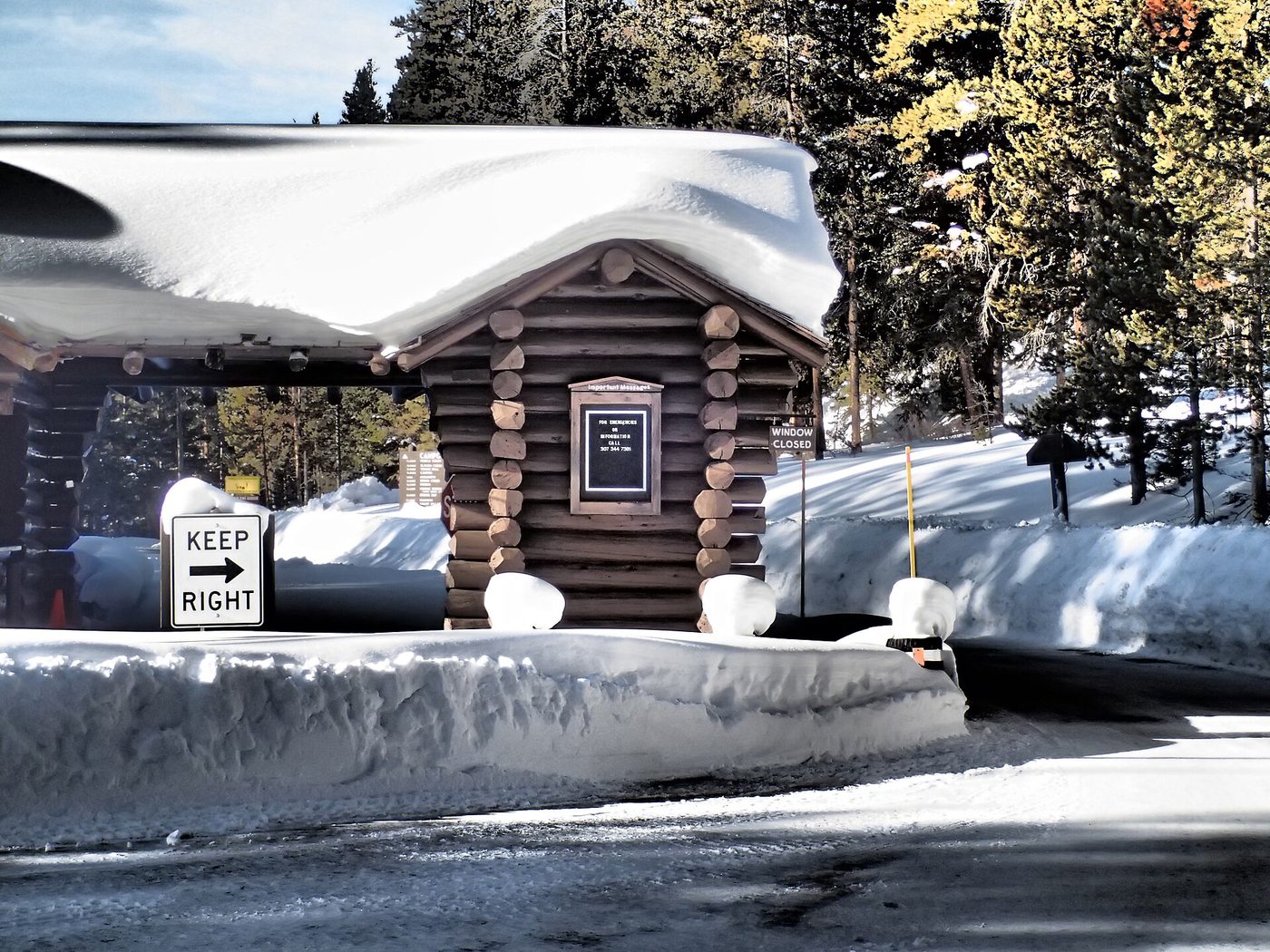
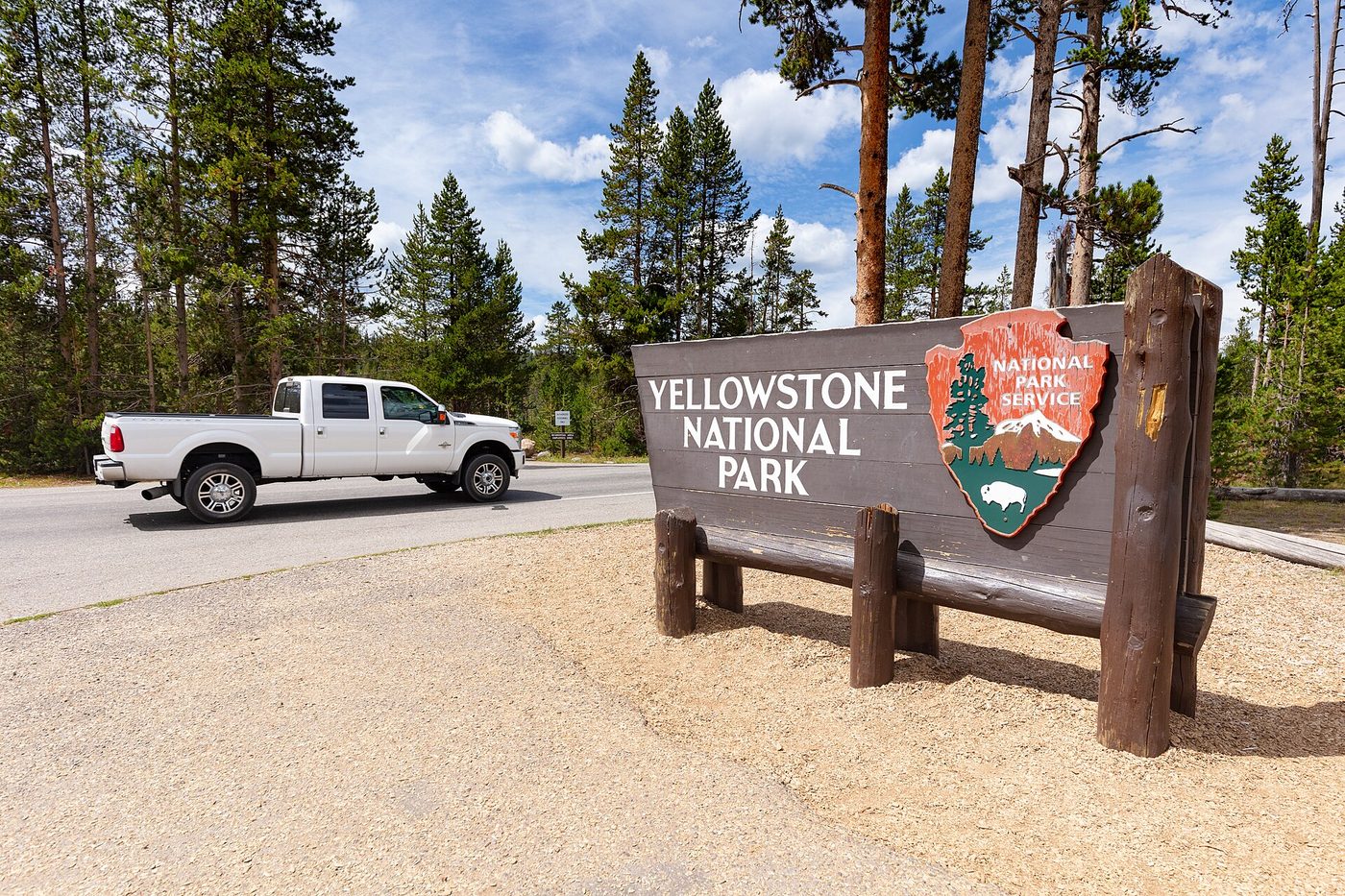
Every entrance charges the same fees and accepts the same payment. A private vehicle pays $35 for seven days, a motorcycle $30 and a person on foot or bicycle $20, and all five stations take cash and cards (checked September 2026).
Since 1 January 2026 there is one more line for international visitors: every non-US resident aged 16 and over pays an additional $100 nonresident fee on top of the standard entrance fee, unless they are admitted on an annual pass or an America the Beautiful pass. The nonresident America the Beautiful pass costs $250, which changes the arithmetic sharply for anyone visiting more than one park. Bring photo ID — passes are checked against it, and an annual pass holder has to be present.
Fee-free days apply to US citizens and residents only. All of this — the full fee table, the pass comparison, the collection rules and the nonresident detail — lives on our entrance fee hub, which we keep current when the numbers change.
Practical notes for the booth itself: have your pass or card out before you reach it, because the queue behind you is the queue you were just in; the receipt is your re-entry pass for seven days and you will need it every time you come back through a gate; and there is no charge for leaving.
Staffed hours and arriving early
Entrance stations are staffed during the day, and the hours vary by gate and by season. Outside those hours the booths are unstaffed and the road is open, which is why visitors who want the first light in Lamar Valley or at Midway can drive in at 5 a.m. without a problem. Two things to know if you do that. You are still liable for the fee, and rangers do check receipts and passes inside the park. And an unstaffed booth means nobody to answer questions, hand you a map or tell you a road is closed, so pick up the park newspaper and map on your first pass through during the day.
RVs, trailers and oversize vehicles
Yellowstone’s roads were laid out for 1920s touring cars and widened reluctantly since. They are narrow, they have short sightlines, and several stretches have no shoulder at all. A large motorhome is manageable but it is not relaxing.
The specific restriction to watch for in the 2026 season was the Gardner River High Bridge between Gardiner and Mammoth, which barred vehicles over 8 feet 6 inches wide or 75 feet long while the single-lane work was under way (checked September 2026). That effectively takes the North Entrance off the table for large rigs during the work. The West and South entrances are the easiest for big vehicles, the East Entrance involves Sylvan Pass, and the Northeast approach over the Beartooth Highway — a 10,947-foot pass with switchbacks and no guardrails in places — is not a road to learn on.
Campground length limits matter more than gate limits in practice: the longest sites in the park are at Fishing Bridge RV Park, and the NPS-run campgrounds cap out well below that. Our camping guide has the full table of sites and lengths.
Accessibility
All five entrance stations are drive-through and none requires you to leave your vehicle. Accessible parking, restrooms and boardwalk sections exist at the major thermal areas, and the park publishes an accessibility guide covering visitor centres, lodges, campsites and trails. If mobility is a consideration, the North Entrance deserves a look for a simple reason: Mammoth is 15 minutes from the gate, has the highest concentration of accessible services in the park, and is open all year.
Can you enter Yellowstone at night?
Yes. The park is open 24 hours a day, 365 days a year, and the entrance stations are not physically gated overnight during the seasons their roads are open. If you arrive after the booth closes you drive through, and you are still expected to have paid or to hold a valid pass.
Driving at night in Yellowstone is a different question from being allowed to. Bison stand on warm pavement after dark and are effectively invisible until your headlights are on them; elk cross without warning; there is no lighting anywhere on the road network and no cell signal across most of it. If you can arrange to arrive in daylight, do. If you cannot, drive well below the 45 mph limit and assume something large is around the next bend. Our safety page covers wildlife on roads along with the thermal and bear rules.
Using more than one entrance on the same trip
You can, and for most trips longer than three days you should. Your entrance receipt is valid for seven consecutive days at every gate, so entering at West and leaving at North costs nothing extra.
The through-routes that work well:
- West in, North out. Geysers first, then Norris and Mammoth, finishing on the northern range. The classic first-visit line, and it ends 85 miles from Bozeman’s airport.
- South in, West out. Grand Teton, then the lake, then Old Faithful, then out to West Yellowstone. Best for a two-park trip flying into Jackson and out of Bozeman.
- East in, North out. Cody and the Wapiti Valley, the lake and canyon, then Lamar and Mammoth. Quiet, scenic and avoids the West Entrance queue entirely.
- Northeast in, West out. The Beartooth, then Lamar, then across to the geysers. The most spectacular approach, summer only.
The one combination to avoid is basing yourself in a single gateway town and driving to the far side of the park each day. Two hours in, two hours back, and your best light is spent on the Grand Loop Road. Move your base instead, even if it means one night somewhere inconvenient. Our three-day Yellowstone itinerary is built around that principle.
There is a version of this that works without moving at all, and it is worth knowing. If you have three days or fewer and you are staying in West Yellowstone, do not attempt Lamar Valley. Spend the time properly on the geyser basins, the Grand Canyon of the Yellowstone and Hayden Valley, all of which are within a reasonable radius, and accept that the wolves are a different trip. A well-used three days beats a badly spread five.
The mistakes people make choosing an entrance
Four errors come up again and again, and all four are avoidable.
Booking the flight before choosing the gate. Bozeman is the default because it has the most flights, but Jackson, Cody and Billings each open a different half of the park with less driving. Decide what you most want to see, then book the airport that serves it.
Assuming the park is small. It is 2.2 million acres, and the Grand Loop Road is 142 miles with a 45 mph limit and bison on it. Two junctions that look adjacent on the map are often an hour apart. The drive-time table above is the reality check.
Treating the gateway towns as interchangeable. They are not remotely alike. West Yellowstone is a full resort town, Gardiner is a working village, Cooke City is a handful of buildings at the end of a road, Cody is a real Wyoming town with its own attractions, and Jackson is an expensive resort. Your evenings will be very different depending on which you pick.
Planning a late-October or early-November trip around a gate that closes. Three of the five entrances shut to cars on 31 October, and the interior with them. If your dates are anywhere near the end of October, check the closing dates before you book anything, and read our October guide for how the month unwinds.
One more that is less common but more painful: arriving in a large RV during the North Entrance bridge work and discovering the size restriction at the bridge rather than at home. Vehicle limits change with construction, so confirm them in the week you travel.
Frequently asked questions
How many entrances does Yellowstone National Park have?
Five: North at Gardiner, Montana; Northeast at Cooke City and Silver Gate, Montana; East from Cody, Wyoming; South from Jackson and Grand Teton; and West at West Yellowstone, Montana. The North Entrance is the only one open to cars all year.
Which Yellowstone entrance is closest to Old Faithful?
The West Entrance. It is 30 minutes to Madison Junction and a further 35 to 45 minutes to Old Faithful, so roughly 65 to 75 minutes in total. The South Entrance is the next closest, at about 90 minutes via Grant Village and Craig Pass.
Which entrance is open in winter?
Only the North Entrance at Gardiner is open to regular vehicles in winter, connecting through Mammoth, Tower and Lamar Valley to the Northeast Entrance at Cooke City. The West, South and East entrances close to cars on 1 November and reopen to oversnow travel on 15 December.
Do all five entrances charge the same fee?
Yes. The entrance fee is the same at every gate: $35 for a private vehicle for seven days, $30 for a motorcycle and $20 per person on foot or bicycle, plus the $100 nonresident fee for non-US residents aged 16 and over. All five stations accept cash and cards.
Which entrance is best for wildlife?
The Northeast Entrance, because it opens directly into Lamar Valley — the best wolf, bear and bison country in the park. The North Entrance is the close second, putting you on the same northern range via Mammoth and Tower, and it stays open all year.
Can I enter through one gate and leave through another?
Yes. Your entrance receipt is valid for seven consecutive days at all five entrances, so you can enter at West and leave at North, or any other combination, without paying again. Keep the receipt visible or to hand.
How long is the queue at the West Entrance?
In July and August, typically 20 to 40 minutes between about 9 a.m. and 11 a.m., and considerably less at other times. Arriving before 7:30 a.m. or after 4 p.m. reliably avoids it. Outside peak season the wait is usually a few minutes at most.
Which entrance is best for a first visit?
The West Entrance for most people, because it is the shortest drive to Old Faithful and the geyser basins and it has the widest choice of hotels and restaurants in West Yellowstone. If you would rather start with wildlife and Mammoth, the North Entrance is the better first gate.
Which entrance is the least crowded?
The Northeast Entrance at Cooke City, by a wide margin. It is the hardest to reach, the approaches close in mid-October, and it serves the quietest corner of the park. The East Entrance from Cody is the next quietest and much easier to reach.
Is the North Entrance road still affected by the 2022 flood?
Traffic uses the improved Old Gardiner Road route between Gardiner and Mammoth, and the National Park Service released an environmental assessment for a permanent replacement alignment in January 2026 (checked September 2026). Separately, the Gardner River High Bridge ran single-lane through the 2026 season with vehicle size limits.
One reason the choice of gate matters so much is simply how big the park is: 2.2 million acres, a 142-mile Grand Loop Road and a 45 mph limit. If you want the rest of the numbers — the geyser count, the lake, the caldera, the wildlife populations — our page of facts about Yellowstone collects them, and several of them will change how you plan the driving.
Sources
- National Park Service — directions, drive times and airports, checked September 2026.
- National Park Service — park roads and 2026 seasonal dates, checked September 2026.
- National Park Service — Yellowstone fees and passes, checked September 2026.
- National Park Service — park passes and the nonresident fee, checked September 2026.
- National Park Service — North Entrance Road environmental assessment news release, checked September 2026.
Image credits
| Photo | Credit |
|---|---|
| The Roosevelt Arch at Gardiner marks the North Entrance, the only gate open to cars all ye (top of page) | NPS Photo, public domain, via Wikimedia Commons |
| Every gate charges the same fee, and one receipt covers all five for seven days | Yellowstone National Park, public domain, via Wikimedia Commons |
| The Madison valley, 30 minutes inside the West Entrance, is the first thing most visitors | Ken Lund from Reno, Nevada, USA, CC BY-SA 2.0, via Wikimedia Commons |
| The North Entrance is the original one, and Mammoth Hot Springs is only 15 minutes inside | NPS Photo, public domain, via Wikimedia Commons |
| The Northeast Entrance stays open to cars all winter, though the roads east of Cooke City | Mike Cline, CC BY-SA 3.0, via Wikimedia Commons |
| Sylvan Pass sits between Cody and Yellowstone Lake, and closes for avalanche control more | Yellowstone National Park, public domain, via Wikimedia Commons |
| The South Entrance road follows the Lewis River up from Grand Teton to West Thumb | Yellowstone National Park, public domain, via Wikimedia Commons |
| Nothing in Yellowstone is close to anything else | Neal Herbert, public domain, via Wikimedia Commons |
| Spring plowing on the way to the South Entrance | Yellowstone National Park from Yellowstone NP, USA, public domain, via Wikimedia Commons |
| All five stations take cash and cards, and passes are checked against photo ID | Mike Cline, CC BY-SA 3.0, via Wikimedia Commons |
| The park line runs along the edge of West Yellowstone, which is why this gate gets the mos | Dietmar Rabich, CC BY-SA 4.0, via Wikimedia Commons |