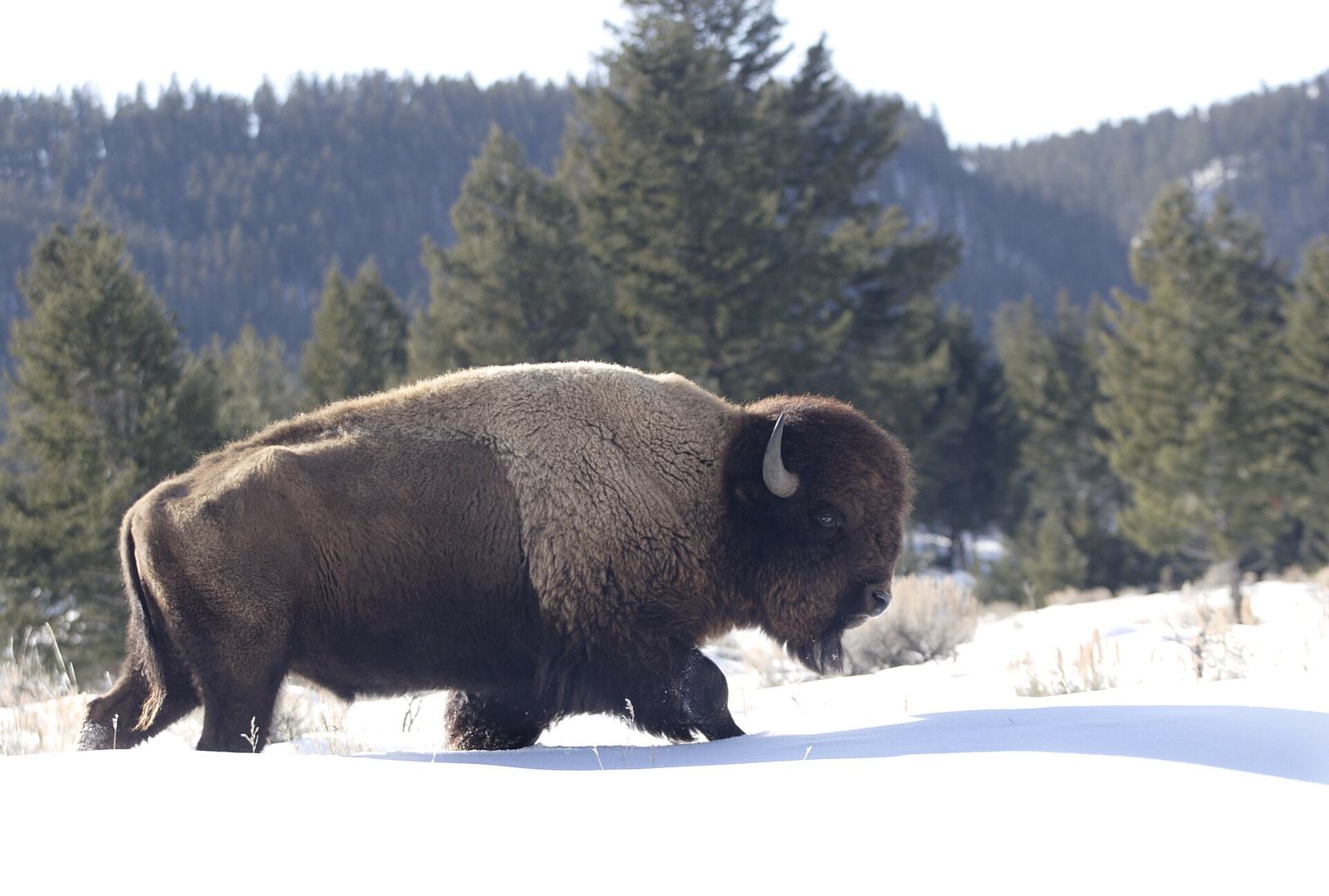
Yellowstone in October is the most rewarding and the most misunderstood month on the calendar. For the first eleven days you get a nearly complete park with a fraction of the summer traffic. After 12 October you lose Dunraven Pass and the Beartooth Highway. After 31 October you lose almost everything: the West, South and East entrances close, and the only road left open to cars runs from Gardiner through Mammoth and Lamar Valley to Cooke City.
Between those dates sits one of the best three weeks of the year to be in the park — if you accept 29°F mornings, a real chance of snow, and a services list that shrinks every week. Our month-by-month guide to the best time to visit Yellowstone compares all twelve; this page is October in full, with the 2026 dates that actually govern what you can reach.
The short version: three Octobers in one month
Treat October as three distinct trips, because the park does.
1–12 October. The whole road network is open, including Dunraven Pass over to Tower and the Beartooth Highway out to Red Lodge. Crowds are a fraction of September’s. Most lodges are still running, though they close in sequence through these days. This is the sweet spot, and it is the stretch most visitors never consider.
13–31 October. Dunraven and the Beartooth are gone, which cuts the direct Canyon-to-Tower link and forces a long detour through Norris and Mammoth for anything on the northern range. Snow becomes likely rather than possible. Lodges close one after another until only Mammoth is left. The park feels genuinely empty, and wildlife viewing on the northern range is excellent.
1 October onward, if you are honest about November. After 31 October the interior closes to cars. Oversnow travel does not begin until 15 December 2026. That six-week gap is the deadest period in Yellowstone’s year, and if your dates fall in it, you are visiting the northern range only.
The honest verdict: early October is one of the best-value weeks in the park’s year. Late October is superb if you are chasing wildlife and solitude and do not mind driving in snow. The last days of the month are a gamble that can pay off beautifully or hand you a whiteout on Craig Pass.
One more thing that October guides rarely say plainly. The park does not become easier because it becomes quiet. Fewer rangers are on duty, fewer visitor centres are staffed, fewer cars pass a breakdown, and the weather that closes roads is the same weather you are driving in. Every margin for error that summer gives you for free — a tow truck within an hour, a hot meal at the next junction, somebody behind you on the trail — gets thinner through October. That is not a reason to stay away. It is a reason to leave with a full tank, a warm coat in the boot and a plan that survives a road closing.
Are Yellowstone roads open in October?
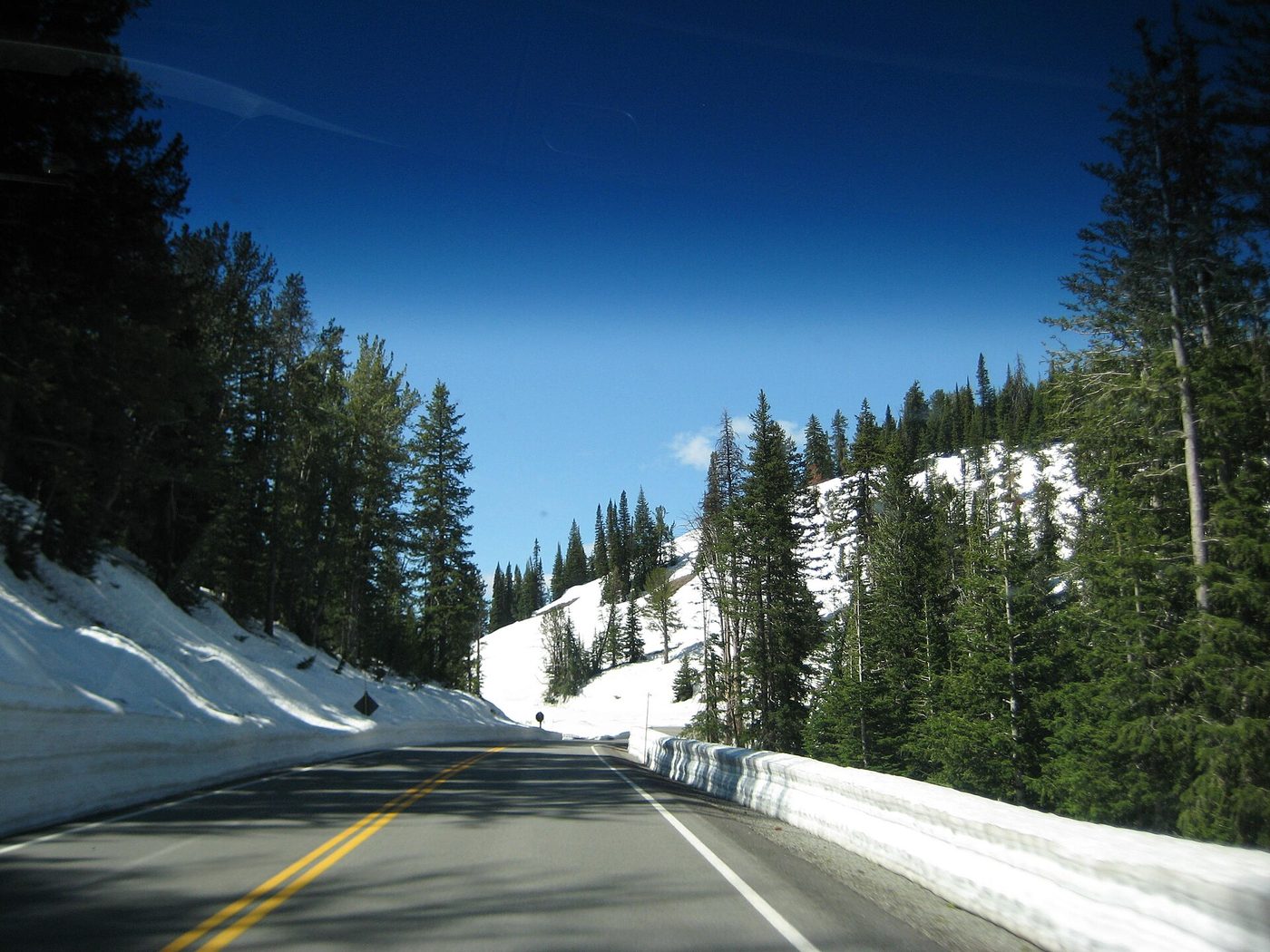
Partly. Every seasonal road is open through 12 October 2026, then Dunraven Pass, the Beartooth Highway and the Chief Joseph Scenic Byway close. The remaining interior roads stay open until 31 October 2026, after which the West, South and East entrances and nearly all park roads close to regular vehicles for the winter (checked September 2026).
Here are the 2026 dates as the National Park Service publishes them:
| Road segment | 2026 regular vehicle season | Closes |
|---|---|---|
| West Entrance to Madison | April 17 – October 31 | 31 Oct |
| Madison to Old Faithful | April 17 – October 31 | 31 Oct |
| Madison to Norris | April 17 – October 31 | 31 Oct |
| Mammoth Hot Springs to Norris | April 17 – October 31 | 31 Oct |
| Norris to Canyon Village | April 17 – October 31 | 31 Oct |
| East Entrance to Fishing Bridge | May 1 – October 31 | 31 Oct |
| South Entrance to West Thumb | May 8 – October 31 | 31 Oct |
| West Thumb to Old Faithful | May 8 – October 31 | 31 Oct |
| West Thumb to Lake Village | May 8 – October 31 | 31 Oct |
| Tower-Roosevelt to Tower Fall | May 8 – October 31 | 31 Oct |
| Canyon Village to Tower Fall (Dunraven Pass) | May 22 – October 12 | 12 Oct |
| Beartooth Highway / Chief Joseph Scenic Byway | May 22 – October 12 | 12 Oct |
| North Entrance to Northeast Entrance | Year-round | — |
Source: nps.gov park roads page (checked September 2026). We keep the full opening and closing calendar, including spring dates and any mid-season changes, on our Yellowstone road closures page.
Two things this table does not show. First, closures can come early. A heavy snowfall gives the park the option to shut a high segment ahead of schedule, and Dunraven Pass at 8,859 feet is the usual first casualty — see our Dunraven Pass guide for how that road behaves. Second, temporary closures happen at any elevation during a storm, and they are lifted when the plows catch up rather than on a published timetable.
What 12 October actually costs you
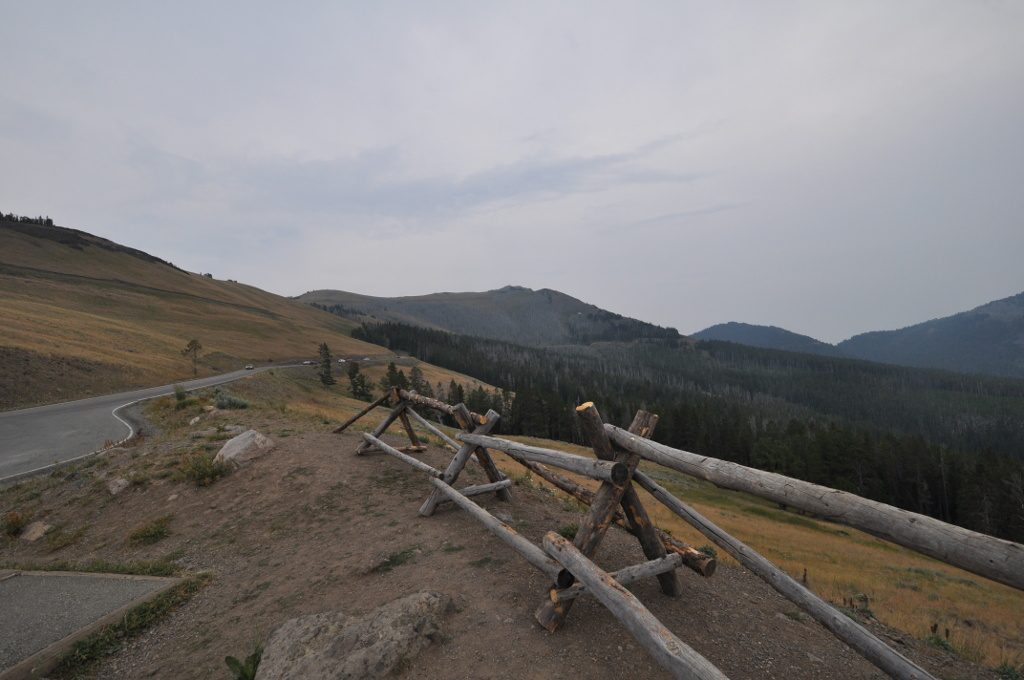
The mid-month closure is the one that changes itineraries, and most October guides mention it without explaining the consequence.
Dunraven Pass is the direct link between Canyon Village and Tower-Roosevelt. Lose it and the northern range is no longer a short hop from the Canyon area: you drive Canyon to Norris to Mammoth to Tower instead, which turns a 19-mile drive into roughly 60 miles of winding road. If your plan was to sleep at Canyon and watch wolves in Lamar at dawn, that plan stops working on 13 October.
You also lose:
- Mount Washburn, the park’s most popular high summit hike, whose main trailheads sit on the Dunraven road. Our Mount Washburn hike page covers access and conditions.
- The Beartooth Highway, the spectacular 10,947-foot route between Cooke City and Red Lodge, and with it the loop that lets you enter through the Northeast Entrance and exit toward Billings.
- The Chief Joseph Scenic Byway to Cody, which is the alternative northeast-to-east connection.
The practical fix for a late-October trip is to change where you sleep. Base yourself in Gardiner or Mammoth for the northern range, and accept a longer day if you want the geyser basins. Or base at West Yellowstone for the basins and treat Lamar as a separate expedition. Trying to do both daily from Canyon after 12 October means spending your best light in the car.
After 31 October: what the winter gap really looks like
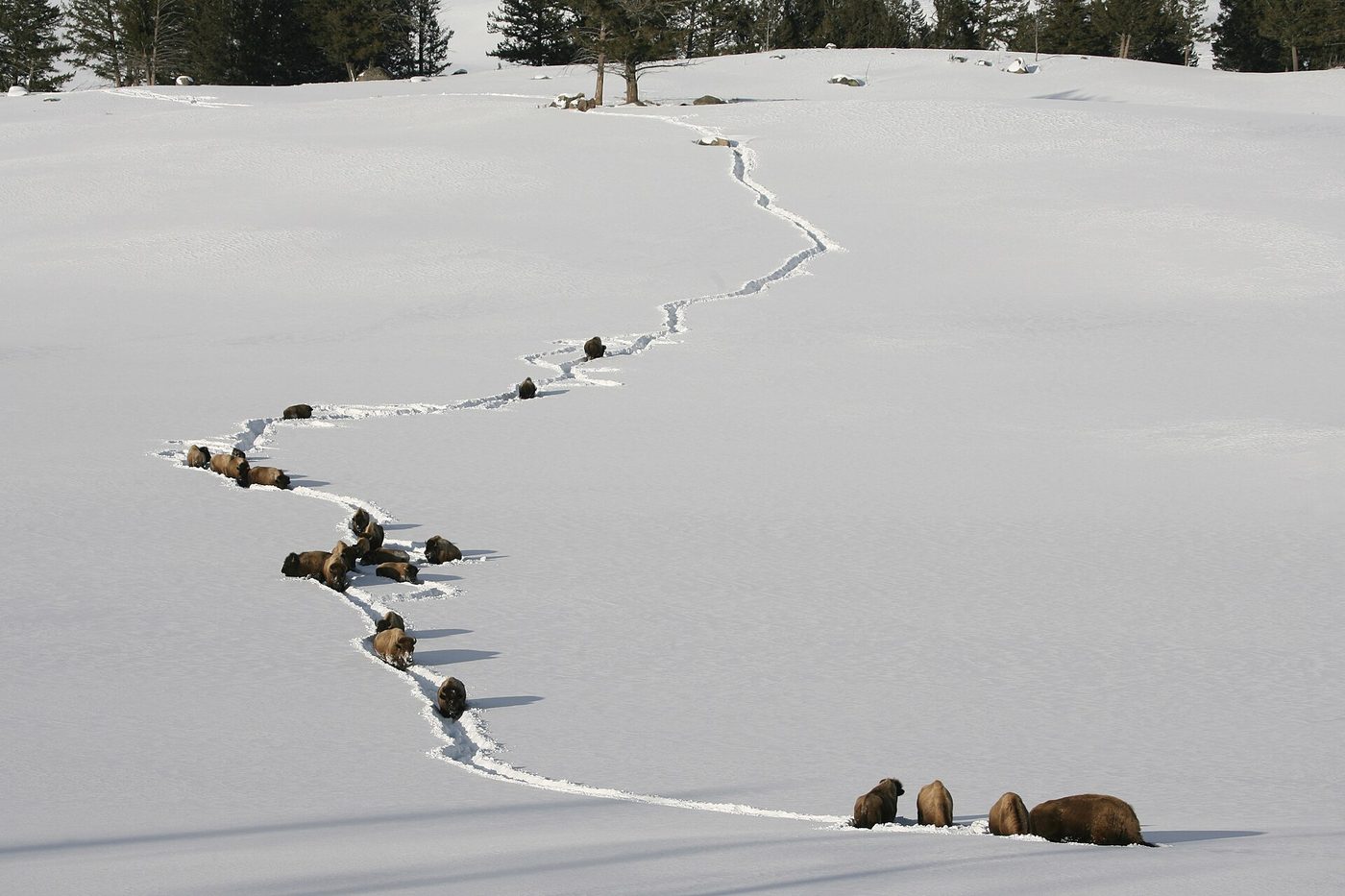
From 1 November 2026, the West, South and East entrances close and the interior roads shut to regular vehicles. The North Entrance at Gardiner and the Northeast Entrance at Cooke City stay open, and the 52-mile road between them — through Mammoth Hot Springs, Tower Junction and Lamar Valley — is open to cars year-round.
Oversnow travel by snowmobile and snowcoach does not start until 15 December 2026. That leaves six weeks in which the interior is inaccessible by any means except skis, snowshoes and your own legs from the northern road.
This matters for October planners in one specific way: if your dates slip into the first days of November, you have not lost a few percent of the park, you have lost most of it. A trip planned for 28 October and pushed a week is a fundamentally different trip. If that is where you have landed, our pages on Yellowstone in November and Yellowstone in winter explain what remains and how to make it work.
Yellowstone weather in October: cold, then properly cold
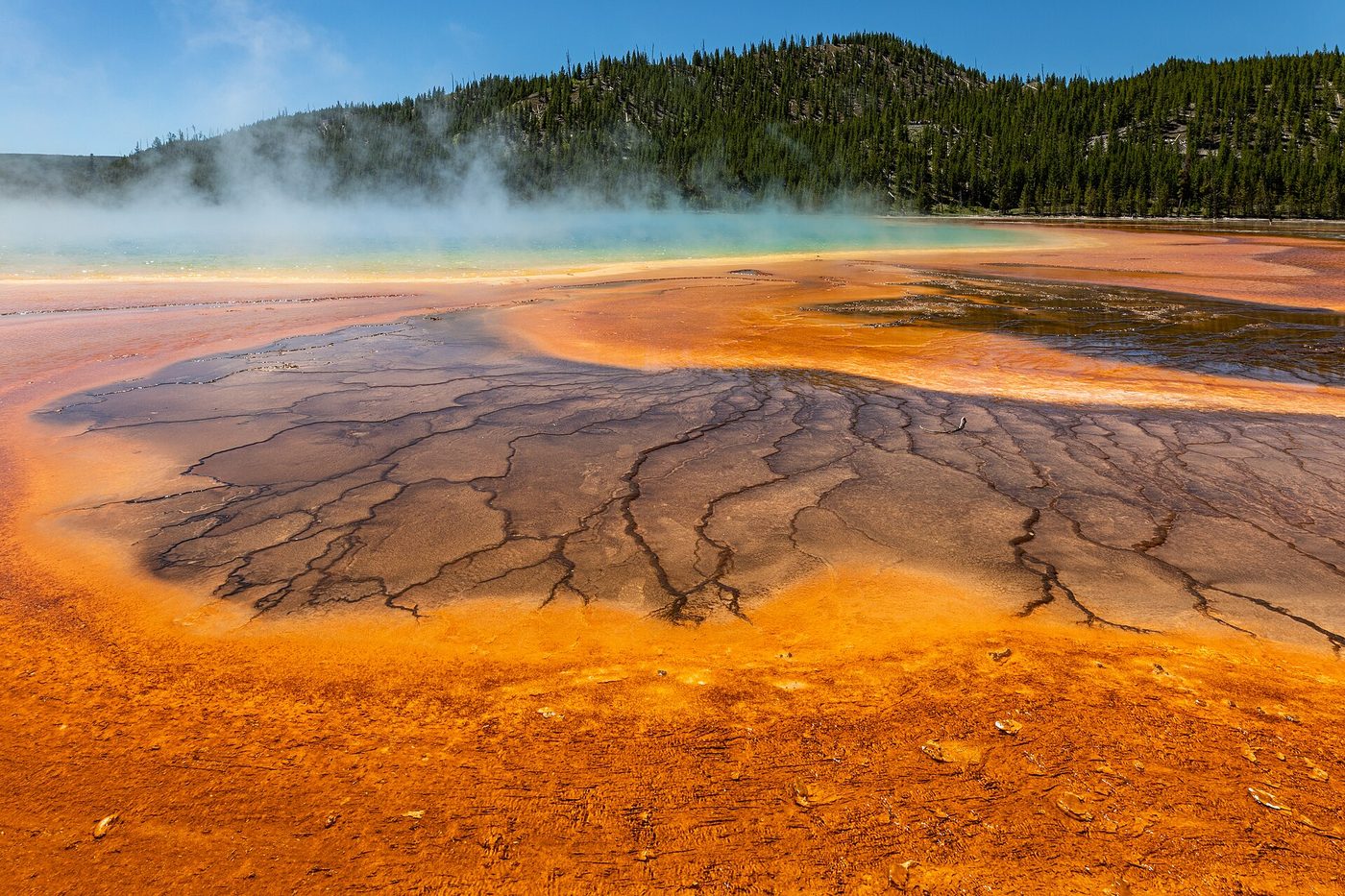
Yellowstone weather in October is a steep drop rather than a gentle cooling. The park’s published averages give a 55.7°F high and a 29.4°F low for the month (checked September 2026), which means the average night is below freezing. That average hides an even steeper slope inside the month: early October often runs in the sixties by afternoon, while the last week can struggle to reach 40°F and can deliver a foot of snow at Canyon.
| Month | Avg high | Avg low | Snow | Character |
|---|---|---|---|---|
| September | 67.8°F | 37.0°F | Possible, usually melts | Crowds falling, rut peaking |
| October | 55.7°F | 29.4°F | Likely, may accumulate | Roads closing, park emptying |
| November | 38.7°F | 19.2°F | Regular | Interior shut, northern range only |
Figures from the NPS Yellowstone weather page (checked September 2026). The park’s own summary warns to expect big temperature swings, rain or snow in every month of the year, and October is where that warning has teeth.
What that means in practice:
- Every night is a freeze. Water bottles left in the car freeze. Boardwalks ice over where thermal runoff crosses them. Tent camping is a genuine cold-weather exercise, not a summer one.
- Snow is normal, not exceptional. It can fall at any elevation, any week. Most of it melts off the main roads within a day or two in early October; from mid-month it starts to stay.
- Passes catch it first. Craig Pass (8,262 feet) between Old Faithful and West Thumb and Sylvan Pass (8,530 feet) on the East Entrance road ice up before the valley roads do.
- Wind on the northern range is the real cold. Lamar Valley at 20°F with a 20 mph wind at first light is the coldest most visitors will be all trip, and it is exactly where you want to be standing.
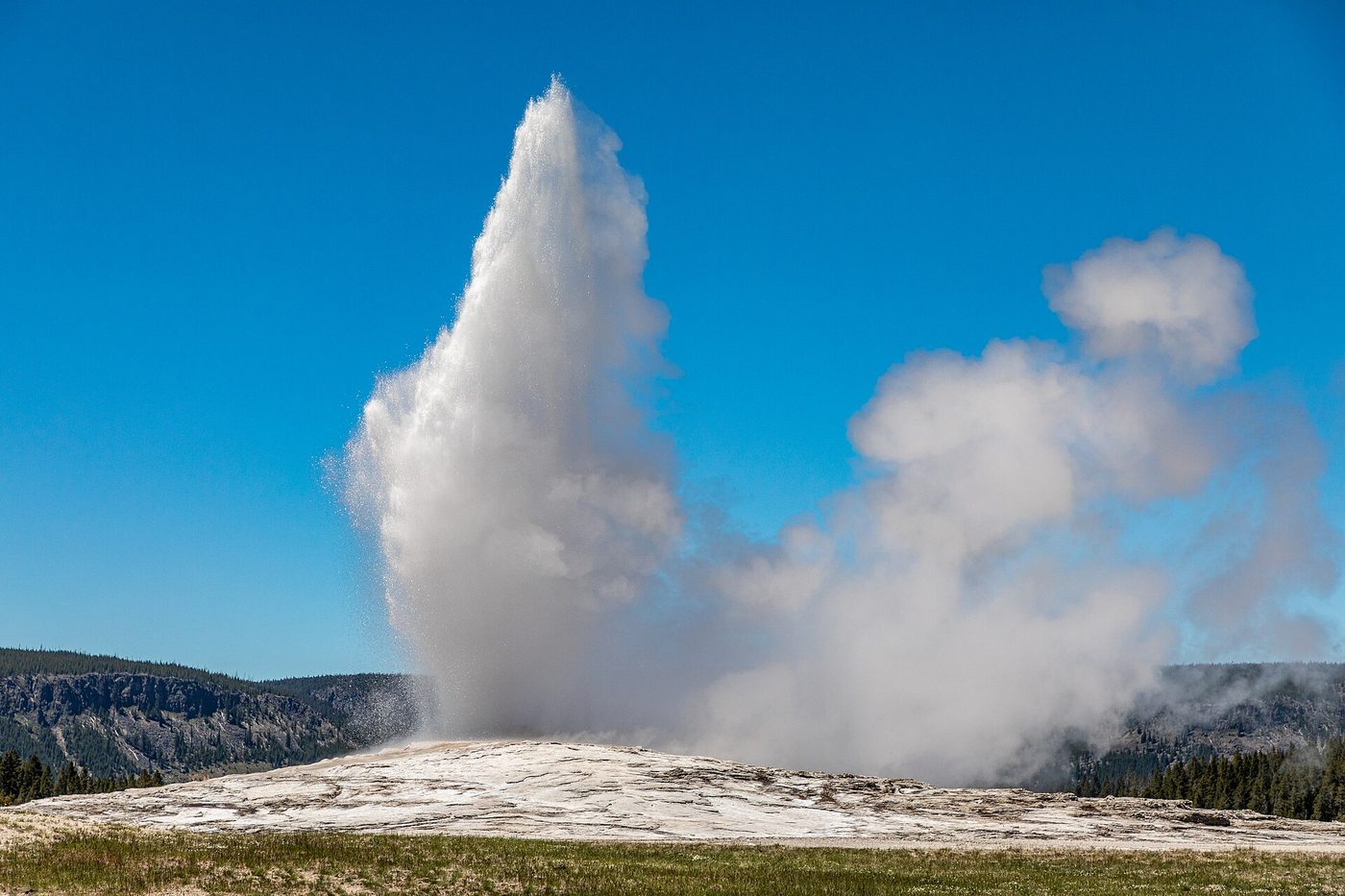
- Steam is at its best. Cold air over near-boiling water produces the thick plumes that make October photographs of Norris, Midway and the Upper Geyser Basin better than anything summer offers.
Check a forecast for a specific location rather than for “Yellowstone”. Mammoth at 6,200 feet, Old Faithful at 7,350 feet and Canyon at 7,900 feet can differ by 15°F on the same afternoon, and the northern range at Gardiner sits nearly 2,000 feet below the Canyon rim.
Daylight shortens fast too, and it catches people out more often than the cold does. At the start of October you get roughly twelve hours between sunrise and sunset; by the 31st you get about ten, and the clocks go back in the final days of the month, which pulls sunset back to around 5 p.m. Combine that with a park where a 60-mile drive takes two hours and you have to plan days that finish earlier than summer instinct suggests. Aim to be wherever you intend to sleep before dark, and treat anything after 4 p.m. in late October as bonus time rather than the plan.
How crowded is Yellowstone in October?
Very lightly, by Yellowstone standards. The park recorded 4,762,988 recreation visits in 2025, with July alone accounting for 975,109 of them (NPS, checked September 2026). October runs a small fraction of that peak, and after the first week you can drive long stretches of the Grand Loop without meeting another car.
The exceptions are predictable. Old Faithful still draws a crowd for eruptions, because almost everyone in the park that day is there for the same 20-minute window. Wildlife jams still form instantly anywhere a bear or a wolf is visible from a road. And the Lamar Valley pullouts fill with wildlife watchers and their scopes at dawn, which is a very different kind of crowd — quiet, stationary and worth talking to, because they will tell you what has been seen and where.
What genuinely disappears in October is the queuing. The West Entrance line, the Midway Geyser Basin parking scramble, the wait for a table at a lodge dining room: all gone. You can arrive at the Grand Prismatic overlook trailhead at 11 a.m. and park.
For the broader pattern across the year, our page on Yellowstone’s crowds sets the monthly rhythm out in full.
Wildlife in October: the best month nobody books
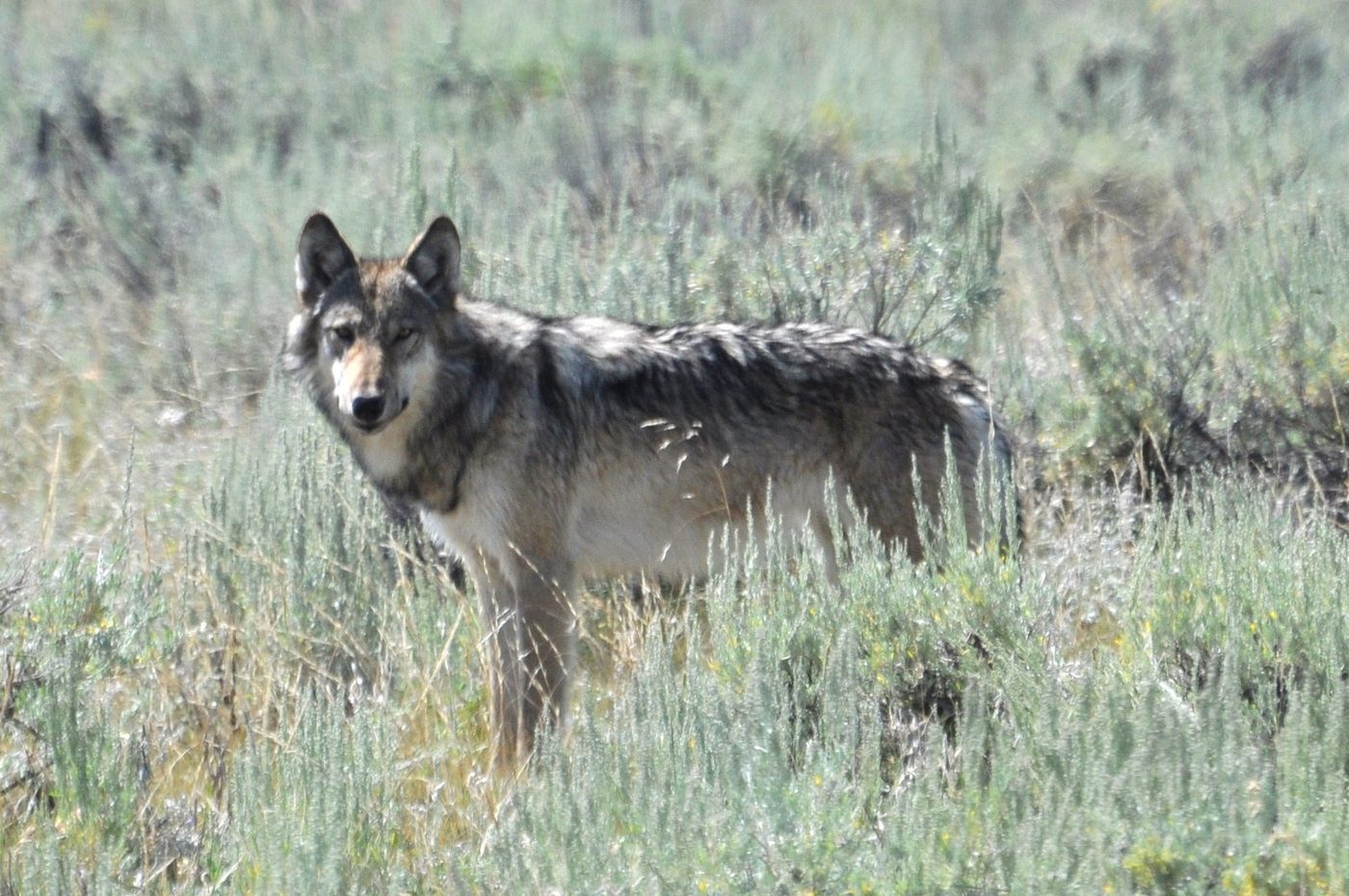
October is a serious contender for the best wildlife month in Yellowstone, and it is far less well known than September for it.
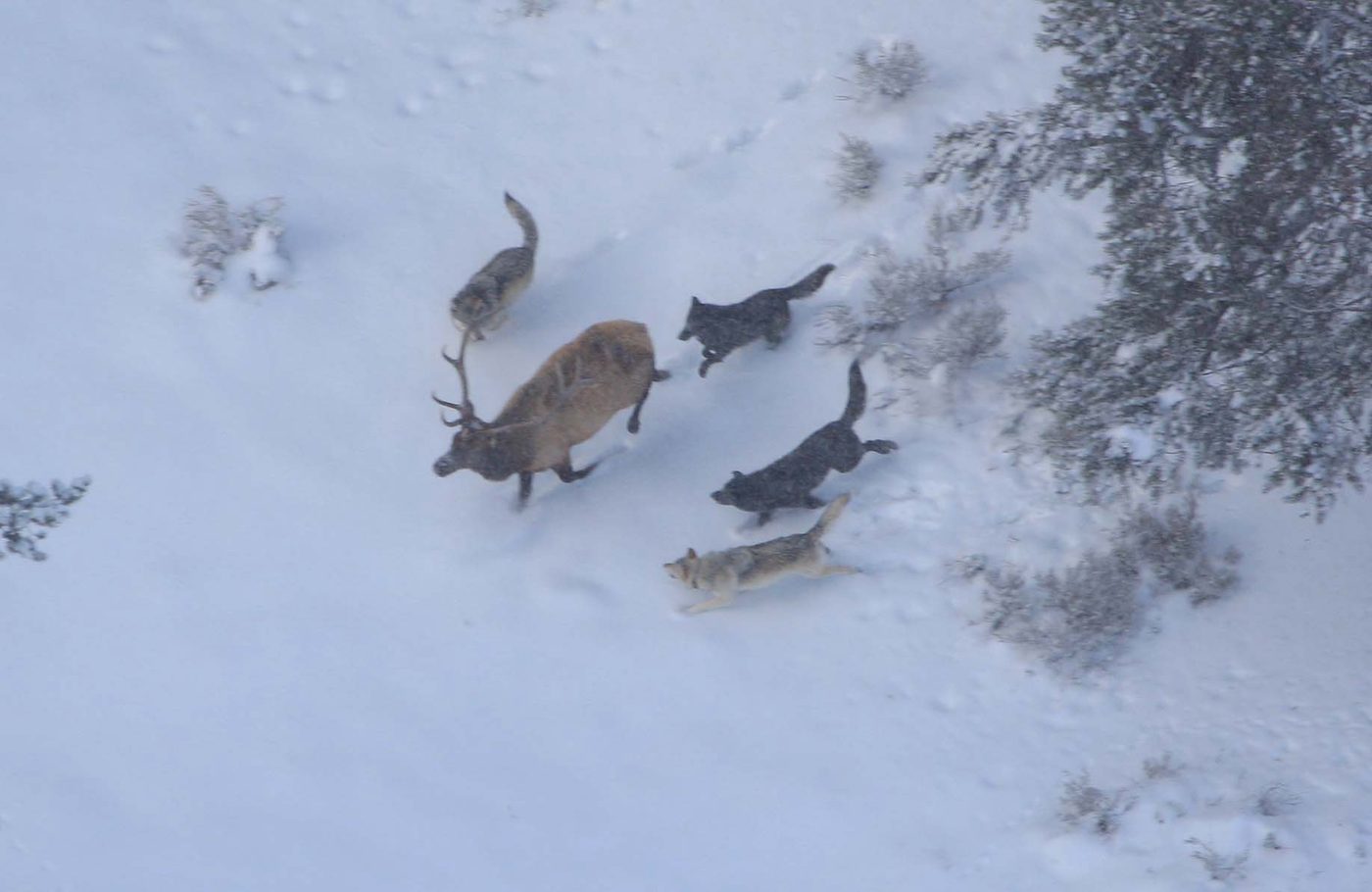
Elk. The rut runs from early September to mid-October according to the NPS, so the first half of the month still delivers bugling bulls and harems, concentrated around Mammoth Hot Springs and along the northern range. Activity tails off in the second half as bulls separate and herds begin moving to winter range. Our elk rut guide has the timing and the best viewing spots.
Bears. Grizzlies and black bears are still in hyperphagia through October, feeding hard before denning, and they are visible in open country far more often than in midsummer. Most bears den between early November and mid-December, so October is the last reliable month. Carry bear spray and know that a feeding bear is a preoccupied bear, not a safe one.
Wolves. October is one of the two best months of the year in Lamar Valley, along with the winter months. Cold weather, elk movement and low visitor numbers combine, and the pullouts between Slough Creek and the Lamar River bridge are where the watchers gather. Bring a spotting scope or make friends with someone who has one. Our Lamar Valley guide covers the pullouts and the timing.
Bison. Herds begin drifting toward winter range through the month, which concentrates them in Hayden and Lamar and along the Madison. Bison in early snow are the defining October photograph, and they are also the animal most likely to stop your car. A herd crossing the road in late October can hold traffic for 20 minutes, and there is nothing to do but switch the engine off and enjoy it.
Bighorn sheep. Rams move down to lower elevations in late autumn ahead of their own rut, which peaks in November and December. The Gardner River canyon between Gardiner and Mammoth is the classic spot, and the animals are often within easy view of the road.
Coyotes, foxes and birds of prey. Less glamorous and far more reliable. Coyotes hunt voles in the open meadows all day in October, red foxes become visible against early snow, and bald eagles concentrate along the Yellowstone and Madison rivers. Trumpeter swans and the last of the migrating waterfowl use both rivers through the month.
One caution about October wildlife applies to nothing else on this page. The animals are working. Bears are trying to put on the last of their weight, bulls have spent a month fighting, and everything in the park is preparing for a winter that kills a proportion of them every year. Disturbance costs them more now than in July. Watch from the road or a pullout, keep your engine off and your voice down, and if an animal changes what it is doing because of you, you are too close.
Every one of these is a reason to be out at first and last light rather than mid-morning. Our Yellowstone wildlife guide covers the species in depth, and the best time to visit Yellowstone for wildlife page sets the whole calendar out season by season.
The safety rules do not relax because the park is empty. Stay 100 yards from bears and wolves and 25 yards from everything else, including elk and bison. Read our wildlife and thermal safety page before you go — an empty park means fewer rangers between you and a bad decision.
What is open in October: lodging, camping, food and fuel
This is where October planning goes wrong. The park closes in sequence through the month, and the sequence is not intuitive.
Lodging. Old Faithful Lodge Cabins closed 3 October in the 2026 season. Canyon Lodge, Lake Yellowstone Hotel and Grant Village follow in the first half of the month; Old Faithful Inn closes in mid-to-late October, and Old Faithful Snow Lodge finishes its summer season around 24 October before reopening for winter in mid-December. Mammoth Hot Springs Hotel runs through into March 2027. The NPS and Xanterra listings differ by a week or more on several of these, which is a good reason to confirm your specific dates at booking rather than trusting any published summary — ours included. We keep the authoritative seasons and the booking rules on our Yellowstone lodging page.
Camping. Four campgrounds run into October in the 2026 season: Lewis Lake to 11 October, Slough Creek to 12 October, and Madison and Fishing Bridge RV Park to 17 October. Mammoth Campground is open year-round and switches to first-come, first-served from 15 October to 1 April. Everything else has already closed by the end of September. Nights are below freezing throughout, and the NPS-run sites have no hookups and do not permit generators, so an RV without a furnace and a full propane tank is a cold night. The full table with sites, lengths, prices and booking windows lives on our camping in Yellowstone page.
Food. Dining rooms close with their lodges. By late October the reliable options inside the park are at Mammoth, and general stores are closing through the month. Plan to carry lunch. This is not a hardship — it is a better way to spend the middle of the day in October anyway — but arriving at Canyon at 1 p.m. on 25 October expecting a hot meal will not work.
Fuel. Card-operated 24-hour fuel runs year-round at Canyon, Fishing Bridge, Grant, Old Faithful and Tower-Roosevelt, plus Mammoth (checked September 2026). Fill up anyway before you enter, because a card reader that is out of service in a park with no cell coverage is a long walk.
Visitor centres and ranger programs. Services thin sharply. Old Faithful eruption predictions are typically unavailable from early November to mid-December because the visitor education centre closes, so October is the last month you can rely on posted predictions — which our Old Faithful eruption times page explains in detail.
Things to do in Yellowstone in October
October changes what is worth doing, not how much there is to do. Three activities are better now than at any other time of year, two are finished for the season, and one is quietly excellent and almost nobody does it.
Wildlife watching, which is the whole point
If you do one thing properly in October, make it a dawn in Lamar Valley. Park at a pullout, kill the engine, and stay. The valley works on patience rather than movement: the watchers who see wolves are the ones who sat still for two hours while everybody else drove past looking for a crowd to join. Bring layers you can put on without getting out of the car, a thermos, and a scope if you own one. Anyone with a scope will almost always let you look, and they will tell you what has been seen that week.
The northern range holds the density in October: elk moving down, bison herds concentrating, wolves following both, bighorn sheep dropping into the Gardner canyon and coyotes everywhere. Hayden Valley is the second choice, and it gets cut off from the north once Dunraven closes.
Hiking, on dry trails with no bugs
Trail conditions in early October are the best of the year. The ground is firm, the mosquitoes and horseflies are gone, and the temperature is right for climbing. Mount Washburn is available until 12 October, and lower routes — the Lamar River trail, Trout Lake, Beaver Ponds, Wraith Falls, Storm Point, the Fairy Falls trail to the Grand Prismatic overlook — stay walkable through the month. Snow arrives on the high trails first and can make a summit route a genuine winter outing with no warning.
Two rules apply harder in October than in summer. Carry bear spray on every trail, because bears are feeding hard and you will meet fewer people. And turn around earlier than you think you need to, because darkness comes fast and a trail you walked in sun can be ice in shadow.
Photography, in the best light the park gets
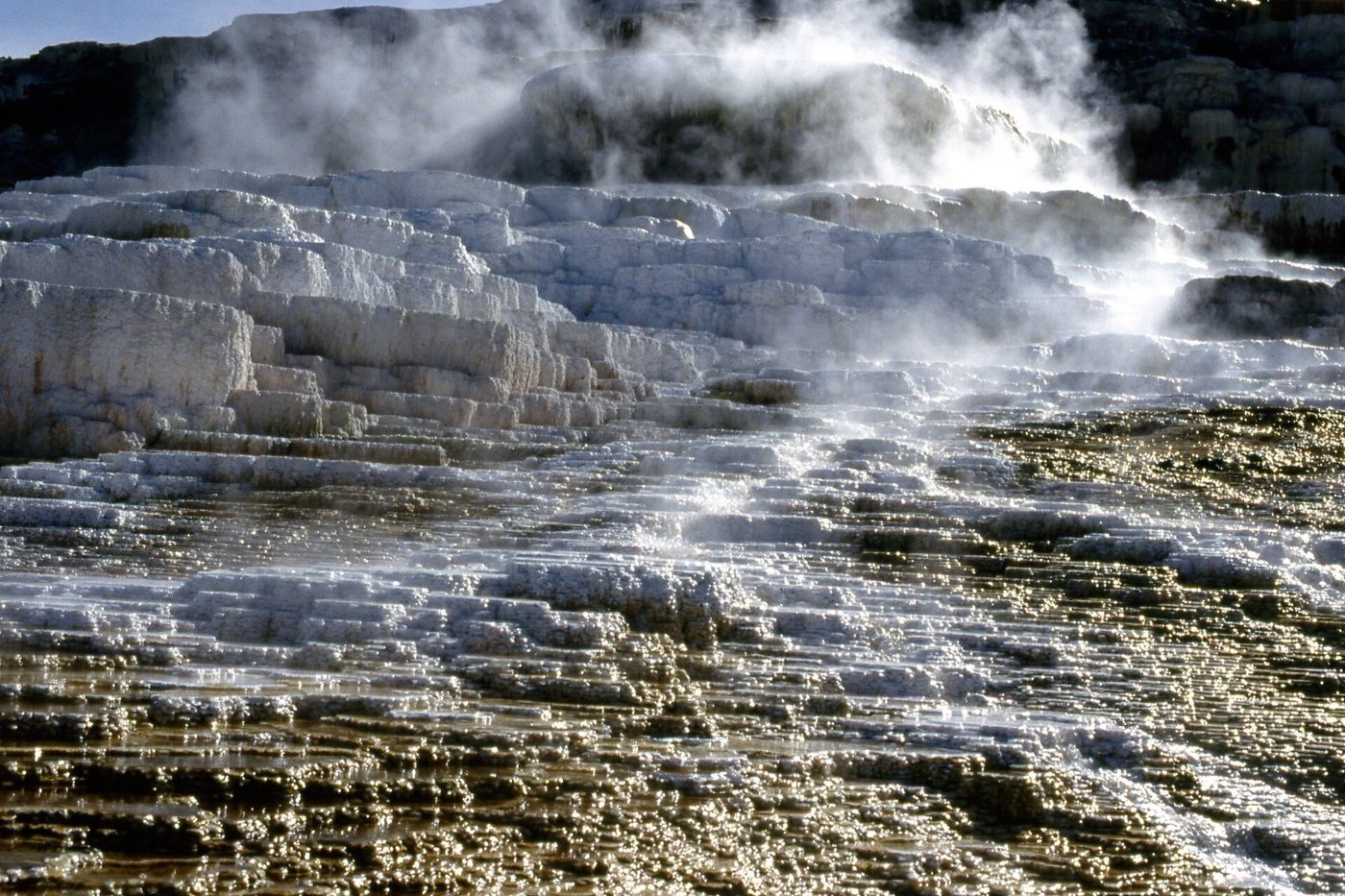
The sun never climbs high in October, which means the whole day has the quality summer only offers at dawn and dusk. Add cold air over thermal water and you get plumes of steam that hide and reveal the basins in a way midsummer never does. The best combinations: Mammoth terraces at first light, the Norris basin on a still cold morning, Midway and the Firehole in low sun, and bison silhouetted against steam anywhere along the Madison.
Fishing, right up to the end
The general fishing season on most park waters runs into early November, and October is the pre-spawn window for brown trout on the Madison and the Gardner. The water is cold, the crowds are gone, and you will need a Yellowstone fishing permit, which is separate from your entrance fee. Our fishing and water guide covers permits, seasons and the rules by drainage.
Stargazing, if you are prepared to be cold
Long nights, dry air and no light pollution make October one of the best months for a dark sky in the park. The trade is obvious: you will be standing outside at 20°F. Lamar Valley pullouts and the Hayden Valley overlooks are the usual spots. Do not walk far from the car in the dark, and remember that the animals you spent the day watching are still there.
What has finished
Boat rentals and scenic cruises at Bridge Bay end in mid-September, horse rides finish with the Roosevelt and Canyon seasons, the Old West Dinner Cookout stops when Roosevelt closes in early September, and ranger-led walks and evening programs thin to almost nothing after Labor Day. Backcountry travel continues, but bear-management closures affect some areas in autumn and permits are required year-round for overnight trips.
Where to stay in October: choosing a base as the park closes
Where you sleep matters more in October than in any other month, because the closures gradually take away your ability to fix a bad choice by driving.
Gardiner, Montana. The strongest October base, and the obvious choice from mid-month. It sits five minutes from Mammoth on the only entrance road open all year, it puts you an hour from the Lamar pullouts at dawn, and it keeps working after 31 October when everything else stops. Its hotels stay open through the winter and rates drop hard after the summer. The one catch in 2026 was the Gardner River High Bridge running single-lane with delays, closed to vehicles over 8 feet 6 inches wide or 75 feet long. Our Gardiner hotels page has the options.
West Yellowstone, Montana. The best base for the geyser basins and the biggest choice of rooms and restaurants, 30 minutes from Madison Junction. It works until the West Entrance closes on 31 October, after which it becomes a snowmobile town waiting for 15 December. Compare the two on our West Yellowstone vs Gardiner page.
Cooke City and Silver Gate, Montana. Tiny, at the top of Lamar Valley, and unbeatable for wolf watching. After the Beartooth closes on 12 October the only way in or out is through the park via Gardiner, which is a long drive in a storm. Services are minimal. Choose it if wolves are the trip.
Inside the park. Mammoth Hot Springs Hotel is the one that runs through, and staying there in late October puts you in the middle of the northern range with a restaurant attached. Everything else closes in sequence through the month. Book through our lodging guide, and book early: the in-park rooms that survive October fill with people who know exactly what they are doing.
Cody and Jackson, Wyoming. Both work for early October, when the East and South entrances are open, and both become long drives once those entrances close on 31 October. Cody is the better value; Jackson is the better town and lets you add Grand Teton, which keeps its main roads open later into the autumn than Yellowstone’s interior does.
Bozeman and Livingston, Montana. Practical if you are flying in and out and willing to drive 90 minutes each way, and the fallback when Gardiner is full.
Driving in Yellowstone in October: what to actually prepare for
Driving is the part of an October trip that people underprepare for, and it is the part most likely to ruin a day.
Tyres matter more than the vehicle. All-season tyres on dry pavement are fine; all-season tyres on packed snow over Craig Pass at 7 a.m. are not. If you are renting, ask what the vehicle is fitted with and take four-wheel drive if the rate difference is small. Wyoming and Montana can impose chain or traction-device requirements on highways outside the park.
Start later than you would in summer. Sunrise is around 7:30 a.m. early in the month and later still by the end, so dawn wildlife watching does not require a 4 a.m. alarm. Black ice before sunrise is real; give the plows and the sun a head start where you can.
Allow for construction. Several bridge projects ran through 2026: delays of up to 15 minutes at Bridge Bay, the Firehole River and the Gardner River High Bridge, up to 30 minutes at the Yellowstone River Bridge, plus parkwide chip sealing with delays of up to 30 minutes (checked September 2026). The Gardner River High Bridge on the North Entrance road ran single-lane 24 hours a day into late October 2026 and was closed to vehicles over 8 feet 6 inches wide or 75 feet long, which rules out large RVs and many towed setups through Gardiner.
Fill the tank and carry supplies. Water, food, a blanket, a charged phone battery and a paper map. Cell coverage across most of the park is poor to nonexistent, and in late October there may be very few cars behind you.
Watch for animals on the road at night. Bison are effectively invisible on a dark road and they do not move. This is the single most common serious accident in the park.
Early October vs late October: which half to choose
If your dates are flexible, this is the decision that matters most.
Choose 1–12 October if you want the full road network, Dunraven Pass, Mount Washburn, the Beartooth Highway, most lodges still open, the tail of the elk rut, and the best chance of driving conditions that feel like autumn rather than winter. This is the stronger choice for a first visit, because you can still see the whole park.
Choose 13–31 October if wildlife and solitude are the point. The northern range in late October — Mammoth, Tower, Lamar — with fresh snow, bison herds moving and almost no other cars is as good as Yellowstone gets, and you will have it to yourself. You give up the high roads, most of the lodges and any guarantee about driving conditions.
Do not choose the last two or three days of the month unless you are prepared for the possibility that a storm closes something early and your route home changes. The park has closed high roads ahead of schedule before, and the announcement is a press release, not a negotiation.
A four-day October itinerary that works
Built for mid-October, when Dunraven is closed and the interior is still open. Adapt the length with our guide to how many days you need in Yellowstone, or compress it using the three-day Yellowstone itinerary.
Day 1 — In at Gardiner, evening at Mammoth. Arrive through the North Entrance, allow for the single-lane bridge delay, check in at Gardiner. Walk the Mammoth terraces in the last hour of light, when the steam is thick and the low sun is on the travertine. Elk on the lawns if you are early in the month.
Day 2 — Lamar Valley and the northeast. Out at first light to the pullouts between Slough Creek and the Lamar River bridge. Wolves, bison, possibly bears. Continue toward Cooke City for the scenery if the road is clear, then back through Tower for Tower Fall and the Lamar River confluence in the afternoon. Second evening at Mammoth or Gardiner.
Day 3 — Cross to the geyser basins. Mammoth to Norris in the morning, with the Norris basin in cold air. Down through Madison to the Firehole. Afternoon at Midway and the Grand Prismatic overlook, then the Upper Geyser Basin for the last light. Overnight at Old Faithful if it is still open, otherwise West Yellowstone.
Day 4 — Canyon and out. Old Faithful to West Thumb over Craig Pass (check conditions), north along the lake to Fishing Bridge, up through Hayden Valley at the best wildlife hour, then Artist Point and the Lower Falls. Out through the West Entrance, or back to Mammoth via Norris if you are returning north.
Everything in that sequence assumes you accept a cold first hour and treat midday as driving time. In October the light is low for most of the day, which is a gift: there is no harsh noon in the geyser basins.
What to pack for October in Yellowstone
October packing is winter packing with a fallback for warm afternoons.
- An insulated jacket rated for standing still, not walking. You will spend 30 to 60 motionless minutes at wildlife pullouts.
- Waterproof shell, top and bottom. Cold rain and wet snow both happen.
- Hat, gloves and a neck gaiter. Wind on the northern range makes these essential rather than optional.
- Insulated, waterproof boots with real grip. Icy boardwalks and slushy pullouts.
- Base layers. Merino or synthetic, not cotton.
- Bear spray, carried on your body. Rentals run from about $16 for one to two days in the gateway towns (checked September 2026).
- Binoculars, and a spotting scope if wolves are the point.
- Headlamp. Sunset arrives early and pullouts have no lighting.
- Ice scraper and a snow brush. Rental cars in Bozeman often do not have them in October. Buy one.
- Sunglasses and sunscreen. Snow glare at 7,000 feet is fierce.
- Cash and a full tank. Card readers fail and there is no signal to call anyone.
Fees and costs in October
Entrance fees do not change with the season. A private vehicle pays $35 for seven days, a motorcycle $30 and an individual on foot or bicycle $20, and since 1 January 2026 every non-US resident aged 16 and over pays an additional $100 nonresident fee unless admitted on an annual or America the Beautiful pass (checked September 2026). One fee-free day fell on 27 October 2026, restricted to US citizens and residents. The full fee table, the pass arithmetic and the nonresident rules live on our entrance fee page.
October also pairs unusually well with Grand Teton, which sits 56 miles south of Yellowstone’s South Entrance and keeps its main roads open later in the autumn. If you enter Yellowstone before 31 October you can run the two parks together on a single trip, and the nonresident pass arithmetic improves sharply when you do, because each park charges its own entrance fee. After the South Entrance closes, the two parks are no longer a single road trip.
Where October genuinely saves money is lodging. Gateway hotel rates in West Yellowstone, Gardiner and Cody drop sharply once the summer season ends, and availability is wide open in a month that fills instantly in July. In-park rooms are cheaper too, when they are still open. Against that, set the risk of a weather day you cannot use and the cost of an extra night if a road closes — a real possibility late in the month.
Is October a good time to visit Yellowstone National Park?
Yes, with a clear caveat. Early October gives you a nearly complete park with almost no crowds, which is arguably the best value of the year. From mid-month you trade road access and services for solitude and outstanding wildlife viewing. If you need to see everything on one trip, come in September or early October rather than late.
Put simply: October rewards visitors who have already decided what they came for. If it is wolves, bison in snow, empty roads and steam against cold air, October beats every other month except deep winter. If it is a comprehensive first tour of every named feature in the park, you are better off earlier. Our best time to visit Yellowstone hub sets October against the other eleven months, and September is the obvious comparison if you want more of the park with most of the quiet.
Frequently asked questions
Are the roads open in Yellowstone in October?
Most are, for most of the month. All seasonal roads were open through 12 October 2026, when Dunraven Pass, the Beartooth Highway and the Chief Joseph Scenic Byway closed. The rest of the interior stayed open until 31 October. The North Entrance to Northeast Entrance road is open to cars year-round.
How cold is Yellowstone in October?
The park averages a 55.7°F high and a 29.4°F low in October, so most nights are below freezing. Early October afternoons often reach the sixties; the last week can stay in the low forties. High passes are colder and windier than the valley figures suggest.
Does it snow in Yellowstone in October?
Yes, usually more than once. Snow can fall at any elevation in any October week. Early-month snow generally melts off the main roads within a day; from mid-month it starts to accumulate and stay, particularly at Canyon, Old Faithful and over Craig and Sylvan passes.
Is Old Faithful open in October?
Yes. The geyser erupts year-round, the Upper Geyser Basin boardwalks stay open, and eruption predictions are still posted through October. Predictions typically become unavailable from early November to mid-December when the visitor education centre closes for the season.
Can you see wildlife in Yellowstone in October?
October is one of the best wildlife months of the year. The elk rut runs into mid-October, bears feed heavily until they den in November or December, wolves are increasingly visible in Lamar Valley, and bison herds move toward winter range. Dawn and dusk on the northern range are the prime hours.
What closes first in October?
Dunraven Pass and the Beartooth Highway, on 12 October in 2026. Lodges close through the first half of the month, campgrounds through the middle, and the West, South and East entrances close on 31 October. Mammoth Hotel and Mammoth Campground stay open into the winter.
Should I visit in early or late October?
Early October if you want the full road network and most services. Late October if you want solitude, snow and the best wolf watching on the northern range, and you can live without Dunraven Pass, Mount Washburn and most of the lodges.
What happens after 31 October?
The interior closes to regular vehicles from 1 November. Only the road from Gardiner through Mammoth and Lamar Valley to Cooke City stays open. Oversnow travel by snowmobile and snowcoach does not begin until 15 December 2026, leaving a six-week gap with no motorised access to the park’s interior.
Sources
- National Park Service — Yellowstone park roads and 2026 seasonal dates, checked September 2026.
- National Park Service — Yellowstone weather and climate, checked September 2026.
- National Park Service — park passes and the nonresident fee, checked September 2026.
- Yellowstone National Park Lodges (Xanterra) — lodging and campground seasons, checked September 2026.
- Recreation.gov — NPS-operated campground seasons and booking windows, checked September 2026.
Image credits
| Photo | Credit |
|---|---|
| Snow reaches the northern range well before the roads close, and bison herds start driftin (top of page) | Wolves201, CC BY-SA 4.0, via Wikimedia Commons |
| Dunraven Pass tops out at 8,859 feet and is always the first road the park gives up | Raman Patel, CC BY 3.0, via Wikimedia Commons |
| The Dunraven road is the direct link between Canyon and Tower | Magicpiano, CC BY-SA 4.0, via Wikimedia Commons |
| What the interior looks like once the roads close | Yellowstone National Park from Yellowstone NP, USA, public domain, via Wikimedia Commons |
| Cold air over near-boiling water is why the basins photograph better now than at any point | Dietmar Rabich, CC BY-SA 4.0, via Wikimedia Commons |
| Lamar Valley in late autumn is one of the two best wolf-watching windows of the year | Mike Cline, public domain, via Wikimedia Commons |
| Mammoth stays open all winter, which makes it the last reliable base once the interior clo | Tasma3197, CC BY 3.0, via Wikimedia Commons |
| Old Faithful erupts year-round, but posted predictions usually stop in early November when | Dietmar Rabich, CC BY-SA 4.0, via Wikimedia Commons |
| Elk move to lower ground as snow builds, and the wolves follow them down | Doug Smith, public domain, via Wikimedia Commons |
| Low October sun sits on the terraces for most of the day rather than just the first hour | Ildar Sagdejev (Specious), CC BY-SA 4.0, via Wikimedia Commons |