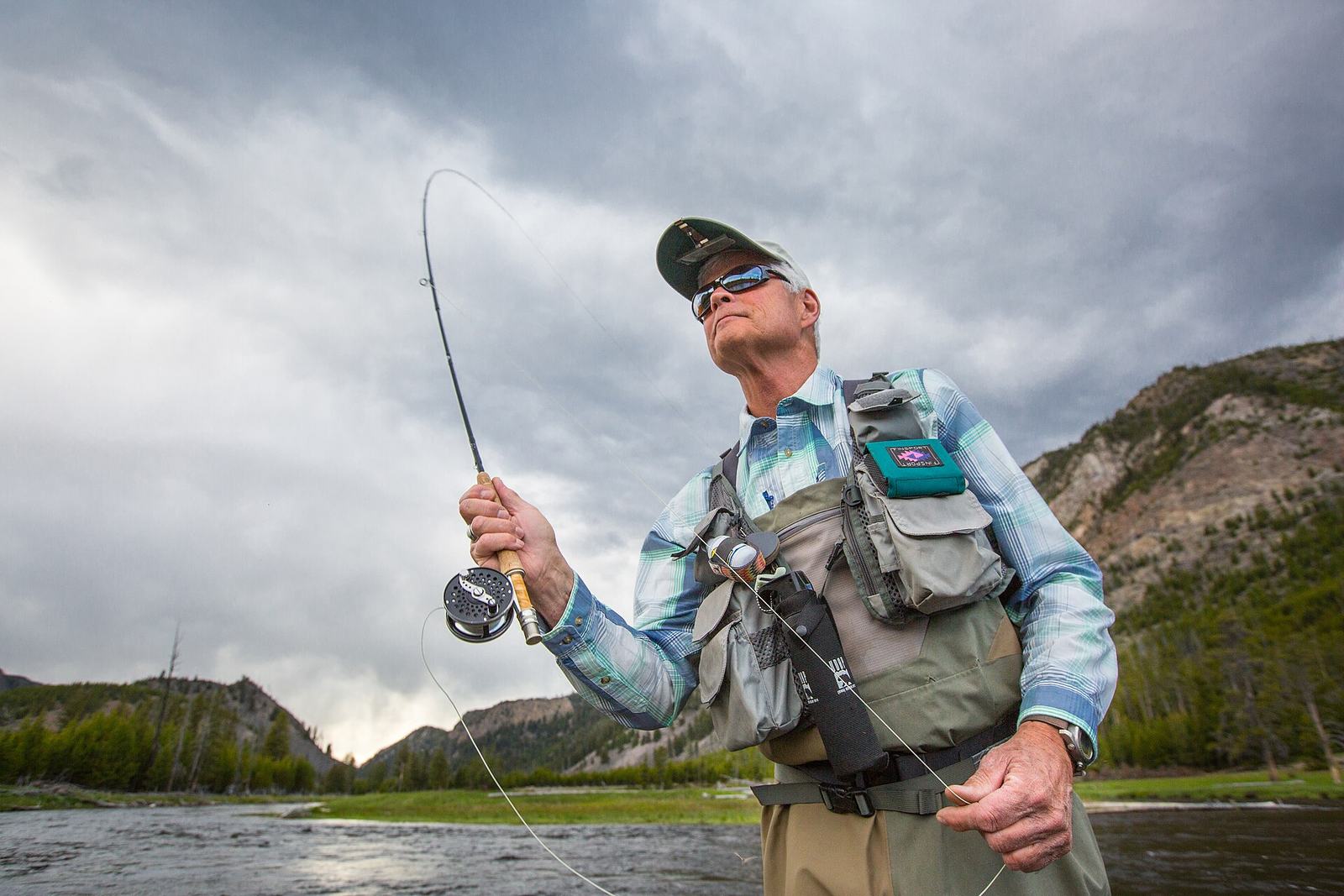
Fishing in Yellowstone needs a park permit, not a state license: $40 for three days, $55 for seven days or $75 for the season, bought through Recreation.gov. The general season runs from the Saturday of Memorial Day weekend through October 31. Hooks must be barbless, lures lead-free, bait is banned, and all native fish go back in the water.
Those rules exist because Yellowstone isn’t a put-and-take fishery. It’s a native-fish conservation project that happens to allow angling, and it’s one of the best trout fisheries in the world, with hundreds of miles of rivers and dozens of lakes, most of which you can walk to from a road.
This hub covers permits and seasons, the regulations that catch visitors out, the best waters river by river, guided trips, boating and paddling permits, and the water questions that have nothing to do with fish: where you can legally swim, what happened to the Firehole swim area and Boiling River, and where the real hot springs soaks are. Every fee and date comes from the NPS, checked September 2026.
Can you fish in Yellowstone National Park?
Yes. Fishing is allowed on most park waters during the season, with a Yellowstone fishing permit. State licenses aren’t valid and aren’t needed. Anglers 16 and over must have a permit; children 15 and under can fish free under direct adult supervision, or with a free permit signed by a responsible adult.
The character of fishing here is different from most places. You’re fishing for wild, unstocked trout in cold, clear water, often within sight of bison. There’s no bait, no barbs and no keeping native fish. In return, you get rivers like the Madison, the Firehole and Slough Creek, and the largest population of wild cutthroat trout in North America in Yellowstone Lake.
Yellowstone fishing permits: prices and where to buy
| Permit | 2026 price |
|---|---|
| 3-day | $40 |
| 7-day | $55 |
| Season | $75 |
| Ages 15 and under | Free (supervised, or free signed permit) |
Points worth knowing (NPS fishing page, updated March 13, 2026, checked September 2026):
- Buy through Recreation.gov, online in advance or at participating vendors, visitor centers and fly shops in and around the park.
- State licenses don’t work. A Montana, Wyoming or Idaho license is not valid inside park boundaries, and the park permit isn’t valid outside them. If you plan to fish both the park and, say, the Madison downstream in Montana, you need both.
- Hiring a guide doesn’t cover you. Every angler still needs a personal permit.
- Carry it with you, along with photo ID.
- Read the regulations booklet you get with the permit. Water-by-water rules vary.
Our full guide to the Yellowstone fishing permit walks through buying online, youth rules and what to do if you’re fishing outside the park too.
Season dates and closed waters
The general season runs from the Saturday of Memorial Day weekend through October 31. Some waters open earlier, some later and a few are open year-round, so check the current regulations for the specific water you want to fish.
Key seasonal patterns:
- Early season (late May to late June). Runoff makes many rivers high and murky. The Firehole and Madison, warmed by thermal water and fed less by snowmelt, fish well when everything else is blown out.
- Midsummer (July and August). The Lamar, Slough Creek and Soda Butte come into their own as the water drops and clears. Some thermally influenced rivers, including parts of the Firehole, can get too warm for ethical fishing, and the park sometimes restricts fishing when water temperatures rise.
- Fall (September and October). Arguably the best time: browns run up the Madison and Lewis, crowds thin, and the light is beautiful. Snow can end it early.
- Yellowstone Lake and its tributaries open later than the general season to protect spawning cutthroat, typically in mid-June.
- Some waters are permanently closed to fishing to protect spawning fish or wildlife, including sections around Fishing Bridge and parts of Hayden Valley.
Our Yellowstone Lake fishing guide covers the lake’s own season and boat access.
The rules that catch people out
Yellowstone’s regulations are stricter than most state waters, and they’re enforced.
- Barbless hooks only. Hooks must be barbless, or the barbs pinched down with pliers.
- Lead-free artificial lures or flies only. No lead weights, no lead-headed jigs.
- No bait. No organic or inorganic bait of any kind, including worms, corn or scented plastics.
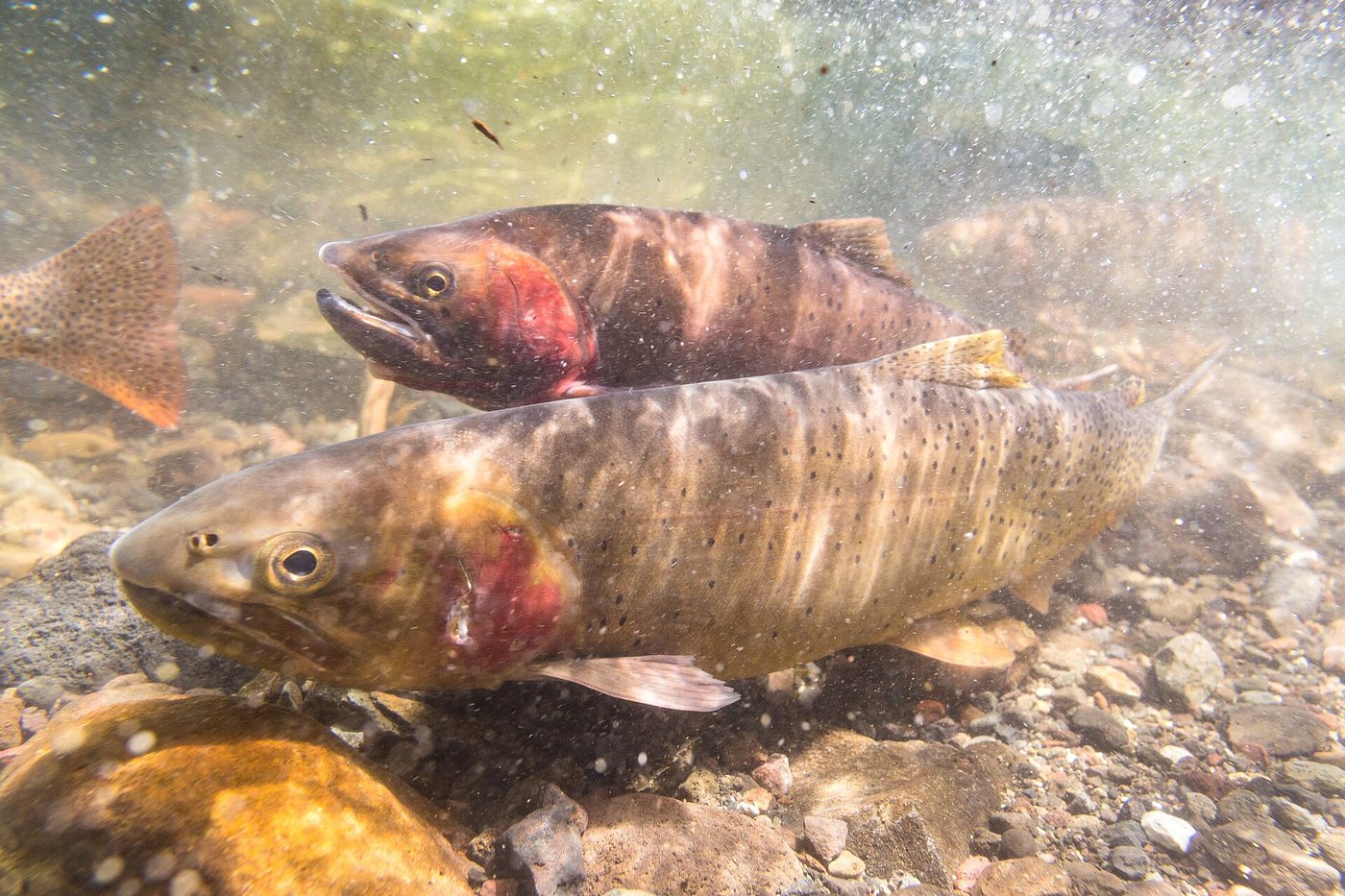
- All native fish must be released unharmed, parkwide. That means cutthroat trout, Arctic grayling and mountain whitefish, everywhere.
- All lake trout caught in Yellowstone Lake must be killed. It’s illegal to release them alive.
- Non-native fish elsewhere may be kept within limits that vary by water; check the regulations.
- Wading and wildlife. Give bison and elk the standard 25 yards, and remember that the best fishing hours are also the best bear hours.
The lake trout rule surprises visitors most. Lake trout were illegally introduced into Yellowstone Lake and were discovered there in the 1990s. They eat cutthroat trout, which are the food source for bears, otters, ospreys and eagles, so the park runs an intensive netting program and asks anglers to help by killing every lake trout they catch. It feels wrong to anglers raised on catch-and-release, and it’s the right thing to do here.
What fish will you catch?
Yellowstone holds both native and non-native species, and knowing which is which matters, because the rules differ.
Yellowstone cutthroat trout are the park’s signature fish: golden-olive with a red slash under the jaw, native to the Yellowstone River drainage and Yellowstone Lake, and the reason for much of the park’s conservation work. They must be released everywhere.
Westslope cutthroat trout are native to the Madison and Gallatin drainages, where restoration projects have been re-establishing them.
Arctic grayling, with their big sail-like dorsal fins, are native and rare, and also protected.
Mountain whitefish are native, widespread and much maligned; they’re also protected, and they’ll take a nymph all day.
Brown trout, rainbow trout, brook trout and lake trout are all non-native, introduced from the park’s early decades onward. Rules on keeping them vary by water, and in Yellowstone Lake, killing lake trout is mandatory.
The park’s long-term work is about tilting this balance back toward natives, through netting, barrier projects and, on some waters, removals and restocking with native fish. When you release a cutthroat carefully, or keep a lake trout, you’re part of that project. It’s one of the things that makes fishing here feel different from fishing anywhere else.
Reading the regulations booklet
The booklet that comes with your permit is the authority, and it’s worth 15 minutes before your first cast. It divides the park by drainage, lists which waters are open and when, gives limits for non-native species, and flags special rules such as fly-fishing-only stretches and permanent closures. When a ranger asks whether you know the rules for the water you’re standing in, the honest answer should be yes.
Where to fish: the best waters, river by river
Yellowstone has more good water than you can fish in a lifetime. These are the classics.
The Madison River
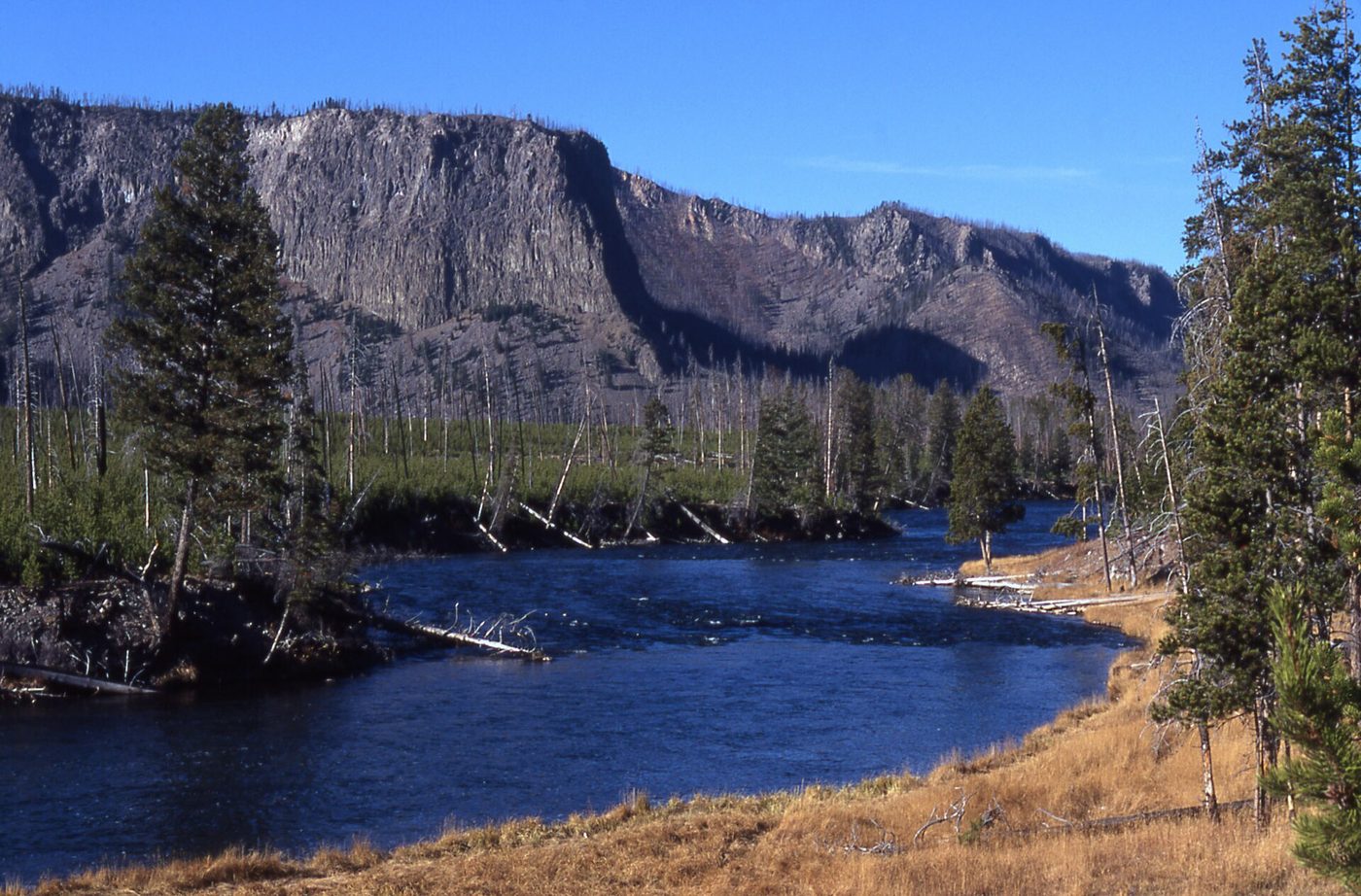
The park’s most famous river inside the boundary, formed where the Firehole and Gibbon meet at Madison Junction. Slow, smooth and technical, with wary brown and rainbow trout. Best in the cooler months, especially the fall run when big browns move up from Hebgen Lake. Easy roadside access along the West Entrance Road.
See our Madison River fishing guide, which explains how the park stretch differs from the famous Montana water downstream.
The Firehole River
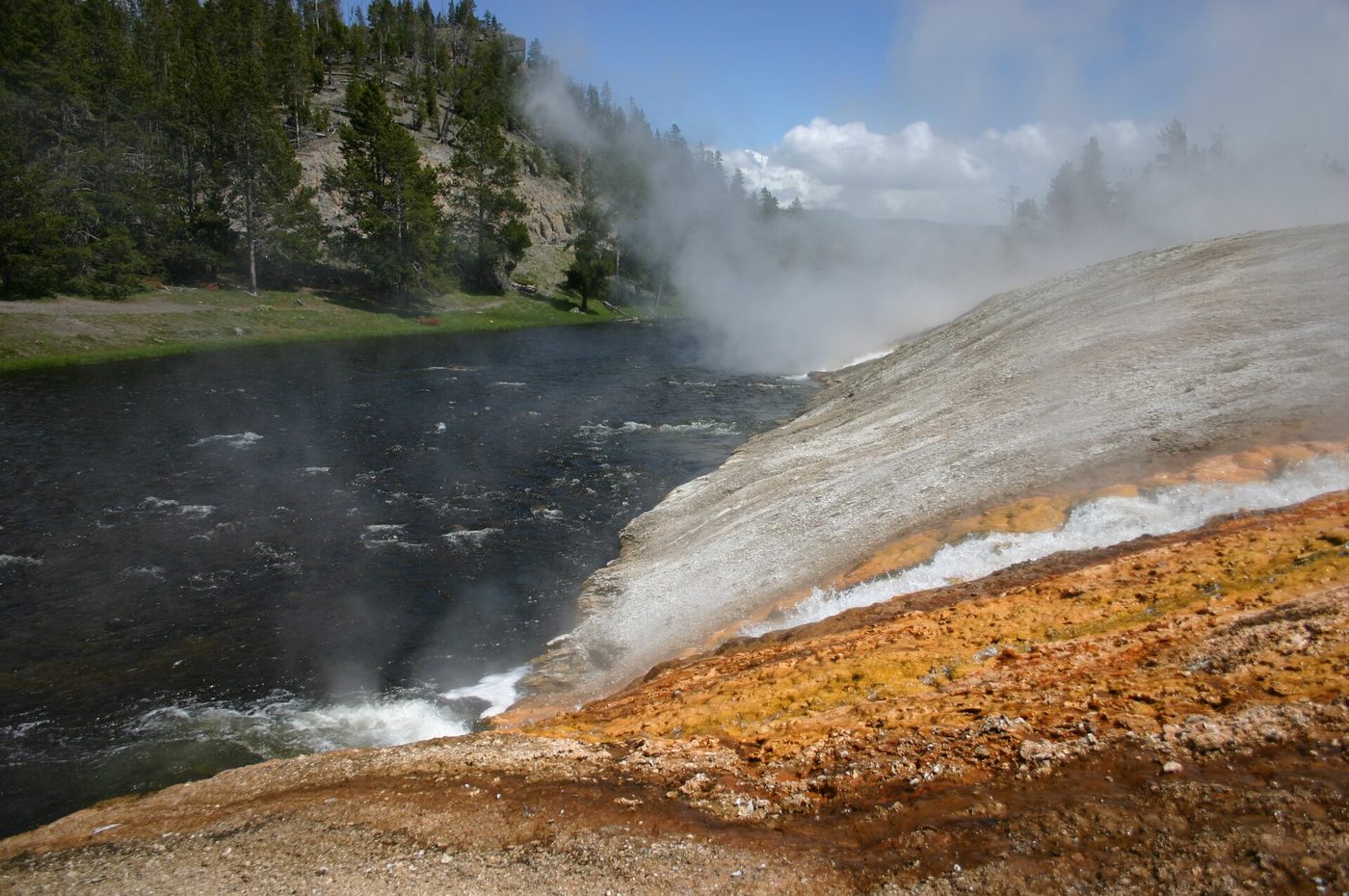
The strangest trout stream on earth: a river running through geyser basins, warmed by thermal runoff, with steam drifting over the water and bison on the banks. It fishes beautifully in late May and June, then often gets too warm in midsummer. Dry-fly water, mostly, with smaller browns and rainbows.
The Gibbon River
Small, varied and often overlooked, running from Norris down to Madison Junction. Meadow stretches, pocket water and a waterfall that separates fish populations. A good place for a relaxed afternoon.
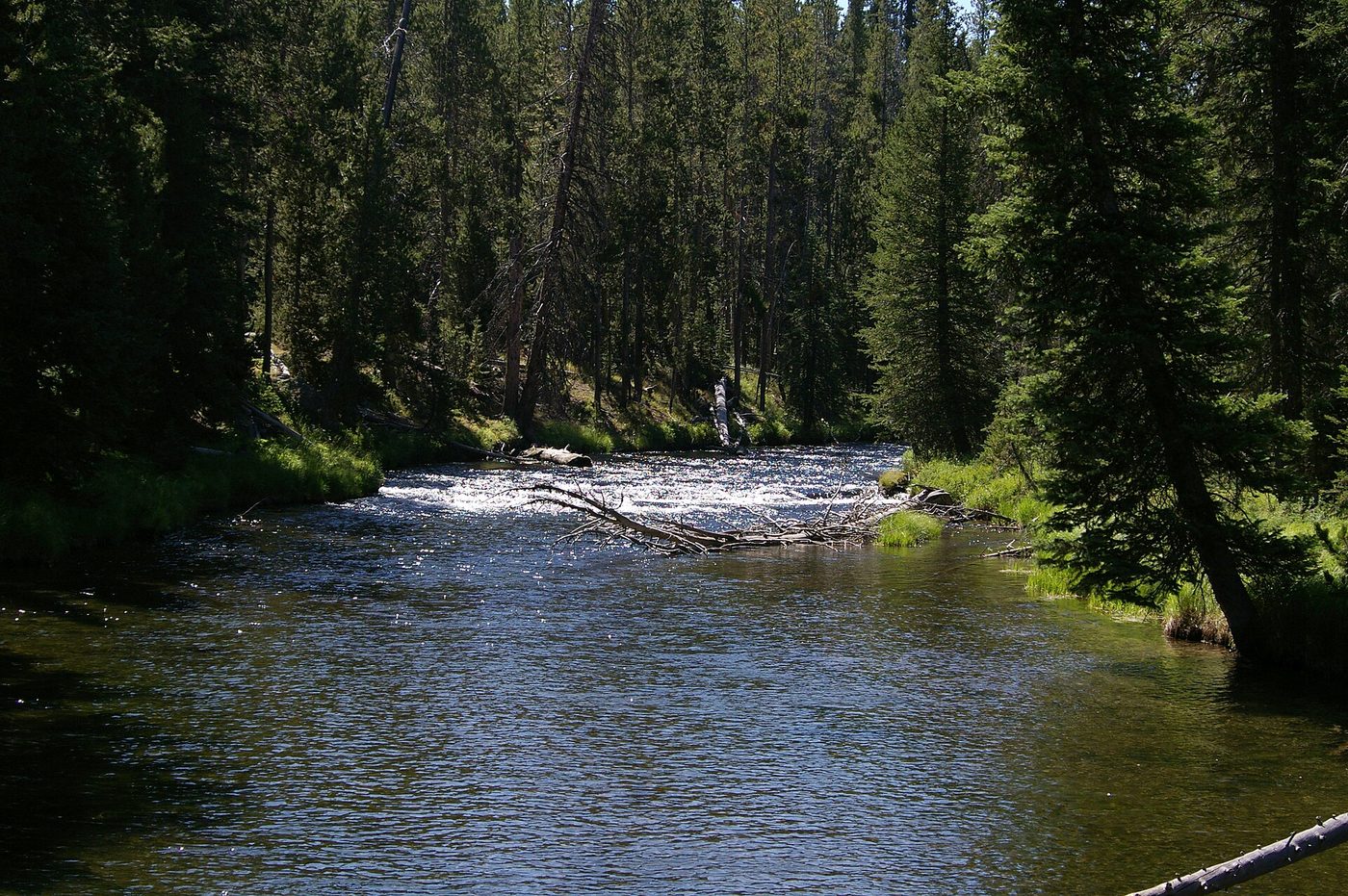
The Lamar River, Slough Creek and Soda Butte Creek
The northeast corner is cutthroat country, and it’s the fishing most people dream about: meadow streams with visible fish rising, mountains all around and bison wandering through. Slough Creek’s upper meadows require a hike, which keeps crowds down. All strictly catch-and-release for natives.
Fishing here means being serious about bears: go in a group, carry spray, and don’t fish a carcass-strewn meadow. Our Lamar River fishing guide covers access, timing and bear-country etiquette, and the Lamar Valley hub covers the wider area.
The Yellowstone River
The longest undammed river in the lower 48 runs from the lake through Hayden Valley and the Grand Canyon before heading north past Tower. Long sections are closed to protect spawning cutthroat and wildlife, but the accessible water below the canyon is superb, if hard to reach.
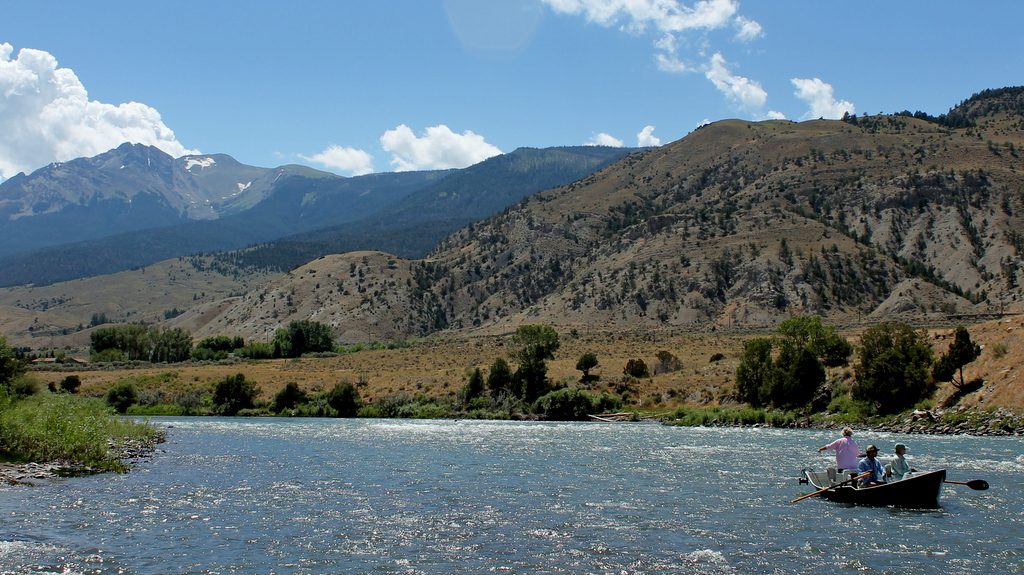
Yellowstone Lake
Cutthroat fishing from shore and boat, plus the lake trout program. Boats launch at Bridge Bay and Grant. Fishing the shoreline near tributary mouths in early summer can be excellent. See our Yellowstone Lake hub for the wider picture of the lake.
Lewis and Shoshone lakes and the Lewis River Channel
The Lewis River Channel between Lewis and Shoshone lakes gets a famous fall run of brown trout, and it’s one of the few river stretches where you can paddle. Shoshone Lake itself, reachable only on foot or by paddle, offers wild fishing in genuine solitude. Our Shoshone Lake canoe trip guide covers the route.
The Gardner River and small streams
The Gardner, near Mammoth, is a good beginner’s river with willing brook trout, and it’s a favorite with families. Small streams across the park hold eager fish and see almost no pressure. Our fly fishing Yellowstone guide goes water by water with hatches and tactics.
First time fishing in Yellowstone? Start here
If you’ve never fished the park, the volume of rules and water can be paralyzing. Here’s the short version of how to have a good first day.
- Buy your permit online before you arrive, through Recreation.gov, and download the regulations.
- Pick one river and stay on it. Driving between drainages eats the day. The Madison near the West Entrance, the Gardner near Mammoth and Soda Butte Creek in the northeast are all easy to access.
- Check the barbs and the lead. Pinch every barb before you leave the car, and swap out any lead weight.
- Fish the edges, early and late. Midday sun in July pushes fish into shade and deeper water; mornings and evenings are better in every sense.
- Walk. Ten minutes from a pullout puts you past most of the pressure.
- Carry bear spray and make noise when you move between runs, especially in brush.
- Take a photo in the water. Keep native fish wet, unhook quickly and let them go without lifting them clear.
- Ask at a fly shop. Shops in West Yellowstone, Gardiner and Cooke City will tell you what’s hatching and which water is fishing, usually for the price of a few flies.
If you’d rather not work it out alone, a single guided day at the start of a trip teaches you more than three days of trial and error, and you can fish the rest of the week on your own.
Fishing with kids
The Gardner River near Mammoth, the Firehole meadows and small streams like Indian Creek are good places to put a child on their first trout. Children 15 and under don’t need a paid permit, spin gear with lead-free lures is allowed on most water, and brook trout in the small streams are obliging. Keep sessions short, bring snacks, and stay well back from fast water. Our Yellowstone with kids guide has the rest of the family planning.
Should you hire a fishing guide?
Hire one if you have only a day or two, are new to the park’s water, or want to fish somewhere that rewards local knowledge. Skip it if you have a week, enjoy exploring and are happy to fish roadside water. Guides know which rivers are fishing this week, which is the thing that’s hardest to work out on your own.
A guide is most valuable when time is short, because Guides handle gear, flies, access and reading the water, and they know which rivers are fishing and which are too warm or too high this week.
What to expect:
- Walk-and-wade trips inside the park are the standard, since drift boats aren’t allowed on park rivers.
- Float trips run on the Yellowstone River outside the park, in Montana.
- Prices: Outfitters advertised full-day guided trips starting around $750 for one or two anglers in September 2026. Check what’s included: flies, rods, waders, lunch and shuttle vary by operator.
- Permits: You still buy your own park fishing permit.
- Booking: Peak weeks in June and September fill months ahead.
Our Yellowstone fishing guides page compares outfitters, typical rates and what a guided day actually looks like.
Boating, kayaking and paddling
Getting on the water requires its own permit, and there’s an invasive-species inspection for every vessel, including paddleboards and packrafts.
| Boat permit (2026) | 7 days | Season |
|---|---|---|
| Non-motorized (kayak, canoe, paddleboard, raft) | $20 | $30 |
| Motorized | $40 | $60 |
The rules (NPS boating page, updated September 14, 2026, checked September 2026):
- Every watercraft must pass a Yellowstone aquatic invasive species (AIS) inspection and receive a permit before launching. Inspections are done at eight locations, including Bridge Bay, Grant, Lewis Lake, Bechler, Mammoth, the Northeast Entrance, Snake River and Tower-Roosevelt ranger stations.
- Motorized boats are allowed only on Lewis Lake and Yellowstone Lake, with a 40-foot length limit. Jet skis, personal watercraft, airboats and submersibles are prohibited, as is towing water skiers.
- All park rivers are closed to boating, with one exception: the Lewis River channel between Lewis and Shoshone lakes, for non-motorized craft.
- Non-motorized craft are allowed on all lakes except Sylvan Lake, Eleanor Lake, Twin Lakes and Beach Springs Lagoon.
- A wearable Coast Guard-approved life jacket is required for every person on board.
- Overnight trips need a backcountry permit.
- The boating season runs from the Saturday of Memorial Day weekend through October 31.
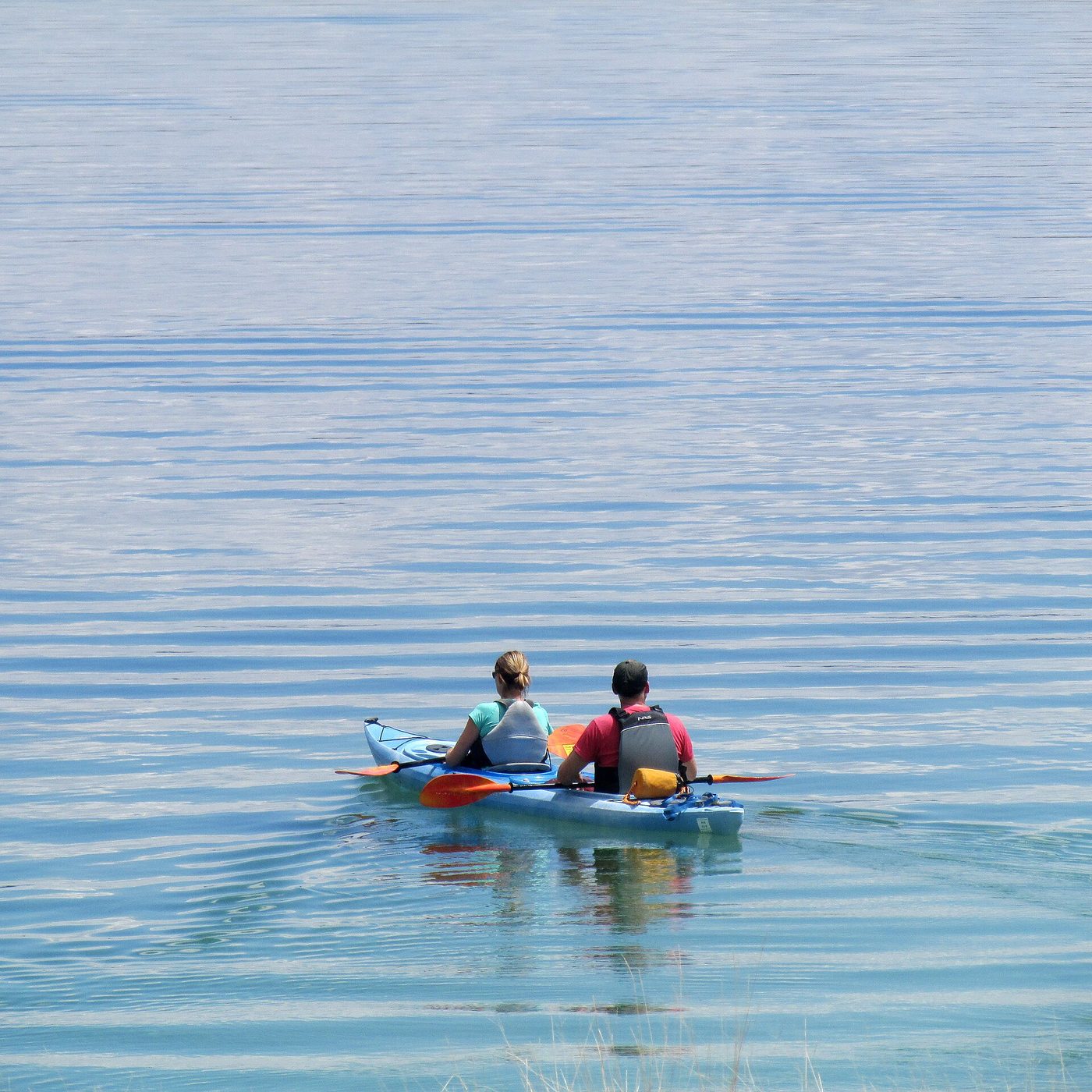
Paddling Yellowstone Lake is serious business. It’s big, it’s cold, wind builds fast in the afternoon, and survival time in the water is 20 to 30 minutes. Paddle early, stay close to shore, and check the forecast. Guided kayak trips out of Grant and Bridge Bay are a safer way to try it. See our guides to kayaking in Yellowstone, Yellowstone kayak tours and the Yellowstone boat permit.
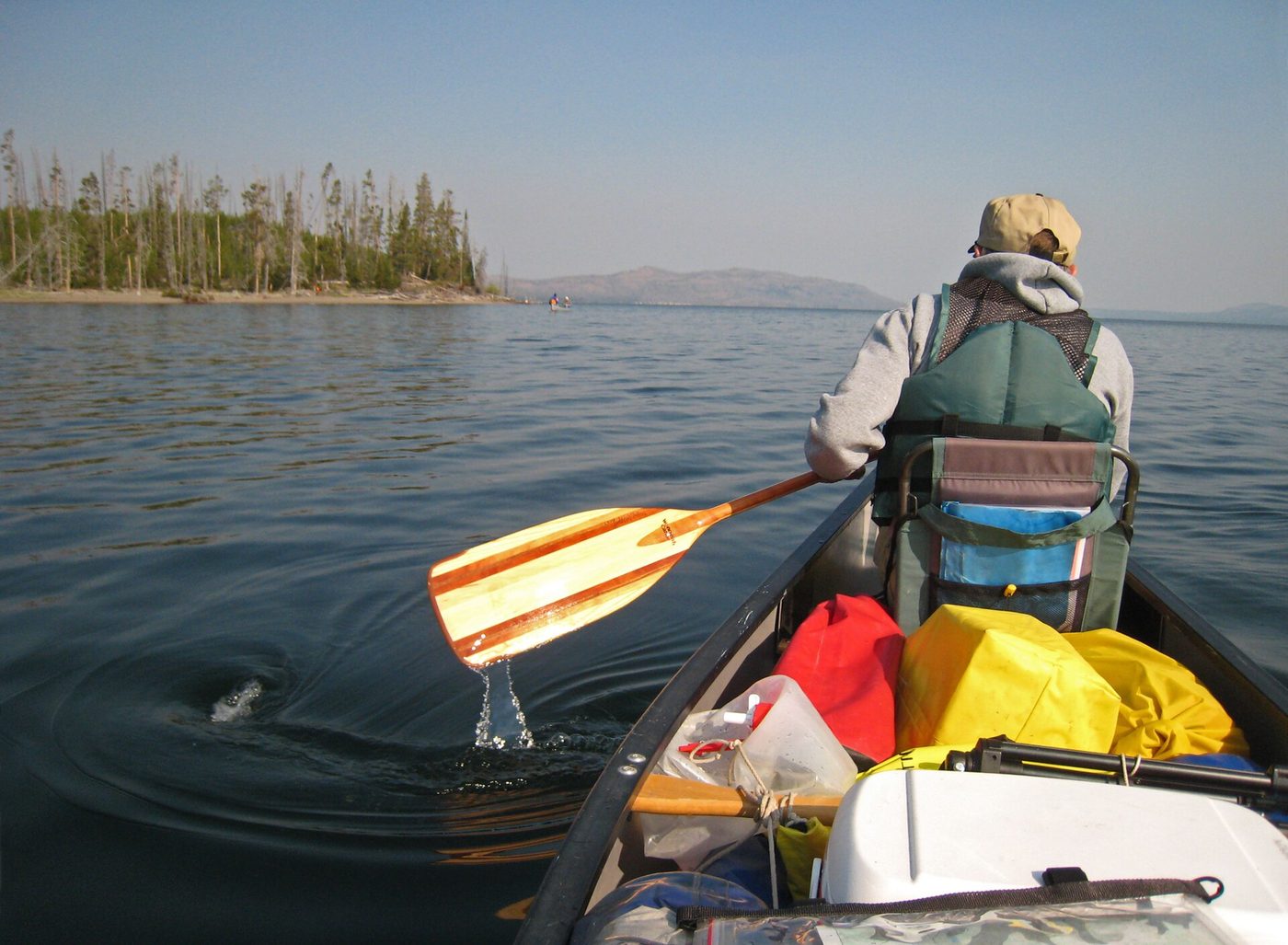
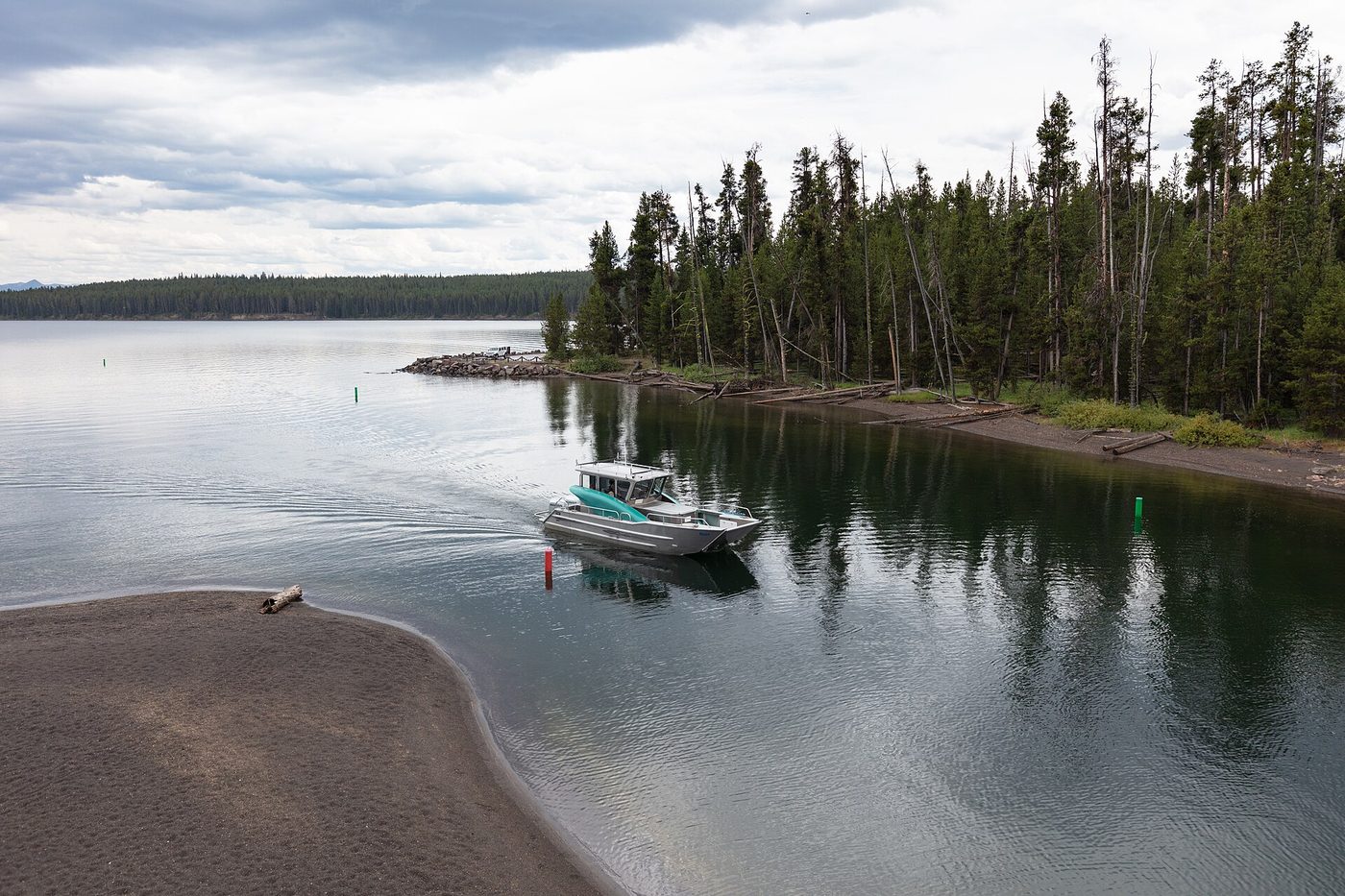
Scenic cruises and boat rentals operate from the Bridge Bay Marina in summer, which is the easy option if you just want to be on the water for an hour.
Can you swim in Yellowstone?
Swimming in water that’s entirely of thermal origin is prohibited, and it’s deadly: hot springs are near boiling. Swimming in the park’s cold lakes and rivers is legal in most places but dangerous, because water temperatures can cause cold shock within minutes. The two places people used to soak, the Firehole swim area and Boiling River, were both closed in 2026.
Here’s the current picture:
- Hot springs: Never. Entering or soaking in thermal features is illegal and has killed people.
- The Firehole River swim area, downstream of the Firehole Canyon Drive falls, is closed (checked September 2026).
- Boiling River, near Mammoth, where a hot spring met the Gardner River, has been closed to swimming since the 2022 flood.
- Yellowstone Lake and the park’s rivers: Legal in many places, but cold enough to be genuinely dangerous, with rivers running fast in early summer.
- Kids and water: Keep children well back from river edges, and never let anyone swim alone.
Our dedicated guides cover swimming in Yellowstone, the Firehole River swim area and Boiling River, each with current status.
Where you can legally soak in hot springs
There are commercial hot springs outside the park where soaking is legal, safe and very good after a long day of driving.
- Yellowstone Hot Springs, north of Gardiner on the way to Livingston, has mineral pools looking at the Yellowstone River, and it’s the closest option to the North Entrance. See our guide to Yellowstone Hot Springs near Gardiner.
- Chico Hot Springs, in Pray, Montana, is an old resort with a large open-air pool, a well-known dining room and rooms if you want to stay.
- Other options are scattered through Montana, Wyoming and Idaho, some developed, some primitive.
Our guide to hot springs near Yellowstone covers each one, with what to expect and current status, and our gateway towns hub puts them in the context of where you’re staying. For the terraces at Mammoth, which you look at rather than get into, see our Mammoth Hot Springs hub.
Rafting near Yellowstone
There’s no whitewater rafting inside the park, since rivers are closed to boating. But just outside the North Entrance, outfitters in Gardiner run half-day and full-day trips on the Yellowstone River through Yankee Jim Canyon, with sections gentle enough for families and others with real whitewater.
South of the park, the Snake River near Jackson offers both scenic float trips and whitewater. Both are excellent ways to spend an afternoon when everyone has had enough of boardwalks. Our rafting near Yellowstone guide covers seasons, minimum ages and how to choose an outfitter.
Water safety, gear and etiquette
A few things that make the difference between a good day on the water and an incident.
- Dress for the water, not the air. Rivers here run cold all summer; hypothermia is a real risk if you go in.
- Wade carefully. Round cobbles, strong current and cold water are an unforgiving combination. A wading staff helps, and a belt on your waders is essential.
- Carry bear spray and fish with a partner, especially in the Lamar drainage and along the Yellowstone River.
- Wet your hands before handling fish, keep them in the water, and release natives quickly.
- Clean, drain and dry all gear between waters to avoid spreading invasive species. Felt-soled boots are discouraged for the same reason.
- Respect closures. Waters close for spawning, for thermal warming and for bear activity.
- Pack out everything, including old tippet and leader, which kills wildlife.
Our Yellowstone safety hub covers bears, thermal areas and the rest of the park’s hazards.
Planning a fishing trip to Yellowstone
When to come. Late June for the Firehole and Madison and early-season dries; July and August for the Lamar drainage and high-country streams; September and October for browns, solitude and fall color.
Where to stay. Fishing-focused visitors usually base in West Yellowstone for the Madison, Firehole and Gibbon, Gardiner for the Gardner and the northern rivers, Cooke City or Silver Gate for Soda Butte and the Lamar, or in the park at Madison, Bridge Bay or Slough Creek campgrounds. Our camping in Yellowstone guide has the campground details, and the gateway towns hub covers the towns.
What to bring. A 9-foot 5-weight rod covers most park water; add a 6-weight for the lake and windy days. Bring waders, polarized glasses, a net, floatant, and flies matched to the season, plus everything you need for a day away from the car.
How much water to plan. Two or three rivers in a week is plenty. The driving distances mean that chasing five different drainages produces a lot of windshield time and not much fishing.
Is it worth it? For anglers, Yellowstone is a bucket-list destination and delivers on it, with the caveat that summer weekends on the famous roadside stretches are busier than the photographs suggest. Walk 20 minutes from a pullout and you’ll usually have water to yourself.
Frequently asked questions
Do you need a license to fish in Yellowstone?
You need a Yellowstone National Park fishing permit, not a state license. State licenses aren’t valid in the park. Permits cost $40 for three days, $55 for seven days or $75 for the season, and children 15 and under can fish free with supervision.
When does fishing season open in Yellowstone?
The general season opens on the Saturday of Memorial Day weekend and runs through October 31. Some waters open earlier or later, notably Yellowstone Lake and its tributaries, which open in mid-June, and a few waters are open year-round.
Can you keep fish in Yellowstone?
You must release all native fish, including cutthroat trout, Arctic grayling and mountain whitefish. Non-native fish may be kept within limits in some waters, and all lake trout caught in Yellowstone Lake must be killed rather than released.
What is the best river to fish in Yellowstone?
The Madison and Firehole are the best known and are excellent in early and late season. For cutthroat and scenery, Slough Creek, the Lamar River and Soda Butte Creek in the northeast are hard to beat in midsummer.
Do you need a permit to kayak in Yellowstone?
Yes. Non-motorized boat permits cost $20 for seven days or $30 for the season, and every vessel must pass an aquatic invasive species inspection first. Motorized permits cost $40 and $60.
Can you swim in Yellowstone National Park?
Swimming in thermal water is prohibited and lethal. Swimming in cold lakes and rivers is allowed in many places but dangerous. The Firehole swim area and Boiling River, the two traditional soaking spots, were both closed in 2026.
Are there hot springs you can soak in near Yellowstone?
Yes, outside the park. Yellowstone Hot Springs near Gardiner and Chico Hot Springs in Pray, Montana, are the closest commercial options to the North Entrance, along with others across the region.
Can you fish with bait in Yellowstone?
No. Only lead-free artificial lures and flies are allowed, hooks must be barbless, and organic and inorganic baits are prohibited throughout the park.
Sources
- National Park Service: fishing in Yellowstone, updated March 13, 2026, checked September 2026
- National Park Service: boating in Yellowstone, updated September 14, 2026, checked September 2026
- National Park Service: Yellowstone Lake, checked September 2026
- Recreation.gov: Yellowstone fishing permits, checked September 2026
Image credits
| Photo | Credit |
|---|---|
| Float trips run on the Yellowstone River outside the park; inside it, rivers are closed to | Lumpytrout, CC BY-SA 3.0, via Wikimedia Commons |
| Native cutthroat trout must be released unharmed everywhere in the park | Yellowstone National Park, public domain, via Wikimedia Commons |
| The Madison inside the park: smooth, slow and technical | Jim Peaco, National Park Service, public domain, via Wikimedia Commons |
| Thermal runoff warms the Firehole, which is why it fishes early and can get too warm in Ju | Wing-Chi Poon, CC BY-SA 2.5, via Wikimedia Commons |
| Quieter water on the upper Firehole | Mark Wagner (User:Carnildo), CC BY 2.5, via Wikimedia Commons |
| Paddle early: wind and waves build on the lake most afternoons | Yellowstone National Park from Yellowstone NP, USA, public domain, via Wikimedia Commons |
| Overnight paddling trips need a backcountry permit as well as a boat permit | Jim Peaco for Yellowstone National Park from Yellowstone NP, USA, public domain, via Wikimedia Commons |
| Bridge Bay Marina, the launch point for Yellowstone Lake | Yellowstone National Park, public domain, via Wikimedia Commons |