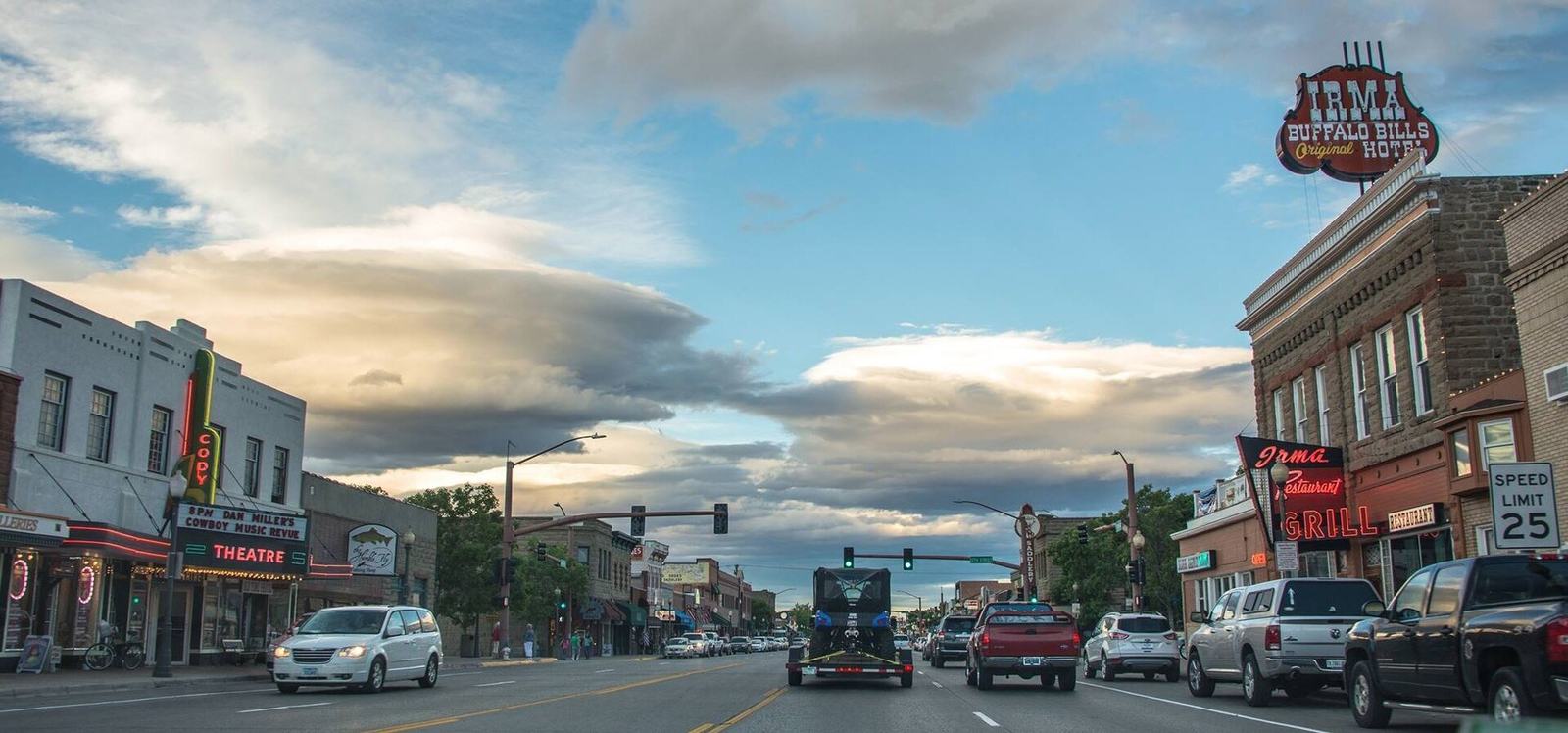
The best Cody WY hotels for a Yellowstone trip are not always the best hotels in Cody. The town sits 52 miles east of Yellowstone’s East Entrance, which is about an hour of driving before you have even reached the gate, so where you sleep within Cody — downtown, out on Yellowstone Avenue, or all the way up the Wapiti Valley — changes your morning by up to 45 minutes.
This page sorts the town’s accommodation into those three zones, says what each one is good for, gives realistic price bands, and is honest about when Cody is the wrong base entirely. For how it stacks up against West Yellowstone, Gardiner, Jackson and Cooke City, see our comparison of Yellowstone gateway towns. Prices and dates checked September 2026.
Why stay in Cody, and when should you not?
Cody is the most substantial town on Yellowstone’s doorstep after Jackson, and it costs considerably less. It has a hospital, a full-size supermarket, an airport with year-round service to Denver, a serious museum complex, a nightly summer rodeo, and a choice of hotels at every level from motel to boutique. It also has something none of the Montana gateways can offer, which is a reason to be there that has nothing to do with the national park.
The approach is the Buffalo Bill Cody Scenic Byway through the Wapiti Valley, past the Buffalo Bill Reservoir and up through red rock formations and the Shoshone National Forest. It is the most beautiful drive to any Yellowstone entrance, and it does not get old.
Stay in Cody if your Yellowstone plans centre on Yellowstone Lake, the Grand Canyon of the Yellowstone, Hayden Valley or the Lamar-side wildlife, if you want a real town at the end of the day, or if you are driving up from Denver or Salt Lake City on the eastern route.
Do not stay in Cody if Old Faithful and the geyser basins are your main target. That is about two and a half hours each way from town, and on a four-day trip you will lose most of a day to the road. West Yellowstone is the right base for that and no amount of enthusiasm for Cody changes the arithmetic.
Do not stay in Cody outside the season either. The East Entrance road is typically open from the beginning of May until the end of October. Outside those months the gate is shut and Cody is an eight-hour drive from the park via Livingston and Gardiner.
Cody hotels at a glance
| Zone | Distance to East Entrance | What it suits | Typical peak rate |
|---|---|---|---|
| Downtown (Sheridan Avenue and around) | ~55 mi, 1 h 5 min | Evenings out, the rodeo, the museum, walkability | $160–$300 |
| West Yellowstone Avenue | ~52 mi, 1 h | Pools, breakfast, easy parking, families | $150–$280 |
| Wapiti Valley (12–40 mi west) | 12–40 mi, 20–45 min | Early starts, horses, quiet, scenery | $170–$320 |
| North Fork / at the boundary | At the gate | Park-focused stays, no services | $180–$300 |
Drive times assume the posted limits and a summer morning. Add time in late afternoon, when the byway carries the day’s returning park traffic.
A word on how Cody is laid out, because it is not obvious from a booking site map. The town sits on a bench above the Shoshone River at about 5,000 feet, with Sheridan Avenue running east to west as the spine. Everything historic is on or just off Sheridan. Yellowstone Avenue peels off westward at the far end and carries the newer hotels, the airport road and the byway out of town. The rodeo grounds and the Buffalo Bill Center of the West sit between the two. Nothing in Cody is more than about ten minutes from anything else in Cody, so the zone you pick is about character and about which end of town you start your morning from, not about being cut off.
Downtown Cody: history, walkability and a good dinner
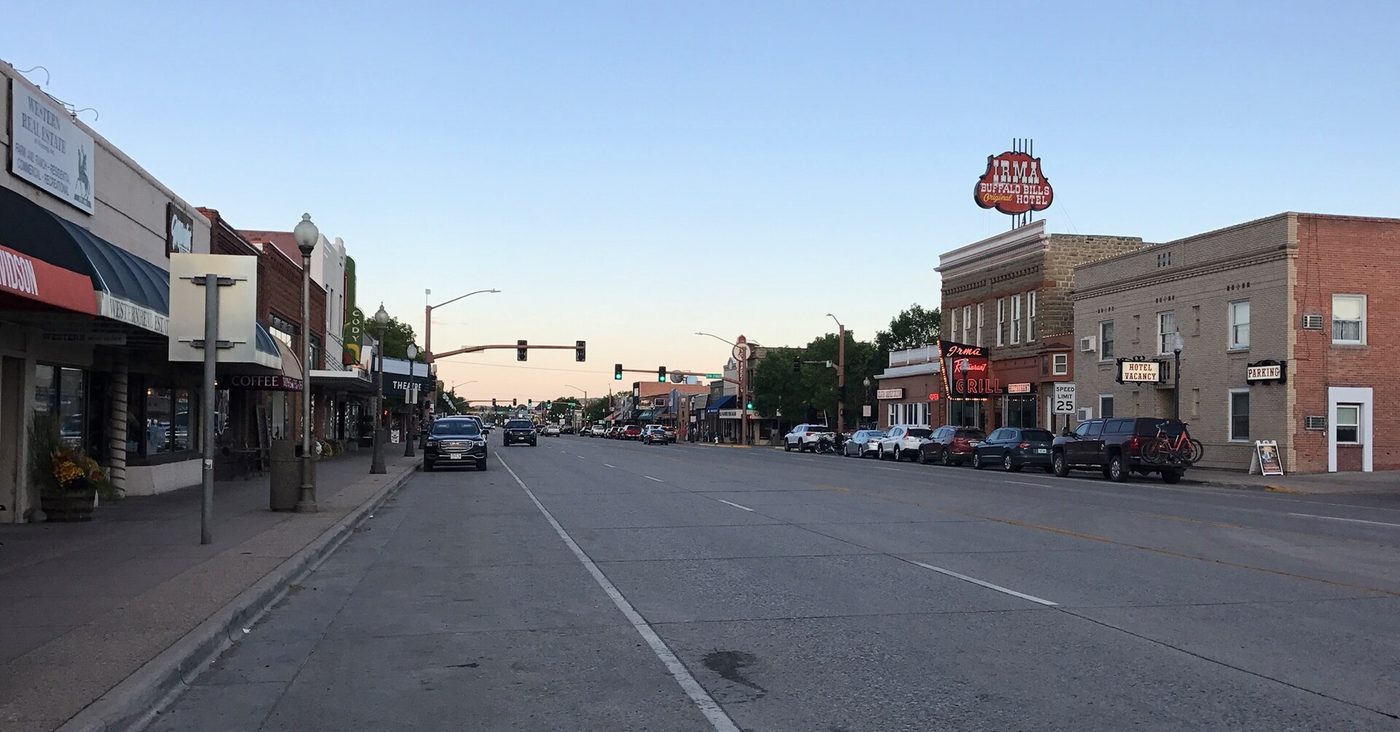
Downtown means Sheridan Avenue and the streets either side. It is genuinely walkable, it has the restaurants, the bars, the galleries and the ice cream, and it puts you five minutes from the Buffalo Bill Center of the West and ten from the rodeo grounds. If you are spending an evening in Cody rather than simply sleeping there, stay here.
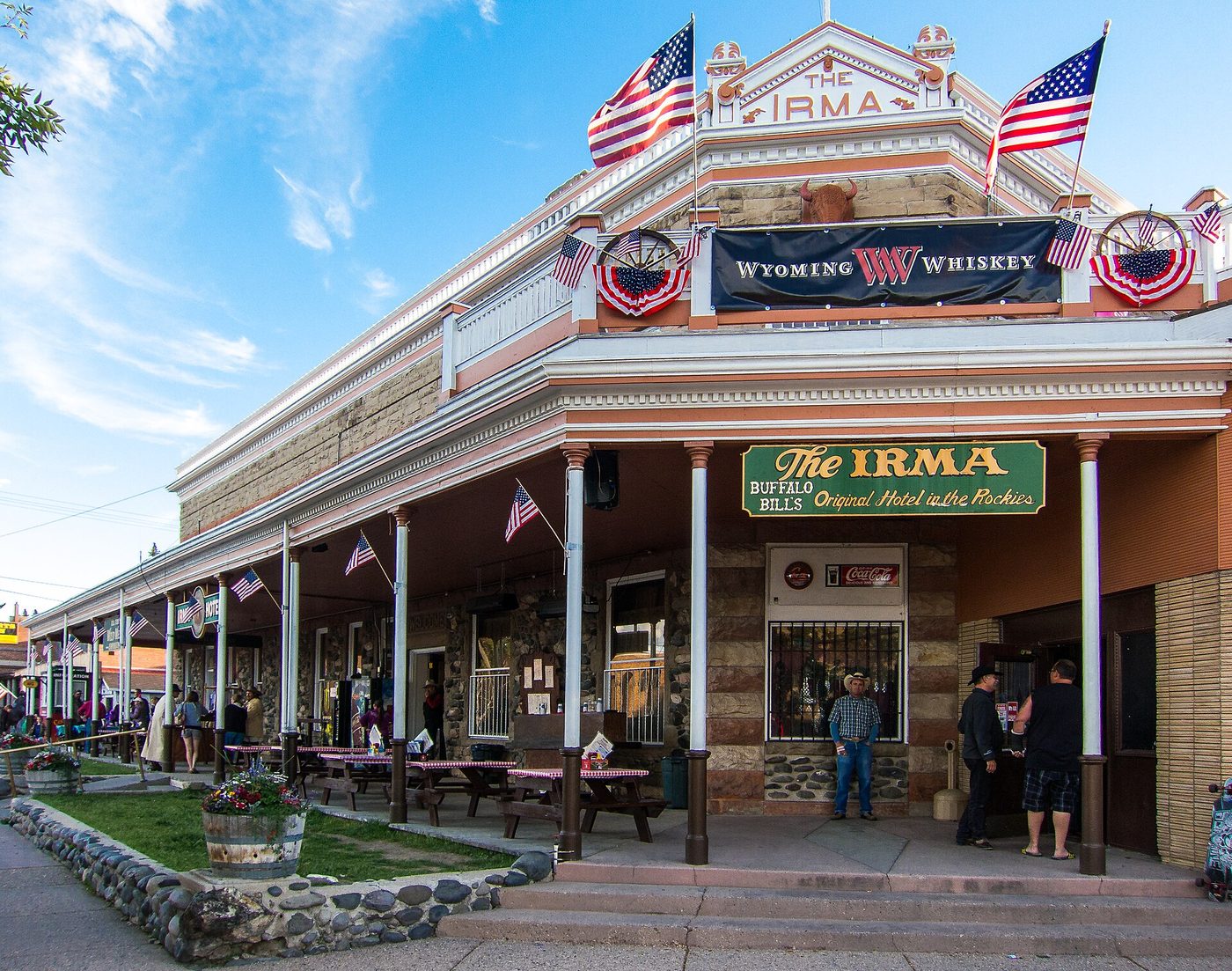
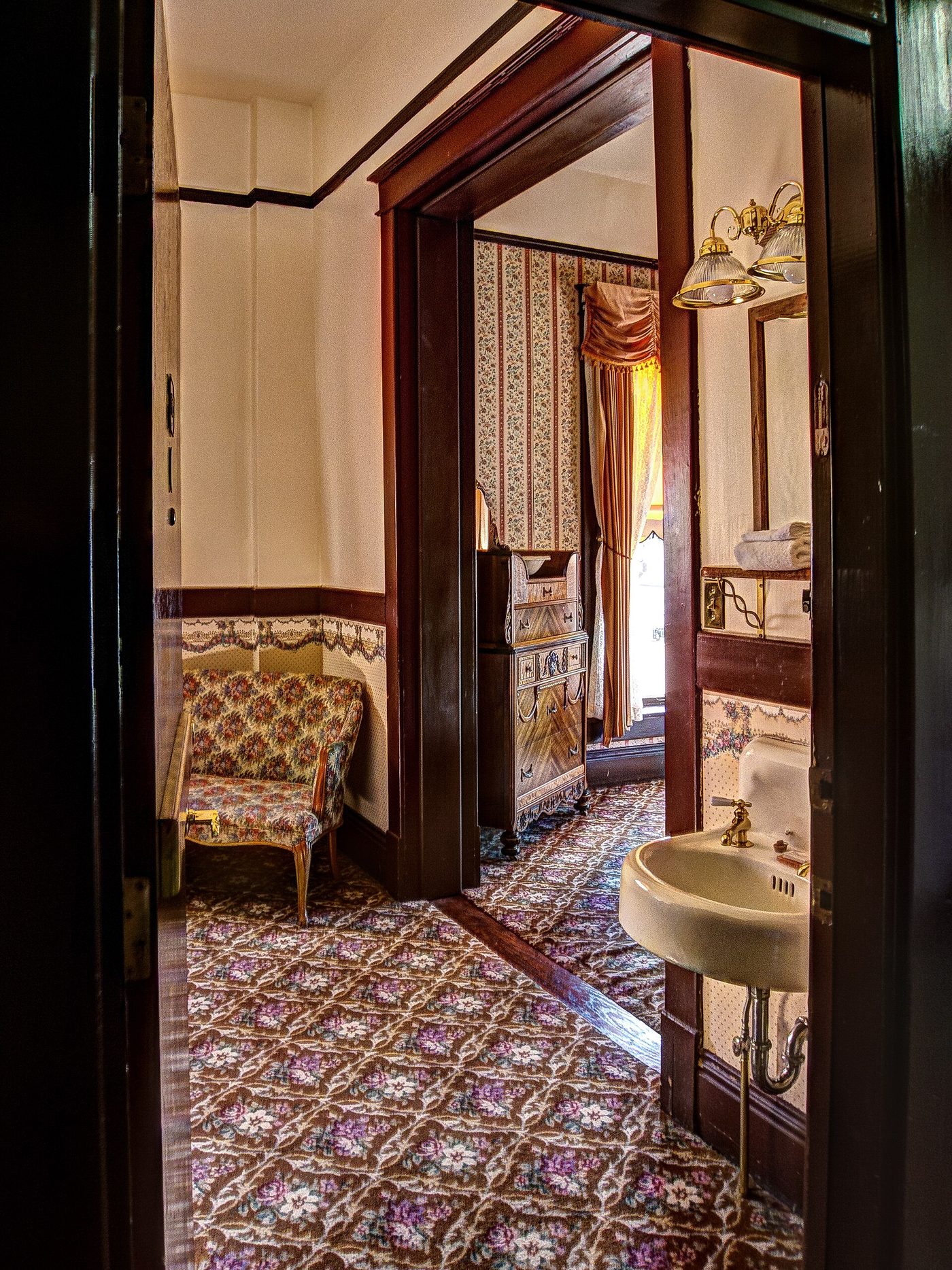
The Irma Hotel is the landmark. Buffalo Bill built it in 1902 and named it for his daughter; the cherrywood back bar in the dining room was reportedly a gift from Queen Victoria, and it remains one of the more improbable objects in Wyoming. The rooms in the historic wing are small, creaky and dated, with the plumbing and sound insulation you would expect from a building of that age. People who book it expecting a boutique hotel are disappointed; people who book it expecting to sleep in Buffalo Bill’s hotel are delighted. Ask for the historic wing rather than the annexe if the history is the point, and accept what comes with it.
The Chamberlin Inn is the boutique option and, in our assessment, the nicest place to sleep in Cody. It is a restored 1904 property in the centre of town with a garden courtyard, a small bar and rooms that have actually been designed. Hemingway stayed here in 1932, which the inn will tell you about. It is small, so it books early, and it is not a family hotel.
Buffalo Bill Village is the Western-themed option: 83 cabins in a downtown complex, with modern interiors, free wifi and televisions behind log-cabin exteriors. It is more comfortable than it looks from the car park and works well for families who want something with more character than a chain but do not want a creaky historic room.
There are also several well-kept independent motels on and just off Sheridan at the lower end of the price range, which in Cody means genuinely inexpensive rather than merely less expensive. They have no pool and no breakfast, and if you are out of the room from six in the morning until nine at night, that is not much of a sacrifice.
Downtown’s weaknesses are parking, which is on-street and tight in July, and noise, because Sheridan Avenue is the main road through town. Ask for a room at the back. The other consideration is that downtown is the furthest zone from the byway, which costs you five minutes in the morning — trivial on its own, but worth knowing if you are choosing between two otherwise equal rooms.
West Yellowstone Avenue: the modern hotels
Yellowstone Avenue runs west out of town towards the byway, and it is where most of the newer purpose-built hotels are. You are a few minutes’ drive from downtown and a few minutes closer to the park, with easy parking, a pool in most cases and free breakfast in nearly all.
The Cody is the pick of them. It is a modern hotel at 232 West Yellowstone Avenue with a large Western-styled lobby, an indoor pool and hot tub, a fitness room, complimentary parking, breakfast and shuttles, and free wifi throughout. Room types run from double queens through deluxe kings to king jetted-tub and jetted-tub fireplace suites, with an accessible king room available. It is pet-friendly on the first and second floors and pet-free on the third, which is a sensible arrangement that more hotels should copy.
Alongside it are the reliable chains — AmericInn by Wyndham, Hampton Inn & Suites, Comfort Inn, Super 8 — which do what chains do. If you are arriving late, leaving early and want a predictable room with a hot breakfast, any of them is fine and the price difference between them in any given week is usually larger than the quality difference.
This zone is the sensible default for families. Pool for the children after a long day, breakfast included, parking outside the door, and no parallel parking on Sheridan Avenue with a tired car full of people.
The trade-off is atmosphere. These are good hotels on a wide road with big car parks, and nothing about them tells you that you are in Wyoming rather than in a suburb of anywhere. If the point of coming to Cody is the West, you will get more of it downtown. If the point of coming to Cody is to sleep before driving into Yellowstone, this is where to do it.
One practical advantage worth flagging: the hotels at this end are closest to Yellowstone Regional Airport, a couple of minutes away, which matters if you are flying in on the year-round United Express service from Denver and picking up a car.
The Wapiti Valley: staying between Cody and the gate
This is the option most visitors never consider and the one that most improves a park-focused trip.
The Wapiti Valley runs west from Cody along the North Fork of the Shoshone River, through the reservoir, into the Shoshone National Forest, and up to Yellowstone’s East Entrance. Scattered along it are guest lodges, dude ranches and cabin operations — Elephant Head Lodge about 12 miles from the entrance, Yellowstone Valley Inn with its log cabin rooms and RV park, Pahaska Tepee close to the boundary itself, and several working ranches offering week-long stays.
What you gain. Between 20 and 45 minutes off every morning drive, which over four days in the park is several hours. Genuine quiet, dark skies, and a good chance of seeing elk, bighorn sheep and bears from the road. Horseback riding, which most of these places run themselves.
What you lose. Restaurants beyond your lodge’s own dining room. A supermarket. Reliable cell coverage. Pharmacy and medical services. And flexibility, because if the kitchen closes at eight you are eating at eight.
Who it suits. Anyone spending three or more full days in the park, anyone travelling with horses or wanting to ride, and anyone who would rather look at mountains than a car park. It is not the choice for a single night, and it is not the choice if anyone in the party has a medical condition that makes being 40 minutes from a hospital uncomfortable.
A further consideration is what kind of property you are booking. Several of these are dude ranches rather than hotels, which means a weekly rate, all meals included, a riding programme and a Sunday-to-Sunday arrival. That is a wonderful holiday and a poor fit for a three-night park stop, so read the booking terms carefully before you assume you can take a room for two nights midweek.
Note that several of these properties are seasonal, opening around May and closing in late September or October with the East Entrance road. Confirm the dates before booking flights.
What do hotels in Cody cost?
Cody is the best-value major gateway to Yellowstone, and the gap is meaningful. Here are the bands we would budget against for 2026 and 2027, sampled September 2026:
| Type | Shoulder (May, Oct) | Peak (Jul–Aug) | Off-season |
|---|---|---|---|
| Budget motel | $70–$110 | $120–$180 | $60–$90 |
| Mid-range chain | $100–$150 | $150–$240 | $80–$120 |
| The Cody / Hampton tier | $130–$190 | $190–$280 | $100–$150 |
| Historic and boutique | $140–$210 | $200–$320 | $110–$170 |
| Wapiti Valley lodge | $150–$220 | $190–$320 | Closed |
For comparison, the equivalent room in West Yellowstone in July commonly runs $250 to $400, and in Jackson $350 to $700. That difference, across five nights, comfortably pays for the extra fuel of a longer commute — which is the honest case for Cody in one line.
Three things to know about how these rates move. Rodeo weekends and the days around the Fourth of July are the most expensive of the year, and the Fourth in Cody is a serious event with the Stampede rodeo running for several days. Shoulder-month rates fall faster here than in the Montana gateways, because Cody’s demand is tied so tightly to the East Entrance season. And the historic properties price less aggressively in peak than the modern ones do, so the gap between the Irma and a mid-range chain narrows considerably in July.
Wyoming charges state sales tax plus a lodging tax, so budget roughly 8 to 10 per cent on top of the quoted rate. Park entrance fees are separate: $35 per private vehicle for seven days, and since 1 January 2026 a $100 nonresident fee per non-US resident aged 16 and over unless admitted on an annual or America the Beautiful pass. The full breakdown is on our Yellowstone entrance fee page.
How far is Cody from Yellowstone?
Cody Yellowstone gives it as “just 52 miles west of Cody via Highway 14-16-20”, which takes about an hour to the East Entrance station. From the gate it is roughly another 27 miles over Sylvan Pass to Fishing Bridge and Yellowstone Lake, so plan on two hours from a Cody hotel to the lake, and about two and a half hours to Old Faithful.
Practical drive times from a downtown Cody hotel, in summer:
- East Entrance station: 1 hour
- Fishing Bridge and Yellowstone Lake: about 2 hours
- Hayden Valley: about 2 hours
- Grand Canyon of the Yellowstone (Canyon Village): about 2 hours 15 minutes
- Old Faithful: about 2 hours 30 minutes
- Lamar Valley: about 3 hours
Staying in the Wapiti Valley cuts 20 to 45 minutes off every one of those. Our full route guide, with the stops worth making and the Sylvan Pass notes, is at Cody to Yellowstone.
Two things about those numbers are worth saying plainly, because the booking sites will not. First, they are one-way. A day at Old Faithful from a Cody hotel is five hours in the car before you have looked at anything, which is not a day anyone enjoys. Second, they assume you are not stopping, and on this road you will stop: the reservoir, the dam visitor centre, the rock formations in the Wapiti, and whatever wildlife is standing beside the road in the Shoshone National Forest.
The way to make Cody work is to accept the geography rather than fight it. Do the eastern half of the park properly — the lake, Fishing Bridge, Hayden Valley, Mud Volcano, the canyon — over two or three days, and either skip the geyser basins or give them a single long day with an early start and no regrets about the driving. Visitors who try to do both halves daily from Cody are the ones who come home saying Yellowstone was mostly a car park.
One caution about Sylvan Pass. The East Entrance road climbs to 8,530 feet over a steep, avalanche-prone pass that is the first thing to close in bad weather and the last to open in spring. In early May and late October, check the road status the morning you travel rather than the night before — Yellowstone road closures has the current picture.
When should you book a hotel in Cody?
Cody’s hotel market is driven by two things: the park season and the rodeo. Both peak in July.
July and August. Book three to four months ahead for the better properties and the Wapiti Valley lodges. Cody has more supply than the Montana gateways so it does not sell out in the same way, but the good-value rooms go first and what is left in late June is the expensive end.
May and October. The shoulder months are Cody’s best trick. The East Entrance is open, rates fall by a third or more, the byway is quiet, and the park is at its best for wildlife. The risk is Sylvan Pass weather, so book refundable.
November to April. The East Entrance is closed and Cody is not a Yellowstone base at all. It is still a pleasant Wyoming town with cheap rooms, and the Buffalo Bill Center of the West runs reduced winter hours, but you would be driving to Gardiner to see the park.
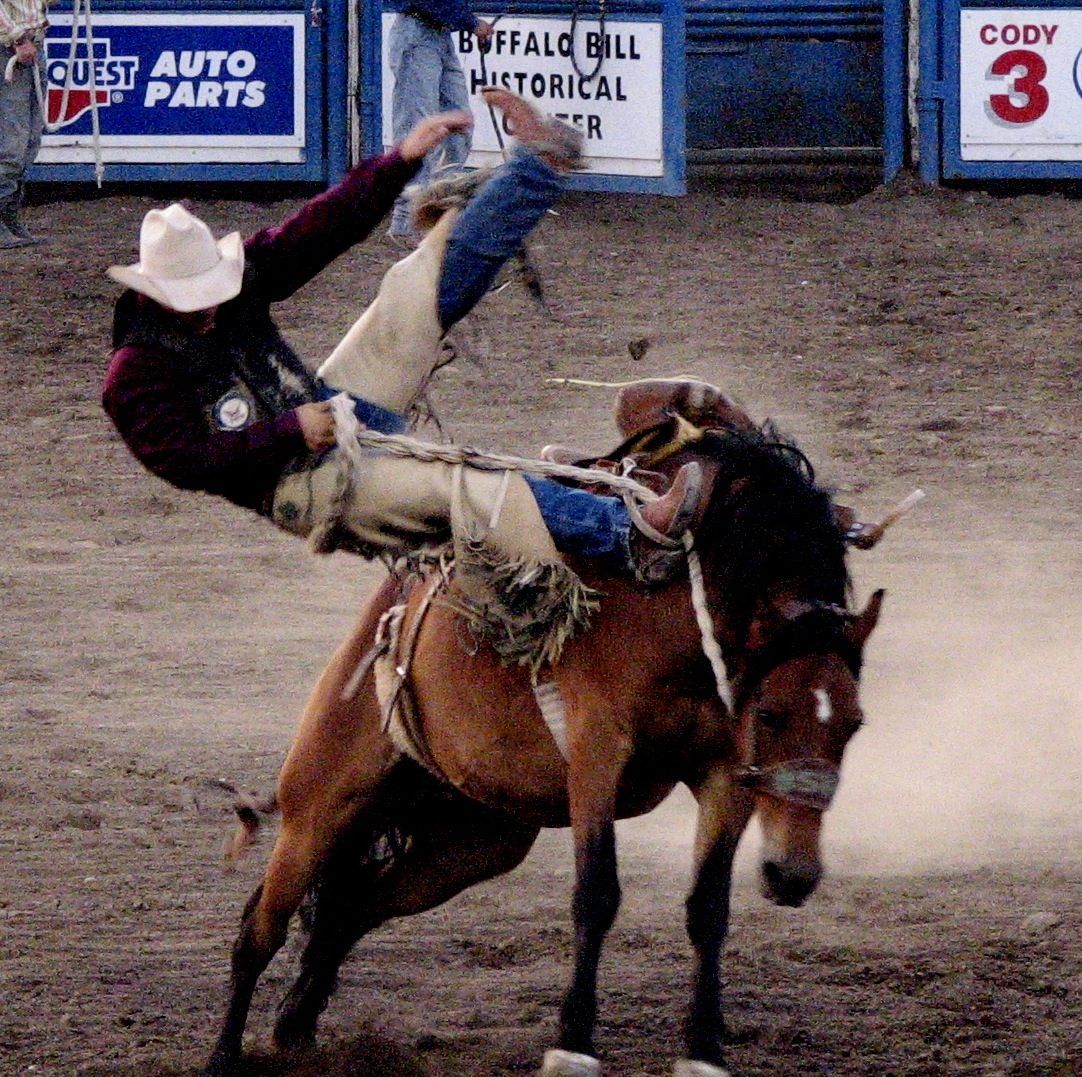
Rodeo nights. The Cody Nite Rodeo runs nightly through the summer and is a genuine institution rather than a show put on for tourists. It does push demand on summer weekends, so if your dates are flexible by a day, midweek is cheaper.
A booking tactic. Because Cody has more supply than it has park-season demand outside the peak six weeks, last-minute availability genuinely exists here in a way it does not in West Yellowstone. If your trip is flexible and you are travelling in early June or September, you can often do better booking three weeks out than three months out. In July, do not try this.
What else there is to do in Cody
This matters more than it does at other gateways, because Cody rewards a day of its own.
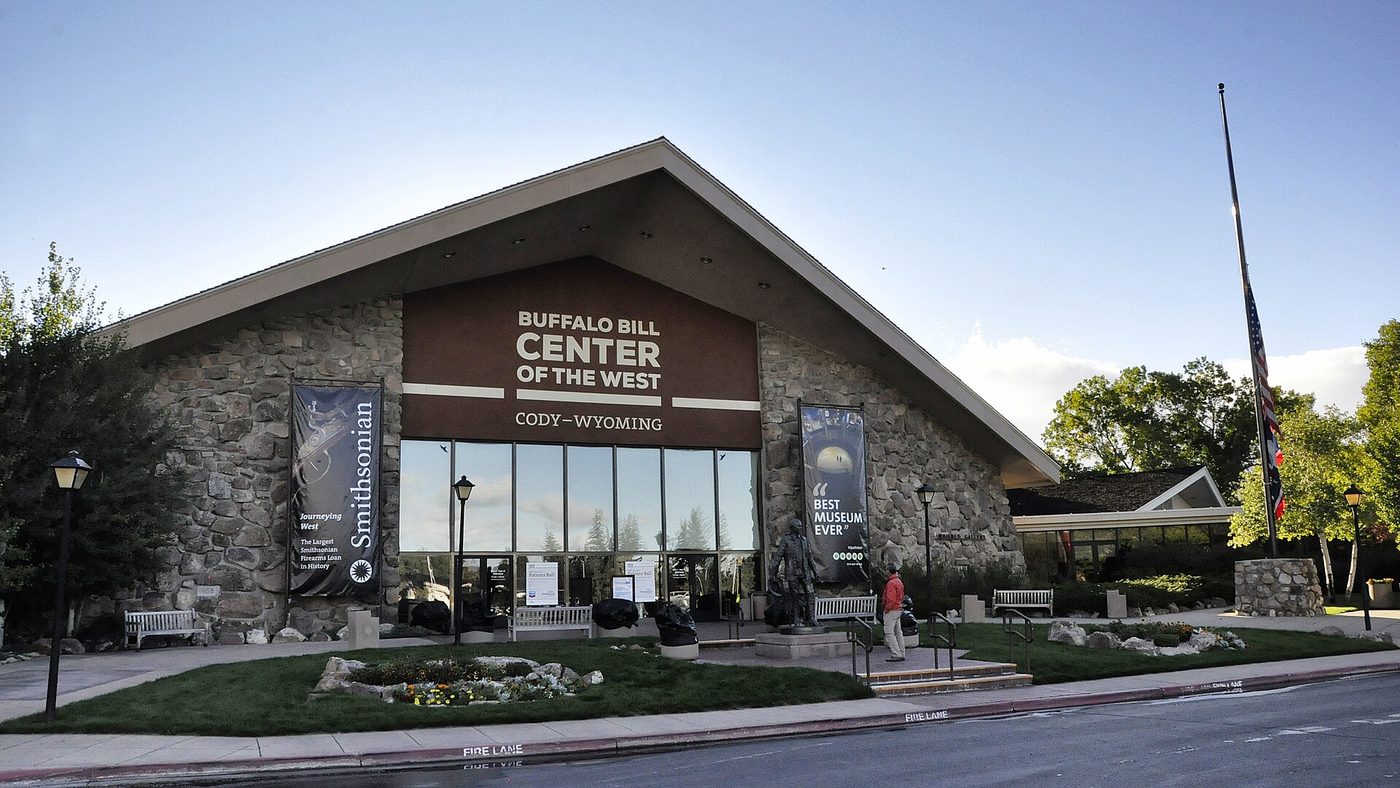
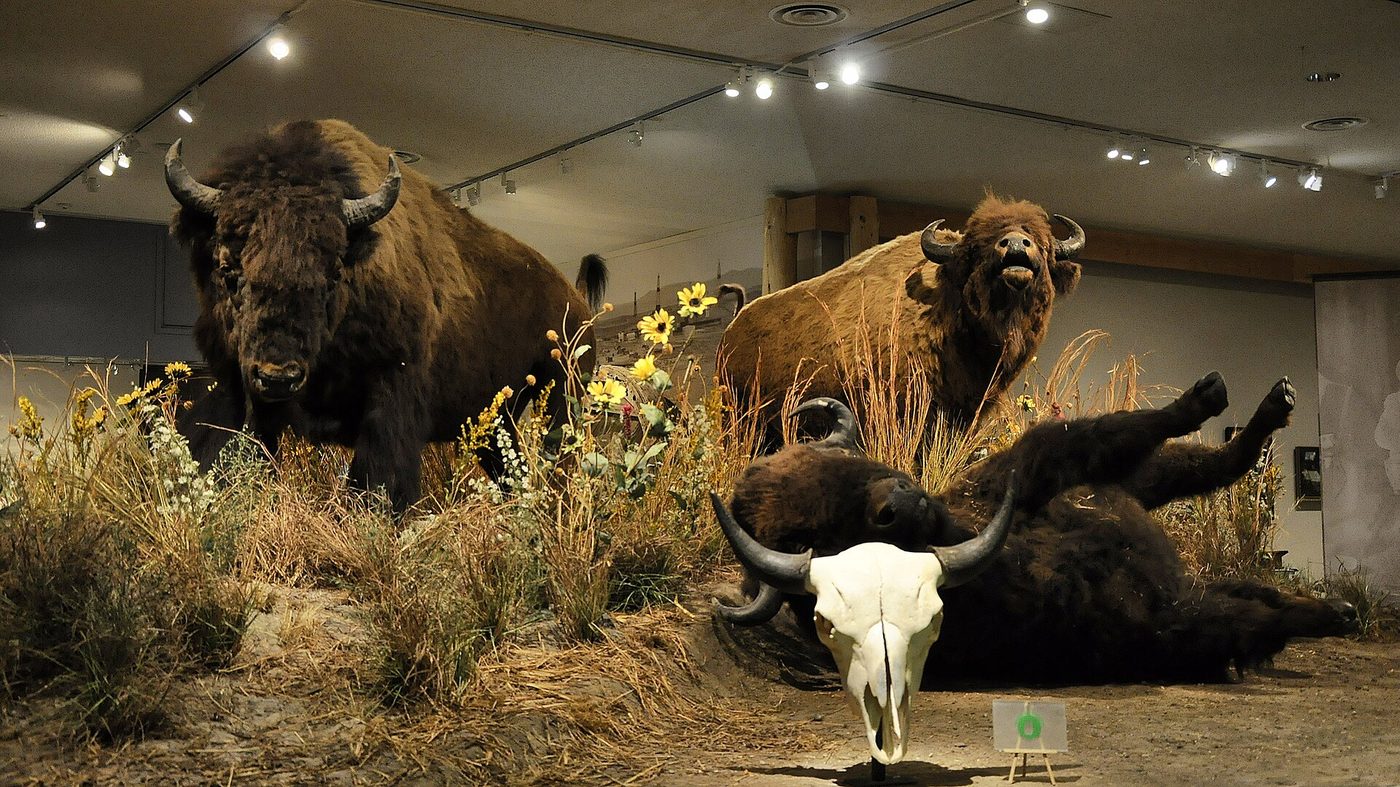
The Buffalo Bill Center of the West is five museums under one roof — Western art, Plains Indian material culture, natural history of the Greater Yellowstone, firearms, and the Buffalo Bill museum itself — and it is a properly serious institution that would be notable in a city ten times the size. Allow half a day minimum; people routinely spend a full one.
Beyond it: the Cody Nite Rodeo every summer evening, Old Trail Town with its collection of relocated frontier buildings, the Buffalo Bill Reservoir and its dam visitor centre on the byway, rafting on the Shoshone, and a walkable downtown with a good bookshop and better-than-expected restaurants.
The practical upshot: build a Cody day into the trip rather than treating the town as a dormitory. Our guide to things to do in Cody, Wyoming covers it in full.
Cody versus the other gateway towns
Versus West Yellowstone. Cody is cheaper, more interesting and further away. West Yellowstone is 30 minutes from Madison Junction; Cody is two hours from anything famous. If geysers are the point, West Yellowstone wins and it is not close.
Versus Gardiner. Gardiner is better for wildlife and open year-round; Cody is more comfortable, better served and better value. For a wolf-watching trip, Gardiner. For a general park trip with a rest day in it, Cody.
Versus Jackson. Cody is roughly half the price and has a better museum. Jackson has better restaurants, Grand Teton on the doorstep and an airport inside a national park. If you are doing both parks, Jackson; if only Yellowstone, Cody.
Versus Bozeman. Neither is a good daily base. Bozeman is the airport town at the north end and Cody is the airport town at the east, and both are better used as arrival and departure nights. Our guide to things to do in Bozeman covers that side.
Versus staying inside the park. Lake Hotel, Lake Lodge and the Fishing Bridge and Bridge Bay campgrounds put you two hours closer to everything, at a higher price and with no wifi, no air conditioning and limited dining. For a park-focused trip they beat Cody on every measure except comfort and cost. The strongest plan for most people is a couple of nights inside near the lake and the rest in Cody.
Where Cody genuinely wins: it is the only Yellowstone gateway that is worth visiting in its own right, and the only one where an afternoon of rain in the park is a pleasant change of plan rather than a wasted day. On a week-long trip with children, having a museum, a pool, a rodeo and a supermarket within ten minutes is worth more than the hour of driving costs you.
Our picks
- Best overall: The Cody, on West Yellowstone Avenue. Pool, breakfast, parking, sensible rooms and a few minutes closer to the gate than downtown.
- Best for character: The Chamberlin Inn. Small, restored, properly designed, and the best night’s sleep in town.
- Best for the story: The Irma. Book the historic wing, expect an old building, and have a drink at the cherrywood bar.
- Best for families: Buffalo Bill Village, or any of the chains with a pool on Yellowstone Avenue.
- Best for park mornings: a Wapiti Valley lodge, 20 to 45 minutes closer to the gate, with the trade-off that dinner is wherever you are staying.
- What we would skip: the cheapest motels at the eastern edge of town. The saving is small, the extra driving is real, and Cody’s mid-range is good value already.
Whichever zone you pick, the thing to get right is the match between your base and the part of the park you care about. Cody is an excellent choice for the lake, the canyon and Hayden Valley, and a poor one for Old Faithful. If that leaves you unsure, our comparison of all the Yellowstone gateway towns lays out every option with drive times to the eight core sights.
Frequently asked questions
How far is Cody, Wyoming from Yellowstone?
Fifty-two miles to the East Entrance via Highway 14-16-20, which takes about an hour. From the entrance station it is another 27 miles over Sylvan Pass to Fishing Bridge, so allow two hours from a Cody hotel to Yellowstone Lake and about two and a half to Old Faithful.
Is Cody a good base for Yellowstone?
It is a very good base for Yellowstone Lake, the Grand Canyon of the Yellowstone and Hayden Valley, and a poor one for the geyser basins. It is also the cheapest of the major gateway towns and the only one with a genuine attraction of its own in the Buffalo Bill Center of the West.
When is the East Entrance to Yellowstone open?
Typically from the beginning of May until the end of October, according to Cody Yellowstone, with exact dates set each year by the National Park Service and driven by snow clearance over Sylvan Pass. Outside that window Cody is not a practical Yellowstone base.
What is the best hotel in Cody, WY?
For comfort and facilities, The Cody on West Yellowstone Avenue. For character and quality of room, the Chamberlin Inn downtown. For history, the Irma Hotel, with the caveat that its historic rooms are genuinely historic.
Is it cheaper to stay in Cody than West Yellowstone?
Yes, noticeably. Mid-range rooms in Cody in peak summer commonly run $150 to $260, against $250 to $400 for the equivalent in West Yellowstone. The trade-off is roughly an hour of extra driving each way to the middle of the park.
Should I stay in Cody or in the Wapiti Valley?
Cody if you want restaurants, shops and services, or are staying one or two nights. The Wapiti Valley if you are spending three or more days in the park and want 20 to 45 minutes back every morning, and do not mind eating where you sleep.
Does Cody have an airport?
Yes. Yellowstone Regional Airport serves Cody with year-round United Express service to Denver. It is small, convenient and usually more expensive than flying into Bozeman or Salt Lake City and driving.
How many days do you need in Cody?
One full day for the town itself, mostly at the Buffalo Bill Center of the West and the rodeo, plus however many days you are spending in Yellowstone. Most visitors give Cody an afternoon and later wish they had given it a day.
Sources
- National Park Service: Yellowstone directions and transportation
- National Park Service: Yellowstone park roads and construction
- National Park Service: Yellowstone entrance fees
- Cody Yellowstone: visitor FAQs
- The Cody Hotel: accommodations
Image credits
| Photo | Credit |
|---|---|
| Downtown Cody at dusk (top of page) | Cityofcody, CC0, via Wikimedia Commons |
| Sheridan Avenue is the main road through town, which is both the appeal and the noise prob | Indy beetle, CC0, via Wikimedia Commons |
| Buffalo Bill built the Irma in 1902 and named it after his daughter | Robert Alescio, CC BY-SA 3.0, via Wikimedia Commons |
| The historic wing is genuinely historic | Robert Alescio, CC BY-SA 3.0, via Wikimedia Commons |
| The Cody Nite Rodeo runs every summer evening and pushes weekend room rates up | 2006-07-28_-_United_States_-_Wyoming_-_Cody_-_Rodeo_-_Cowboy.jpg: C. G. P. Grey derivative work: Montanabw, CC BY 2.5, via Wikimedia Commons |
| Five museums under one roof, and the only gateway-town attraction worth a full day | Paul Hermans, CC BY-SA 3.0, via Wikimedia Commons |
| The natural history wing covers the Greater Yellowstone ecosystem you are about to drive i | Paul Hermans, CC BY-SA 3.0, via Wikimedia Commons |