Three full days is the honest minimum for a first visit, four is the number most people should aim for, and five turns a rushed tour into an actual holiday. If you are asking how many days in Yellowstone you need, the short answer is that the park is 2.2 million acres with a 142-mile loop road and a 45 mph speed limit, so distance decides your itinerary more than ambition does.
One day is possible and it is a compromise. Two days works if you pick a half of the park and stay in it. Anything beyond five days starts buying you depth — backcountry, fishing, wolf watching, repeat mornings at the same valley — rather than more sights. This page sets out exactly what each length gets you, and where the extra day is genuinely worth the money. For the routes themselves, see our Yellowstone itinerary hub.
The short answer, by trip type
| You have | What you can realistically see | Verdict |
|---|---|---|
| 1 day | One loop half: either the geyser basins or the canyon and the northern valleys | Doable, not satisfying. Better than not going |
| 2 days | Lower Loop: geyser basins, Yellowstone Lake, the canyon, Hayden Valley | The workable minimum |
| 3 days | Lower Loop plus Mammoth and a first taste of Lamar | The recommended minimum for a first visit |
| 4 days | Everything above, with a proper dawn in Lamar and a real hike | The sweet spot for most people |
| 5 days | The same, unhurried, with weather slack and a second attempt at anything you missed | The best value per day |
| 6–7 days | Depth: backcountry, fishing, wolves, repeat mornings, Grand Teton | For wildlife, photography or a second visit |
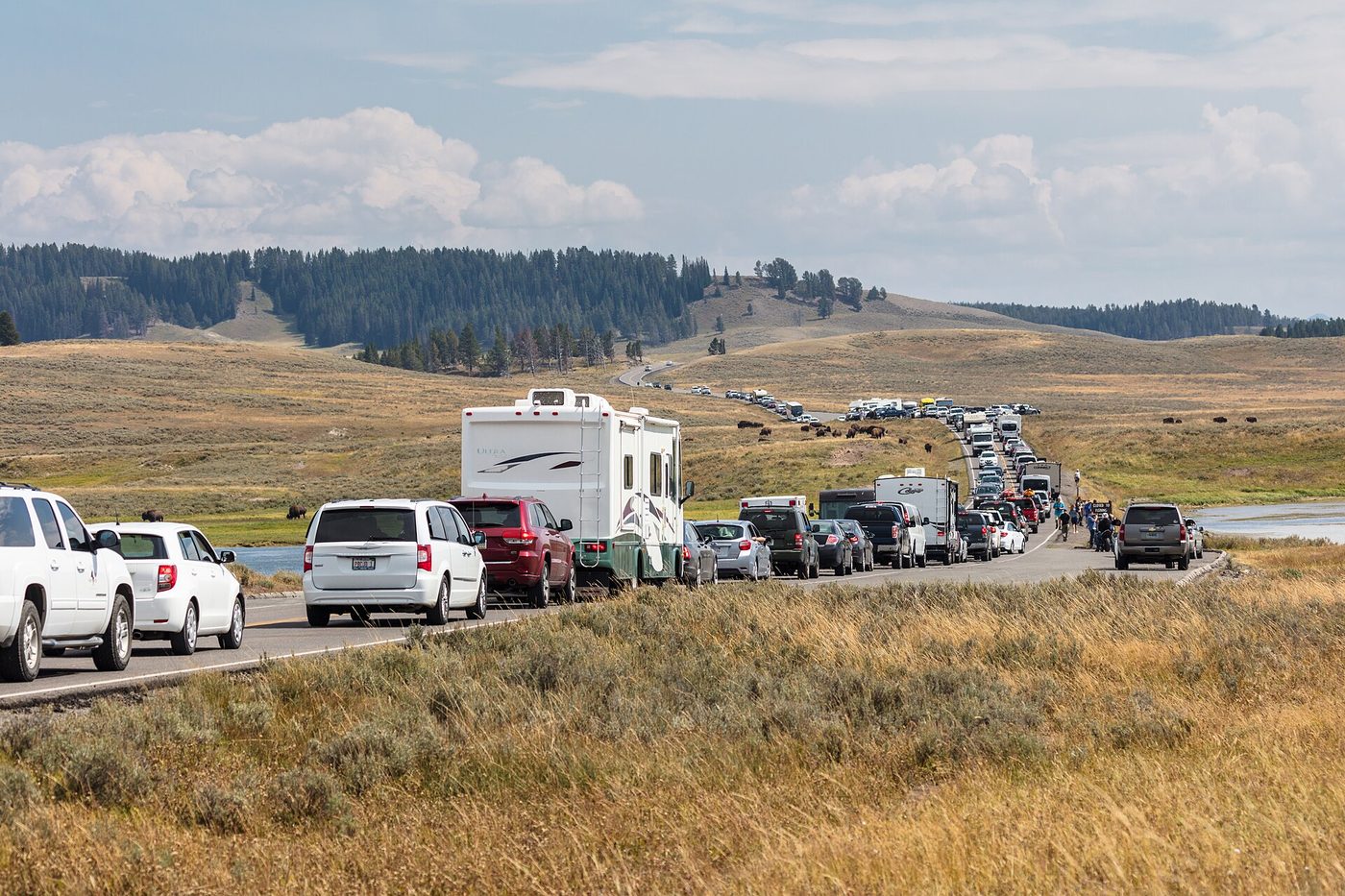
The single most useful thing to understand before you choose: you will spend more time driving than you expect. The Grand Loop Road is a figure of eight, roughly 142 miles all the way round, with a 45 mph limit, frequent construction and a bison herd that can stop you for 20 minutes whenever it likes. A “short hop” between two junctions is often 45 minutes.
Why Yellowstone takes longer than it looks
Three structural facts drive every answer on this page.
The park is enormous. At 2.2 million acres it is larger than Rhode Island and Delaware combined, and the major sights sit at opposite ends of it. Old Faithful and Lamar Valley are roughly 100 miles apart by road.
The roads are slow by design. The 45 mph limit applies almost everywhere, drops to 25 mph through developed areas, and is genuinely enforced. The National Park Service’s own drive times make the scale clear:
| From | To | NPS drive time |
|---|---|---|
| West Entrance | Madison Junction | 30 min |
| Madison Junction | Old Faithful | 35–45 min |
| Old Faithful | Grant Village | 40 min |
| Grant Village | Lake Village | 45 min |
| Lake Village | Canyon Village | 35 min |
| Canyon Village | Norris Junction | 30 min |
| Canyon Village | Tower Junction | 50–60 min |
| Northeast Entrance | Tower Junction | 60 min |
| Tower Junction | Mammoth Hot Springs | 40 min |
| North Entrance | Mammoth Hot Springs | 15 min |
| Mammoth Hot Springs | Norris Junction | 45 min |
| Norris Junction | Madison Junction | 30 min |
Drive times from the National Park Service (checked September 2026), and they assume no delays.
Everything worth seeing takes longer than the drive to it. The Upper Geyser Basin is a two-to-three-hour walk if you do it properly. Artist Point and the canyon rim take a morning. A serious dawn in Lamar Valley is three hours of sitting still. Add those up across a day and you get two or three major stops, not six.
The practical consequence: plan two or three substantial stops per day, not a list. Visitors who try to tick eight things end up with photographs of parking lots.
One day in Yellowstone: pick a half and commit
One day is a real option, and the mistake people make is trying to see everything. You cannot. What you can do is one half of the figure of eight, properly.
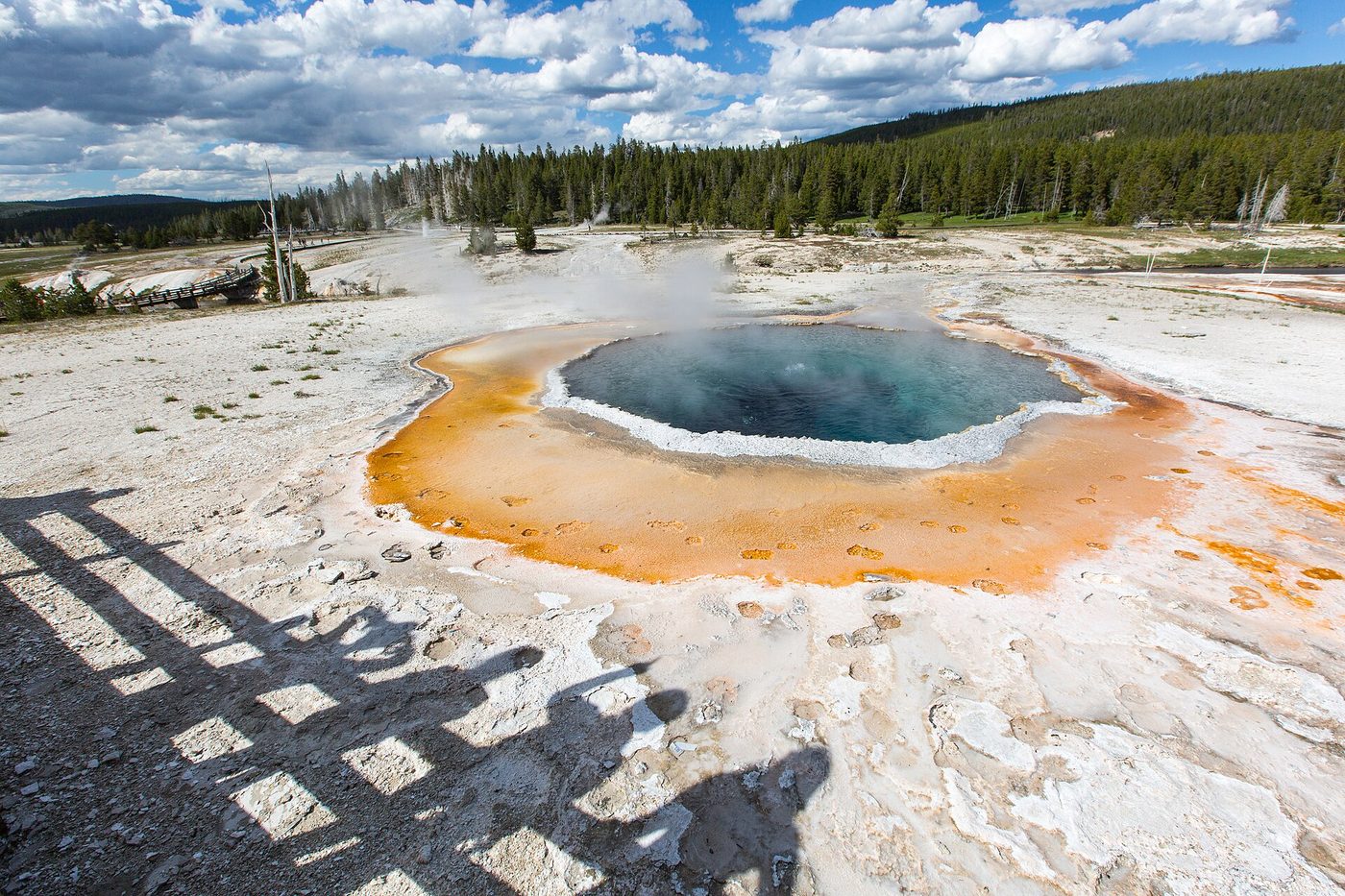
If you enter from the West or South: do the geyser basins. Madison, the Firehole, Midway and Grand Prismatic, the Fountain Paint Pot, then the Upper Geyser Basin and Old Faithful. That is a full day at a civilised pace and it delivers the thermal landscape nothing else on earth has.
If you enter from the North or Northeast: do Mammoth, Tower and Lamar Valley. Terraces in the morning, the Lamar pullouts at either end of the day, Tower Fall in between. That is the wildlife day, and in autumn or winter it beats the geysers.
If you enter from the East: Yellowstone Lake, Hayden Valley and the Grand Canyon of the Yellowstone. Artist Point, the Lower Falls, and bison in the valley.
Whichever half you choose, start before 7 a.m. and accept that you are not going to reach the other side. Our one-day Yellowstone itinerary sets out each of these as a timed route.
The other thing a one-day visit demands is that you sleep as close to your chosen half as possible. A day trip from Bozeman is roughly three hours of driving before you reach anything, and three hours back. A night in West Yellowstone or Gardiner converts that into two extra hours inside the park, which on a one-day trip is a quarter of everything you have.
The honest verdict on a single day: it is much better than nothing, and it will probably make you want to come back. Do not plan a one-day visit that includes both Old Faithful and Lamar Valley. You will spend five hours in the car to stand in two car parks.
Two days: the workable minimum
Two full days lets you do the Lower Loop — the southern half of the figure of eight — without sprinting.
Day one: geyser basins. Madison, Firehole Canyon Drive, Fountain Paint Pot, Midway and the Grand Prismatic overlook, then the Upper Geyser Basin and Old Faithful in the afternoon. Our Old Faithful eruption times page explains how to plan around the predictions rather than waiting at the benches.
Day two: West Thumb, Yellowstone Lake, Fishing Bridge, Mud Volcano, Hayden Valley at the wildlife hour, then the Grand Canyon of the Yellowstone — Artist Point, the Brink of the Lower Falls, Lookout Point — and out via Norris.
Two days will not include Mammoth or Lamar Valley unless you sacrifice something substantial. That is the trade, and it is a reasonable one for a stopover on a bigger road trip.
Where to sleep matters more on a two-day trip than on any other length. Stay inside the park if you can get a room, or at West Yellowstone if you cannot. A two-day trip run from Cody or Jackson loses four hours to the approach drives, which is a quarter of your available daylight. Our lodging guide covers what is available and how far ahead to book.
Three days: the recommended minimum for a first visit
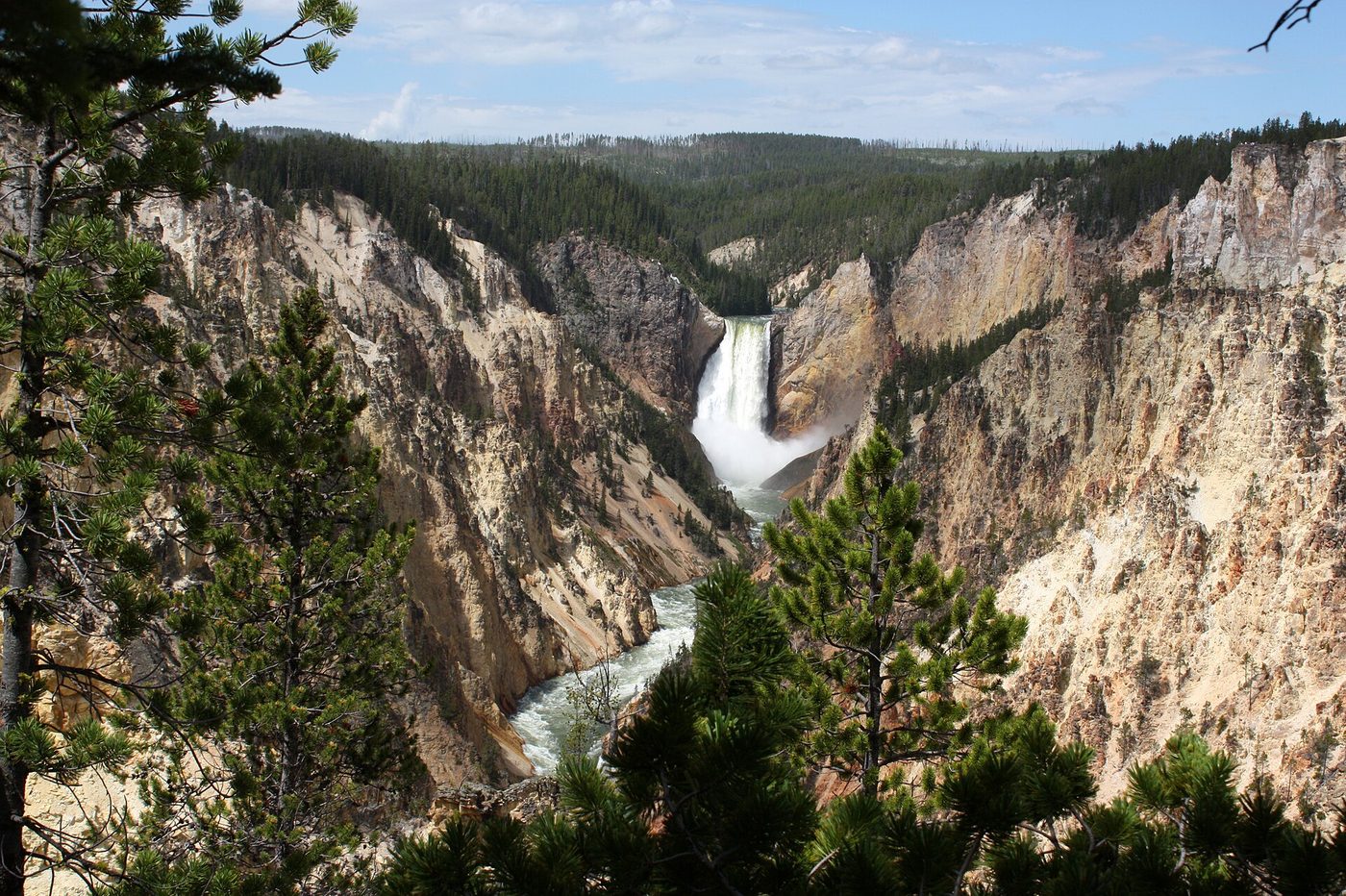
Three days is the number most guides recommend, and it is right, with a caveat: it needs to be three full days, not an arrival afternoon, a full day and a departure morning. Check that against your flights before you count.
A three-day trip adds the northern half of the park to the two-day plan:
Day one: geyser basins, west side. Day two: lake, Hayden Valley, the Grand Canyon of the Yellowstone. Day three: Norris, Mammoth terraces, Tower, and the eastern end of Lamar Valley, with an early start for wildlife.
That covers every category the park is famous for: geysers, hot springs, a canyon with two large waterfalls, a big lake and open wildlife valleys. Our three-day Yellowstone itinerary has the full version with timings and the entrance-by-entrance variations.
What three days does not give you is slack. One weather day, one road closure or one long bison jam and something falls off the plan. It also gives you exactly one shot at wildlife, and wildlife does not perform to schedule.
Four days: the sweet spot
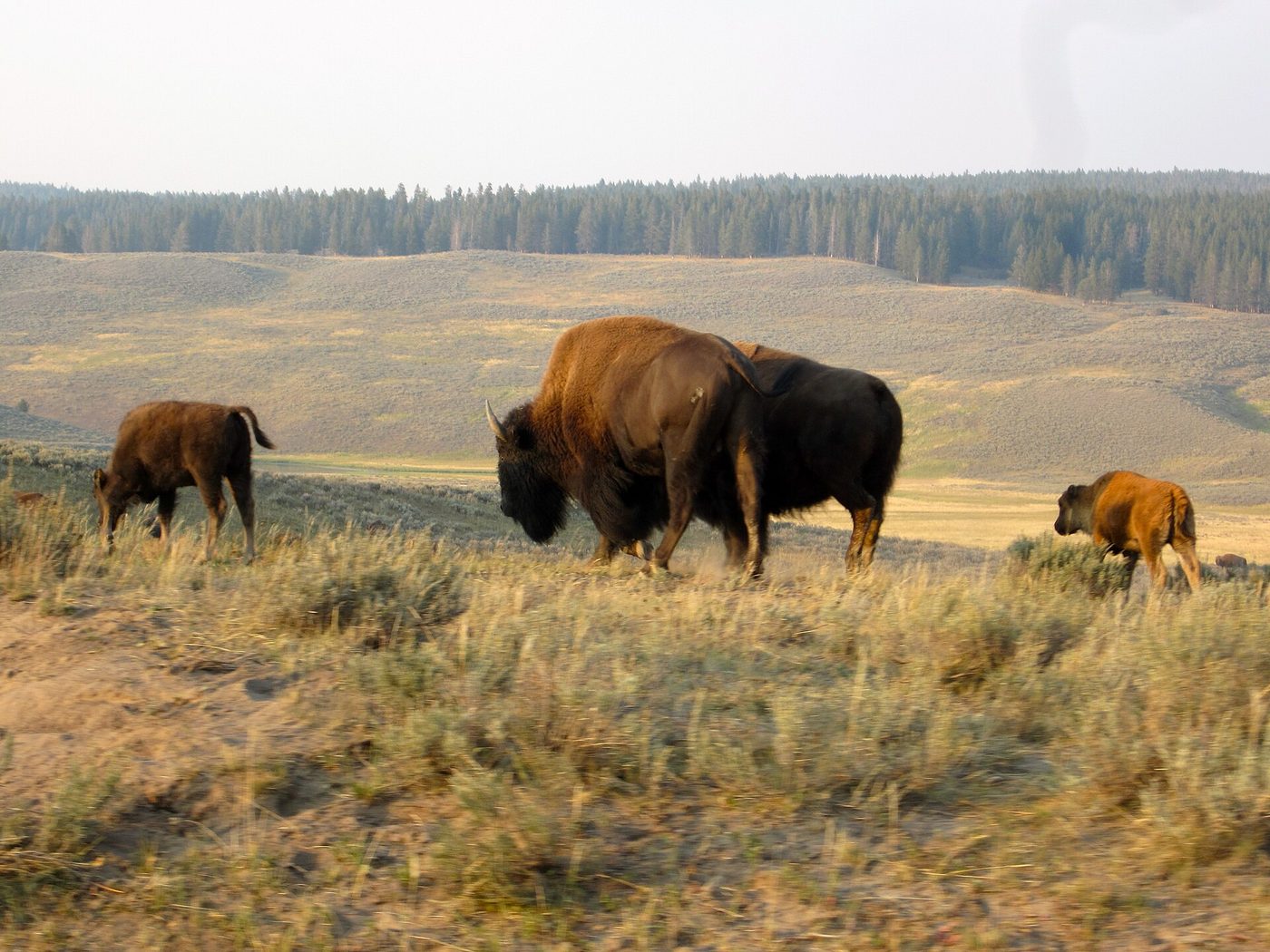
If you can take four days, take four. The fourth day is the best-value day of any Yellowstone trip, because it converts a tour into a visit.
What the fourth day buys:
- A proper dawn in Lamar Valley. Not a drive-through — a pre-sunrise arrival at a pullout, engine off, two or three hours of watching. This is where wolves, bears and the real density of animals are. Our Lamar Valley guide covers the pullouts.
- A real hike. Mount Washburn, Fairy Falls to the Grand Prismatic overlook, Storm Point, Bunsen Peak or the Lamar River trail. Yellowstone from a trail is a completely different park from Yellowstone from a boardwalk.
- Weather slack. Something will go wrong. A fourth day means it does not cost you a highlight.
- A second attempt. At the geyser you missed, the viewpoint that was fogged in, the valley that was empty at noon.
A four-day trip also lets you split your base sensibly: two nights on the west or south side for the geysers and lake, two nights north at Mammoth, Gardiner or Canyon for the wildlife. Moving once is worth the packing.
The difference between three and four days is not 33% more park. It is the difference between seeing Yellowstone and spending time in it. On a three-day trip you will remember the sights. On a four-day trip you will remember a morning.
Five days: the best pace
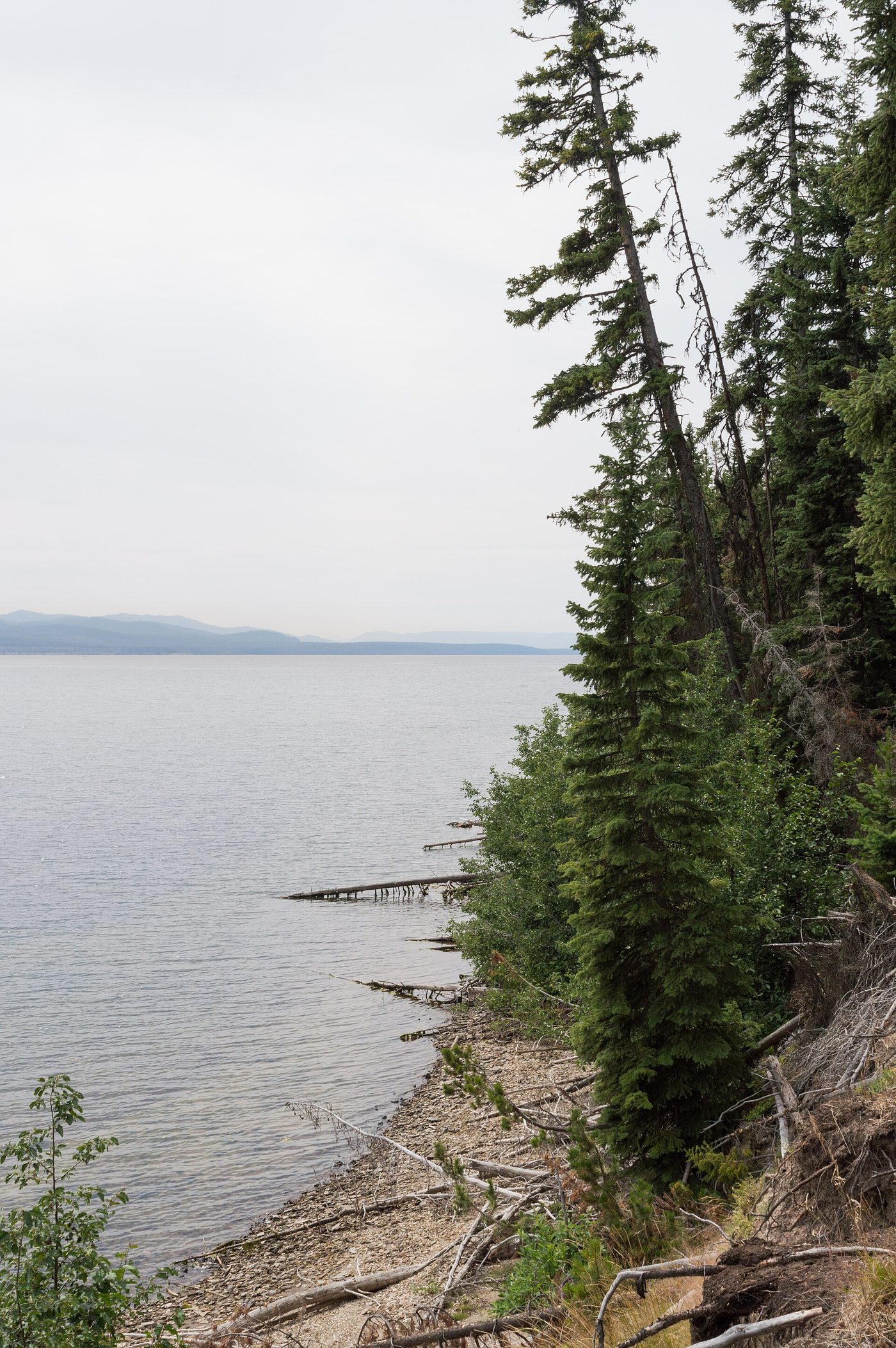
Five days is where a Yellowstone trip stops feeling like a schedule. The itinerary is the four-day one with everything given room, plus one of these:
- A full wildlife day, with both dawn and dusk in Lamar or Hayden and the middle of the day for a nap or a short walk. Our wildlife guide covers what is where.
- A day on the water or the river. Fishing, a paddle on Yellowstone Lake, or a float on the Yellowstone or Madison. Permits and seasons are on our fishing and water page.
- A day in the Bechler corner or the Lamar backcountry, which almost nobody does and which is where the park stops feeling like a national park and starts feeling like wilderness.
- A day in Grand Teton, 56 miles south of the South Entrance and worth every mile. See our Yellowstone and Grand Teton guide.
Five days also removes the need to make the two hardest decisions in Yellowstone planning: whether to skip Lamar, and whether to skip the canyon. With five days you do both properly.
There is a less obvious benefit too. Five days is long enough that the weather changes at least once, which means you see more than one Yellowstone: the basins in sun and the basins in cold steam, the valleys in haze and the valleys after rain. Visitors on short trips get whatever weather they were dealt. Visitors on longer ones get a choice.
Six days or more: when extra days stop paying
There is a point of diminishing returns, and it is worth being honest about where it sits.
Days six and seven are excellent if you have a specific reason: wolf watching, photography, fly fishing, a backcountry trip, hiking beyond the day-hike list, or combining Yellowstone with Grand Teton as a two-park holiday. They are also good for a return visit, when the famous sights are already ticked and you can go looking for the quiet corners.
They are less good if your plan is simply “more Yellowstone”. By day six the geyser basins are familiar, and the thing that keeps rewarding attention is wildlife, which means early mornings and patience rather than more driving. Visitors who book seven days with a tick-list itinerary tend to spend days six and seven on a shopping trip to Bozeman.
Our honest recommendation: five days in Yellowstone plus two in Grand Teton beats seven days in Yellowstone for almost everyone.
There is one exception worth naming. If you are travelling a long way — from Europe, Asia or Australia — and this is likely to be a once-in-a-lifetime trip, the arithmetic changes. The marginal cost of two more nights is small against the flights, and the chance of a wolf sighting, a clear morning at the canyon or a bear on a hillside rises with every extra dawn you are there for. Non-US residents also now pay a $100 nonresident fee per person aged 16 and over on top of the standard entrance fee, which makes a short visit disproportionately expensive per day (checked September 2026). If you have come that far, stay longer.
Altitude, fatigue and why day three feels harder
One factor that rarely appears in itinerary advice: most of Yellowstone sits between 6,000 and 8,000 feet, and the Grand Loop Road crosses passes above 8,200. Visitors arriving from sea level routinely underestimate what that does to them.
The symptoms are mild and cumulative rather than dramatic — poor sleep the first two nights, a headache in the afternoon, less appetite, and legs that find a flat boardwalk harder than they should. It is the reason day three of a packed itinerary often feels worse than day one, and it is the strongest practical argument for building a trip around three stops a day rather than six.
Three things help more than anything else: drink considerably more water than you think you need, keep the first day’s driving and walking modest, and do not plan your longest hike before day three. If anyone in your party has a heart or lung condition, factor in that Mammoth at 6,200 feet is the gentlest base and Canyon at 7,900 feet the least forgiving.
The sun is the other altitude problem. Thin air and, in shoulder season, snow glare burn people who assumed a cool day was a safe one. Sunscreen and sunglasses belong in the day bag in every month of the year.
How long each part of Yellowstone actually takes
The quickest way to size your own trip is to add up the things you care about. These are realistic times including walking, parking and stopping to look, not the minimum possible.
| Area | Minimum | Properly | What eats the time |
|---|---|---|---|
| Upper Geyser Basin and Old Faithful | 1.5 h | 3–4 h | 1.3 miles of boardwalk each way, waiting for predicted eruptions |
| Midway Geyser Basin and Grand Prismatic | 45 min | 1.5 h | Parking, plus the 1.2-mile round trip to the overlook |
| Lower Geyser Basin and Fountain Paint Pot | 30 min | 1 h | Firehole Lake Drive adds 30 minutes |
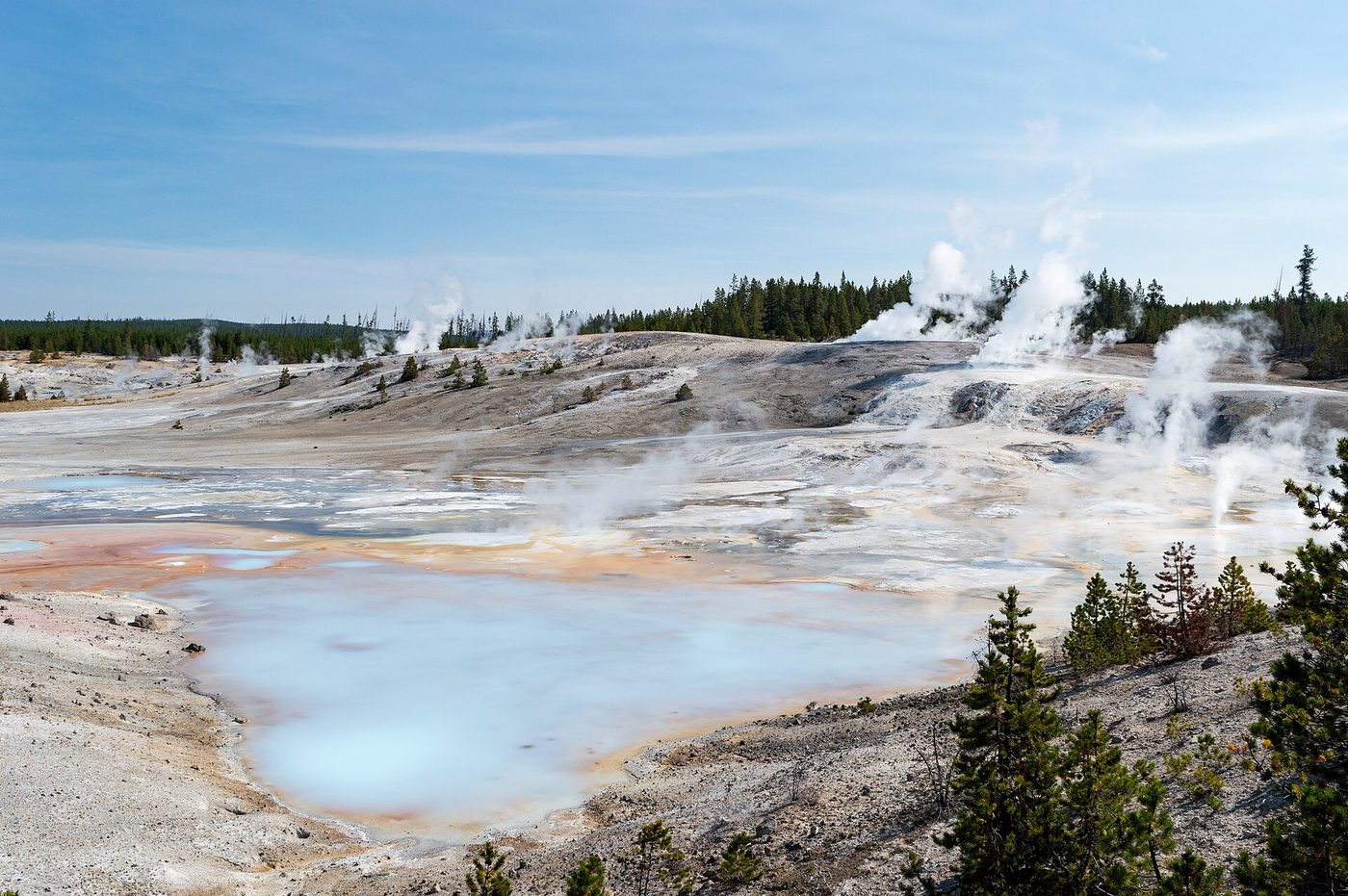
| Norris Geyser Basin | 1 h | 2 h | Two loops; Back Basin is the longer and better one |
| Mammoth Hot Springs terraces | 1 h | 2 h | Upper and Lower terraces, plus the drive between them |
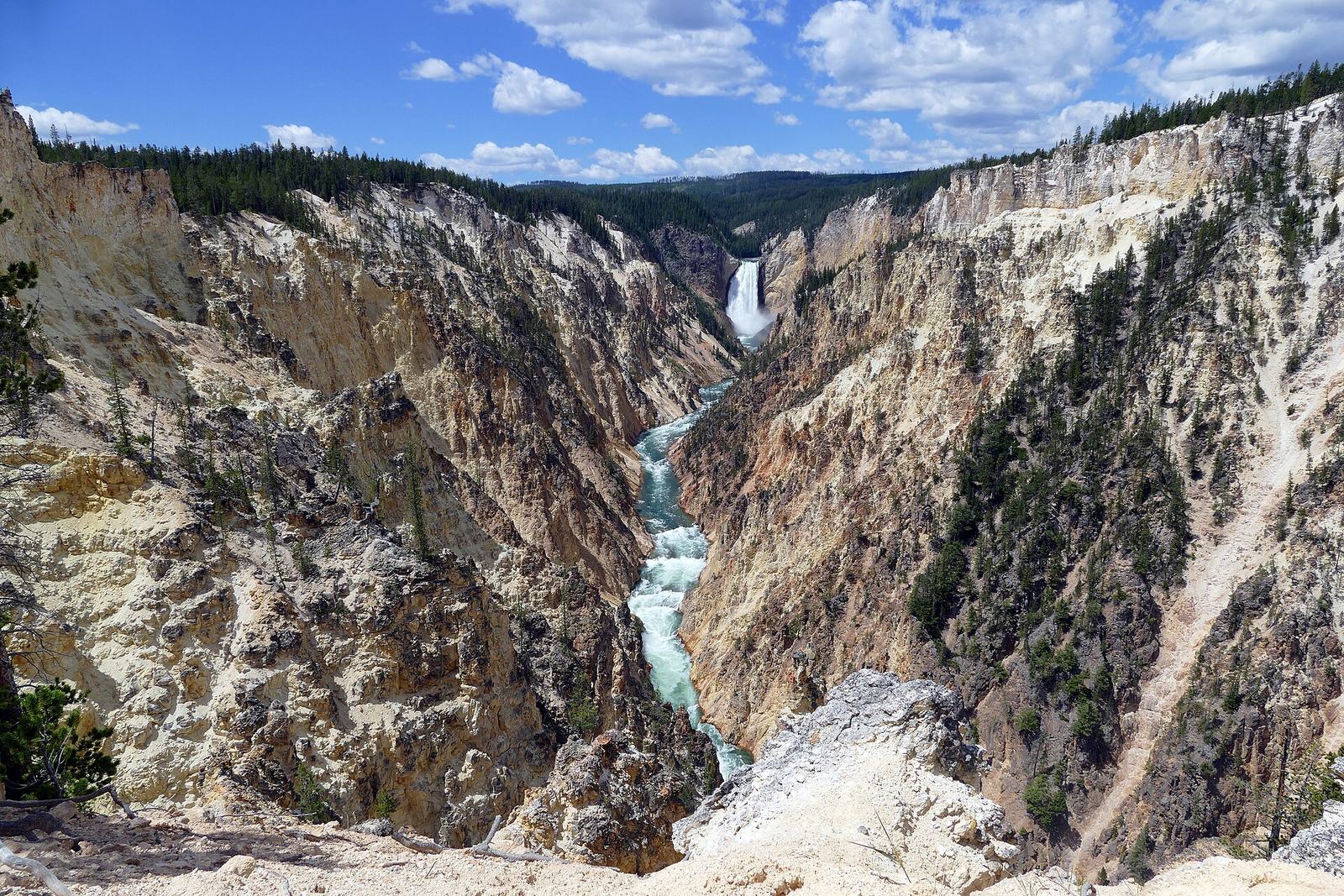
| Grand Canyon of the Yellowstone | 1.5 h | Half a day | Both rims, Artist Point, Brink of the Lower Falls, Uncle Tom’s area |
| Hayden Valley | 30 min driving | 2 h | Wildlife stops; best at dawn and dusk |
| Lamar Valley | 1.5 h driving | Half a day | It only works if you stop and wait |
| Yellowstone Lake and West Thumb | 1 h | 2–3 h | West Thumb boardwalk, lake shore, Fishing Bridge |
| Tower Fall and the Tower area | 30 min | 1.5 h | Short but the drive there is long |
| Mud Volcano and Sulphur Cauldron | 30 min | 45 min | A short loop, often skipped, worth 30 minutes |
Add two or three of those to a day and you have filled it, because you also have to drive between them. The most common planning error is assuming a “quick stop” exists in Yellowstone. The parking alone can be 15 minutes in July.
A second way to sanity-check a plan: count your boardwalk miles. A thorough day in the thermal areas is four to six miles of walking on flat boardwalk, which is more tiring at 7,500 feet than it sounds, particularly with children or anyone who is not acclimatised.
Where to base yourself for each trip length
Where you sleep does more to determine what you see than how many days you book. A well-placed three days beats a badly placed five.
One or two days. Inside the park if you can get a room, otherwise West Yellowstone. Both put you inside the Lower Loop and remove the approach drive entirely.
Three days. Two nights on the geyser side — Old Faithful, Madison or West Yellowstone — and one night at Canyon or Lake so you are close to the canyon and Hayden Valley on your second morning. Moving once costs 45 minutes and saves two hours.
Four days. Two nights south or west, two nights north at Mammoth, Gardiner or Canyon. This is the split that makes a dawn in Lamar Valley possible without a 4 a.m. start.
Five days or more. Three bases, or two bases with one long day. At this length you can afford a night at Cooke City or Silver Gate for the far end of Lamar Valley, which is where the wolf watchers stay.
Any length, with a caveat about booking. In-park rooms release up to 13 months ahead and the good dates go quickly, so if you are reading this less than six months before a summer trip, plan on a gateway town. Our lodging guide covers the seasons and the booking windows, and our camping guide has the campground table if you are bringing a tent or an RV.
One more base decision that catches people out: Cody and Jackson are wonderful towns and poor Yellowstone bases. Each adds roughly two hours of driving per day. If you are staying in either, plan on losing the equivalent of a full day across a three-day visit, and choose a gate-appropriate itinerary rather than fighting the geography. Our entrances comparison sets out what each gate puts you next to.
How many days do you need with kids?
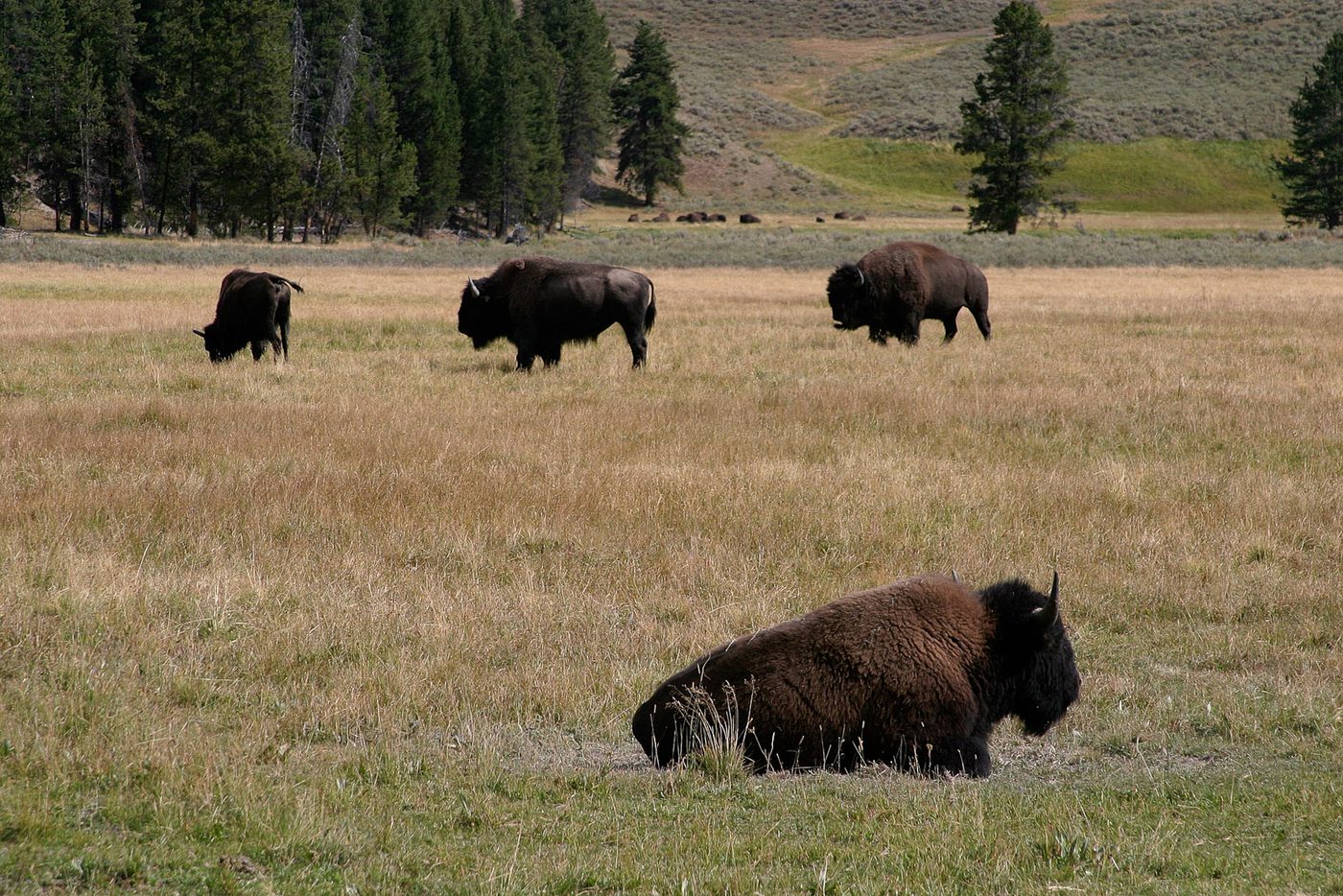
Add a day to whatever you would otherwise plan, and shorten every driving leg. Four days with children under ten covers roughly what three days covers without them, because boardwalks take longer, patience runs out faster, and a 90-minute drive after a full morning is a hard sell.
Two practical adjustments make a family trip work. Stay inside the park or at the nearest gateway town so the driving legs are short, and build each day around one big thing rather than three medium ones — a geyser eruption, a bison herd, a waterfall — with the rest as bonus. Ranger programs and the Junior Ranger booklet carry more of the day than most parents expect.
The things that reliably work with children: Old Faithful, because it performs on a schedule; any bison close to the road; the Mud Volcano area, because it smells terrible and bubbles; Tower Fall; and the Brink of the Lower Falls, which feels genuinely dramatic. The things that reliably do not: long scenic drives without a target, more than two boardwalks in a day, and any plan that depends on everyone being quiet in a car at 6 a.m.
What to skip when you are short of days
Cutting well is the whole skill of a short Yellowstone trip. These are the calls we would make, in order.
Skip first: the far corners. Bechler, the Northeast Entrance road beyond Lamar, the Firehole Lake Drive detour, Virginia Cascade. All good, none essential on a first visit.
Skip second: duplicate thermal areas. If you have done the Upper Geyser Basin and Midway properly, West Thumb and the Fountain Paint Pot are variations on a theme. Keep Norris, which is genuinely different — hotter, more violent and stranger than anything else in the park.
Skip third: one side of the canyon. The South Rim with Artist Point is the iconic view; the North Rim has Lookout Point and the Brink of the Lower Falls. Doing one well beats doing both badly.
Never skip, at any length: the Upper Geyser Basin, the Grand Canyon of the Yellowstone from at least one viewpoint, and one hour parked in a wildlife valley at dawn or dusk. Those three are what the park is.
And do not skip the walking. The most common regret we hear is not from people who missed a viewpoint. It is from people who saw Yellowstone entirely through a windscreen and from boardwalks within 200 yards of a car park. A single two-hour trail — Storm Point, Trout Lake, Wraith Falls, Beaver Ponds — changes the trip out of proportion to the time it costs.
A realistic day, hour by hour
Here is what a well-run day actually looks like, so you can judge whether your own plan is realistic.
- 6:00 a.m. Leave. Coffee in the car. It is cold and nearly empty out there.
- 6:45–9:00 a.m. First stop, the one you care most about. Wildlife valley or thermal basin, in the best light of the day, with parking available.
- 9:00–10:00 a.m. Drive to the second area. Traffic is building but not yet bad.
- 10:00 a.m.–12:30 p.m. Second major stop. Boardwalks, viewpoints, a predicted eruption if you have timed one.
- 12:30–2:00 p.m. Lunch out of a cool box at a pullout, and the day’s longest drive. This is the hour to move, because the light is flat and everywhere is busy.
- 2:00–4:30 p.m. Third stop, or a short hike.
- 4:30–6:00 p.m. Back toward base, with an unplanned stop wherever something is happening.
- 6:00 p.m. onwards Dinner, then out again for the last hour of light if you have anything left.
That is three substantial stops and roughly two hours of driving, and it is a full day. If your plan has five stops and three hours of driving, take something out now rather than at 4 p.m. on the day.
How the season changes the answer
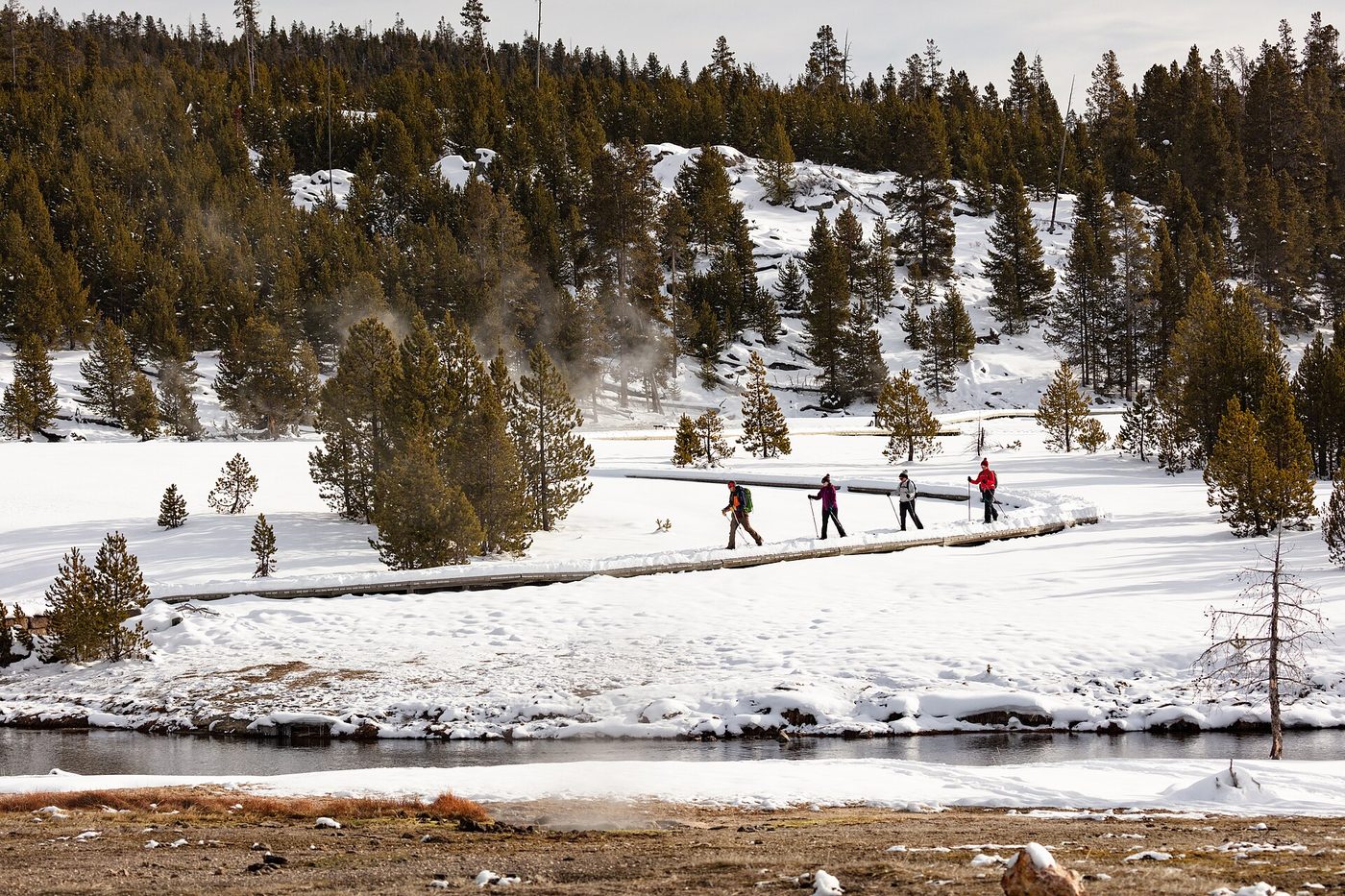
The number of days you need depends on which park you are visiting, because Yellowstone has two very different versions.
Mid-April to October. Everything above applies. All five entrances open at some point in this window, the full loop is drivable, and three to five days covers it.
November to mid-December, and mid-March to mid-April. Only the road from Gardiner through Mammoth and Lamar to Cooke City is open, and oversnow travel has not started or has finished. Two days covers everything accessible. This is a wildlife trip or nothing.
Mid-December to mid-March. The interior is reachable only by snowcoach or snowmobile, which are slow and booked as day trips. Three to four days is right: one or two oversnow days to Old Faithful or the canyon, and one or two on the northern range by car. Our Yellowstone in winter page covers how the access works.
Road opening and closing dates for every segment sit on our road closures page, and our best time to visit Yellowstone hub compares all twelve months.
How many days if you are also doing Grand Teton?
Grand Teton sits 56 miles south of Yellowstone’s South Entrance and deserves two full days of its own. The combined trip that works best is five days in Yellowstone and two in Grand Teton, or four and two if a week is your limit.
The financial argument is worth knowing too. Each park charges its own entrance fee, so a combined trip pays twice — $35 per vehicle at each — unless you buy an America the Beautiful pass at $80 for US residents. For non-US residents the $100 nonresident fee applies per person aged 16 and over at each park, which makes the $250 nonresident America the Beautiful pass the cheaper route for most parties visiting both (checked September 2026). Our entrance fee page does that arithmetic properly.
How to lose days without noticing
Four things quietly eat a Yellowstone itinerary. Knowing them is worth an extra day on its own.
- Arrival and departure days. A flight into Bozeman at 2 p.m. and a 90-minute drive means day one is an evening, not a day. Count full days only.
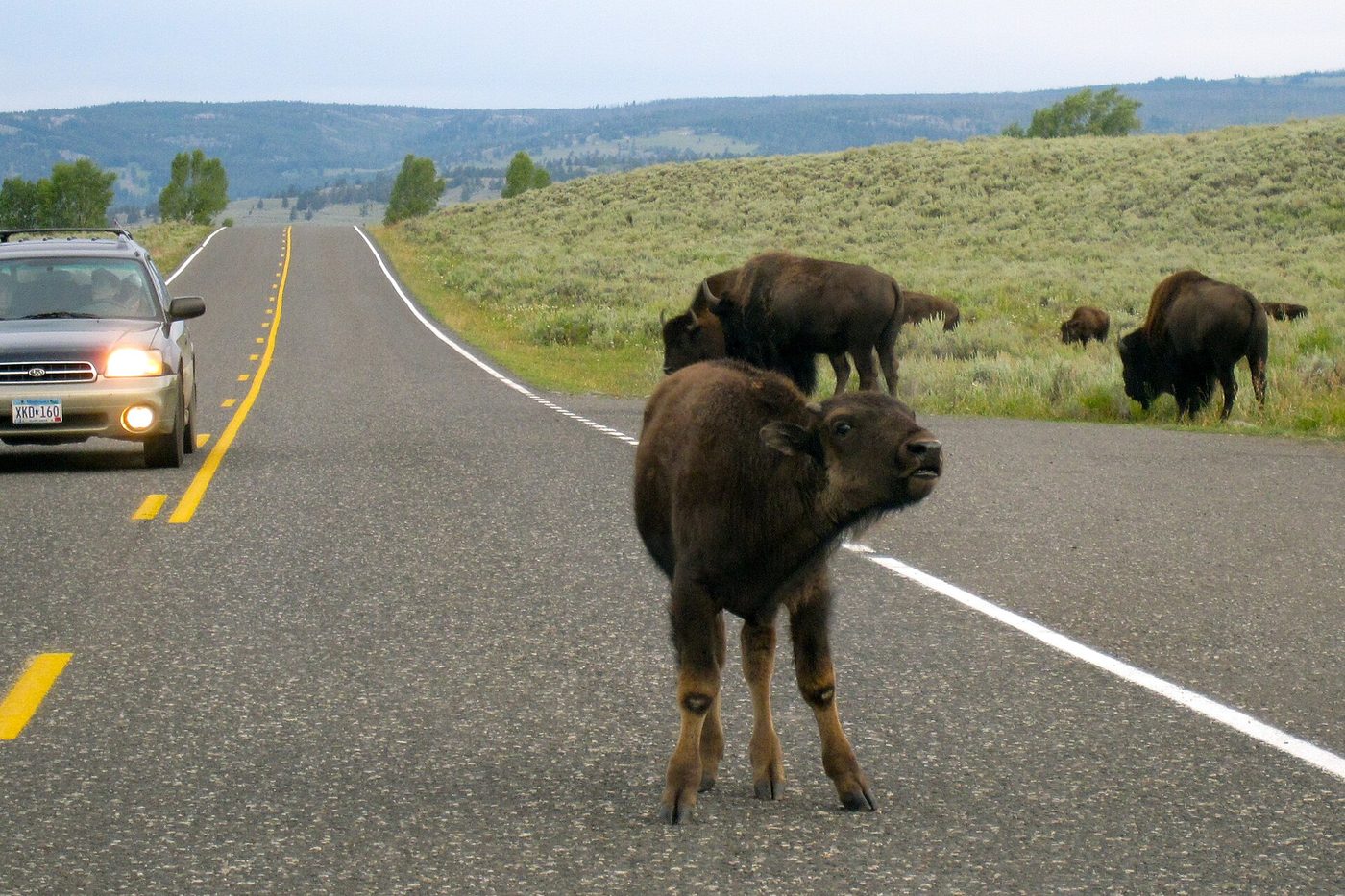
- Bison jams and construction. A herd on the road costs 10 to 30 minutes and cannot be planned around. Several bridge projects ran through the 2026 season with delays of up to 15 minutes, and chip sealing added up to 30 minutes parkwide (checked September 2026).
- Parking. At Midway, Old Faithful and Artist Point in July, finding a space can take 20 minutes. Before 9 a.m. it takes none.
- Distance between hotel and park. Staying in Cody or Jackson adds two to four hours of driving per day. That is a whole day across a three-day trip.
The single most effective fix for all four is the same: start early. A 6:30 a.m. departure gives you the best light, the best wildlife, empty car parks and no queue, and it effectively adds two hours to every day of your trip.
So how many days should you book?
If you are a first-time visitor in summer with no particular specialism: four days, based two nights on the west or south side and two nights north. That sees everything the park is famous for at a pace that leaves room for the things you cannot plan.
If you only have three: three works, and it is a good trip. Do not try to stretch it to cover Lamar at dawn as well as everything else.
If you have five: take them. It is the best-value length in the park, and the fifth day is the one you will remember.
If you have one or two: go anyway, pick one half of the park, and be honest with yourself that you are scouting for a return visit. Our first-time visitor guide covers what to prioritise, and the itinerary hub has the routes for every length from one day up.
Frequently asked questions
Is 3 days enough for Yellowstone?
Yes, for a first visit covering the main sights — the geyser basins, the Grand Canyon of the Yellowstone, Yellowstone Lake and Mammoth. It needs to be three full days rather than a part-day arrival and departure, and it leaves no slack for weather, road closures or a second attempt at wildlife.
Is 2 days enough for Yellowstone?
Two days works if you accept a limit. You can cover the Lower Loop properly — geyser basins on one day, the lake, Hayden Valley and the canyon on the other — but you will not reach Mammoth or Lamar Valley. Stay inside the park or at West Yellowstone to avoid losing hours to approach drives.
Can you see Yellowstone in one day?
You can see one half of it. Choose the geyser basins if you enter from the west or south, or Mammoth, Tower and Lamar if you enter from the north. Attempting both means roughly five hours of driving and very little time out of the car.
How many days do you need for Yellowstone and Grand Teton?
Seven is the comfortable number: five in Yellowstone and two in Grand Teton. Six works at a brisker pace with four and two. Grand Teton is much smaller and more compact, so two days genuinely covers its highlights in a way two days never covers Yellowstone’s.
What is the best number of days for a first visit?
Four. Three days covers the sights; the fourth day adds a dawn in Lamar Valley, a proper hike and enough slack that one bad-weather morning does not cost you a highlight. Four days is also enough to justify splitting your base between the south and north of the park.
How long does it take to drive around Yellowstone?
The full Grand Loop Road is about 142 miles and takes four to seven hours of pure driving depending on traffic and wildlife, with no stops at all. Driving it in one day is possible and pointless; it is designed to be broken into halves.
How many days do you need in Yellowstone in winter?
Three to four. The interior is reachable only by snowcoach or snowmobile, which operate as full-day trips from West Yellowstone, Mammoth or Old Faithful, so plan one or two oversnow days plus one or two days on the northern range by car.
Should I add days or add Grand Teton?
Add Grand Teton. After five days in Yellowstone the returns flatten unless you have a specific interest like wolves or fly fishing. Two days in Grand Teton adds a genuinely different landscape for the same time and, with an America the Beautiful pass, little extra cost.
Scale is the thing that catches people out, and it is worth getting a sense of it before you build an itinerary. Yellowstone covers 2.2 million acres across three states, sits on an active volcanic system and holds roughly half the world’s hydrothermal features. Our collection of Yellowstone National Park facts puts the numbers in one place, and most of them explain why a day here takes longer than you planned.
Sources
- National Park Service — directions and drive times between park junctions, checked September 2026.
- National Park Service — park roads and 2026 seasonal dates, checked September 2026.
- National Park Service — Yellowstone fees and passes, checked September 2026.
- Yellowstone National Park Lodges (Xanterra) — in-park lodging and itineraries, checked September 2026.
- National Park Service — park passes and the nonresident fee, checked September 2026.
Image credits
| Photo | Credit |
|---|---|
| The canyon alone is a half day done properly, which is why three days is the working minim (top of page) | Yellowstone National Park from Yellowstone NP, USA, public domain, via Wikimedia Commons |
| A wildlife jam costs 10 to 30 minutes and cannot be planned around | Jacob W. Frank, public domain, via Wikimedia Commons |
| The geyser basins are the one-day choice if you come in from the west or the south | Neal Herbert, public domain, via Wikimedia Commons |
| Norris is hotter and stranger than the other basins, and it is the one thermal area never | Supercarwaar, CC BY-SA 4.0, via Wikimedia Commons |
| Both rims take a morning | The Dye Clan, CC BY-SA 3.0, via Wikimedia Commons |
| The fourth day is the one that buys a proper morning in a wildlife valley rather than a dr | Beatlesnature, CC BY-SA 3.0, via Wikimedia Commons |
| Yellowstone Lake is the largest high-elevation lake in North America and the easiest thing | Supercarwaar, CC BY-SA 4.0, via Wikimedia Commons |
| With children, build the day around one certainty like this rather than three maybes | Greg Willis from Denver, CO, usa, CC BY-SA 2.0, via Wikimedia Commons |
| In winter the interior is reachable only by snowcoach or snowmobile, which changes the ari | Yellowstone National Park, public domain, via Wikimedia Commons |
| Bison have right of way, and they know it | Kevin R Foote, CC BY-SA 3.0, via Wikimedia Commons |