Choosing the best hotels near Yellowstone is really a question about which of the five entrances you will use most, because the park is 3,472 square miles and the gateway towns are up to 90 minutes apart. Get the entrance right and you will spend an extra hour a day in the park. Get it wrong and you will spend that hour on US-191.
This page works through all five entrances in turn — West Yellowstone, Gardiner, Cooke City, Cody and Jackson, plus the second-tier bases at Island Park, Big Sky, Livingston and Bozeman — with what each town is actually like, which properties are worth booking, what the price bands look like, and where we would not stay. If you are still deciding between a lodge inside the boundary and a hotel outside it, start with the main guide to where to stay in Yellowstone, which lays out that trade-off in full. Prices and dates checked September 2026.
First decide: inside the park or outside?
Inside the park you get early mornings and late evenings on empty boardwalks, no daily commute and nine historic or purpose-built lodges to choose from. You also get no air conditioning, patchy or absent wifi, limited dining, high prices and a booking window that opens thirteen months ahead and closes within hours.
Outside the park you get real hotels with real beds, laundry, restaurants that stay open past nine, groceries, pharmacies, reliable cell service, and typically a lower nightly rate for a better room. You pay for it in driving — anywhere from 30 minutes to two hours each way, every day.
Most well-planned Yellowstone trips use both. Two or three nights inside at Old Faithful, Canyon or Lake, bracketed by nights in a gateway town at each end. That gives you the dawn boardwalks without a week of cold showers and no wifi. Our dedicated comparison of staying inside versus outside Yellowstone works through the maths, and lodging in Yellowstone National Park covers the nine in-park properties in detail.
There is one more argument for outside that rarely gets made, and it is about food. In-park dining is limited, expensive and closes early, and by night four of a family trip the novelty of a cafeteria queue has worn thin. A gateway town gives you a supermarket, a kitchen if you book one, and somewhere to eat at eight o’clock. On a week-long trip that matters more than most people expect when they are booking in February.
And one argument against outside that is often overstated: the entrance stations are not gated at night, and park roads stay open around the clock in season. Staying outside does not lock you out at dusk. It just means the dawn drive starts from further away.
If you are set on outside, read on. The rest of this page is about the towns.
The five entrances, compared
| Entrance | Gateway town | Distance from town | Open season | Best for |
|---|---|---|---|---|
| West | West Yellowstone, MT | At the gate | Mid-Apr to early Nov (wheeled) | Geysers, first-time visitors, families |
| North | Gardiner, MT | At the gate | Year-round | Mammoth, Lamar Valley, winter |
| Northeast | Cooke City / Silver Gate, MT | 4 mi / 0.5 mi | Seasonal beyond Cooke City | Wolves, Lamar Valley, solitude |
| East | Cody, WY | ~50 mi | Early May to early Nov | Lake, canyon, Western history |
| South | Jackson, WY | ~60 mi | Mid-May to early Nov | Combining with Grand Teton |
Distances to the towns are approximate and drawn from the state tourism boards and chambers of commerce, checked September 2026; the season dates come from the National Park Service and move by a week or two each year. Confirm yours against Yellowstone road closures before you book anything non-refundable, because a hotel outside a closed entrance is a very expensive mistake.
One number that matters more than any of the above: inside the park, the National Park Service’s own drive-time table gives 30 minutes from the West Entrance to Madison Junction, another 35 to 45 minutes from Madison to Old Faithful, 45 minutes from Grant Village to Lake Village, 35 minutes from Lake to Canyon, 50 to 60 minutes from Canyon to Tower Junction, and 40 minutes from Tower to Mammoth. Add your commute from outside to whichever of those you are aiming at, and add more for bison.
West Entrance: West Yellowstone, Montana
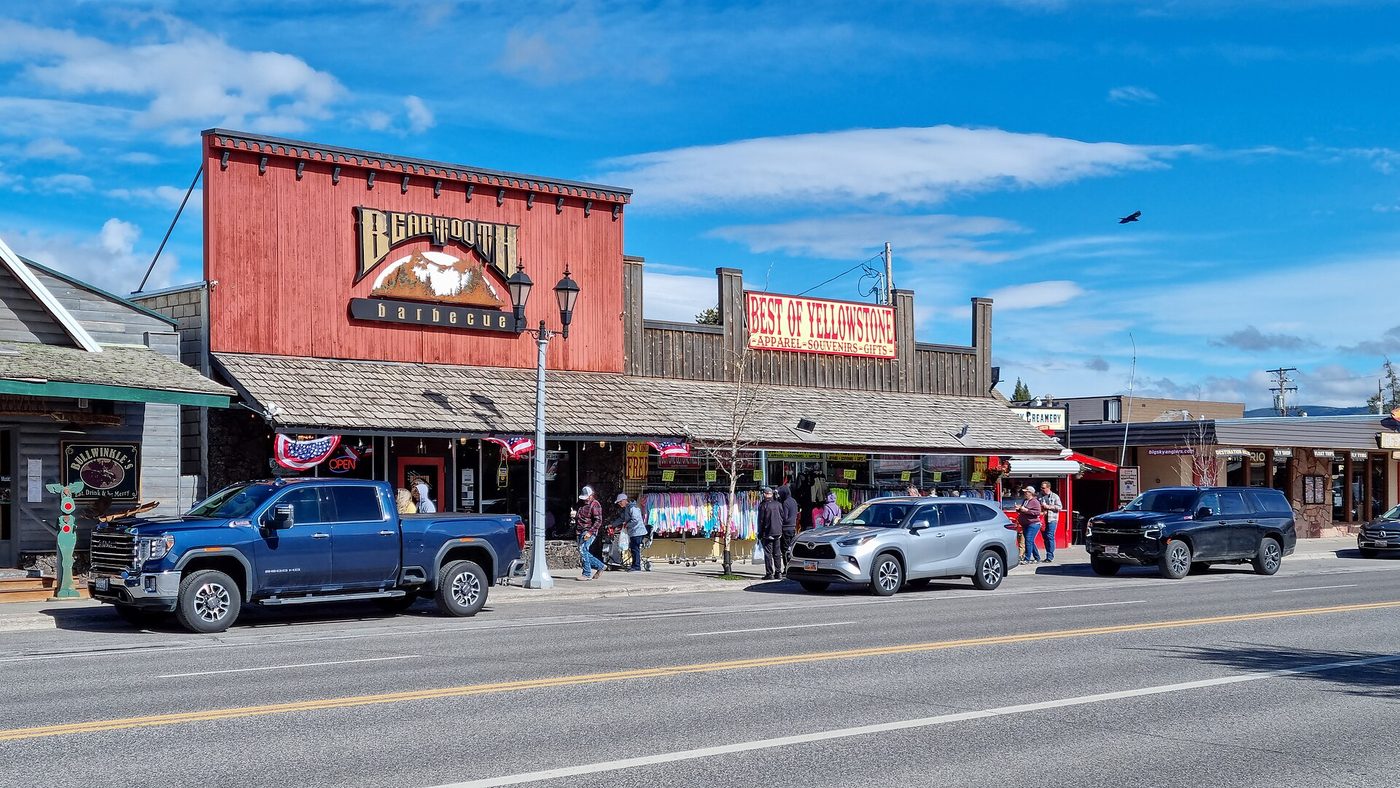
This is the default choice, and for good reason. The town sits literally at the park boundary — you can walk to the entrance station — and it is 30 minutes from Madison Junction, which puts Old Faithful and the whole geyser country inside 75 minutes. Roughly half of all park visitors come through this gate.
West Yellowstone is a small grid of about 1,200 permanent residents that swells enormously in summer. It has around 40 lodging properties, a good spread of restaurants, two grocery stores, an IMAX, the Grizzly & Wolf Discovery Center, and the only seasonal commercial airport actually at a park gate. In winter it becomes the snowmobile capital of the region and stays busy.
Where to stay. The chain hotels along Canyon Street and Yellowstone Avenue are newer and more comfortable than the independents and priced accordingly; properties such as Holiday Inn West Yellowstone, the Kelly Inn and Explorer Cabins sit at the upper-mid end. Three Bear Lodge and the Gray Wolf Inn are long-established mid-range options within a few blocks of the gate. The older motels on the outer streets are noticeably cheaper and perfectly serviceable, and in a town this small, “further out” means a six-minute walk.
What it costs. Peak July and August rates in West Yellowstone commonly run $250 to $400 a night for a mid-range room, and independents in the shoulder months fall to half that. This is not a cheap town in summer and nobody should pretend otherwise; you are paying for the location.
The honest verdict. If this is your first Yellowstone trip and you are seeing the geysers, stay here. It is the most convenient base in the region and the one that needs the least explaining. Its weaknesses are that it is a tourist town with tourist-town food and tourist-town prices, that it is a long way from Lamar Valley — plan on well over two hours to the wolf-watching pullouts — and that the whole town books out for the summer months by spring.
Practicalities that matter here. There are two supermarkets, which sounds trivial until you realise how few of the gateway towns have one; a laundromat; a hardware store; and petrol at prices well below the in-park pumps. The town is flat and walkable end to end in twenty minutes, so you can leave the car parked for an evening. Cell coverage is good in town and disappears within a few miles of the entrance. The seasonal airport at West Yellowstone runs from roughly early May to mid-October, which makes a fly-in, fly-out park trip possible without a long transfer, though fares are high and the schedule is thin.
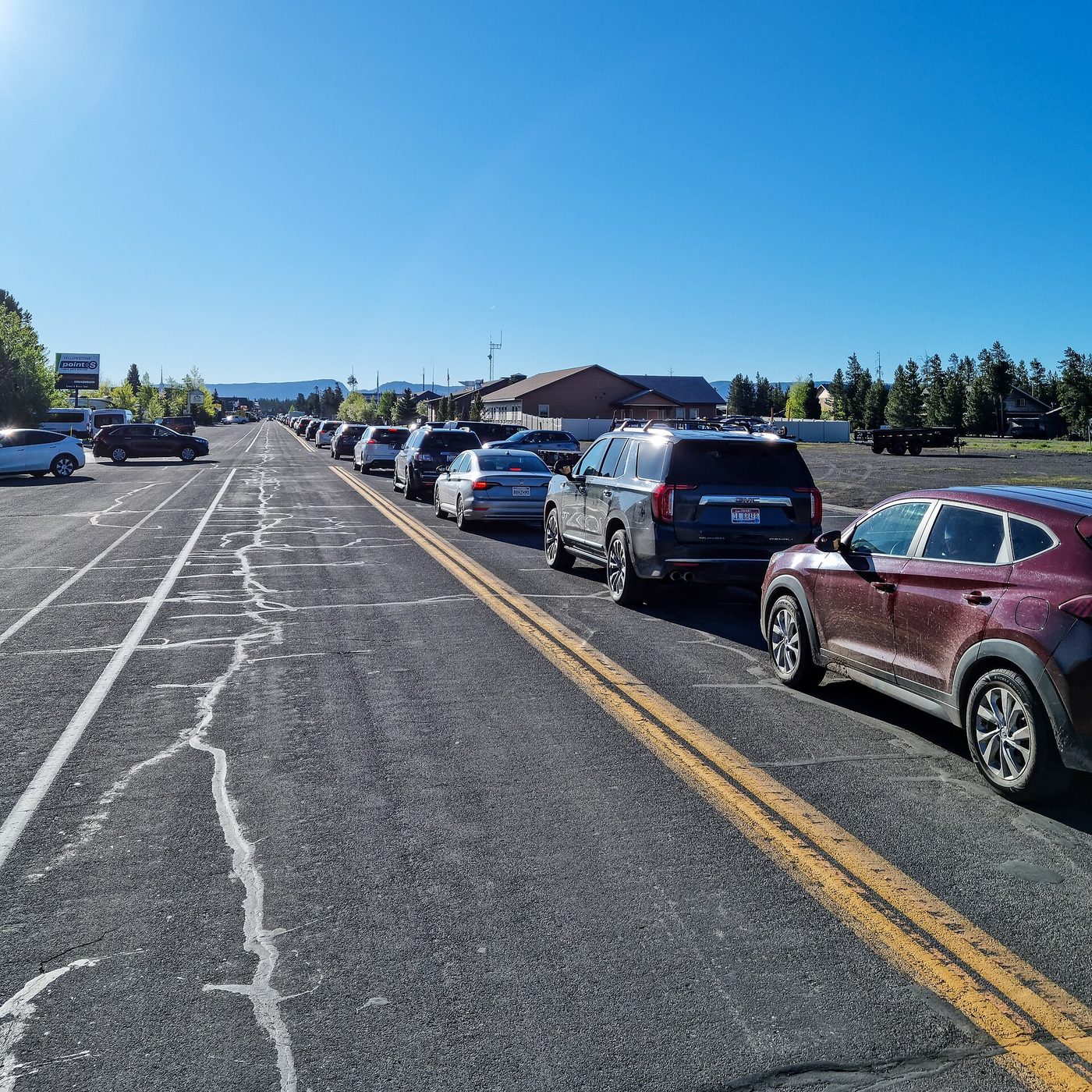
Traffic. The entrance queue on Yellowstone Avenue backs up from about 8:30 a.m. through mid-morning in July and August, and can run twenty minutes or more. Leaving at 7:00 costs you an hour of sleep and buys back most of that, plus the best light and the best wildlife. This is the single most useful thing to know about staying here.
For the full property-by-property comparison, see where to stay in West Yellowstone, and for dinner, West Yellowstone restaurants.
Island Park and Big Sky: the West Entrance alternatives
Island Park, Idaho is a 33-mile strip of cabins, lodges and resorts along US-20, running from about 15 to 45 minutes west of the entrance. It is the place to look when West Yellowstone is full or when you want a cabin with a kitchen rather than a motel room. Properties such as Sawtelle Mountain Resort and the newer chain builds at the eastern end are the usual picks. Claims that Island Park is dramatically cheaper than West Yellowstone come mostly from businesses with an interest in saying so; in our checking the gap is real but modest, and it narrows once you account for driving.
Big Sky, Montana is about an hour north of West Yellowstone on US-191, and is a ski resort town that has grown a serious summer business. It has the best restaurants and the most comfortable hotels of anywhere in this section, plus rafting, a tram and mountain biking. It is also the wrong shape for a Yellowstone trip: an hour to the gate, then 30 minutes to Madison, then another 40 to Old Faithful. Stay in Big Sky if you want a resort holiday with a Yellowstone day trip in it. Do not stay in Big Sky if Yellowstone is the point.
North Entrance: Gardiner, Montana
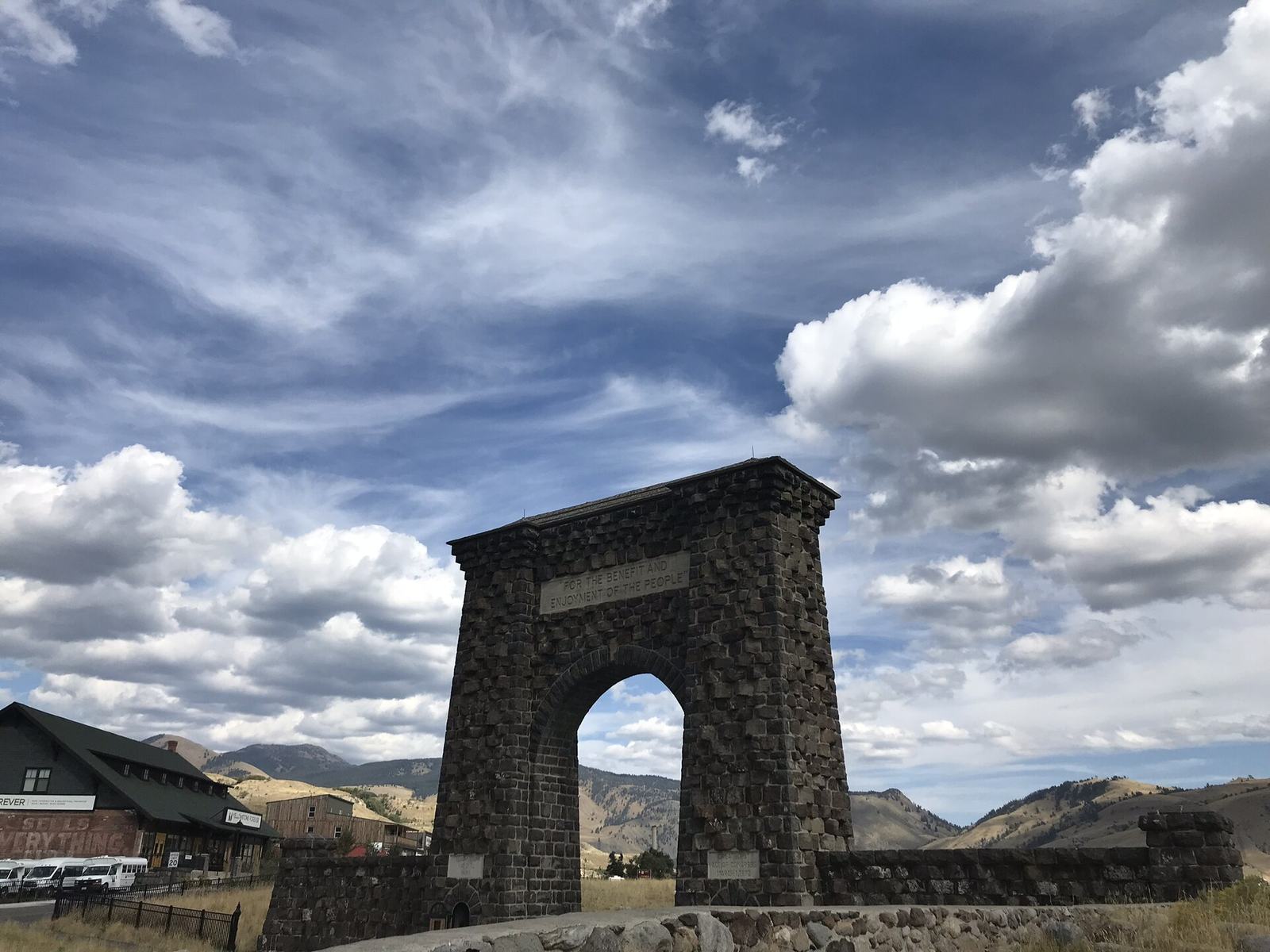
Gardiner is the only entrance open to cars all year, and it is the best base in the region for wildlife. Mammoth Hot Springs is five miles inside the gate; Lamar Valley, the single best place in North America to see wolves and one of the best for bears, is about an hour further on. In winter, when the interior roads close, Gardiner and the Mammoth-to-Cooke City road are the only driving you can do in the park.
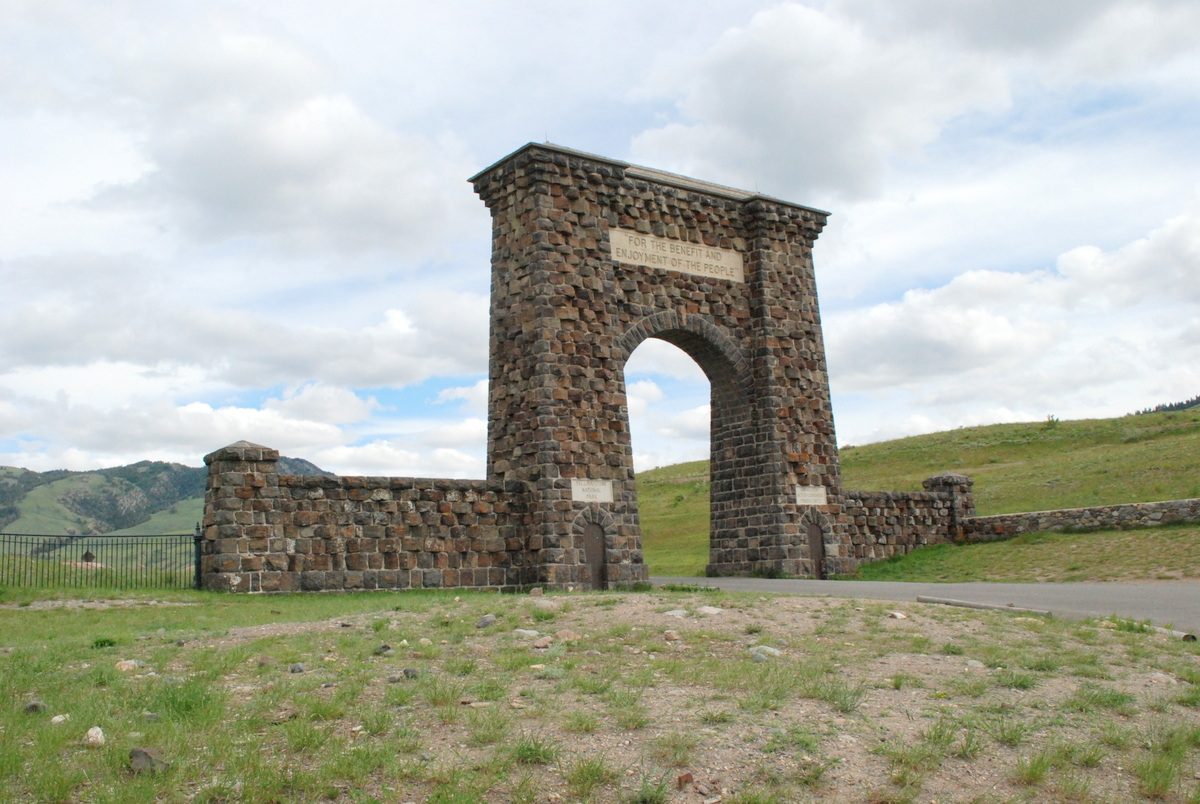
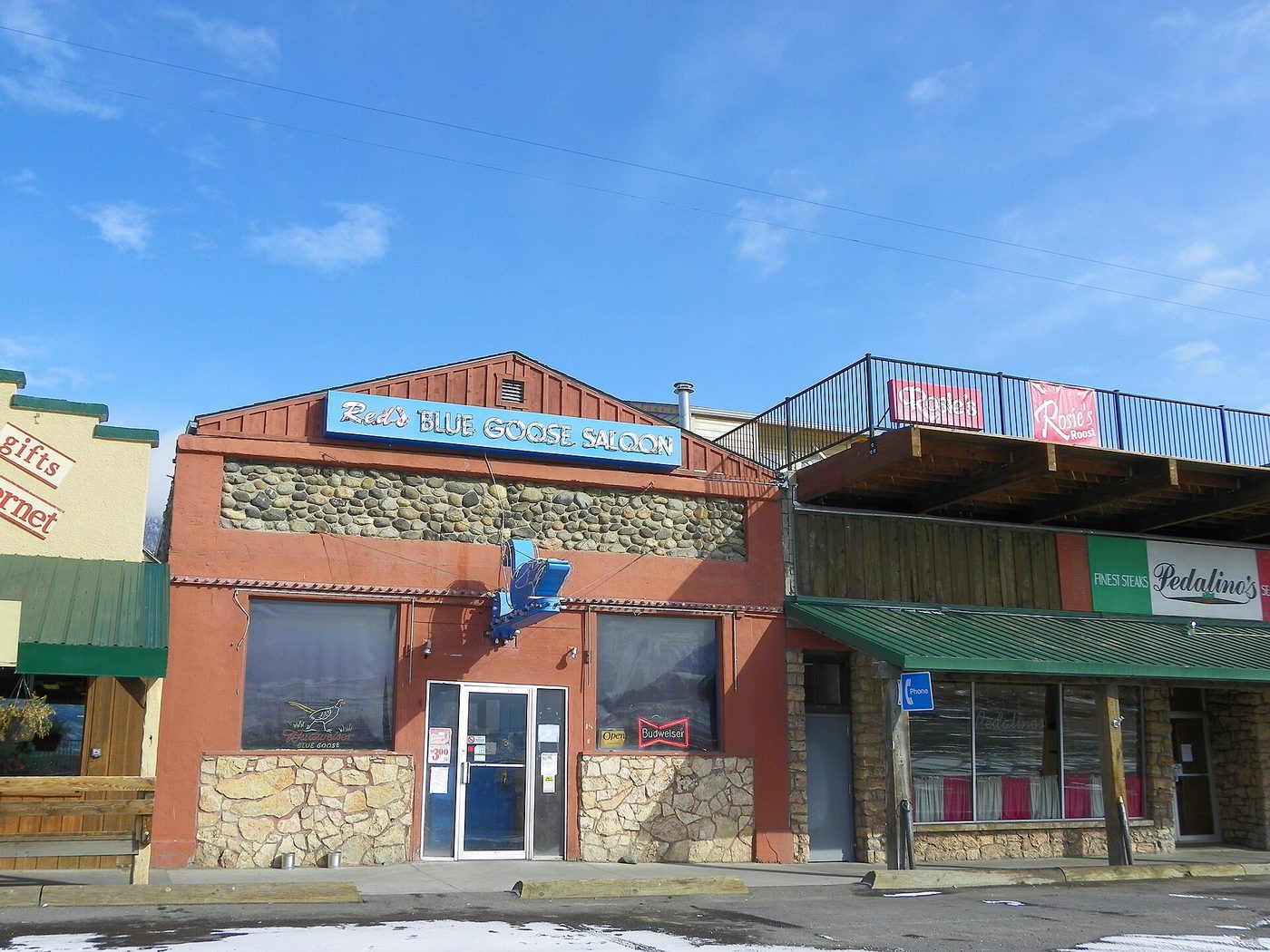
The town is small, scruffy in a likeable way, split by the Yellowstone River, and built around the Roosevelt Arch that Theodore Roosevelt laid the cornerstone for in 1903. It has fewer rooms and fewer restaurants than West Yellowstone, and it feels considerably less like a resort.
Where to stay. The Ridgeline Hotel at Yellowstone, on the bench above town, is the most comfortable full-service option and the one with the pool and the free breakfast. Yellowstone Gateway Inn offers apartment-style units with kitchens that work well for families. A cluster of independent motels sits along Scott Street and Park Street near the arch, at lower rates and with a short walk to the gate.
What it costs. Mid-range rooms in high summer commonly sit in the $180 to $320 band, generally a little below West Yellowstone for equivalent quality. Winter rates fall sharply, and Gardiner in February is one of the best-value trips in American travel.
The honest verdict. Stay in Gardiner if wildlife is your priority, if you are visiting in winter, or if you want the northern loop — Mammoth, Tower, Lamar — rather than the geysers. Do not stay here if Old Faithful is your main target: it is a two-hour drive each way, and you will resent it by day three.
One 2026 caveat. Road work on the Gardner River High Bridge on the North Entrance road runs to late October 2026, with single-lane operation, delays of up to 15 minutes around the clock, and a prohibition on vehicles 8 feet 6 inches or wider or 75 feet or longer. If you are towing anything substantial, factor that in.
Practicalities. Gardiner has a small supermarket, a few good coffee places, several outfitters running rafting and wildlife tours, and a walkable centre split by the river. It has fewer restaurants than West Yellowstone and they close earlier, so a 9:00 p.m. arrival after a long day in Lamar may mean a petrol-station sandwich. Cell service is reliable in town. The elk that wander through Mammoth also wander through Gardiner, and they are not tame: the 25-yard rule applies on the pavement outside your hotel exactly as it does at a pullout.
The wildlife advantage, quantified. From Gardiner you can be at the Lamar Valley pullouts before sunrise with an hour of driving. From West Yellowstone the same trip is a 4:00 a.m. start. Over a four-day trip that difference is the whole reason to choose one base over the other, and it is why the wolf-watching community stays here and in Cooke City rather than anywhere else.
Livingston, Paradise Valley and Bozeman
Paradise Valley, the stretch of the Yellowstone River between Gardiner and Livingston, is the most beautiful place to sleep in this entire guide and the one most people never consider. Sage Lodge, roughly 35 minutes from the park, is the upscale anchor, with a spa, two restaurants and views of the Absaroka range. There are guest ranches, fishing lodges and cabin rentals scattered along US-89 the whole way. You are 30 to 50 minutes from the North Entrance, which is a real cost, and the compensation is that you are staying somewhere rather than merely near something.
Livingston is about 50 miles north of the North Entrance, a working Montana town with a genuine main street, good food, an excellent bookshop and hotel rates well below the gateway towns. An hour to the gate is a lot to swallow daily; as a first or last night, it is excellent.
Bozeman is about 85 miles from the North Entrance and has the region’s busiest airport. Almost nobody should base a Yellowstone trip in Bozeman, and almost everybody should spend one night there at the start or end of the trip because that is where the flights are. Treat it as an airport night, not a base.
Northeast Entrance: Cooke City and Silver Gate
Silver Gate sits about half a mile from the Northeast Entrance and Cooke City about four miles, which makes them the closest accommodation to Lamar Valley by a wide margin — roughly 30 minutes to the best wolf-watching pullouts, against two hours from West Yellowstone.
These are tiny places. Cooke City has a few hundred residents in summer and far fewer in winter, a handful of motels and cabin operations, two or three restaurants, one small store and no chain anything. Silver Gate is smaller still. Cell service is poor, wifi is patchy, and the nearest supermarket is a long way off.
Where to stay. Small independent motels and cabin lodges, all of them family-run, most of them booked a long way ahead by returning wildlife watchers. There is no luxury option and there is no bargain option; there is a narrow band of simple, clean, expensive-for-what-it-is rooms.
The seasonal trap. The Northeast Entrance road from Gardiner through Lamar is open all year, but the two spectacular roads onward from Cooke City — the Beartooth Highway and the Chief Joseph Scenic Byway — are seasonal, typically open from late May to mid-October. Outside that window, Cooke City is a dead end reached only by driving the length of the northern range from Gardiner. That is fine if you planned it and a shock if you did not.
The honest verdict. Stay here if wolves are the reason you are coming, if you are happy being up at 5:00 a.m., and if you do not mind a week without a decent dinner. For everyone else it is too remote and too limited. Book early; the wildlife-watching community fills these beds months out.
What staying here is actually like. You wake at 4:45, drive west into Lamar in the dark, park at a pullout with a dozen other cars and a row of spotting scopes, and wait. Somebody with a radio receiver usually knows roughly where the collared wolves are. By eight the light is flat, the wolves have bedded down, and you go back for breakfast and a nap. Around four you do it again in reverse. It is a specific kind of holiday, and the people who love it come back every year, which is exactly why there are no rooms.
If that is not your trip but you still want the wildlife, base in Gardiner and accept the extra half hour. You will sleep better and eat better and you will still see wolves.
East Entrance: Cody, Wyoming
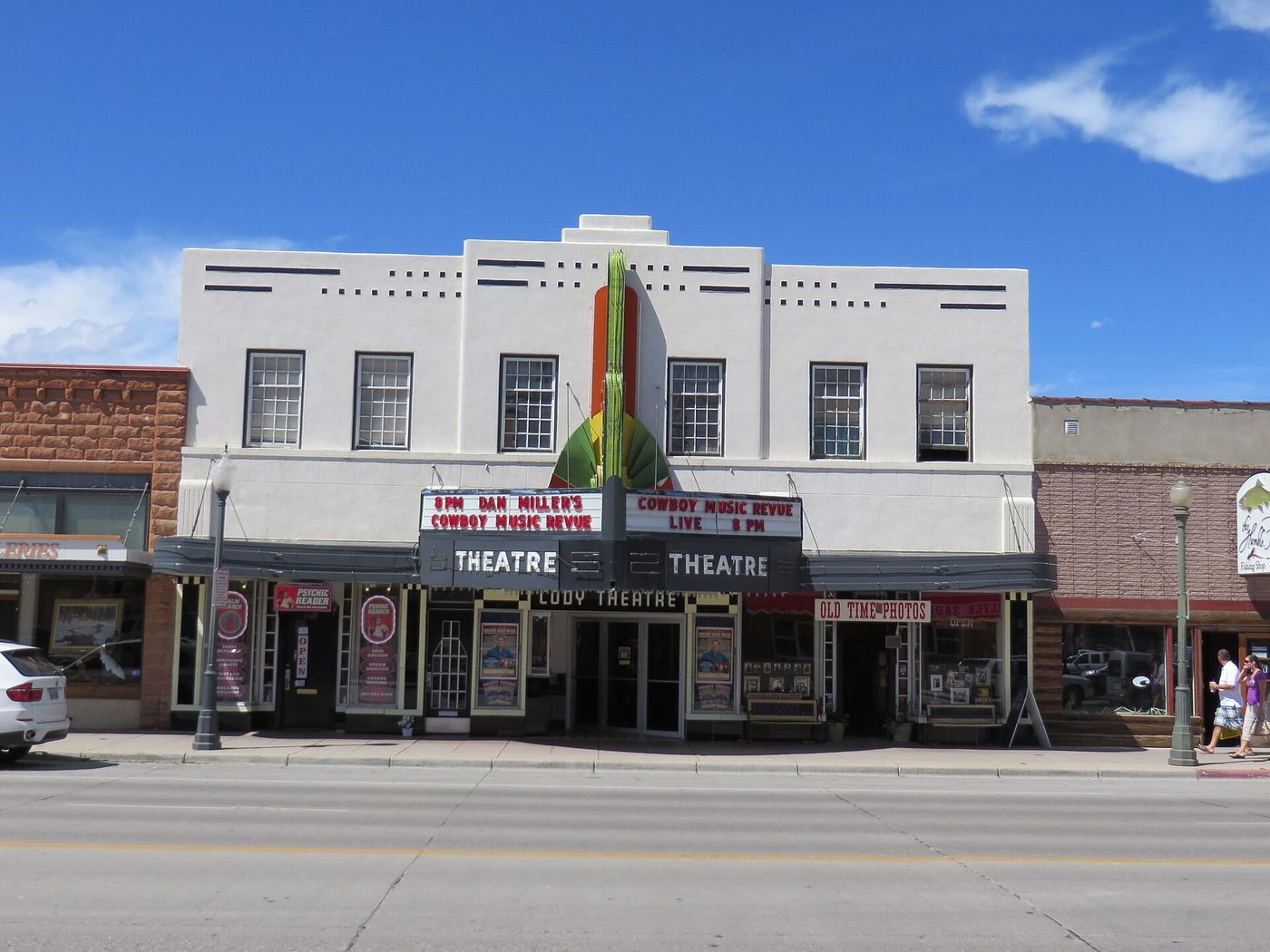
Cody is about 50 miles east of the East Entrance and is by far the most substantial town on this list after Jackson. It was founded by Buffalo Bill, it has the Buffalo Bill Center of the West — which is a serious museum complex and not a tourist trap — a nightly summer rodeo, a real hospital, an airport with year-round service, and a proper range of hotels at every price point.
The drive in is the Buffalo Bill Scenic Byway through the Wapiti Valley, which Roosevelt reportedly called the most scenic 50 miles in America and which is, for once, close to the truth. It takes about an hour to the entrance station and then another hour or so to Fishing Bridge and the lake.
Where to stay. The Cody is a comfortable modern hotel of around 75 rooms on the byway side of town. The Irma Hotel, built by Buffalo Bill in 1902 and named for his daughter, is the historic choice with the famous cherrywood bar; the rooms are dated and that is rather the point. Chamberlin Inn is the boutique option. Chains cluster along Sheridan Avenue and West Yellowstone Avenue.
Staying closer to the gate. The Wapiti Valley between Cody and the entrance has a string of guest lodges — Elephant Head Lodge about 12 miles from the entrance in Shoshone National Forest, Pahaska Tepee at the boundary itself, Yellowstone Valley Inn and others — which cut the morning drive substantially at the cost of being 40 minutes from a supermarket. For a two- or three-night park-focused stay, these are the smarter choice.
What it costs. Cody undercuts West Yellowstone and Jackson noticeably, with good mid-range rooms often in the $150 to $260 band in high summer. It is the best value of the major gateways.
The honest verdict. Cody is an excellent base if your Yellowstone plans centre on the lake, the canyon and Hayden Valley, and a poor one if they centre on the geysers. It is also the only gateway that is genuinely worth a day in its own right. If you have a spare afternoon, spend it at the Buffalo Bill Center rather than driving into the park for two hours.
Practicalities. Cody has a full-size supermarket, a hospital, an airport with year-round service, and a proper choice of restaurants that stay open. Of all the gateways it is the one where you are least aware of being in a tourist town. The rodeo runs nightly through the summer and is a genuine local institution rather than a show put on for visitors.
The trade-off, stated plainly. Two hours to Fishing Bridge each way is a lot, and there is no way around it. Cody works brilliantly for a trip built around Yellowstone Lake, the Grand Canyon of the Yellowstone and Hayden Valley, and badly for a trip built around Old Faithful. The Wapiti Valley lodges close that gap by roughly 45 minutes each way, which over four days is six hours of your holiday.
Our full comparison of the town’s properties is at Cody, WY hotels.
South Entrance: Jackson, Wyoming and Grand Teton
Jackson sits about 60 miles south of the South Entrance, and the drive takes roughly an hour and a quarter to an hour and a half because it runs the length of Grand Teton National Park — which is to say the commute is one of the great drives in the United States and you will stop repeatedly. Add another hour from the entrance to Old Faithful or the lake.
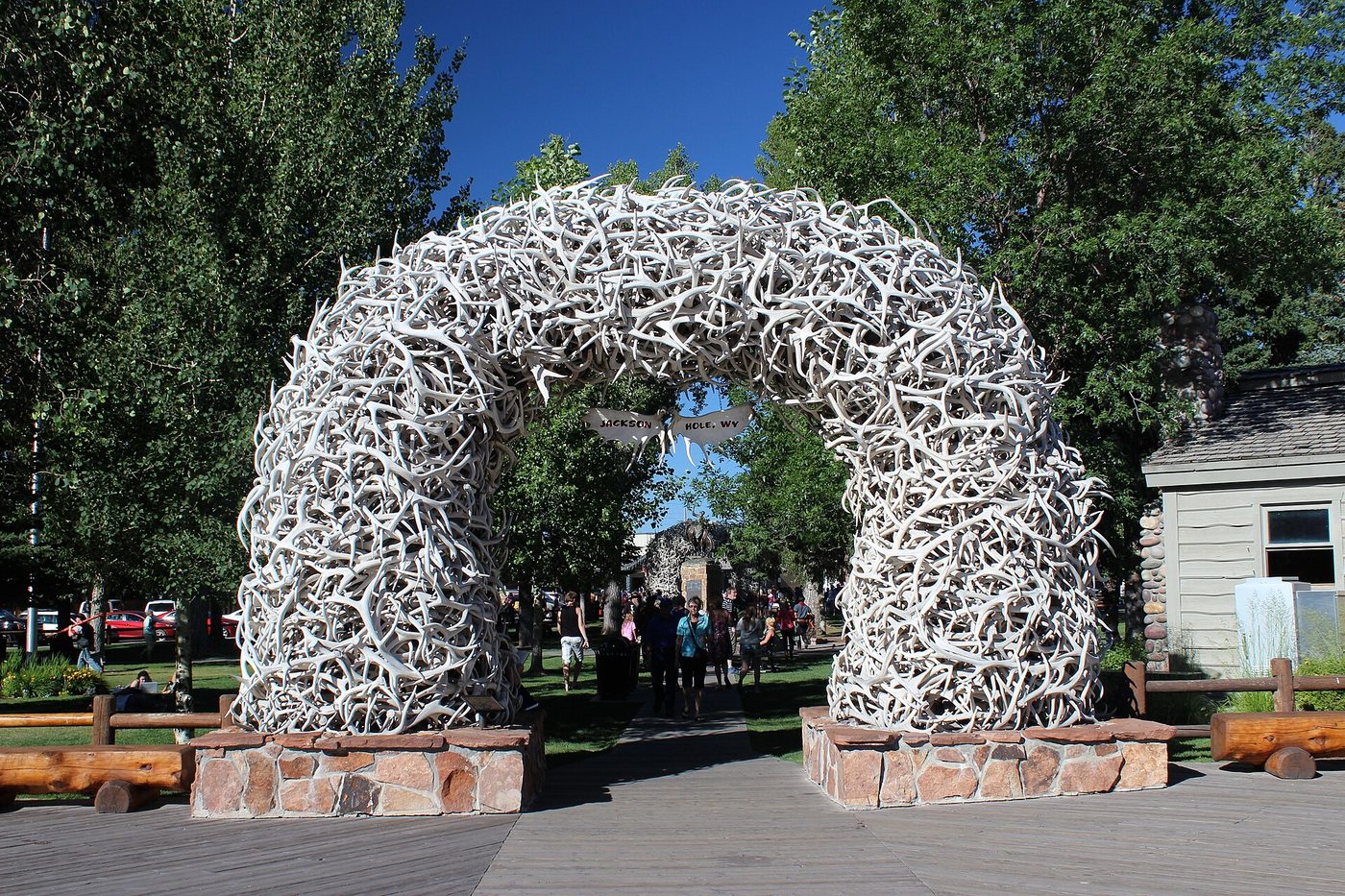
Jackson is a wealthy resort town with the best restaurants, the best hotels and the highest prices in the region by a distance. The square with its elk-antler arches is a genuine landmark and a genuine tourist crush. There is an airport inside Grand Teton itself, seven miles north of town, which is the most convenient airport for a combined two-park trip.
Where to stay. Every level exists here. Amangani and the Four Seasons at Teton Village are the luxury anchors; Rusty Parrot Lodge, Wyoming Inn of Jackson Hole and Inn on the Creek occupy the upper-middle; a diminishing number of older motels near the square hold the bottom of the market at prices that would be top-of-market elsewhere. Teton Village, 12 miles out at the ski resort, is a separate and often better-value option in summer.
Closer to the park. The lodges inside Grand Teton — Jackson Lake Lodge, Signal Mountain, Colter Bay — sit 20 to 30 minutes from Yellowstone’s South Entrance and cut a solid hour off the daily drive. They book on their own schedule and go early. If your trip is genuinely both parks, these beat Jackson comfortably.
What it costs. Expect $350 to $700 a night in July and August for anything you would describe as nice, and more at the top. Jackson is the most expensive place in this guide and the gap is not small.
The honest verdict. Stay in Jackson if you are doing Grand Teton properly as well as Yellowstone, if you want a good dinner every night, or if you are flying into JAC. Do not stay in Jackson as a Yellowstone base alone — you are two and a half hours from Old Faithful each way, and the money would be far better spent elsewhere.
One more cost. Since 1 January 2026 the $100 nonresident fee applies at Grand Teton as well as Yellowstone, so an international visitor driving the parkway between the two parks passes through two fee-charging parks rather than one. An America the Beautiful pass covers both, and the maths is worth doing if there are several adults in the car.
What do hotels near Yellowstone cost?
There is no single answer, because rates swing by a factor of three between February and July. Here are the bands we would plan around for 2026 and 2027, based on published rates sampled in September 2026. Treat them as ranges to budget against, not quotes.
| Base | Shoulder (May, Oct) | Peak (Jul–Aug) | Winter |
|---|---|---|---|
| West Yellowstone | $130–$230 | $250–$400 | $110–$200 |
| Island Park | $120–$200 | $200–$330 | $100–$180 |
| Gardiner | $110–$200 | $180–$320 | $90–$160 |
| Paradise Valley | $180–$350 | $300–$650 | $150–$300 |
| Cooke City | $130–$200 | $190–$300 | Limited |
| Cody | $110–$180 | $150–$260 | $80–$140 |
| Jackson | $220–$400 | $350–$700+ | $180–$400 |
| Bozeman | $140–$220 | $200–$330 | $120–$220 |
These are for a standard double room, before tax, and they exclude the top of the luxury market in Jackson, Big Sky and Paradise Valley, where the ceiling is considerably higher. Resort fees are rare outside Jackson and Big Sky. Montana has no general sales tax but does levy a lodging tax; Wyoming and Idaho add sales tax plus lodging tax, so budget roughly 8 to 12 per cent on top of the quoted rate depending on the state and county.
Three things move these numbers more than anything else. The first is the date: the week either side of the Fourth of July is the most expensive week of the year everywhere on this list. The second is how far ahead you book, which matters more here than in most destinations because supply is genuinely finite. The third is whether you need two rooms — family suites and cabins with kitchens are disproportionately good value when there are five of you.
Note also that park entrance fees sit on top of all of this: $35 per private vehicle for seven days, and since 1 January 2026 a $100 nonresident fee for each non-US resident aged 16 and over, unless admitted on an annual or America the Beautiful pass. That is a substantial addition for an international family and it catches people out. The full picture is on our Yellowstone entrance fee page.
How far in advance should you book a hotel near Yellowstone?
For July and August, six to nine months, and that is not an exaggeration. West Yellowstone and Gardiner are effectively full by March for peak dates; Cooke City goes earlier because its handful of rooms are taken by returning wildlife watchers; Jackson has more supply but the good value disappears first.
For June and September, three to four months is usually enough. For May and October, a month will generally do, and last-minute deals genuinely exist in those months. For winter in Gardiner, book Christmas and Presidents’ Day weekends ahead and treat everything else as flexible.
One further wrinkle for 2027: five of the park’s campgrounds move from the concessioner to Recreation.gov for the 2027 season, on a roughly six-month booking window, which will push a wave of people who would have camped into gateway-town hotels when they miss out. If you are planning a 2027 summer trip, that argues for booking your outside rooms earlier than the guidance above rather than later.
A tactic worth knowing: gateway-town hotels have far more forgiving cancellation policies than the in-park lodges. Book a refundable outside room early as insurance, keep watching for in-park cancellations, and drop the outside booking if something better opens up. The in-park deposit structure — first night down, refundable 30 or more days out — pushes a steady flow of rooms back into inventory about a month ahead, and people who check daily in that window frequently get in.
Drive times you actually need to plan around
The single biggest planning error is treating the map’s mileage as travel time. Yellowstone’s speed limit is 45 mph, the real average with traffic and wildlife is closer to 30 to 35, and a single bison on the road can add 20 minutes.
Working from the National Park Service’s own drive-time table, from the West Entrance it is 30 minutes to Madison Junction and 35 to 45 more to Old Faithful. Mammoth to Norris is 45 minutes. Canyon to Tower Junction is 50 to 60. Tower to Mammoth is 40. Grant Village to Lake Village is 45 and Lake to Canyon is 35.
Stack your commute on top:
- West Yellowstone to Old Faithful: about 1 hour 15 minutes.
- West Yellowstone to Lamar Valley: well over 2 hours, and realistically a dawn start.
- Gardiner to Lamar Valley: about 1 hour.
- Gardiner to Old Faithful: about 2 hours.
- Cooke City to Lamar Valley: about 30 minutes.
- Cody to Fishing Bridge: about 2 hours.
- Jackson to Old Faithful: about 2 hours 30 minutes.
The practical conclusion is the same every time: pick your base for the part of the park you most want to see, and do not plan to see the whole loop from any one of them in a single day. Our guide to the best area to stay in Yellowstone works through the night-splitting maths for trips of two to seven days.
Which base suits which trip?
First visit, four or five days, geysers and the canyon. West Yellowstone for two or three nights, then Canyon or Gardiner. This is the standard trip and it is standard because it works.
Wildlife trip. Gardiner or Cooke City, every time. Nothing else is close. Plan on dawn and dusk in Lamar and Hayden, and book accordingly.
Yellowstone and Grand Teton together. Jackson, Teton Village or a lodge inside Grand Teton at the south end, then move north and take Canyon, Gardiner or West Yellowstone for the second half. Do not try to do both parks from one base.
Winter. Gardiner, without alternatives worth listing. The North Entrance road is the only one open to cars, and the interior is reached by snowcoach.
Family with young children. West Yellowstone. Pool, groceries, laundry, a place to eat at six o’clock, a park entrance you can walk to, and the shortest driving day of any base.
Budget trip. Cody or Island Park in the shoulder months, or camping. Camping inside the park costs $20 to $45 a night and is covered in full on our camping in Yellowstone page.
Second or third visit. Cooke City, Paradise Valley or the Wapiti Valley. All three are quieter, more interesting places to spend an evening than the main gateways, and all three assume you already know the park.
One night only. If you genuinely have a single night — a road trip passing through, or a long layover in Bozeman — stay in West Yellowstone and spend the day on the geyser basins. It is the only base from which a one-day Yellowstone visit is not mostly driving.
Shoulder season on a budget. Gardiner or Cody in early May or October. Rates roughly halve, the wildlife is more active than in midsummer, and the roads you most want are usually open. The risk is a late or early snowfall closing a pass, which is why the refundable booking matters.
A note on splitting nights. The single most common mistake we see is booking all seven nights in one town. Yellowstone is too big for that, and the driving compounds. Two or three nights per base, moving roughly clockwise or anticlockwise around the loop, turns a week of two-hour commutes into a week of twenty-minute ones. Even if the second base is only an hour from the first, the change pays for itself within a day.
Pets, families and accessibility
Pets. Gateway-town hotels are far more pet-friendly than the in-park lodges, where pets are permitted only in designated cabins at certain properties for a $40 nightly fee. West Yellowstone and Gardiner both have a good supply of pet-friendly motels. Remember that pets are extremely restricted inside the park — no trails, no boardwalks, no backcountry — so a dog on a Yellowstone trip means someone sitting in a car park.
Families. Look for kitchenettes and two-room units rather than bigger beds. Yellowstone days are long, dining rooms are slow and expensive, and being able to make breakfast at 5:45 a.m. before a wildlife drive changes the trip. Island Park cabins and Gardiner’s apartment-style units are the strongest options here.
Accessibility. Newer chain properties in West Yellowstone, Gardiner and Cody have modern accessible rooms and lifts; the older independent motels and the Wapiti Valley lodges frequently do not, and photographs on booking sites are not reliable on this point. Call. Inside the park, accessible rooms exist at every lodge but historic buildings have real constraints.
Altitude. West Yellowstone sits at about 6,700 feet, Gardiner at about 5,300, Cooke City at about 7,600 and most of the park road system between 7,000 and 8,900. Visitors arriving from sea level routinely underestimate this: the first night is often a poor one, and the standard advice — drink more water than feels necessary, go easy on alcohol, and do not plan a hard hike for day one — is worth following. If altitude is a known problem for anyone in your party, Gardiner is the lowest base on this list by a useful margin.
Laundry. West Yellowstone, Gardiner, Cody and Jackson all have public laundromats; Cooke City and the Wapiti Valley effectively do not. On a trip of a week or more, that is worth building into which night goes where.
Our picks
If you want short answers rather than a framework:
- Best overall base: West Yellowstone. Closest to the most-visited half of the park, and the easiest place to organise a trip around.
- Best for wildlife: Gardiner, with Cooke City for people who are serious about it.
- Best value: Cody. The rooms cost less, the town is better, and the drive in is the prettiest of the five.
- Best place to actually stay, as opposed to sleep: Paradise Valley.
- Best for a two-park trip: a lodge inside Grand Teton, or Teton Village.
- Best in winter: Gardiner, which is not much of a contest.
- Where we would not stay: Big Sky and Bozeman as Yellowstone bases, and Jackson unless Grand Teton is genuinely half the trip. All three are good places that are simply too far away, and all three are recommended constantly by guides that have not measured the drive.
A final piece of advice. The best hotel near Yellowstone is usually the one that puts you at a park entrance at 6:30 in the morning without a fight, and that is a question of geography rather than thread count. Work out which corner of the park you care about, book the nearest decent room to it, and spend the money you save on an extra night. The overview of all the options, inside and out, is on our main where to stay in Yellowstone page, and the towns themselves are profiled in Yellowstone gateway towns.
Frequently asked questions
What is the closest town to Yellowstone National Park?
West Yellowstone, Montana, which sits directly at the West Entrance — you can walk from the town’s main street to the entrance station. Silver Gate is about half a mile from the Northeast Entrance and Gardiner is at the North Entrance gate, so all three are effectively on the boundary.
Is it cheaper to stay inside or outside Yellowstone?
Outside, usually, and the gap is largest in the shoulder months. In-park lodges have limited supply and no competition; gateway towns have dozens of properties competing on price. The trade-off is one to two hours of driving a day, which has its own costs in fuel and time.
Which entrance is best for first-time visitors?
The West Entrance. It is 30 minutes from Madison Junction and about 75 minutes from Old Faithful, which puts the geyser basins, Grand Prismatic and the Firehole within an easy day, and West Yellowstone has the most rooms, restaurants and services of any gateway town.
How far is Jackson from Yellowstone?
About 60 miles from the South Entrance, or roughly an hour and a quarter to an hour and a half, because the road runs the length of Grand Teton National Park. Allow another hour from the entrance to Old Faithful or Yellowstone Lake, so plan on two and a half hours to the main sights.
Can you stay near Yellowstone in winter?
Yes, in Gardiner, which is at the only entrance open to cars year-round. West Yellowstone also stays open and busy as a snowmobile base. The park interior is reached only by snowcoach or snowmobile from mid-December to mid-March, so your hotel choice and your park access are linked.
How far in advance should I book?
Six to nine months for July and August, three to four months for June and September, and about a month for May and October. Cooke City and the Wapiti Valley lodges go earlier than their size suggests because they have very few rooms.
Are there luxury hotels near Yellowstone?
Yes, though not inside the park. Amangani and the Four Seasons at Teton Village near Jackson, One&Only Moonlight Basin at Big Sky, and Sage Lodge in Paradise Valley are the genuine high-end options. Nothing inside the boundary is a luxury hotel and nothing ever has been.
Is West Yellowstone or Gardiner better?
West Yellowstone if you want the geysers and more choice of hotels and restaurants; Gardiner if you want wildlife, Mammoth or a winter trip. West Yellowstone is about two hours from Lamar Valley and Gardiner is about two hours from Old Faithful, which is the whole decision in one line.
Sources
- National Park Service: directions and transportation
- National Park Service: Yellowstone operating dates
- National Park Service: Yellowstone park roads
- National Park Service: Yellowstone entrance fees
- Yellowstone National Park Lodges: in-park lodging
Image credits
| Photo | Credit |
|---|---|
| Gardiner’s Roosevelt Arch marks the only park entrance open to cars all year (top of page) | Dudegilley, CC BY-SA 4.0, via Wikimedia Commons |
| West Yellowstone’s grid runs right up to the park boundary | Dietmar Rabich, CC BY-SA 4.0, via Wikimedia Commons |
| Gardiner is smaller and scruffier than West Yellowstone, and far closer to Lamar Valley | Zeist85, public domain, via Wikimedia Commons |
| Theodore Roosevelt laid the cornerstone in 1903 | Jrozwado, CC BY-SA 4.0, via Wikimedia Commons |
| Cody undercuts the Montana gateways on price and is the only one worth a day of its own | Leonard J. DeFrancisci, CC BY-SA 3.0, via Wikimedia Commons |
| The summer queue on Yellowstone Avenue | Dietmar Rabich, CC BY-SA 4.0, via Wikimedia Commons |
| Jackson is the most expensive base on this list and about two and a half hours from Old Fa | Miguel Hermoso Cuesta, CC BY-SA 4.0, via Wikimedia Commons |