Yellowstone with kids works brilliantly, as long as you plan around three things: long drives, thermal areas that are genuinely dangerous for small children, and wildlife that has to be watched from a distance. Give the park four or five days, base yourself in no more than two places, and let the Junior Ranger program do a lot of the work.
Families are one of Yellowstone’s biggest audiences, and the park delivers for them in a way few places do. Kids who won’t look up from a screen at home will stand transfixed while Old Faithful builds, or watch a herd of bison cross a river with their mouths open. Our own experience, and the experience of nearly every family we’ve talked to, is that Yellowstone lands somewhere between “great” and “the best trip we’ve ever taken.”
What makes it hard is the geography. This is a park the size of a small country, with slow roads, no public transport, few playgrounds, one form of water activity kids can’t do (swimming) and a lot of time in the car. A day that looks tidy on a map can turn into six hours of driving with three stops. This guide is about avoiding that.
Below: the honest realities, a realistic number of days, age-by-age advice from babies to teens, the sights and short hikes that work best, the Junior Ranger and Young Scientist programs, safety, where to stay, what to pack and how to survive the driving days. For the wider trip, start with our guide to planning a trip to Yellowstone.
Is Yellowstone good for kids?
Yes, for almost any age. Geysers, bison, waterfalls and the Junior Ranger program give children something extraordinary to look at every day, and most of the park’s highlights are reached on short boardwalks. The catch is driving distance and the need for constant supervision in thermal areas.
The park is best for children who are old enough to walk a mile or two and follow instructions reliably, roughly 4 and up. That doesn’t mean toddlers and babies can’t come, just that the trip looks different: shorter days, more car naps, a carrier instead of a stroller, and a lot of “hold my hand.”
What kids love here, in our experience:
- Geysers erupting. Old Faithful is the headline, but smaller geysers going off unexpectedly are often the bigger hit.
- Bison in the road. The single most reliable thrill in the park.
- Mud pots. Loud, smelly and rude-sounding. Kids adore Fountain Paint Pot and Mud Volcano.
- The colors. Grand Prismatic Spring looks like something out of a cartoon.
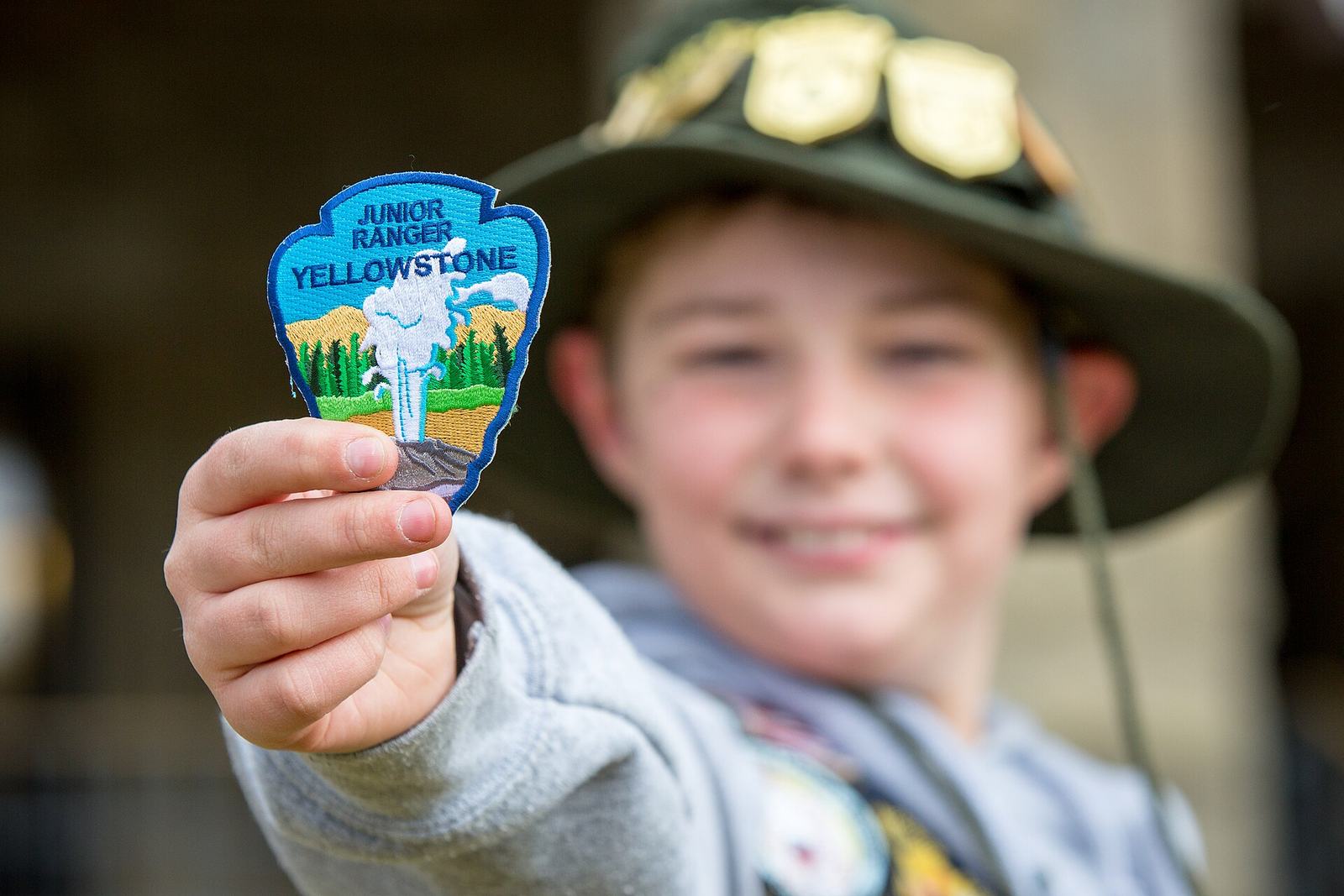
- Junior Ranger badges. A wooden arrowhead badge that kids genuinely work for.
- Waterfalls. The Lower Falls at Artist Point is a jaw-dropper.
What kids don’t love: three-hour drives, waiting for a wolf that never appears, and boardwalks in the rain.
The realities to plan around
Read this before you build an itinerary. It’s the part most family guides skip.
| Reality | What it means for your plan |
|---|---|
| The park is huge | The Grand Loop is about 142 miles of slow road; realistic average speed is 25 to 35 mph |
| There’s no public transport | You’ll drive everywhere, or book tours |
| Thermal areas are lethal | Boiling water, thin crust, often no railings; children must be held or closely supervised at all times |
| Wildlife rules are strict | 100 yards from bears and wolves, 25 yards from everything else, no exceptions |
| No swimming | Lakes and rivers are dangerously cold; there’s no pool at most park lodges |
| Elevation | Most of the park is above 6,000 feet, so kids tire faster and dehydrate more quickly |
| Limited cell service | Download offline maps, music and audiobooks in advance |
| Weather swings | Snow is possible in any month; mornings are often in the 30s or 40s°F even in July |
| Food is basic and busy | Lunch lines at peak hours are long; packing lunches saves a lot of pain |
| Early mornings win | Wildlife is active, parking is easy, and crowds are thin before 9 a.m. |
None of these are deal-breakers. They just mean a Yellowstone family trip needs more structure than a beach holiday.
How many days do you need in Yellowstone with kids?
Four or five days is the sweet spot for families. Three is doable if you stay inside the park and accept you’ll skip a region. Two days with children means a lot of driving for a handful of sights. Adding Grand Teton pushes you to seven or eight.
A workable shape for five days, staying in two places:
- Day 1: Arrive, West or Old Faithful area. Upper Geyser Basin, Old Faithful, an easy boardwalk, early dinner.
- Day 2: Geyser country. Grand Prismatic, Fountain Paint Pot, Firehole Canyon Drive, Norris. Half day, so there’s time to rest.
- Day 3: Move to Canyon or Lake. Grand Canyon of the Yellowstone, Artist Point, Hayden Valley wildlife in the evening.
- Day 4: Lake or Lamar. Storm Point walk, Fishing Bridge, or a long day north for Lamar Valley and Tower Fall.
- Day 5: Mammoth and out. The terraces, Fort Yellowstone, elk on the lawns, and the drive to Bozeman or back to West Yellowstone.
The key principle: no more than two “big drive” days in a row, and a slow afternoon after every early morning. Our detailed Yellowstone itinerary with kids has day-by-day plans with drive times, nap-friendly legs and restroom stops, and the general Yellowstone itinerary hub has options for other trip lengths.
What a good family day actually looks like
Here’s a real-shaped day, the kind that works, based on a family with children aged 4 and 8 staying at Canyon.
- 6:45 a.m. Wake, dress in layers, eat something quick in the room or from the cooler. Nobody enjoys this part.
- 7:15 a.m. Drive south into Hayden Valley. Bison are everywhere, mist is on the river, and there are maybe six other cars. This is the hour that makes the early start worth it.
- 8:30 a.m. Continue to Mud Volcano for the 30-minute loop. Kids get to be disgusted by the smell, which they will talk about for years.
- 9:30 a.m. Drive back to Canyon, stop at Artist Point before the lot fills. Twenty minutes of looking at the Lower Falls, ten minutes of photographs, five minutes of somebody needing the bathroom.
- 11:00 a.m. Canyon Visitor Education Center: Junior Ranger activities, exhibits, and a ranger to sign the booklet.
- 12:00 p.m. Picnic lunch at a picnic area, with running-around time.
- 1:00 p.m. Back to the room. Naps, cards, reading, a shower. Do not skip this.
- 4:00 p.m. Short walk or an easy trail, or a quiet drive with binoculars.
- 6:00 p.m. Early dinner, then a ranger evening program or a last look for wildlife.
- 8:30 p.m. Bed, because tomorrow starts at 6:45 again.
Two big stops before lunch, a real rest in the middle, and something small in the evening. Families who try to do five stops before lunch and three after usually have a meltdown by day three, and it’s rarely the children who start it.
Five days, region by region
If you want the five-day skeleton filled in, this is the version we’d give a friend with two children, entering from West Yellowstone and leaving from Bozeman.
Day 1, arrival and the Old Faithful area. Enter through the West Entrance in the afternoon, stop at the Madison meadows to look for elk and bison, and drive to Old Faithful. Check the next eruption prediction, watch it from the boardwalk rather than the crowded front row, and walk as much of Geyser Hill as everyone has energy for. Get Junior Ranger booklets at the visitor center before it closes.
Day 2, geyser country. Start at Grand Prismatic before 9 a.m., when the boardwalk is quiet and the steam hasn’t hidden the colors. Add the Fairy Falls trailhead walk to the overlook if children are 5 or older. Then Fountain Paint Pot and Firehole Lake Drive, lunch at a picnic area, and an afternoon off. Late in the day, Firehole Canyon Drive is a pretty, short loop.
Day 3, north to Canyon. Drive via Norris Geyser Basin, which is the strangest thermal area in the park and a good one for children old enough to walk the Porcelain Basin loop. Continue to Canyon, see Artist Point and one North Rim viewpoint, and finish in Hayden Valley in the evening light.
Day 4, the lake or the northeast. Either go south to Yellowstone Lake for Storm Point, Fishing Bridge and a boat cruise from Bridge Bay, or make the long run northeast to Lamar Valley for wildlife, Tower Fall and the Petrified Tree. Don’t try to do both.
Day 5, Mammoth and out. Drive north over Dunraven Pass if it’s open, or via Norris if it isn’t. Walk the Mammoth terraces, look for elk in the village, hand in the Junior Ranger booklets at Albright Visitor Center, and drive out through Gardiner.
Swap the direction if you’re arriving from Jackson and Grand Teton in the south: do the lake and Old Faithful first, then Canyon, then Mammoth and Lamar.
Where families most often go wrong
- Basing outside the park to save money. A cheaper room in Bozeman or Jackson can add three hours of driving a day, which costs more in misery than it saves in dollars.
- Booking too late. In-park lodging is released 13 months ahead and the best family cabins go quickly.
- Planning by map distance. Fifty miles in Yellowstone is not an hour. Use real drive times.
- Doing the whole loop in a day. It’s possible and it’s awful.
- Skipping the rest hour. The afternoon break is what makes the early mornings sustainable.
- Relying on restaurant meals. Lines at 12:30 p.m. with hungry children are the fastest route to a bad afternoon.
- Forgetting layers. Cold, wet children end days early.
The best time to visit Yellowstone with children
Late June and the first two weeks of September are the two best windows for families. Late June brings warm days, everything open, baby bison and long daylight. Early September brings thinner crowds, the elk rut, cooler hiking and easier lodging, though some services start closing mid-month.
Other seasons, honestly:
- July and August are the busiest. Everything is open and the weather is at its best, but parking lots fill by 9 or 10 a.m. and lodging books out a year ahead. Manageable if you start early every day.
- May is lovely for wildlife (bison calves, bears) but cold, with some roads and services still closed.
- Late September and October are quiet and beautiful, with the risk of snow and early closures.
- Winter is a genuinely magical family trip for the right family, and a logistical challenge for everyone else. See the winter section below.
Whichever month you choose, book lodging as early as you can, since in-park rooms open 13 months ahead. Full month-by-month detail is in our guide to the best time to visit Yellowstone.
Yellowstone age by age
The single biggest factor in how your trip feels is the age of the youngest child.
Babies (under 2)
Yellowstone with a baby is mostly fine, because babies travel well in cars and sleep through drives. Bring a carrier rather than relying on a stroller, since many of the best short walks are unpaved or have stairs. Nursing and diaper changes happen in the car or at visitor centers, most of which have decent restrooms. Watch for sun and dry air at altitude, and remember the elevation means quicker dehydration.
The honest caveat: you’ll be doing this trip for you, not for them, which is fine. Our guide to Yellowstone with a baby covers gear, feeding, altitude and where to escape when things go wrong.
Toddlers (2 to 4)
The hardest age, and still very doable. Toddlers love bison and mud pots and hate car seats. Key tactics: rent or bring a carrier, plan two stops per morning rather than five, treat boardwalks as hold-hands-always zones, and use the picnic areas, which are everywhere and let kids run in a safe spot.
Thermal areas deserve extra attention at this age. Many boardwalks have no railings, and toddlers move fast. If you’re solo-parenting two small children, consider a carrier for one and a hand for the other, every time. Our Yellowstone with toddlers guide has the full playbook.
Young children (5 to 8)
This is the golden age for Yellowstone. Kids can walk a mile or two, they’re old enough for Junior Ranger, and they find everything amazing. Build the trip around short walks, the geyser basins, wildlife watching and one or two “big” experiences like a boat cruise or a horseback ride.
Older children (9 to 12)
Add distance and depth. Kids this age can handle 3- to 5-mile hikes, get a lot out of the Young Scientist program, and often become the family’s wildlife spotter with a pair of binoculars. Consider letting them plan a day.
Teenagers (13+)
Teens do well when they have agency and a challenge: a summit hike like Mount Washburn, a paddle on a lake, a photography project, or the job of navigating and finding wildlife. The park’s remoteness and lack of signal can be a gift or a battle; it helps to be upfront about it before you go. See our guide to Yellowstone with teenagers.
The best things to do in Yellowstone with kids
These are the sights and activities that consistently work for families, with time needed and the ages they suit best.
| Activity | Best ages | Time | Why it works |
|---|---|---|---|
| Old Faithful eruption | All | 1-2 hours with the visitor center | A guaranteed show with a predicted time |
| Upper Geyser Basin boardwalks | 4+ | 1-3 hours | Dozens of geysers; mostly flat, partly paved |
| Grand Prismatic Spring | All | 1 hour | The colors astonish kids |
| Fountain Paint Pot | All | 30-45 min | Mud pots that plop and burp; short loop |
| Mud Volcano and Dragon’s Mouth | 4+ | 30-45 min | Loud, sulfurous and deeply satisfying |
| Artist Point and the Lower Falls | All | 30-60 min | Huge waterfall, short walk from parking |
| Hayden or Lamar Valley wildlife drive | All | 2-4 hours | Bison herds are the surest bet in the park |
| Junior Ranger program | 4+ | Ongoing | Turns the whole trip into a quest |
| Ranger-led walk or evening program | 5+ | 45-90 min | Free, and rangers are excellent with kids |
| Boat cruise from Bridge Bay | 5+ | ~1 hour | A break from the car, out on the lake |
| Horseback ride at Roosevelt or Canyon | 8+ typically | 1-2 hours | Minimum ages apply; book ahead |
| Old West Cookout at Roosevelt | 5+ | 2-3 hours | Wagon or horseback ride to a steak dinner |
| Rafting on the Yellowstone River at Gardiner | Varies by outfitter | Half day | Outside the park; the only real water fun nearby |
| Fishing Bridge and LeHardy Rapids | All | 30 min | Watch trout, pelicans and otters |
| Storm Point or Trout Lake walk | 5+ | 1-2 hours | Short hikes with a payoff |
A few notes from experience. The Old West Cookout at Roosevelt is a genuine family highlight and books out early; in 2026 the wagon ride version was $94.72 for adults and $73.67 for children (checked September 2026), with horseback options costing more. Horseback rides at the Roosevelt corral ran $99.99 for one hour and $157.87 for two (June 6 to September 7, 2026), and trail rides have minimum ages, so confirm when you book. Details on all of these are in our Yellowstone tours hub.
Wildlife watching that works with children
Wildlife is the thing most kids remember, and it’s also the thing most likely to end in disappointment if you set it up wrong. A few ways to tilt the odds:
- Promise bison, not bears. Bison are close to guaranteed; bears and wolves are not. Frame anything beyond bison, elk and pronghorn as a bonus.
- Go at the right hour. Dawn and the last two hours of light are when animals move. Midday drives through the same valley often produce nothing.
- Give every child binoculars. Cheap kids’ binoculars turn a distant brown dot into an event, and they keep children occupied during quiet stretches.
- Keep a list. A simple checklist of species, ticked in the car, becomes a competition that runs all week.
- Teach the distances as a game. The thumb trick works well: hold out a thumb at arm’s length, and if the animal isn’t hidden behind it, you’re too close.
- Use the pullouts properly. Pull fully off the road, keep children on the side away from traffic, and don’t let anyone out until you’ve stopped and looked.
- Explain what a wildlife jam is before you’re in one, so a 30-minute wait behind a bison herd is exciting rather than boring.
The best family wildlife areas are Hayden Valley, close to Canyon, and Lamar Valley in the northeast, which is the better bet for predators but a long drive. Our Yellowstone wildlife hub has what to look for by season.
Junior Ranger and Young Scientist: the two programs to use
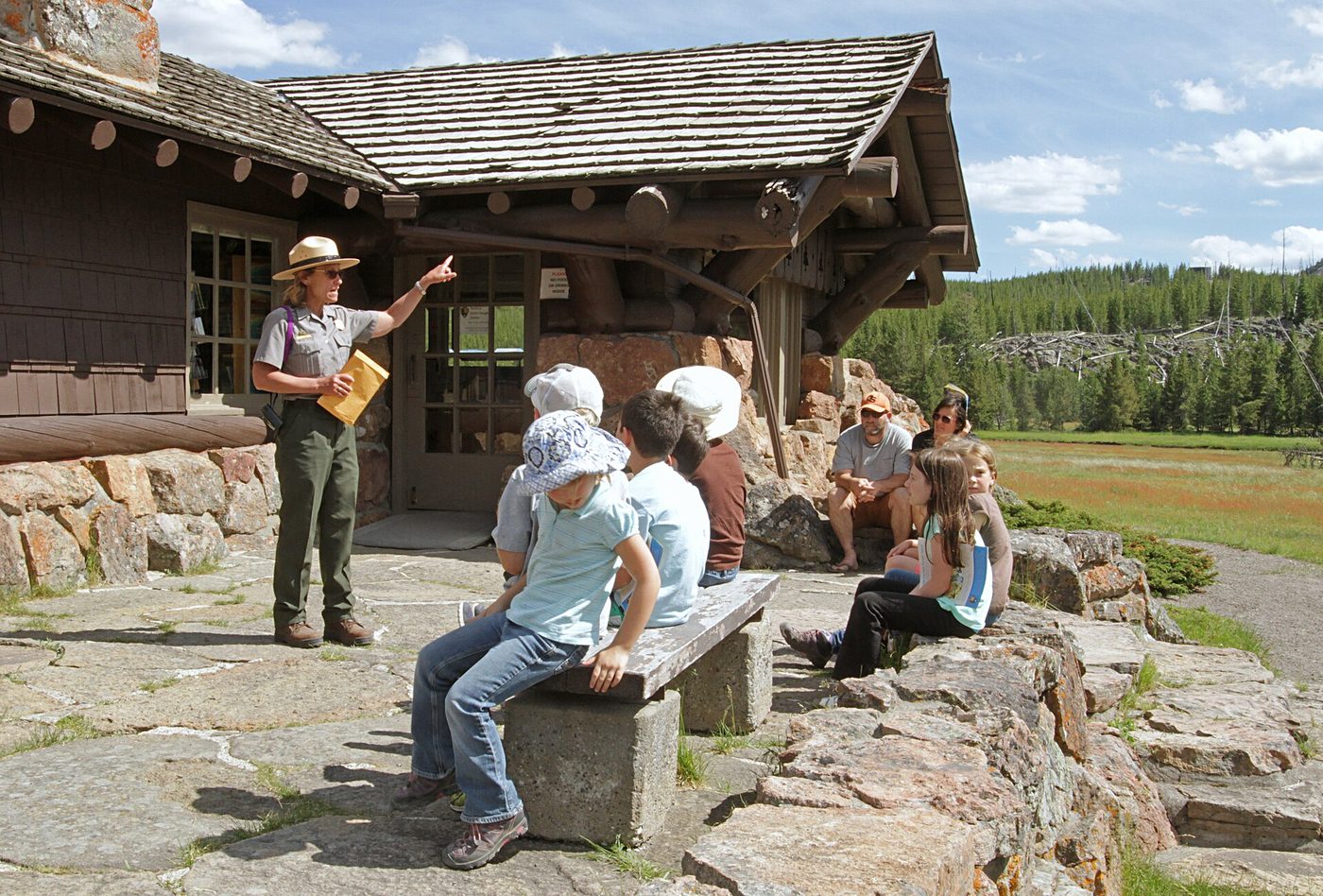
If you do one structured thing with kids in Yellowstone, make it the Junior Ranger program. It reframes the whole trip: instead of being dragged between viewpoints, kids are collecting evidence.
Junior Ranger
- Ages: 4 and up.
- How it works: Pick up an activity booklet at any park visitor center, or download it before you arrive. Kids complete the age-appropriate requirements inside, then have the booklet reviewed by a ranger at a visitor center.
- The reward: A wooden badge shaped like an arrowhead, with a geyser, a mountain peak and a bison on it. You have to be in the park to receive it; the NPS can’t mail booklets or badges.
- If you can’t get to a visitor center: There’s a Virtual Junior Ranger option on the NPS site.
Our tip: get the booklet on day one, not day three. Several activities require attending a ranger program or visiting particular places, and families who start late end up scrambling. See our full guide to the Yellowstone Junior Ranger program for what’s in the booklet by age and where to get badges signed.
Young Scientist
For older kids who like the science, the Young Scientist program is a step up.
- Ages: 5 and up, with age-banded booklets. The 5 to 9 version is offered only at the Old Faithful Visitor Education Center.
- Cost: The self-guiding booklet is $5, sold at the Canyon Visitor Education Center or the Old Faithful Visitor Education Center (checked September 2026).
- Gear: You can check out a Young Scientist toolkit at Old Faithful for use in the Upper Geyser Basin, with a thermometer, stopwatch and other instruments.
- The reward: A patch for ages 5 to 13, or a keychain for ages 14 and up.
Both visitor centers are excellent in their own right, and the Canyon Visitor Education Center’s volcano exhibits are the best indoor hour in the park on a wet day.
The best easy hikes for kids
Short hikes get you away from the crowds without triggering a mutiny. These are the family favorites (distances are round trip, from NPS, checked September 2026).
| Trail | Distance | Notes |
|---|---|---|
| Wraith Falls | 1 mile | Flat, near Mammoth, ends at a 79-foot cascade |
| Trout Lake | 1.2 miles | Short, steep start; otters and spawning trout in early summer |
| Grand Prismatic Overlook | 1.2 miles, 105 feet of climb | The famous view from above; the best short payoff in the park |
| Storm Point | 2.3 miles | Flat lakeshore loop with marmots |
| Mystic Falls | 2.4 miles | Check current access, since Biscuit Basin has been closed |
| Natural Bridge | About 3 miles | Gentle, near Bridge Bay |
| Elephant Back Mountain | 3.5 miles, 800 feet | For older kids; big view over Yellowstone Lake |
| Mount Washburn | About 6 miles, 1,400 feet | A summit day for fit older kids and teens |
Take bear spray on every hike, keep children between adults on the trail, and make noise. Our best hikes in Yellowstone hub has the full set, with difficulty ratings and seasons.
Keeping kids safe in Yellowstone
Yellowstone is safe for families who follow a few rules, and genuinely dangerous for those who don’t. The three that matter most:
- Thermal areas. Boiling water sits under a thin crust. Hold small children’s hands on every boardwalk, and make “no running on boardwalks” a hard rule from the first day. More than 20 people have died from hot spring burns in the park.
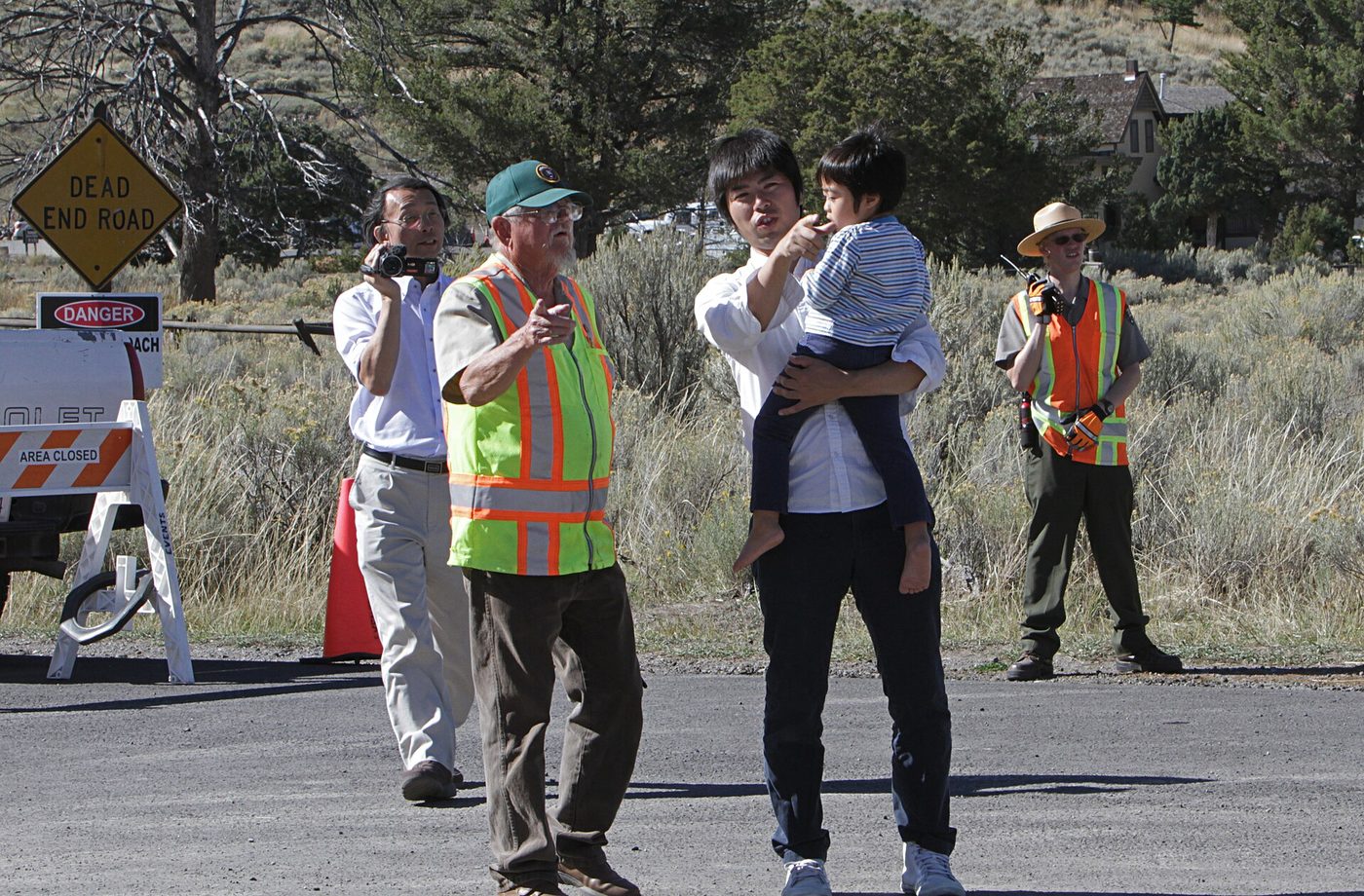
- Wildlife distance. 100 yards from bears and wolves, 25 yards from bison, elk and everything else. Bison injure more people in Yellowstone than any other animal, and almost every incident involves someone getting too close.
- Water and edges. Rivers are cold and fast, and canyon rims have long drops. No climbing on railings, ever.
Practical family safety habits we’d recommend:
- Give every child a whistle on their jacket, and agree what to do if they get separated: stay put and blow it.
- Agree a meeting point at busy places like the Old Faithful viewing area.
- Explain why the rules exist before you arrive, using pictures. Kids who understand the danger are far more careful than kids being nagged.
- Carry bear spray on hikes and know how to use it. It’s not for children to carry.
- Watch for altitude effects: headaches, tiredness and crankiness on day one are common. Push water, go easy on the first day.
- Reapply sunscreen; the sun is strong at altitude and the pale sinter of the geyser basins reflects it.
The full set of rules and numbers is in our Yellowstone safety hub.
Where to stay with a family
Where you sleep decides how much time you spend driving. The two best options for families are staying inside the park, which cuts driving dramatically, or basing in West Yellowstone, which has the most family services.
- Inside the park: Cabins are usually better value and more practical for families than hotel rooms. Roosevelt Lodge cabins are rustic and fun; Canyon Lodge is modern and central; Lake Lodge Cabins are a good base for the lake. Old Faithful Inn is a wonderful building, though rooms are small and there’s no air conditioning or TV. Book as early as you can. See our where to stay in Yellowstone guide for the full comparison.
- Camping: Campgrounds are a great fit for families who already camp. Madison, Bridge Bay, Canyon and Grant are the big reservable ones; Mammoth is open year-round. Bear-safe food storage rules apply to everything with a scent.
- West Yellowstone: Motels with pools, restaurants, laundry, a grocery store, the Grizzly & Wolf Discovery Center and an IMAX. The most convenient gateway town for families.
- Gardiner: Smaller, with rafting outfitters and quick access to Mammoth and Lamar Valley.
A practical tip: choose no more than two bases for a five-day trip. Packing and unpacking with children costs more time and goodwill than the extra driving saves.
Food, driving days and what to pack
Food in Yellowstone is fine, not exciting, and busy at peak hours. Cafeterias at Canyon and Lake Lodge are the easiest family option; dining rooms need reservations and take longer. General stores sell sandwiches, snacks and basics.
Our approach: buy groceries in a gateway town, keep a cooler in the car, and picnic. The park has dozens of picnic areas, many in beautiful places, and they let kids run around. It also removes the misery of a 45-minute lunch line at 12:30 p.m.
For the drives themselves:
- Download everything. Audiobooks, music, podcasts and offline maps. There’s no signal for most of the day.
- Break drives every 45 to 60 minutes. Pullouts, picnic areas and short boardwalks are everywhere.
- Give kids a job. Wildlife spotter, navigator, photographer, timekeeper for the next geyser.
- Front-load the day. Leave at 7 a.m. and you’ll see more wildlife, get parking and be back by early afternoon.
- Expect delays. A bison jam can add 30 minutes with no warning. Never schedule tightly.
- Bring a bag for car sickness. The roads over Dunraven and Sylvan passes are winding.
Road dates and construction delays change every season; check our Yellowstone road closures page before you plan driving days.
What to pack for kids
Beyond the usual:
- Layers for every day: fleece, rain shell, hat and gloves, even in July.
- Closed-toe shoes with grip for boardwalks and trails.
- A carrier for children under 3, more useful than a stroller on most trails.
- Binoculars for each child. Cheap ones are fine and transform wildlife watching.
- Refillable water bottles and more snacks than you think.
- Sunscreen, lip balm and sunglasses.
- A small first-aid kit, plus any regular medication; the nearest pharmacy may be an hour away.
- Junior Ranger clipboard or a hard notebook to write on in the car.
- A whistle for each child.
- Wet wipes and trash bags, because there’s sulfur mud and sticky hands.
- Bear spray for adults on hikes.
Our Yellowstone facts for kids page is a good pre-trip read for children, and our list of books about Yellowstone has picture books and read-alouds that build anticipation before you go.
Yellowstone with kids in winter and bad weather
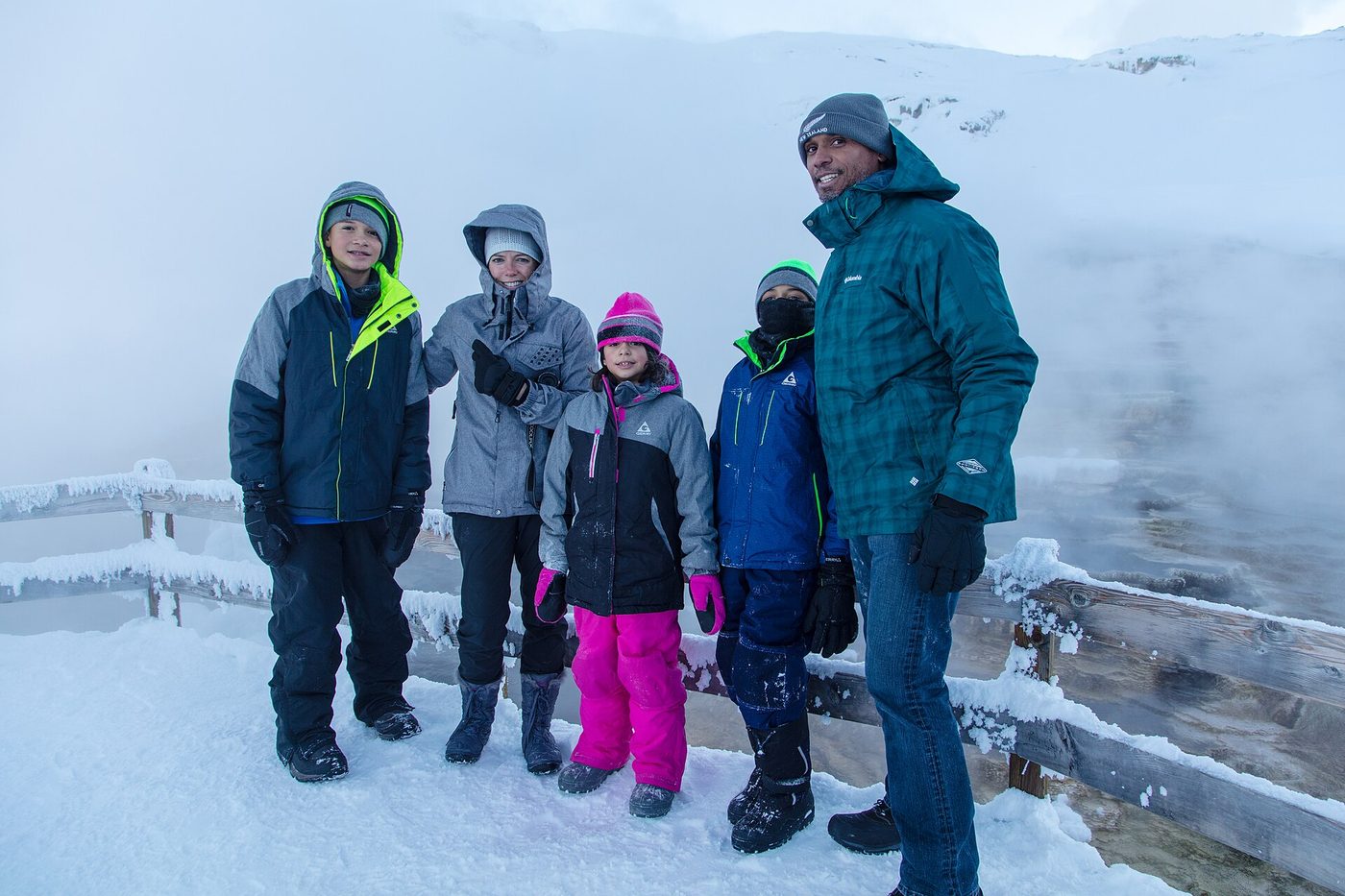
A winter family trip is completely different: fewer than a tenth of the summer crowds, snow-covered geyser basins, steam everywhere and wildlife against white ground. The trade-off is logistics. Most park roads are closed to cars from November to mid-April, so reaching Old Faithful means a snowcoach or snowmobile tour, and those cost real money and take a full day.
What works well with children:
- Drive the north road. Gardiner to Mammoth to Lamar Valley stays open to cars all year. You can see the terraces, wildlife and often wolves without a tour.
- Mammoth as a base. The Mammoth Hot Springs Hotel is open in winter, with an outdoor skating rink and rental skates nearby.
- Snowcoach day trip to Old Faithful. Long but memorable; best for kids 6 and up.
- Snowshoeing or cross-country skiing. Rentals are available in the park and in gateway towns, and the flat trails around Mammoth are beginner friendly.
Dress children for real cold: mornings below 0°F are common. Our guide to Yellowstone with kids in winter covers gear, tours and realistic day plans, and our Yellowstone in winter hub covers the season for everyone.
Rainy days and bad-weather plans
Weather turns fast, and a wet day with kids in a park with few indoor spaces can be grim. The best indoor options:
- Canyon Visitor Education Center for the volcano exhibits and the huge relief model of the park.
- Old Faithful Visitor Education Center for the geyser science exhibits and eruption predictions.
- Albright Visitor Center at Mammoth for wildlife and history exhibits, open year-round.
- Fishing Bridge Visitor Center for the bird and wildlife displays.
- Old Faithful Inn lobby, a great place to sit out a storm; the fireplace and the balconies are worth an hour on their own.
- Grizzly & Wolf Discovery Center in West Yellowstone, plus the IMAX theater next door.
Rain also tends to clear the boardwalks, and the geyser basins are spectacular in cool, damp air because the steam is thicker. A good rain jacket buys you the park at half capacity.
What a family trip costs
Yellowstone isn’t cheap, mostly because of lodging. Rough guidance for a family of four in summer (checked September 2026):
- Entrance: $35 per vehicle for seven days, covering everyone in the car. An America the Beautiful annual pass is $80 for US residents and worth it if you’ll visit other parks, including Grand Teton, which charges separately. Non-US-resident visitors aged 16 and up also pay a $100 nonresident fee each, so children under 16 are exempt.
- Lodging: In-park cabins and rooms vary widely by property and season, and gateway-town motels are often cheaper. Campgrounds run roughly $20 to $45 a night for tent and standard sites, with the Fishing Bridge RV Park much higher.
- Food: Cafeteria meals and store sandwiches are the cheapest sit-down options; a dining-room dinner for four costs considerably more. Self-catering from a cooler is the single biggest saving.
- Activities: Most of the park is free. The paid extras that families choose are boat cruises, horseback rides, the Old West Cookout and guided tours.
- Fuel: Expect to drive 400 to 700 miles over a five-day trip, more if you’re commuting from outside the park.
Our costs guide has a full worked budget, including an international-family example with the nonresident fee.
Is a family trip to Yellowstone worth it?
Yes, with the caveat that it’s a driving holiday with extraordinary scenery, not a resort. Families who plan a realistic number of stops, stay inside or close to the park, start early and use the Junior Ranger program almost always come away saying it was the best trip they’ve done.
Where families struggle: trying to see the whole park in two days, basing in Bozeman or Jackson and commuting, sleeping in a different bed every night, or booking so late that the only option is a motel 90 minutes from the gate. Those are avoidable problems.
Our summary advice: five days, two bases, early mornings, one big activity booked in advance, and a booklet in every child’s hand. For everything else, from fees to packing lists, head back to our planning hub.
Frequently asked questions
What is the best age to take kids to Yellowstone?
Between about 5 and 12 is the easiest: children can walk a few miles, understand the safety rules and get a lot out of the Junior Ranger program. Younger children still enjoy the wildlife and geysers, but need constant supervision on boardwalks and shorter days.
How many days do you need in Yellowstone with kids?
Four or five days is ideal. Three days works if you stay inside the park and skip a region. With two days you’ll spend most of your time driving between a few famous sights.
Do kids pay the Yellowstone entrance fee?
Vehicle entry covers everyone in the car. Where per-person fees apply, they’re charged for ages 16 and up, so younger children enter free, and the $100 nonresident fee applies only to visitors 16 and older. Our fees guide has the full breakdown.
Can kids swim in Yellowstone?
Effectively no. Swimming in hot springs is prohibited and deadly, and lakes and rivers are dangerously cold, with Yellowstone Lake averaging about 41°F. Some gateway-town hotels have pools, which is where most families swim.
Are there strollers-friendly trails in Yellowstone?
Some. Paved sections around Old Faithful and parts of a few boardwalks work with a stroller, but many boardwalks have stairs or rough surfaces, and trails are natural surface. A carrier is more practical for children under 3.
What should families do first in Yellowstone?
Pick up a Junior Ranger booklet at the first visitor center you pass, and see a geyser basin early on day one. Both set the tone for the rest of the trip.
Is Yellowstone safe for toddlers?
Yes, with close supervision. The main risks are thermal areas, wildlife and unfenced drop-offs. Hold hands on boardwalks, never let children run ahead, and keep a wide distance from every animal.
Do rangers run programs for children?
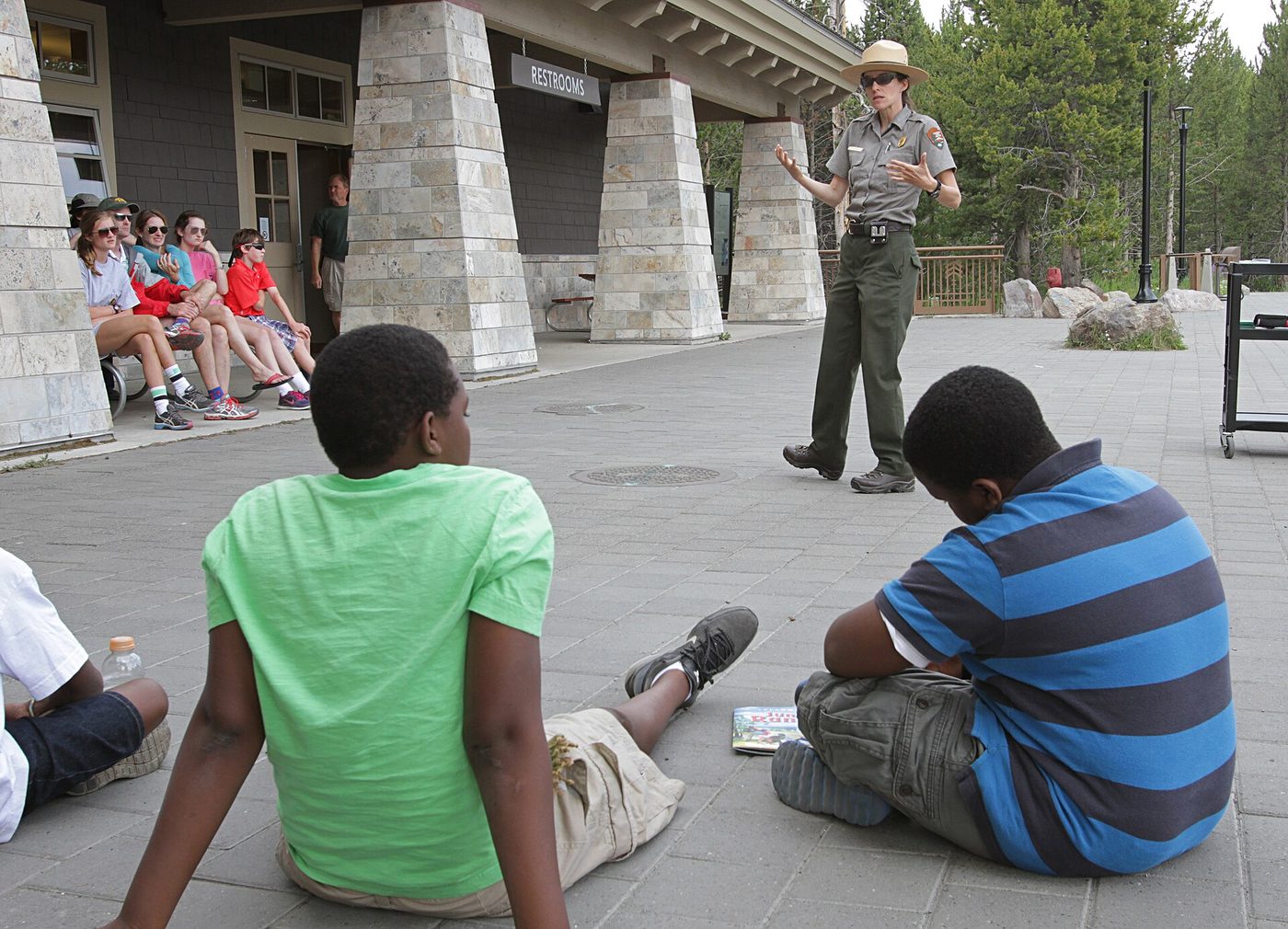
Yes. Ranger-led walks and talks run through the summer at the main developed areas and are free, and they’re often the highlight of a family’s trip. Check current schedules at a visitor center when you arrive.
Sources
- National Park Service: Yellowstone Junior Ranger, checked September 2026
- National Park Service: Yellowstone Young Scientist, checked September 2026
- National Park Service: Yellowstone safety, checked September 2026
- National Park Service: Yellowstone campgrounds, checked September 2026
- Yellowstone National Park Lodges: lodging and activities, checked September 2026
Image credits
| Photo | Credit |
|---|---|
| The Junior Ranger badge is the best structure you can give a family trip (top of page) | Yellowstone National Park, public domain, via Wikimedia Commons |
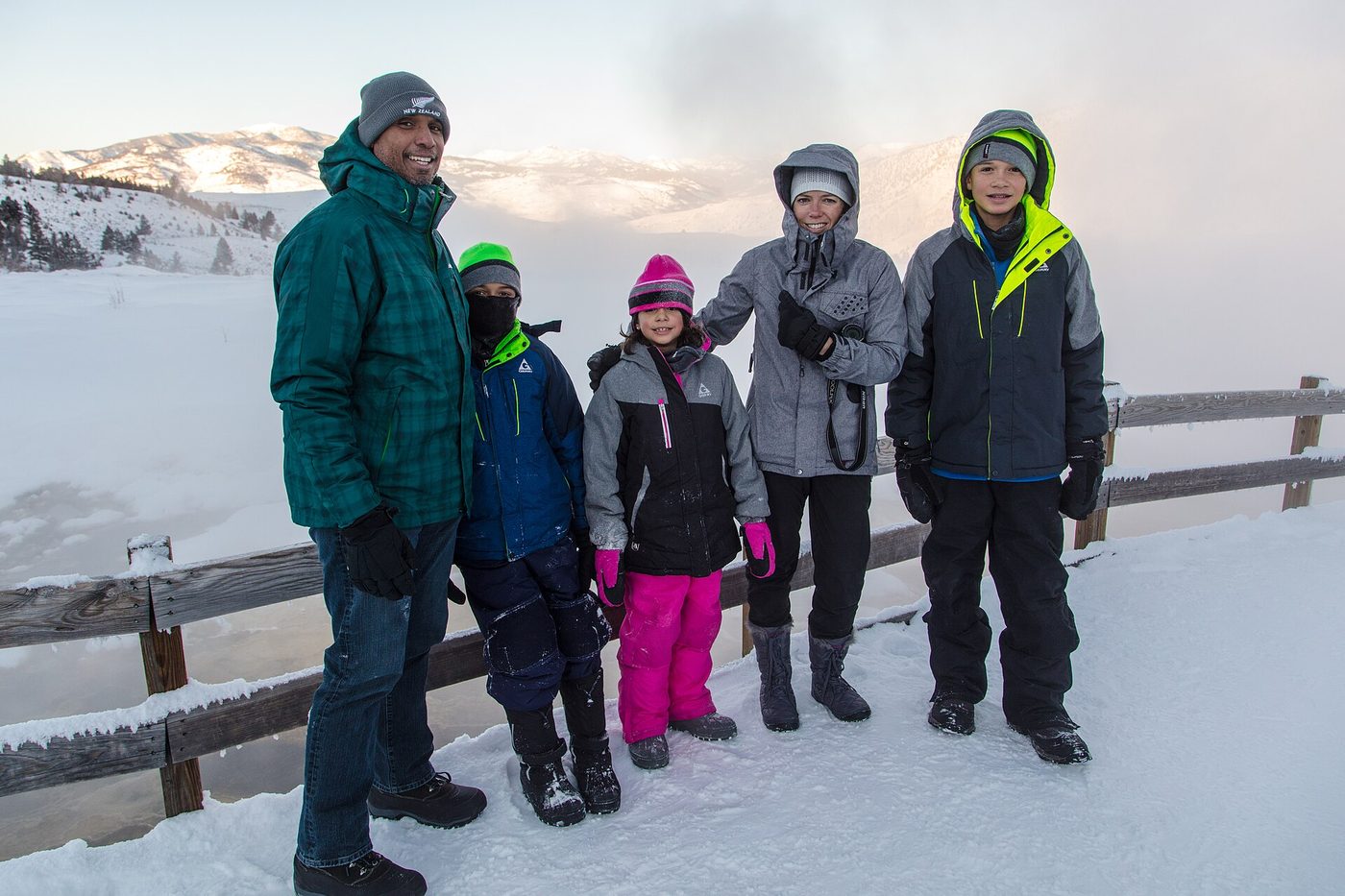
| A family at Mound Spring | Jacob W. Frank, public domain, via Wikimedia Commons |
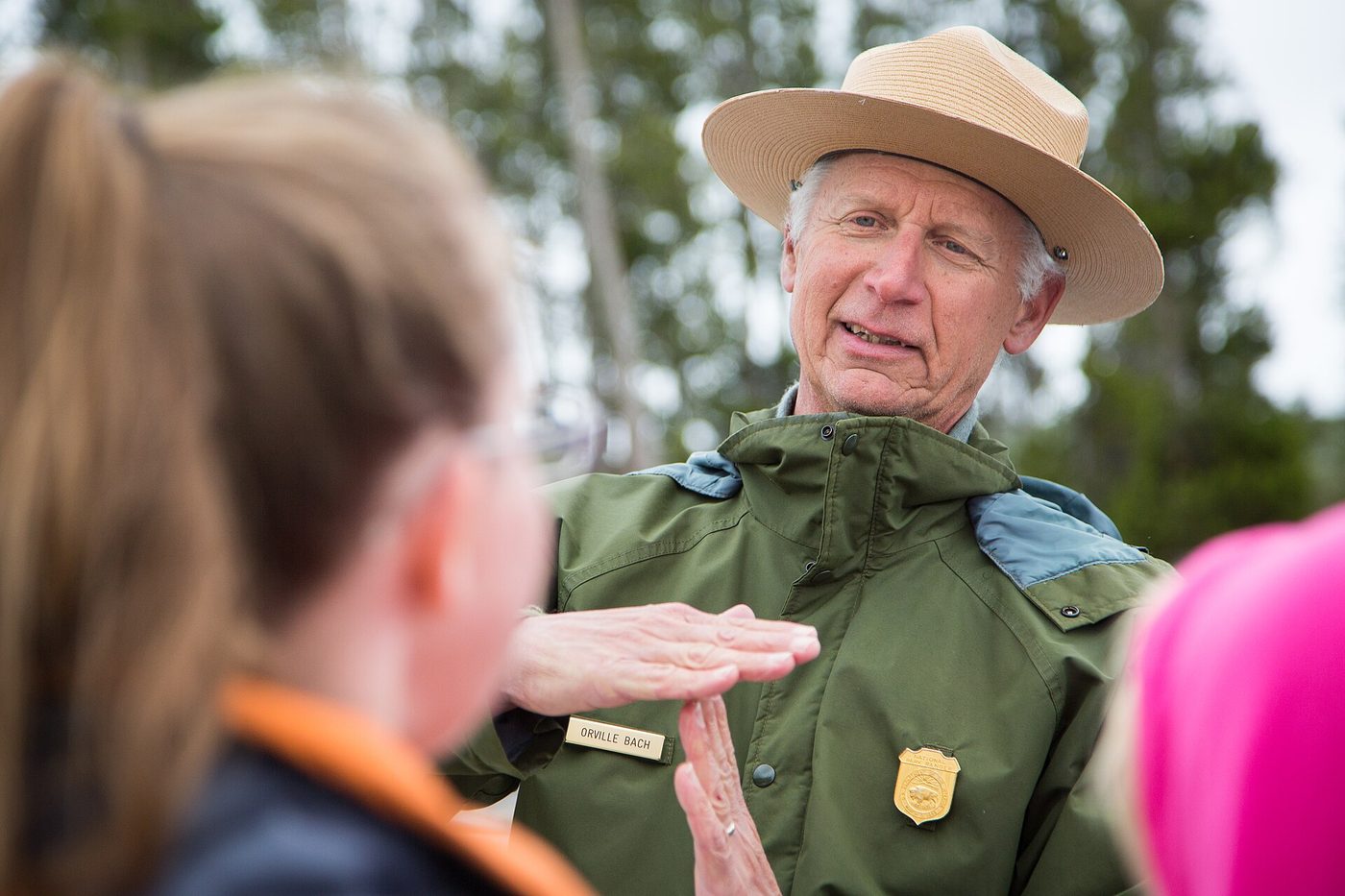
| Rangers are outstanding with children, and their programs are free | Yellowstone National Park from Yellowstone NP, USA, public domain, via Wikimedia Commons |
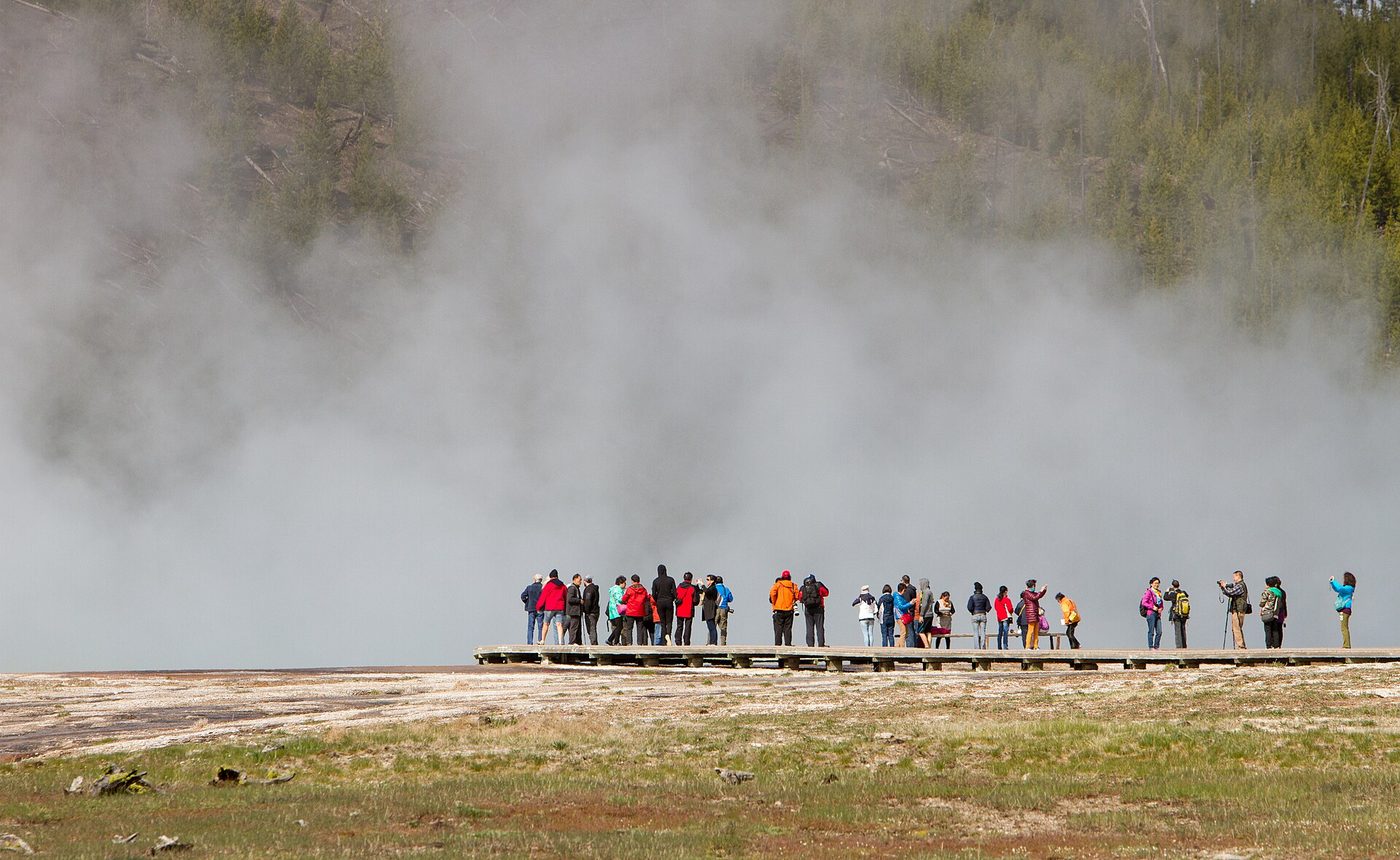
| Grand Prismatic’s boardwalk is flat, busy and endlessly interesting for kids | Yellowstone National Park from Yellowstone NP, USA, public domain, via Wikimedia Commons |
| Junior Ranger sessions run at ranger stations and visitor centers through the summer | Yellowstone National Park from Yellowstone NP, USA, public domain, via Wikimedia Commons |
| An interpretive program at Old Faithful | Yellowstone National Park from Yellowstone NP, USA, public domain, via Wikimedia Commons |
| During the elk rut at Mammoth, rangers keep visitors at a safe distance | Yellowstone National Park from Yellowstone NP, USA, public domain, via Wikimedia Commons |
| Winter turns the geyser basins into something out of a storybook | Jacob W. Frank, public domain, via Wikimedia Commons |