Yellowstone winter wolf tours run from about December to March on the park’s northern road, the one route open to cars in winter, and most follow the same pattern: a pre-dawn pickup, a morning in the Lamar Valley with a guide and spotting scopes, and a warm vehicle between sightings. You can book a day with a local guiding company, a Xanterra tour from Mammoth, a multi-day safari or a five-day Yellowstone Forever wolf week.
Which one suits you depends on how much time you have, where you’re staying and how much you want to learn. A single guided morning can be the highlight of a winter trip. A week at the Lamar Buffalo Ranch can change how you see wild animals for good. And if you have a spotting scope and a few free mornings, you may not need a guide at all. This guide compares every option for winter 2026-27, with the dates and details we could verify in September 2026, honest notes on what each is worth, and the questions to ask before you book. For the whole winter season, see our guide to Yellowstone in winter.
How do Yellowstone winter wolf tours work?
Because the northern road stays open to cars all winter, wolf tours are road-based. A guide picks you up before dawn in a van or SUV, drives to the Lamar Valley and spends the morning moving between pullouts with spotting scopes, following the wolf-watcher network. No snowcoach is needed, and half-day and full-day tours are both common.
A typical January day starts with a pickup in Gardiner around 6 a.m. or earlier, and you’ll be scanning the slopes of the Lamar Valley as the sky lightens a little after 7. The guide checks in with other watchers to learn where packs were seen the evening before, then works the valley from pullout to pullout. When wolves are found, the scopes come out and you watch, sometimes for an hour or more, as a pack travels, feeds or beds down. By late morning the wolves are usually resting, and the tour turns to other wildlife, a warm lunch or the drive back.
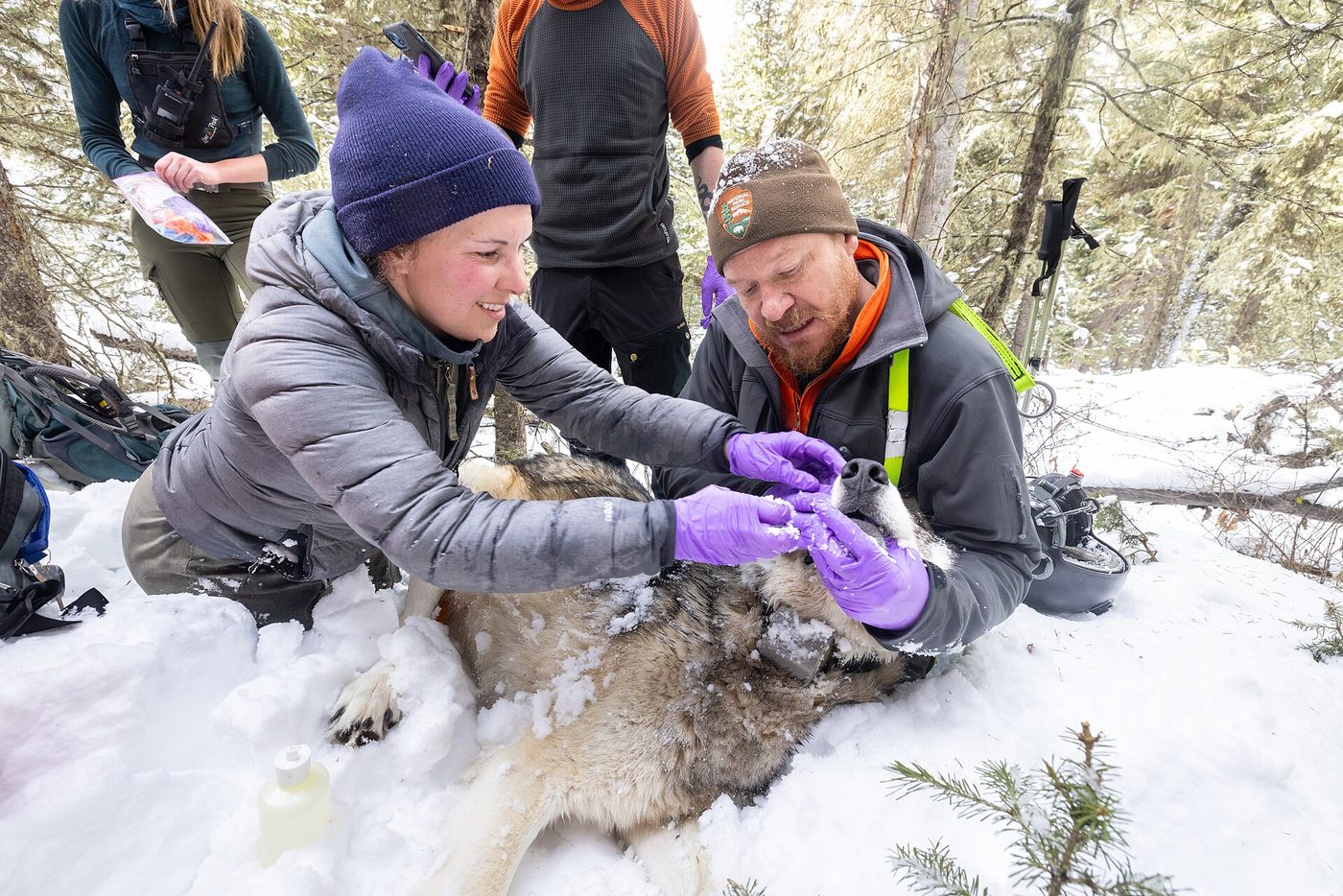
Guides earn their keep in several ways. They carry high-quality scopes that turn a distant speck into a wolf you can watch. They know the packs, the individual wolves and their habits, and many of the wolves you’ll see wear research collars that help guides and researchers identify them. They drive the icy road so you don’t have to. And they explain what you’re seeing, which is often the difference between “a wolf on a hill” and a story you’ll remember.
What a guide can’t do is guarantee a wolf. Winter mornings in the Lamar Valley often produce a sighting, but not every one does, and a good guide will tell you that up front.
For the basics of finding wolves on your own, see our guide to wolf watching in Yellowstone, and for the one road that makes all this possible, driving through Yellowstone in winter.
Winter wolf tour options at a glance
Here’s how the main choices compare for winter 2026-27. Few operators publish winter prices, so for most options you’ll need to ask for a quote.
| Option | Length | Starts from | Best for | Price information (checked September 2026) |
|---|---|---|---|---|
| Guided day tour with a local company | Full day, about 8 to 10 hours | Gardiner, Bozeman, Big Sky | First-timers with a day or two | Quote on request |
| Xanterra wildlife tours from Mammoth | Part day | Mammoth Hot Springs Hotel | Guests staying at Mammoth | Through the winter line, 307-344-7311 |
| Multi-day wolf and wildlife safari | Two or three days | Bozeman area and Gardiner | Travelers who want the logistics handled | Quote on request |
| Yellowstone Forever field seminar | Four to seven days | Lamar Buffalo Ranch or Gardiner | Learners, photographers, repeat visitors | At registration, or (406) 848-2400 |
| Escorted winter tour (Tauck) | Eight days | Bozeman to Jackson | A full winter trip including Old Faithful | From $6,990 per person |
| On your own | As long as you like | Gardiner, Mammoth, Cooke City | Visitors with a scope and several mornings | Entrance fee and fuel |
What to ask any wolf tour operator
- How many guests per vehicle, and how many scopes? Two or three people per scope is comfortable; eight people sharing one is not.
- What time is pickup, and how long will we spend in the Lamar Valley? The drive can eat most of the day from some towns.
- Is the park entrance fee included? If not, how much is it per person?
- Is food included? A hot drink and a proper lunch make a long cold morning much better.
- What happens if the road closes? Storms occasionally close the northern road, and refund policies vary.
- Is a private tour available? For families or photographers, a private vehicle can be good value once you divide the price by your party.
Signs of a good wolf guide
The guides who work the Lamar Valley all winter vary a lot, and a few signs separate the best from the rest.
- They’re authorized. Businesses that guide in Yellowstone need a commercial use authorization from the National Park Service. A reputable operator will confirm theirs without hesitation.
- They keep groups small. The best mornings come from being able to move quickly between pullouts and get everyone onto a scope fast.
- They follow the rules without being asked. A good guide keeps you 100 yards from wolves, parks fully off the road, and never crowds animals or other watchers for a better view.
- They’re honest about odds. Anyone who promises a wolf is overselling. The best guides talk about likelihoods, recent pack movements and what else you might see.
- They teach. You should come away knowing which pack you watched, how it has fared, and why the wolves behaved as they did.
Guided day tours from Gardiner, Bozeman and Big Sky
Local guiding companies run most of the winter wolf days. Yellowstone Safari Company, for example, lists a full-day Yellowstone Winter Wildlife Safari of 8 to 10 hours, 2-day and 3-day Winter Wolves and Wildlife Safaris, and a 4-hour snowshoe outing near Big Sky, with pickups listed in Bozeman, Big Sky, Gardiner, West Yellowstone and Cody, and binoculars and spotting scopes supplied (checked September 2026). Its prices aren’t posted on the page, so ask for a quote. Other guides based in Gardiner, Bozeman and Cooke City run similar days, and many offer private trips. Our guide to Yellowstone tours from Gardiner and Yellowstone tours from Bozeman list more options.
Why your starting town matters
In winter, the only road to the Lamar Valley runs through Gardiner, so the distance from your hotel to Gardiner decides how much of your tour is spent driving.
- Gardiner or Mammoth: about an hour to the west end of the Lamar Valley in good conditions. This is the best base for a wolf tour by far.
- Bozeman: about 80 miles to Gardiner by I-90 and US-89, so roughly two and a half hours each way to the valley. A full-day tour works, but expect a very early start.
- Big Sky: add about another hour to Bozeman’s drive, since the road runs north through the Gallatin Canyon before turning east. A long day for a few hours of wolf watching.
- West Yellowstone: the park road to Mammoth is groomed snow in winter, so the drive round by Bozeman and Livingston is about 170 miles to Gardiner alone. Not practical for a day of wolf watching.
- Cody: in winter, the Chief Joseph Highway can’t take you through to Cooke City, and the drive round is very long. Treat Cody pickups as a summer option.
The honest verdict: if wolves are the reason for your trip, sleep in Gardiner, at Mammoth or in Cooke City, and book a tour that starts there. A tour from Big Sky or Bozeman is fine as a one-day add-on to a ski trip, but you’ll spend much of the day in a van.
Xanterra’s winter wildlife tours from Mammoth
Xanterra, the park’s lodging concessioner, runs two wildlife trips from Mammoth Hot Springs Hotel in winter: Wake Up to Winter Wildlife and the Lamar Valley Wildlife Tour. They’re the easiest option if you’re staying at Mammoth, since they start at the hotel door, and they pair well with Xanterra’s snowcoach to Old Faithful on another day. Xanterra doesn’t publish the prices, times or group sizes on its tour pages, so ask the winter reservations line, 307-344-7311, when you book your room.
The honest verdict: convenient and a solid introduction to the northern range, especially for a first winter trip. Ask how many people ride in each vehicle and whether scopes are provided, and if you’re a keen wolf watcher, consider a smaller private guide for a second morning. Our Yellowstone winter lodging guide covers Mammoth Hot Springs Hotel.
Yellowstone Forever winter field seminars and Lamar Valley Wolf Weeks
For wolf tracking in Yellowstone and a real understanding of what you’re watching, nothing matches Yellowstone Forever, the park’s official nonprofit partner. Its winter field seminars run from November to March, many of them based at the historic Lamar Buffalo Ranch in the heart of the valley, where the park raised bison in the early 20th century to rebuild the herd.
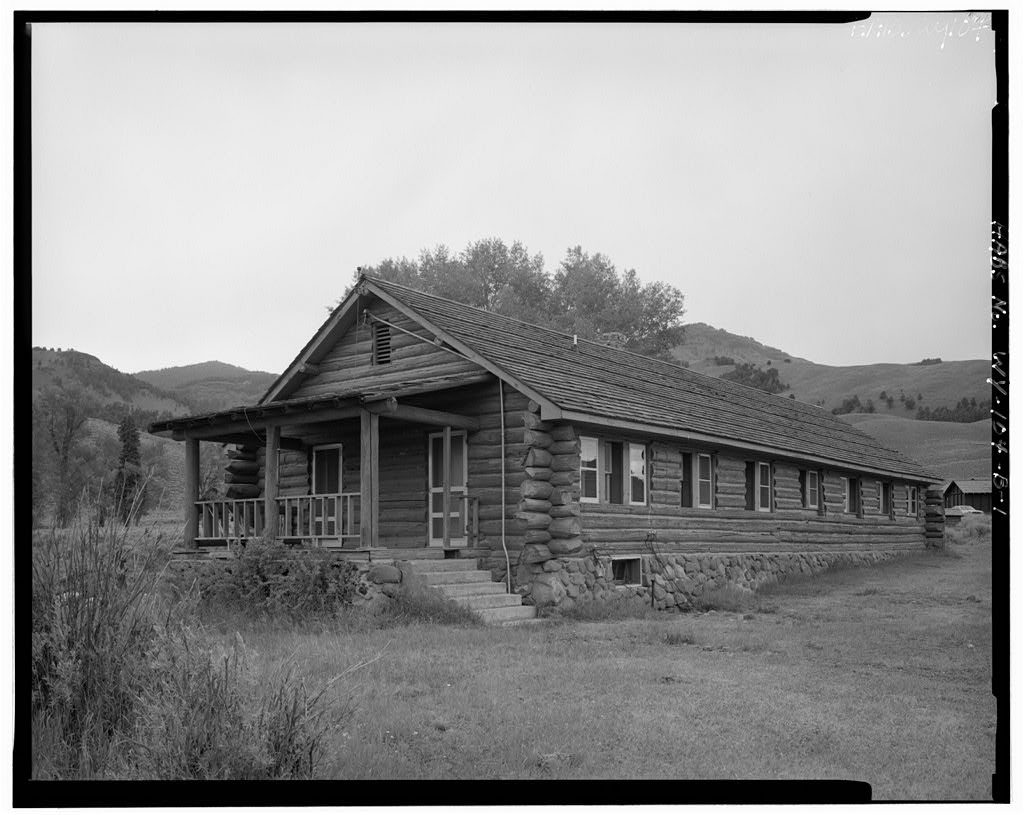
The 2026-27 winter program lists these wolf and wildlife courses (checked September 2026):
- New Year’s in Lamar, December 29, 2026 to January 2, 2027, Lamar Buffalo Ranch.
- Winter World of Ravens and Wolves, January 14 to 18, 2027, Lamar Buffalo Ranch, taught by Colleen and John Marzluff, well known for their research on ravens.
- Call of the Wild: Decoding the Language of Wolves, January 24 to 28, 2027, Lamar Buffalo Ranch.
- Yellowstone’s Captivating Carnivores: Wolves and Cougars, February 1 to 4, 2027, Gardiner.
- Tracking Yellowstone’s Winter Wildlife, February 12 to 15, 2027, Lamar Buffalo Ranch.
- Lamar Valley Wolf Weeks 1 to 4: February 22 to 26, March 1 to 5, March 8 to 12 and March 15 to 19, 2027, all at Lamar Buffalo Ranch.
- Winter photography courses, including a four-day wildlife photography course in Gardiner from December 10 to 13, 2026; two of the longer photography courses were already sold out.
Prices weren’t shown on the listings when we checked, so register online or call (406) 848-2400 for costs and what’s included. Field seminars typically mix time in the field with classroom sessions, and winter courses can involve snowshoeing, so check each listing for the activity level.
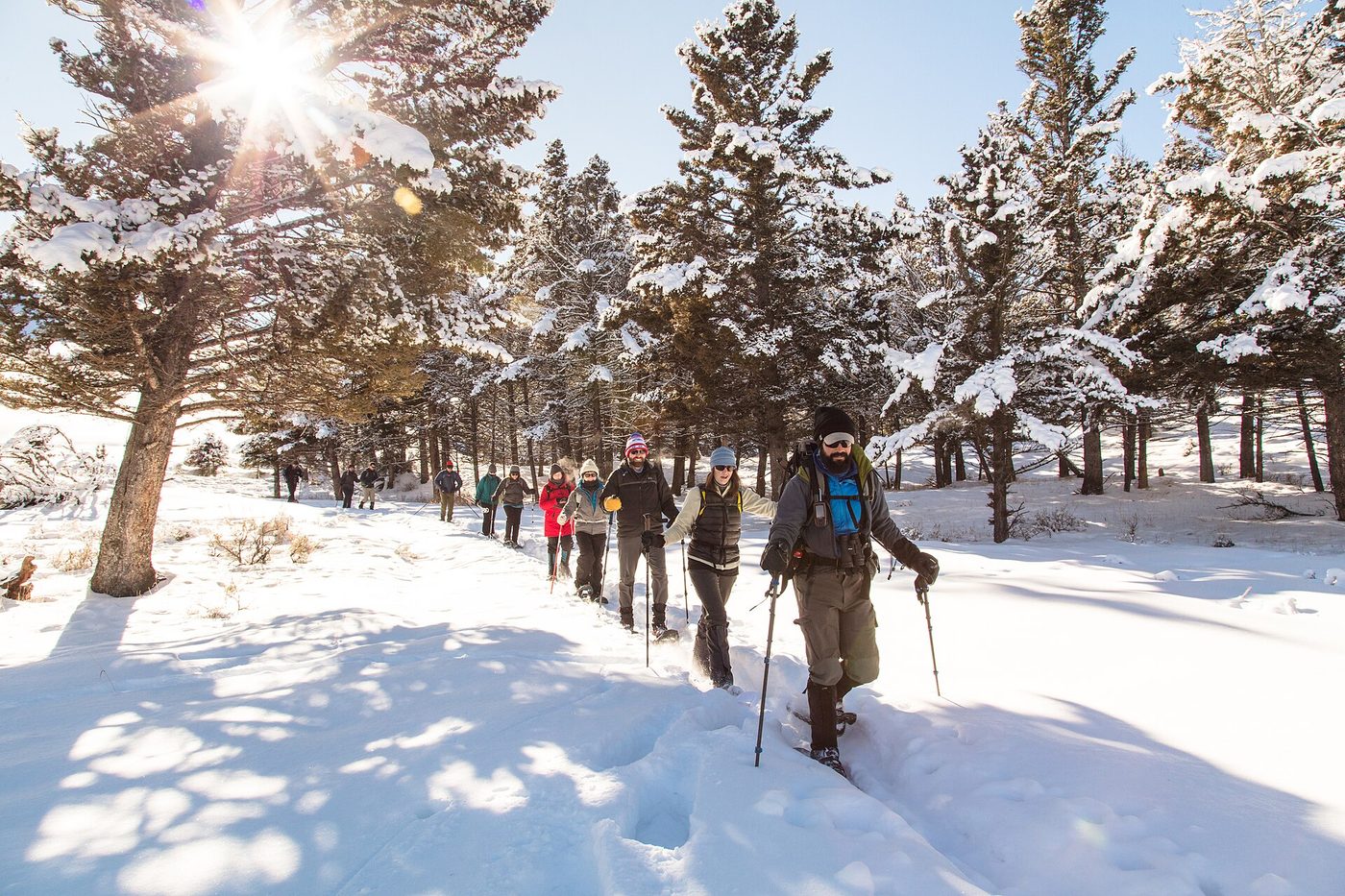
The honest verdict: if you can give it four or five days, a Lamar Valley Wolf Week is the single best winter wolf experience in the park. You’ll watch wolves with instructors who know the packs, learn to read the snow, and spend the time in between in the valley itself rather than driving to it. The late-February and March weeks also come with longer days and the end of the breeding season. The only real downside is that the good courses fill early, so book as soon as the schedule is posted.
Multi-day winter wolf and wildlife safaris
If you want someone else to handle everything, multi-day safaris package lodging, guiding and transport. Yellowstone Safari Company’s 2-day and 3-day Winter Wolves and Wildlife Safaris are one example, and some operators add snowshoeing, a snowcoach day to Old Faithful or dog sledding outside the park. International specialists sell longer winter wildlife trips too.
The best-known escorted winter tour is Tauck’s Wonderland: Yellowstone in Winter, eight days and seven nights from Bozeman to Jackson with January and February 2027 departures, from $6,990 per person sharing and no more than 24 guests (checked September 2026). It includes wildlife viewing on the northern range, two nights at Mammoth Hot Springs Hotel, two at Old Faithful Snow Lodge, a sleigh ride on the National Elk Refuge and a private naturalist presentation. It’s a winter overview rather than a dedicated wolf trip, so if wolves are the priority, pair it with a Lamar-focused day or choose a seminar instead.
The honest verdict on packages: they’re worth it if winter driving worries you or your time is short. But a base in Gardiner, one or two guided mornings and a few mornings on your own with a borrowed or rented scope will usually show you just as many wolves for much less. Our Yellowstone winter tours comparison covers the broader range of winter packages.
How much do winter wolf tours cost?
Few wolf tour operators publish winter prices, so expect to request quotes. The one verified benchmark for 2026-27 is Tauck’s eight-day winter tour from $6,990 per person, and Xanterra and Yellowstone Forever price by phone or at registration. Budget separately for entrance fees, the $100 nonresident fee where it applies, and a tip.
A few points help you compare quotes:
- Private versus shared. Private tours are often priced per vehicle or per group, so work out the per-person cost for your party before you compare.
- Park fees. If you drive yourself, the standard private-vehicle fee is $35 for seven days. On a commercial tour, the operator pays per person and may pass it on. Since January 1, 2026, non-US residents aged 16 and older also owe a $100 nonresident fee unless they hold an annual or America the Beautiful pass (checked September 2026). See our Yellowstone entrance fee page.
- Tips. Guides expect 15 to 20 percent of the tour price.
- Hidden time costs. A cheaper tour from a distant town can mean fewer hours in the valley. Compare the time you’ll actually spend watching, not just the price.
Is a guided winter wolf tour worth it?
For most first-time winter visitors, yes: a guide improves your odds, supplies the optics and drives the icy road. If you already own a spotting scope, have several mornings and are comfortable on winter roads, you can do very well on your own by joining the watchers at the Lamar Valley pullouts.
| Guided tour | On your own | |
|---|---|---|
| Optics | High-quality scopes supplied | Your own binoculars; a scope if you have one |
| Knowing where the wolves are | Guides share information daily | You learn from the watchers at the pullouts |
| Winter driving | Guide drives | You drive a snowy, icy road in the dark |
| Interpretation | Behavior, pack history, individual wolves | Whatever you can pick up |
| Cost | Tour price plus tip | Entrance fee and fuel |
| Flexibility | Set start and finish | Stay as long as you like |
Our recommendations by traveler:
- One day in the area: book a guide. It’s the difference between a likely sighting and a hopeful drive.
- Three or more mornings: book a guide for the first morning, then go on your own with what you’ve learned.
- Photographers: a private guide or a photography course; shared tours rarely wait for the light.
- Families: a private tour, so you can set the pace and warm up when the children need it.
- Serious naturalists: a Yellowstone Forever Wolf Week.
Planning your winter wolf trip
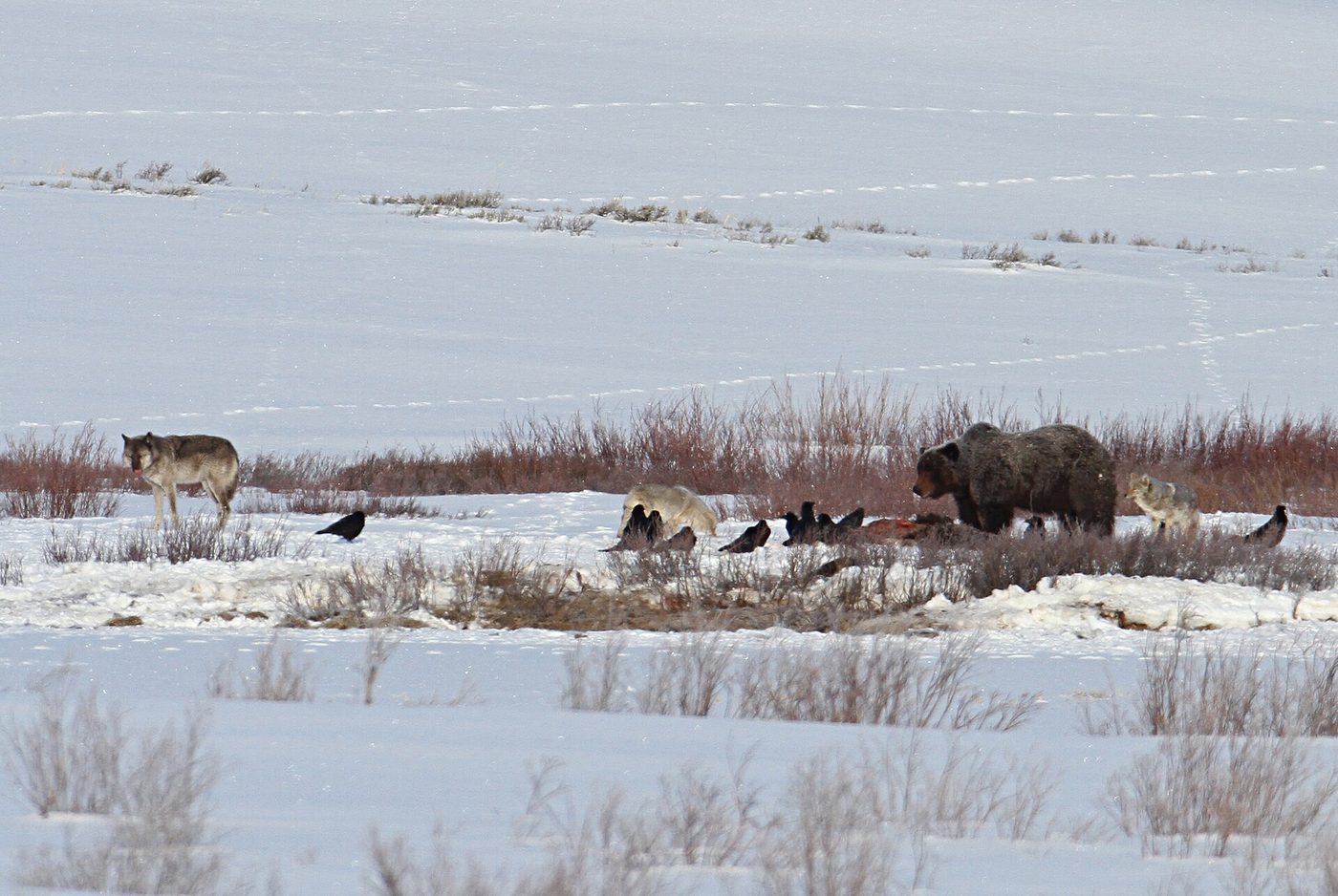
When to go. January through March is the heart of the season. The breeding season begins in late January, and Yellowstone Safari Company points to January through March as the time when sightings improve. The holiday weeks around Christmas and New Year are busier, while late February and March bring longer days and Yellowstone Forever’s Wolf Weeks. In March, grizzlies begin to leave their dens, and a carcass can draw bears, wolves, coyotes and ravens together. For month-by-month detail, see Yellowstone in January and Yellowstone in February.
Where to stay. Gardiner, Mammoth Hot Springs Hotel and Mammoth Campground put you about an hour from the Lamar Valley; Silver Gate and Cooke City put you closer to the east end. Our guide to where to stay near Lamar Valley compares them.
What to wear. Wolf watching means standing still in subzero air at dawn, often for an hour at a time. Wear a wicking base layer, a warm mid-layer, an insulated and windproof parka, insulated boots, mittens with liner gloves, a warm hat and a neck gaiter, and carry hand warmers and a hot drink. The Yellowstone winter packing list has the full list.
Rules to know. Stay at least 100 yards from wolves and 25 yards from bison and elk, even at the roadside, and never stop in a travel lane. Our Yellowstone safety guide covers the details.
Photography. Wolves are usually far away, so a wolf tour is rarely a photography tour. You’ll see the most through the guide’s scope, and even a 600mm lens won’t fill the frame with a wolf half a mile off. Bring a long lens for the closer moments, a sturdy tripod, spare batteries kept warm in an inside pocket, and a phone adapter if the guide’s scope takes one. Shared tours move on when the group is ready, not when the light is best, so serious photographers should book a private guide or a photography course. See our guide to Yellowstone photography tours.
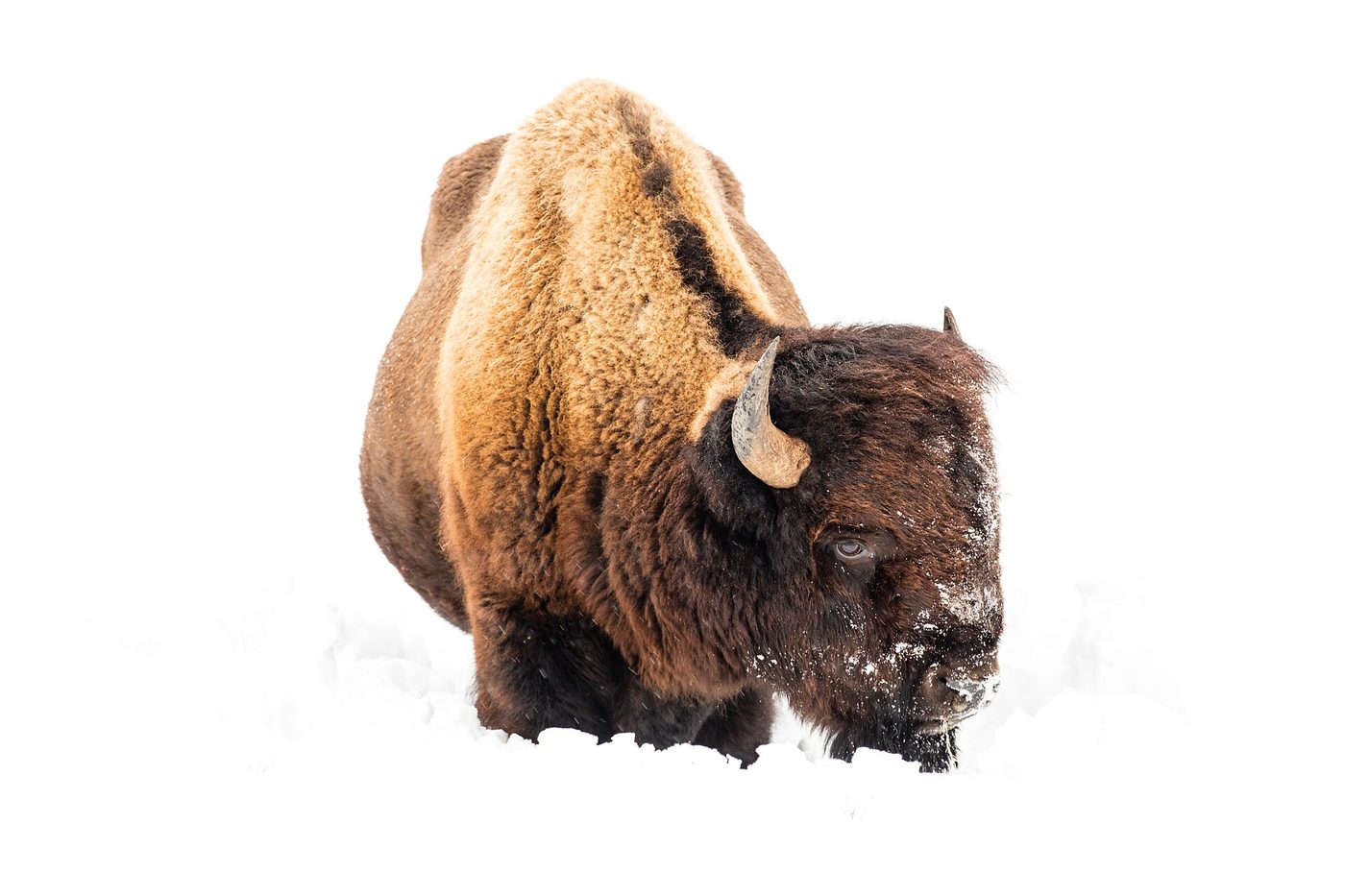
What else you’ll see. Wolves may be the headline, but a winter morning on the northern range is full of other animals. Bison plow through the snow with their heads, elk and bighorn sheep work the slopes above Gardiner and the Lamar River, and coyotes and red foxes hunt voles under the snow. Bald and golden eagles, ravens and magpies gather at carcasses. Near the Northeast Entrance, look for mountain goats on the cliffs and moose in the willows along Soda Butte Creek. See Yellowstone wildlife in winter for the full list.
A second day. If you have time after your wolf morning, a second day can take in cross-country skiing or snowshoeing near Mammoth. See cross-country skiing in Yellowstone, snowshoeing in Yellowstone and our overview of Yellowstone wildlife tours for every season. Everything else about the cold months, from road dates to lodging, is in our complete Yellowstone winter guide.
Frequently asked questions
What is the best month for a winter wolf tour in Yellowstone?
January through March. Wolves stand out against the snow, follow elk and bison into the Lamar Valley, and become more active as the breeding season begins in late January. Late February and March add longer days, and Yellowstone Forever’s 2027 Lamar Valley Wolf Weeks run from February 22 to March 19.
How early do winter wolf tours start?
Most start before dawn. From Gardiner, expect a pickup around 6 a.m. to reach the Lamar Valley as it gets light, a little after 7 in January. From Bozeman or Big Sky, pickups can be two or more hours earlier. Morning is when wolves are most active.
Do you need a snowcoach for a winter wolf tour?
No. The road from Gardiner through Mammoth and the Lamar Valley to Cooke City is open to cars all winter, so wolf tours use ordinary vans and SUVs. Snowcoaches are only needed for the interior roads to Old Faithful, Norris and Canyon.
Will you definitely see a wolf on a winter tour?
No one can guarantee it. Winter is the best season for sightings and many mornings in the Lamar Valley produce one, but some days the packs are out of view. Booking a second morning, or combining a guided tour with a day on your own, gives you the best odds.
Can children join winter wolf tours?
Yes, on most day tours, and a private tour lets you set the pace. Dress children very warmly, bring snacks and a hot drink, and pick a tour that isn’t too long. Yellowstone Forever sets its own requirements for field seminars, so check each course listing.
Do wolf tour guides in Yellowstone need a permit?
Yes. Any business that guides visitors inside Yellowstone needs a commercial use authorization from the National Park Service. It’s worth asking a guide to confirm theirs, particularly if you find them through a general booking site rather than directly.
Is Xanterra’s Lamar Valley Wildlife Tour worth it?
It’s a convenient choice if you’re staying at Mammoth Hot Springs Hotel, since it leaves from the hotel. Xanterra doesn’t publish prices or group sizes online, so ask how many guests share each vehicle and whether scopes are provided before you book. Keen wolf watchers may prefer a small private guide.
Sources
- National Park Service, Mammals of Yellowstone
- National Park Service, Park roads
- Yellowstone Forever, Winter field seminars
- Yellowstone National Park Lodges (Xanterra), Winter tours from Mammoth Hot Springs
- Tauck, Wonderland: Yellowstone in Winter
Image credits
| Photo | Credit |
|---|---|
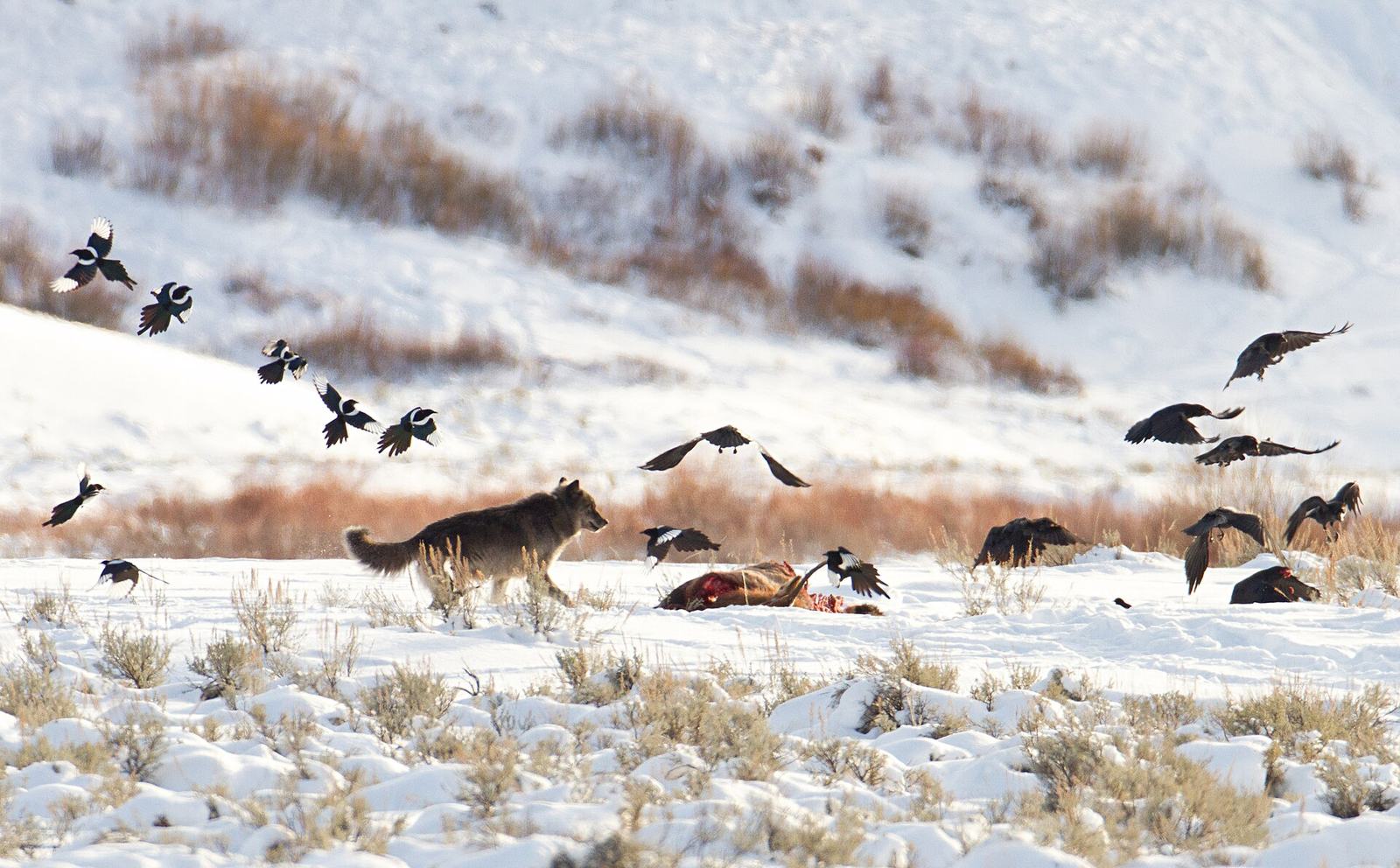
| A wolf chases magpies and ravens from an elk carcass near Soda Butte in January 2016 (top of page) | Yellowstone National Park from Yellowstone NP, USA, public domain, via Wikimedia Commons |
| Researchers collar a wolf during a 2024 winter capture; collars help guides and scientists | YellowstoneNPS, public domain, via Wikimedia Commons |
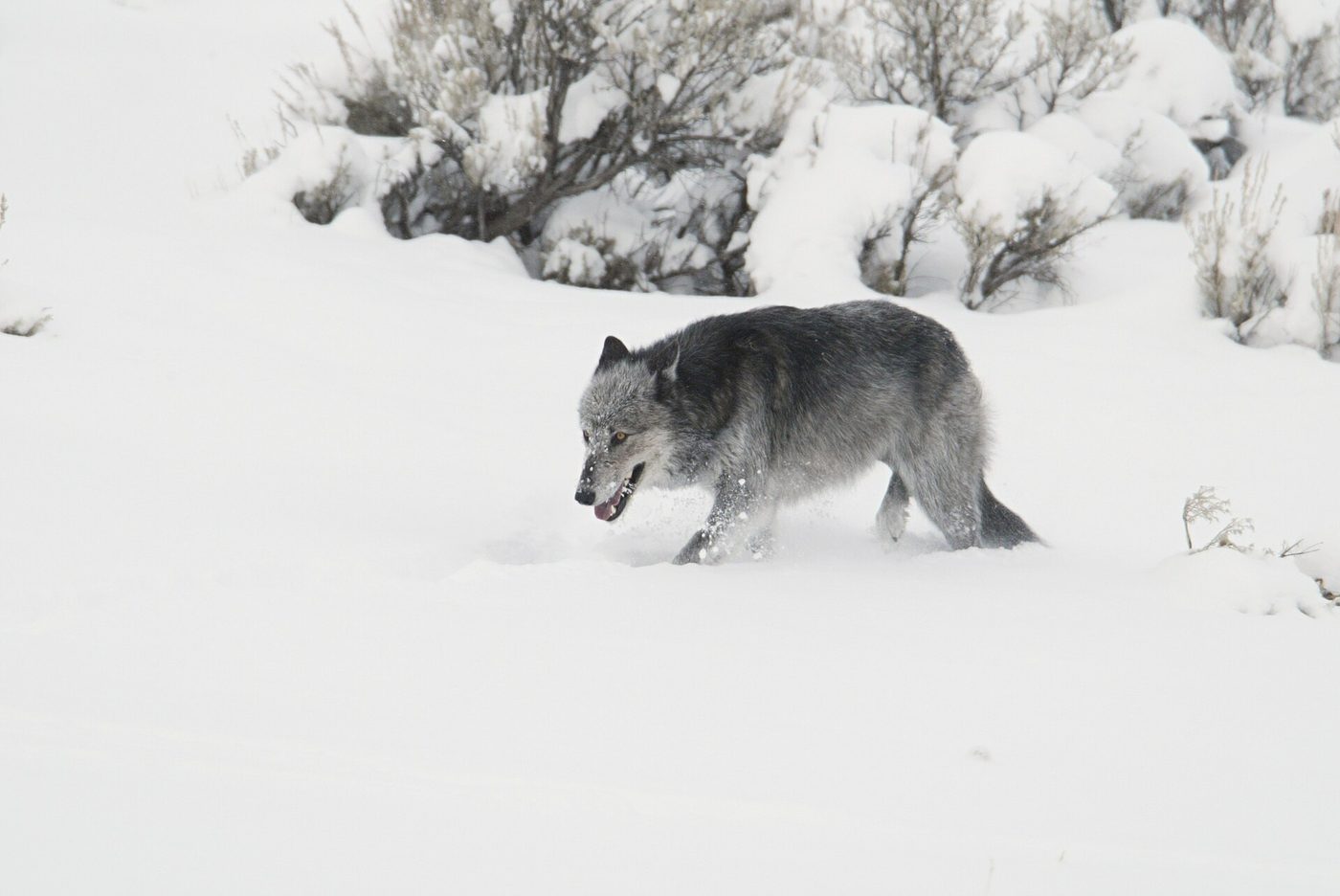
| A Druid pack wolf known to watchers as Half Black, near the Lamar River bridge | Yellowstone National Park from Yellowstone NP, USA, public domain, via Wikimedia Commons |
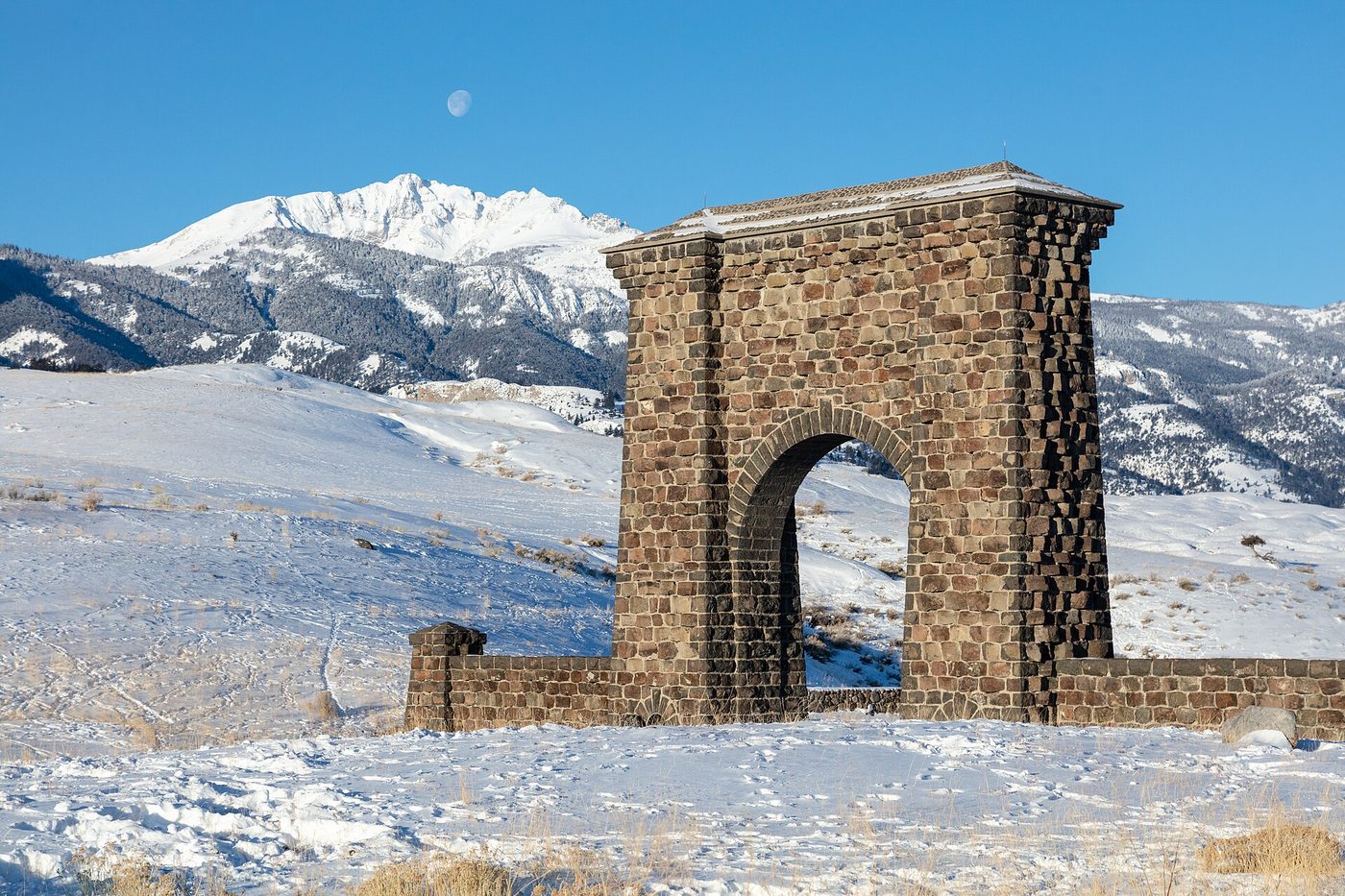
| The Roosevelt Arch at Gardiner, the gateway for almost every winter wolf tour | Yellowstone National Park, public domain, via Wikimedia Commons |
| A Lamar Buffalo Ranch building, recorded by the Historic American Buildings Survey; the ra | US Government, National Park Service, public domain, via Wikimedia Commons |
| A Yellowstone Forever cougar course on snowshoes near Hellroaring | Jacob W. Frank, public domain, via Wikimedia Commons |
| A bison resting in the snow in the Lamar Valley, a common sight on any winter wolf tour | Yellowstone National Park, public domain, via Wikimedia Commons |
| A grizzly, a wolf, coyotes and ravens at a carcass on Swan Lake Flat, a scene more likely | Yellowstone National Park Flickr stream, public domain, via Wikimedia Commons |