No, not all the way through. From November until the spring plowing is done, the only road in Yellowstone open to ordinary cars is the northern route from Gardiner, Montana, past Mammoth Hot Springs and through the Lamar Valley to Cooke City, about 56 miles. Every other road is closed to wheeled vehicles, and from December 15 the interior roads carry only snowcoaches and snowmobiles. So the real answer to can you drive through Yellowstone in winter is that you can drive into the park on one spectacular road, and back out the same way.
That one road happens to be the best wildlife drive in North America in winter. It runs through the park’s northern range, where elk, bison and bighorn sheep spend the cold months and wolves follow them, and it passes Mammoth’s terraces, frozen waterfalls and the wide white bowl of the Lamar Valley. This guide covers exactly which roads are open and closed, the northern road mile by mile, what winter driving there is really like, where to stop, and what to do if you want to reach Old Faithful. For the whole season, including tours, lodging and dates, see our guide to Yellowstone in winter.
Which Yellowstone roads are open in winter?
Only the road from the North Entrance at Gardiner through Mammoth, Tower Junction and the Lamar Valley to the Northeast Entrance and Cooke City is open to cars all winter. From December 15, 2026, the other interior roads open to guided snowcoaches and snowmobiles only, until they close in stages in March.
Here’s the status of each part of the park through the winter. Exact opening and closing dates change a little every year, so our Yellowstone road closures page keeps the current list.
| Road | Early November to mid-December | Mid-December to early or mid-March | Spring |
|---|---|---|---|
| North Entrance to Mammoth, Tower, Lamar and the Northeast Entrance | Open to cars | Open to cars | Open to cars |
| Mammoth to Norris | Closed to all vehicles | Snowcoaches and snowmobiles only | Closed for plowing, then opens to cars in April |
| West Entrance to Madison and Old Faithful | Closed to all vehicles | Snowcoaches and snowmobiles only | Closed for plowing, then opens to cars in April |
| Norris to Canyon | Closed to all vehicles | Snowcoaches and snowmobiles only | Closed for plowing, then opens to cars in April |
| South Entrance to West Thumb, Old Faithful and Lake | Closed to all vehicles | Snowcoaches and snowmobiles only | Opens to cars in May |
| East Entrance over Sylvan Pass | Closed to all vehicles | Limited oversnow travel | Opens to cars in May |
| Canyon to Tower over Dunraven Pass | Closed | Closed | Opens in late May |
| Beartooth Highway east of Cooke City | Closed | Closed | Opens in late May |
Winter storms can close any road for hours or a day, including the northern road. Check before you go with the park’s road status line, 307-344-2117, or sign up for the park’s text alerts by texting 82190 to 888-777 (checked September 2026).
The northern road, mile by mile
The drive from Gardiner to Cooke City is about 56 miles. In summer the park’s own drive-time estimates add up to about two hours without stops: 15 minutes from the North Entrance to Mammoth, 40 minutes from Mammoth to Tower Junction, and an hour from Tower Junction to the Northeast Entrance. In winter, plan on longer, and plan on stopping a lot.
Gardiner to Mammoth Hot Springs (5 miles)
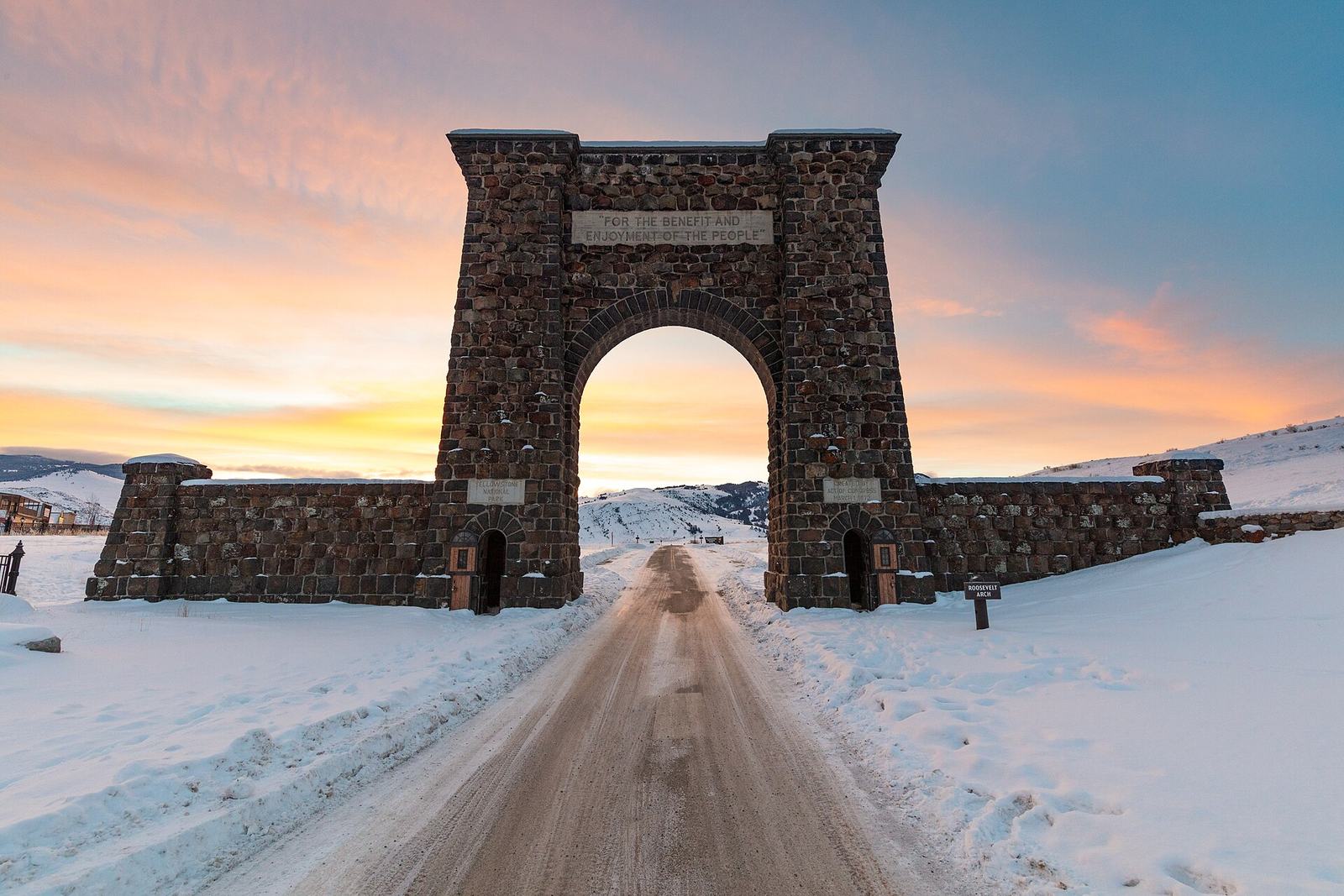
You enter the park at Gardiner through the North Entrance, passing the stone Roosevelt Arch, whose cornerstone was laid in 1903. Since October 2022 the road up to Mammoth has followed an improved version of the old Gardiner stagecoach road, built as a temporary route after floods in June 2022 destroyed the canyon road along the Gardner River. It’s plowed all winter, but it’s steep and winding, so take it slowly on ice. The park has proposed a permanent new North Entrance road, and published an environmental assessment for it in January 2026, but that’s a long-term project.
At Mammoth, the park’s headquarters village, you’ll find the Albright Visitor Center, a general store, a post office and a clinic, all open year-round, along with Mammoth Hot Springs Hotel. Elk often lie on the lawns. The road south toward Norris is gated to cars in winter, so turn east here for Tower.
Mammoth to Tower Junction (18 miles)
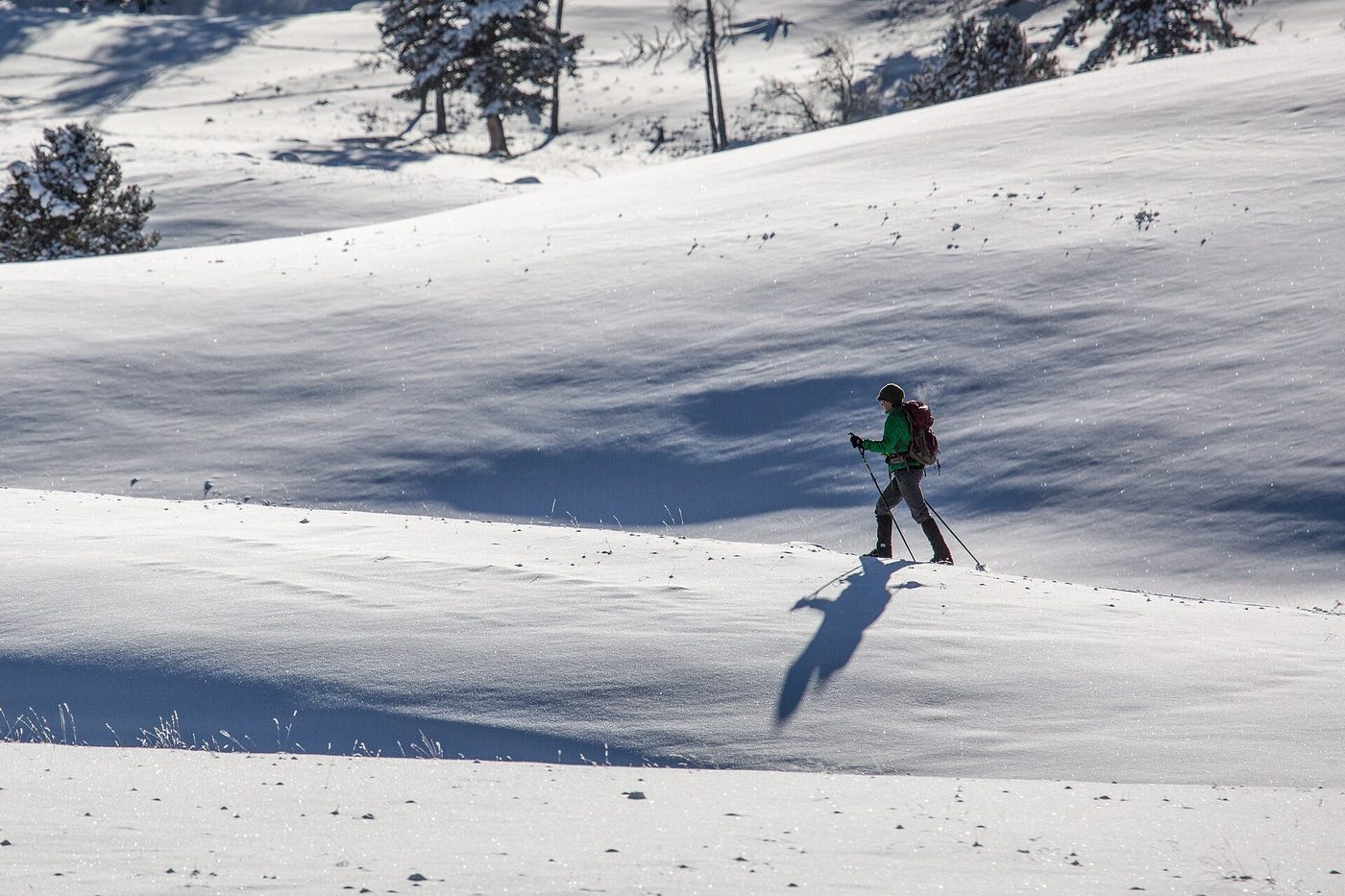
East of Mammoth the road climbs past the Gardner River High Bridge, where construction kept traffic to a single lane through late October 2026, then past Undine Falls, a 60-foot waterfall visible from a roadside pullout. A little farther is the trailhead for Wraith Falls, a 1-mile round trip that’s open all year and makes a good snowshoe outing. The road then crosses Blacktail Deer Plateau, a wide, rolling upland where bison and elk winter; the unpaved Blacktail Plateau Drive is closed to cars in winter and used by skiers.
At Tower Junction, Roosevelt Lodge is closed for the season, but the fuel station sells gas by card around the clock all year. The park’s services page lists year-round card fueling at Mammoth too, but it’s safest to fill up in Gardiner before you set out.
Tower Junction to the Lamar Valley
From Tower Junction the road heads east and crosses the Yellowstone River on a new bridge, 1,285 feet long and about 180 feet high, which opened in November 2025 to replace a 1963 span. Beyond it are the turnoff to Slough Creek and the narrow Lamar Canyon, where shaded curves can hold black ice all day. Then the valley opens up: the Lamar River meandering through wide, snow-covered flats, with ridges on every side. This is wolf country. Look for cars gathered at pullouts and people with spotting scopes, often the first sign that a pack is in view.
The historic Lamar Buffalo Ranch, where the park once raised bison to restore the herd, sits on the valley floor. Today it’s a base for Yellowstone Forever’s field seminars.
The Lamar Valley to the Northeast Entrance (29 miles from Tower in all)
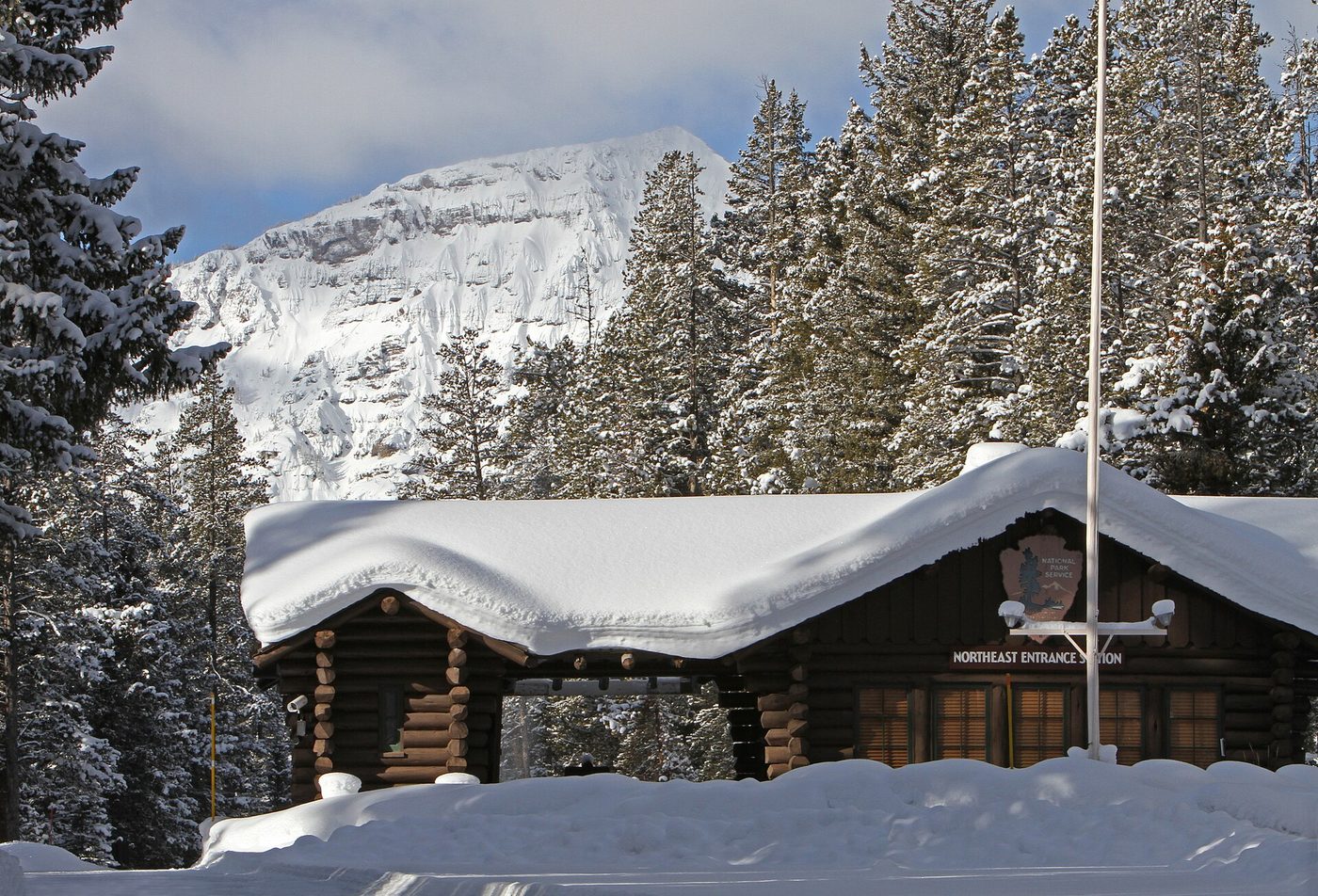
At the east end of the valley the road follows Soda Butte Creek past Soda Butte, the travertine cone of a long-dormant hot spring, and the closed Pebble Creek campground. The mountains close in, and the cliffs of Barronette Peak rise above the road; scan them for mountain goats. The road then threads the narrow, shaded stretch known as Icebox Canyon before reaching the Northeast Entrance, whose 1930s log ranger station is a National Historic Landmark.
Silver Gate and Cooke City
Just beyond the entrance are Silver Gate and, a few miles on, Cooke City, a tiny mountain town with lodging, restaurants and services open through the winter. It’s also one of the region’s biggest snowmobiling hubs, with more than 33 miles of groomed trails nearby, according to the local chamber of commerce.
Here the road ends for cars. East of Cooke City, US-212 over the Beartooth Highway is closed for the winter, and the stretch to Pilot Creek, where the Chief Joseph Highway comes in from Wyoming, is open to snowmobiles and snowcoaches only. So in winter the only way to drive to Cooke City is through Yellowstone from Gardiner, and the only way out is back the same way. Our guide to Cooke City, Montana has more on the town.
What is winter driving on the northern road really like?
It’s a plowed, two-lane mountain road with packed snow and ice for long stretches, especially in shaded canyons. Most days it’s very driveable at modest speeds with good tires. Storms, drifting snow and bison in the road are the real hazards, and the park may close sections for hours or a day in bad weather.
A few things to expect:
- Packed snow and ice. The road is plowed, not bare. Expect a white, packed surface on many days, with ice in shaded spots like Lamar Canyon and Icebox Canyon and on bridges.
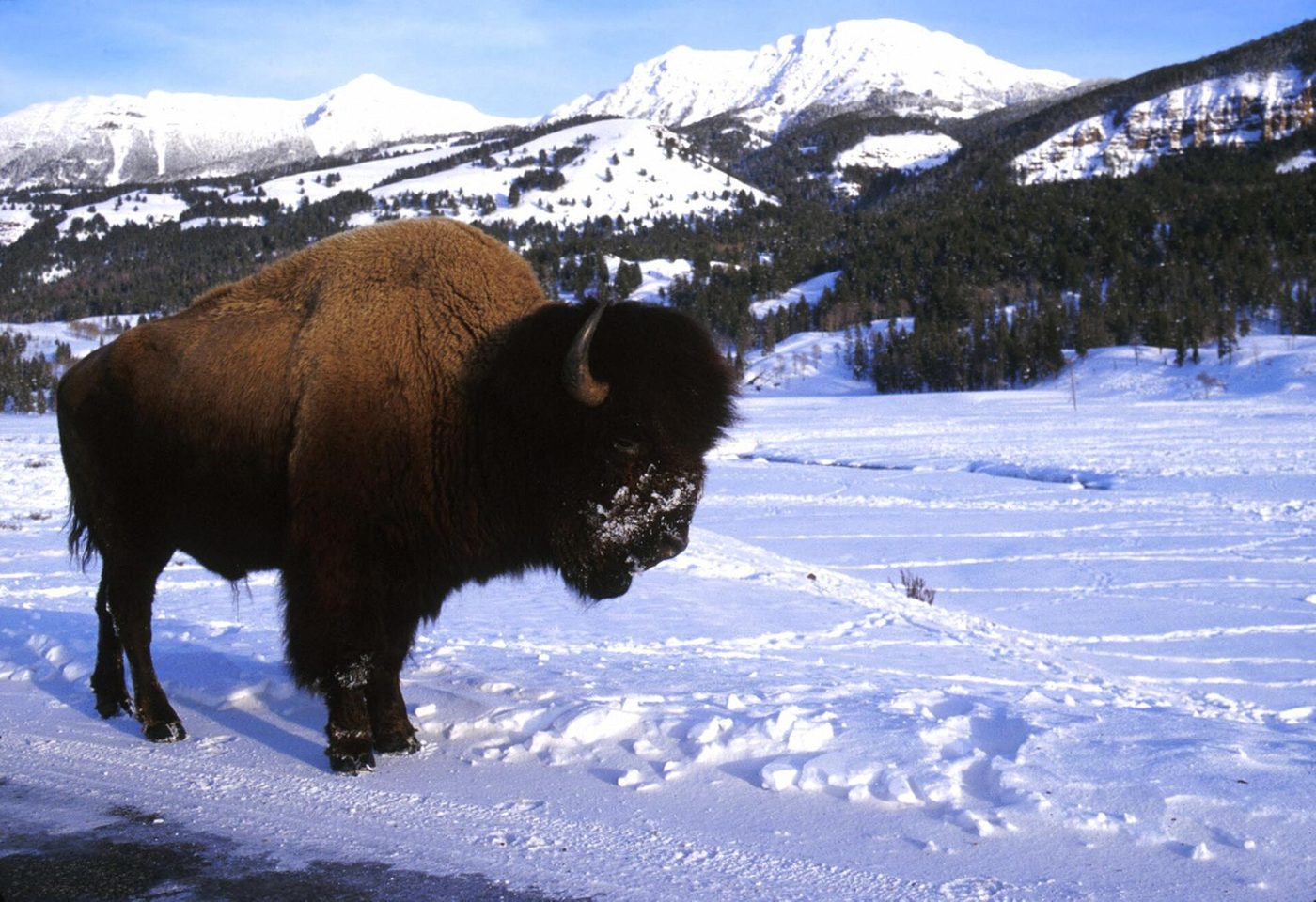
- Bison on the road. In deep snow, bison use the plowed road as the easiest way to travel, often walking right down the middle. You’ll wait for them, sometimes for a while. Don’t honk, don’t nudge, and pass only slowly and with plenty of space when they move aside.
- Wildlife jams. When wolves are visible, dozens of cars can gather at a pullout. Pull fully off the road, and never stop in a travel lane.
- Short days. In January the sun rises around 8 a.m. and sets around 5 p.m., and the best wildlife watching is in the first and last hours of light, so you’ll drive part of the way in the dark.
- Cold. Mornings well below zero are common. Your car needs good antifreeze, a strong battery and a full tank.
The speed limit is 45 mph unless posted lower, and on winter roads you’ll often drive well below it. The park notes that traffic accidents are the most common cause of injury and death in Yellowstone, and winter conditions make that more true, not less.
Getting to Gardiner in winter
Most winter visitors start in Bozeman, whose airport is about 85 miles from the North Entrance. The drive is the easiest in the region in winter: east on I-90 over Bozeman Pass to Livingston, then south on US-89 through Paradise Valley, with the North Entrance about 50 miles south of Livingston. It’s a wide, well-maintained highway most days, though Bozeman Pass and the Livingston area are known for strong winds and blowing snow. If you’d rather not drive, the park’s directions page lists bus service between Bozeman and Gardiner in winter, and Xanterra runs a winter-only shuttle from the Bozeman airport to Mammoth Hot Springs Hotel. For the full drive, see Bozeman to Yellowstone.
Wildlife jams and wolf-watcher etiquette
The Lamar Valley has a winter culture of its own. Dedicated wolf watchers, researchers and guides are out most mornings, and the unwritten rules keep things friendly and the animals undisturbed.
- Pull completely off the road, and never block a pullout entrance or another car. If a pullout is full, drive on to the next one.
- Keep your voice down and your doors quiet. Sound carries across snow, and a slammed door can send a wolf over the ridge.
- Stay by the road. Don’t follow wolves or other animals on foot, and never try to get closer for a photo. The rule is at least 100 yards from wolves and 25 yards from other animals.
- Don’t howl, call or bait. Anything that attracts or disturbs wildlife is prohibited, and so are drones anywhere in the park.
- Ask, then share. Most watchers are happy to point you toward what they’re seeing, and many will let you look through their scope. Return the favor by passing on what you’ve seen.
Tips for driving Yellowstone’s northern road in winter
A little preparation makes this one of the easiest winter drives in the Rockies.
- Drive a capable car. Four-wheel or all-wheel drive with good winter tires is ideal. A front-wheel-drive car with winter tires is fine on most days; all-season tires are a gamble on ice. If you’re renting in Bozeman, ask for an AWD vehicle and check what the rental agreement says about winter roads.
- Fill up before you go. Get gas in Gardiner or Cooke City. Inside the park, the stations at Mammoth and Tower Junction are listed with 24-hour card fueling all year, but don’t count on them.
- Pack a winter kit. Carry a shovel, blankets or a sleeping bag, extra layers, water, food, a flashlight, jumper cables and a phone charger.
- Expect little or no cell service. Coverage is patchy through much of the Lamar Valley. Tell someone your plans and when you’ll be back.
- Check the road before you leave. Call 307-344-2117 or check the park’s alerts, and turn back early if a storm is building.
- Start at dawn, and use the pullouts. The best wildlife viewing is early, and stopping in the travel lane is dangerous.
- Keep your distance from wildlife. Stay at least 25 yards from bison and elk and 100 yards from wolves, even from your car. The Yellowstone safety rules apply all year.
- Leave room and time. Brake gently, keep a long gap, and give plows plenty of space.
Where to stop along the way
Most people drive the northern road for wildlife, but there’s plenty to see between animals.
- Mammoth Hot Springs. Walk the terraces with traction devices, since most boardwalks aren’t maintained in winter. See Mammoth Hot Springs in winter.
- Undine Falls. A quick roadside stop for a 60-foot waterfall hung with ice.
- Wraith Falls. A 1-mile round trip to a 79-foot cascade, good on snowshoes.
- Blacktail Deer Plateau. Scan the open slopes for bison, elk and coyotes, or ski the closed Blacktail Plateau Drive.
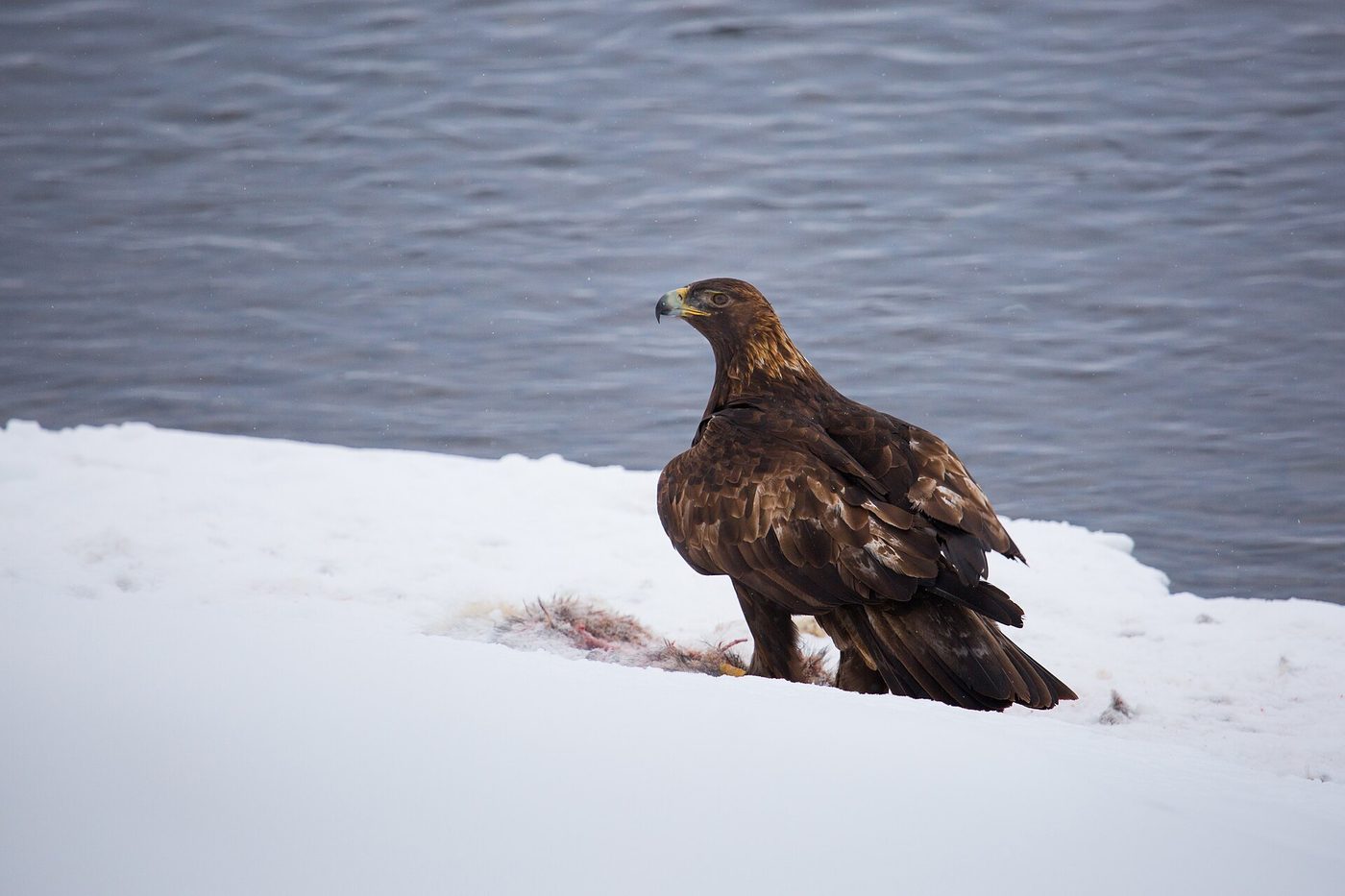
- The Lamar Valley pullouts. The heart of the drive. Wolves, bison, coyotes, foxes and eagles, especially at dawn and dusk.
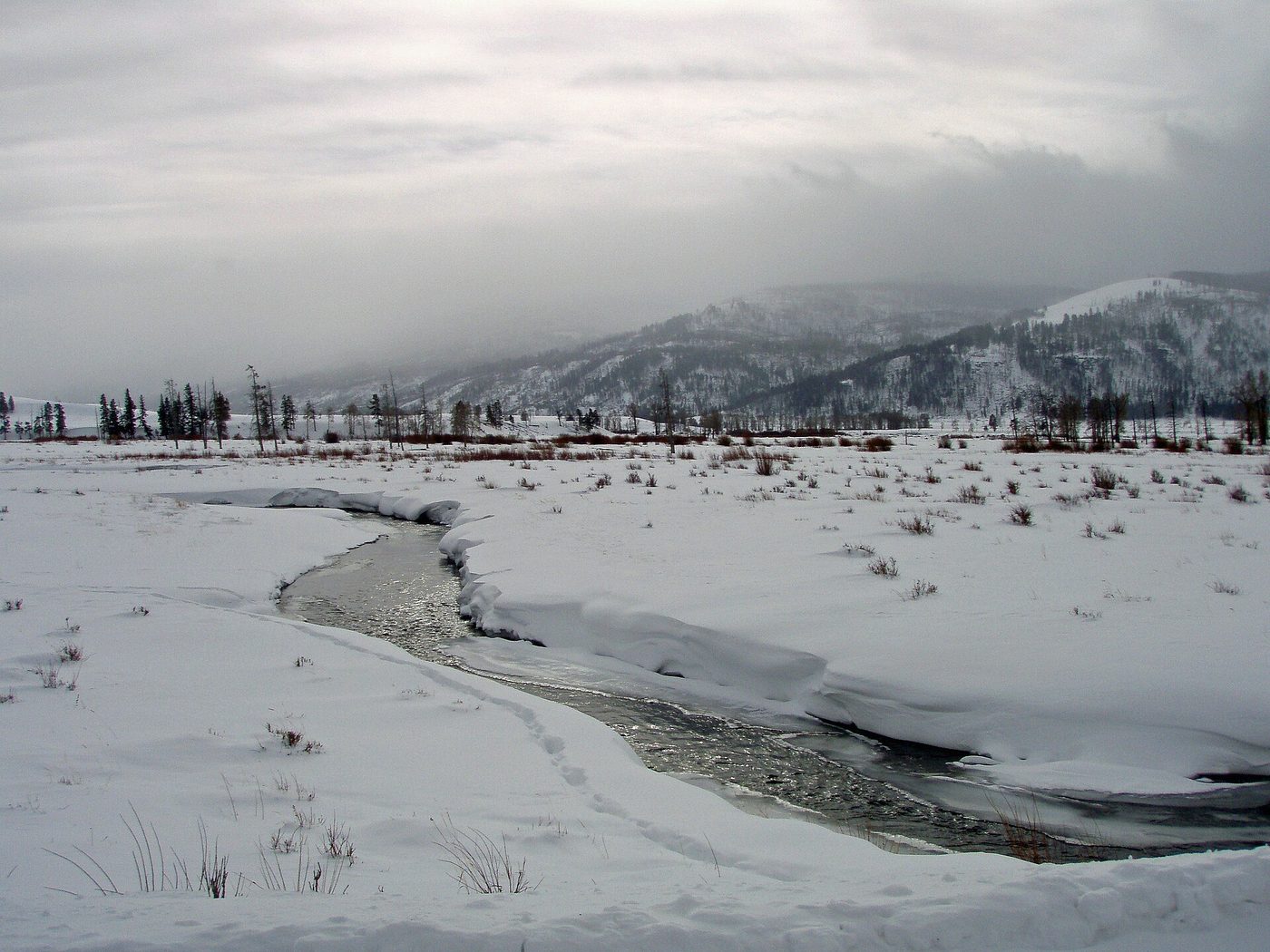
- Soda Butte and Soda Butte Creek. A good place to look for moose and river otters along the creek, and bighorn sheep and mountain goats on the cliffs above.
- Cooke City. Lunch, coffee and a warm-up before the drive back.
The honest tip: midday on the northern range is often quiet, with animals bedded down. If you only have one day, be in the Lamar Valley at first light, spend the middle of the day at Mammoth or in Cooke City, and come back through the valley in the last two hours before dark. See Yellowstone wildlife in winter for what you’re likely to see, and Yellowstone winter wolf tours if you’d rather have an expert along.
Where to stay along the northern road
The northern road has four winter bases, and where you sleep decides how early you can be in the Lamar Valley.
- Gardiner is the practical choice: the most lodging, a few restaurants open through the winter, and a short drive to Mammoth. From here the west end of the Lamar Valley is roughly an hour away in good conditions, longer on snowy days. See Gardiner hotels.
- Mammoth Hot Springs Hotel is the only hotel inside the park you can drive to in winter, open into early March 2027, and it saves you the climb from Gardiner each morning.
- Mammoth Campground stays open all year, with first-come, first-served sites at $25 a night in winter; the park lists a 30-foot limit for RVs and trailers in winter, against 45 feet in summer (checked September 2026). See winter camping in Yellowstone.
- Silver Gate and Cooke City put you minutes from the east end of the Lamar Valley at dawn. They’re small, with limited services, and a storm that closes the park road can leave you stuck for a day, so keep your plans flexible.
Our Yellowstone winter lodging guide compares all of these with West Yellowstone and the Old Faithful Snow Lodge.
Can you drive to Old Faithful in winter?
No. From mid-December to mid-March the roads to Old Faithful are open only to snowcoaches and snowmobiles, and before and after that they’re closed to all vehicles. To see Old Faithful in winter, take a guided snowcoach or snowmobile tour, win a non-commercial snowmobile permit, or stay at Old Faithful Snow Lodge.
Your options, briefly:
- A snowcoach day from West Yellowstone, or Xanterra’s scheduled coach from Mammoth, which costs $179.45 per adult to Old Faithful (checked September 2026). See our Yellowstone snowcoach tours guide.
- A guided snowmobile day, mostly from West Yellowstone or Jackson. Our comparison of snowcoach vs snowmobile helps you choose.
- The non-commercial snowmobile permit, a small lottery for groups who want to ride without a commercial guide. See our guide to the non-commercial snowmobile permit.
- A night at Old Faithful Snow Lodge, reached by snowcoach. See Yellowstone winter lodging.
From West Yellowstone, the West Entrance is right at the edge of town, but the road beyond it is groomed snow from mid-December. You can’t drive your car in, and there’s no road connection in winter from West Yellowstone to the northern road except the long way round, about 170 miles through Bozeman and Livingston.
When do Yellowstone’s other roads reopen to cars?
In spring, in stages. In 2026 the first segments, from the West Entrance to Old Faithful and from Mammoth to Norris and Canyon, reopened to cars on April 17, with the rest following on May 1, May 8 and May 22. The 2027 dates will be similar; our road closures page posts them once announced.
The shoulder seasons on either side of winter catch many visitors out.
- November to mid-December. Most park roads close to cars at the end of October, but the oversnow season doesn’t start until December 15. In between, the northern road is the only road open to motor vehicles, and there are no snowcoach or snowmobile tours. It’s the quietest time of year in the park.
- Mid-March to mid-April. The groomed roads close in stages between March 7 and March 15 so crews can plow them. For a few weeks the interior is closed to motor vehicles again. Once snow removal is finished, usually by early April, cyclists are allowed on some segments before cars, including the 49 miles between Mammoth and the West Entrance and the 6 miles between the East Entrance and the east side of Sylvan Pass.
- Late spring. Dunraven Pass between Canyon and Tower and the Beartooth Highway are the last to open, in late May.
Throughout all of this, the northern road stays open, weather permitting. For month-by-month detail, see Yellowstone in April and our Yellowstone road closures page.
A day on the northern road: a sample itinerary
Here’s how to spend a single winter day on the one road you can drive, based in Gardiner or Mammoth.
- 6:30 a.m. Leave Gardiner with a full tank, coffee and a packed lunch.
- About 7:30 a.m. Reach the Lamar Valley as the sky starts to lighten. Find the scopes and watch for wolves.
- Mid-morning. Continue east past Soda Butte to Barronette Peak, scanning for moose and mountain goats.
- Late morning. Warm up and eat in Cooke City.
- Early afternoon. Drive back west slowly, stopping at Soda Butte Creek and the Lamar pullouts.
- Mid-afternoon. Stop at Undine Falls, or snowshoe to Wraith Falls.
- Last light. Walk the Mammoth terraces as the steam turns pink, then drive the last five miles down to Gardiner.
With two days, split them: spend the night in Cooke City or Silver Gate so you’re minutes from the valley at dawn. Our Yellowstone in January guide has a longer itinerary that adds Old Faithful by snowcoach, and things to do in Yellowstone in winter covers the rest of the season’s options. For everything else about the cold months, from tours to lodging to what’s open, see our complete Yellowstone winter guide.
Frequently asked questions
Is the road from Gardiner to Cooke City open in winter?
Yes. The road from the North Entrance at Gardiner through Mammoth, Tower Junction and the Lamar Valley to the Northeast Entrance and Cooke City is open to cars all year, weather permitting. Storms can close sections for hours or a day, so check the park’s road line, 307-344-2117, before you go.
Can you drive from West Yellowstone to Old Faithful in winter?
No. From mid-December to mid-March the road from the West Entrance to Old Faithful is open only to snowcoaches and snowmobiles, and it’s closed to all vehicles in November, early December and the spring plowing period. Take a snowcoach or guided snowmobile tour from West Yellowstone instead.
Do you need four-wheel drive in Yellowstone in winter?
It isn’t required, but it’s strongly recommended, along with good winter tires. The northern road is plowed but often snow-packed and icy, especially in shaded canyons. A front-wheel-drive car with proper winter tires handles most days; all-season tires on ice are the bigger risk.
Can you drive from Cooke City to Cody or Red Lodge in winter?
No. East of Cooke City, the Beartooth Highway is closed all winter, and the stretch of US-212 to Pilot Creek, where the Chief Joseph Highway joins, is open only to snowmobiles and snowcoaches. In winter, Cooke City is reachable by car only through Yellowstone from Gardiner.
How long does it take to drive from Gardiner to Cooke City in winter?
About two hours without stops, based on the park’s summer drive-time estimates for the 56 miles, and longer on snowy days. Most people make a full day of it, with wildlife stops in the Lamar Valley and lunch in Cooke City.
Is Mammoth Hot Springs open in winter?
Yes. You can drive to Mammoth all winter on the plowed road from Gardiner. The terraces are open, though most boardwalks aren’t maintained, so bring traction devices. The Albright Visitor Center, general store, post office, clinic and Mammoth Hot Springs Hotel all stay open through the winter season.
Can you drive an RV in Yellowstone in winter?
Only on the northern road, and with care. The road from Gardiner to Cooke City is plowed but often icy, and bison walk it all winter. Mammoth Campground takes RVs up to 30 feet in winter on a first-come, first-served basis, with no hookups. Every other campground in the park is closed.
Do you have to pay the entrance fee to drive the northern road?
Yes. The standard private-vehicle fee is $35 for seven days, and non-US residents aged 16 and older owe a $100 nonresident fee on top unless they hold an annual or America the Beautiful pass (checked September 2026). See our Yellowstone entrance fee page for the details.
Sources
- National Park Service, Park roads
- National Park Service, Directions and drive times
- National Park Service, Safety in Yellowstone
- National Park Service, North Entrance Road environmental assessment news release
- Cooke City Chamber of Commerce, Cooke City and Silver Gate
Image credits
| Photo | Credit |
|---|---|
| Winter sunrise at the Roosevelt Arch in Gardiner, where the park’s one year-round car road (top of page) | Yellowstone National Park, public domain, via Wikimedia Commons |
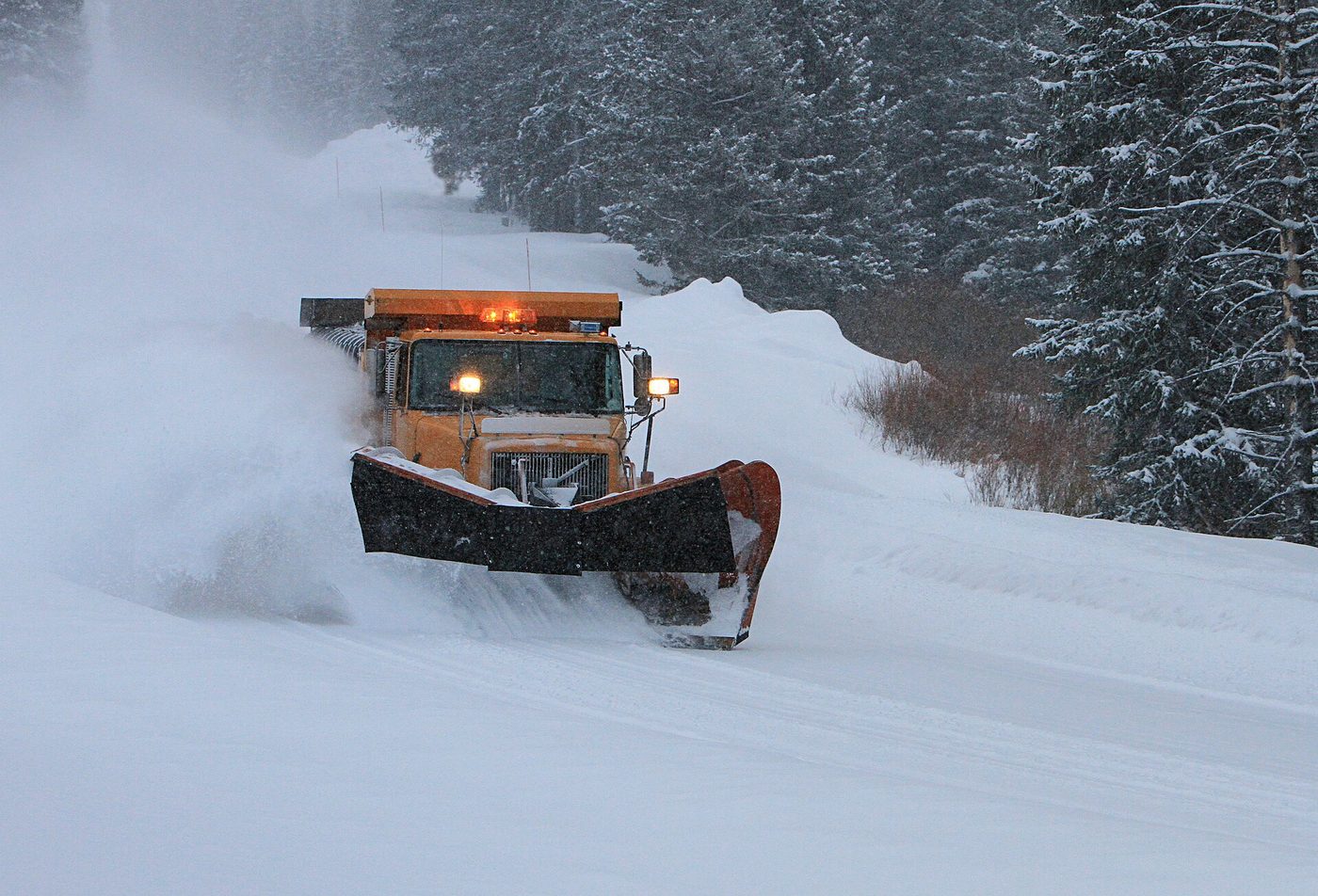
| A plow clearing the road near the Northeast Entrance, which keeps the northern route open | NPS/Jim Peaco, public domain, via Wikimedia Commons |
| Skiing on Blacktail Deer Plateau, where the unpaved summer drive becomes a winter ski rout | Neal Herbert, public domain, via Wikimedia Commons |
| The Northeast Entrance station in February; Silver Gate and Cooke City lie just beyond | Yellowstone National Park from Yellowstone NP, USA, public domain, via Wikimedia Commons |
| Soda Butte Creek in January, near the east end of the Lamar Valley | Mike Cline, public domain, via Wikimedia Commons |
| A golden eagle on the Lamar River in January | Neal Herbert, public domain, via Wikimedia Commons |
| A bison bull near Soda Butte Creek, one of the many you’ll pass on the northern road | NPS Photo, public domain, via Wikimedia Commons |