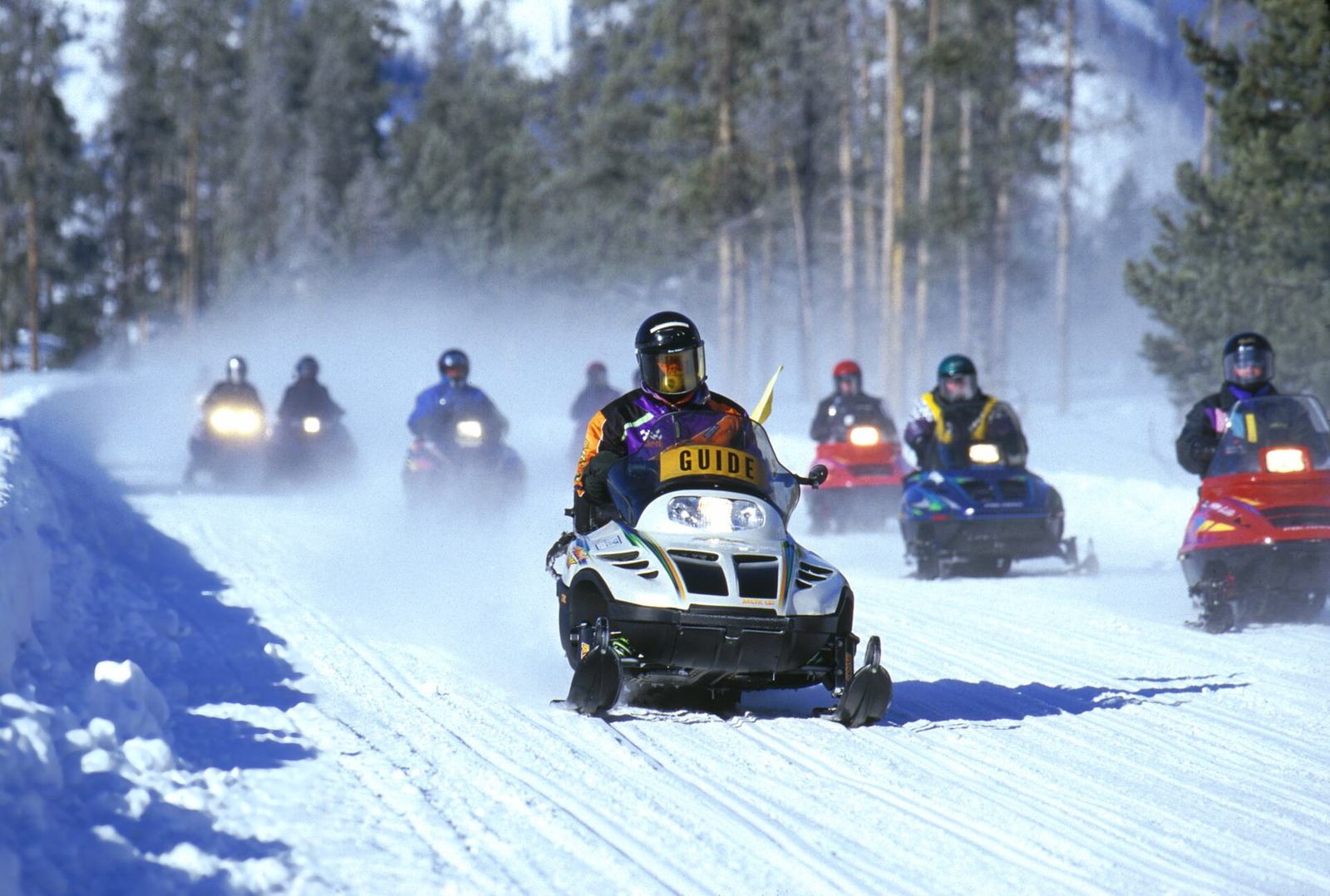
Yellowstone snowmobile tours run from 15 December to mid-March, and almost everyone who takes one does so with a commercial guide, because that is what the park’s rules require unless you hold a non-commercially guided permit obtained through a lottery the previous August. The classic trip is a day ride from West Yellowstone to Old Faithful and back, roughly 65 miles round trip, and published 2026-27 prices run from about $322 to $525 per rider depending on the operator and what is included (checked September 2026).
It is one of the most memorable things you can do in an American national park, and it is also more regulated, more expensive and more weather-dependent than most people expect. This page sets out the season dates by road segment, who runs the tours, what they cost, what the rules actually are, and whether a snowcoach is the better choice. For the season as a whole, see our Yellowstone in winter guide.
The rule that shapes everything: you need a guide
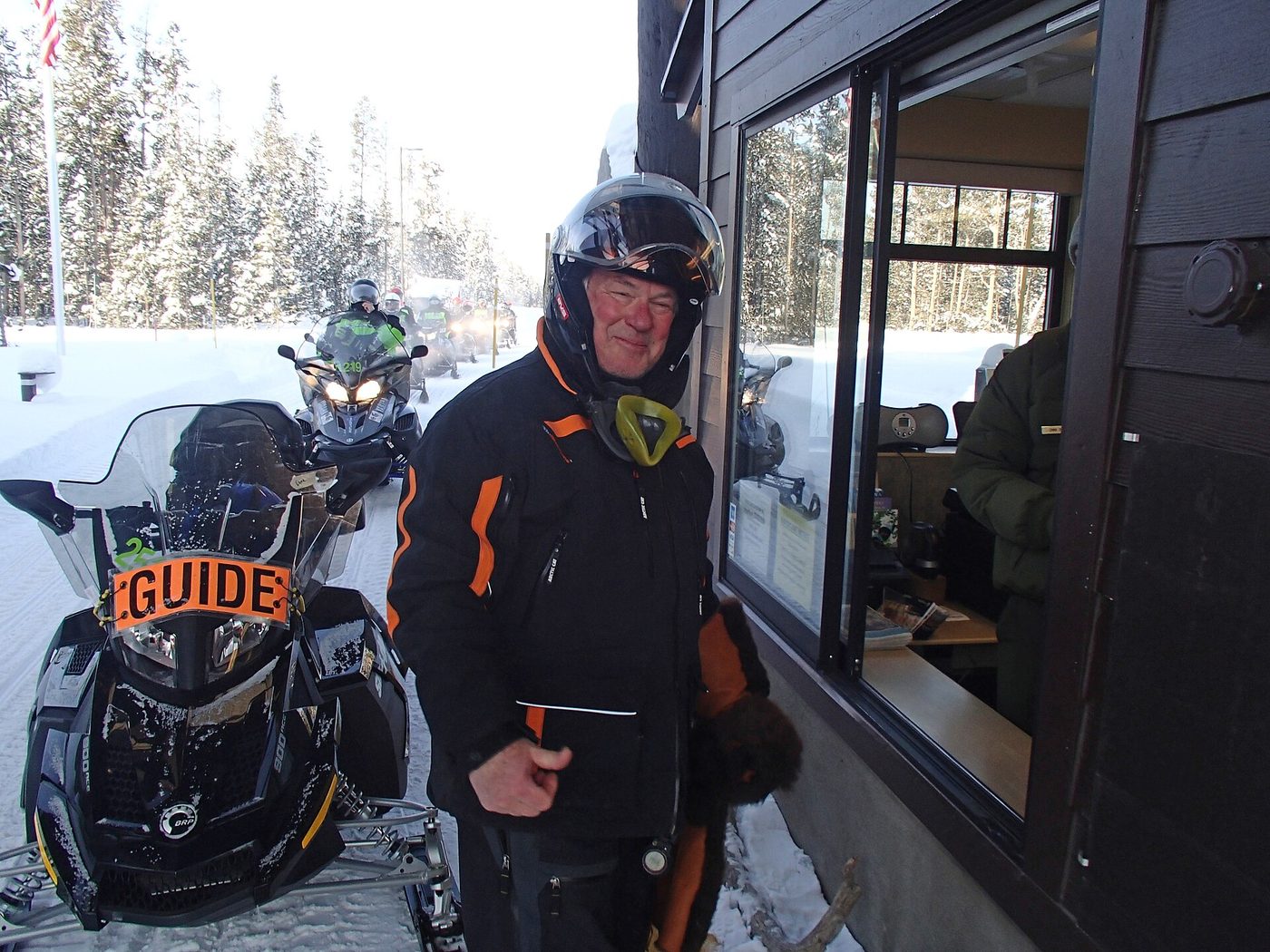
Yellowstone does not let you ride your own snowmobile into the park and go where you like. Oversnow access is managed, and there are two legitimate routes in.
Commercially guided tours. A licensed operator supplies the machine, the guide, the safety briefing and usually the clothing, and leads a group along a set route. This is how the large majority of snowmobile visitors enter the park, and it is the only option available to anybody making a decision in December.
The non-commercially guided snowmobile access programme. A limited number of permits allow a small private group to ride without a commercial guide, provided one member completes the park’s required training and the group uses machines meeting the park’s technology standards. Permits were reported at $40 per day with an application window of 1 to 31 August for the following winter (checked September 2026). The park’s dedicated page for this programme has been intermittently unavailable, so confirm the current cost, dates and process directly with Yellowstone’s winter use office before relying on it — and note that if you are reading this after August, the window for the coming season has closed.
Everything else — riding in on your own machine, hiring one in West Yellowstone and entering unguided, following a friend who has done it before — is not permitted.
The 2026-27 oversnow season
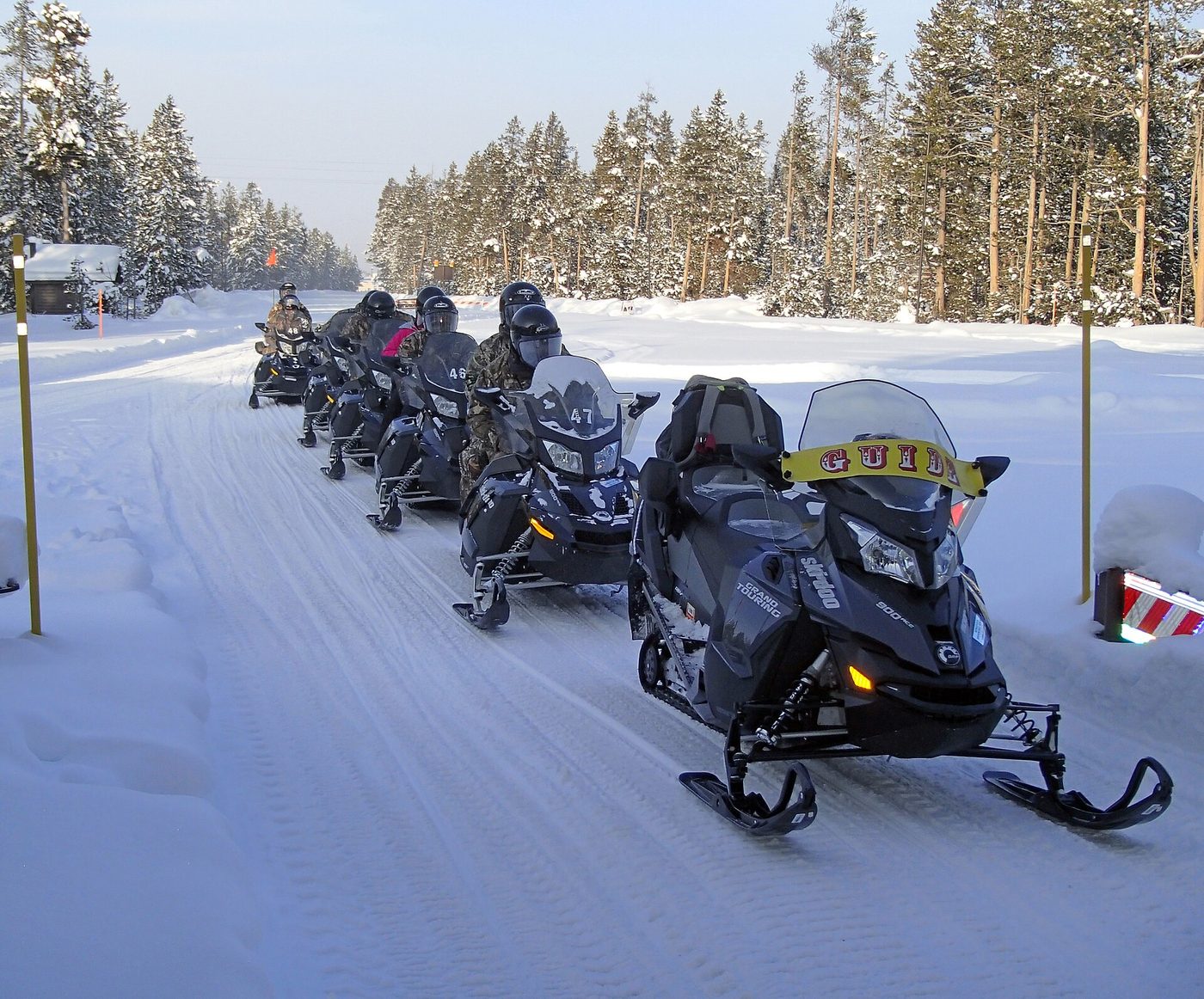
Oversnow travel opened at 8 a.m. on 15 December 2026 and closes in stages through March, by road segment (National Park Service, checked September 2026).
| Segment | Oversnow season 2026-27 |
|---|---|
| Mammoth to Norris | 15 December – 7 March |
| Norris to Madison | 15 December – 9 March |
| Norris to Canyon | 15 December – 9 March |
| Canyon to Washburn | 15 December – 9 March |
| Canyon to Fishing Bridge | 15 December – 14 March |
| West, South and East entrances and remaining roads | 15 December – 15 March |
Two things follow from that table. The northern segments close first, so a mid-March trip is a West Entrance trip. And the season has hard edges: there is no oversnow travel before 15 December and none after 15 March, with the roads then closed to everything until the spring plowing finishes in April. Our road closures page has the full calendar including the spring openings.
The opening date is a plan rather than a guarantee. Grooming depends on snowpack, and a warm or dry start to the season can delay routes or restrict which segments open first. If you are booking the third week of December, build a fallback day into the itinerary.
Where do Yellowstone snowmobile tours start?
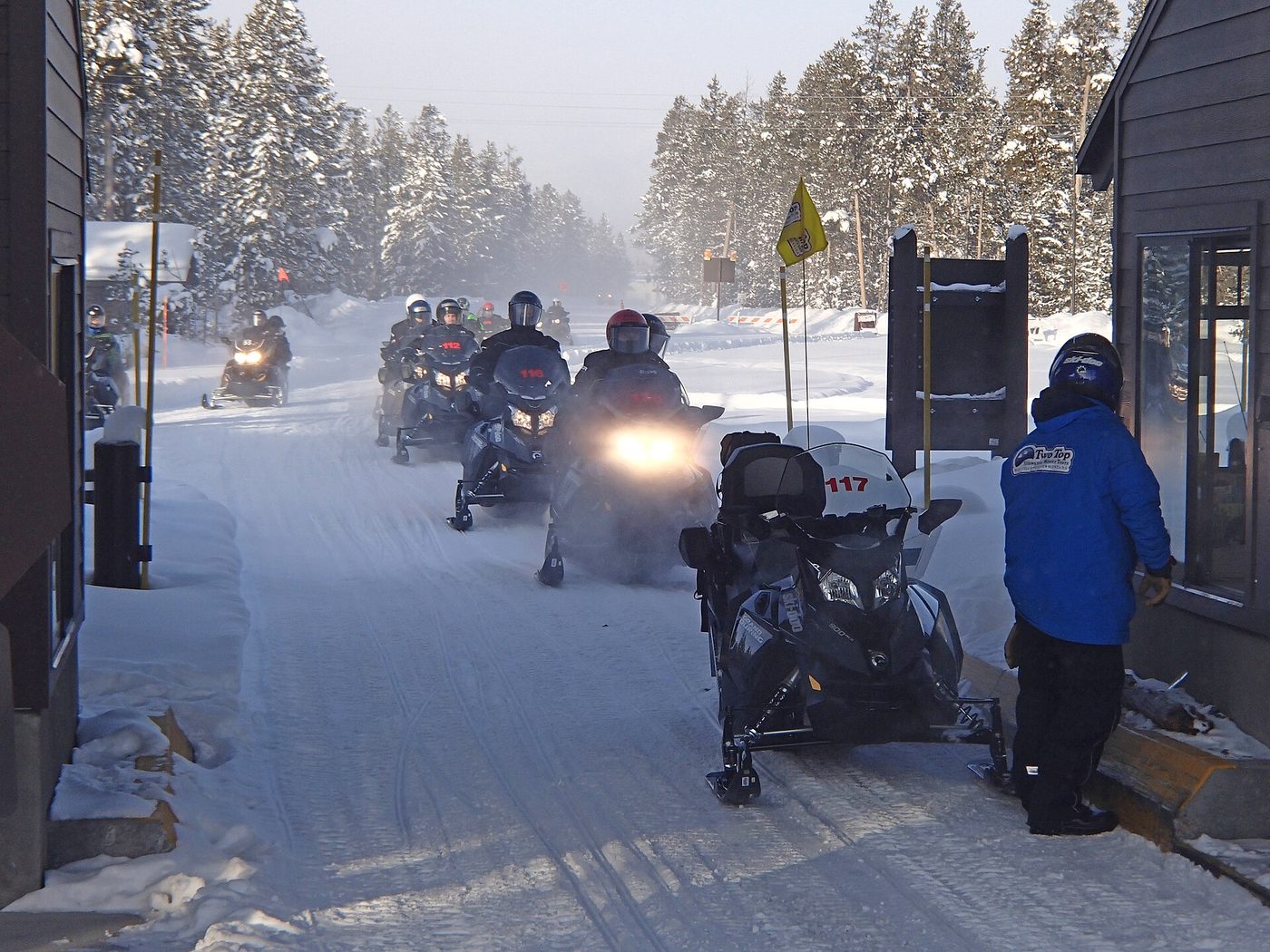
Four places: West Yellowstone, Flagg Ranch near the South Entrance, Cody through the East Entrance, and Mammoth in the north. West Yellowstone runs the large majority of departures and offers the shortest ride to Old Faithful, so unless you are already based elsewhere, that is where you start.
West Yellowstone, Montana. The main snowmobile town by a wide margin, with the largest concentration of operators and the shortest route to Old Faithful. Almost every published day tour starts here. See our West Yellowstone guide.
Flagg Ranch and the South Entrance. The Jackson-side approach, running north from Grand Teton to Old Faithful. Operators run from Jackson with a transfer to the staging area.
The East Entrance, from Cody. Over Sylvan Pass, which is the most avalanche-prone road in the park and is subject to closures for control work. The quietest and least reliable approach.
Mammoth and the North Entrance. You can drive to Mammoth year-round and pick up a guided ride south from there. Fewer operators, but it pairs well with a northern-range wildlife trip.
For a first trip, West Yellowstone is the straightforward answer: more operators, more departures, more competition on price, and the shortest ride to the geyser basins.
The Old Faithful day trip: what it is actually like
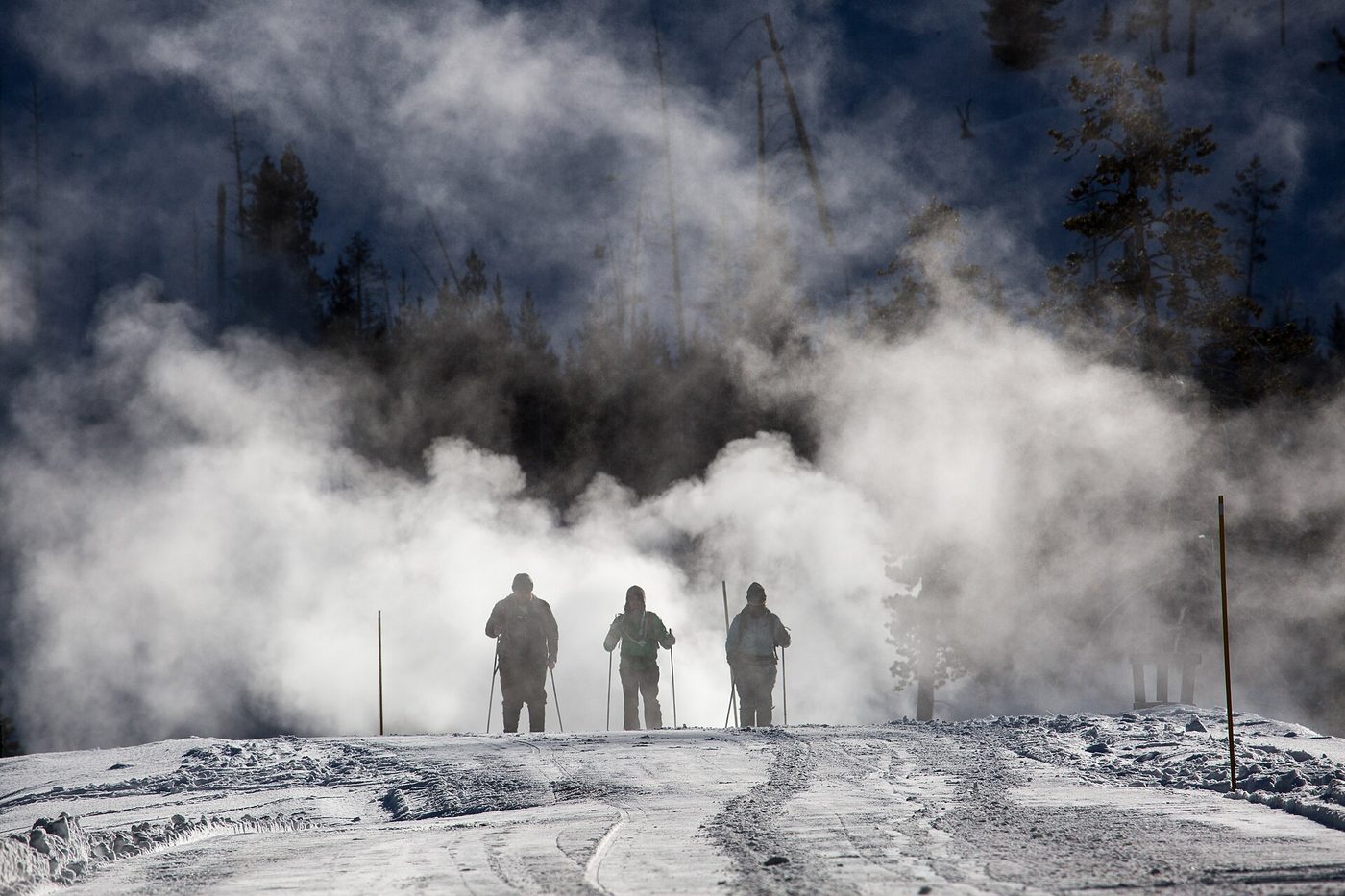
The standard tour is a full day, and it is a long one. A realistic shape:
7:30 a.m. Check in at the operator’s base in West Yellowstone. Paperwork, a safety and rules briefing, and kitting out in the supplied suit, boots, helmet and gloves.
8:30 a.m. Ride to the West Entrance, pay or present park fees, and onto the groomed road toward Madison Junction.
Morning. The Madison valley along the river, where bison and elk use the thermal ground and the plowed road edge. Stops at Fountain Paint Pot and the Firehole. Everything is white, steaming and almost silent when the engines stop.
Midday. Arrive at Old Faithful. Two to three hours off the machines: the Upper Geyser Basin boardwalks, an eruption or two, lunch at the Snow Lodge, and time in the warming hut.
Afternoon. The same route back, with different light. Sunset is around 5 p.m. in midwinter, so the last hour is often the best of the day.
4:30 to 5:30 p.m. Back in West Yellowstone.
The riding itself is not technically demanding. Groomed park roads, a strict speed limit, single file behind a guide, no off-trail riding of any kind. Anyone who can ride a bicycle can manage it. What is demanding is the cold: you are sitting still on a moving machine at 10°F for several hours, and the wind chill is what people remember.
What a Yellowstone snowmobile tour costs
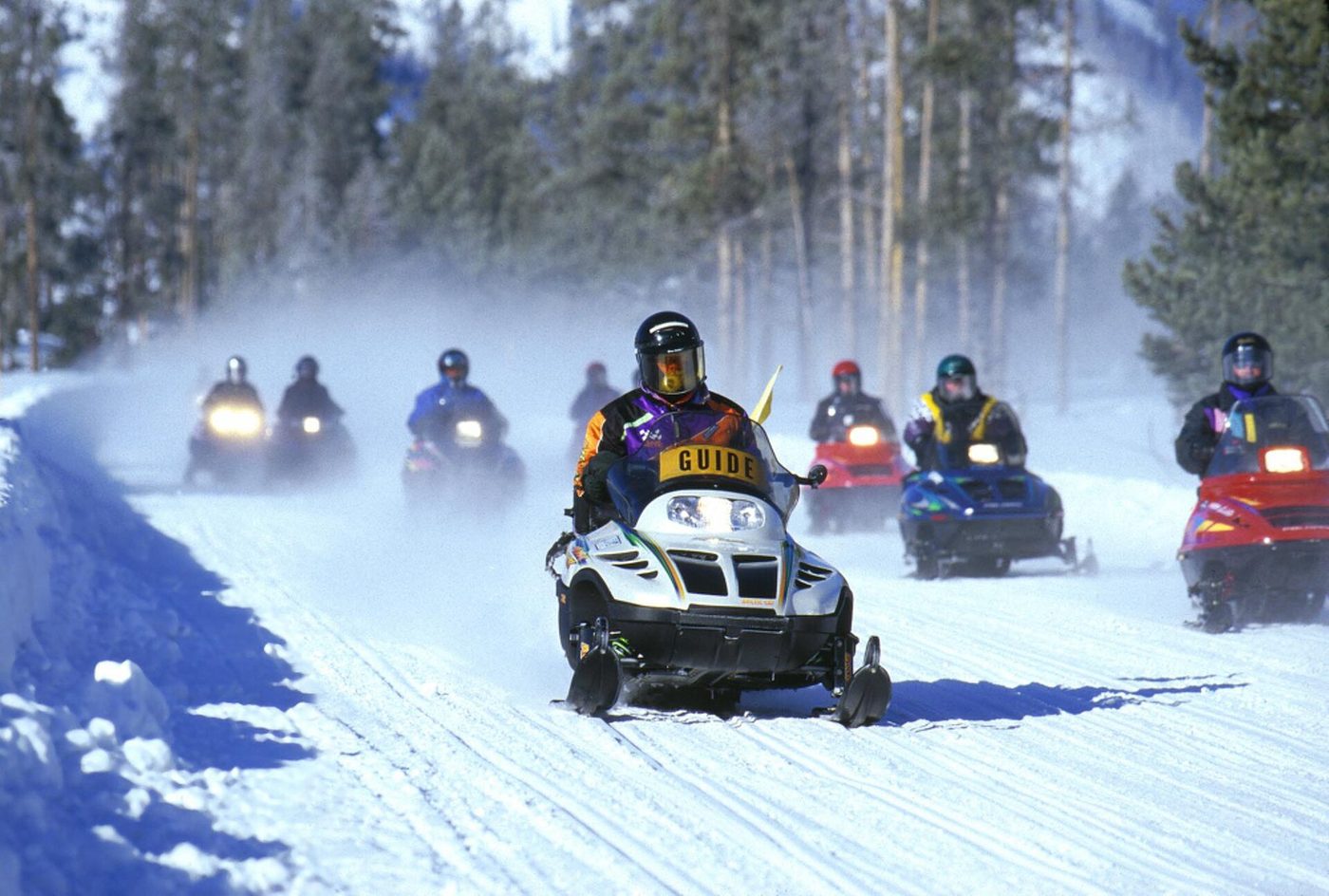
Prices vary more than you would expect between operators, and the quoted figure often excludes the park entrance fee. Published 2026-27 rates (checked September 2026):
| Tour | Published price |
|---|---|
| Day tour to Old Faithful, single rider | From about $322 |
| Day tour to Old Faithful, two riders on one machine | From about $343 |
| Day tour, premium operator, single rider | About $490 plus a $50 park fee |
| Day tour, passenger on a guide’s machine | About $300 plus a $20 park fee |
| Day tours advertised “from” | Around $525 at some operators |
| Package: 3 nights lodging plus one day tour | From about $1,324 per couple |
| Package: 4 nights lodging plus tours | From about $1,890 per couple |
| Six-day guided winter tour, all inclusive | About $2,819 to $3,499 per person |
Rates as published by operators and aggregators (checked September 2026); confirm the current price and what it includes directly with the operator, because these change season to season.
The park’s own entrance fee is separate and modest: $30 covers up to two snowmobiles with up to four total passengers for seven days, or $20 per person on foot or skis (checked September 2026). Where an operator quotes a “$50 park fee”, that is their own bundled charge rather than the NPS rate. The $100 nonresident fee for each non-US resident aged 16 and over applies here as everywhere else in the park — our entrance fee page covers it.
Two riders on one machine is the obvious saving, and on a first trip it works well: you swap the controls at the stops and the passenger gets to look around. The catch is that a full day two-up is less comfortable than it sounds, particularly for the person behind.
What you will actually see along the route
The West Entrance to Old Faithful ride is not a transfer between two sights; the road itself is the trip.
The Madison valley. The first fourteen miles follow the Madison River, which stays open all winter because it is fed by thermal water. Bison and elk congregate along it for exactly that reason, and this is the most reliable wildlife stretch of the route. Trumpeter swans and goldeneye use the open water. Bison frequently stand on the groomed road, which is the easiest walking surface available to them, and your group will wait.
Frost-covered everything. Downwind of any thermal feature, the trees are coated in hoar frost — white, spiky and completely unlike snow. Whole stands of lodgepole look like they have been dipped in sugar. It is the single most photographed thing on the ride after the geysers.
The Firehole and the Lower Geyser Basin. Steam everywhere, thermal runoff cutting black channels through the snow, and the Fountain Paint Pot area. Most tours stop here.
Old Faithful in winter. Cold air turns the eruption into a dense white column visible from a long way off, and the crowd is a few dozen people rather than a few thousand. Our Old Faithful in winter page covers the area, and our Old Faithful eruption times page explains the predictions, which resume once the visitor centre reopens in mid-December.
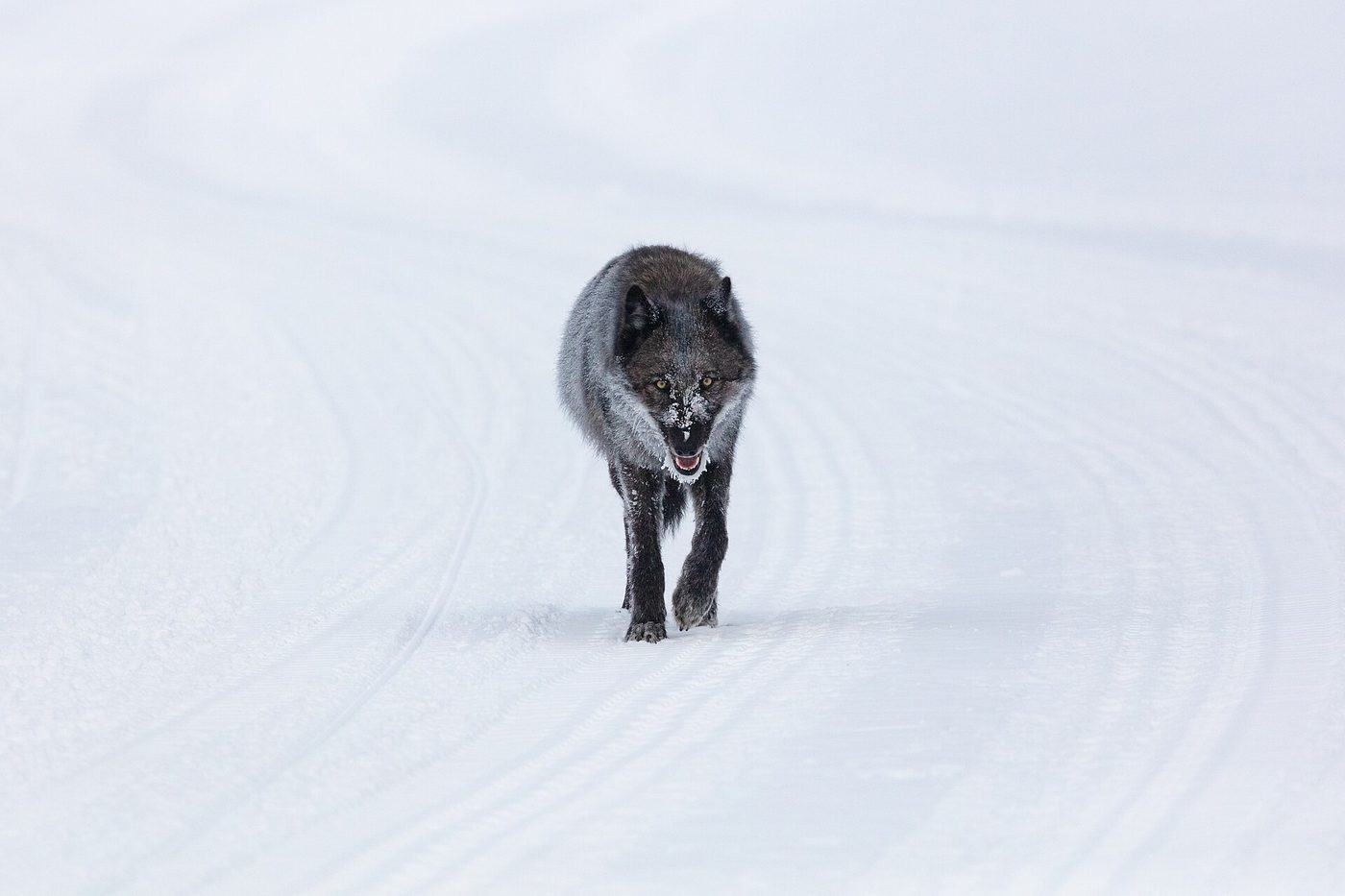
Coyotes, foxes and the occasional wolf. All far more visible against snow than in summer, and all comfortable using the groomed roads. A wolf on the road in front of a snowmobile group is not common, but it happens often enough that guides have a routine for it: stop, kill the engines, wait.
What you will not see from a snowmobile is the Grand Canyon of the Yellowstone — that needs a separate trip to Canyon, which some operators run as a second-day option — or Lamar Valley, which is on the one road you can drive.
Choosing an operator
There is no single best operator, and the differences that matter are not the ones the websites emphasise.
Group size is the one to ask about first. A group of six behind one guide is a different day from a group of eighteen. Smaller groups stop more, wait less and move at a pace closer to what you want.
What is included. Park entrance fees, lunch, clothing, helmet and fuel vary. A tour that looks $100 cheaper can be the same price once everything is added.
Machine type and age. All machines in the park must meet the park’s technology standards, but a current-model four-stroke with heated grips and a taller windscreen is a considerably warmer day than an older one.
Departure time. Earlier departures get the frost, the best light and the quieter road. If two operators are otherwise equal, take the earlier start.
Cancellation terms. Winter tours get cancelled for weather. Find out whether that means a refund or a credit before you pay.
Our winter tours page compares the wider set of options, including wildlife and photography trips, if a snowmobile day is only part of the plan.
What is included, and what to bring
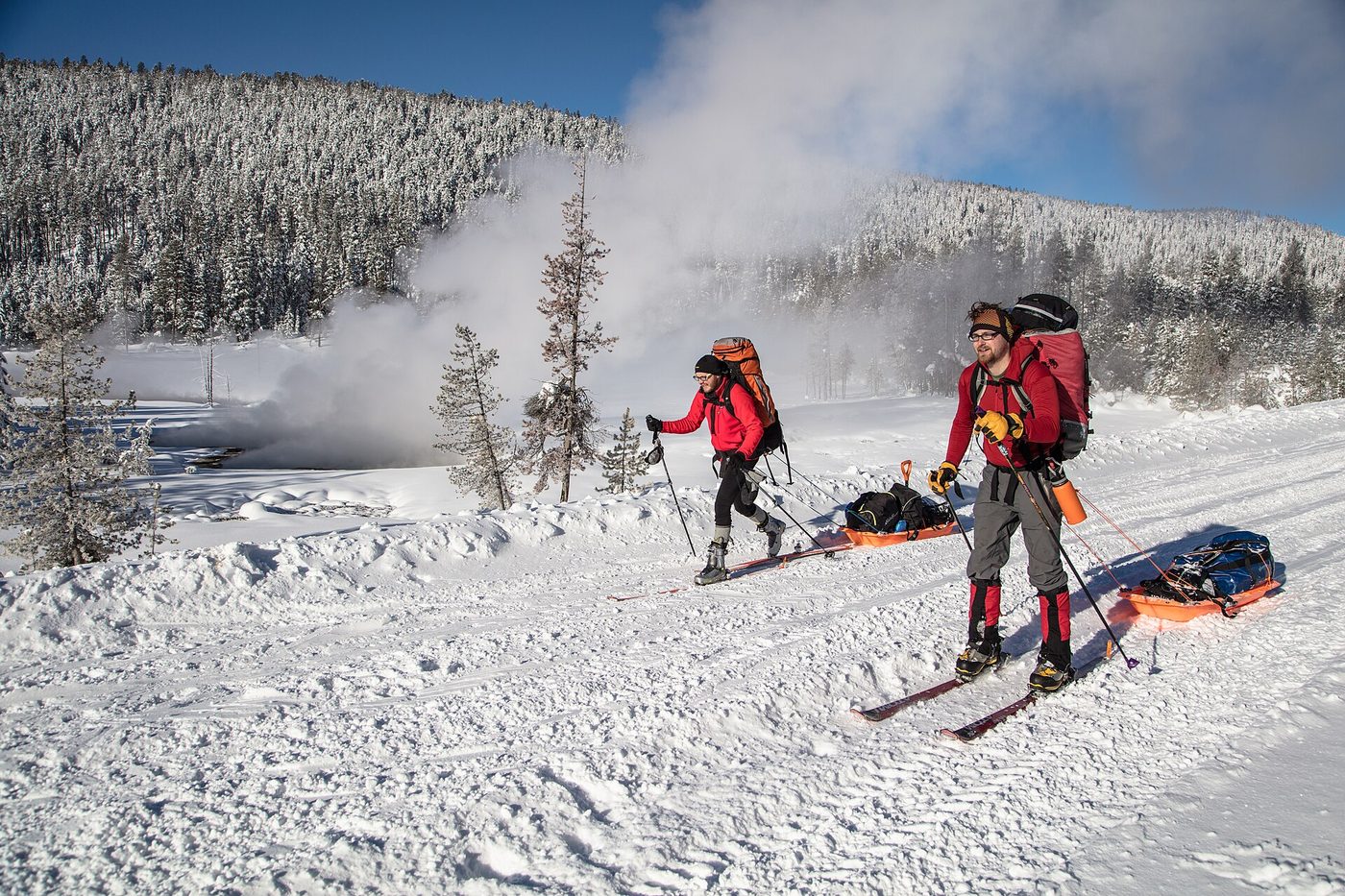
Most operators include the snowmobile and fuel, a guide, an insulated suit, boots, helmet with face shield and gloves, and a safety briefing. Many include lunch or a lunch stop. Park entrance fees are sometimes included and sometimes not — this is the most common source of a price surprise, so ask.
What to bring yourself:
- Base layers, merino or synthetic, top and bottom. Never cotton.
- A warm mid-layer, fleece or light down, to go under the supplied suit.
- Thick wool socks, one pair, not two — two pairs in a borrowed boot restricts circulation and makes your feet colder.
- A balaclava or neck gaiter. The supplied helmet covers your head, not the gap at your neck.
- Glove liners. The supplied gauntlets are warm but clumsy; thin liners let you use a camera at stops.
- Sunglasses. Snow glare on a bright day is severe, and the visor is not enough.
- Hand and toe warmers. A few dollars, and they change the last hour of the ride.
- A small camera or phone in an inside pocket. Cold drains batteries fast.
Leave the big camera bag behind. Storage on a snowmobile is limited and anything loose will not survive the day.
Rules, age limits and safety
Yellowstone’s winter use rules are stricter than snowmobiling anywhere else in the region, and the operator enforces them because their permit depends on it.
- Guided travel only, unless you hold a non-commercially guided permit.
- On the groomed roads only. Off-trail and off-road riding is prohibited everywhere in the park, without exception.
- Machines must meet the park’s air and sound technology standards. Operators supply compliant machines; this is one reason you cannot simply bring your own.
- Speed limits are low and enforced, and the group rides in single file behind the guide.
- A valid driver’s licence is required to operate a machine. Minimum ages for driving versus riding as a passenger vary by operator, so check before booking a family trip — younger children generally ride as passengers or take a snowcoach instead.
- Wildlife rules apply as they do in summer. Stay 100 yards from wolves and 25 yards from bison and elk, and never crowd an animal on or beside the groomed road. Winter animals are conserving energy and a forced move costs them more than it would in July. Our safety page covers this properly.
- No alcohol before or during the ride, for obvious reasons.
The most common real hazard is not a crash; it is cold. Tell your guide early if you cannot feel your fingers or toes, because there are warming huts along the route and stopping for ten minutes is routine.
The second is the thermal ground. Everything that makes a geyser basin dangerous in July is still true in January, with two additions: snow can bridge a thin crust and hide it, and thermal ground melts out into unstable ground at the edges. Stay on the boardwalk and on the groomed road, and do not follow animal tracks across open thermal ground, however solid the snow looks.
The third is worth stating because it is easy to forget on a machine: you are a long way from help. There is no cell coverage along most of the route, evacuation in winter is slow, and the nearest clinic is in Mammoth. That is not a reason to worry; it is a reason to take the briefing seriously and to tell the guide about any medical condition before you set off rather than after.
Snowmobile or snowcoach?
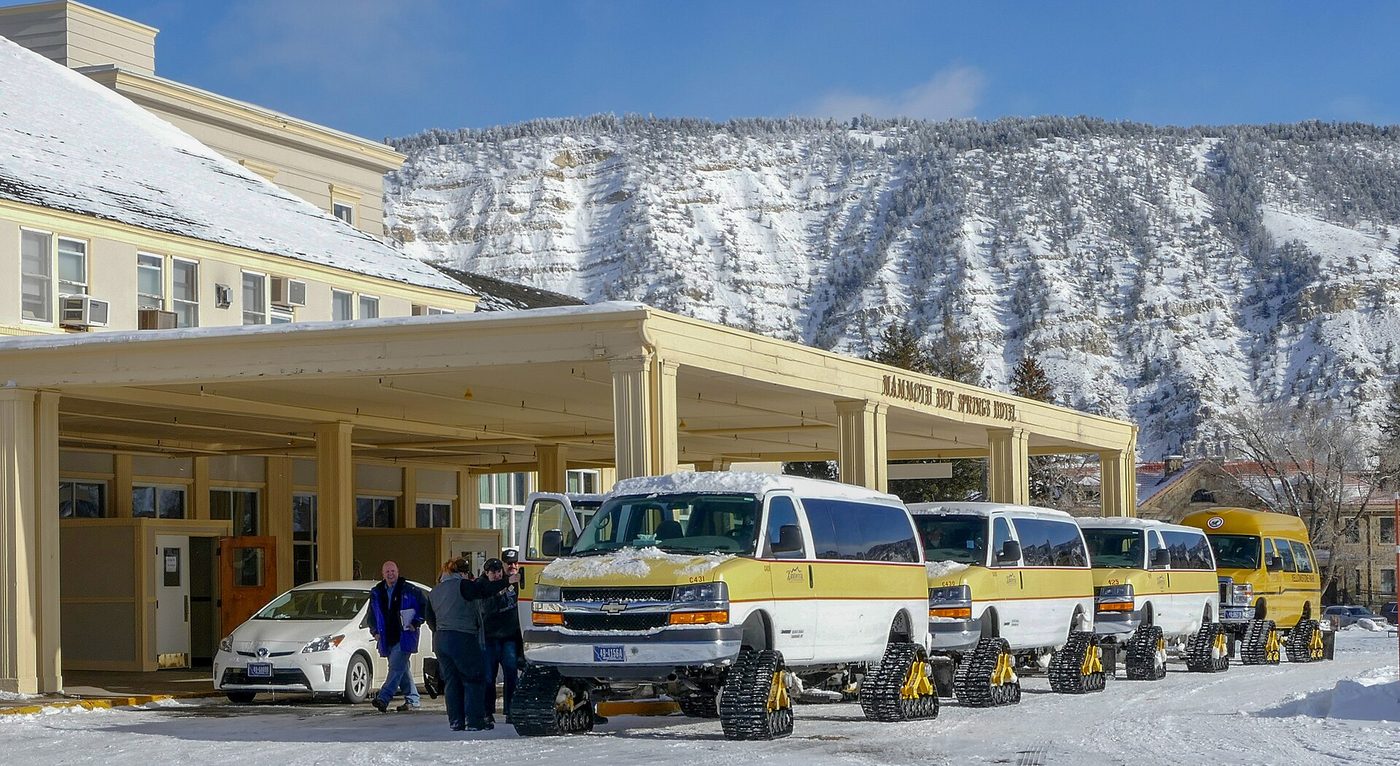
Take the snowmobile if you want to be in the weather, you like riding, and the journey is part of the point. Take the snowcoach if you are travelling with young children, you feel the cold badly, you want to photograph freely along the way, or you would rather spend the day looking than steering.
| Snowmobile | Snowcoach | |
|---|---|---|
| Cost per person | Roughly $322–$525 for a day tour | Often lower per person; a Mammoth–Old Faithful transfer ran at $179.45 per adult |
| Comfort | Cold, exposed, physically engaging | Heated, seated, windows |
| Children | Limited by age and licence rules | Suitable for all ages |
| Photography | Only at stops | Continuous, through windows or at stops |
| Group size | Small, single file | Typically 10 to 14 passengers |
| The experience | Immediate, loud, memorable | Sociable, comfortable, more interpretive |
There is no wrong answer, and plenty of people do one each way. Our snowcoach tours page covers the alternative in detail, and snowcoach vs snowmobile compares them at length.
Booking: when and how
Book early for the holidays. The week between Christmas and New Year is the busiest of the winter season and fills months ahead. January and early February are the easiest weeks to book and the coldest.
Book the lodging first. If you want to stay at the Old Faithful Snow Lodge, that room is the constraint, not the tour — it releases 13 months ahead through Xanterra. Our when Yellowstone reservations open page has the release calendar, and our winter lodging page covers what runs.
Check the cancellation terms before you pay. Winter tours are weather-dependent and an operator may cancel for conditions. Understand whether you get a refund or a credit.
Confirm what is included. Park entrance fees, lunch, clothing and fuel differ between operators, and the cheapest headline price is not always the cheapest day.
Allow a spare day. If a storm closes a route or an operator cancels, a second day in West Yellowstone gives you another chance. It also gives you a day for skiing or a wildlife trip if the weather is fine. Our winter tours page covers the alternatives, and things to do in Yellowstone in winter has the wider list.
Is a Yellowstone snowmobile tour worth it?
Yes, if you want to reach the interior of the park in winter and you are comfortable being cold for several hours. Riding a groomed road through the Madison valley with steam rising off the river, bison on the verge and nobody else in sight is genuinely one of the great experiences in the national park system, and there is no summer equivalent.
It is not worth it if your main interest is photography, if you are travelling with children under about ten, or if you simply want to see Old Faithful in winter — in all three cases the snowcoach does the same job better and often for less. And it is a poor choice as a first and only visit to Yellowstone, because you will see a narrow corridor of an enormous park. Come in summer or autumn first, then come back in February for this.
If you are weighing the whole season rather than just this trip, our Yellowstone in winter hub sets out what is open, how the access works and what the alternatives are, and our December guide covers the opening weeks of the oversnow season in detail.
Frequently asked questions
Can you snowmobile in Yellowstone without a guide?
Only with a non-commercially guided snowmobile access permit, which is allocated by lottery with an application window reported as 1 to 31 August for the following winter, at around $40 per day. Everyone else must ride with a licensed commercial operator. Confirm current terms with the park, as its published details have changed.
When can you snowmobile in Yellowstone?
From 15 December 2026, when oversnow travel opens at 8 a.m., until the segments close in March — 7 March for Mammoth to Norris, 9 March for the Norris and Canyon segments, 14 March for Canyon to Fishing Bridge and 15 March for the West, South and East entrance roads.
How much is a snowmobile tour to Old Faithful?
Published 2026-27 day-tour prices run from about $322 for a single rider to around $525 at some operators, with a passenger on a guide’s machine at about $300. Park entrance fees may be extra. Multi-day packages with lodging start from roughly $1,324 per couple.
How far is it from West Yellowstone to Old Faithful by snowmobile?
About 65 miles round trip, following the groomed road via Madison Junction. A day tour typically leaves around 8:30 a.m. and returns in the late afternoon, with two to three hours off the machines at Old Faithful.
Do you need a driver’s licence to snowmobile in Yellowstone?
Yes, to operate a machine. Passengers do not. Minimum ages for driving vary between operators, so check before booking a family trip. Younger children usually ride as passengers or travel by snowcoach instead.
Is snowmobiling in Yellowstone difficult?
No. You ride in single file behind a guide on groomed roads at low speed, with no off-trail riding permitted anywhere in the park. Anyone who can ride a bicycle can manage it. The difficulty is the cold rather than the machine.
What should I wear on a Yellowstone snowmobile tour?
Most operators supply an insulated suit, boots, helmet and gloves. Bring merino or synthetic base layers, a warm mid-layer, one pair of thick wool socks, a balaclava or neck gaiter, glove liners, sunglasses and hand warmers.
Snowmobile or snowcoach for Old Faithful?
Snowmobile if you want to be in the weather and the ride is part of the appeal. Snowcoach if you are travelling with young children, you feel the cold, or you want to photograph continuously. The snowcoach is usually cheaper per person and always warmer.
Sources
- National Park Service — Yellowstone park roads and oversnow travel dates, checked September 2026.
- National Park Service — Yellowstone fees and passes, checked September 2026.
- National Park Service — Yellowstone operating hours and winter seasons, checked September 2026.
- Yellowstone National Park Lodges (Xanterra) — winter lodging and snowcoach services, checked September 2026.
Image credits
| Photo | Credit |
|---|---|
| Almost every rider in the park is on a commercially guided tour (top of page) | (NPS Photo), uploaded by en:User:Great Scott., public domain, via Wikimedia Commons |
| The alternative is a non-commercially guided permit, allocated by lottery the previous Aug | Yellowstone National Park from Yellowstone NP, USA, public domain, via Wikimedia Commons |
| Oversnow travel opens on 15 December and closes segment by segment through March | Yellowstone National Park from Yellowstone NP, USA, public domain, via Wikimedia Commons |
| West Yellowstone has the most operators and the shortest ride to the geyser basins | Yellowstone National Park from Yellowstone NP, USA, public domain, via Wikimedia Commons |
| The road itself is the trip | Neal Herbert, public domain, via Wikimedia Commons |
| Two riders on one machine is the obvious saving, and less comfortable than it sounds | NPS Photo, public domain, via Wikimedia Commons |
| Operators supply the suit, boots, helmet and gloves | Jacob W. Frank, public domain, via Wikimedia Commons |
| Wolves and bison use the groomed roads because they are the easiest ground to walk | Yellowstone National Park, public domain, via Wikimedia Commons |
| For children, photography or anyone who feels the cold, the snowcoach does the same job be | NPS/Diane Renkin, public domain, via Wikimedia Commons |