Winter shuts most of Yellowstone to cars, but it doesn’t shut much else. From mid-December to mid-March you can watch Old Faithful erupt into subzero air, ski to a backcountry geyser, track wolves across the Lamar Valley and skate outside the Snow Lodge. Here are the 20 best things to do in Yellowstone in winter, how to reach each one, and the few that aren’t worth the cold.
Two facts shape every plan. First, the interior roads to Old Faithful, Norris, Canyon and West Thumb are groomed for oversnow travel from December 15, 2026 until they close in stages between March 7 and March 15, 2027, and you’ll ride them on a guided snowcoach or snowmobile. Second, the road from Gardiner through Mammoth and the Lamar Valley to Cooke City stays open to ordinary cars all winter. Almost everything below sits on one side of that line or the other. For the season as a whole, including dates, lodging and what’s open, start with our guide to Yellowstone in winter.
What can you do in Yellowstone in winter?
Most winter activities fall into four groups: geyser basins reached by snowcoach or snowmobile, wildlife watching along the plowed northern road, skiing and snowshoeing from the two winter lodges, and a handful of things just outside the park, like hot spring soaks. Bears are asleep, fishing is closed and most roads are groomed snow.
Here’s the whole list at a glance, with where each experience happens and how you get there. Anything marked “oversnow” needs a snowcoach, a guided snowmobile or a night at Old Faithful Snow Lodge.
| # | Experience | Where | Access | Guide needed? |
|---|---|---|---|---|
| 1 | Old Faithful in the cold | Upper Geyser Basin | Oversnow | No, once you’re there |
| 2 | Upper Geyser Basin boardwalks | Upper Geyser Basin | Oversnow | No |
| 3 | Norris steam and Steamboat | Norris | Oversnow tour from Mammoth | Yes |
| 4 | Craig Pass and West Thumb | Yellowstone Lake shore | Oversnow tour from the Snow Lodge | Yes |
| 5 | The Firehole and Midway corridor | Lower and Midway basins | Oversnow | Yes |
| 6 | A snowcoach day | West Yellowstone, Mammoth, Flagg Ranch | Tour | Yes |
| 7 | A snowmobile day | Mostly West Yellowstone | Tour | Yes, or a permit |
| 8 | The Grand Canyon in ice | Canyon | Oversnow tour | Yes |
| 9 | Wolves in the Lamar Valley | Northern range | Your own car | No |
| 10 | Bison, bighorns and more | Gardiner to Cooke City | Your own car | No |
| 11 | Madison River wildlife | West Entrance to Madison | Oversnow | Yes |
| 12 | A Yellowstone Forever course | Mostly the northern range | Program | Yes |
| 13 | Ski the Old Faithful trails | Upper Geyser Basin | Oversnow, then skis | No |
| 14 | Lone Star Geyser | Near Kepler Cascades | Skis or snowshoes | No |
| 15 | Snowshoe near Mammoth | Wraith Falls, Beaver Ponds | Your own car | No |
| 16 | Skate at the Snow Lodge | Old Faithful | Oversnow | No |
| 17 | Mammoth terraces in snow | Mammoth Hot Springs | Your own car | No |
| 18 | Fort Yellowstone and Junior Ranger | Mammoth | Your own car | No |
| 19 | A hot spring soak | North of Gardiner | Your own car | No |
| 20 | Grizzlies and wolves up close | West Yellowstone | Your own car | No |
Geysers and hot springs in the snow
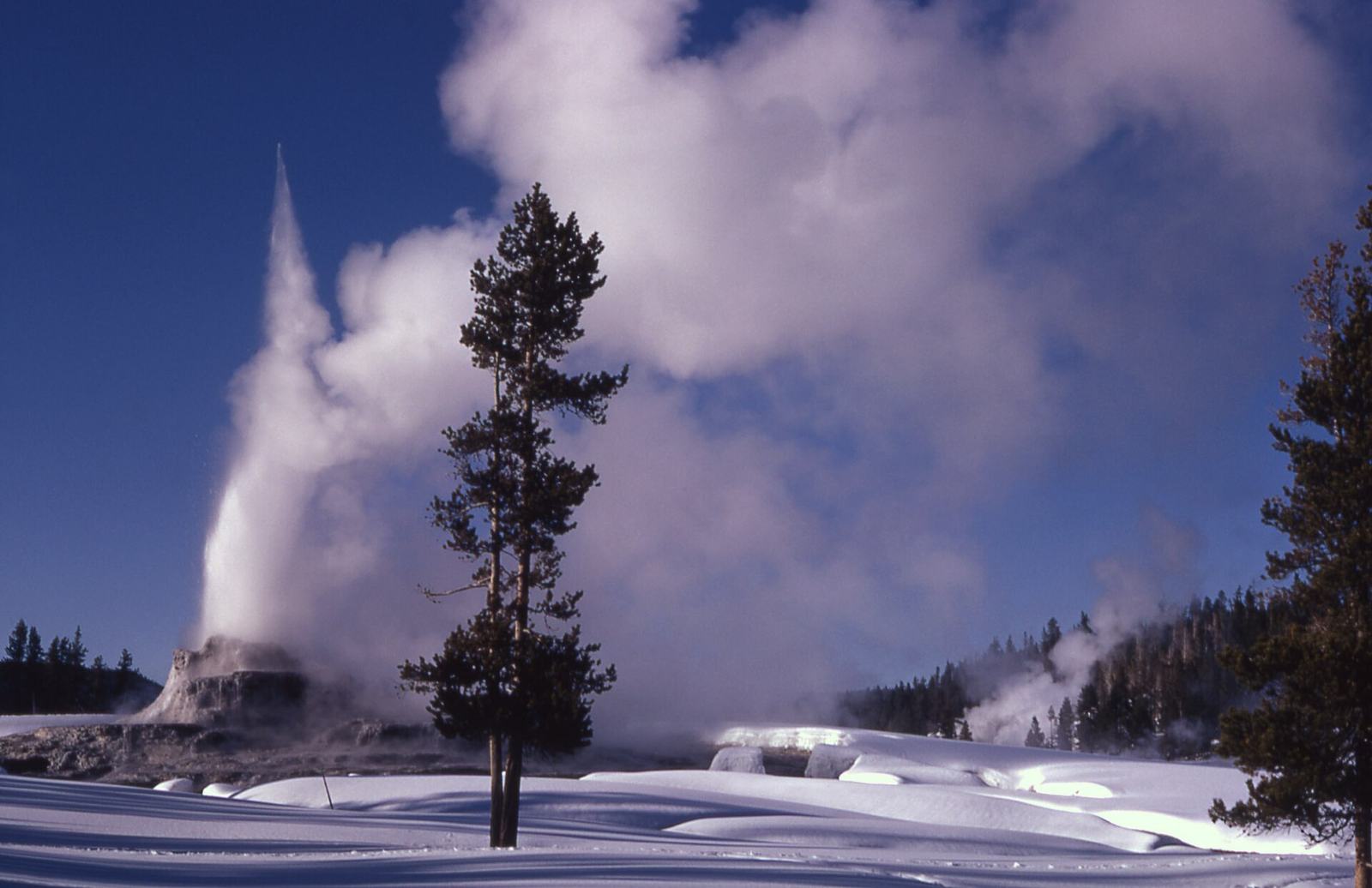
Yellowstone’s thermal areas are at their most dramatic when the air is cold enough to freeze the steam. A geyser that throws a modest plume in July can build a cloud hundreds of feet tall on a -20°F morning, and every tree near a hot spring wears a thick coat of rime.
1. Watch Old Faithful erupt into subzero air
Old Faithful erupts all winter on much the same schedule as in summer. The park’s most recent figure put the median interval at about 102 minutes, give or take 10, with eruptions averaging around 130 feet (checked September 2026). What changes is the steam. In deep cold the column keeps growing long after the water stops, then drifts across the basin like fog.
Predictions are posted at the lodge and in the NPS app, so you can time a tour stop or a walk from your room. The best eruptions to catch are the first and last of the day, when the low sun backlights the steam and the crowds from West Yellowstone haven’t arrived or have already left. Our guide to Old Faithful in winter covers timing and the best places to stand.
2. Walk the Upper Geyser Basin boardwalks
The Upper Geyser Basin packs at least 150 hydrothermal features into about a square mile, and in winter you can have long stretches of it to yourself. The walk north from Old Faithful to Castle, Grand and Riverside geysers and on toward Morning Glory Pool is the classic. Castle erupts to about 90 feet on a cycle of roughly 16 to 17 hours, and Grand, when it goes, reaches up to 200 feet; the park predicts both, along with Riverside and Daisy.
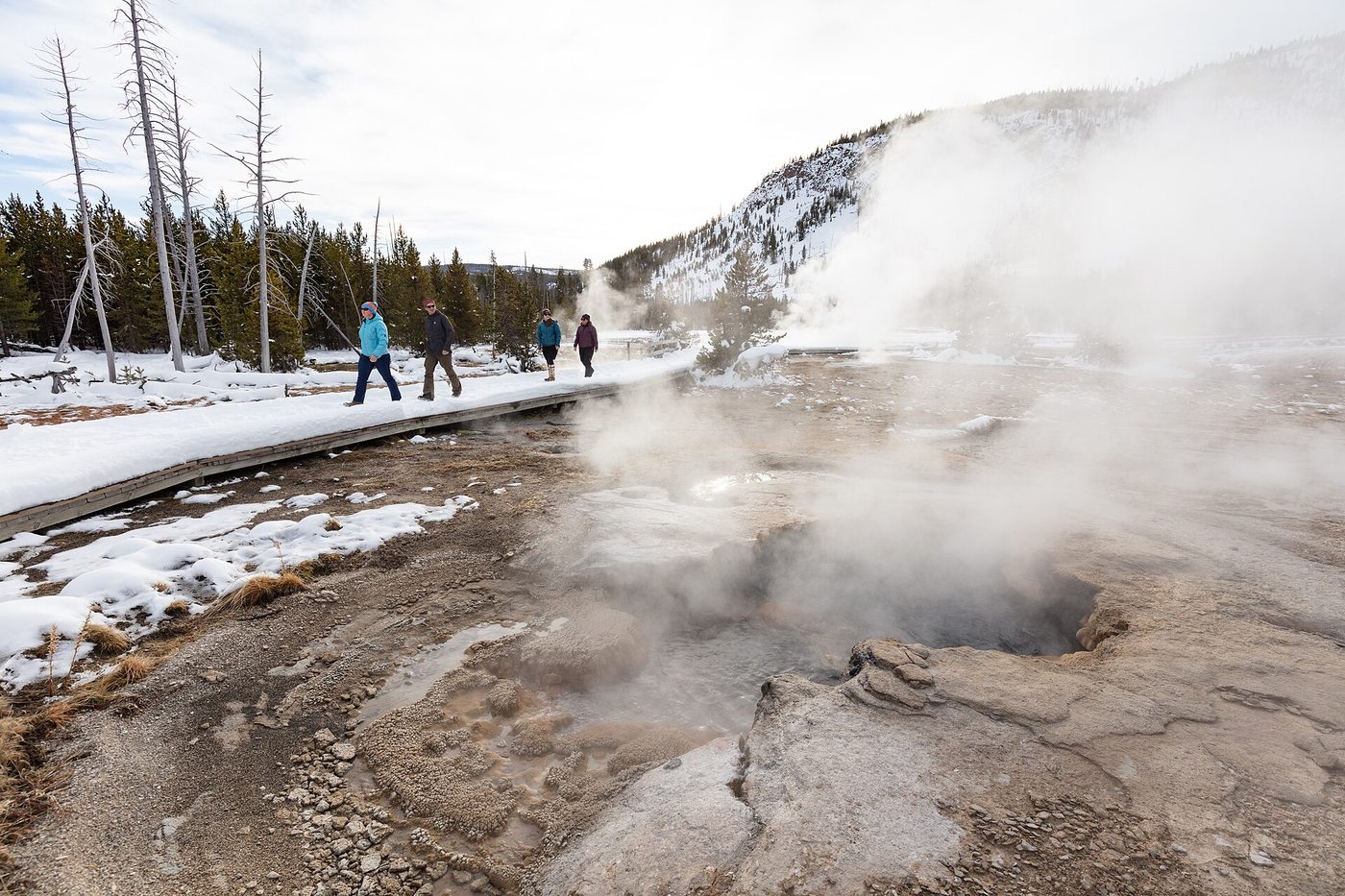
The boardwalks aren’t cleared like sidewalks, so wear boots with traction devices and expect packed snow and ice. Stay on the boardwalks: the crust near hot springs is thin, and snow hides where it ends. Bison use the same packed paths you do, often at a leisurely pace, and they have right of way. One closure to know about: Biscuit Basin, just north of the Upper Geyser Basin, has been closed since a hydrothermal explosion in July 2024 and was still closed in September 2026.
3. See Norris steam at its most dramatic
Norris is the hottest and most changeable of Yellowstone’s geyser basins, and in winter the whole place seems to breathe. It’s home to Steamboat Geyser, the world’s tallest active geyser, whose major eruptions top 300 feet. Don’t count on seeing one: after 48 major eruptions in 2019 and again in 2020, Steamboat managed only three in 2025 and one so far in 2026, on February 27. Even without it, the view across Porcelain Basin on a frozen morning is one of the park’s great sights.
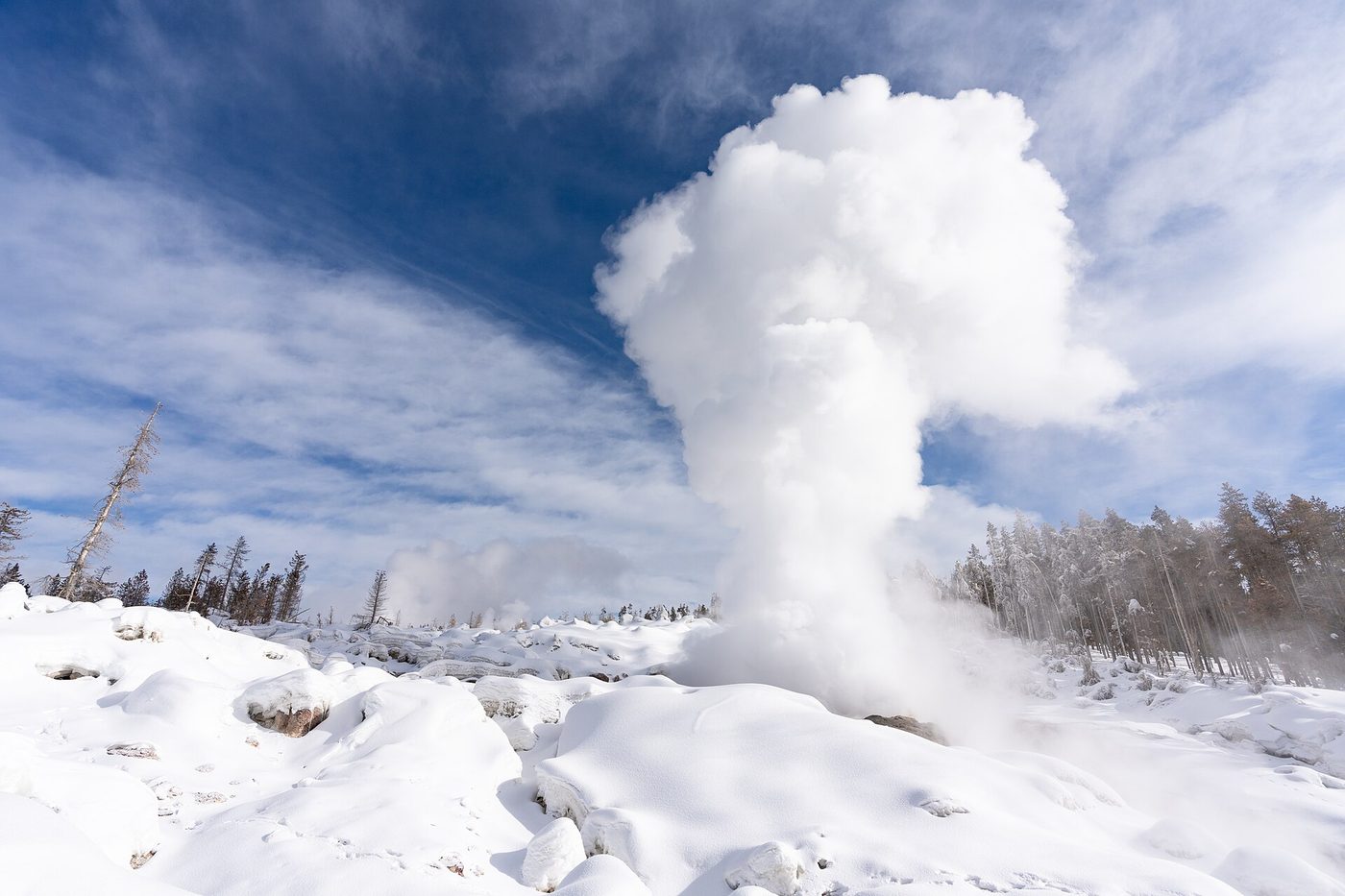
The easy way in is Xanterra’s Norris Geyser Basin Tour from Mammoth Hot Springs Hotel. The road south from Mammoth is open only to oversnow vehicles in winter, so you can’t drive yourself.
4. Cross Craig Pass to West Thumb
West Thumb Geyser Basin sits right on the shore of Yellowstone Lake, and in winter the lake freezes, usually by late December or early January, with ice that can be more than two feet thick. Hot springs steaming at the edge of a frozen lake are a strange and lovely thing to see. Xanterra’s Across the Great Divide tour from Old Faithful Snow Lodge goes there over Craig Pass on the Continental Divide. It’s the best choice for a second day at Old Faithful once you’ve walked the Upper Geyser Basin.
5. Ride the Firehole and Midway corridor, and set your expectations
The road from Madison Junction to Old Faithful follows the Firehole River past the Lower and Midway geyser basins, and it’s the part of the park most winter visitors see. Bison graze along the warm riverbanks, steam pours off the water and the trees are coated in frost. Xanterra’s Firehole Basin Winter Adventure from the Snow Lodge spends more time on this stretch than a transfer does.
Now the honest part. Grand Prismatic Spring, the famous rainbow pool at Midway, is usually just a wall of steam in winter. You’ll see the steam, you’ll feel the warmth, and you’ll rarely see the colors. If Grand Prismatic is the reason you’re coming, come in summer.
Snowcoach and snowmobile days
Unless you’re staying at Old Faithful Snow Lodge, one of these is how you’ll see the geysers.
6. Spend a day on a snowcoach
A snowcoach is a heated van or bus on tracks with big windows and a driver who narrates the route. From West Yellowstone it’s about 30 miles to Old Faithful, and day tours run from December 15, 2026 to mid-March. From Mammoth, Xanterra’s scheduled coach to the Snow Lodge costs $179.45 per adult and $89.72 for a child aged 3 to 11, and takes about four and a quarter hours (checked September 2026). There are also departures from Flagg Ranch for visitors staying in Jackson.
It’s the right choice for families, photographers and anyone who feels the cold. Our Yellowstone snowcoach tours guide compares operators and routes, and our Yellowstone winter tours comparison lines up every kind of tour side by side.
7. Drive a snowmobile to Old Faithful
A guided snowmobile day from West Yellowstone covers about 65 miles round trip, leaves around 8 a.m. and gets back around 5 p.m. with lunch. Operator listings in September 2026 put a single rider at $322 to $490, with lower passenger rates and sometimes a separate park fee. Every driver needs a valid driver’s license, you ride in a guided group, and the sleds must meet the park’s standards for noise and emissions.
It’s the most fun way to see the park, and the least good for photography. See our Yellowstone snowmobile tours guide for outfitters, and snowcoach vs snowmobile if you’re torn. A small lottery also lets a few groups a day ride without a commercial guide; our non-commercial snowmobile permit guide explains how it works.
8. See the Grand Canyon of the Yellowstone in ice
The Lower Falls drops 308 feet, and in winter spray freezes into an ice cone at its base that grows through the season. The canyon walls turn white and gold, and the river below runs dark between shelves of ice. It’s one of the best sights in the park and one of the hardest to reach: Canyon is an oversnow destination from every direction.
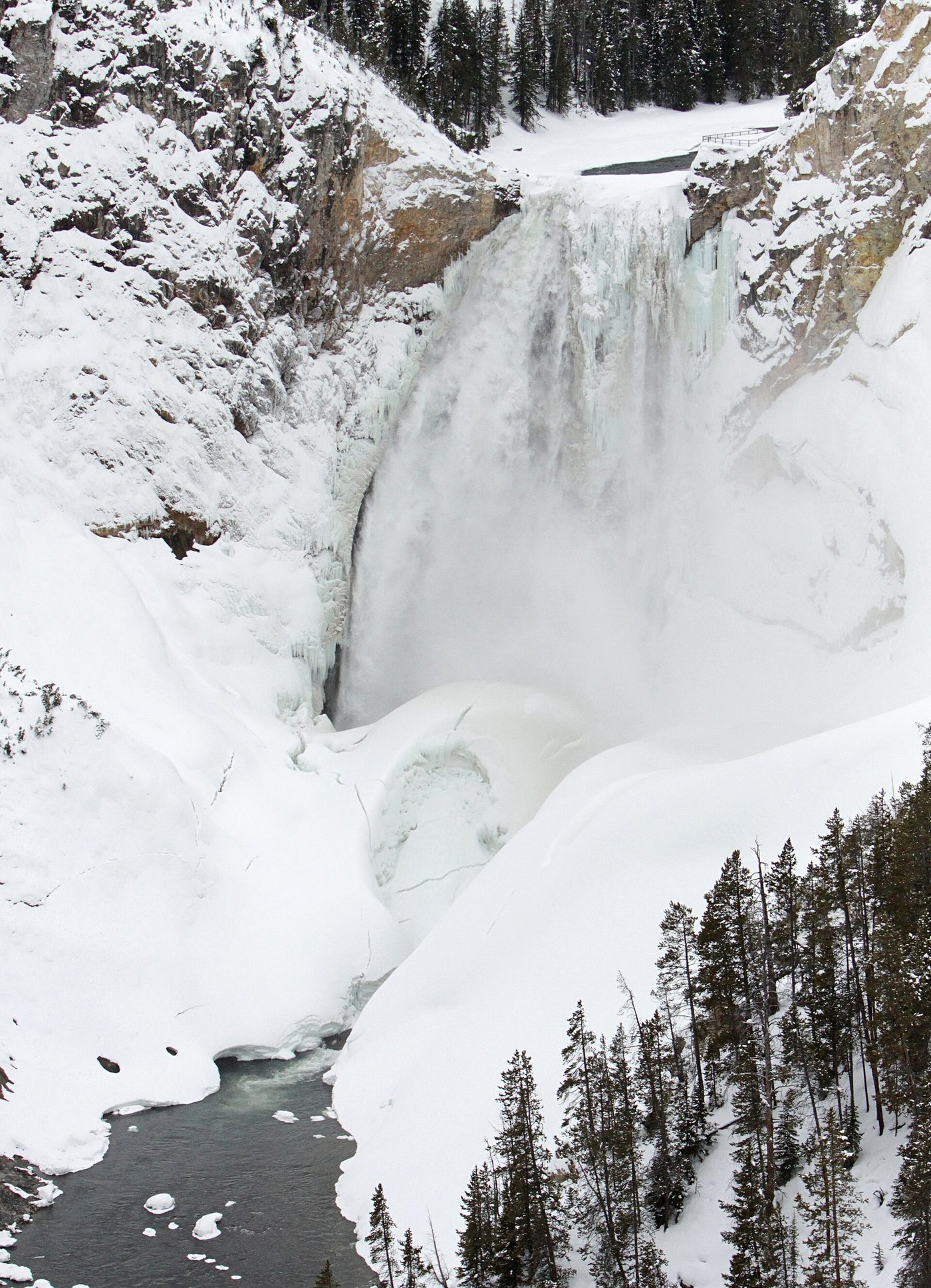
You can go by snowcoach from West Yellowstone (one large operator’s Canyon trip runs December 15, 2026 to March 9, 2027), from Old Faithful Snow Lodge, or from Mammoth. Xanterra also runs a full-day Grand Canyon ski tour and a Grand Canyon of the Yellowstone snowshoe tour of up to 3 miles. It’s a long day from any base, so save it for your second or third day.
Wildlife on the northern range
This is where winter beats summer. Snow pushes animals down into the valleys, makes them easy to spot, and leaves tracks that tell you what passed in the night.
9. Watch for wolves in the Lamar Valley
The park counted at least 108 wolves living mainly inside its boundaries in early 2025, and the packs on the northern range are the most watched wild wolves in the world. Winter is the best season to see them: they’re dark against the snow, they’re active at first light, and they follow the bison and elk that winter in the valleys.
Get to the Lamar Valley before sunrise, look for groups of people with spotting scopes at the pullouts, and ask politely what they’re watching. Most regulars are glad to share. Keep at least 100 yards from wolves, even when they’re near the road. Our guides to wolf watching in Yellowstone and Yellowstone winter wolf tours cover where to look and whether a guide is worth it.
10. Drive the northern road for bison, bighorns and more
The 56 or so miles from Gardiner to Cooke City are open to cars all winter, and they’re the best wildlife drive in the park in any season. Bighorn sheep work the cliffs near Gardiner and above the Lamar, bison plough through the snow with their heads, coyotes and red foxes pounce on voles under the snow, and bald eagles and ravens gather wherever there’s a carcass. Near the Northeast Entrance, look for mountain goats on the cliffs and moose along Soda Butte Creek.
The honest tip: time it. Midday on the northern range is often quiet, with animals bedded down. Dawn and the last two hours of light are when things happen. Carry a full tank, food and warm layers, since services along the road are few. See Yellowstone wildlife in winter for the species list and driving through Yellowstone in winter for road conditions.
11. Watch the Madison River from a snowcoach
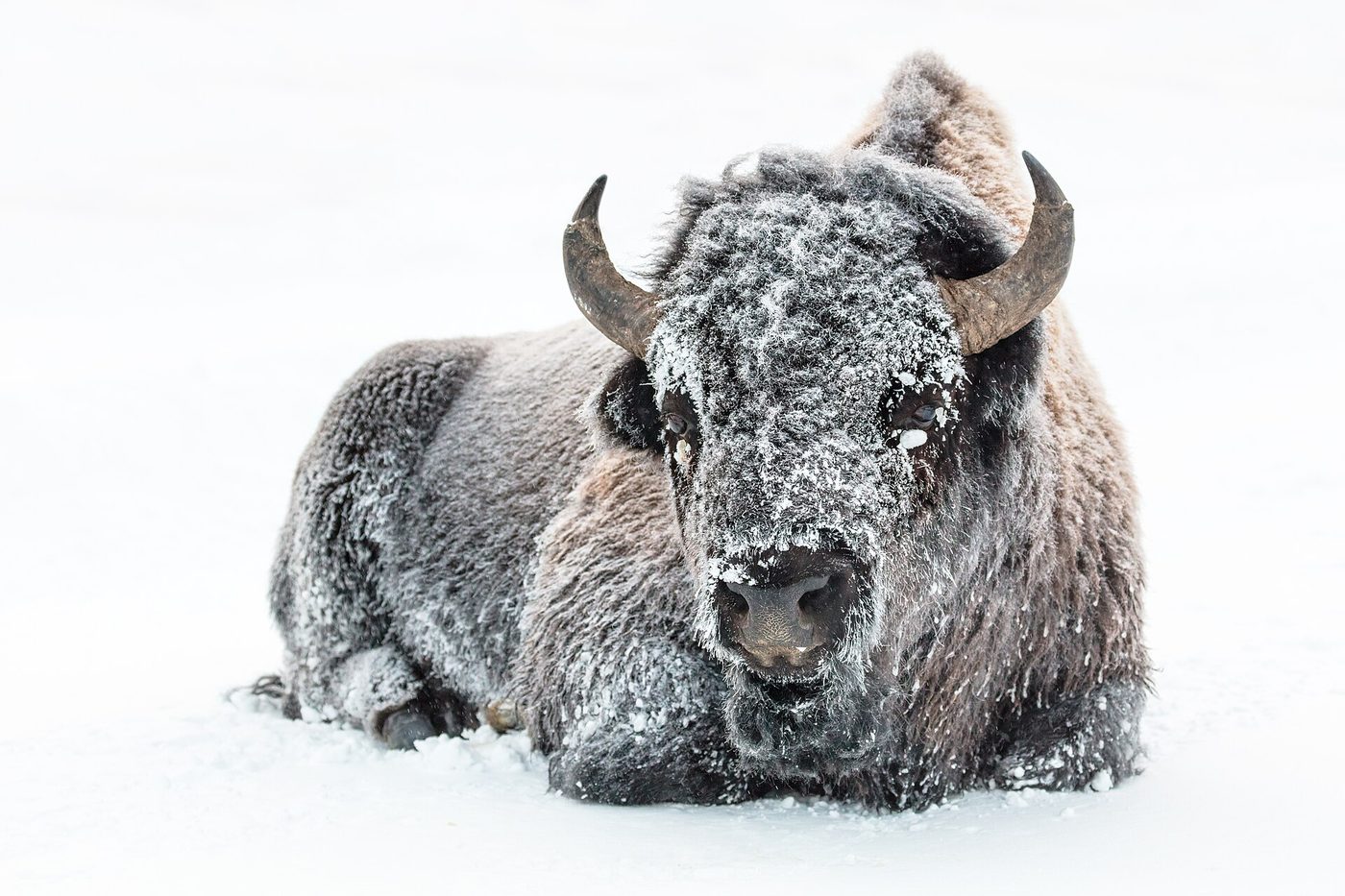
The Madison runs west from Madison Junction past the West Entrance, and water warmed by the geyser basins upstream keeps it open all winter. That draws bison, elk and waterfowl, and trumpeter swans often winter on the open water. Xanterra’s Madison Wildlife Excursion from the Snow Lodge spends its time on a 7-mile stretch of this corridor, and the West Yellowstone snowcoach and snowmobile tours all pass it on the way in.
12. Learn to read tracks with Yellowstone Forever
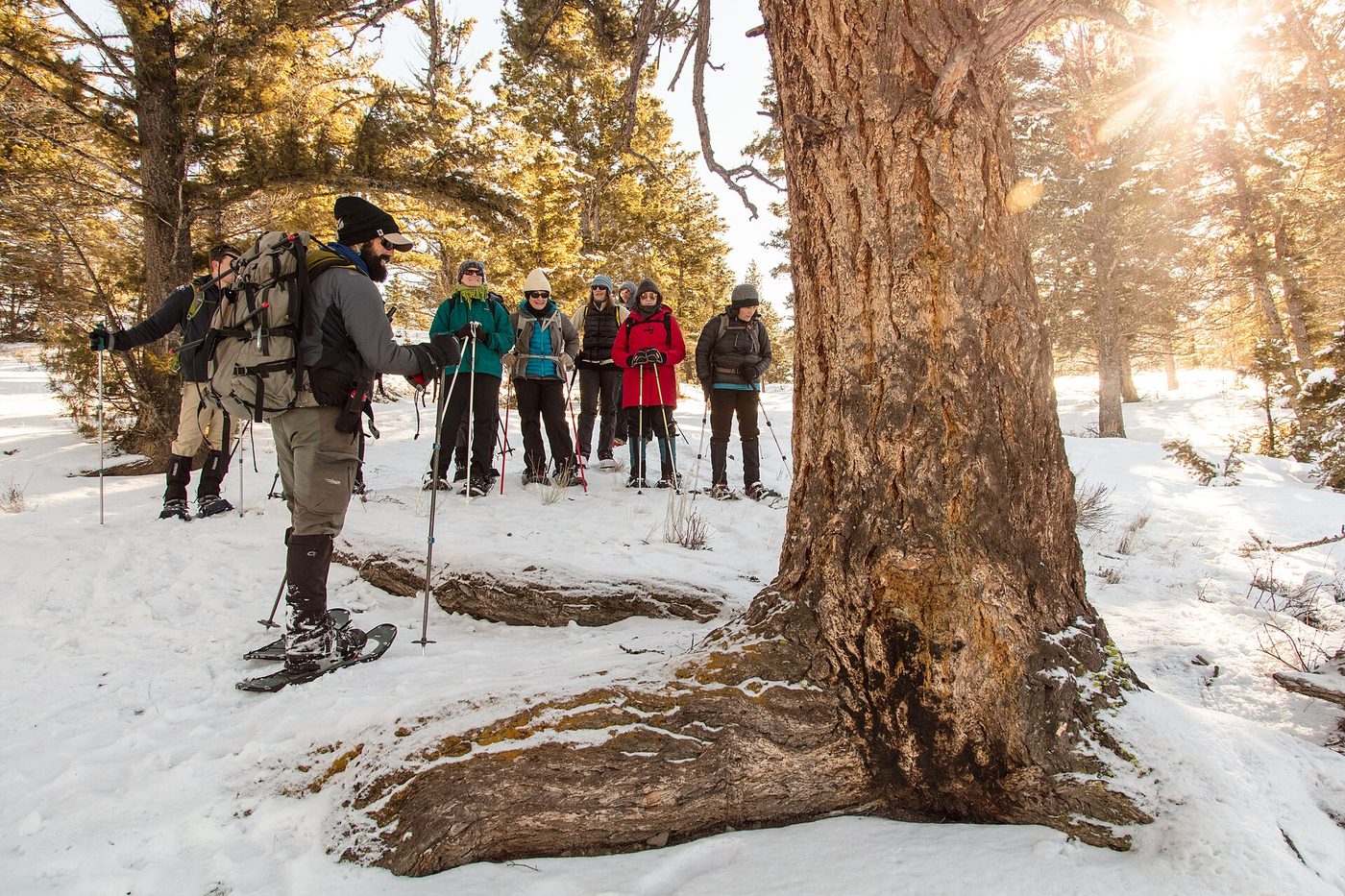
Yellowstone Forever, the park’s nonprofit partner, runs winter field seminars from November to March, with subjects like wolf and cougar tracking in the Lamar Valley, ravens and winter photography. Its Lodging and Learning programs run four to six days in winter and pair in-park lodging with naturalist-led days out. If you want to understand what you’re seeing rather than just photograph it, nothing else on this list comes close.
Skiing, snowshoeing and skating
You don’t need to be a strong skier to enjoy Yellowstone on skis. Many of the trails around Old Faithful and Mammoth are flat, marked and short.
13. Cross-country ski around Old Faithful
The Bear Den Ski Shop at Old Faithful Snow Lodge rents skis and snowshoes, gives lessons and runs guided tours, and Xanterra’s skier shuttles drop you at marked trails so you can ski back to the lodge. Trails through Black Sand Basin and toward Kepler Cascades are good first outings, with thermal features steaming beside the track.
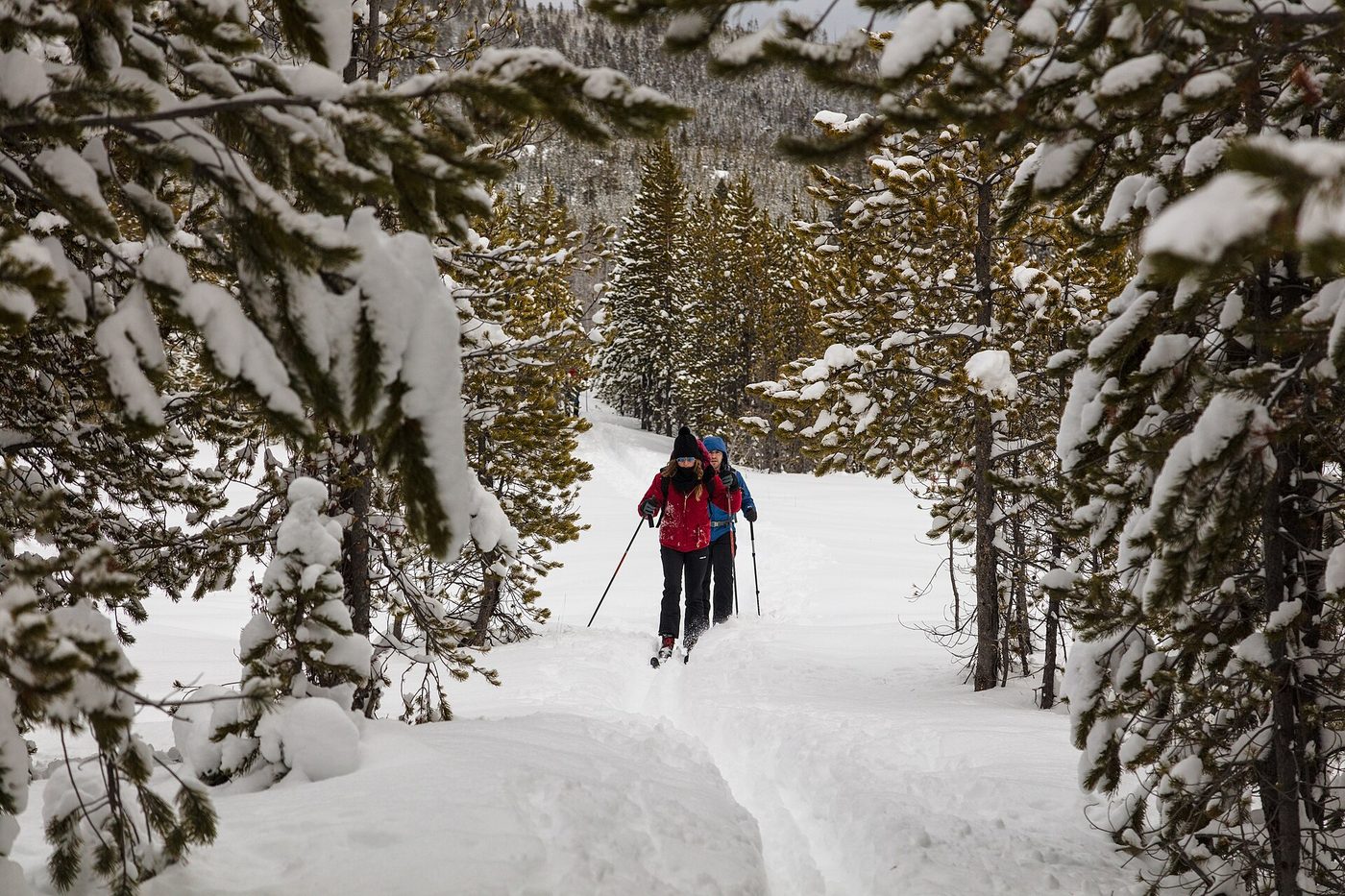
Watch for bison on the trails, give them a wide berth even if it means breaking your own track, and never ski onto thermal ground. With Biscuit Basin still closed, any route that used to end there may be cut short. Our guide to cross-country skiing in Yellowstone lists the trails and conditions.
14. Ski or snowshoe to Lone Star Geyser
Lone Star is the park’s best backcountry geyser you can reach in winter: 4.8 miles round trip on a mostly flat old road beside the Firehole River, starting near Kepler Cascades. It erupts roughly every three hours to 30 to 45 feet from a tall cone, and watching it alone in the snow is one of those Yellowstone moments that stay with you. Xanterra’s half-day Lone Star Excursion goes by ski or snowshoe, and it’s a good choice if you’re not confident about timing the geyser on your own.
15. Snowshoe near Mammoth: Wraith Falls and Beaver Ponds
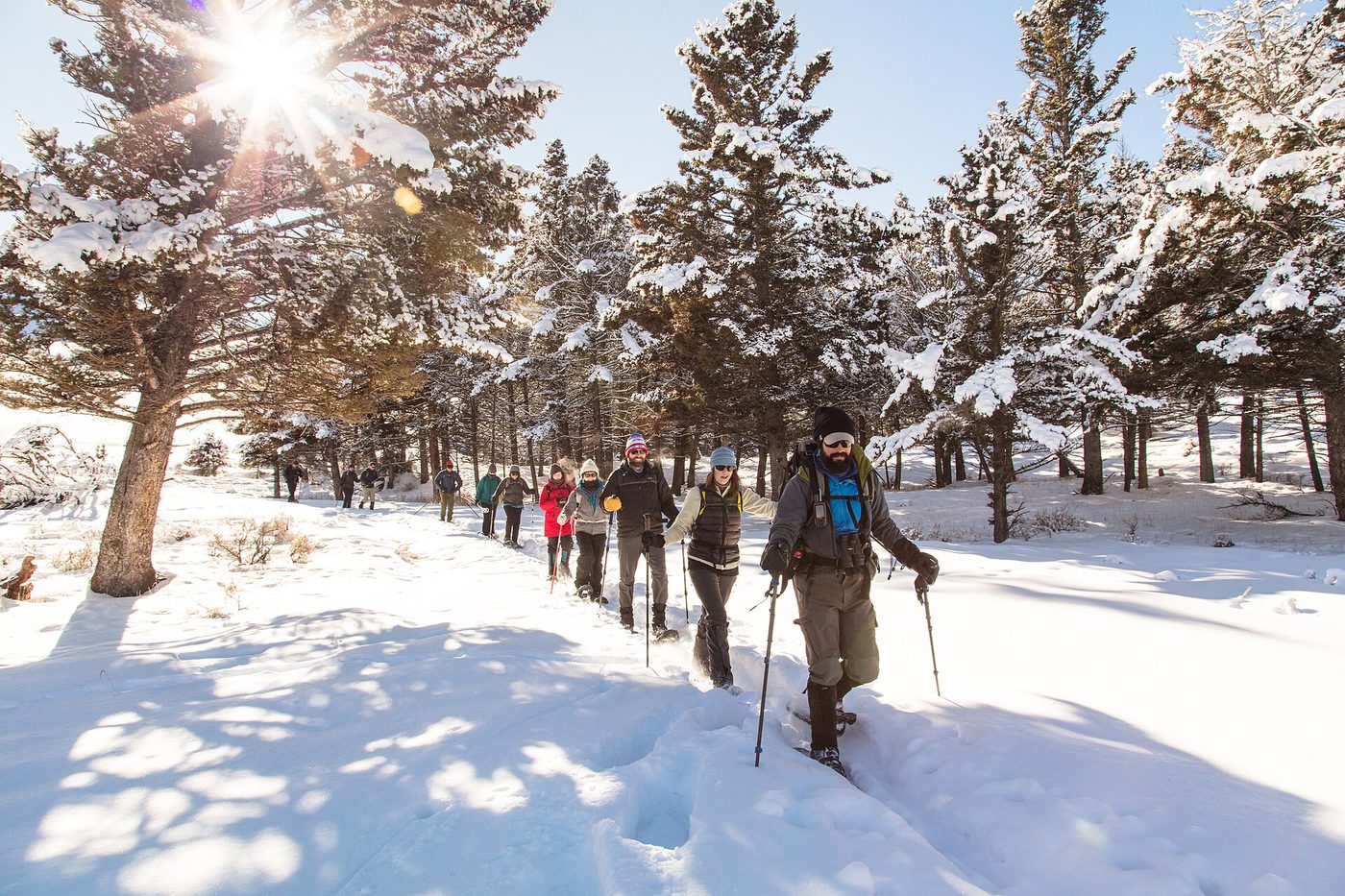
If you’re based at Mammoth or Gardiner, two trails stay open all year. Wraith Falls is a 1-mile round trip to a 79-foot cascade that ices over in a cold snap, from a trailhead half a mile east of the Lava Creek Picnic Area. The Beaver Ponds loop is 5 miles with 350 feet or more of climbing, starting north of Liberty Cap or behind the Mammoth Hotel, and it’s a good place for elk, tracks and silence. Xanterra’s half-day Tower Ski Tour heads out on Blacktail Plateau in the afternoon, and skier shuttles run to marked trails near Mammoth.
16. Skate outside the Snow Lodge, then look up
Old Faithful Snow Lodge keeps an outdoor skating rink with free skate rentals, and on a clear night it’s hard to beat: steam drifting over the basin, the lodge windows glowing and more stars than most people have seen in years. For something more structured, Xanterra runs an evening program called Steam, Stars, and Winter Soundscapes, built around the night sky and the thermal features. Both are only for guests who’ve made it to Old Faithful, which is one more reason to spend a night there. Our Yellowstone winter lodging guide covers the Snow Lodge in detail.
Mammoth Hot Springs in winter
Mammoth is the one part of the park’s developed interior you can drive to in winter, and it’s open for business: a hotel, a dining room, a store, a post office, a clinic and the park’s main visitor center all stay open.
17. Walk the Mammoth terraces in snow
The travertine terraces keep building all winter, and steam and snow make them look entirely different from the bleached white of summer. Plan on 30 to 90 minutes. The park warns that most of the boardwalks aren’t maintained in winter, and the trail network includes steep sections and several hundred stairs, so wear traction devices and take it slowly. The Upper Terrace Drive is closed to cars in winter. Elk often rest on the lawns around the village; they’re wild animals, so give them at least 25 yards.
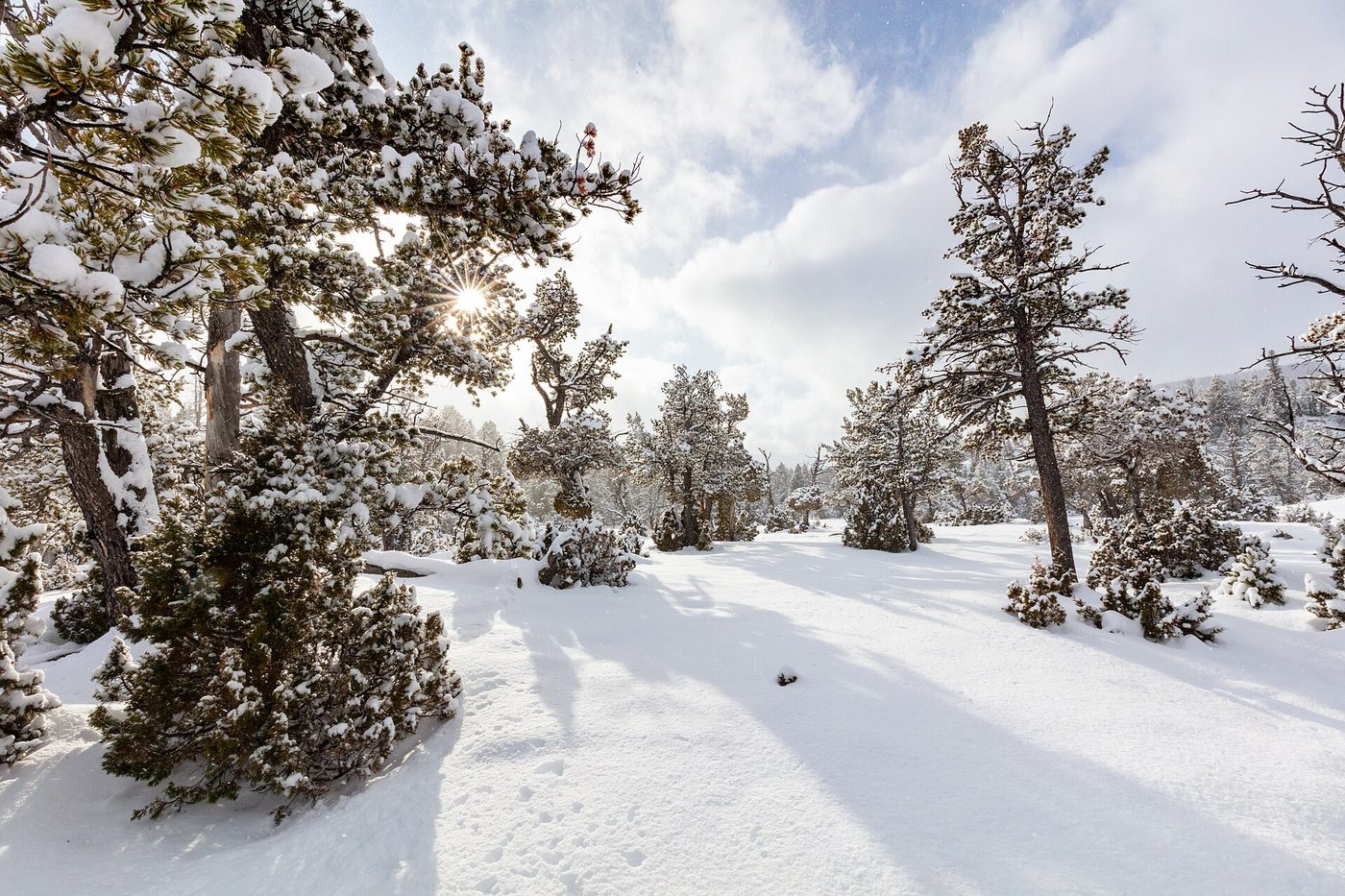
18. Explore Fort Yellowstone and earn a Junior Ranger badge
The stone and frame buildings around Mammoth were Fort Yellowstone, built between 1891 and 1913 when the US Army ran the park, and a short walk among them is a good way to fill a cold hour. The Albright Visitor Center, open all year, has exhibits on the park’s history and wildlife. Children aged 4 and older can pick up a Junior Ranger booklet at any visitor center; they have to be in the park to receive the wooden badge, so Mammoth in winter is a fine place to finish one. The park has offered ranger-led talks and snowshoe walks in past winters, but the 2026-27 schedule wasn’t posted when we checked in September 2026, so ask at Albright. For more ideas with children, see Yellowstone with kids in winter.
Just outside the park
Two of the best cold-weather experiences in the area are beyond the boundary.
19. Soak in a hot spring near Gardiner
You can’t soak in any of Yellowstone’s thermal features. It’s illegal, and people have died from burns in the park’s hot springs. The old Boiling River soaking spot near Mammoth has been closed to swimming since the 2022 flood. The good news is that Yellowstone Hot Springs at Corwin Springs, a few miles north of Gardiner, is open to the public, and Chico Hot Springs in Paradise Valley is a longer drive north. After a morning in the Lamar Valley at -10°F, it’s the best hour of the day. See Yellowstone Hot Springs near Gardiner, and our fishing and water guide covers the park’s rules on swimming.
20. See grizzlies and wolves up close in West Yellowstone
Yellowstone’s bears are denned up for the winter, so the only grizzly most winter visitors see is at the Grizzly & Wolf Discovery Center in West Yellowstone, which is open every day. It’s a nonprofit wildlife park with bears and wolves that can’t live in the wild, and it’s an easy afternoon between snowcoach days. It won’t replace a wild wolf through a spotting scope, but children love it. See our Grizzly & Wolf Discovery Center guide.
If you’re based farther afield, there’s more: downhill skiing at Big Sky, about 50 miles north of West Yellowstone, and sleigh rides on the National Elk Refuge if you’re staying in Jackson.
What isn’t worth doing in Yellowstone in winter?
A few winter plans usually disappoint: hoping to see bears, expecting Grand Prismatic’s colors, day-tripping to Old Faithful from Bozeman or Big Sky, fishing in the park, and driving the Lamar Valley at midday. Knowing these in advance frees up time for the experiences that are at their best in the cold.
- Looking for bears. Grizzlies and black bears den through the winter, and grizzlies start coming out in March. If bears are on your list, plan a spring trip.
- Grand Prismatic’s colors. In winter it’s mostly steam. The overlook trail is out of reach without an oversnow trip and a ski.
- Old Faithful as a day trip from Bozeman or Big Sky. You’ll spend more of the day on US-191 than in the park. Sleep in West Yellowstone the night before instead.
- Fishing in the park. The general season closes on October 31 and reopens on the Saturday of Memorial Day weekend, with only limited exceptions. The Yellowstone fishing guide has the rules.
- The Lamar Valley at noon. Animals rest in the middle of the day. Go at dawn and dusk and use midday for Mammoth or a hot spring.
- Doing it all in one short trip. The geysers and the northern range are about four hours apart by snowcoach. On a short trip, pick one side and do it well.
How many days do you need for Yellowstone in winter?
Three days covers the essentials: one on the northern range for wolves, and two at the geysers, ideally with a night at Old Faithful Snow Lodge. Two days works if you choose one side of the park. Five days lets you add the Grand Canyon, skiing and a slower pace for the wildlife.
Here’s how those trips usually come together.
- Two days, geysers. Stay in West Yellowstone. Day one is a snowcoach or snowmobile trip to Old Faithful; day two is the Grand Canyon or, if you’d rather stay closer, the Grizzly & Wolf Discovery Center and a ski on the Rendezvous trails.
- Two days, wildlife. Stay in Gardiner or at Mammoth. Drive the Lamar Valley at dawn both days, walk the terraces and snowshoe to Wraith Falls in between, and finish with a soak.
- Three days, the best of both. One night at Mammoth with the Lamar Valley at first light, then Xanterra’s 1:45 p.m. snowcoach to Old Faithful and two nights at the Snow Lodge for the basin, skating and a ski to Lone Star.
- Five days, the full winter. Two nights in Gardiner or Cooke City for wolves, one at Mammoth, and two at the Snow Lodge with a Grand Canyon day.
If you’re still choosing dates, Yellowstone in December and Yellowstone in January cover each month’s weather and crowds, and the Yellowstone winter packing list will keep you warm. For the rest of the year, our main list of things to do in Yellowstone covers every season, and everything else about the cold months, from road dates to what’s open, is in our Yellowstone winter guide.
Frequently asked questions
Is Yellowstone open in winter?
Yes. The park is open all year, around the clock. In winter the road from Gardiner through Mammoth and the Lamar Valley to Cooke City is open to cars, while the interior roads are open only to snowcoaches and snowmobiles from December 15, 2026 until they close in stages between March 7 and March 15, 2027 (checked September 2026).
Can you see Old Faithful in winter?
Yes, but you can’t drive there. You’ll arrive by snowcoach, by guided snowmobile, or by staying at Old Faithful Snow Lodge, which you reach by snowcoach. Old Faithful erupts all winter, roughly every 102 minutes on the park’s most recent figure, and the cold makes the steam column much bigger.
What animals can you see in Yellowstone in winter?
Bison, elk, wolves, coyotes, red foxes, bighorn sheep, mountain goats, moose, bald eagles, ravens and trumpeter swans are all seen in winter, most easily along the northern road. Grizzly and black bears are denned up until spring, so you won’t see one in the wild in midwinter.
Can you visit Yellowstone in winter without a tour?
Yes, on the northern side. You can drive from Gardiner to Mammoth and on through the Lamar Valley to Cooke City, walk the Mammoth terraces and snowshoe nearby trails on your own. To reach Old Faithful, Norris or the Grand Canyon, you’ll need a snowcoach, a guided snowmobile or a non-commercial snowmobile permit.
How cold is Yellowstone in winter?
January, the coldest month, averages a high of about 29°F and a low of about 10°F in the park, and subzero mornings are common. The park’s record low is -66°F. Dress in layers with insulated boots, and bring traction devices for icy boardwalks.
Are there ranger programs in Yellowstone in winter?
The park has run ranger-led talks and snowshoe walks at Mammoth and Old Faithful in past winters, but the 2026-27 schedule hadn’t been posted when we checked in September 2026. Ask at the Albright Visitor Center in Mammoth, which is open all year.
Sources
- National Park Service, Explore Old Faithful
- National Park Service, Operating hours and seasons
- National Park Service, Park roads and winter travel
- Yellowstone National Park Lodges (Xanterra), Winter tours from Old Faithful
- Yellowstone National Park Lodges (Xanterra), Winter tours from Mammoth Hot Springs
- Yellowstone Forever, Field seminars
Image credits
| Photo | Credit |
|---|---|
| Castle Geyser in the Upper Geyser Basin, where cold air turns every eruption into a toweri (top of page) | Unknown authorUnknown author, public domain, via Wikimedia Commons |
| Black Sand Basin’s boardwalk in winter, a short walk or ski from Old Faithful | Yellowstone National Park, public domain, via Wikimedia Commons |
| Steamboat Geyser’s steam cloud on a cold morning at Norris, reached by snowcoach from Mamm | Yellowstone National Park, public domain, via Wikimedia Commons |
| The Lower Falls in February, when spray freezes into an ice cone at the bottom | Yellowstone National Park from Yellowstone NP, USA, public domain, via Wikimedia Commons |
| A frost-covered bison along the Madison River, which stays open all winter | Yellowstone National Park, public domain, via Wikimedia Commons |
| A Yellowstone Forever instructor shows a group cougar sign on a winter tracking course | Jacob W. Frank, public domain, via Wikimedia Commons |
| Skiing the Black Sand Basin trail, one of the easy routes near Old Faithful | Yellowstone National Park, public domain, via Wikimedia Commons |
| Snowshoeing near Hellroaring on the northern range, where trails stay reachable by car all | Jacob W. Frank, public domain, via Wikimedia Commons |
| Mammoth’s terraces in winter, the one thermal area you can drive to | Yellowstone National Park, public domain, via Wikimedia Commons |