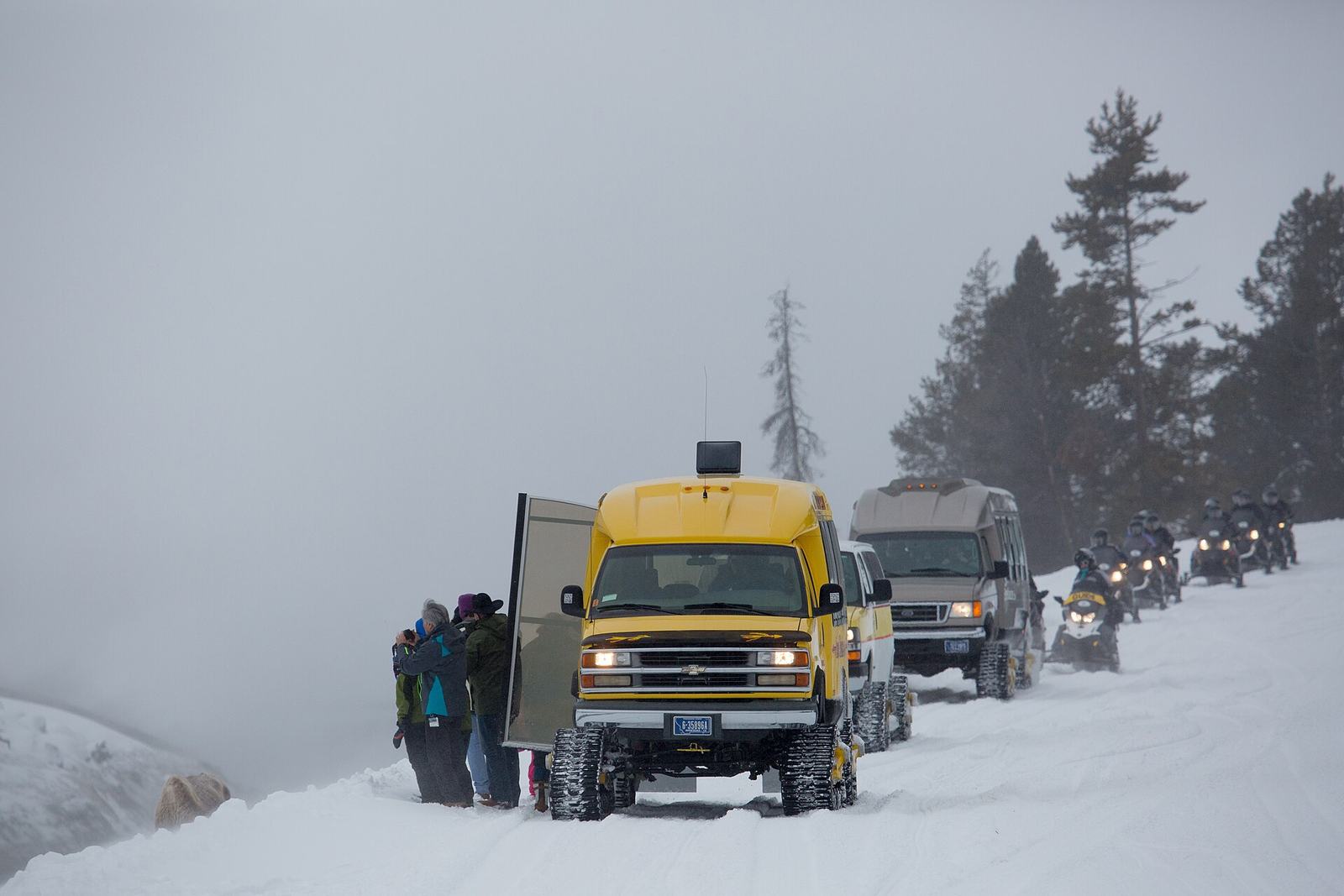
Choose a snowcoach if you want warmth, conversation and the best wildlife viewing; choose a snowmobile if you want to drive and don’t mind the cold. Both go to the same places on the same groomed roads, with a guide, from December 15, 2026 to mid-March 2027. That’s the short answer to Yellowstone snowcoach vs snowmobile, and for most first-time winter visitors the coach is the better day.
The longer answer depends on who’s coming, what you want to photograph, how you handle cold, and what you’re willing to spend. A couple who love adventure will remember a snowmobile day for years. A family with a seven-year-old, a photographer with a long lens, or anyone who hates being cold will be much happier on a coach. This guide compares the two on price, comfort, wildlife, photography, age limits and gear, using 2026-27 prices we checked in September 2026, and ends with a clear recommendation for each kind of traveler. For the whole winter season, including dates, lodging and what’s open, start with our guide to Yellowstone in winter.
Snowcoach or snowmobile: which is better in Yellowstone?
For most visitors, the snowcoach is better. It’s heated, you can talk to the guide and each other, photography is easy, children of any age can come, and it can cost less for a couple. The snowmobile is better only if the ride itself is the point: it’s colder, louder and more tiring, but more exciting.
Neither vehicle gets you anywhere the other can’t. From December 15 until the groomed roads close in stages between March 7 and March 15, 2027, the only motorized ways to reach Old Faithful, Norris, the Grand Canyon of the Yellowstone and West Thumb are snowcoaches and snowmobiles, and nearly everyone travels with a licensed guide. Both follow the same routes, stop at the same pullouts and eat lunch at the same lodge. The road from Gardiner through the Lamar Valley to Cooke City is the one exception, open to ordinary cars all winter; our page on driving through Yellowstone in winter covers it.
So the choice isn’t about where you’ll go. It’s about how the day will feel.
Snowcoach vs snowmobile at a glance
Here’s how the two compare on the things that matter most. Prices are the 2026-27 figures operators showed in September 2026.
| Snowcoach | Guided snowmobile | |
|---|---|---|
| Warmth | Heated cabin all day | Open air; heated handlebars, but real wind chill |
| Who drives | A driver-guide | You, if you’re 16 or older with a valid driver’s license |
| Children | Any age; Xanterra charges child fares for ages 3 to 11 | Passengers only; one Jackson operator sets a minimum age of 8 |
| Group | A small coachload; Teton Science Schools caps its coaches at nine guests | A guided line of snowmobiles, up to 10 per group |
| Talking to the guide | Any time | Mostly at stops |
| Photography | Easy: big windows, no helmet, gear on your lap | Harder: helmet, mittens, and you have to keep up |
| Luggage | Yes, including transfers to Old Faithful Snow Lodge | No room beyond a small bag |
| Gear | Bring your own warm layers | Suit, boots, mittens and helmet usually included |
| Sample price | $179.45 one way, Mammoth to Old Faithful; $375 for a 12-hour day from Jackson with meals | $490 plus a $50 park fee per driver, $300 plus $20 per passenger, from Jackson |
| Best for | Families, photographers, older travelers, anyone who feels the cold | Couples and active travelers who want the ride itself |
| The catch | Less thrilling, and the pace suits the group | Cold, noisy and tiring; you watch the sled ahead |
What each day actually feels like
The table tells you the facts. It doesn’t tell you how the hours pass.
A snowcoach day
You’re picked up at your hotel around 8 a.m. in West Yellowstone, or before dawn in Jackson, and climb into a warm vehicle with big windows and a small group of other travelers. The driver narrates as you go: the geology of the Madison valley, the history of the park’s winter travel, which bison is which. When anyone spots something, the coach pulls over, and you look through the window or step out into the cold with your camera, then climb back in to thaw.
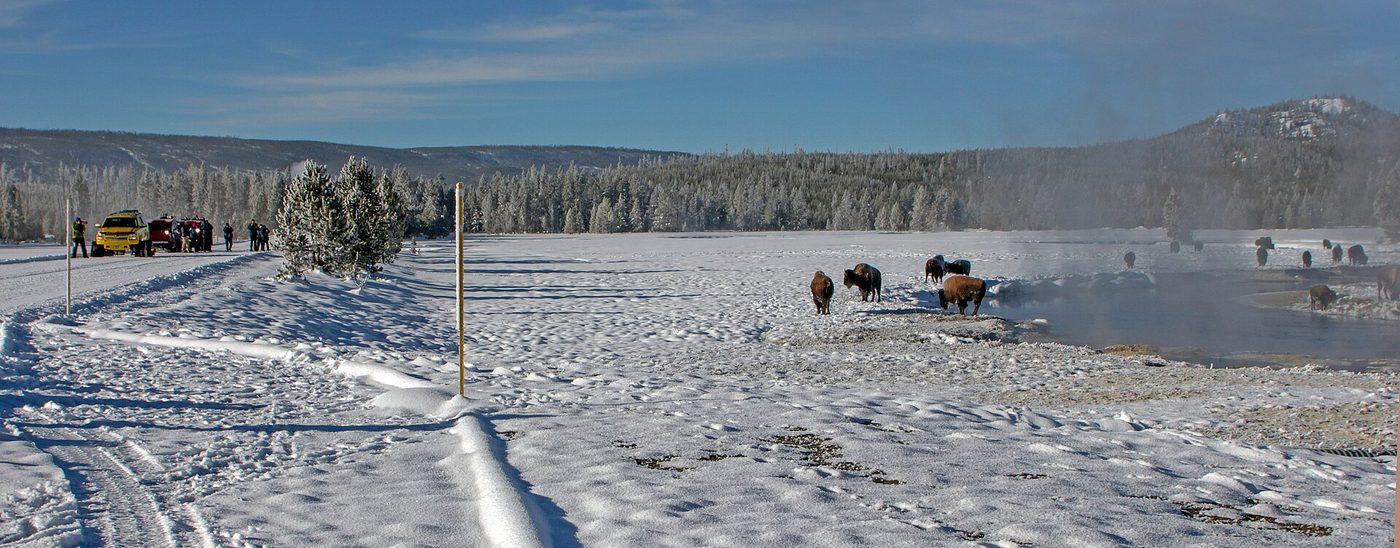
At Old Faithful you get a couple of hours to see an eruption, eat lunch and walk the boardwalks, then it’s back into the coach for the ride home, often with half the passengers dozing in the warmth. It’s a sociable, comfortable, low-effort day, and the thing people say most afterward is how much they learned. The downside is that you share the pace and the stops with everyone else, and on a busy coach it can take a while to get everybody in and out.
A snowmobile day
The day starts at the outfitter’s shop, where you’re fitted with a snowmobile suit, boots, mittens and a full-face helmet. After a short briefing you ride in a single-file line behind your guide, usually on late-model four-stroke sleds with heated handlebars. The first few miles are exhilarating: the engine under you, the snow spraying off the track, steam rising from the Madison as you pass.
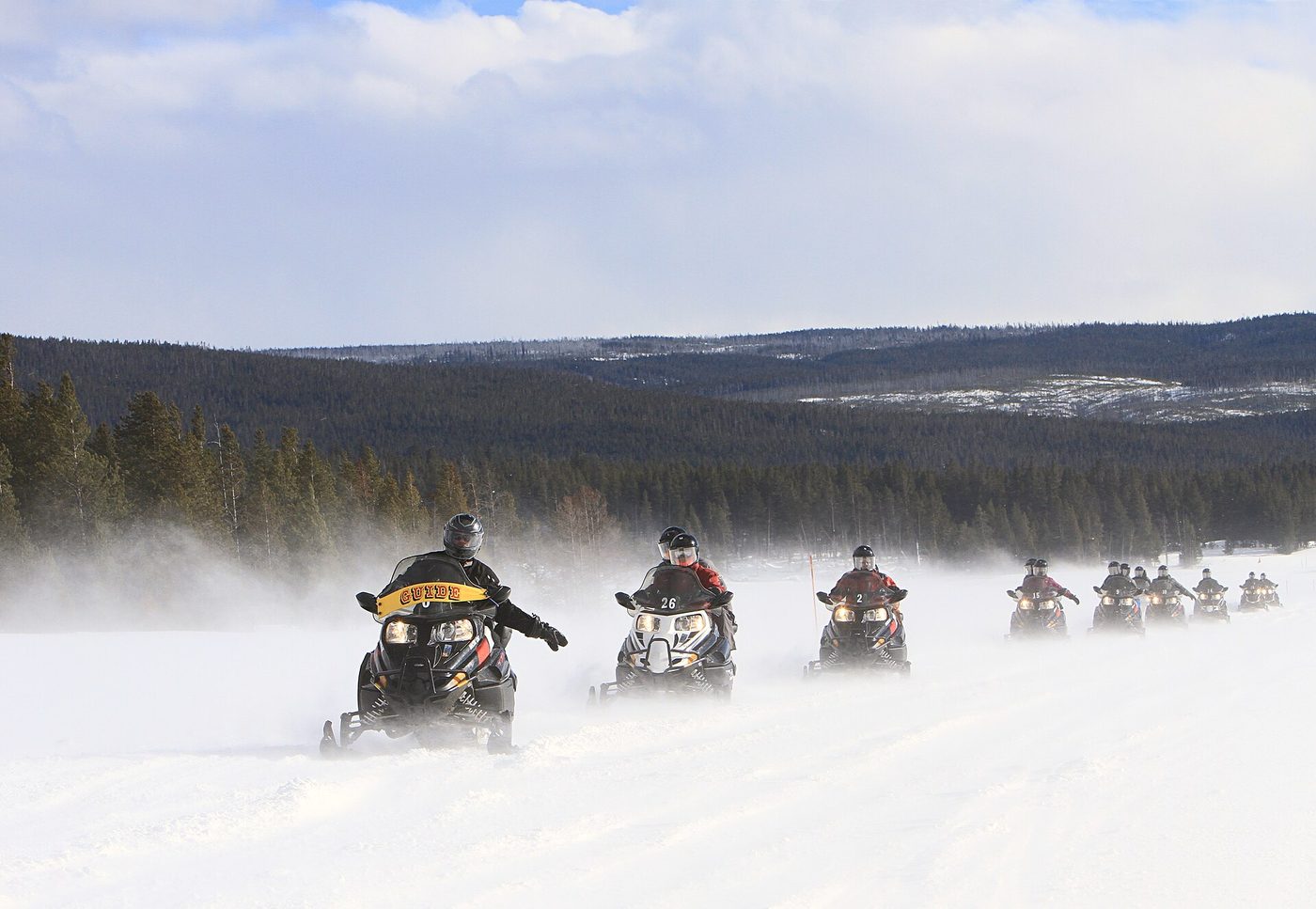
Then the reality sets in. You spend most of the day watching the sled in front, because keeping a steady gap is your job. Conversation happens at stops, shouted through helmets. Wind finds every gap in your clothing, and the ride home in fading light is when the cold really bites. By the end of a 65-mile round trip from West Yellowstone, most people are tired in a way they didn’t expect. Most also say it was one of the best days of their trip.
Our guides to Yellowstone snowcoach tours and Yellowstone snowmobile tours cover each option’s operators and routes in depth.
How much does a snowcoach cost compared with a snowmobile?
A snowcoach is usually the cheaper choice for a couple. From Jackson, two seats on Teton Science Schools’ 12-hour snowcoach day cost $750 with meals, while two people sharing one snowmobile with a Jackson outfitter pay $860 including park fees, and two separate sleds cost $1,080 (checked September 2026).
Here are the verified 2026-27 prices we could find.
| Trip | Price (checked September 2026) | What’s included |
|---|---|---|
| Xanterra snowcoach, Mammoth to Old Faithful | $179.45 adult, $89.72 child (3-11) | Transport, taxes |
| Xanterra snowcoach, Old Faithful to Mammoth | $182.90 adult, $91.45 child (3-11) | Transport, taxes |
| Teton Science Schools snowcoach day from Jackson | $375 per person, four-person minimum | Naturalist, binoculars and scopes, breakfast, lunch, snacks, traction devices |
| Teton Science Schools private snowcoach | From $1,800 for one or two guests | As above, plus hotel pickup |
| Old Faithful Tours snowmobile day from Jackson, driver | $490 plus $50 park fee | Suit, boots, mittens, helmet, breakfast burrito, lunch, guide |
| Same tour, passenger on the same sled | $300 plus $20 park fee | As above |
| Optional snowmobile damage waiver | $25 a day, $600 deductible | Reduces your liability for damage |
Some worked examples, all from Jackson so the comparison is like for like:
- A couple on a snowcoach: $750, plus the park entrance charge, which Teton Science Schools doesn’t include.
- A couple sharing one snowmobile: $490 + $50 + $300 + $20 = $860, park fees included.
- A couple on two snowmobiles: 2 × ($490 + $50) = $1,080.
- A family of four with children aged 9 and 12, two parents driving and the children riding as passengers: 2 × $540 + 2 × $320 = $1,720 by snowmobile, against $1,500 plus park fees by snowcoach (Teton Science Schools doesn’t list a child rate). With a child under 8, the snowmobile isn’t an option at that operator.
From West Yellowstone, the comparison is harder, because the big operators there don’t publish fares outside their booking engines. Yellowstone Vacations runs both snowcoach and snowmobile days, with snowmobile tours from December 15 to March 9 and snowcoaches to March 15, and one travel blog reported $322 for a single rider on a Two Top Old Faithful day. Treat that as a ballpark and get quotes for both options for your exact party.
A few money notes that apply either way:
- Bring your pass. The Jackson snowmobile operator’s park fee is $20 per person and $30 per snowmobile, waived if you hold an America the Beautiful pass. Our Yellowstone entrance fee page has the current fees and passes.
- Nonresidents pay more. Since January 1, 2026, non-US residents aged 16 and older owe a $100 nonresident fee on top of the entrance fee unless they hold an annual or America the Beautiful pass.
- Tip the guide. 15 to 20 percent is the usual range, on a coach or a sled.
The honest verdict on cost: a snowmobile is not the budget option. It’s the premium experience, and you should choose it because you want to drive, not to save money.
Comfort, cold and physical demands
This is where the two options differ most, and where most people make the wrong call by underestimating the cold.
A snowcoach is heated, and you’ll often be too warm inside with all your layers on. The cold only matters at stops, which you can make as short or as long as you like.
On a snowmobile, the cold is the whole story. Wind chill is what your skin feels, and at snowmobile speeds it drops fast. Using the National Weather Service’s wind chill formula, here’s what a 30 mph ride does to the air temperature:
| Air temperature | Feels like on a snowmobile at 30 mph |
|---|---|
| 20°F | About 1°F |
| 10°F | About -12°F |
| 0°F | About -26°F |
| -10°F | About -39°F |
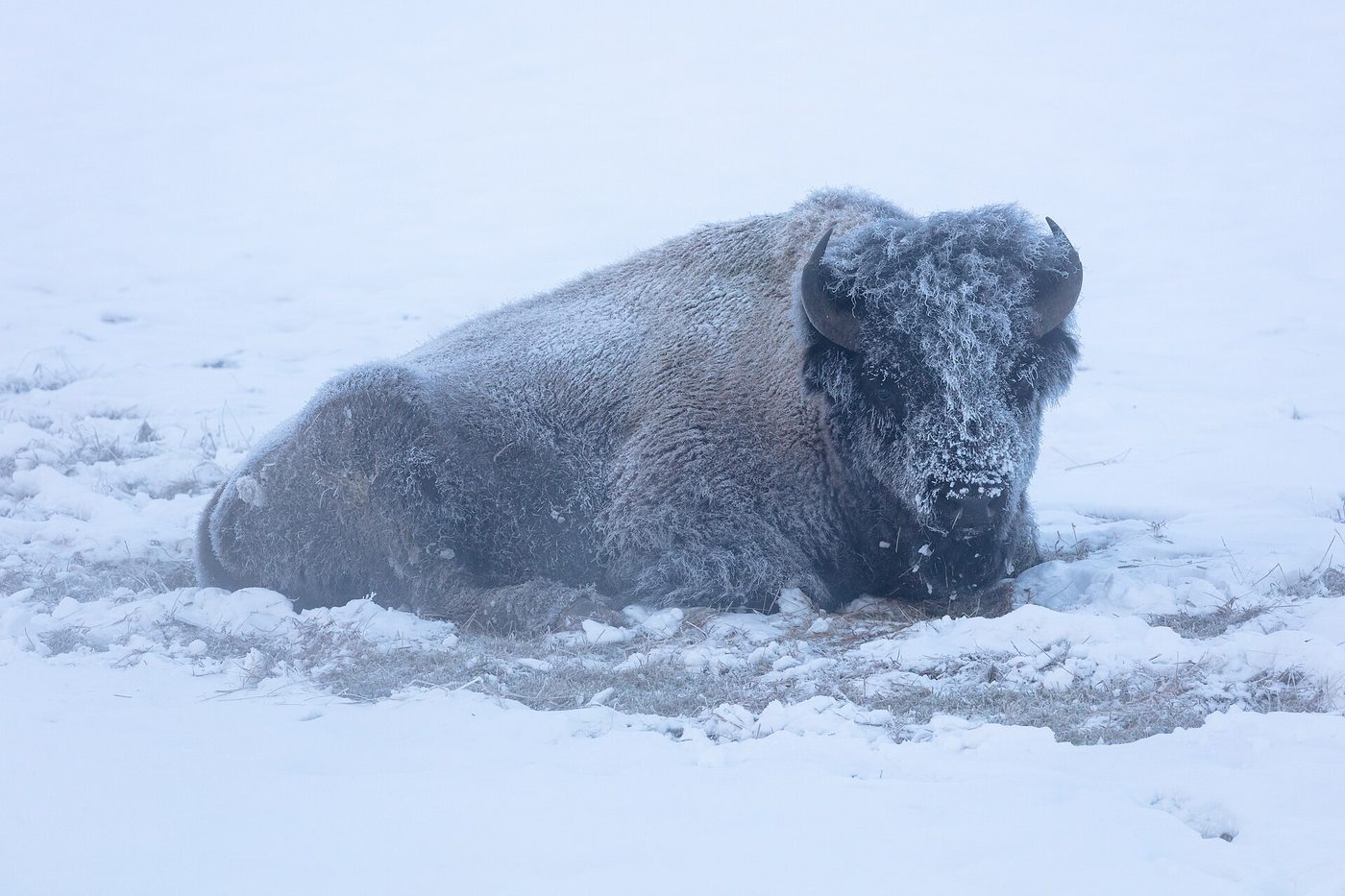
January averages in the park run from a high of about 29°F to a low of about 10°F, and subzero mornings are common, so most of a winter snowmobile day is spent in the bottom two rows of that table. Outfitter suits, heated grips and full-face helmets make it manageable. But exposed skin on a -20°F morning at speed is serious, and passengers often feel it more than drivers, because they have nothing to do but sit.
The physical side matters, too.
- Driving a snowmobile takes effort. Steering through soft snow and ruts works your arms and shoulders, and holding the thumb throttle for hours can make your hand ache.
- The day is long. Tours from West Yellowstone run from about 8 a.m. to 5 p.m., and from Jackson you add an hour or more in a van each way to reach the sleds at Flagg Ranch.
- Both vehicles bounce. Tracked coaches pitch and roll on uneven snow, which can trouble anyone prone to motion sickness; sitting forward helps. A snowmobile jolts over bumps, which can be hard on bad backs.
- Restrooms are limited. Both kinds of tour stop at Old Faithful and, in winters when they’re open, the warming huts along the route.
If you’re unsure how you’ll handle the cold, choose the coach. You can always stand outside longer at stops. You can’t warm up on a sled.
What to wear for each
The clothing is different enough that it’s worth planning separately.
- For a snowcoach, think in easy-off layers. You’ll sit in a heated cabin for hours, then step out into air that may be well below zero. A base layer, a fleece and an insulated parka you can unzip work well, along with insulated boots, a warm hat and gloves you can operate a camera in. Pack traction devices for icy boardwalks and pullouts.
- For a snowmobile, the outfitter’s suit, boots, mittens and helmet do most of the work, but what’s underneath matters. Wear a wicking base layer and a light fleece, never cotton, plus wool socks that aren’t so thick they squeeze your feet inside the boots. Bring a neck gaiter or balaclava for the gap between helmet and collar, thin liner gloves so you can take photos without bare hands, and chemical hand warmers for the ride home.
Our Yellowstone winter packing list has the full checklist for both.
Accessibility
If you use a wheelchair or have limited mobility, a snowcoach is the only realistic choice, since driving or riding a snowmobile needs strength and balance. Snowcoaches vary a lot, from high-stepped vintage Bombardiers to modern vans, so ask each operator how passengers board and whether they can carry a folded wheelchair. Boardwalks at the stops are often packed snow and ice in winter, which is worth knowing when you plan how much walking to do.
Wildlife and photography: which sees more?
You’ll pass the same animals either way, but you’ll see them differently.
On a snowcoach, you have big windows, a guide scanning the landscape for you, and the freedom to use binoculars or a long lens the whole time. When bison are walking the road, you watch from a warm seat while the driver waits. For wildlife spotting, and especially for photography, the coach is better: you can shoot through the window, step out with a tripod at a stop, and keep your batteries warm between shots.
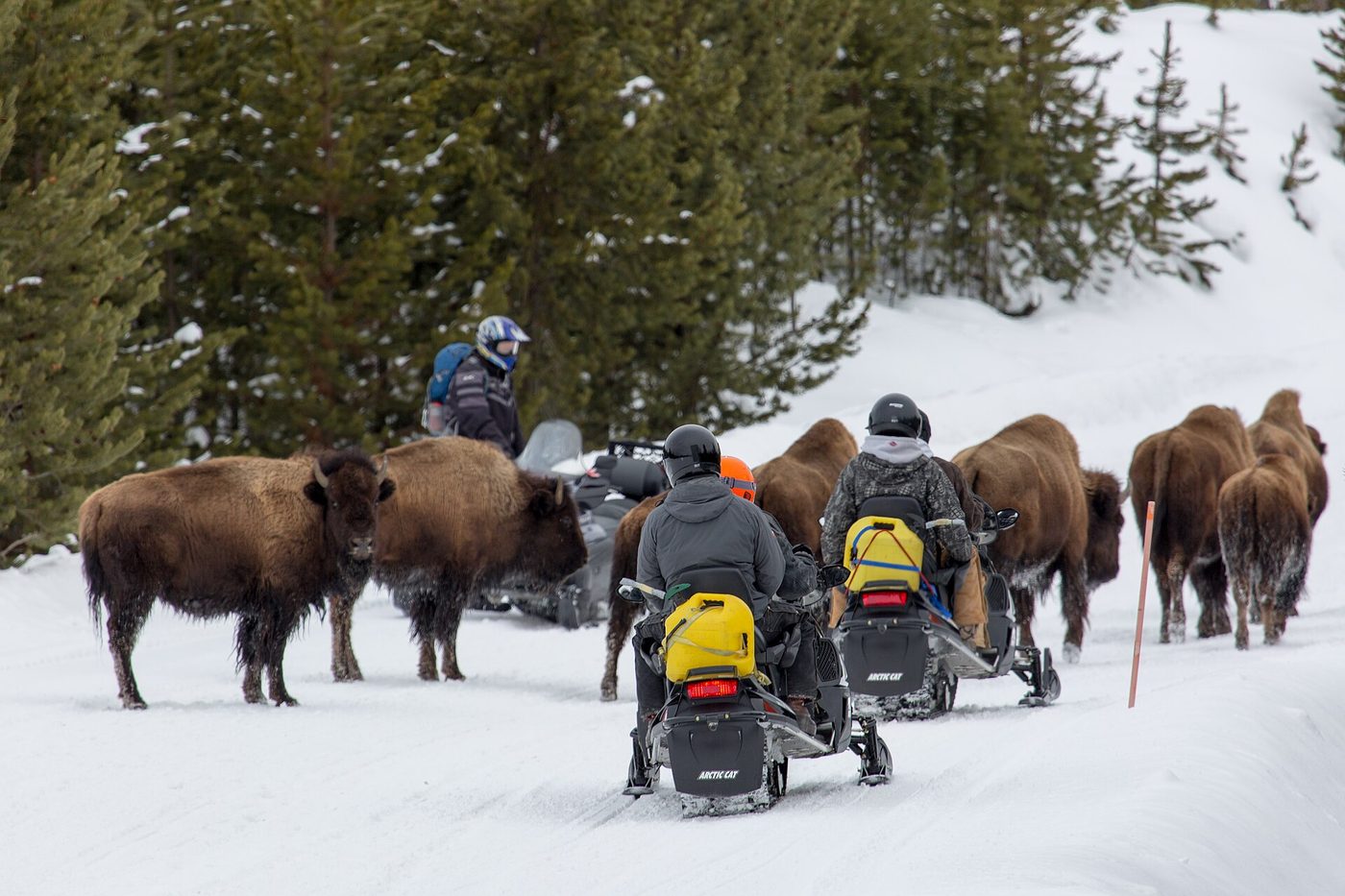
On a snowmobile, you’re at road level and fully exposed to the scene, which makes wildlife encounters feel more immediate. When a herd of bison comes down the road toward your group, you’ll remember it. But you can’t use binoculars or a camera while riding, your helmet narrows your view, and at stops you’ll be fumbling with mittens and a cold camera while the group waits. The guide decides when and where to stop, and you pass bison slowly, at the guide’s signal, without stopping beside them.
Whichever you choose, the rules are the same: stay at least 25 yards from bison and elk and 100 yards from wolves, even at a roadside stop. Our Yellowstone safety guide covers the details, and Yellowstone wildlife in winter explains what you’re likely to see and where.
The honest verdict for photographers: take a snowcoach. If you want to shoot seriously, look for a photo-focused tour, such as Xanterra’s Winter Photo Safari from Old Faithful Snow Lodge.
Which is better for the park?
The winter vehicles have been argued over for decades. By the late 1990s, a busy day could bring more than a thousand snowmobiles through the West Entrance, and the noise and exhaust hanging over the geyser basins led to years of planning and court cases. Studies done during that debate found that, per visitor, snowcoaches produced less of some pollutants than snowmobiles, which is one reason today’s rules favor guided groups and cap daily traffic.
Since then, the gap has become less stark. Both vehicle types now have to meet the park’s Best Available Technology standards for noise and emissions, the snowmobiles on guided tours are modern four-strokes, and the number of vehicles allowed in each day is limited. If minimizing your footprint matters to you, a full snowcoach is still the lower-impact way to travel, because a single engine carries a whole group. But a guided snowmobile day today is a very different thing from the smoky free-for-all of the 1990s.
Who should choose which
Here’s our recommendation by traveler type.
- Families with children under 8: snowcoach. Children that young can’t ride on at least one operator’s snowmobiles, and a warm coach keeps a winter day fun.
- Families with older children: either, but a snowcoach keeps everyone together and talking. If the teenagers are desperate to ride, do one day of each.
- Couples: a snowmobile if you both love adventure and handle cold well; a snowcoach if either of you doesn’t. Sharing a sled is cheaper, but the passenger gets colder.
- Photographers and birders: snowcoach, without question.
- Older travelers and anyone with back or joint problems: snowcoach, and sit toward the front.
- Travelers without a driver’s license: snowcoach, or ride a snowmobile as a passenger.
- Thrill-seekers: snowmobile. It’s the most fun you can have in Yellowstone in winter.
- Anyone visiting the Grand Canyon of the Yellowstone: snowcoach. It’s a longer day than the Old Faithful trip, and a long, cold ride home on a sled wears thin.
- Guests heading to Old Faithful Snow Lodge: snowcoach, since you’ll need room for luggage.
The best plan: do both
If you have two days, the ideal winter trip uses both. Spend day one on a snowmobile to Old Faithful, when you’re fresh and the novelty is at its peak, and day two on a snowcoach to the Grand Canyon, where you’ll appreciate the warmth and the windows. Our Yellowstone winter tours comparison lines up every tour type, and Yellowstone with kids in winter has more on choosing for a family.
Questions to ask before you book
Whichever you choose, the same few questions separate a great day from a disappointing one. Ask every operator:
- How big is the group? Fewer people means more time at each stop and more of the guide’s attention.
- How long do we get at Old Faithful? Two hours or more almost guarantees an eruption and time for a walk.
- Is the park entrance fee included, and do you accept my pass? An America the Beautiful pass can waive the fee on some tours.
- Are meals included? Some tours include breakfast and lunch; others stop at the lodge, where you buy your own.
- What gear is provided? For snowmobiles: suit, boots, mittens and helmet. For coaches: binoculars or scopes, traction devices.
- What’s the cancellation and weather policy? Storms can cancel days, and refund rules vary widely.
- For snowmobiles, what’s the damage liability? One Jackson operator offers a $25-a-day waiver with a $600 deductible.
- What kind of vehicle is it? A vintage Bombardier and a modern van are very different days.
Can you snowmobile in Yellowstone without a guide?
Only with a permit from the Non-Commercially Guided Snowmobile Access Program, a small lottery. Up to four groups a day can enter, one at each oversnow entrance, with no more than five snowmobiles each. The leader must be 18 or older, every driver needs a license and an online certification, and permits cost $40 a day plus a $6 application fee.
The program’s other rules, from the park’s snowmobiling page (last updated May 2025, so confirm the 2026-27 terms):
- Applications open August 1 to 31, with awards in mid-September. Any permits left over are available first come, first served from October 1.
- Every operator must be at least 16 by the first day of the trip, hold a valid driver’s license and complete the Yellowstone Snowmobile Education Certification course.
- Leaders may lead no more than two trips per winter season.
- Machines must be registered and certified as meeting the park’s New Best Available Technology standard. Tracked side-by-sides aren’t allowed. Compliant snowmobiles can be rented from local businesses.
- Trips can last up to three days and two nights.
- Refunds are available if you cancel at least a week before the start date, but the $6 application fee isn’t refundable.
If the program follows its usual calendar, the August lottery for 2026-27 has already run, so your only chance this winter is a leftover permit. It’s a great option for experienced riders who want to set their own pace, but it isn’t a way around the cold, and you’re responsible for your group’s safety and route. Our guide to the non-commercial snowmobile permit explains how to apply.
Planning your winter day
Whichever you choose, book early for holiday dates, dress in layers, and leave a spare day in case a storm cancels a tour. Snowmobile outfitters usually supply the outer layers, but you’ll still want a warm base layer, wool socks, a neck gaiter and liner gloves; on a coach, bring everything yourself. Our Yellowstone winter packing list has the full checklist, Yellowstone winter lodging helps you pick a base, and the rest of the season, from road dates to what’s open, is in our complete Yellowstone winter guide.
Frequently asked questions
Is a snowcoach warmer than a snowmobile?
Much warmer. A snowcoach is heated all day, and the cold only matters at stops. On a snowmobile, wind chill at 30 mph turns a 0°F morning into about -26°F on exposed skin, and heated handlebars help your hands but not the rest of you.
How old do you have to be to drive a snowmobile in Yellowstone?
Every driver needs a valid driver’s license. Outfitters typically set the minimum driving age at 16, and the non-commercial permit program requires operators to be at least 16. Children ride as passengers, subject to each outfitter’s minimum age; one Jackson operator sets it at 8 (checked September 2026).
Is a snowcoach or snowmobile cheaper?
Usually the snowcoach, especially for couples. From Jackson in 2026-27, two snowcoach seats with meals cost $750, while two people sharing one snowmobile pay $860 including park fees and two sleds cost $1,080 (checked September 2026). Prices vary by operator, so compare quotes for your group.
Do snowmobile tours provide warm clothing?
Most do. The Jackson operator we checked includes a two-piece snowmobile suit, insulated boots, leather mittens and a full-face helmet. You’ll still need your own base layers, warm socks and a neck gaiter. Snowcoach passengers bring all their own clothing.
Which is better for seeing wildlife in Yellowstone in winter?
A snowcoach, for most people. You have large windows, a guide scanning for animals, and the freedom to use binoculars and cameras the whole time. Snowmobiles put you closer to the scene, but you can’t use optics while riding and your helmet limits your view.
Do you need experience to drive a snowmobile in Yellowstone?
No. Guided tours are designed for first-timers: the outfitter gives you a briefing before you leave, the roads are groomed, and the guide sets a steady pace. Most people are comfortable within the first few miles. If you’ve never ridden, ask about sharing a sled for the first stretch.
What happens if it’s extremely cold on your tour day?
Tours run in cold weather as a matter of course, and subzero mornings are normal in January. Operators may delay or cancel for dangerous conditions such as blizzards or extreme cold combined with wind. Check each operator’s weather policy before you pay, and consider switching to a snowcoach if the forecast is brutal.
Can children ride snowmobiles in Yellowstone?
Yes, as passengers, if they meet the outfitter’s minimum age, which is 8 at one Jackson operator. They can’t drive until they’re 16 and licensed. For younger children, a snowcoach is the only way to reach the interior, and Xanterra’s child fares cover ages 3 to 11.
Sources
- National Park Service, Snowmobiling in Yellowstone
- National Park Service, Park roads and winter travel
- Yellowstone National Park Lodges (Xanterra), Snowcoach transportation
- Teton Science Schools, Full Day Yellowstone Snowcoach Tour
- Old Faithful Tours, Yellowstone snowmobile day tour
- National Weather Service, Wind chill chart
Image credits
| Photo | Credit |
|---|---|
| Guided snowcoach and snowmobile groups stopped together near Midway Geyser Basin in Februa (top of page) | Yellowstone National Park from Yellowstone NP, USA, public domain, via Wikimedia Commons |
| Snowcoach passengers watching bison at Gibbon Meadows | NPS/Diane Renkin, public domain, via Wikimedia Commons |
| A guided snowmobile group near the Lower Geyser Basin, February | Yellowstone National Park from Yellowstone NP, USA, public domain, via Wikimedia Commons |
| A frost-covered bison near Roaring Mountain, on the road between Norris and Mammoth | Yellowstone National Park, public domain, via Wikimedia Commons |
| Snowmobilers wait for bison to move along the road; guides decide when to pass | Neal Herbert, public domain, via Wikimedia Commons |
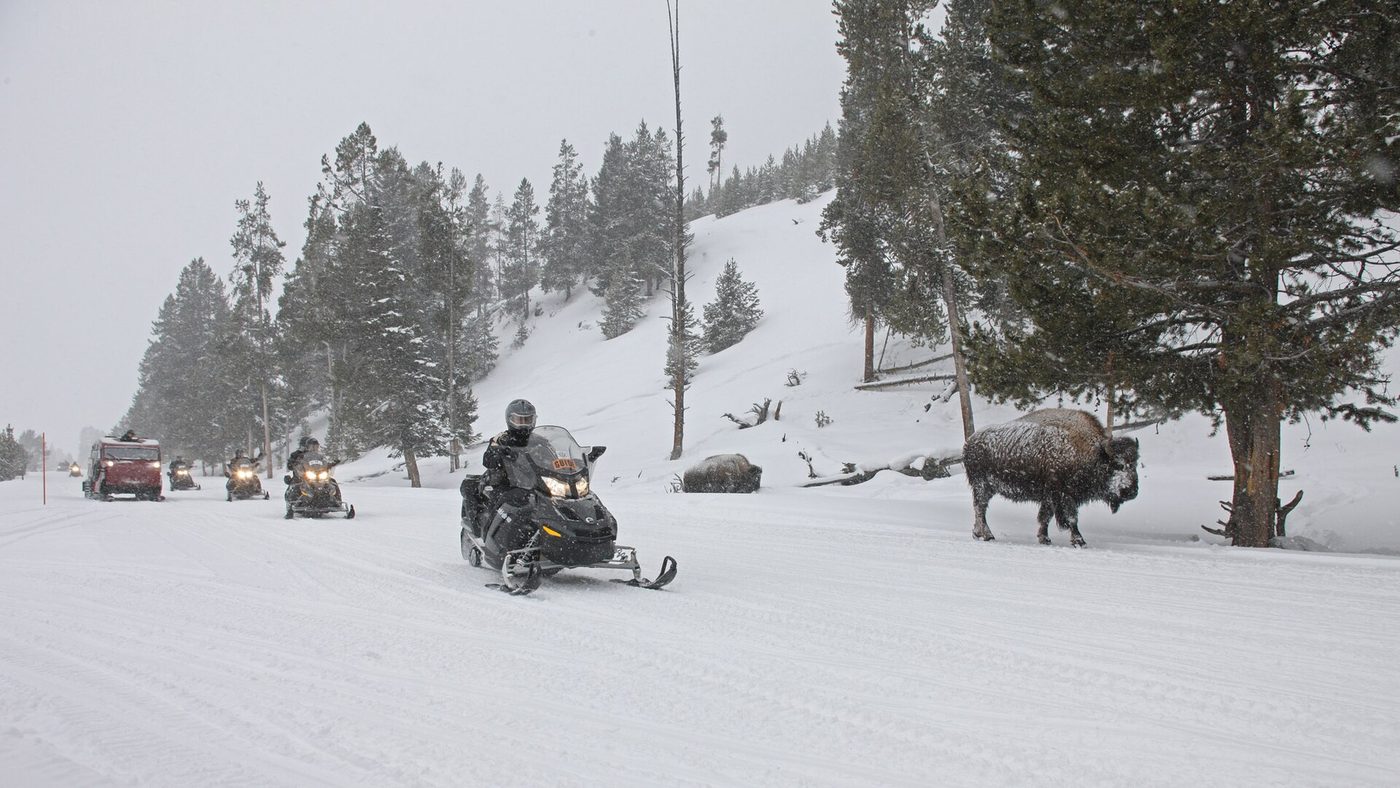
| Snowmobiles pass a bison on the West Entrance road, the busiest winter route into the park | Yellowstone National Park from Yellowstone NP, USA, public domain, via Wikimedia Commons |